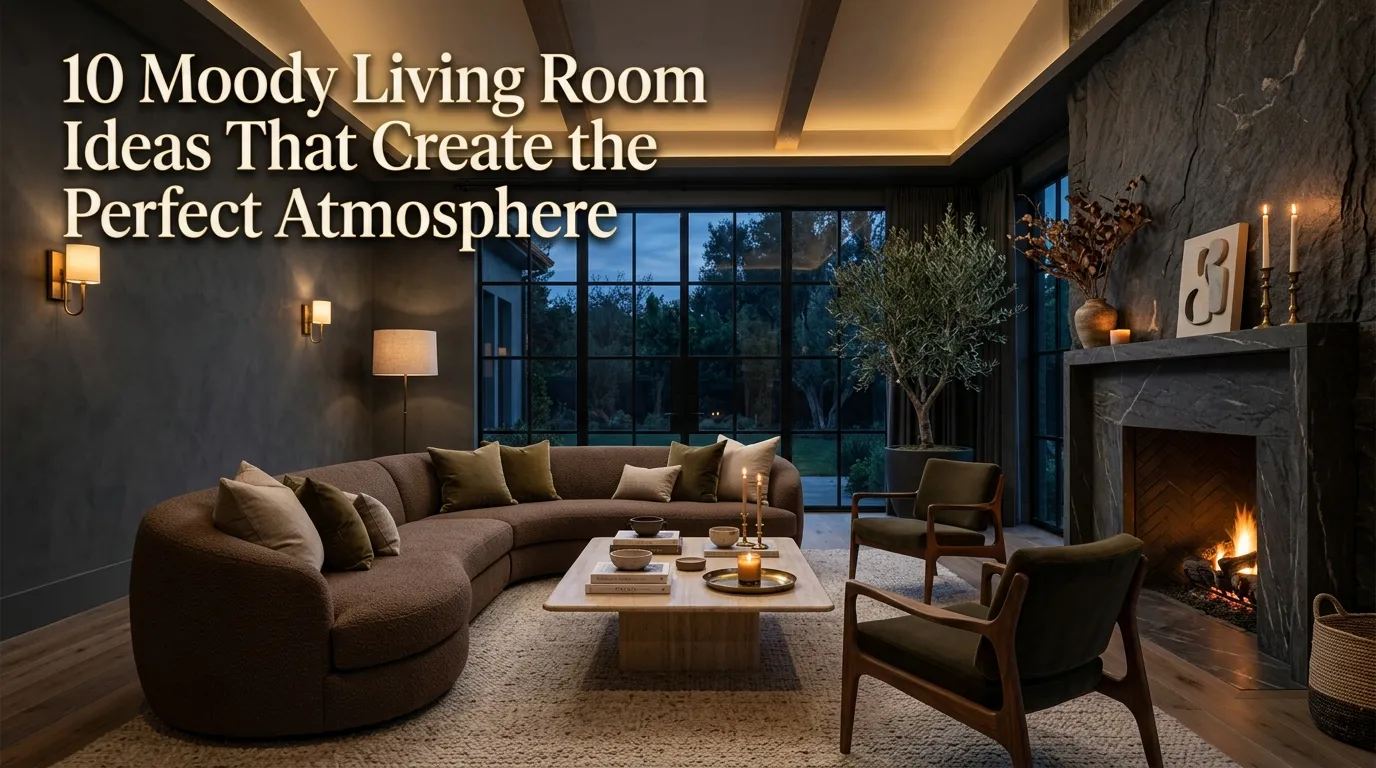
10 Moody Living Room Ideas That Create the Perfect Atmosphere
There is a common misconception in the interior design world that a living room must always be bright, airy, and washed in endless shades of stark white to feel welcoming. For a long time, standard design advice pushed us to maximize light at all costs, fearing that anything under a certain lumen count would feel cramped or depressing. But if you are someone who craves a home that feels like a warm embrace at the end of a long day, those clinical white walls can often feel cold, sterile, and entirely devoid of personality. You want a space that tells a story, commands attention, and wraps you in total comfort.
If you’re anything like me, you’ve realized that a room truly comes alive when you lean into the shadows. That is the magic of a moody aesthetic. It isn’t about creating a dark, gloomy cave; it is about intentional contrast, rich textures, and deep colors that cultivate an intimate, sophisticated atmosphere. A well-executed moody living room feels deeply luxurious, cozy, and grounded. It becomes the ultimate sanctuary for quiet evening conversations, curling up with a good book, or hosting intimate gatherings by candlelight.
In my experience, transforming a standard space into a moody retreat requires a careful balance of elements so the room feels intentional rather than accidental. One simple trick I always suggest is focusing on how light interacts with dark surfaces, ensuring that every deep hue is supported by tactile fabrics and warm illumination. By shifting your approach from chasing brightness to mastering depth, you can create a space that feels both grand and incredibly snug. Let’s explore how to bring this captivating, high-end look into your own home.
Table of Contents
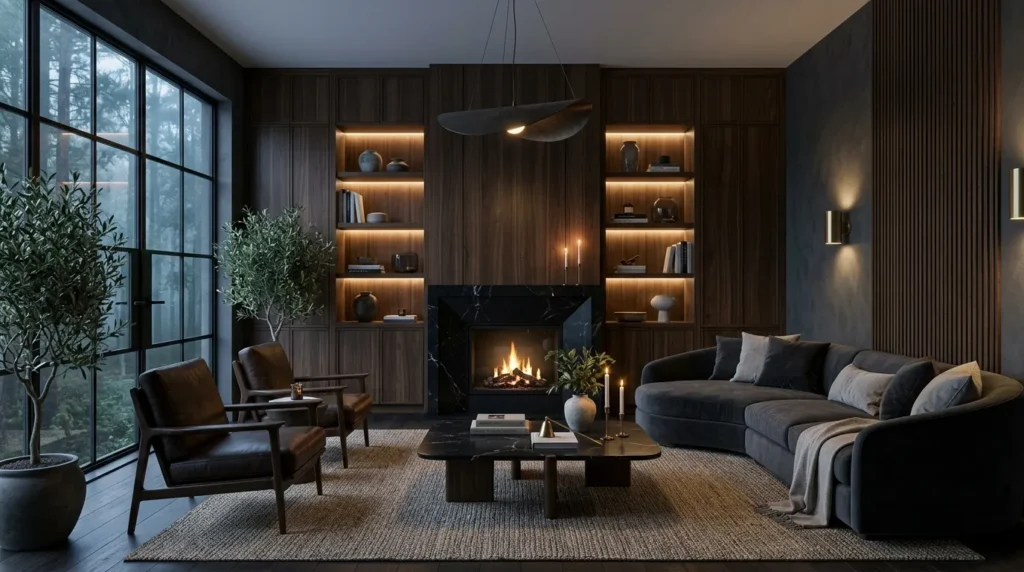
- 1. Charcoal Accent Walls
- A deep, matte foundation that instantly grounds the room and makes your furniture pop.
- 2. Plush Velvet Seating
- Rich, touchable fabrics in jewel tones that absorb light and add instant luxury.
- 3. Warm Layered Lighting
- Moving away from harsh overhead fixtures to create pockets of cozy radiance.
- 4. Dark Wood Tones
- Incorporating walnut, espresso, and reclaimed timber for a timeless, organic feel.
- 5. Metallic Brass Details
- Sparks of unlacquered brass and gold to cut through the shadows with elegance.
- 6. Moody Botanical Accents
- Deep green foliage, dried flora, and rich floral prints that bring life to dark corners.
- 7. Intimate Gallery Layouts
- Grouping moody artwork and vintage frames closely together to create a focal point.
- 8. Textured Ceiling Finishes
- Bringing the dark palette upward with paint, wallpaper, or wood beams for a canopy effect.
- 9. Heavy Statement Drapery
- Framing windows with floor-to-ceiling puddling fabrics that add dramatic vertical height.
- 10. Monochromatic Color Drenching
- Painting walls, trim, doors, and baseboards the exact same deep shade for seamless elegance.
1. Charcoal Accent Walls
Quick Benefits
- Creates instant visual depth.
- Minimizes the appearance of wall imperfections.
- Makes colorful artwork stand out vividly.
- Softens the overall perimeter of the room.
- Provides a high-end, designer-level backdrop.
Why It Works
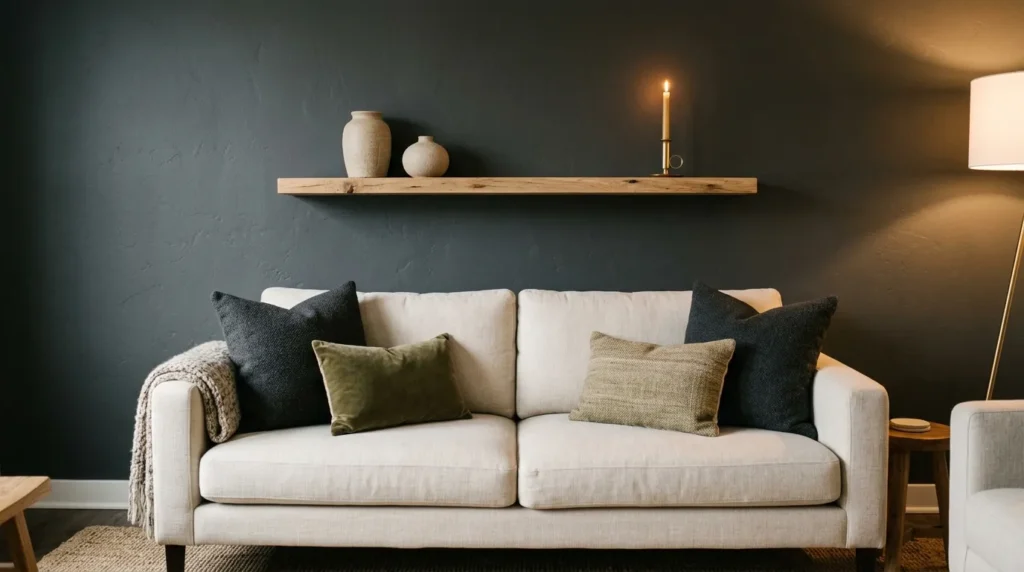
One thing that works especially well when transitioning to a darker aesthetic is starting with a dedicated charcoal accent wall. Charcoal gray is an incredibly forgiving and versatile shade; it carries all the sophisticated drama of true black without feeling overly harsh or restrictive. In my experience, a matte or flat finish charcoal paint absorbs light beautifully rather than reflecting it, which immediately blurs the sharp corners of a room and creates an illusion of infinite depth. This structural grounding effect makes the entire living space feel instantly cozier and more secure, serving as a striking canvas that elevates everything placed against it.
How To Style It
To execute this flawlessly, select a prominent wall—ideally the one hosting your fireplace, main media console, or largest sofa. I suggest using a high-quality matte paint to prevent unwanted glare from windows. Pair this charcoal backdrop with a light-toned fabric sofa, such as a textured cream linen or a soft camel leather, to create a striking but balanced contrast. Integrate raw wood shelving directly onto the wall to break up the solid color, and display a mix of ceramic vases and brass candleholders. Keep the surrounding baseboards a crisp off-white or, for a more seamless transition, paint them one shade lighter than the charcoal.
2. Plush Velvet Seating
Quick Benefits
- Adds a tactile layer of physical comfort.
- Reflects light subtly across its pile.
- Elevates the perceived value of the room.
- Introduces vibrant, saturated jewel tones.
- Resists showing everyday wear and dust.
Why It Works
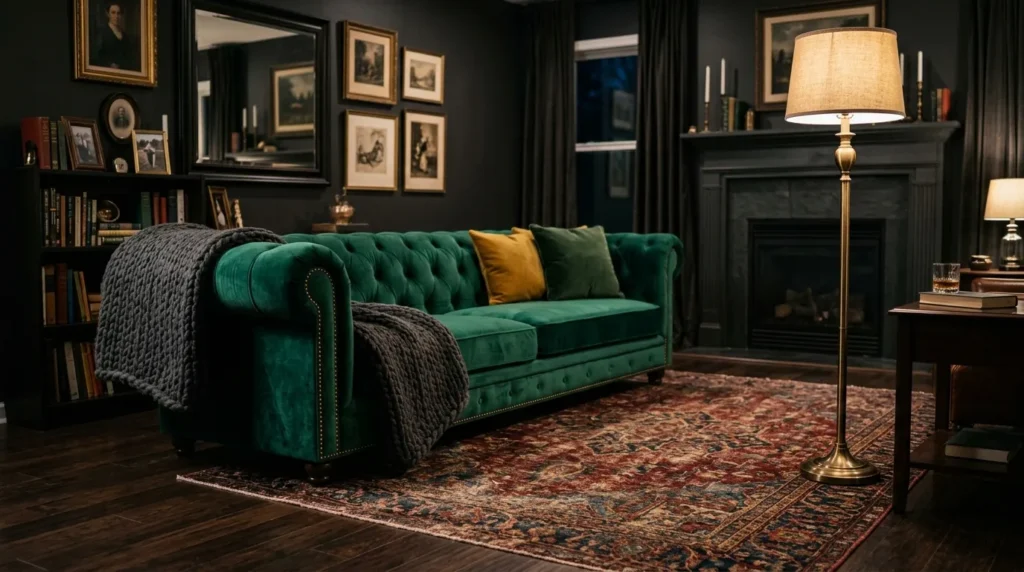
A mistake many homeowners make when designing a moody room is keeping all the textures flat, which can cause a dark space to feel lifeless or cold. That’s why many designers recommend introducing plush velvet seating as a primary anchor. Velvet possesses a unique nap that catches low light along its curves, creating a beautiful sheen that shifts as you walk through the room. This subtle movement prevents dark spaces from feeling flat or stagnant. In rich shades like emerald green, deep sapphire, or burnt orange, velvet furniture injects an undeniable sense of luxury and physical warmth that practically begs you to sit down and stay a while.
How To Style It
Introduce a substantial velvet chesterfield sofa or a pair of sleek, mid-century modern velvet accent chairs as your focal point. If your walls are a deep slate or navy, choose a velvet in a contrasting jewel tone like ruby red or rich mustard to create a sophisticated focal point. Layer the seating with textured knit throw blankets and woven linen pillows to keep the arrangement from looking too uniform. Ensure the furniture legs are constructed from dark stained walnut or tapered brass to elevate the pieces off the floor, allowing light to pass underneath and maintaining a balanced sense of space.
3. Warm Layered Lighting
Quick Benefits
- Eliminates harsh shadows and glare.
- Sets a relaxed, evening-ready mood.
- Highlights specific architectural features.
- Allows you to customize light levels easily.
- Creates a cozy, campfire-like glow indoors.
Why It Works
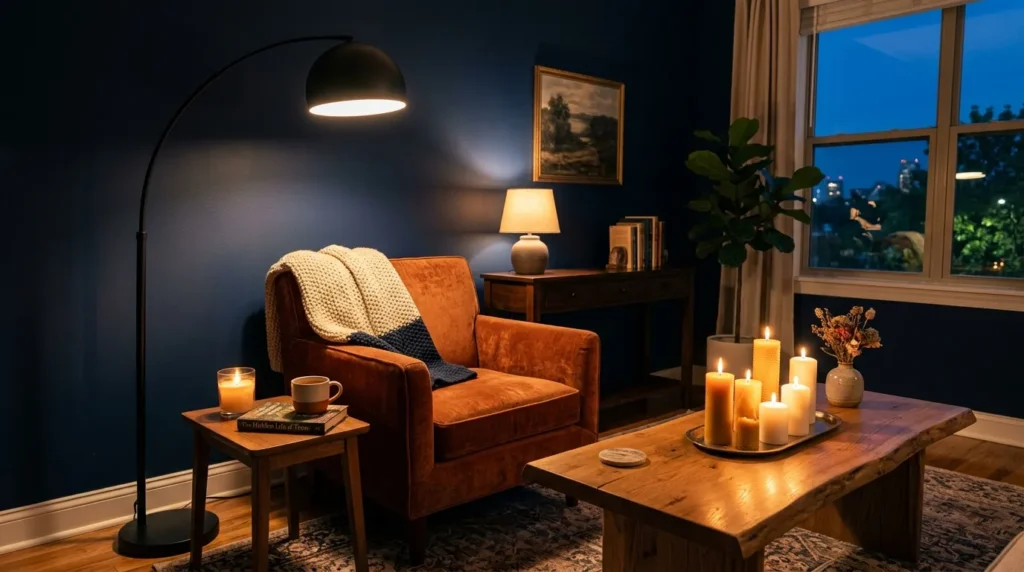
I’ve noticed that the success of a moody living room hinges entirely on its lighting strategy. If you rely solely on a bright, centralized overhead light, you will completely wash out the subtle shadows and rich colors that make a dark room so appealing. Warm, layered lighting relies on scattering multiple low-wattage light sources at different heights throughout the space. By intentionally leaving certain corners in soft shadow while illuminating functional areas with warm, amber bulbs (ideally around 2700K), you create an enchanting, intimate ambiance that feels exclusive, calm, and tailored for relaxation.
How To Style It
Turn off the main ceiling fixture entirely and instead place a tall, arched floor lamp with a fabric shade next to your primary reading chair. Position two matching table lamps with opaque or dark-toned shades on side tables to direct light exclusively downward and outward. Add low-voltage LED picture lights directly above your favorite pieces of artwork to create a museum-like glow. Finally, scatter real or high-quality flickering flameless wax candles across your coffee table and mantelpiece. This combination provides pockets of soft, warm illumination that keep the dark walls looking rich and inviting.
4. Dark Wood Tones
Quick Benefits
- Introduces a timeless, historic quality.
- Brings natural, organic patterns inside.
- Pairs effortlessly with any dark paint.
- Adds structural weight and stability.
- Enhances the cozy, cabin-like feel.
Why It Works
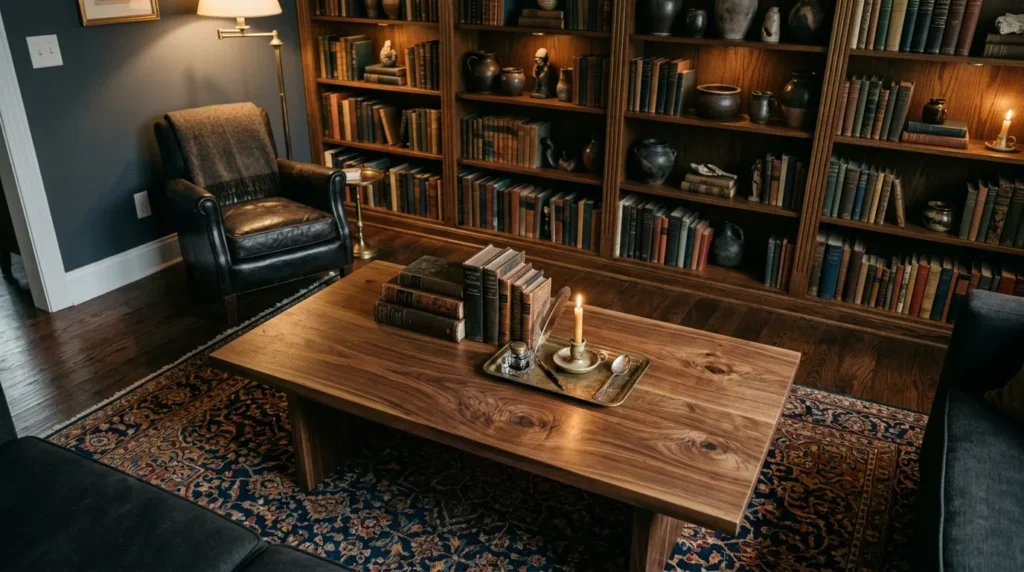
To keep a moody living room from feeling overly synthetic or starkly modern, you must ground it with natural, organic materials. Dark wood tones—such as espresso-stained oak, rich walnut, and weathered reclaimed timber—are perfect for adding an authentic, time-worn substance to the space. I’ve seen this idea transform spaces completely because wood carries inherent imperfections, grain patterns, and warmth that paint simply cannot replicate. The natural matte texture of dark wood absorbs light in a way that feels incredibly grounding, preventing the room from feeling cold and instead infusing it with a classic, collected-over-time character.
How To Style It
Incorporate dark wood through substantial, large-scale furniture pieces rather than small accessories. A solid walnut coffee table with a visible, expressive grain or a floor-to-ceiling dark oak bookcase makes an excellent anchor. If you have light-colored floors, layer a large, textured wool rug beneath your dark wood furniture to create a clear visual separation. You can also introduce dark wood architecturally by installing faux or structural rustic wooden beams across the ceiling, which instantly draws the eye upward and encloses the room in a cozy, protective architecture.
5. Metallic Brass Details
Quick Benefits
- Prevents the space from looking dull.
- Reflects flickering candlelight beautifully.
- Adds a polished, sophisticated finish.
- Breaks up large fields of dark color.
- Coordinates perfectly with warm tones.
Why It Works
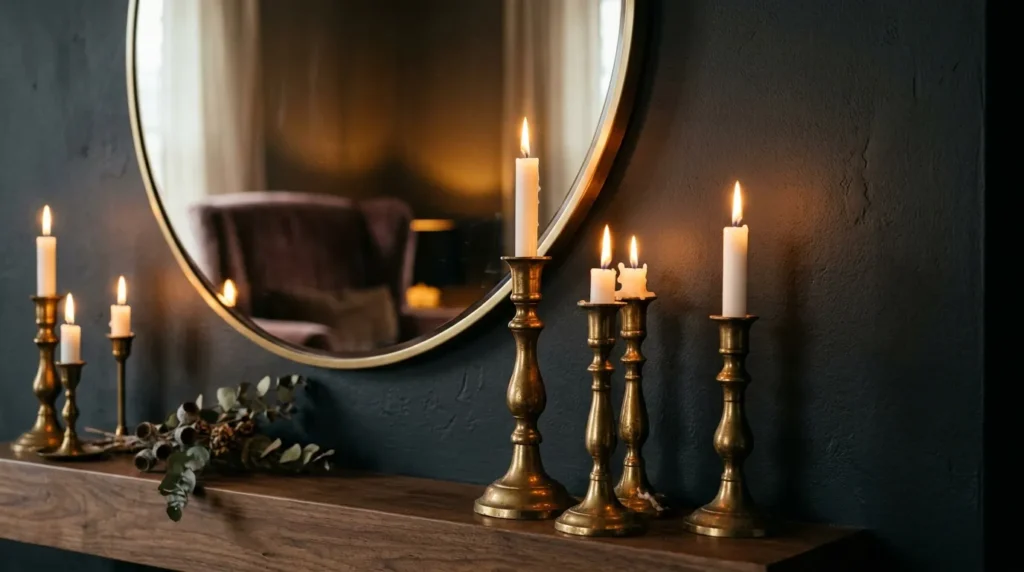
When you are working with a dark, moody color palette, you need intentional elements that pierce through the shadows to provide a sense of structure and refinement. Metallic brass details act like jewelry for your living room. Because brass possesses a warm, golden undertone, it contrasts beautifully against deep blues, dark greens, and charcoal grays without creating the chilly, sterile look that chrome or silver often brings. One simple trick I always suggest is using unlacquered or brushed brass, which patinas naturally over time and develops a soft, historical glow that feels right at home in an atmospheric space.
How To Style It
Look for subtle opportunities to swap out standard hardware and fixtures for brushed brass options. Install brass cabinet pulls on your media console, choose floor lamps with slender brass stems, or hang a large, round brass-framed mirror directly above the fireplace mantel to bounce light across the room. You can also incorporate smaller accent pieces, such as a brass tray on the coffee table to hold coasters, or antique brass candleholders of varying heights. These small, bright metallic moments will catch the low light and keep the eye moving naturally around the room.
6. Moody Botanical Accents
Quick Benefits
- Injects organic life without brightness.
- Softens straight lines and hard edges.
- Features stunning, complex textures.
- Introduces deep, natural color variations.
- Creates a fresh, curated appearance.
Why It Works
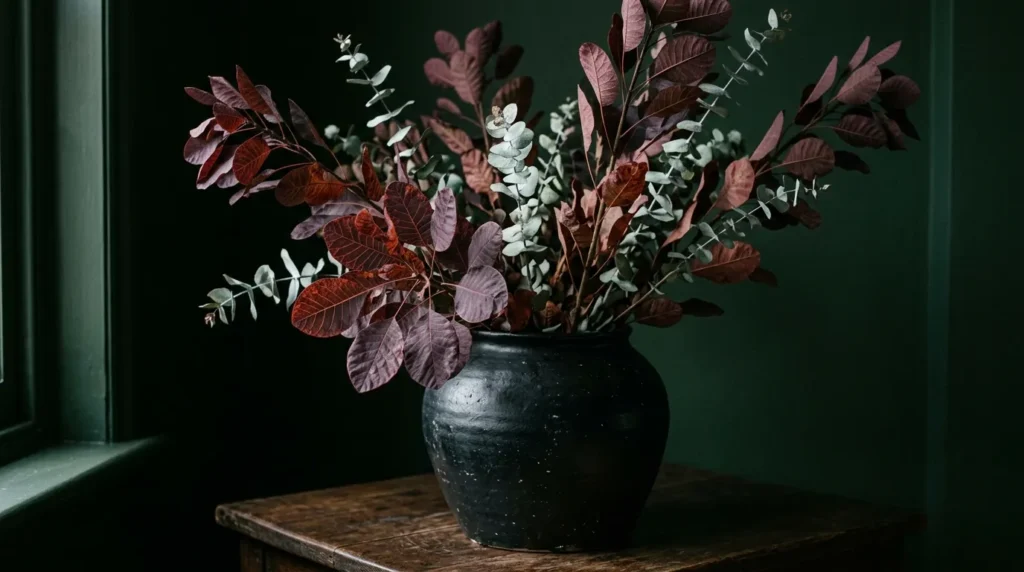
Every successful room needs a touch of nature to feel lived-in and complete, but standard, bright lime-green houseplants can sometimes clash with a deeply atmospheric, moody design. That’s why many designers recommend opting for moody botanical accents instead. Think of plants and flora that boast deep burgundy, forest green, or variegated plum leaves, as well as dried stems and branches. These deeper organic elements align beautifully with a shadowed color scheme, bringing a sense of vitality and movement into the living room while preserving the sophisticated, mysterious vibe you have carefully built.
How To Style It
Place a large, matte black ceramic or terracotta vessel in an empty corner and fill it with tall, dried eucalyptus branches, pampas grass, or structural willow twigs that reach toward the ceiling. On your coffee table or mantel, style a vase with deep burgundy cotinus leaves or rich, dark forest fern stems. If you prefer live plants, options like the rubber tree (Ficus elastica) with its near-black, glossy leaves, or a dramatic fiddle leaf fig placed in a dim corner will thrive while adding the perfect structural, deep-green silhouette against a dark accent wall.
7. Intimate Gallery Layouts

Quick Benefits
- Displays your unique personal story.
- Fills large, empty wall expanses.
- Distributes visual weight evenly.
- Keeps the eyes engaged at eye level.
- Allows easy updates to your decor.
Why It Works
Empty, expansive walls in a dark room can sometimes feel imposing or unfinished. An intimate gallery layout allows you to break up that heavy visual space while leaning heavily into a curated, historic aesthetic. By clustering artwork close together, you create a dense, captivating focal point that draws people in. In my experience, choosing art with dark backgrounds, vintage oil painting reproductions, or moody black-and-white photography helps the collection feel integrated with the wall itself, transforming an ordinary living room wall into a deeply soulful, personalized exhibition.
How To Style It
Collect an assortment of vintage-style frames from local thrift stores or antique shops, focusing on ornate tarnished gold, dark wood, and matte black finishes. Print out moody landscape paintings, dramatic portraits, or abstract charcoal sketches. Arrange the frames tightly together on your main wall, keeping the spacing between them down to just two or three inches to maximize the sense of density. To make it feel truly cohesive, paint the wall behind the gallery a deep, dark shade so the frames appear to emerge naturally out of the shadows, creating a high-end designer look.
8. Textured Ceiling Finishes
Quick Benefits
- Eliminates the jarring white ceiling line.
- Makes high ceilings feel incredibly cozy.
- Imparts a custom, architectural luxury.
- Adds unexpected detail to the room.
- Encloses the space in a warm cocoon.
Why It Works
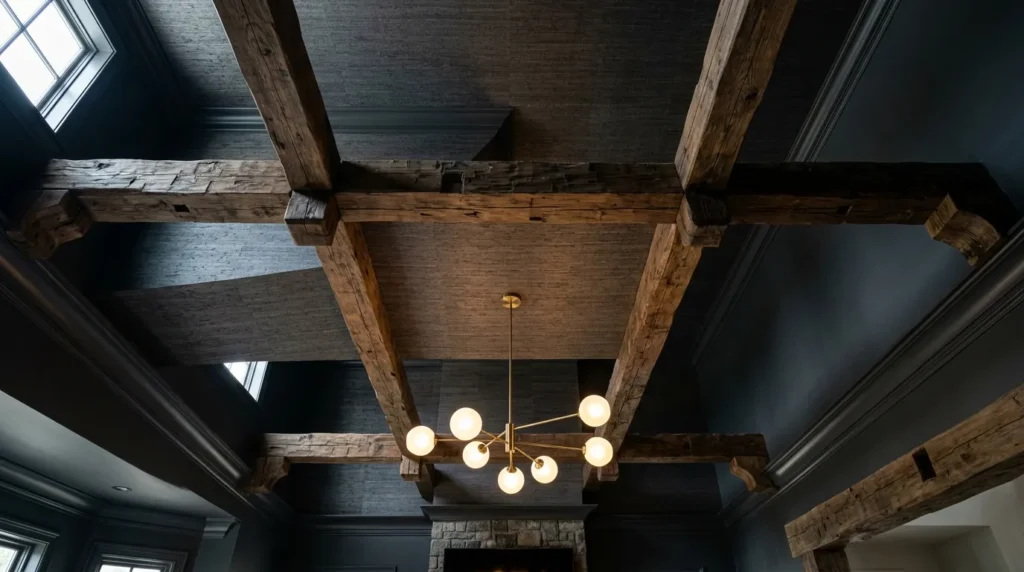
A mistake many homeowners make is meticulously designing dark walls and dark furniture, only to leave the ceiling painted a bright, flat builder-grade white. This creates a harsh line of contrast that cuts the room in half visually and ruins the immersive atmosphere. Bringing a textured ceiling finish or a deep paint color upward wraps the entire living room in a continuous design. This canopy effect makes the boundaries of the room recede, making the space feel like an architectural sanctuary where the ceiling gently envelopes you rather than hovering coldly overhead.
How To Style It
If you are feeling bold, paint the ceiling the exact same dark color as your walls, using a flat finish to hide structural imperfections. For a more tactile approach, apply a subtle textured wallpaper, such as a dark charcoal grasscloth, to the ceiling panel to add incredible physical depth. If your style leans a bit more traditional or rustic, install dark-stained tongue-and-groove wood paneling across the ceiling, accented by heavy box beams. Keep your flooring slightly lighter or balance the room with a large, plush area rug so the overall space still feels balanced and intentionally grounded.
9. Heavy Statement Drapery
Quick Benefits
- Increases the perceived height of the room.
- Softens acoustics and reduces echoing.
- Provides excellent light control and privacy.
- Frames views outside beautifully.
- Delivers a grand, theatrical sophistication.
Why It Works
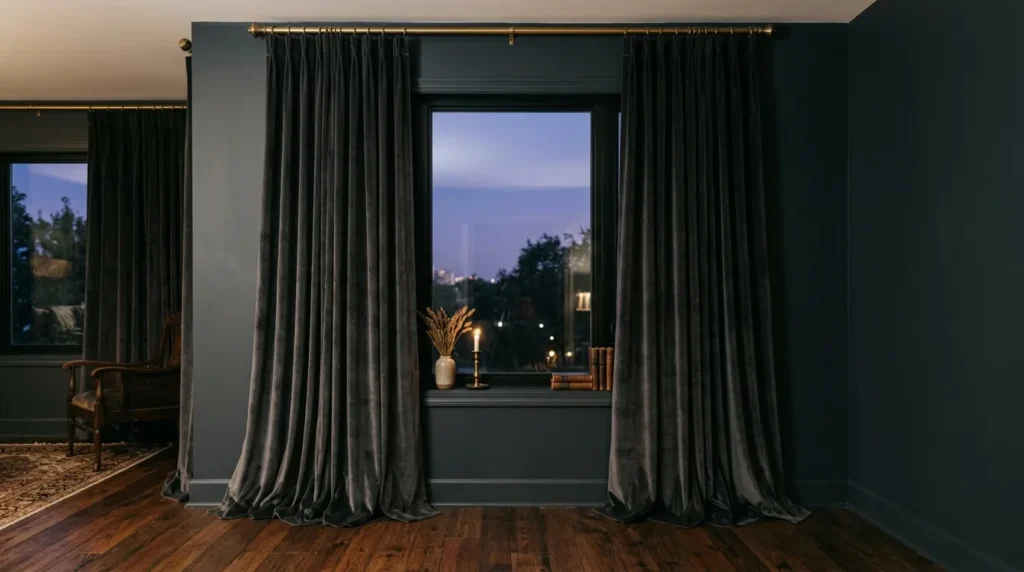
Windows can become massive, cold black voids at night if left uncovered, which disrupts the cozy comfort of a moody living room. Framing your windows with heavy statement drapery is an excellent way to introduce vertical texture, softness, and color saturation. Thick, luxurious fabrics like heavy linen, velvet, or dense wool insulate the room physically and visually. In my experience, allowing these rich fabrics to puddle slightly on the floor adds a sense of effortless, old-world elegance that instantly upgrades the entire room, making it look incredibly polished and expensive.
How To Style It
Mount your drapery hardware as close to the ceiling line as possible, extending the rod at least 10 to 12 inches wider than the window frame on each side. This trick allows the curtains to frame the glass without blocking natural light during the daytime. Choose heavy curtains in a deep, matte color that matches or complements your walls—such as charcoal, navy, or a deep chocolate brown. Let the fabric extend all the way down to the floor, allowing an extra inch or two of material to pool gracefully on the ground for a dramatic, high-end appearance.
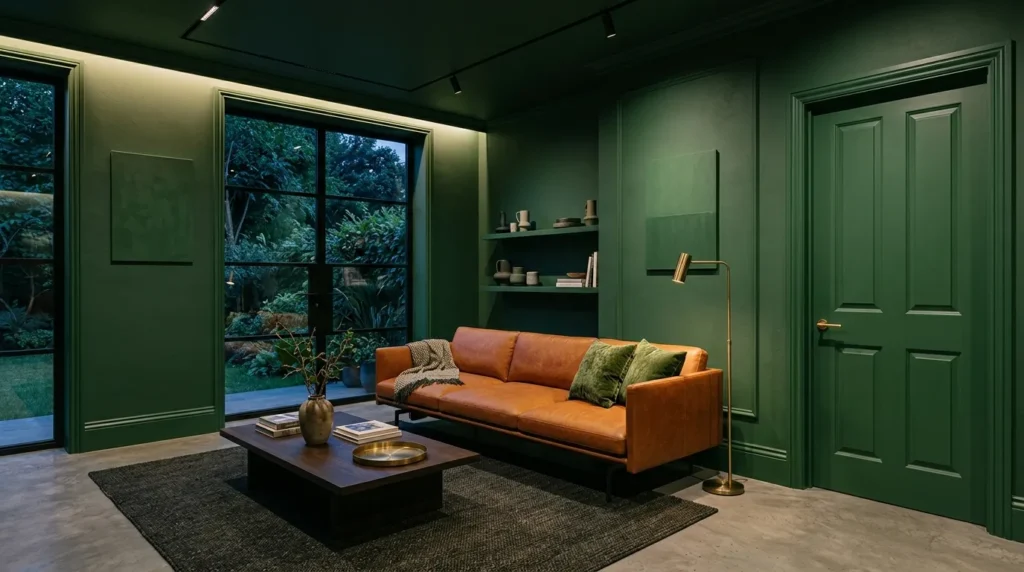
10. Monochromatic Color Drenching
Quick Benefits
- Creates a completely seamless, modern look.
- Makes small living rooms feel much larger.
- Disguises bulky radiators, vents, and doors.
- Reduces visual noise and distractions.
- Offers the ultimate high-end designer vibe.
Why It Works
Color drenching is the ultimate commitment to a beautiful, moody aesthetic. This technique involves painting your walls, baseboards, window trim, crown molding, and even the doors in the exact same deep color. Traditional white trim against dark walls creates a choppy, high-contrast grid pattern that limits how spacious a room feels. By drenching the space in a single tone, you eliminate those hard visual breaks. The lines of the room completely disappear, leaving a flawless, sophisticated envelope of color that feels incredibly calming, expansive, and breathtakingly intentional.
How To Style It
Select your absolute favorite moody hue—whether that is an intense forest green, a rich slate blue, or a velvety near-black. Buy the paint in two different finishes to create a subtle interplay of light: use a flat or matte finish for the main wall surfaces to absorb light, and a satin or semi-gloss finish for the baseboards, window casings, and doors. The slight gloss on the trim will catch low light beautifully, outlining the architectural shapes of your home while keeping the color palette perfectly unified, modern, and ultra-luxurious.
Featured Snippet Optimization
If you want to make a dark room feel cozy rather than small, focus on eliminating high-contrast lines. Paint your trim and baseboards the same deep color as your walls, use low-level warm lighting scattered throughout the room, and layer rich, touchable fabrics like velvet and dark wood. This approach allows the walls to visually recede, creating a luxurious and inviting sanctuary.
FAQ Section
Will painting my living room a dark, moody color make it feel too small?
Not at all. In fact, dark colors often have the opposite effect. When you paint walls a deep shade, especially using a matte finish, the corners of the room recede because they stop reflecting harsh light. This blurs the physical boundaries of the space, creating an illusion of infinite depth that can make a compact living room feel much grander and cozier than it actually is.
How do I choose the right moody paint color if my room gets very little natural light?
If your room naturally lacks light, don’t try to fight it with bright white paint, which can quickly look gray and dingy in dark spaces. Instead, lean into the shadows with a rich color that features warm undertones, such as a deep chocolate brown, charcoal, or a muted olive green. These tones look intentional and sophisticated in low light, turning a naturally dim space into an incredibly cozy feature.
What is the best light bulb wattage or temperature for a moody living room?
You should always look for bulbs with a warm color temperature between 2200K and 2700K. Avoid anything above 3000K, as cool white or daylight bulbs will create a clinical, harsh blue glare against dark walls. Keep your light sources low-wattage and dimmable, relying on multiple accent lamps and candles rather than a single bright overhead light fixture to keep the ambiance soft.
Can I still create a moody living room if I am renting and cannot paint the walls?
Yes, absolutely. You can build a wonderful moody atmosphere without painting by bringing in large-scale dark elements. Use a large, deep charcoal or black area rug to cover the floor, hang floor-to-ceiling dark velvet drapery across your windows, invest in a dark jewel-toned sofa, and hang oversized, dark vintage artwork using removable wall strips to fill your vertical view.
How do I keep a dark, moody living room from looking dusty or dirty?
Dark, flat surfaces tend to show dust and fingerprints a bit more easily than light surfaces. To combat this, opt for washable matte paint finishes on your walls, and choose furniture made from textured dark woods or patterned textiles rather than high-gloss black plastics or smooth acrylics. Regular light dusting with a microfiber cloth will keep your sanctuary looking pristine.
Conclusion
Creating a beautiful, moody living room is all about embracing the unique depth, comfort, and character that comes from stepping away from a standard bright white color palette. By thoughtfully layering rich textures like velvet, grounding your space with dark wood tones, and using warm, scattered lighting, you can easily transform any ordinary room into an extraordinary architectural sanctuary. Remember that design is a journey that should always reflect your personal style. Start with one or two ideas—perhaps an accent wall or a few brass accents—and gradually build an atmospheric home that wraps you in total comfort every single day.
Related Articles
- Cozy Bedroom Ideas for a Restful Sanctuary
- Small Living Room Layouts That Maximize Space
- Modern Farmhouse Decor Essentials for Every Home
- Neutral Home Styling for a Sophisticated Space
- DIY Accent Wall Ideas to Transform Your Walls