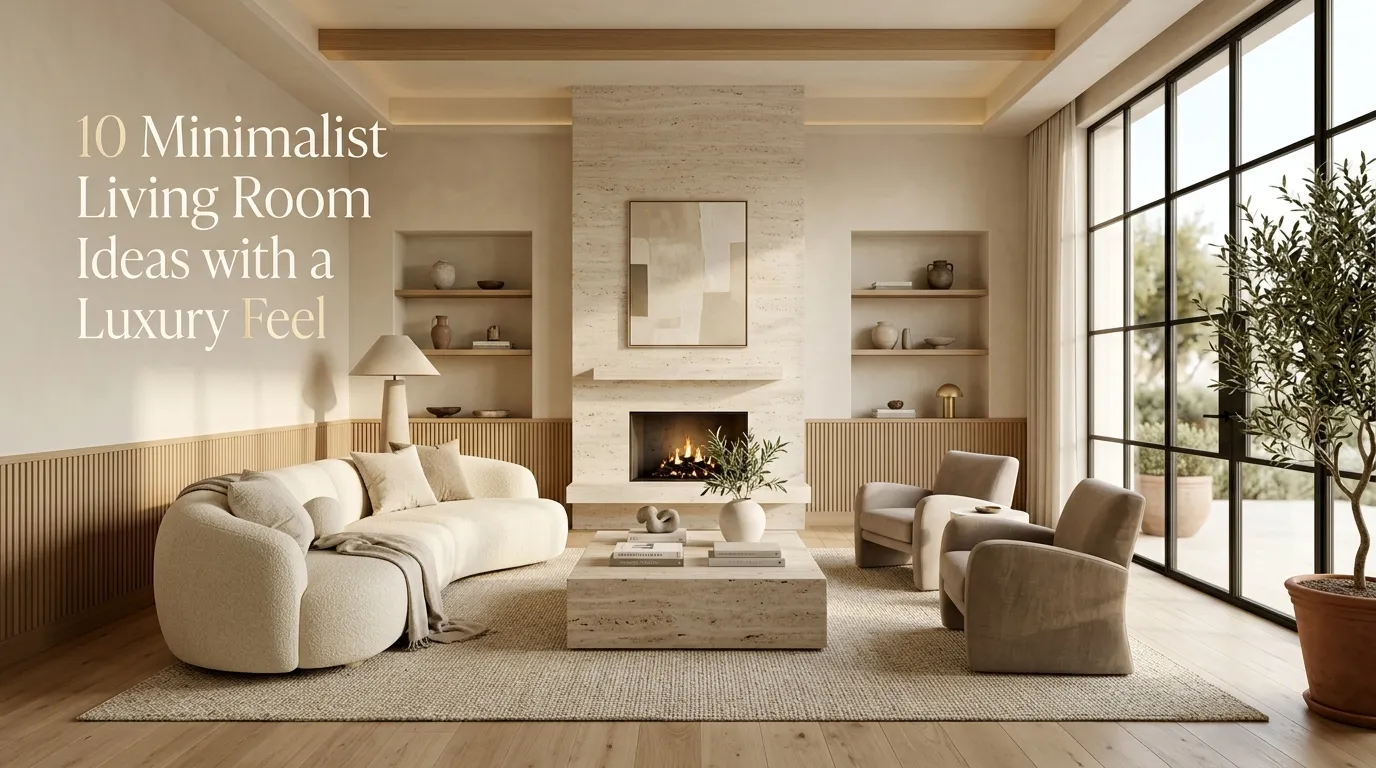
10 Minimalist Living Room Ideas with a Luxury Feel
There’s a difference between a minimalist living room that feels expensive and one that just feels empty. If you’ve ever tried the “less is more” approach only to end up with a room that reads as bare or unfinished rather than elevated, you’re not alone. The gap between “minimal” and “luxury minimal” almost never comes down to spending more money on more furniture — it comes down to a handful of specific choices about materials, proportion, and restraint.
In my experience working with pared-back spaces, the rooms that feel genuinely luxurious with very little in them share a few common threads: high-quality materials, intentional negative space, and a color story with real depth instead of flat, single-tone neutrals. A mistake many homeowners make when going minimalist is simply removing furniture without replacing it with anything considered. That’s how a room ends up feeling unfinished instead of refined.
This article walks through ten minimalist living room ideas that create a genuinely luxury feel, without requiring a designer budget or a full gut renovation. These are the underlying principles high-end minimalist spaces are built on — the kind you see in boutique hotels and architectural home tours — broken down into changes you can actually make in your own living room.
Each idea below includes the quick benefits, an explanation of why it works, and practical guidance on how to style it. Whether you’re furnishing a room from scratch or editing down a space that already feels cluttered, you’ll find something here worth trying this week.
Table of Contents
- Curated Statement Pieces — Why fewer, better pieces outperform more furniture.
- Rich Neutral Layering — Building depth into a minimalist palette.
- Sculptural Furniture Lines — Choosing shapes that read as intentional.
- Hidden Storage Solutions — Keeping surfaces clear without sacrificing function.
- Quality Over Quantity — Where to spend and where to skip.
- Soft Ambient Lighting — The detail that makes a room feel expensive.
- Natural Stone Accents — Timeless material choices for a minimal space.
- Tailored Window Treatments — Framing the room with precision.
- Monochrome Color Depth — Avoiding the flat, one-note look.
- Negative Space Balance — Using empty space as a design tool.
1. Curated Statement Pieces
Quick Benefits
- Creates a focal point without visual clutter
- Makes each piece of furniture feel intentional
- Elevates the entire room’s perceived value
- Reduces the temptation to over-furnish
- Works in both small and large living rooms
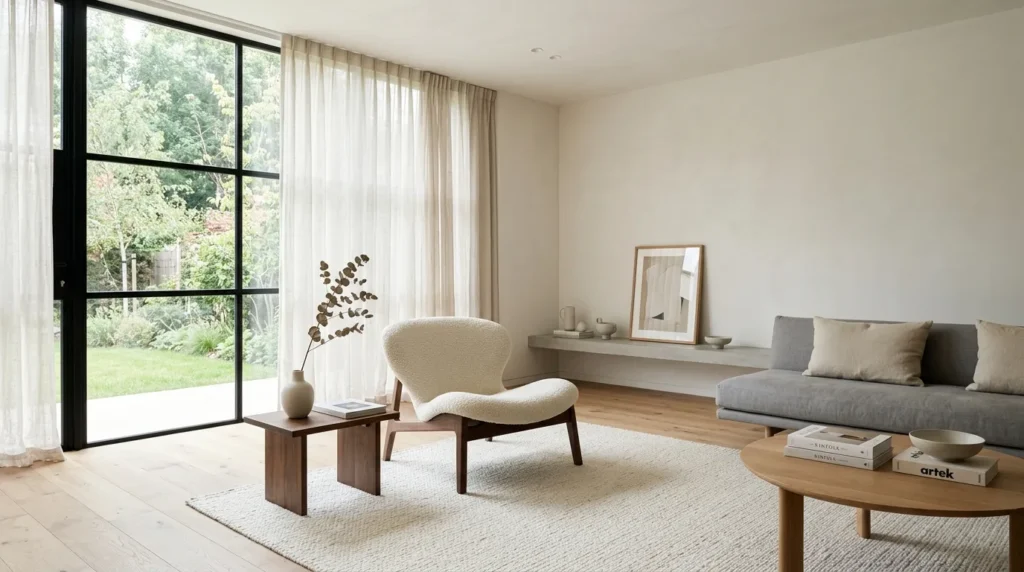
Why It Works A luxury minimalist room typically has one or two pieces that do all the visual work — a sculptural chair, a striking coffee table, an oversized piece of art — surrounded by simpler supporting furniture. I’ve noticed that rooms filled with several “pretty good” pieces almost always read as less luxurious than rooms with one genuinely well-chosen piece and a lot of restraint around it. The statement piece gives the eye somewhere to land, which is exactly what makes minimal spaces feel curated instead of empty.
How To Style It Choose one piece to be the visual anchor of the room — often the coffee table, an accent chair, or a large art piece — and build everything else around it in a supporting role. Keep surrounding furniture simple in shape and color so it doesn’t compete. If budget is limited, invest in the one piece that will be seen and used most, such as the sofa or coffee table, rather than spreading a budget thin across many smaller items.
2. Rich Neutral Layering
Quick Benefits
- Adds depth without introducing visual clutter
- Prevents the room from feeling flat or cold
- Creates warmth within a restrained palette
- Photographs beautifully in natural light
- Works across warm and cool color schemes
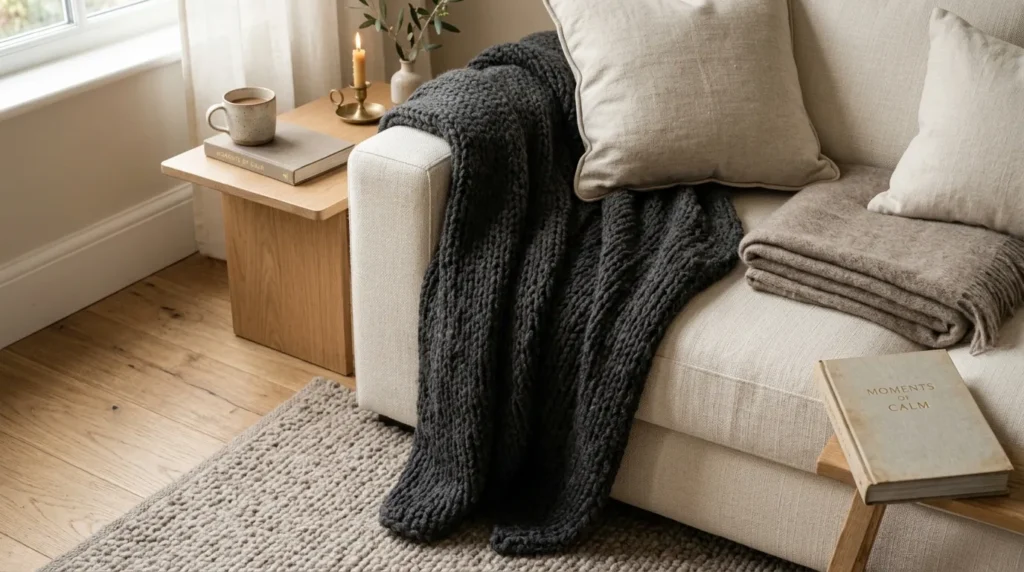
Why It Works A common mistake in minimalist design is using a single neutral shade throughout an entire room, which can flatten the space rather than elevate it. Luxury minimalist rooms almost always layer several neutral tones — a deep charcoal, a warm cream, a soft taupe — to create depth while still staying within a restrained palette. That’s why many designers recommend building a room around three neutral tones of varying depth rather than one flat shade repeated everywhere.
How To Style It Choose a dominant neutral for large surfaces like walls and sofas, then layer in a lighter and a darker tone through rugs, pillows, and accessories. Stick to warm or cool undertones consistently to avoid a mismatched feel. A single deep neutral, like charcoal or espresso, used sparingly on one piece of furniture can add the depth a flat beige or white room is often missing.
3. Sculptural Furniture Lines
Quick Benefits
- Adds visual interest without pattern or color
- Creates a gallery-like, curated feeling
- Draws the eye through shape rather than clutter
- Works well as a single statement piece
- Elevates even a simple, neutral room
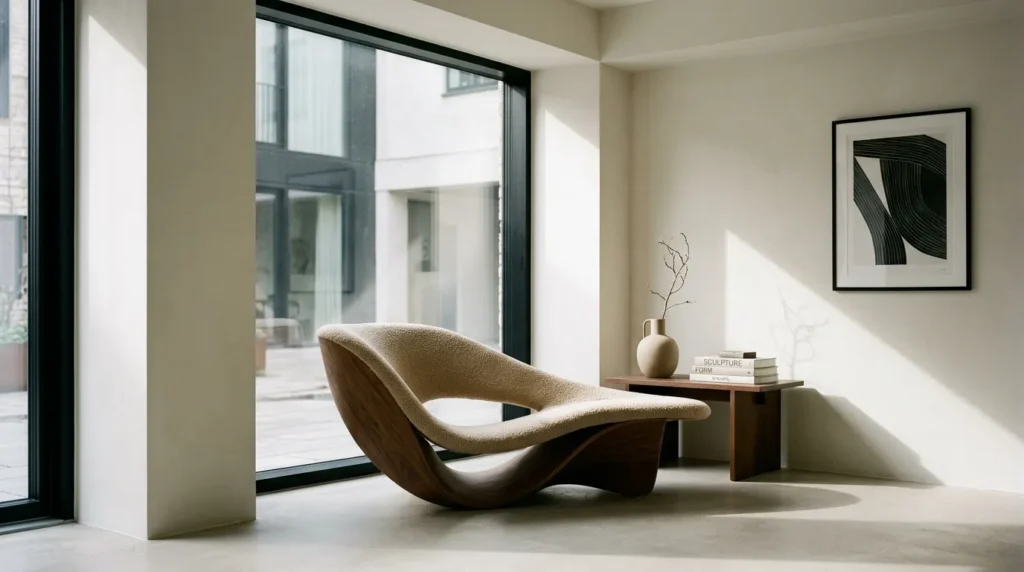
Why It Works When color and pattern are minimal, shape becomes one of the most important design tools available. A curved chair, an organic-shaped coffee table, or an arched mirror introduces visual interest purely through form, which reads as intentional and considered rather than sparse. In my experience, adding even one sculptural piece to an otherwise straight-lined room instantly makes the space feel more designed, almost like a gallery installation rather than a furniture showroom.
How To Style It Introduce one curved or organically shaped piece — a chair, table, or lighting fixture — into a room of otherwise straight lines to create contrast. Avoid overdoing sculptural shapes throughout the whole room, since one or two pieces read as intentional while too many can feel busy. Place sculptural furniture where it will be seen clearly, such as near a window or as the first thing visible from the entryway.
4. Hidden Storage Solutions
Quick Benefits
- Keeps surfaces clear and visually calm
- Supports everyday function without visual clutter
- Makes small rooms feel significantly larger
- Reduces the need for open shelving or clutter
- Essential for maintaining a true minimalist look
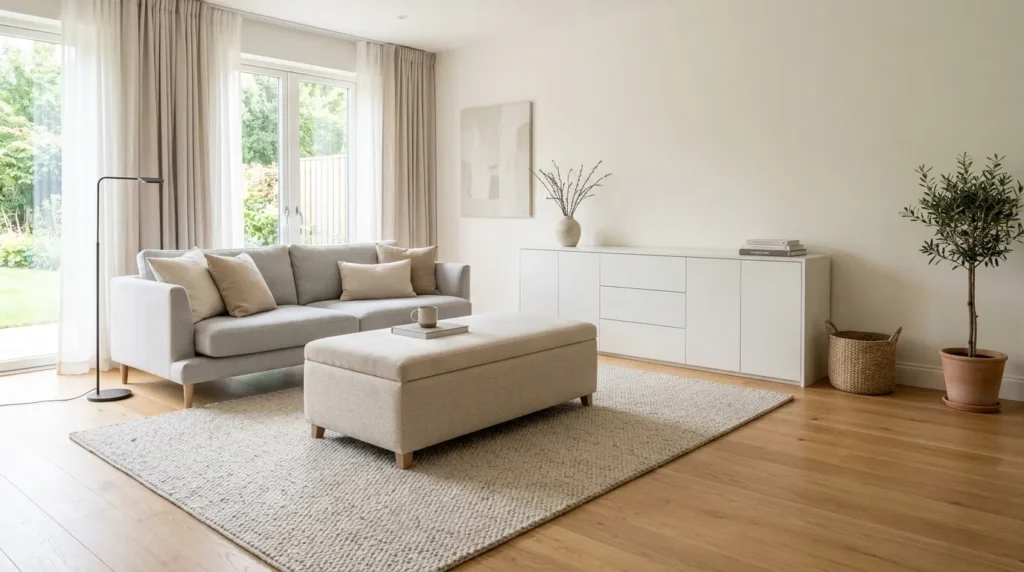
Why It Works Minimalist rooms only stay minimal if there’s somewhere for everyday items to actually go. A mistake many homeowners make is pursuing a pared-back look without addressing storage, which leads the space to become cluttered again within weeks. Built-in cabinetry, storage ottomans, and furniture with concealed compartments allow a room to function normally while keeping surfaces clear — which is ultimately what makes a minimalist room feel luxurious rather than just empty.
How To Style It Choose a coffee table or console with a drawer or hidden shelf for remotes, coasters, and everyday items. A storage ottoman can double as a footrest and hide blankets or magazines. If built-in storage is an option, floor-to-ceiling cabinetry with flush, handle-less doors maintains the clean lines minimalist rooms depend on. Keep visible storage, like open shelving, to a strict minimum of curated objects only.
5. Quality Over Quantity
Quick Benefits
- Fewer purchases that last significantly longer
- Better cost-per-use value over time
- Creates a more cohesive, elevated look
- Reduces decision fatigue when furnishing a room
- Avoids the cluttered feel of impulse purchases
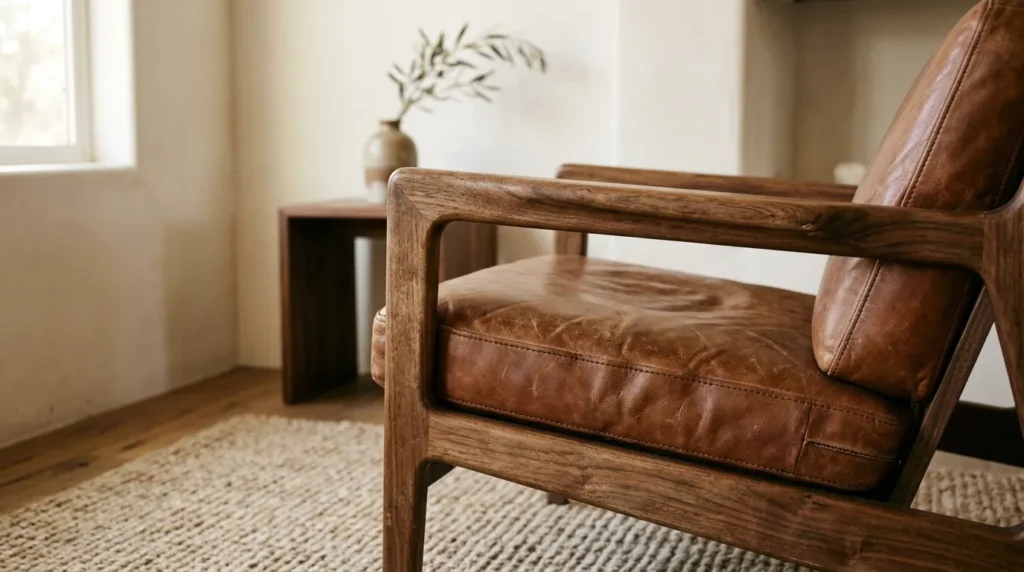
Why It Works Luxury minimalism is fundamentally about spending intentionally rather than spending less. A single well-made sofa in a natural material will typically outperform, both visually and functionally, three lower-quality pieces bought to fill space. One simple trick I always suggest is asking whether a piece would still feel special in five years before buying it — if the answer is no, it’s usually not the right fit for a minimalist room, where every item carries more visual weight.
How To Style It Prioritize investment pieces for items used daily and seen most — the sofa, the rug, the coffee table. Choose natural materials like solid wood, leather, or high-quality linen over synthetic alternatives, since they tend to age better and photograph more richly. Resist filling empty spots in a room just because they’re empty; an intentional gap often looks better than an unnecessary filler piece.
6. Soft Ambient Lighting
Quick Benefits
- Instantly elevates the mood of any room
- Softens harsh overhead lighting
- Creates a warm, hotel-like atmosphere
- Highlights architectural and furniture details
- Inexpensive way to add a luxury feel
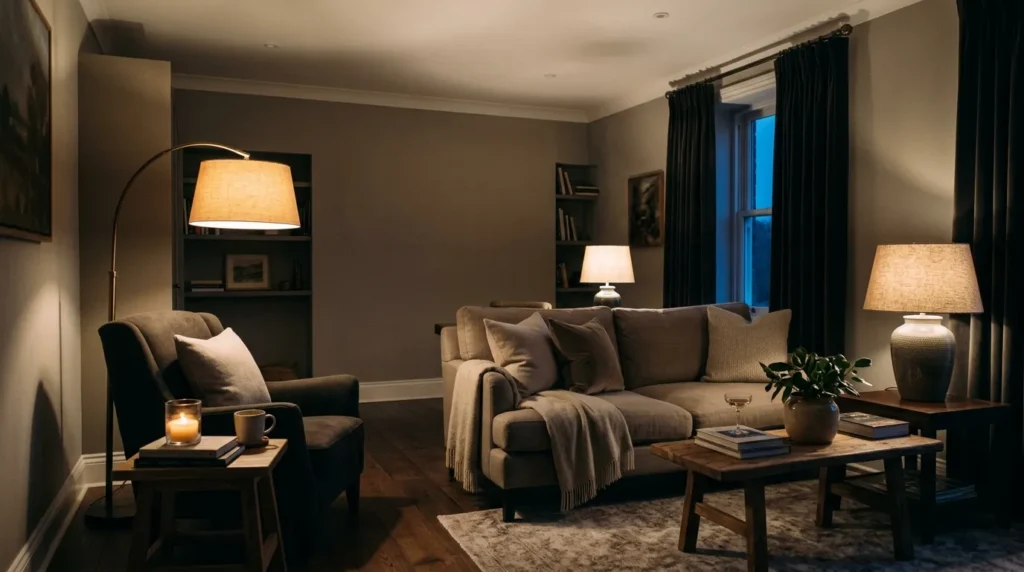
Why It Works Lighting is one of the most underrated tools in luxury minimalist design. A room with only a single overhead light source tends to feel flat and utilitarian, no matter how nice the furniture is. Layered ambient lighting — floor lamps, table lamps, and hidden accent lighting — creates the kind of warm, soft glow found in boutique hotels and high-end interiors. I’ve seen this idea transform rooms more dramatically, and more affordably, than almost any furniture change.
How To Style It Add at least two additional light sources beyond the main overhead fixture, such as a floor lamp near a reading chair and a table lamp on a console. Choose warm-toned bulbs rather than cool white ones to maintain a soft, inviting glow. Dimmer switches allow the room’s mood to shift from bright and functional during the day to soft and ambient in the evening.
7. Natural Stone Accents
Quick Benefits
- Adds texture and material depth without color
- Elevates the perceived quality of the room instantly
- Introduces natural variation that never feels dated
- Works beautifully in small, curated doses
- Pairs well with wood, linen, and metal finishes
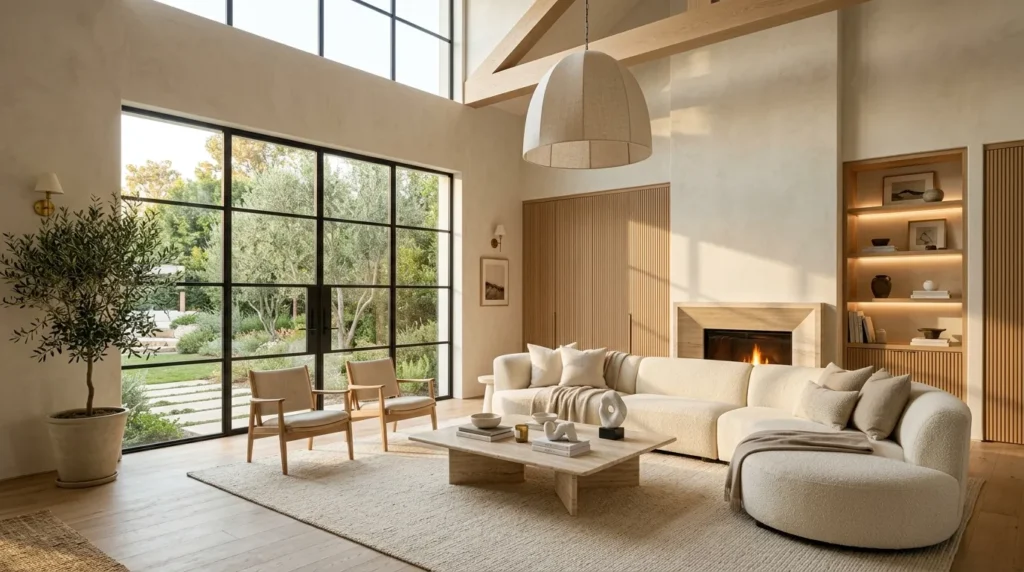
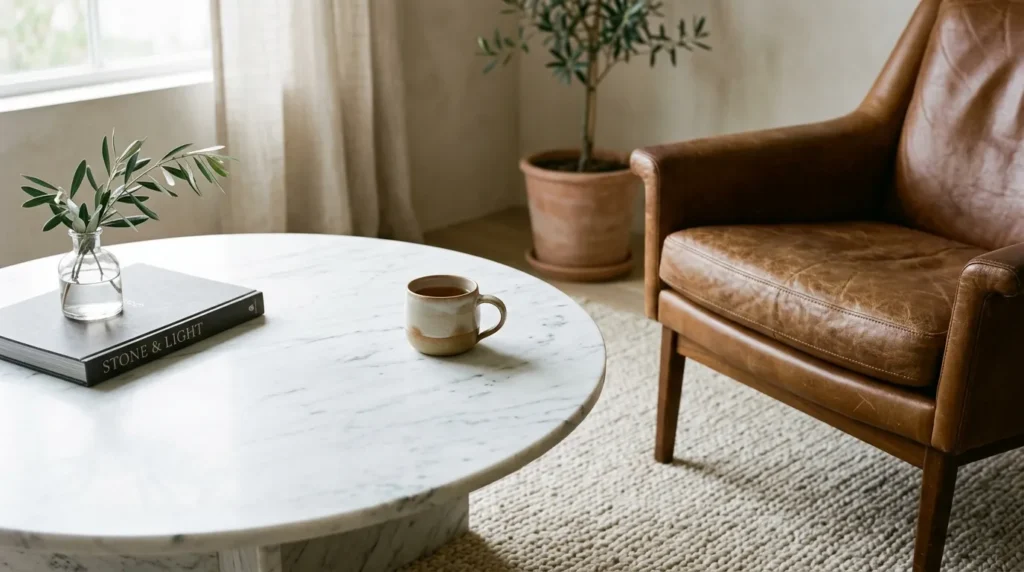
Why It Works Stone is a defining material in luxury minimalist spaces because it introduces natural variation and richness without requiring any color or pattern. A marble or travertine surface catches light differently than a painted or laminate one, adding a sense of quality that’s immediately noticeable, even to guests who couldn’t articulate why the room feels elevated. That’s why many designers recommend at least one stone element in an otherwise pared-back room.
How To Style It A stone coffee table, side table, or fireplace surround works as a strong anchor piece. Smaller touches — a marble tray, a travertine lamp base, stone bookends — introduce the same effect at a lower cost. Pair stone with warm wood or leather to avoid a space that feels cold or overly gallery-like. Keep stone accents to one or two spots so each one reads as intentional.
8. Tailored Window Treatments
Quick Benefits
- Frames the room with a clean, finished look
- Softens natural light without overwhelming the space
- Adds height and makes ceilings feel taller
- Supports a polished, custom appearance
- Works with minimal or fuller drapery styles
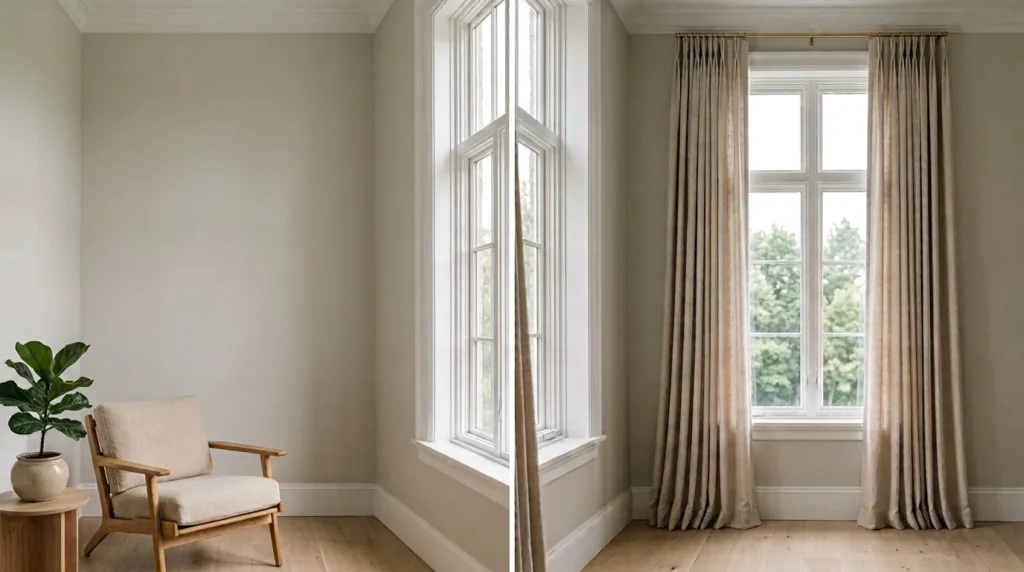
Why It Works Window treatments are often an afterthought in minimalist rooms, but they play a significant role in how “finished” a space feels. Simple, well-fitted curtains or shades read as tailored and intentional, while ill-fitting or mismatched window coverings can undercut an otherwise well-designed room. A mistake many homeowners make is skipping window treatments entirely in the name of minimalism, which can leave a room feeling incomplete rather than clean.
How To Style It Choose a single, simple fabric — linen or a structured cotton blend — in a tone that complements the wall color without matching it exactly. Hang curtain rods close to the ceiling and extend them beyond the window frame to create height and width. For a more architectural, minimal look, consider structured Roman shades or solar shades in a neutral tone instead of traditional drapery.
9. Monochrome Color Depth
Quick Benefits
- Creates a cohesive, elevated color story
- Prevents the flat look of a single shade
- Adds sophistication without introducing pattern
- Works well with both warm and cool palettes
- Photographs as intentional rather than accidental
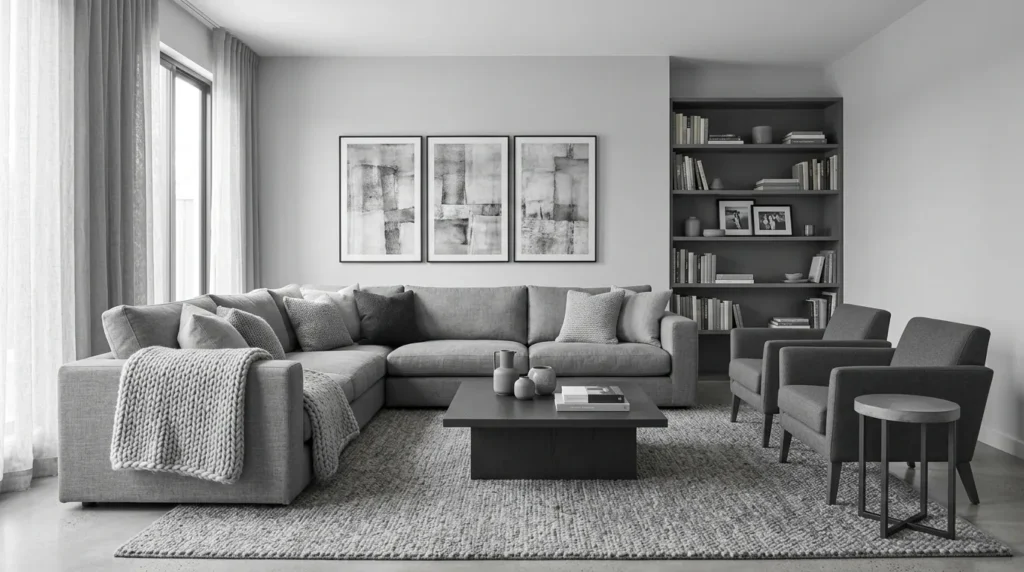
Why It Works Monochrome doesn’t mean one flat color — it means varying shades and tones of a single color family, which is exactly what gives luxury minimalist rooms their depth. A room built entirely in tones of gray, from pale dove to deep charcoal, feels considerably more sophisticated than a room where every surface is the exact same shade. In my experience, this kind of tonal variation is one of the fastest ways to make a minimal room feel expensive rather than plain.
How To Style It Select one color family — gray, taupe, or warm white — and use it across walls, furniture, and textiles at different depths and saturations. Introduce texture within that same color family, like a nubby wool rug in the same tone as the sofa, to add dimension without breaking the monochrome effect. Reserve any contrast, like black or a deep wood tone, as a small, deliberate accent.
10. Negative Space Balance
Quick Benefits
- Allows key pieces to stand out and breathe
- Creates a calm, uncluttered atmosphere
- Signals intentional design rather than empty space
- Improves flow and functionality in the room
- The defining trait of true luxury minimalism
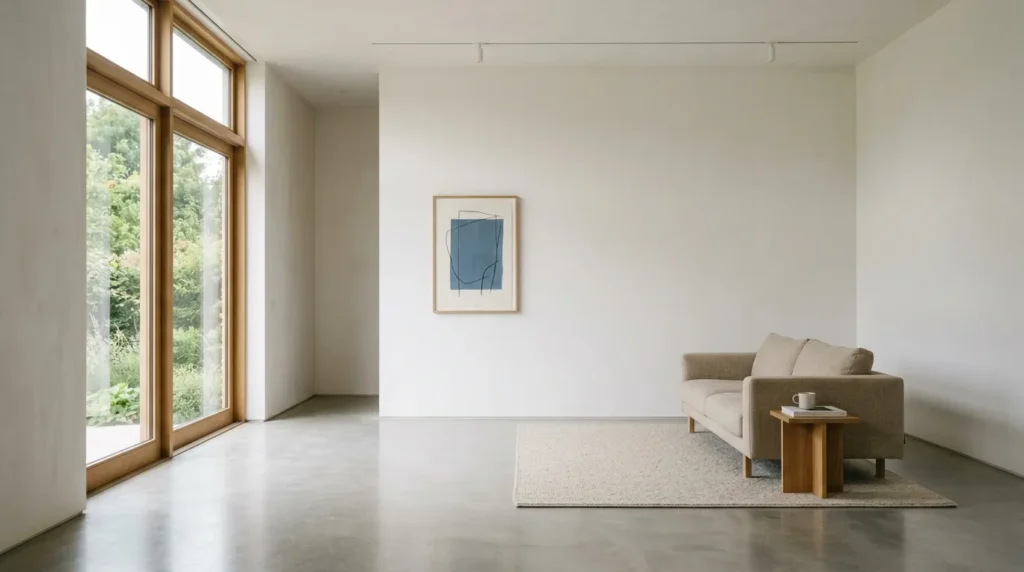
Why It Works Negative space — the empty areas between and around furniture — is arguably the most important and most overlooked element of luxury minimalist design. Rooms that feel truly elevated almost always have breathing room around key pieces rather than furniture pushed to the edges to maximize floor space. If you’re anything like me, your instinct might be to fill an empty corner, but resisting that urge is often what separates a merely sparse room from a genuinely luxurious one.
How To Style It Leave visible floor space around major furniture pieces rather than pushing everything against the walls. Resist the urge to fill every empty corner or blank wall — a single well-placed piece of art on an otherwise bare wall often reads as more intentional than a fully decorated one. Walk through the room and identify any area that feels crowded or unnecessary, then remove rather than add.
Frequently Asked Questions
What makes a minimalist living room feel luxurious instead of empty? The difference comes down to material quality, layered neutral tones, and intentional negative space rather than simply removing furniture. A luxury minimalist room feels curated, with each piece serving a clear purpose, rather than sparse or unfinished.
Do I need to buy expensive furniture for a luxury minimalist look? Not necessarily. Prioritizing a few well-made, natural-material pieces over many lower-cost items typically creates a more elevated look than an expensive but crowded room. Quality and restraint matter more than overall spend.
How do I add warmth to a minimalist living room without clutter? Layer neutral tones, add soft ambient lighting, and introduce natural textures like wool, linen, or wood. These additions create warmth through material and light rather than through extra decor or color.
Is monochrome the same as minimalist? Not exactly. Minimalist refers to reduced clutter and intentional furnishing, while monochrome refers to using a single color family at varying depths. The two often work well together but aren’t interchangeable concepts.
How much furniture is too much in a minimalist living room? If a room feels crowded when walking through it, or if furniture is pushed against every wall to make room, it’s likely overfurnished. Leaving visible negative space around key pieces is a good general guide.
Can a small living room still achieve a luxury minimalist look? Yes, and in some cases small rooms benefit even more, since fewer pieces are needed to fill the space. Focus on one or two quality statement pieces and consistent neutral tones to maximize the effect.
What lighting works best for a luxury minimalist living room? Layered, warm-toned lighting from multiple sources — a floor lamp, a table lamp, and dimmable overhead lighting — creates the soft, ambient feel associated with high-end minimalist interiors, rather than a single bright overhead light.
Final Thoughts
A minimalist living room only feels luxurious when restraint is paired with intention. The ten ideas above — from curated statement pieces to negative space balance — work because they focus on quality, material depth, and deliberate choices rather than simply having less furniture in the room. That distinction is what separates a genuinely elevated space from one that just feels bare.
You don’t need to redesign the entire room at once to see a difference. Start with one or two ideas and gradually build a space that reflects your style and supports everyday comfort. Swapping in warmer lighting, editing down clutter, or investing in a single quality piece can shift the entire feel of a room without a full renovation.
The most elevated minimalist rooms are built on these fundamentals rather than trends, which is exactly why they continue to look considered and current for years. Pick the idea that feels most doable this week, and let the rest come together over time.
Related Articles
- 10 Neutral Living Room Ideas That Never Go Out of Style
- Small Living Room Layout Ideas That Actually Work
- How to Layer Rugs Like a Designer
- Modern Farmhouse Decor on a Budget
- DIY Accent Wall Ideas for Renters