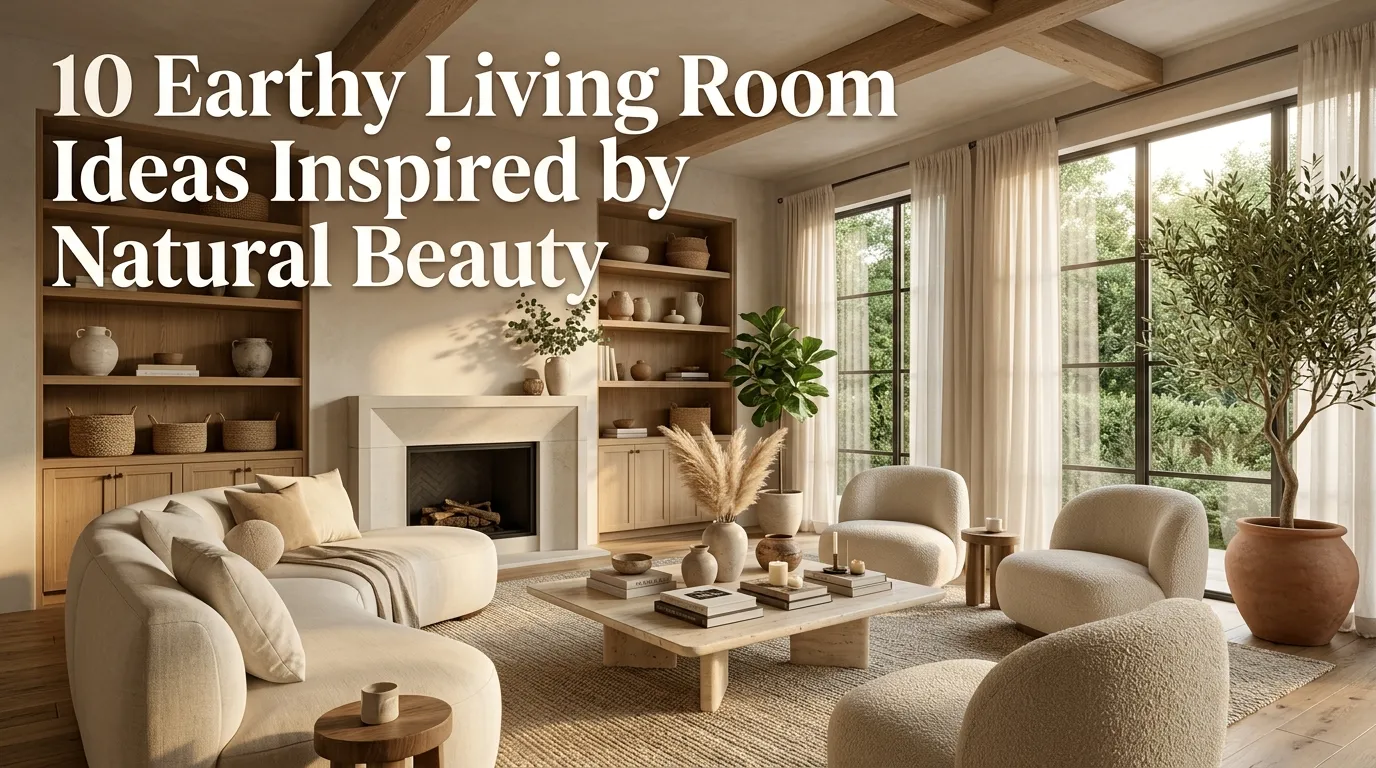
10 Earthy Living Room Ideas Inspired by Natural Beauty
There’s a reason certain living rooms feel instantly calming the moment you walk in — they borrow directly from the outdoors. Clay tones, raw wood, stone textures, muted greens: these are colors and materials we’re wired to find soothing, because they mirror the natural world rather than anything manufactured.
In my experience, earthy design is one of the more forgiving styles to work with, because nature itself rarely clashes. A warm terracotta pairs naturally with sage green, raw wood pairs naturally with stone, and none of it requires the kind of precise color-matching that other styles demand. A mistake many homeowners make with earthy design, though, is assuming it only works with heavy, rustic furniture, when in reality it can look just as at home in a modern space as a traditional one.
I’ve noticed that the most successful earthy living rooms draw on nature in layers — color first, then material, then a few organic shapes and finishing touches like dried botanicals or natural light. Skipping straight to color without the material layer often leaves a room looking more “brown” than genuinely earthy and grounded.
This guide covers ten earthy living room ideas inspired directly by natural beauty — from terracotta and stone textures to raw wood grain and mossy green accents. Each idea focuses on bringing a genuine sense of the outdoors inside, whether you’re drawn to warm desert tones, deep forest greens, or the quiet texture of natural stone. If you’re anything like me, you’ll find this is one of the easier styles to build gradually, since so many of these elements can be sourced secondhand or found already growing in your own backyard.
Table of Contents
- Terracotta Clay Accents — Bringing warm, sun-baked clay tones into the room.
- Stone Concrete Textures — Using cool, natural mineral textures for grounding contrast.
- Botanical Print Artwork — Displaying plant and nature-inspired art as a focal point.
- Earthy Color Gradient — Building a palette that moves through natural desert-to-forest tones.
- Dried Botanical Arrangements — Styling with dried branches and grasses instead of fresh flowers.
- Organic Shaped Furniture — Choosing furniture silhouettes inspired by natural forms.
- Natural Light Emphasis — Letting daylight play the same role it does outdoors.
- Mossy Green Accents — Introducing deep, muted greens reminiscent of forest floors.
- Raw Wood Grain Details — Choosing furniture that highlights natural wood imperfections.
- Woven Basket Wall Art — Using natural fiber pieces as sculptural wall decor.
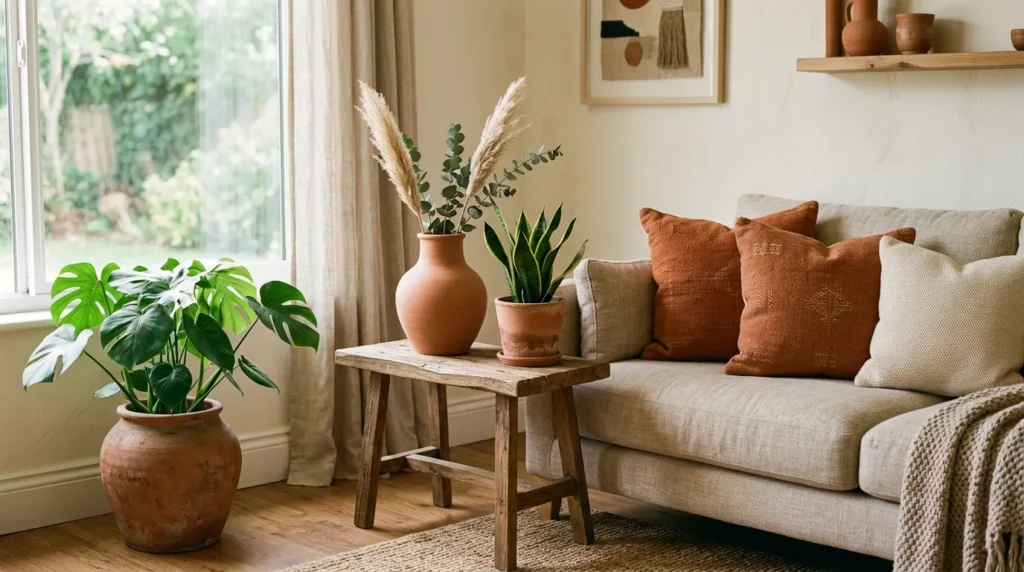
1. Terracotta Clay Accents
Quick Benefits
- Adds warmth without relying on bold, saturated color
- Works beautifully with wood and stone materials
- Suits both modern and traditional earthy rooms
- Easy to introduce through small accessories
- Pairs naturally with greenery and natural light
Why It Works
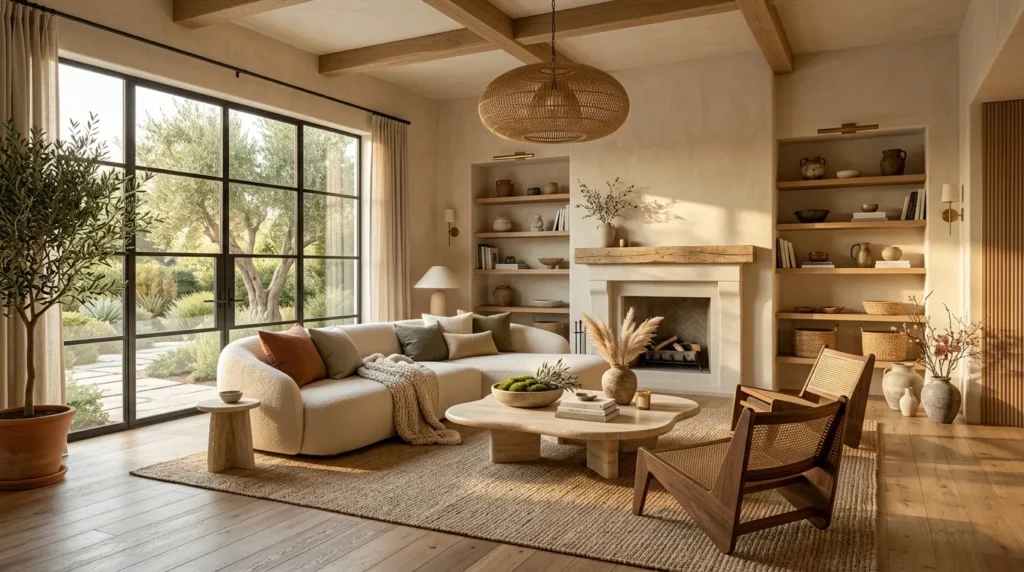
Terracotta has become one of the defining tones of earthy design, and for good reason: it’s the color of sun-baked clay, one of the oldest natural building materials still in use today. One thing that works especially well is using terracotta not as a single bold wall color, but distributed across smaller elements — a vase, a set of planters, a throw pillow — so its warmth reads as a natural accent rather than an overwhelming statement. This works because terracotta’s muted, earthy warmth pairs easily with almost every other natural material without competing for attention.
How To Style It
Introduce terracotta through a few key pieces: a set of unglazed terracotta planters, a ceramic vase, or a woven basket with warm rust undertones. If you want a bolder statement, a terracotta accent wall pairs beautifully with warm wood furniture and green plants. Keep surrounding tones neutral and warm so the terracotta reads as an intentional accent rather than a clash.
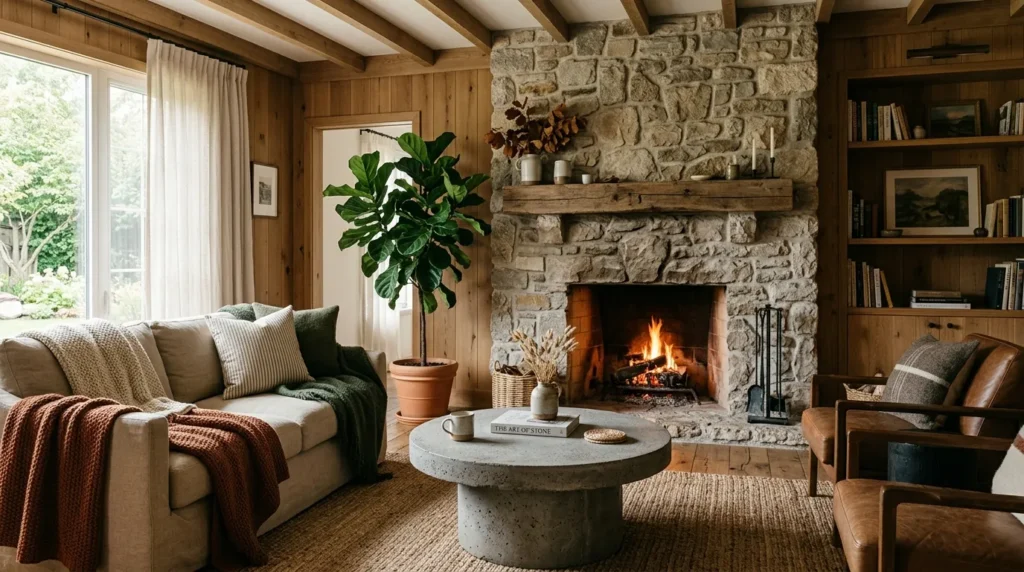
2. Stone Concrete Textures
Quick Benefits
- Adds a cool, grounding contrast to warm tones
- Creates a modern, minimalist earthy feel
- Works well in fireplace surrounds and side tables
- Pairs naturally with wood and greenery
- Suits both rustic and contemporary interpretations
Why It Works
A mistake many homeowners make with earthy design is focusing entirely on warm tones like terracotta and wood, forgetting that stone and concrete are just as natural and add valuable contrast. That’s why many designers recommend incorporating at least one cool, mineral-toned element — a stone side table, a concrete planter, or a natural stone fireplace surround. This works because the coolness of stone balances the warmth of clay and wood tones, creating the same kind of tension found in actual natural landscapes.
How To Style It
A stone or concrete-look side table or coffee table base introduces this texture without a major renovation. If your fireplace already has a plain surround, a natural stone or limestone-look material can transform it into a genuine focal point. Pair stone elements with warm wood and soft textiles nearby so the coolness feels balanced rather than sterile.
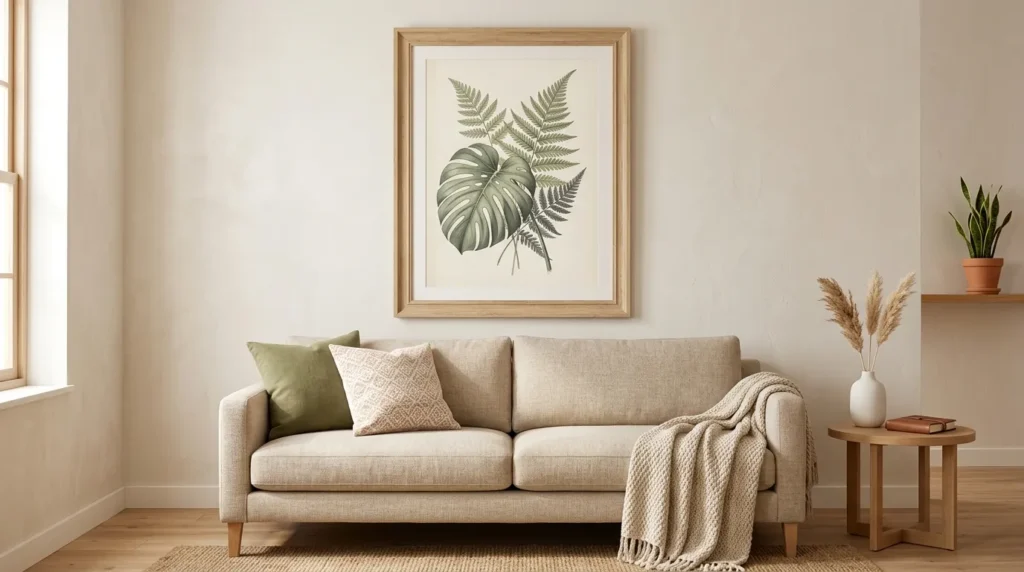
3. Botanical Print Artwork
Quick Benefits
- Reinforces the room’s natural theme through art
- Adds color and texture without physical plants
- Works well in low-light rooms where plants struggle
- Easy to source affordably through prints
- Suits both minimalist and maximalist earthy styles
Why It Works
Not every room has the natural light to support a jungle of live plants, but botanical artwork brings the same organic reference into the space through a different medium. One simple trick I always suggest for earthy rooms with limited plant success is leaning on botanical prints — large leaf illustrations, pressed-flower-style art, or abstract nature photography — to reinforce the natural theme visually. This works because it satisfies the same desire for organic imagery without depending on the actual maintenance and light requirements live plants need.
How To Style It
Choose one or two larger botanical prints rather than many small ones for the most impactful placement, ideally above a sofa or console. Frame them in natural wood rather than metal or glossy black for a more cohesive earthy look, and choose muted, natural color palettes within the art itself rather than bright, saturated florals.
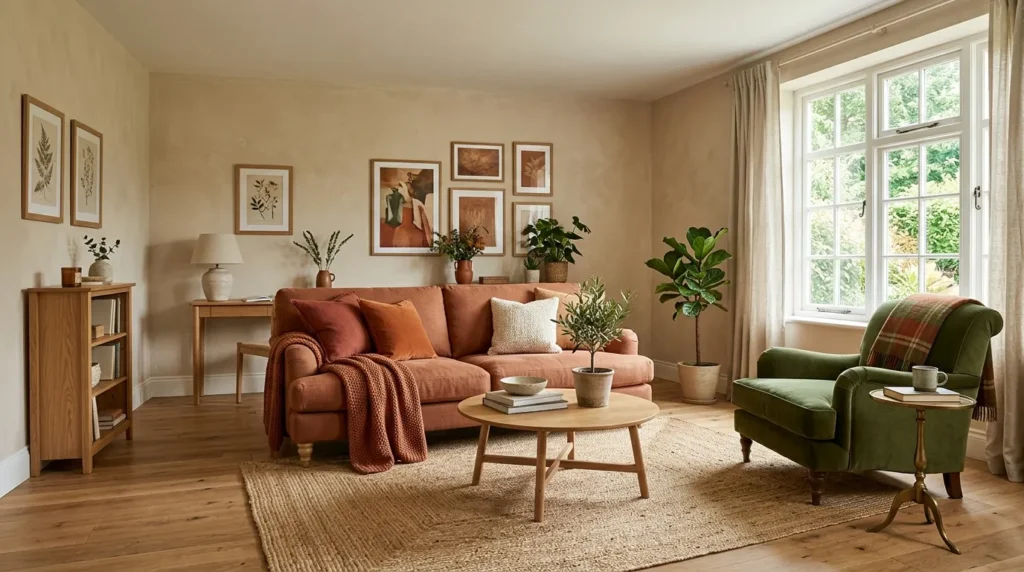
4. Earthy Color Gradient
Quick Benefits
- Creates a cohesive, nature-inspired palette
- Works across warm and cool tones together
- Prevents an earthy room from feeling one-note brown
- Easy to build gradually over time
- Suits nearly any furniture style already owned
Why It Works
A mistake many homeowners make when attempting earthy design is sticking to a single tone, like all-brown or all-terracotta, which can start to feel flat and monochromatic. I’ve noticed the most successful earthy rooms build a gradient across the natural spectrum — warm clay and rust, moving through sandy neutrals, into deeper mossy greens and soft charcoal. This works because it mirrors how color actually appears in nature, where warm and cool, light and dark tones sit side by side rather than in isolation.
How To Style It
Choose a base neutral (sand, oatmeal, or warm gray) for your largest surfaces, then layer in terracotta, deep green, and a touch of charcoal or espresso brown through furniture, textiles, and accessories. Aim for the palette to feel like a walk through changing terrain — desert to forest — rather than a single repeated shade.
5. Dried Botanical Arrangements
Quick Benefits
- Lasts far longer than fresh flowers
- Adds texture without ongoing maintenance
- Works beautifully with earthy, muted color palettes
- Affordable and often free to source locally
- Easy to rearrange and refresh seasonally
Why It Works
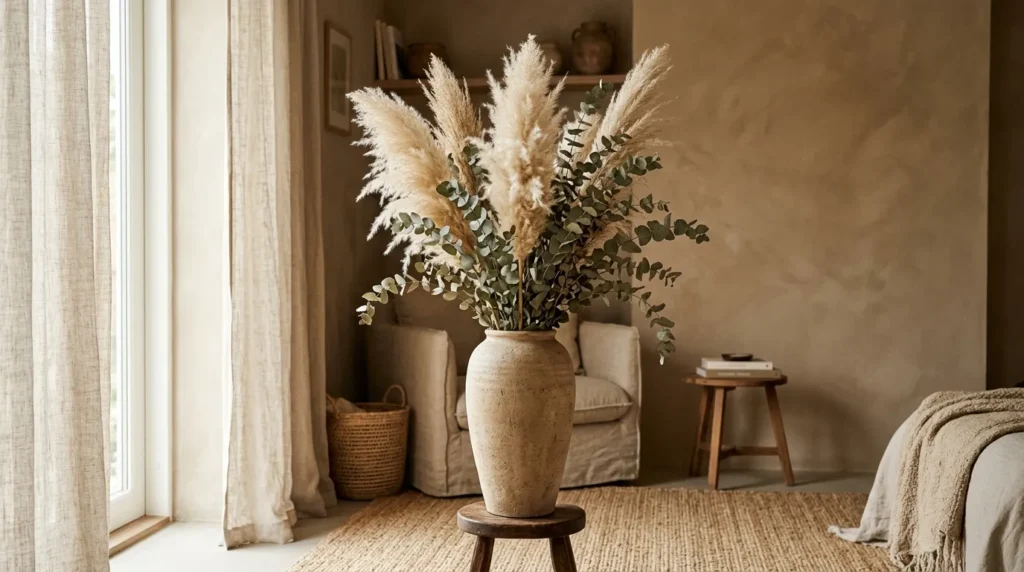
Fresh flowers are lovely but short-lived, and their bright colors can sometimes clash with a more muted earthy palette. One thing that works especially well instead is dried botanicals — pampas grass, dried eucalyptus, wheat stalks, or seed pods — which naturally carry the same muted, warm tones already found throughout an earthy room. This works because dried arrangements age gracefully rather than wilting, and their neutral, sun-bleached coloring blends seamlessly into a natural palette rather than standing apart from it.
How To Style It
A tall vase of dried pampas grass or branches in a corner makes a strong, low-maintenance statement, while smaller dried arrangements work well on a coffee table or shelf. Look for materials with visible texture and natural imperfection rather than dyed or artificially preserved florals, which can look less authentic to the earthy aesthetic.
6. Organic Shaped Furniture
Quick Benefits
- Softens the room with nature-inspired silhouettes
- Adds visual interest without added color or pattern
- Works well as a single statement piece
- Complements both modern and rustic earthy styles
- Creates a memorable, distinctive focal point
Why It Works
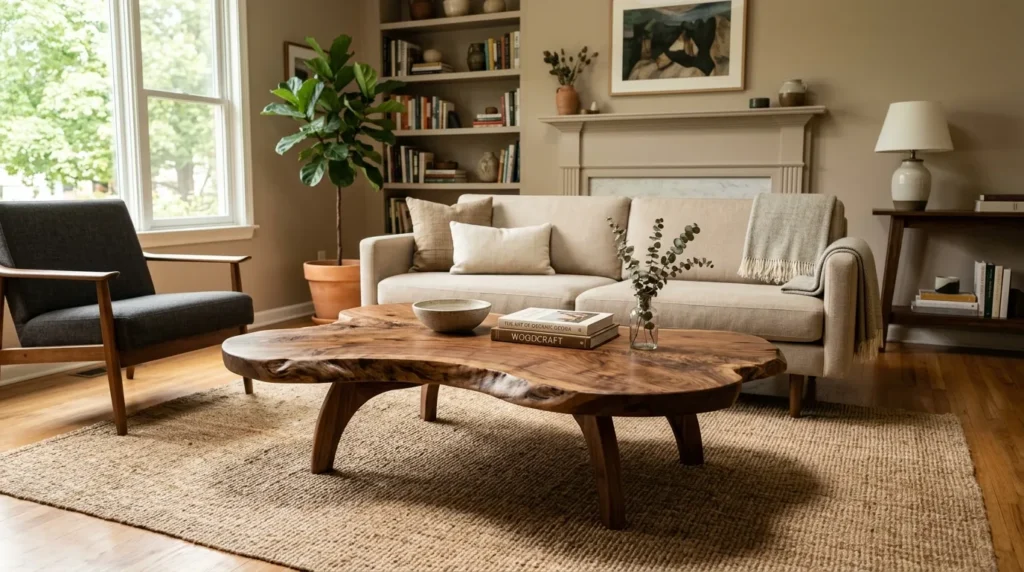
Nature rarely produces perfectly straight lines, and furniture with organic, irregular silhouettes — a freeform coffee table, a curved sofa, an asymmetrical mirror — reflects that same natural imperfection. That’s why many designers recommend at least one organically shaped piece in an earthy room, since it reinforces the natural theme through form, not just color or material. This works because irregular, curved shapes catch light and shadow differently than straight edges, adding subtle visual movement that echoes natural landscapes.
How To Style It
A freeform wood or stone-look coffee table is one of the easiest ways to introduce organic shape without redesigning the whole room. Pair it with simpler, straight-lined furniture elsewhere so the organic piece remains a clear focal point rather than one of several competing shapes.
7. Natural Light Emphasis
Quick Benefits
- Enhances every other earthy element in the room
- Reduces reliance on artificial lighting
- Improves overall mood and warmth
- Costs nothing to prioritize
- Highlights natural textures like wood and stone
Why It Works
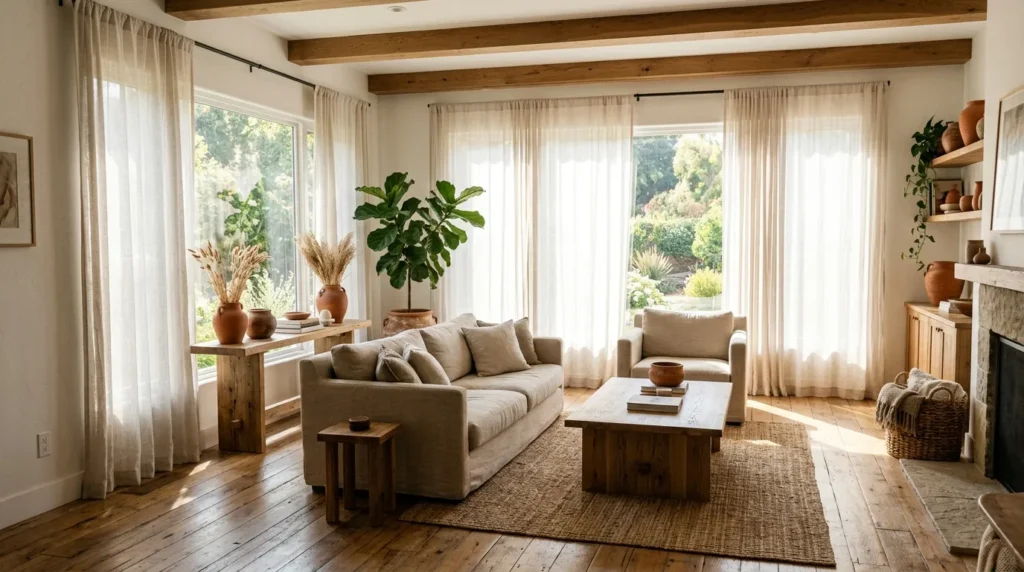
Earthy design is, at its core, about bringing the outdoors in, and natural light plays as important a role as any material choice. In my experience, rooms that maximize available daylight make every other earthy element — wood grain, stone texture, terracotta warmth — look more alive and dimensional than the same materials under artificial light alone. This works because sunlight shifts throughout the day, casting the kind of changing shadow and warmth that mimics the outdoor environment earthy design is meant to evoke.
How To Style It
Keep window treatments minimal and sheer to let in as much natural light as possible, and avoid placing tall furniture directly in front of windows. If privacy is a concern, light linen curtains diffuse harsh light while still allowing most of it through, keeping the room bright and naturally lit throughout the day.
8. Mossy Green Accents
Quick Benefits
- Adds a deep, grounding color without feeling heavy
- Pairs naturally with terracotta and wood tones
- Works well in both large and small doses
- Evokes a genuine forest-floor feeling
- Suits modern and traditional earthy interpretations
Why It Works
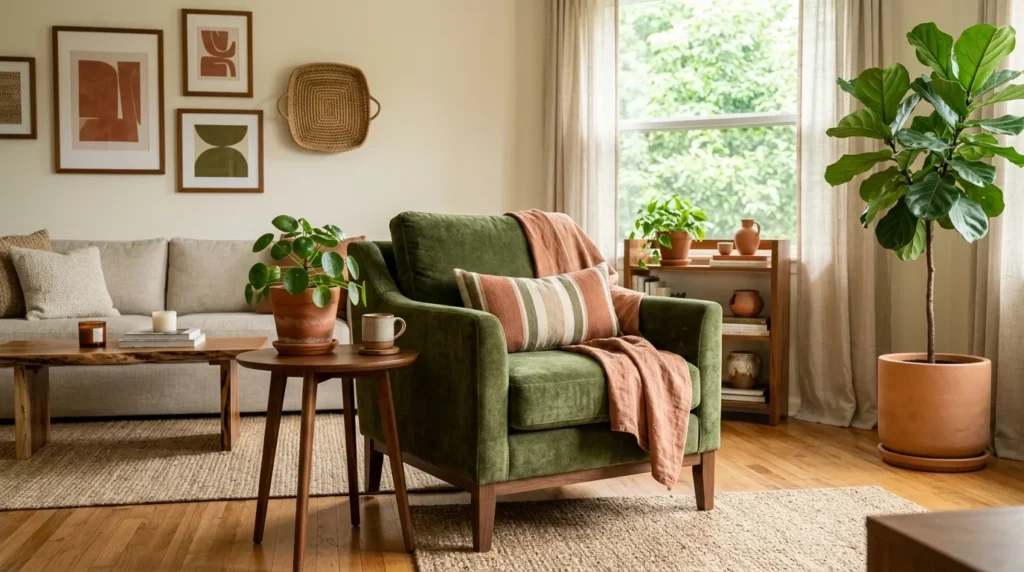
If you’re anything like me, you’ve noticed how a deep, mossy green feels instantly calming in a way brighter greens don’t. This works because muted, mossy greens read as genuinely natural — closer to actual forest foliage than a bright, saturated green — and pair effortlessly with the warm clay and wood tones already common in earthy design. A single mossy green element can ground an entire room’s palette without introducing any visual tension.
How To Style It
A mossy green accent chair, a set of throw pillows, or even a single accent wall works well as the room’s grounding color. Pair mossy green with warm wood, terracotta, and cream tones rather than brighter or cooler colors, which can clash with the muted, natural quality that makes this shade work so well.
9. Raw Wood Grain Details
Quick Benefits
- Highlights the natural imperfections of real wood
- Adds authentic texture that manufactured materials can’t replicate
- Works beautifully with stone and clay tones
- Suits both rustic and refined earthy interiors
- Ages gracefully rather than looking dated
Why It Works
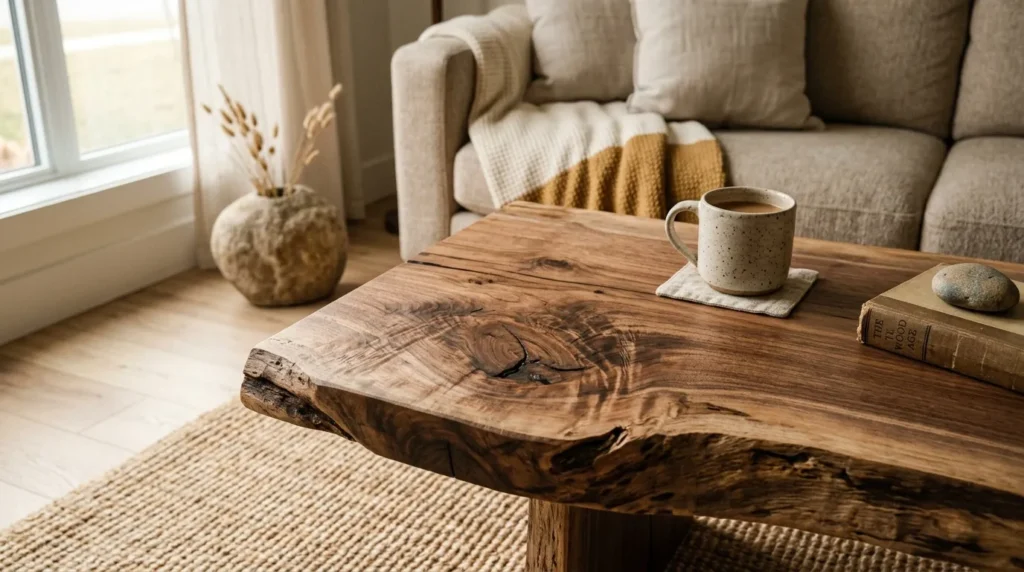
A mistake many homeowners make is choosing heavily finished, uniform wood furniture when raw or lightly finished wood — with visible grain, knots, and natural variation — reinforces the earthy aesthetic far more convincingly. One thing that works especially well is choosing furniture that celebrates rather than hides the wood’s natural character, since this variation is exactly what separates authentic, nature-inspired design from something that merely looks brown.
How To Style It
Look for furniture with a matte or lightly oiled finish rather than a high-gloss lacquer, which can obscure the wood’s natural texture. Live-edge coffee tables, raw wood shelving, or a simple unfinished wood bench all showcase this quality well. Pair raw wood pieces with stone or terracotta accents so the natural materials read as a cohesive, intentional pairing.
10. Woven Basket Wall Art
Quick Benefits
- Adds sculptural texture without traditional framed art
- Reinforces the room’s handmade, natural feel
- Affordable and easy to source
- Works well in clusters or as a single statement
- Suits nearly any earthy or natural design style
Why It Works
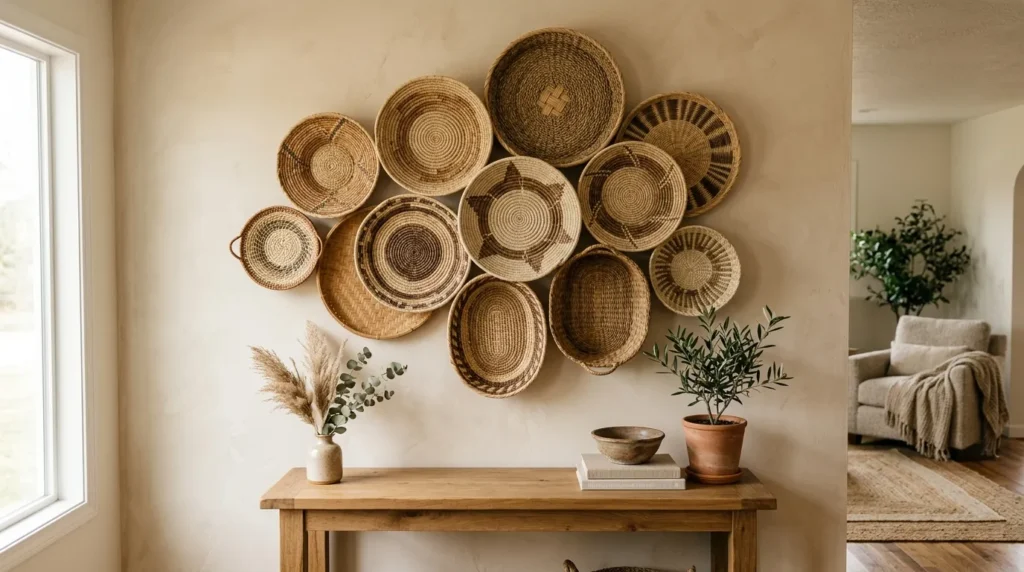
Traditional framed art isn’t the only option for filling wall space in an earthy room. One simple trick I always suggest is arranging woven baskets — the kind typically used for storage — directly on the wall as sculptural decor instead. This works because their natural fiber texture and handmade irregularity add genuine organic character, reinforcing the room’s natural theme in a way flat, framed art can’t fully replicate.
How To Style It
Choose baskets of varying sizes and shapes and arrange them in a loose, asymmetrical cluster on a large blank wall, mixing flat and shallow basket styles for visual variety. Keep the surrounding wall color neutral so the natural fiber texture stands out clearly against the background.
Frequently Asked Questions
What colors define an earthy living room?
Earthy living rooms typically draw from warm terracotta, sandy neutrals, deep mossy green, and raw wood tones, often layered together in a gradient that moves from warm to cool rather than sticking to a single shade.
Do I need real plants for an earthy living room?
No. While plants complement the style well, botanical artwork and dried arrangements achieve a similar natural feel without the maintenance real plants require, especially in rooms with limited natural light.
Can earthy design work in a modern living room?
Yes. Earthy design pairs naturally with modern furniture through material choices like raw wood, stone, and terracotta, without necessarily requiring a rustic or traditional furniture style.
What’s the easiest earthy living room idea to start with?
Dried botanical arrangements and terracotta accents are the easiest and most affordable starting points, since both can be introduced through small, inexpensive additions rather than furniture changes.
Is stone or concrete necessary for earthy design?
Not necessary, but including at least one cool, mineral-toned element helps balance the warmth of terracotta and wood, creating the same natural contrast found in real landscapes.
How do I keep an earthy room from looking too brown?
Building a full color gradient — from warm terracotta through sandy neutrals to mossy green and charcoal — prevents the room from reading as one flat, monochromatic brown tone.
Conclusion
Earthy living room design succeeds because it borrows directly from the natural world, where warm clay, cool stone, raw wood, and muted green already coexist effortlessly. From terracotta accents and dried botanicals to organic furniture shapes and raw wood grain, the ten ideas above offer a genuine, grounded way to bring the outdoors into your living space without relying on any single trend.
Start with one or two ideas and gradually build a space that reflects your style and supports everyday comfort. A dried botanical arrangement or a few terracotta accents cost very little and often make an immediate difference, before moving on to bigger changes like stone surfaces or raw wood furniture. Give each change room to settle before adding the next, and let your earthy palette develop its own natural rhythm over time.
Related Articles
- Neutral Living Room Ideas
- Cozy Living Room Ideas
- Living Room Inspo Ideas
- Modern Farmhouse Decor
- DIY Accent Wall Ideas