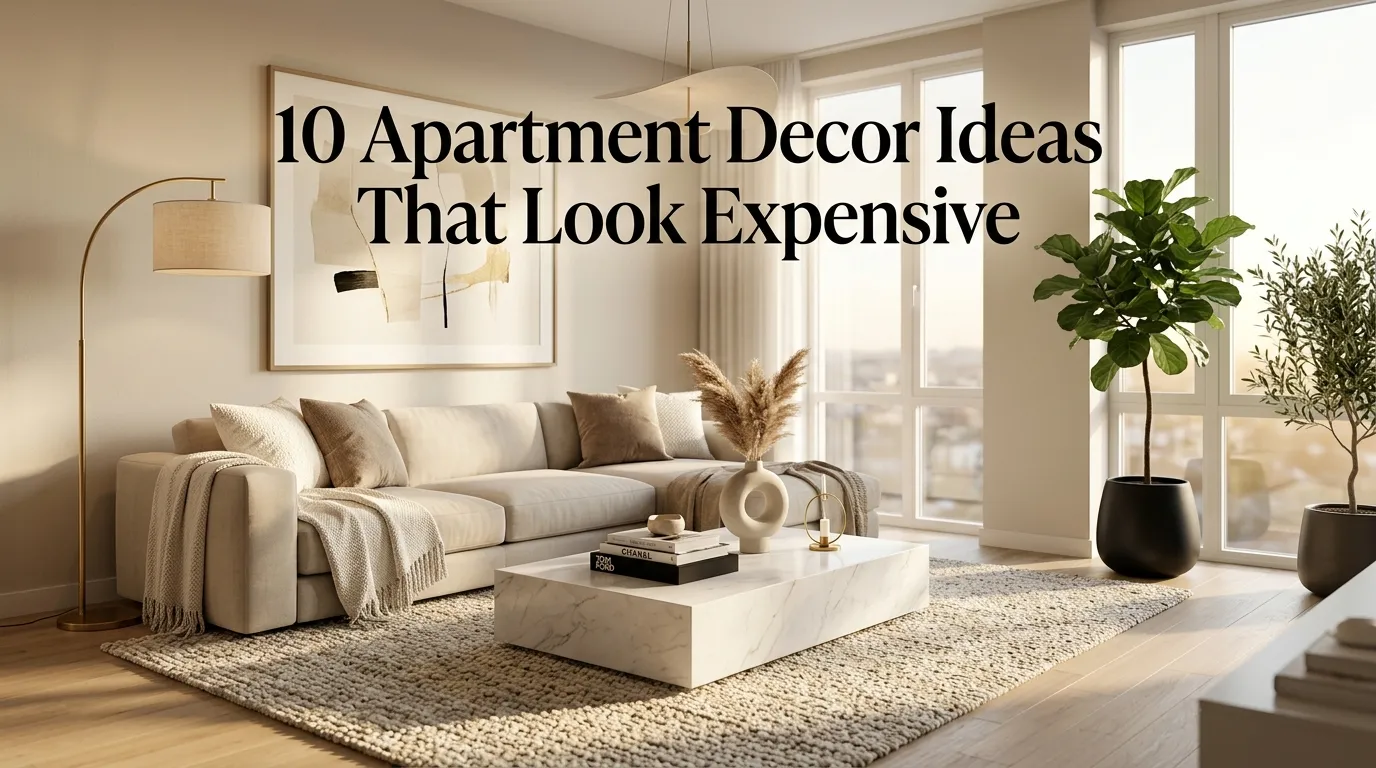
10 Apartment Decor Ideas That Look Expensive
Introduction
Creating a stylish apartment doesn’t require a huge budget; it’s about choosing elements that feel luxurious, curated, and cohesive. Apartment Decor that looks expensive often involves clever layering, texture mixing, and strategic placement of furniture and accessories. For USA renters and homeowners alike, transforming a small or mid-sized apartment into a space that feels high-end is not only possible but also fun. With thoughtful choices, you can create rooms that impress guests and provide a comfortable sanctuary without overspending on designer pieces.
The key lies in balancing visual appeal and functionality. Using neutral palettes, statement pieces, and personalized touches allows spaces to feel both sophisticated and lived-in. From luxurious lighting to textured textiles, the right elements can elevate even modest interiors. Each of these ideas focuses on practical implementation while ensuring a Pinterest-ready aesthetic, offering homeowners a blueprint for interiors that are visually striking, functional, and feel like they cost far more than they actually did. Let’s explore these apartment decor strategies that exude style and elegance.
1. Layered Lighting
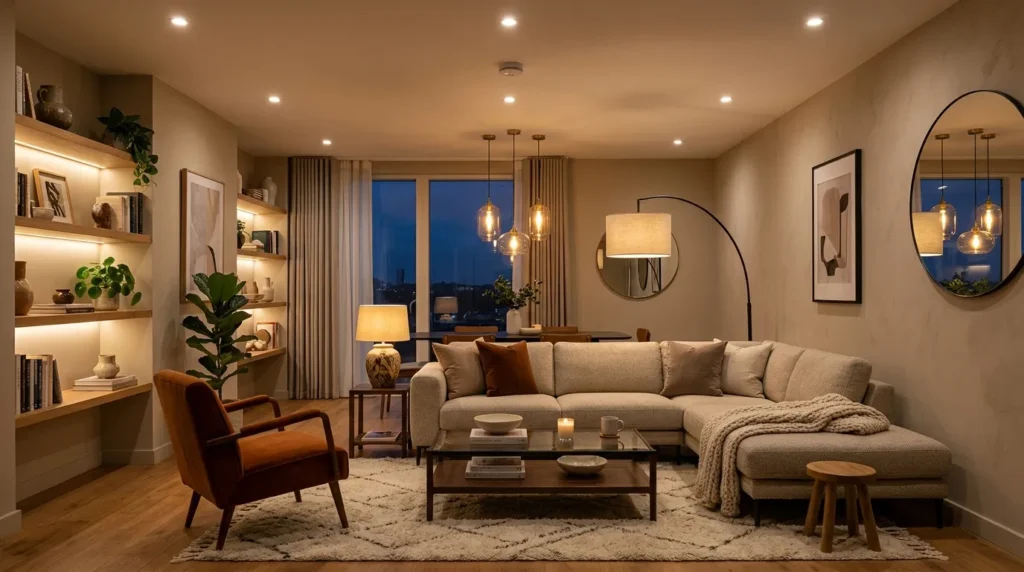
- Combines overhead, accent, and task lighting
- Enhances ambiance and mood throughout the apartment
- Highlights architectural features and décor
- Works with LED, pendant, floor, and table lamps
- Creates a warm, inviting environment
Layered lighting is one of the most effective ways to make an apartment feel high-end. Combining ceiling lights with wall sconces, table lamps, and subtle LED accents creates depth and sophistication. I’ve noticed that homes with layered lighting feel larger and more welcoming, even in compact spaces. The interplay of soft and bright lighting allows homeowners to set the mood for different activities, from reading to entertaining guests. By thoughtfully selecting fixtures that complement each other, lighting becomes both a functional necessity and a design feature that elevates the overall aesthetic.
The transformation comes from how lighting interacts with the room’s elements. Highlighting textures, artwork, or furniture through directional and accent lighting draws attention to focal points. Dimmer switches add flexibility, allowing spaces to shift from bright and lively to soft and intimate. Floor and table lamps can fill corners and balance darker areas, preventing shadows from making a room feel smaller. Overall, layered lighting adds polish and intentionality, making even a modest apartment look thoughtfully curated and luxurious without major renovations.
2. Statement Rugs
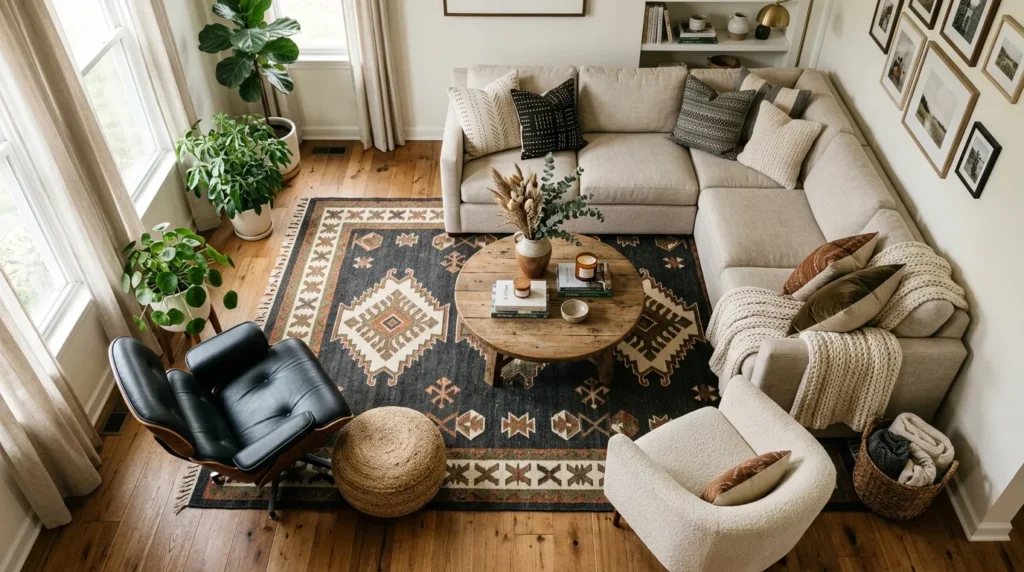
- Anchors seating areas and defines space
- Adds texture, pattern, and color
- Works with neutral or monochromatic palettes
- Can elevate budget-friendly furniture
- Creates visual interest and warmth
A statement rug instantly elevates an apartment’s interior, acting as a central visual anchor that ties furniture and accessories together. Large rugs with intricate patterns, subtle textures, or rich colors create a sense of luxury and cohesion. In my experience, even simple furnishings appear more expensive when placed on a well-chosen rug, especially in open-plan living rooms or studio apartments. Rugs also provide tactile comfort, absorbing sound and making hard flooring feel cozier, which is essential for apartments that often feature tile or laminate surfaces.
The practical transformation comes from how a statement rug defines zones and enhances the visual flow. It separates living, dining, and workspace areas in open layouts while adding sophistication to the color scheme. Layering smaller accent rugs over larger neutral pieces can create depth, while choosing durable, easy-to-clean materials ensures functionality. The right rug complements existing furniture, reflects personal style, and makes the apartment feel intentionally designed, balancing elegance and everyday usability for a polished, expensive look.
3. Gold Accents
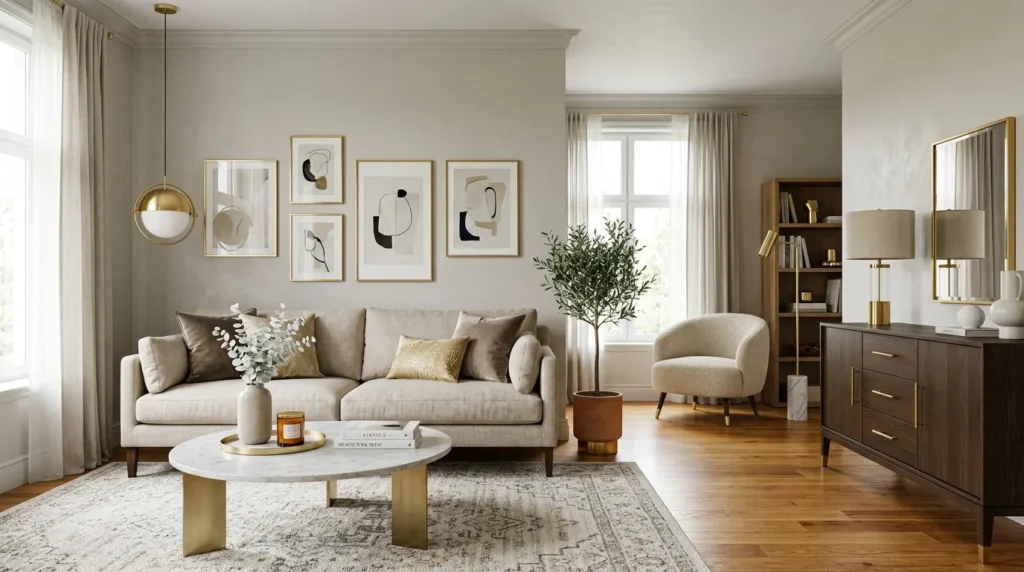
- Adds a luxurious metallic touch
- Works with furniture, lighting, and decorative objects
- Pairs well with neutral or jewel-tone palettes
- Creates focal points without overwhelming the space
- Affordable way to mimic high-end finishes
Gold accents are a simple yet impactful way to make an apartment feel refined and expensive. Whether it’s hardware on cabinets, picture frames, lamps, or decorative objects, metallic touches catch the eye and add visual warmth. I’ve noticed that even small gold details elevate the perception of quality and design, making furniture and textiles feel curated. Combining gold with muted or monochromatic colors ensures it doesn’t feel overbearing, maintaining balance and harmony in the overall aesthetic.
The transformation comes from how these accents interact with other textures. Gold contrasts beautifully with soft fabrics, dark woods, or matte surfaces, drawing attention to key areas without dominating the room. It adds sparkle and elegance to everyday items while subtly enhancing natural light reflections. Strategically placing gold elements, such as mirror frames, lamp bases, or shelf décor, creates the illusion of sophistication and expense, turning ordinary apartments into visually rich, curated spaces with minimal effort.
4. Gallery Walls
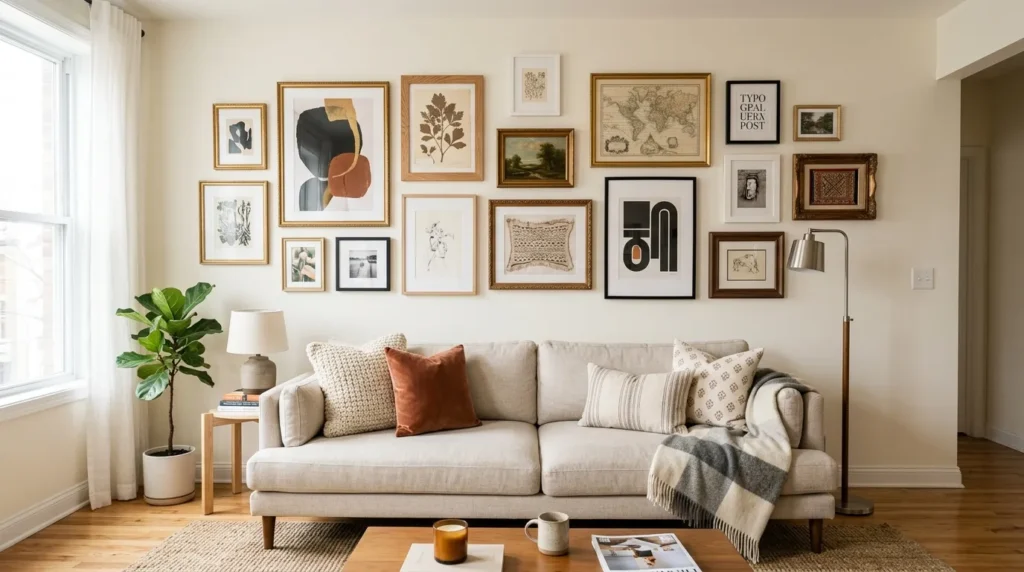
- Personalizes empty wall space
- Displays art, photos, and decorative objects
- Can be arranged symmetrically or eclectically
- Works with frames of varying sizes and finishes
- Creates a high-end curated look
Gallery walls are a DIY-friendly way to add personality and sophistication. Arranging framed art, photographs, or mirrors on a focal wall turns a blank space into a curated display. I’ve seen how gallery walls make apartments feel thoughtfully decorated, offering a gallery-like experience in a compact home. The key is balance: mixing frame sizes, colors, and textures creates cohesion without appearing cluttered, while selecting artwork that reflects personal style ensures the space feels unique and intentional.
The transformation lies in how gallery walls draw the eye and create visual depth. They can act as a backdrop for seating areas, dining tables, or entryways, elevating the room’s perceived sophistication. Using consistent matting, cohesive color schemes, or repeating metallic accents reinforces an expensive, curated aesthetic. The flexibility of gallery walls allows for seasonal rotations or new additions, making them dynamic decor elements that keep interiors fresh, personalized, and visually compelling, all while maintaining a luxurious appeal.
5. Mirrored Surfaces
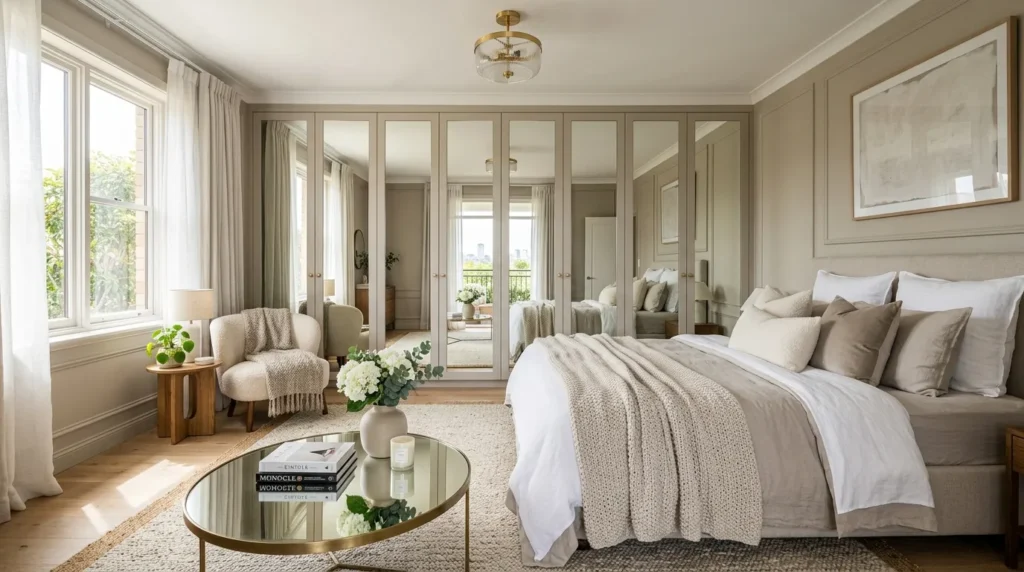
- Reflects light to make spaces appear larger
- Adds glamour without heavy investment
- Works on furniture, walls, and decorative panels
- Complements neutral and bold color palettes
- Enhances depth and brightness
Mirrored surfaces are a classic trick to make an apartment feel spacious and high-end. Placing mirrors strategically amplifies natural light, creates the illusion of depth, and reflects attractive elements in the room. In my experience, mirrored coffee tables, consoles, or decorative panels can significantly elevate the perceived quality of furnishings, making spaces feel curated and luxurious without major investment. They also work in combination with layered lighting and metallic accents to enhance ambiance and sophistication.
The transformation comes from both aesthetics and functionality. Mirrors expand visual boundaries, making small apartments feel airier and more open. A well-placed mirror behind a dining area or sofa can highlight artwork or architectural details, while mirrored furniture introduces subtle elegance. Beyond practical light reflection, mirrors add a reflective texture that complements soft textiles, wooden finishes, and metallic décor. This combination produces a polished, cohesive, and expensive-looking environment that transforms the everyday apartment experience.
6. Layered Textures
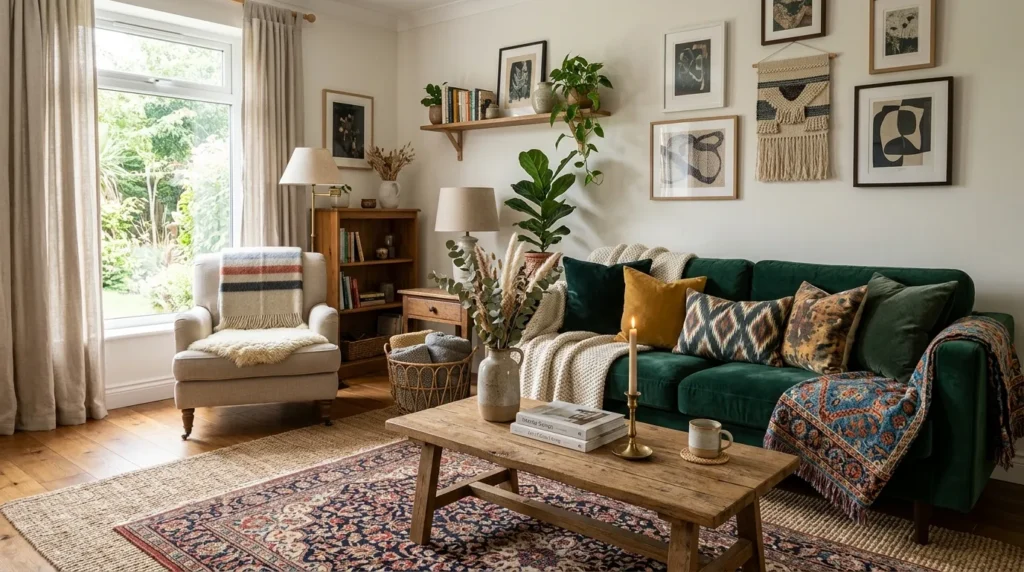
- Combines fabrics, rugs, pillows, and throws
- Adds depth and warmth to interiors
- Works with monochromatic or neutral palettes
- Enhances comfort and visual interest
- Can be applied across living areas, bedrooms, and seating
Layered textures are a key factor in making interiors feel expensive and curated. Combining soft throws, velvet cushions, woven rugs, and textured curtains adds dimension to a space. I’ve noticed that layering different textures within a consistent color palette creates a cohesive, high-end look. It transforms simple furniture into a curated ensemble, giving the impression of thoughtful styling and attention to detail. This approach also improves tactile comfort, ensuring apartments feel inviting and lived-in.
The transformation is both visual and functional. Layering materials softens hard edges, adds warmth to minimalist layouts, and allows for effortless personalization. Using varied textures, such as linen, wool, faux fur, or velvet, creates contrast that draws the eye and elevates modest furnishings. Layered textiles can also delineate zones in open layouts or provide comfort in seating areas. The result is a dynamic, cozy, and polished apartment that combines tactile appeal with visual richness, making even modest spaces feel luxurious and curated.
7. Floating Shelves
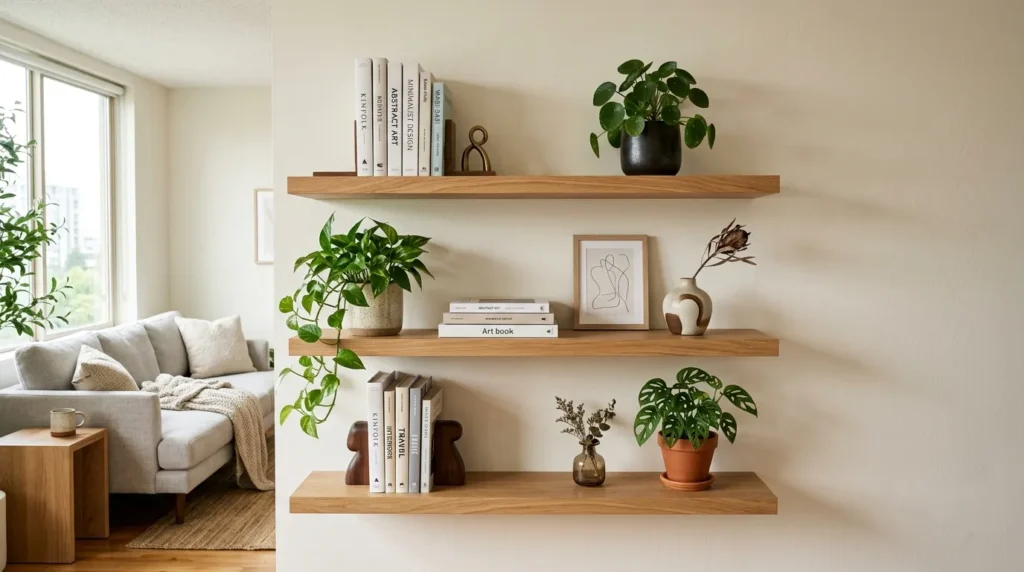
- Offers stylish storage without bulk
- Works for books, décor, and personal collections
- Can be installed at varied heights for visual interest
- Complements minimalist and modern interiors
- Adds a curated, high-end touch
Floating shelves are a functional and decorative solution for apartments seeking a polished look. They provide display space for décor while maintaining an open, airy feel. I’ve seen floating shelves elevate spaces by creating layered visual interest without adding furniture bulk. By choosing wood, metal, or painted finishes that complement existing décor, homeowners can create cohesive displays that feel intentional, organized, and upscale. Styling items in odd numbers or mixing heights enhances sophistication.
The transformation comes from how floating shelves curate space while maximizing functionality. They allow objects to be showcased, from vases and sculptures to books and framed photographs. Using subtle lighting or decorative brackets further enhances their impact. Floating shelves also improve wall usage in small apartments, providing storage and decor opportunities without cluttering floor space. The combination of design and utility ensures that apartments feel curated, thoughtful, and expensive, demonstrating a high level of interior planning and personal style.
8. Neutral Color Palette
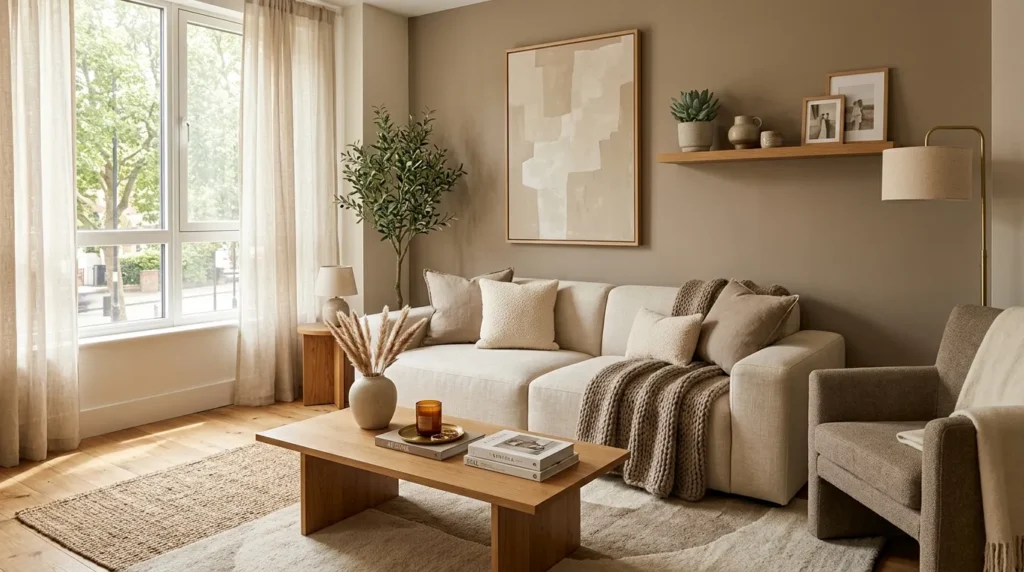
- Creates a sophisticated, cohesive backdrop
- Works with metallics, natural wood, and textiles
- Enhances light and perception of space
- Provides flexibility for accessories and seasonal décor
- Contributes to timeless, Pinterest-friendly interiors
A neutral color palette is a simple but powerful way to make an apartment feel luxurious. Shades of beige, cream, taupe, or grey serve as a sophisticated backdrop, allowing furniture, textiles, and accents to stand out. I’ve noticed that neutral walls make layering textures, metallics, and art easier, creating a curated, high-end aesthetic. This approach also increases versatility, letting homeowners swap accent pieces or seasonal décor without clashing with existing finishes.
The transformation is primarily in the space’s perception. Neutral tones reflect light, making rooms feel brighter and more open. Combined with layered textiles, rugs, and accent colors, they produce a harmonious environment that balances warmth and elegance. This palette also encourages consistency across rooms, making a small apartment feel more expansive and intentional. The result is a polished, cohesive, and Pinterest-worthy interior that exudes understated luxury while remaining flexible for personal touches and updates.
9. Statement Artwork
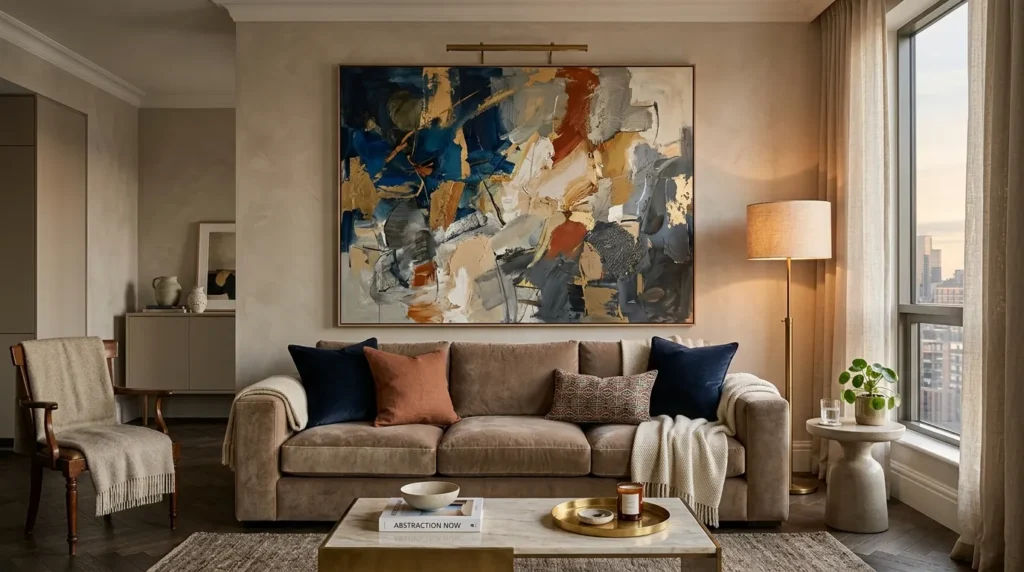
- Draws attention and creates a focal point
- Works with bold colors, abstract designs, or oversized prints
- Elevates minimalist and neutral interiors
- Offers opportunities for DIY or affordable reproductions
- Enhances sophistication and personal style
Statement artwork transforms a simple apartment into a visually engaging space. Large canvases, abstract pieces, or bold prints act as focal points, creating visual drama without overwhelming the room. I’ve seen this approach work particularly well against neutral walls, where contrast and scale amplify the impact. Statement pieces also allow homeowners to reflect personality and taste, producing an intentionally curated, high-end look even with budget-friendly prints or DIY art.
The transformation comes from focus and depth. Art defines spaces, balances furniture arrangements, and draws the eye upward, enhancing perceived ceiling height and room proportion. Placement above sofas, beds, or console tables anchors furniture and complements other décor layers. Combining artwork with lighting, metallic accents, and minimal furnishings creates a cohesive, gallery-like effect. This strategy makes interiors feel intentionally designed, expensive, and visually dynamic, giving apartments the sophistication of professionally curated homes without a large financial outlay.
10. Luxury Textiles
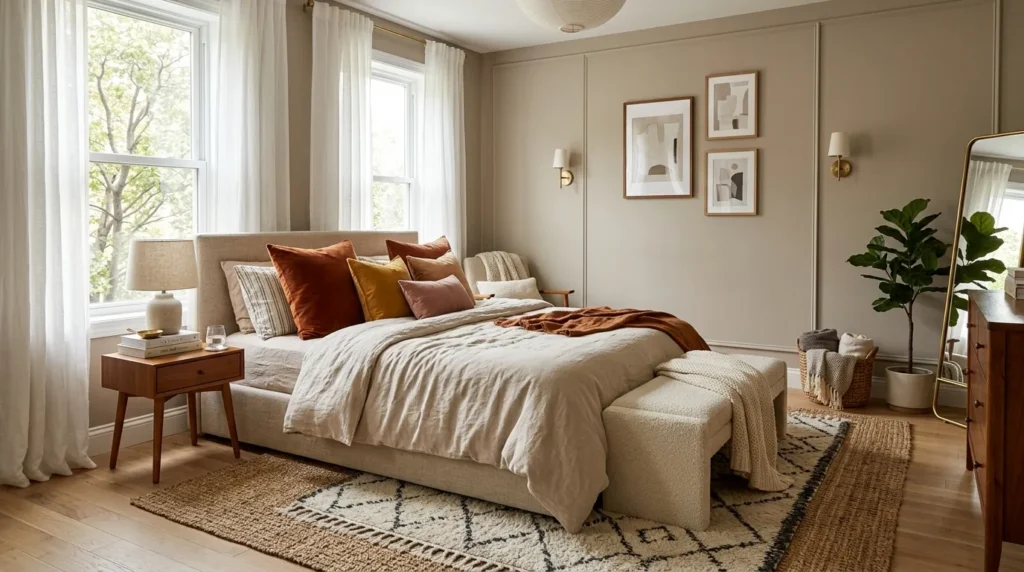
- Introduces softness, warmth, and tactile appeal
- Works with throw blankets, cushions, and curtains
- Enhances comfort while elevating style
- Can be layered for depth and visual richness
- Affordable way to mimic expensive interiors
Luxury textiles are a cost-effective way to make apartments feel high-end. Velvet cushions, soft throws, linen curtains, and patterned rugs contribute texture, color, and warmth. I’ve noticed that layering textiles across seating, beds, and floor areas instantly elevates interiors, creating a cohesive and curated aesthetic. Choosing quality fabrics, even if limited in quantity, produces a sense of abundance and sophistication that trick budget constraints, allowing modest apartments to feel luxurious and polished.
The transformation comes from how these fabrics interact with light, furniture, and surrounding décor. Soft textiles soften angular furniture, absorb sound, and make spaces feel cozy. Coordinating colors, textures, and patterns reinforces an intentional style while maintaining comfort and functionality. This approach also allows for seasonal refreshes and easy personalization, keeping interiors dynamic. By strategically incorporating luxury textiles, apartments achieve a polished, high-end appearance, demonstrating thoughtful layering and visual richness without requiring major renovations.