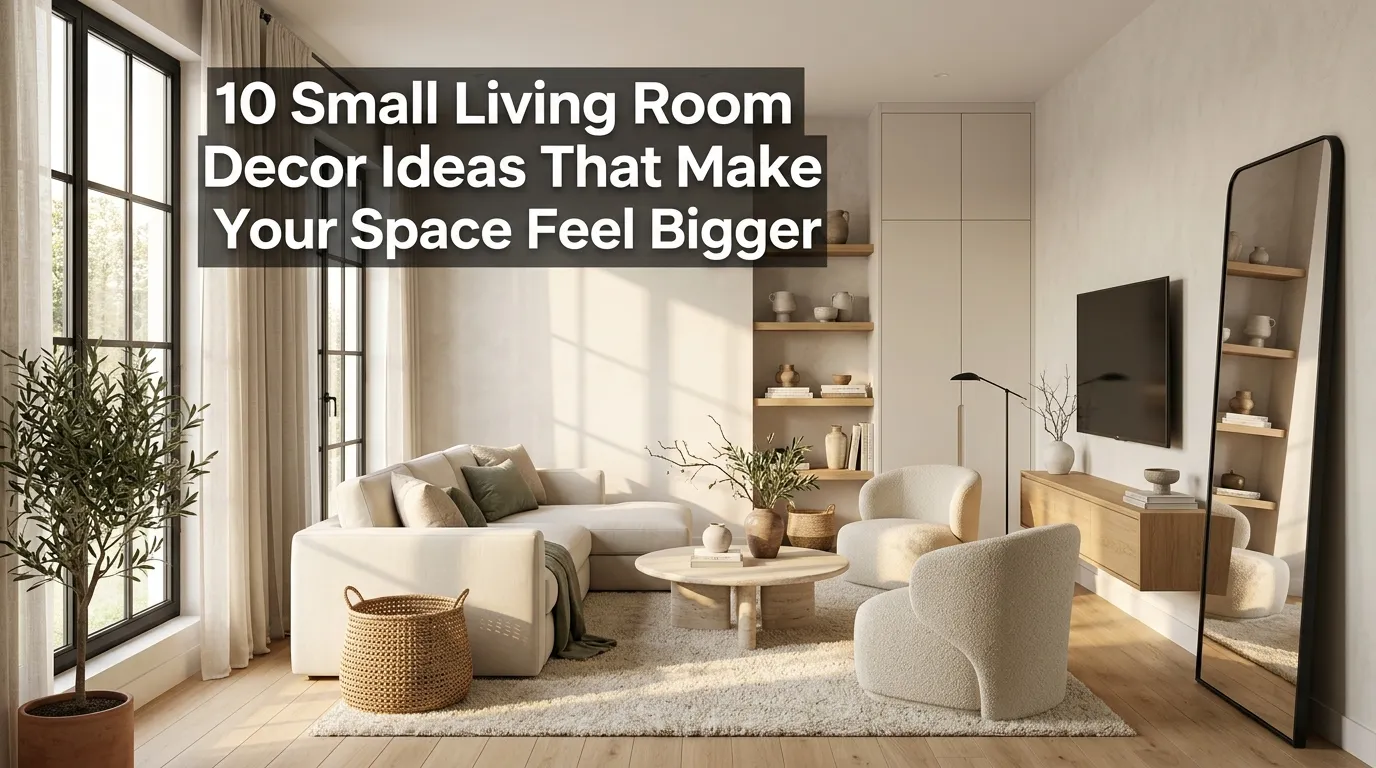
10 Small Living Room Decor Ideas That Make Your Space Feel Bigger
If you’ve ever felt like your living room is working against you instead of for you, you’re probably dealing with a space that’s smaller than you’d like. A mistake many homeowners make is assuming a small living room simply has to feel cramped, when in reality, the right combination of furniture choices, color, and layout can make even a modest room feel noticeably more open.
In my experience, square footage matters far less than how intentionally a space is used. I’ve walked into tiny living rooms that felt surprisingly spacious, and large ones that felt cluttered and closed-in, simply because of the choices made around furniture scale, color, and sightlines. Small space design isn’t about cramming in fewer things — it’s about choosing the right things and giving them room to breathe.
This guide walks through ten practical, proven ideas for making a small living room feel bigger, brighter, and more functional. Each idea includes the reasoning behind it along with specific, actionable advice you can apply this weekend, whether you’re working with a studio apartment, a cozy starter home, or simply a living room that’s smaller than you’d like.
If you’re anything like me, you don’t want to sacrifice style just because your square footage is limited. These ideas are built to help your small living room feel just as intentional and beautiful as a much larger one.
Table of Contents
- Multi-Functional Furniture — Choosing pieces that do more than one job.
- Vertical Storage Solutions — Building upward instead of outward.
- Mirrored Wall Accents — Using reflection to expand the visual space.
- Light Reflective Color Palette — Choosing tones that open up the room.
- Floating Furniture Placement — Arranging pieces away from the walls.
- Slim Profile Seating — Selecting furniture with a lighter visual footprint.
- Strategic Lighting Layers — Brightening corners and shadows intentionally.
- Vertical Line Details — Drawing the eye upward for perceived height.
- Clear Sightline Layout — Keeping the eye’s path unobstructed.
- Compact Statement Pieces — Adding personality without bulk.
1. Multi-Functional Furniture
Quick Benefits
- Reduces the total number of pieces needed
- Maximizes usefulness per square foot
- Minimizes clutter and visual bulk
- Adapts to changing needs over time
- Frees up floor space for movement
Why It Works
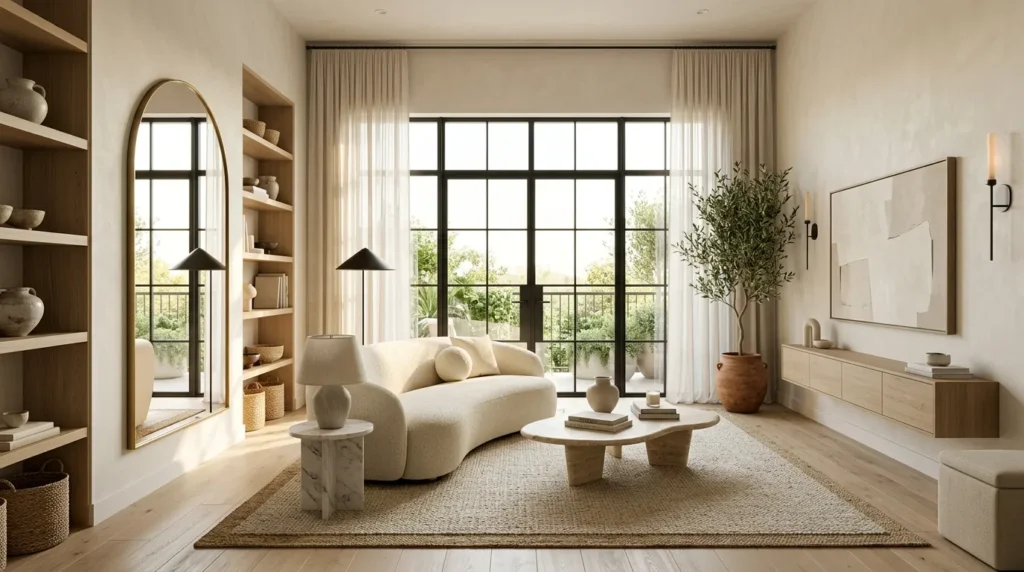
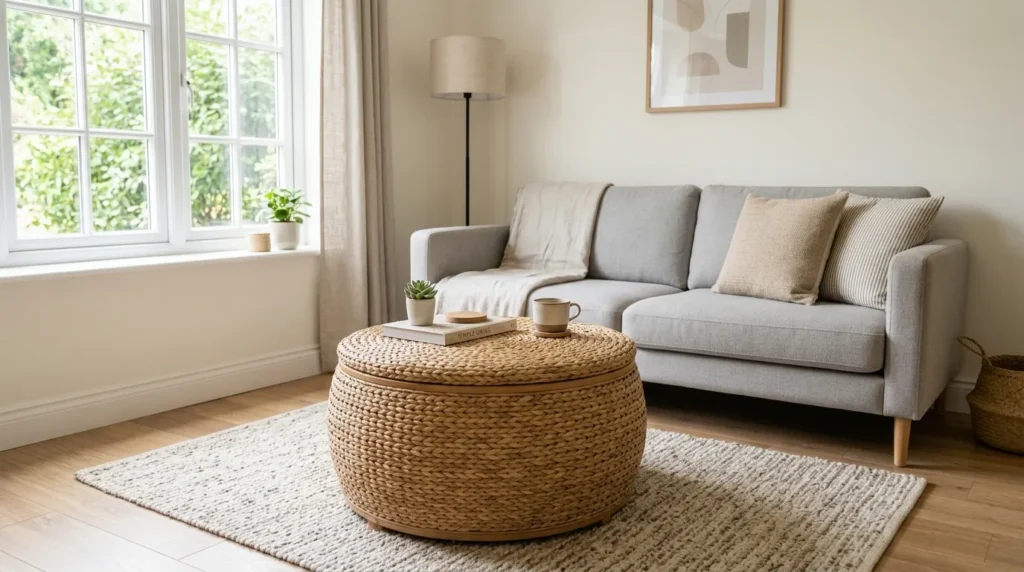
A mistake many homeowners make in small living rooms is furnishing the space exactly as they would a larger one, just with smaller versions of the same pieces. The better approach is choosing furniture that serves more than one purpose, which reduces the overall number of items in the room without sacrificing function. A storage ottoman, for example, can act as a coffee table, extra seating, and hidden storage all at once, doing the work of three separate pieces in the footprint of one.
How To Style It
Look for coffee tables with built-in storage, ottomans that open up for blanket or media storage, and console tables that can double as a workspace when needed. A sofa bed or daybed is a particularly effective choice if the living room occasionally doubles as a guest space. Prioritize pieces that fold, nest, or expand — nesting side tables, for instance, provide extra surface area when needed and tuck away neatly the rest of the time.
2. Vertical Storage Solutions
Quick Benefits
- Uses wall space instead of valuable floor space
- Draws the eye upward, increasing perceived height
- Keeps the floor open for a more spacious feel
- Provides ample storage without bulky furniture
- Works in nearly any room shape
Why It Works
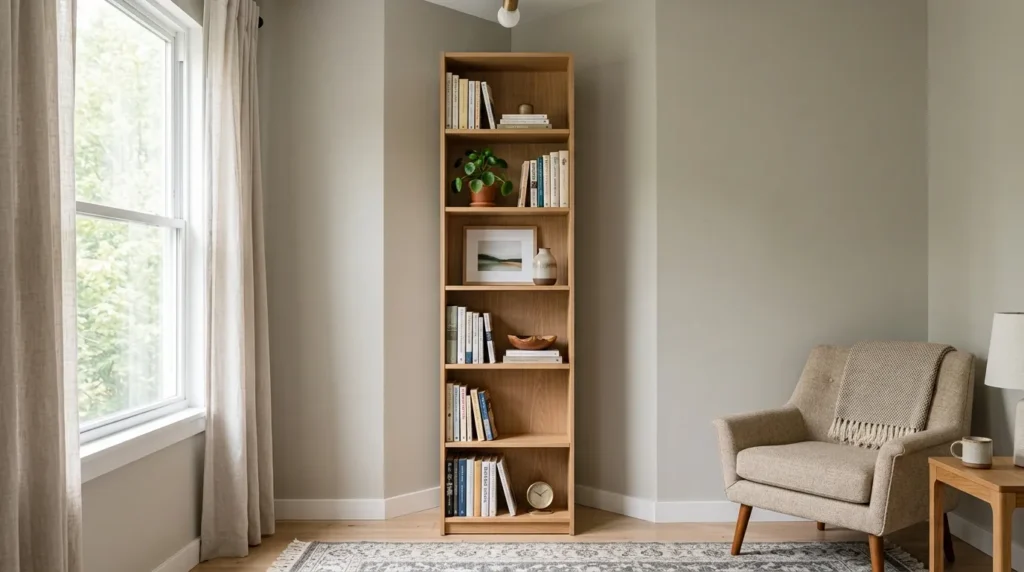
In a small living room, floor space is the most valuable real estate you have, which is why vertical storage is one of the most effective strategies available. One simple trick I always suggest is replacing a low, wide bookshelf with a tall, narrow one, or better yet, floating shelves that don’t touch the floor at all. This shifts storage upward rather than outward, freeing up the floor and simultaneously drawing the eye toward the ceiling, which makes the room feel taller and more open.
How To Style It
Install floating shelves above eye level to store books, decor, or media equipment without adding floor-level bulk. Choose tall, narrow bookshelves over wide, low ones whenever floor-standing storage is necessary, since the vertical shape uses less floor footprint for the same amount of storage. Wall-mounted cabinets near the ceiling can also handle overflow storage that would otherwise need a bulky floor unit.
3. Mirrored Wall Accents
Quick Benefits
- Visually doubles the perceived size of the room
- Reflects and amplifies natural light
- Adds a decorative element without floor space
- Works in nearly any design style
- Easy and affordable to implement
Why It Works
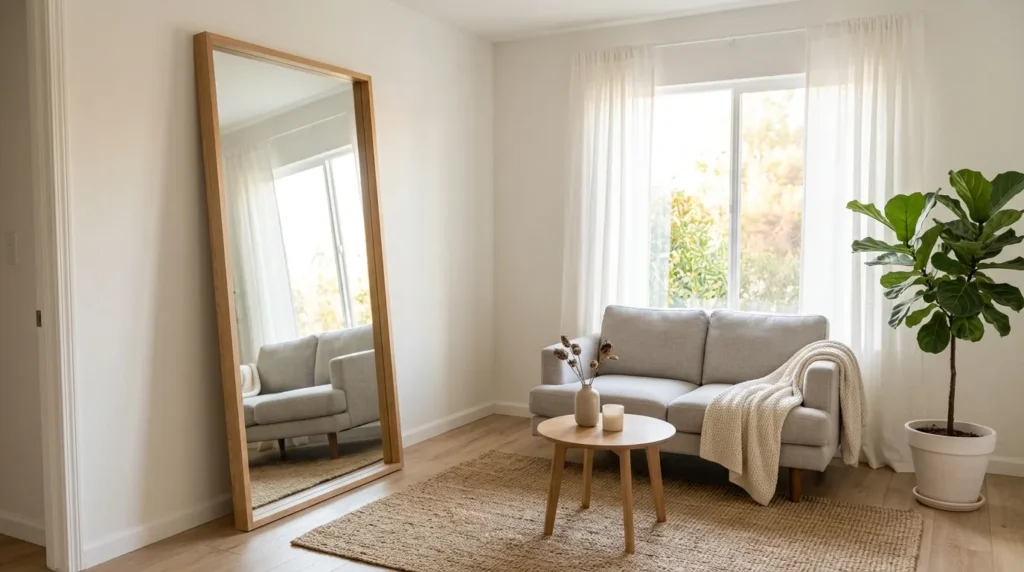
Mirrors are one of the oldest and most reliable tricks for making a small room feel larger, and for good reason — they genuinely do create the illusion of additional space by reflecting the room back on itself. A mistake many homeowners make is choosing a small, purely decorative mirror rather than a piece large enough to have a real visual impact. A single oversized mirror placed strategically can noticeably change how spacious a small living room feels.
How To Style It
Position a large mirror directly across from a window whenever possible, since this reflects natural light and the outdoor view back into the room, amplifying both brightness and the sense of depth. A floor-length leaning mirror works particularly well in a small living room, since it adds height as well as width to the perceived space. If wall space is limited, a mirrored coffee table or side table can achieve a similar reflective effect on a smaller scale.
4. Light Reflective Color Palette
Quick Benefits
- Brightens the overall feel of the room
- Reflects natural and artificial light more effectively
- Creates a sense of openness and airiness
- Provides a flexible base for accent colors
- Pairs well with nearly any furniture style
Why It Works
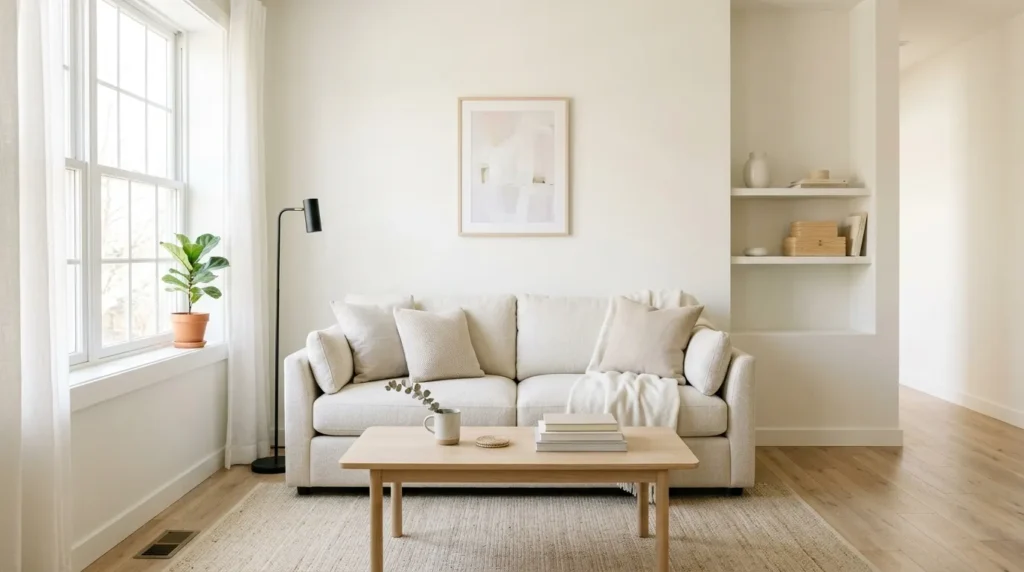
Color has a direct effect on how spacious a room feels, and light, reflective tones bounce available light around a room far more effectively than dark, absorptive colors. That’s why many designers recommend a light, neutral base — soft white, pale gray, warm cream — for small living rooms, since darker colors, while beautiful in larger spaces, tend to visually shrink a smaller room by absorbing rather than reflecting light.
How To Style It
Choose a light, warm-toned wall color rather than a stark white, which can feel a bit cold in smaller spaces, or a deep, saturated tone, which can make walls feel like they’re closing in. Extend this same light palette to large furniture pieces like the sofa, since a big, dark piece of furniture can visually dominate a small room. Reserve darker or bolder colors for small accents, like a single throw pillow or a piece of art, rather than large-scale surfaces.
5. Floating Furniture Placement
Quick Benefits
- Creates a more open, intentional layout
- Improves natural traffic flow through the room
- Prevents the room from feeling boxed-in
- Makes better use of awkward room shapes
- Encourages a more conversational seating arrangement
Why It Works
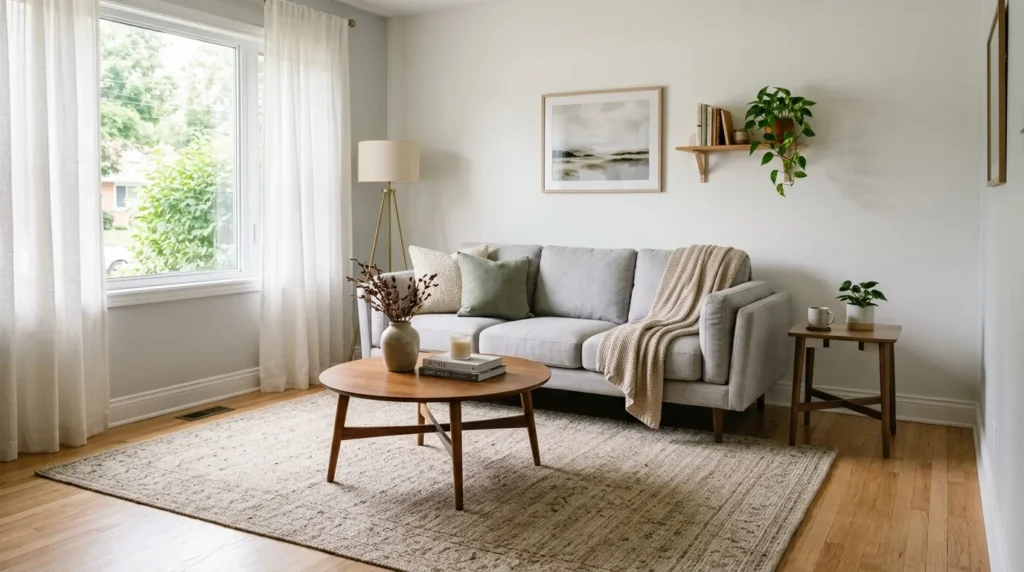
A mistake many homeowners make in small living rooms is pushing every piece of furniture against the walls in an attempt to maximize open floor space in the middle. Counterintuitively, this often makes a room feel smaller, not bigger, because it creates one large, undefined empty space rather than a series of intentional, usable zones. Floating furniture slightly away from the walls, even by a foot or two, tends to create a more layered, spacious feel.
How To Style It
Pull your sofa a few inches away from the wall rather than pushing it flush against it, and angle a chair or two to create a more conversational arrangement rather than lining every piece up along the perimeter. Use a rug to help define the seating area within the larger room, which reinforces the sense of intentional zones rather than one undefined space. This approach works especially well in open-concept layouts where the living room shares space with a dining or kitchen area.
6. Slim Profile Seating
Quick Benefits
- Reduces visual bulk without sacrificing comfort
- Frees up floor space around the seating area
- Pairs well with smaller room proportions
- Provides flexibility for rearranging
- Works well in both formal and casual layouts
Why It Works
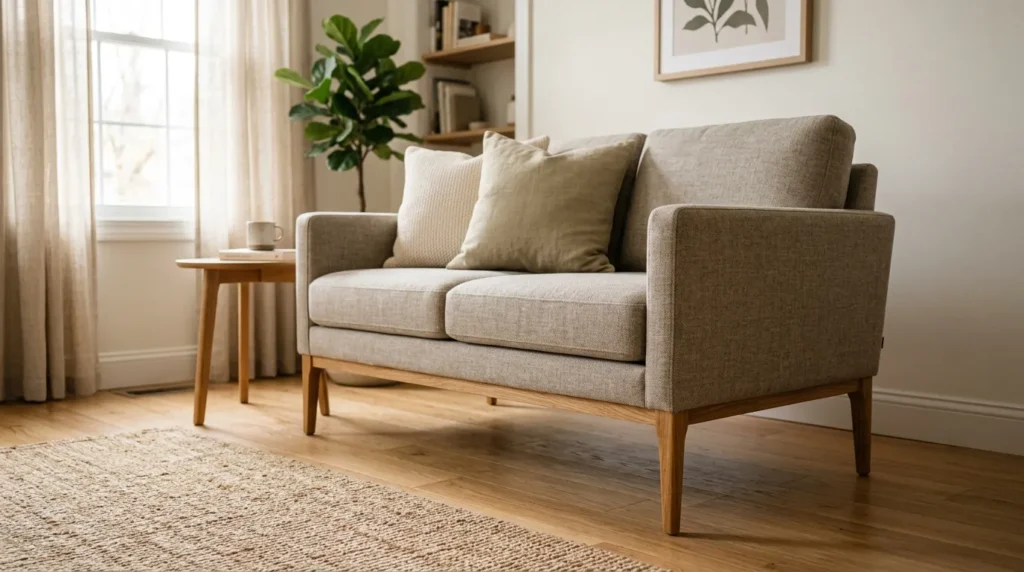
Oversized, deep-seated furniture that works beautifully in a large living room can overwhelm a smaller one, eating up floor space and visually dominating the room. I’ve noticed that swapping bulky furniture for pieces with slimmer profiles — tapered legs, narrower arms, a lower overall silhouette — often makes as much of a difference as removing an entire piece of furniture altogether. The room instantly feels lighter and more open, even with the same number of seats.
How To Style It
Choose sofas and chairs with visible, tapered legs rather than a solid base that touches the floor entirely, since visible legs allow light and sightlines to pass underneath, creating a sense of openness. Opt for narrower arms and a slightly lower back height where possible, both of which reduce the furniture’s overall visual weight. Loveseats or apartment-sized sofas, sized specifically for smaller rooms, are worth prioritizing over full-sized sofas designed for larger spaces.
7. Strategic Lighting Layers
Quick Benefits
- Brightens dark corners that can feel cramped
- Adds depth and dimension to the room
- Reduces reliance on a single overhead source
- Makes the room feel more finished and intentional
- Works well alongside a light color palette
Why It Works
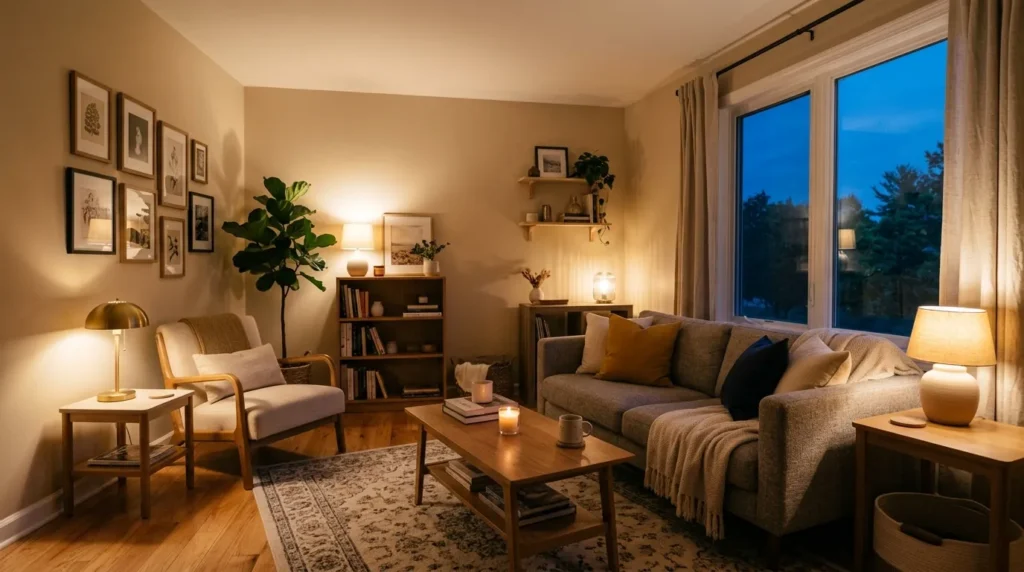
Dark corners tend to visually shrink a small room, since the eye reads unlit areas as smaller and less defined than they actually are. One thing that works especially well is adding a lamp or small light source to every corner of the room, ensuring there are no unlit pockets that make the space feel more closed-in than it is. This layered approach to lighting also adds warmth and dimension, which supports the room’s overall aesthetic beyond just making it feel bigger.
How To Style It
Place a floor or table lamp in each corner of the room, even if that corner doesn’t have an obvious furniture grouping, to eliminate dark, shrinking shadows. Use warm-toned bulbs to keep the room feeling inviting rather than starkly bright. A few well-placed lamps almost always do more for a small room’s sense of openness than a single bright overhead fixture, which tends to flatten the space rather than add depth.
8. Vertical Line Details
Quick Benefits
- Draws the eye upward, increasing perceived height
- Makes ceilings feel taller than they are
- Adds visual interest without floor clutter
- Works well through curtains, art, and shelving
- Complements a light, open color palette
Why It Works
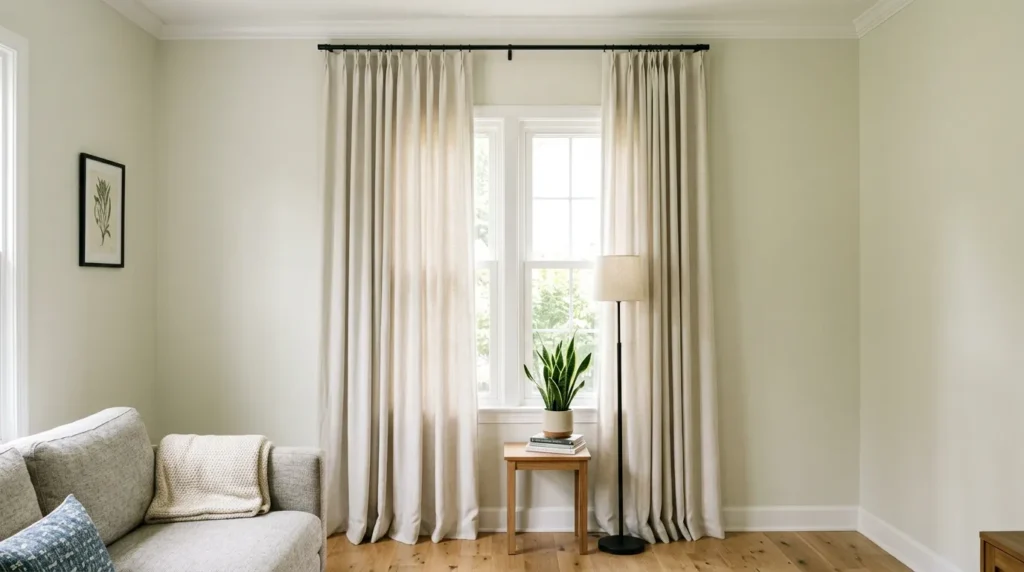
Vertical elements — tall curtains, narrow bookshelves, elongated art — all encourage the eye to travel upward, which creates the illusion of a taller room even when the actual ceiling height hasn’t changed. A mistake many homeowners make is hanging short curtains or choosing wide, horizontal furniture and art, which visually compresses the room rather than elongating it. Emphasizing vertical lines throughout the space is a subtle but effective way to make a small living room feel bigger.
How To Style It
Hang curtains as close to the ceiling as possible, well above the window frame, so the eye reads the fabric as part of the wall’s overall height rather than stopping at the window itself. Choose taller, narrower furniture and decor — a tall floor lamp, an elongated piece of art, a narrow bookshelf — over wide, low alternatives whenever possible. Vertical stripes on a rug or an accent pillow can reinforce this same effect on a smaller scale.
9. Clear Sightline Layout
Quick Benefits
- Prevents visual clutter from blocking depth
- Makes the room feel more open at a glance
- Improves flow between rooms in open layouts
- Reduces the sense of a cramped, boxed-in space
- Works well with minimal furniture arrangements
Why It Works
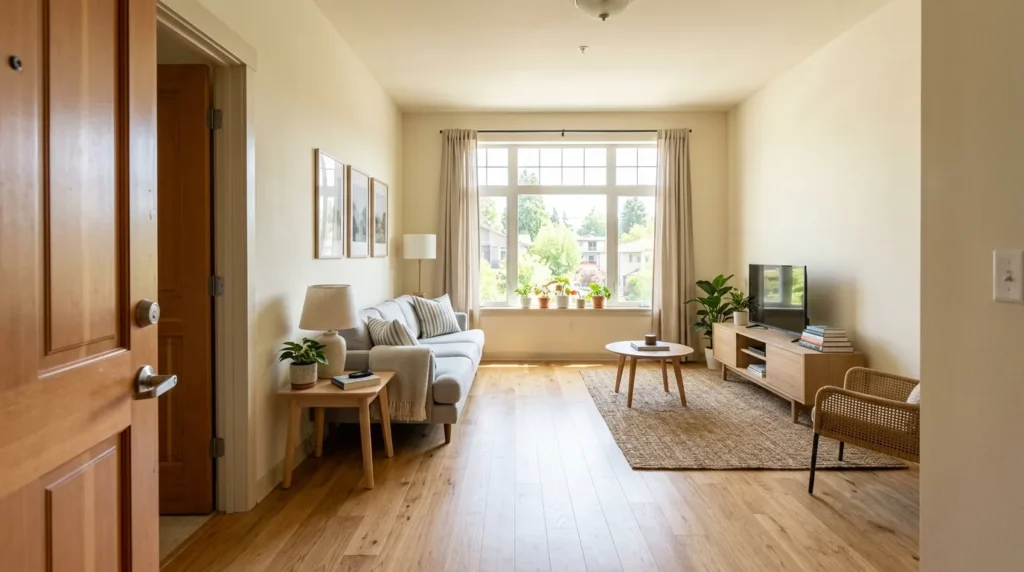
The eye’s ability to see clearly across and through a room has a major effect on how large that room feels, even more so than the actual square footage. A mistake many homeowners make is placing tall or bulky furniture directly in the sightline from the entryway, which blocks the view and makes the room feel more closed-off than it actually is. Keeping a clear visual path from the doorway to the far end of the room is one of the simplest ways to preserve a sense of openness.
How To Style It
Walk into the room from its main entry point and notice what your eye sees first — if a large piece of furniture is directly in that sightline, consider repositioning it to the side. Keep taller furniture, like bookshelves or armoires, along the sides of the room rather than directly in the center of the visual path. In open-concept spaces, this same principle applies to maintaining a clear view through to adjoining rooms whenever possible, which reinforces a sense of continuous, connected space.
10. Compact Statement Pieces
Quick Benefits
- Adds personality without consuming valuable space
- Provides a focal point in a minimal layout
- Elevates the room without bulky furniture
- Works well as a single high-impact choice
- Balances function with visual interest
Why It Works
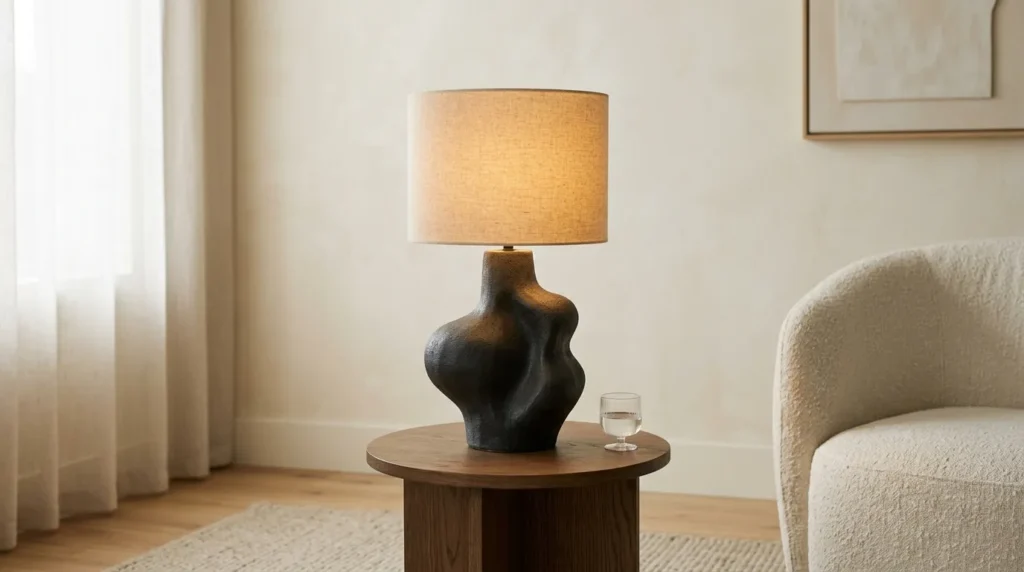
A small living room doesn’t have to sacrifice personality or style just because space is limited — it simply needs to be more selective about where that personality comes from. A mistake many homeowners make is trying to fit in too many decorative elements, which can quickly overwhelm a smaller room. Instead, choosing one or two compact but striking pieces — a sculptural lamp, a bold piece of art, a uniquely shaped side table — provides visual interest without adding unnecessary bulk.
How To Style It
Select one standout piece to serve as the room’s main personality moment, such as an eye-catching light fixture or a boldly patterned but small accent chair, and keep everything else in the room simpler and more neutral by comparison. This approach lets the statement piece actually be noticed, rather than getting lost among too many competing details. A single well-chosen piece of art, sized appropriately for the wall, can achieve a similar effect without taking up any floor space at all.
Frequently Asked Questions
What is the biggest mistake people make in small living rooms?
Overcrowding the room with too much furniture is the most common mistake. Filling every wall and corner with furniture might seem practical, but it actually makes the room feel smaller. Editing down to only the essential pieces, chosen for their scale and function, almost always creates a more spacious feel.
Should small living rooms avoid dark colors entirely?
Not entirely, but dark colors should generally be reserved for smaller accents rather than large surfaces like walls or a big sofa. A dark accent pillow, a piece of art, or even a single accent wall can work well, as long as the majority of the room stays in lighter, more reflective tones.
Does furniture with legs really make a room feel bigger?
Yes. Furniture with visible legs allows light and sightlines to pass underneath, which creates a sense of openness that solid-based furniture doesn’t achieve. This is a small detail, but it consistently makes a noticeable difference in how spacious a room feels.
How can I add storage to a small living room without making it feel cluttered?
Prioritize vertical storage solutions like tall bookshelves or floating shelves over wide, low furniture, and choose multi-functional pieces like storage ottomans that combine several needs into one. Keeping stored items organized and out of sight also helps maintain an open, uncluttered feel.
Is it better to have fewer, larger furniture pieces or more, smaller ones in a small room?
Generally, fewer well-chosen pieces work better than many smaller ones, since too many small items can create visual clutter even if each individual piece is compact. Focus on one or two well-scaled pieces per function rather than filling the room with extras.
Can a small living room still have a rug?
Yes, and a rug is actually recommended, since it helps define the seating area and adds warmth underfoot. Choose a rug sized so the front legs of the furniture rest on it, and opt for lighter tones to keep with the room’s overall reflective color palette.
How much does lighting really affect how big a room feels?
Significantly. Dark, unlit corners visually shrink a room, while well-distributed lighting throughout the space eliminates shadows and creates a sense of depth and openness. Layering a few lamps throughout the room often makes as much of a visual difference as rearranging furniture.
Conclusion
Making a small living room feel bigger doesn’t require knocking down walls or investing in an expensive renovation. Multi-functional furniture, a light and reflective color palette, strategic lighting, and a few carefully chosen vertical details can transform how spacious a room feels without changing its actual square footage at all.
Start with one or two ideas from this list and gradually build a space that reflects your style and supports everyday comfort. Whether that means swapping in slimmer furniture, adding a large mirror across from a window, or simply floating your sofa a few inches from the wall, small, intentional changes compound quickly. The most successful small living rooms aren’t the ones that try to fit in more — they’re the ones designed with just enough, arranged with real intention.
Related Articles
- Small Living Room Layout Solutions
- Aesthetic Living Room Ideas You’ll Love
- Simple Timeless Living Room Ideas
- Cozy Living Room Ideas For A Warm Home
- Multi-Functional Furniture For Small Spaces