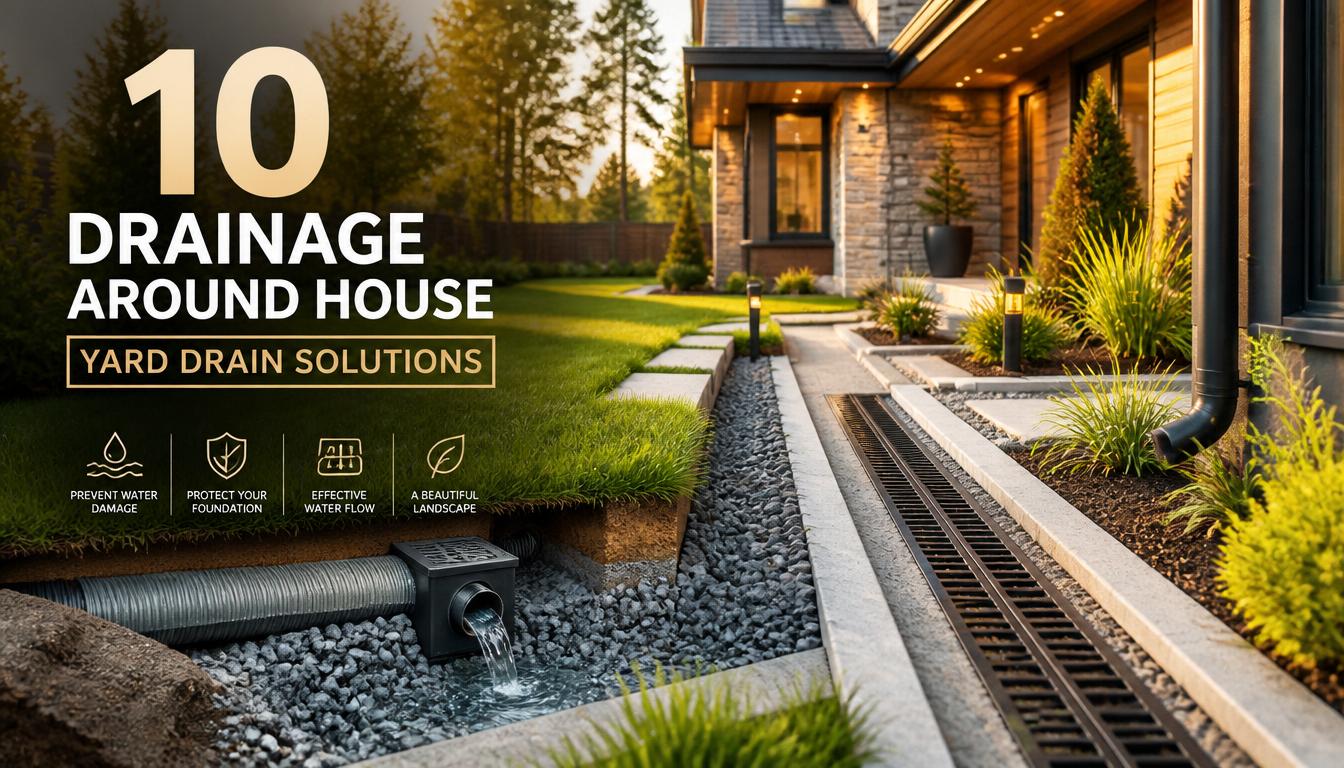
10 Drainage Around House Yard Drain Solutions
Poor yard drainage can lead to a variety of problems, including standing water, foundation damage, soil erosion, muddy lawns, and unhealthy landscaping. What may seem like a minor puddle after a rainstorm can eventually become a costly issue if water isn’t directed away from your home properly. The good news is that there are practical and attractive drainage solutions that can improve both the functionality and appearance of your yard.
Whether you’re dealing with heavy rainfall, low spots in your lawn, or water pooling near your foundation, the right drainage system can protect your property while enhancing curb appeal. These Drainage Around House Yard Drain Solutions offer effective ways to manage excess water, preserve landscaping, and maintain a healthier outdoor environment.
1. French Drain System
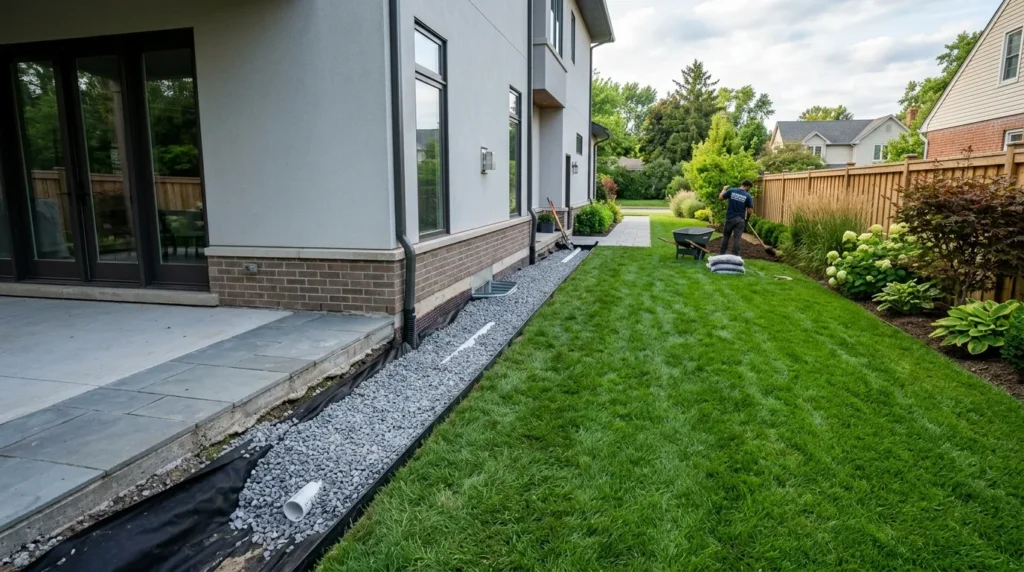
A French drain is one of the most effective methods for redirecting excess water away from problem areas. This system uses a perforated pipe surrounded by gravel and buried beneath the ground to collect and move water efficiently. Once installed, it remains largely invisible while providing long-term drainage protection.
Many homeowners choose French drains because they work well in a variety of soil conditions and landscaping layouts. In my experience, they are particularly effective for yards that experience repeated water pooling after storms. The result is a cleaner, drier landscape with improved protection for your home’s foundation.
2. Dry Creek Bed
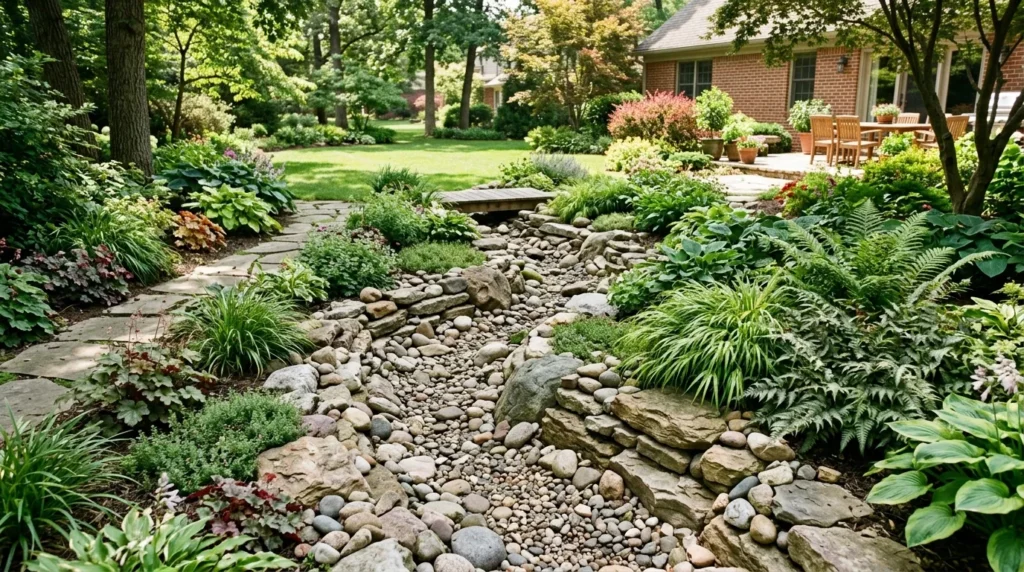
A dry creek bed combines drainage functionality with attractive landscape design. Constructed using decorative stones and gravel, it mimics the appearance of a natural stream while directing excess water away from the property. The feature adds texture and visual interest to the yard even when dry.
One reason dry creek beds remain popular is their ability to solve drainage issues while enhancing curb appeal. The natural appearance blends beautifully with surrounding landscaping and creates an attractive focal point. The result feels intentional, practical, and visually appealing.
3. Downspout Extensions
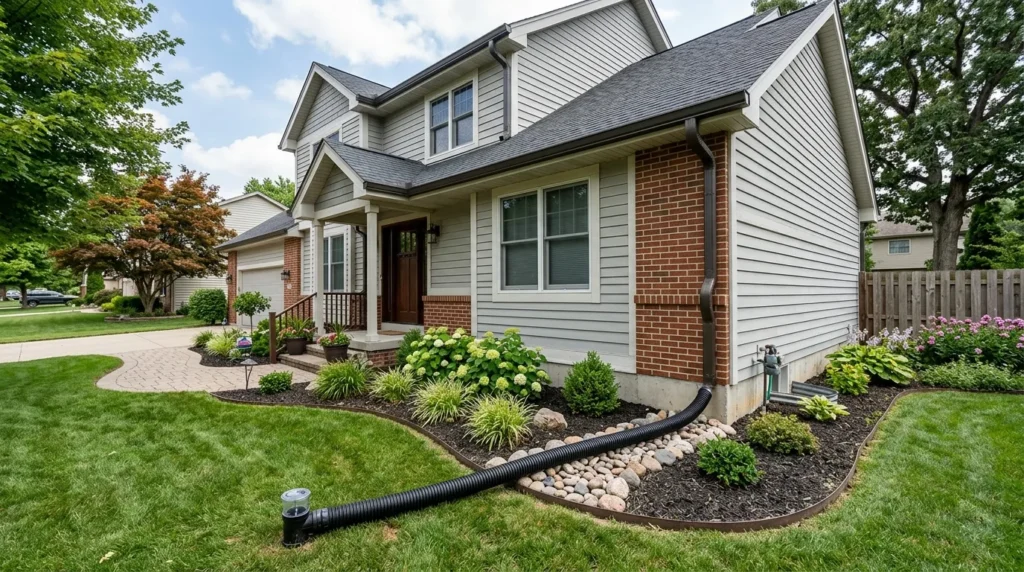
Downspout extensions provide a simple yet highly effective way to move water away from the home’s foundation. By directing rainwater several feet from the structure, extensions help reduce soil saturation and minimize the risk of foundation-related moisture problems.
Many homeowners overlook this affordable solution despite its effectiveness. Extending downspouts can significantly improve drainage performance without requiring major excavation or landscaping changes. The result is better water management and increased protection for the home.
4. Gravel Drain Border
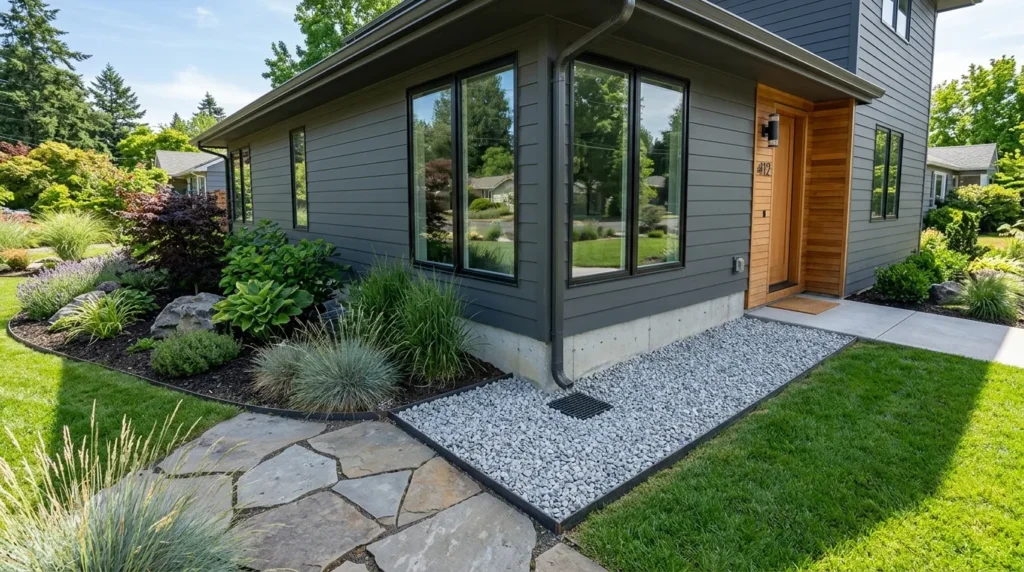
A gravel drainage border helps manage runoff while creating a clean and attractive landscape feature. Installed along foundations, walkways, or garden edges, gravel allows water to filter through while reducing erosion and minimizing mud accumulation. The texture also contributes to a polished appearance.
The low-maintenance nature of gravel makes it especially appealing. Many designers recommend decorative stone because it improves drainage while complementing a variety of landscape styles. The finished result feels organized, practical, and visually balanced.
5. Catch Basin Installation
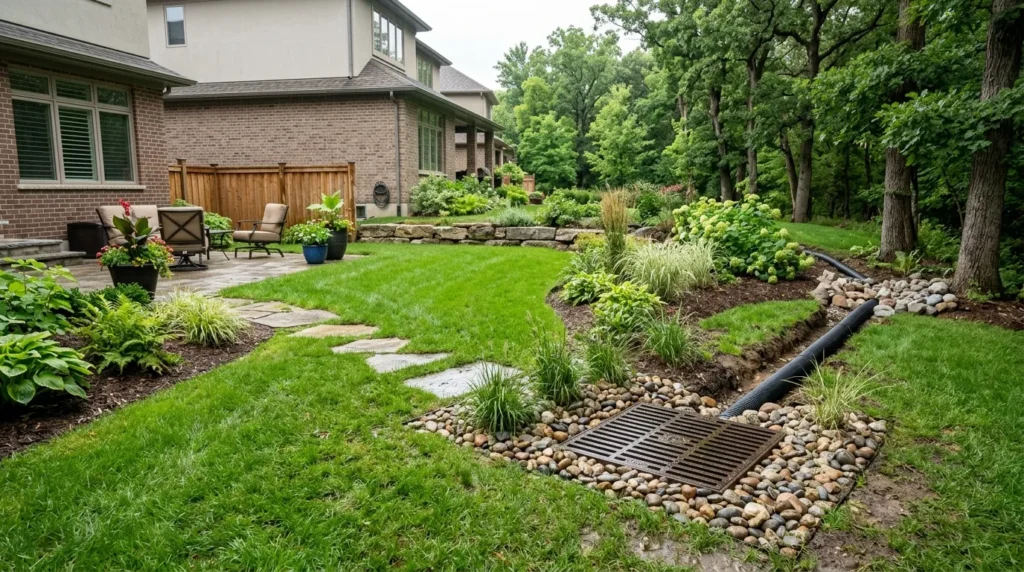
A catch basin collects and redirects surface water before it has an opportunity to pool around the property. Positioned in low areas where water naturally gathers, the basin channels runoff into an underground drainage system. This helps prevent standing water and landscape damage.
Catch basins are particularly useful in areas prone to heavy rainfall. They offer an effective solution for properties where traditional grading alone may not provide adequate drainage. The result is a cleaner, safer, and more functional outdoor environment.
6. Rain Garden Design
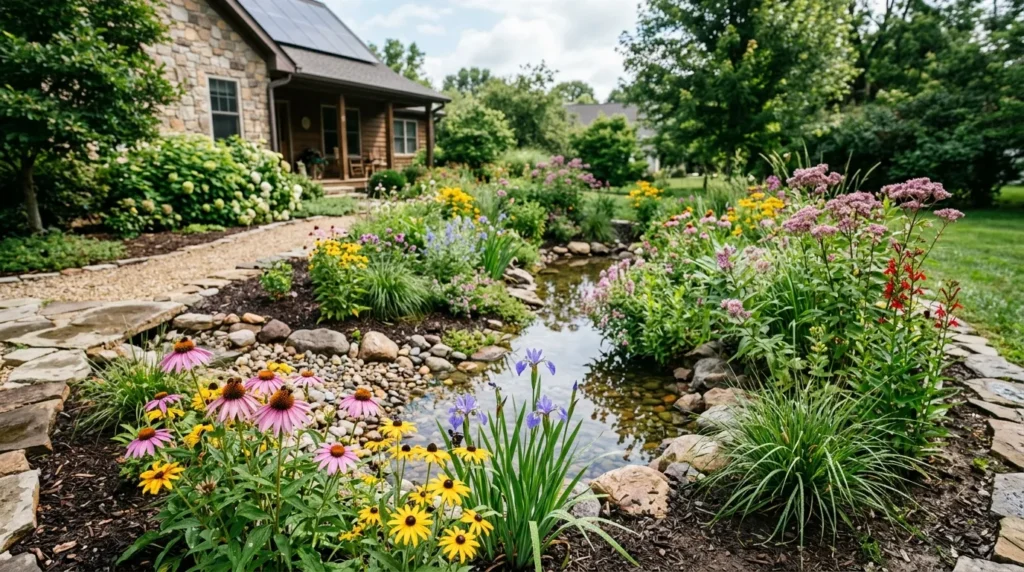
A rain garden uses specially selected plants and a shallow basin to absorb and filter excess water naturally. Positioned in areas where runoff collects, the garden helps reduce standing water while adding beauty and biodiversity to the landscape. Native plants often perform especially well in these environments.
I’ve noticed that rain gardens are becoming increasingly popular because they combine environmental benefits with attractive landscaping. They help manage stormwater while creating habitat for pollinators and beneficial wildlife. The result feels sustainable, functional, and visually appealing.
7. Yard Grading Upgrade
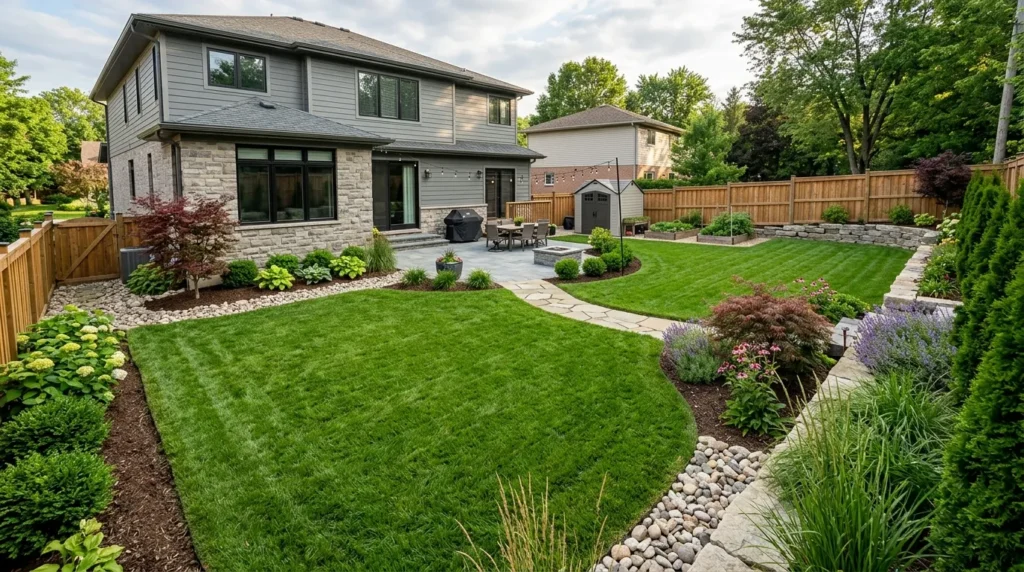
Proper grading is one of the most important components of effective drainage. Adjusting the slope of the yard ensures that water flows away from the house rather than toward the foundation. Even small grading improvements can significantly reduce drainage problems.
Many drainage issues stem from improper slope rather than insufficient drainage systems. Correcting grading helps address the root cause of water accumulation while improving the overall functionality of the property. The result is a healthier landscape and better long-term protection for the home.
8. Channel Drain Path
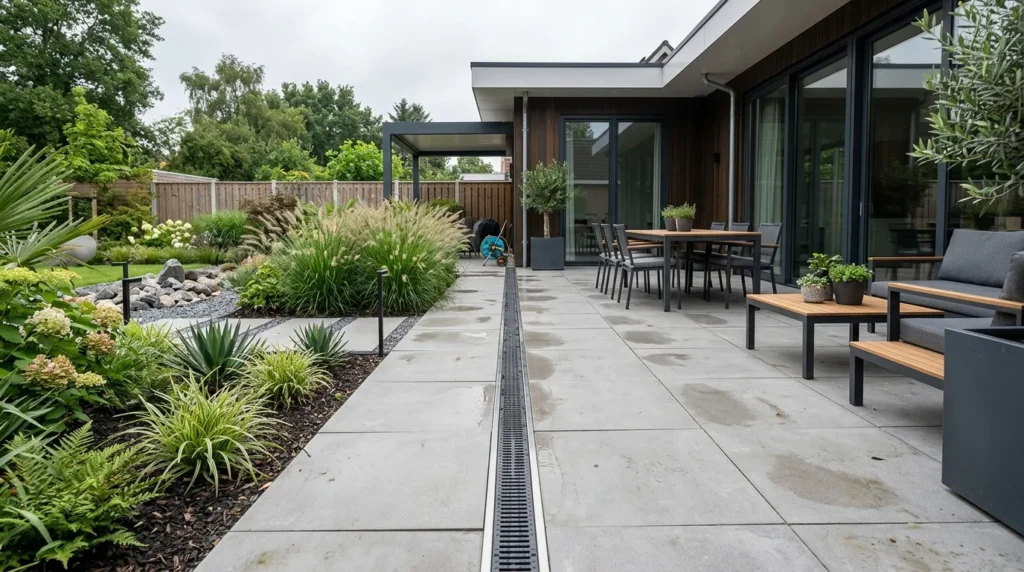
Channel drains provide an efficient solution for collecting water from hard surfaces such as driveways, patios, and walkways. Installed flush with the surrounding surface, these linear drains capture runoff and direct it into underground drainage systems before pooling can occur.
The sleek appearance of channel drains makes them especially suitable for modern landscapes. They combine functionality with a clean and unobtrusive design. Many homeowners appreciate how effectively they manage water while preserving the appearance of outdoor living spaces.
9. Retaining Wall Drainage
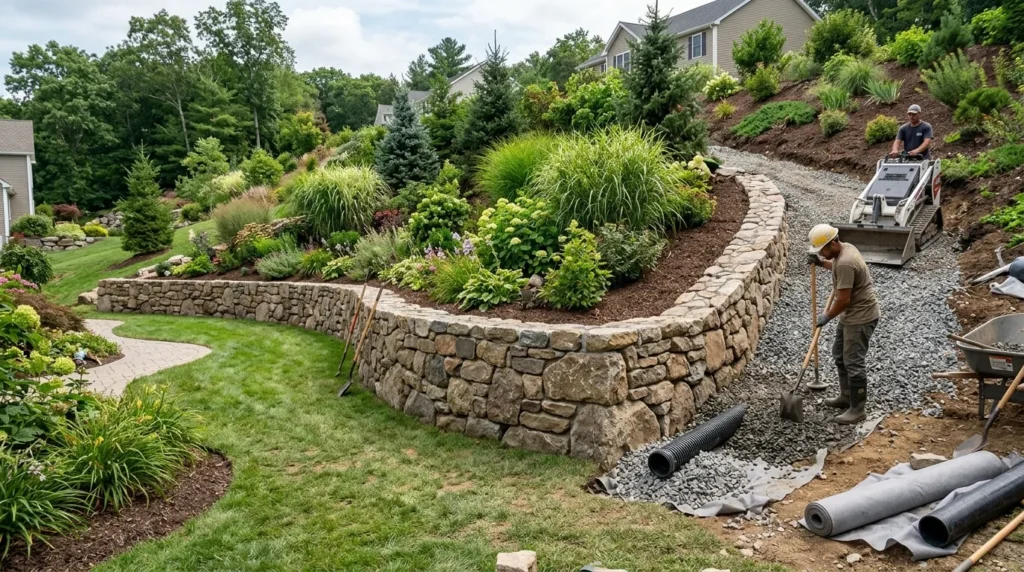
Retaining walls often require integrated drainage systems to prevent water buildup behind the structure. Proper drainage reduces pressure on the wall while helping maintain soil stability. Gravel backfill, perforated pipes, and drainage outlets are commonly used components.
Without adequate drainage, retaining walls can experience structural issues over time. That’s why many landscape professionals recommend incorporating drainage features during installation. The result is a stronger, longer-lasting structure that performs reliably during heavy rainfall.
10. Permeable Paver Surface
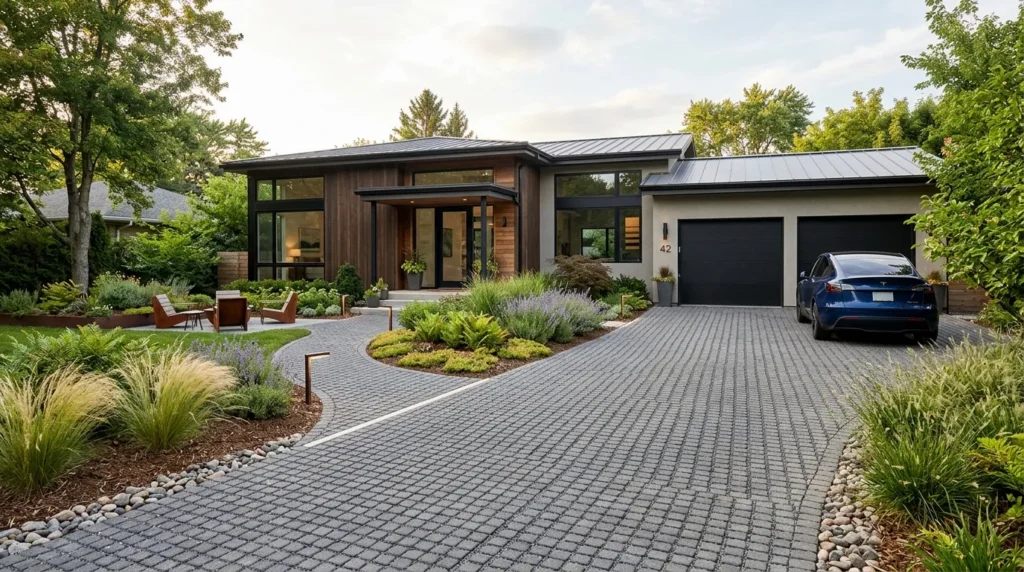
Permeable pavers allow water to pass through the surface and infiltrate the ground below rather than running off into surrounding areas. This reduces pooling, minimizes erosion, and supports healthier groundwater recharge. The attractive appearance also enhances outdoor spaces.
Many homeowners choose permeable paving because it combines drainage performance with beautiful design. Available in various styles and colors, the pavers work well for patios, pathways, and driveways. The result feels modern, environmentally responsible, and highly functional.