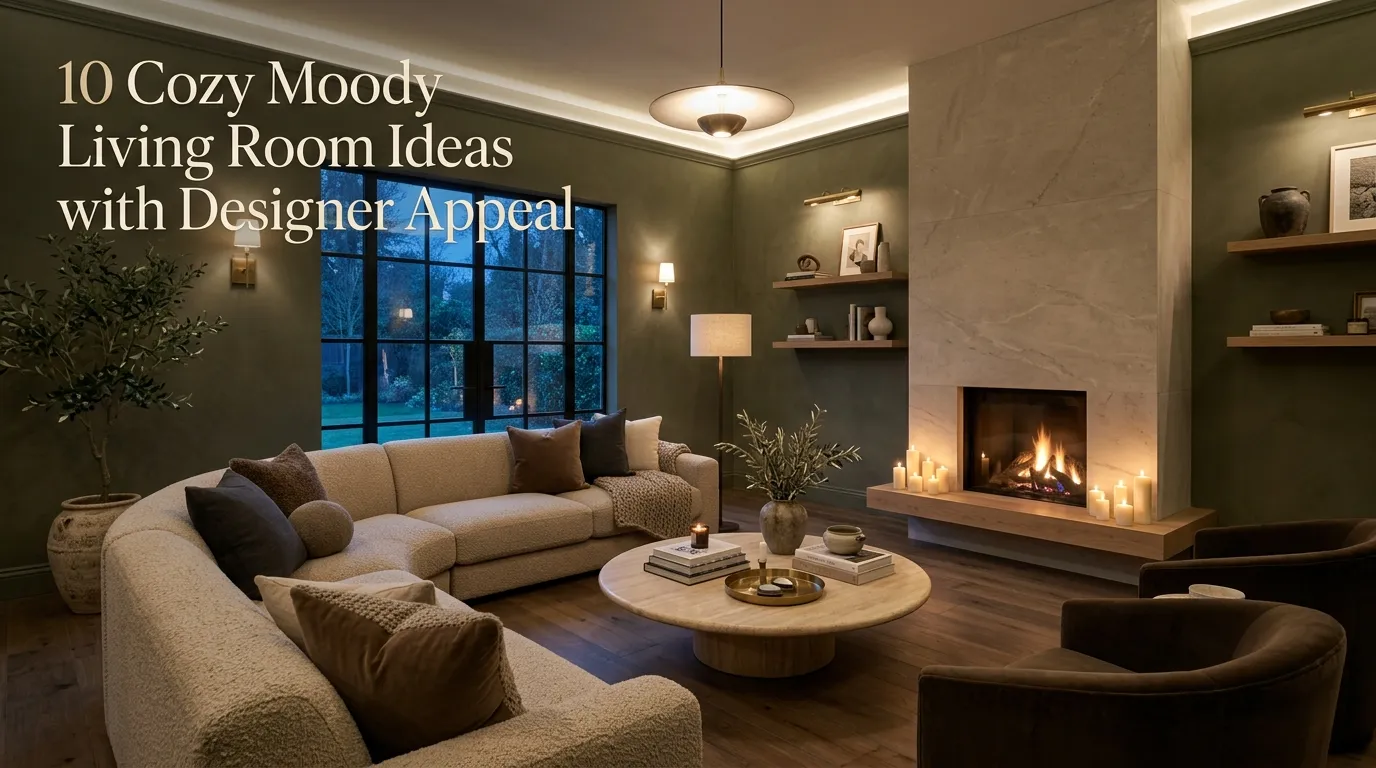
10 Cozy Moody Living Room Ideas with Designer Appeal
For years, the design world has pushed the narrative that white, bright, and stark spaces are the only way to achieve a high-end, editorial look. We’ve all scrolled past endless feeds of bleached linen sofas, bright white walls, and minimalist spaces that look beautiful in a magazine but feel remarkably cold in real life. If you are someone who craves warmth, comfort, and an undeniable sense of soul when you walk through your front door, that hyper-bright aesthetic can feel entirely empty. A home shouldn’t feel like an unblemished art gallery; it should feel like a sanctuary that wraps you in a comforting embrace at the end of a long day.
If you’re anything like me, you have found yourself drawn to spaces that have a bit of mystery, drama, and deep, tactile comfort. That is where the magic of an intentional, moody design comes into play. Shifting away from standard white walls isn’t about making a room feel small or gloomy; it’s about mastering depth, playing with rich textures, and leaning into the shadows to craft a high-end look. When done correctly, an atmospheric palette feels incredibly sophisticated, grounding, and intimately welcoming for family and guests alike.
In my experience, bringing this style to life requires a thoughtful blend of deep tones and cozy elements so the room feels curated rather than accidental. One thing that works especially well is balancing dark foundations with warm light and organic materials to keep the space feeling soft and alive. By focusing on intentional contrast and luxurious details, you can easily replicate these 10 Cozy Moody Living Room Ideas with Designer Appeal to establish a magazine-worthy haven. Let’s dive into how you can transform your main living area into an atmospheric masterpiece.
Table of Contents
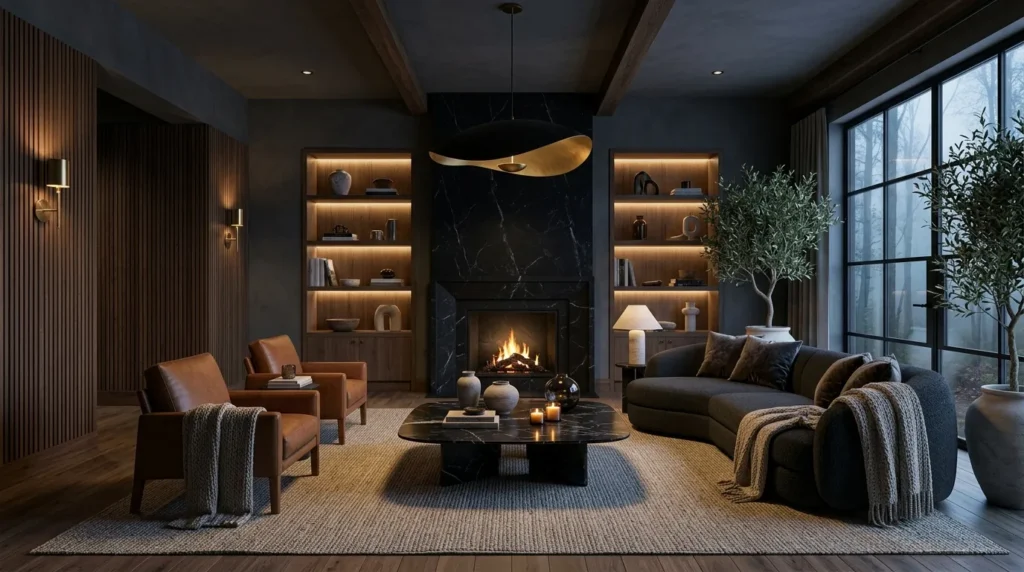
- 1. Velvet Jewel Seating
- Plush, deeply saturated sofas and chairs that absorb light and add instant tactile luxury.
- 2. Integrated Color Drenching
- Painting walls, trim, and built-ins the same dark tone to create a seamless, high-end look.
- 3. Layered Ambient Lamps
- Moving away from overhead fixtures toward scattered low-level light sources for ultimate coziness.
- 4. Deep Walnut Elements
- Bringing in rich, dark wood furniture pieces to ground the space with organic warmth.
- 5. Antique Brass Accents
- Using warm, weathered metallic details to pierce through dark shadows with polished elegance.
- 6. Textured Lime Wash
- Applying dimensional, mineral-based wall finishes that capture low light beautifully.
- 7. Intimate Gallery Collections
- Grouping moody, vintage oil landscape reproductions together to build a historic focal point.
- 8. Puddling Velvet Drapery
- Hanging heavy, floor-to-ceiling window panels to enhance vertical height and acoustic softness.
- 9. Statement Stone Mantels
- Centering the living space around a dark, weathered stone or brick fireplace facade.
- 10. Moody Botanical Displays
- Using deep burgundy foliage, dried branches, and dark greenery to introduce life naturally.
1. Velvet Jewel Seating
Quick Benefits
- Elevates the visual value of the entire room instantly.
- Creates a stunning, light-absorbing focal point.
- Introduces unparalleled physical softness and luxury.
- Deepens the complexity of rich, dark color palettes.
- Disguises minor everyday wear better than flat fabrics.
Why It Works
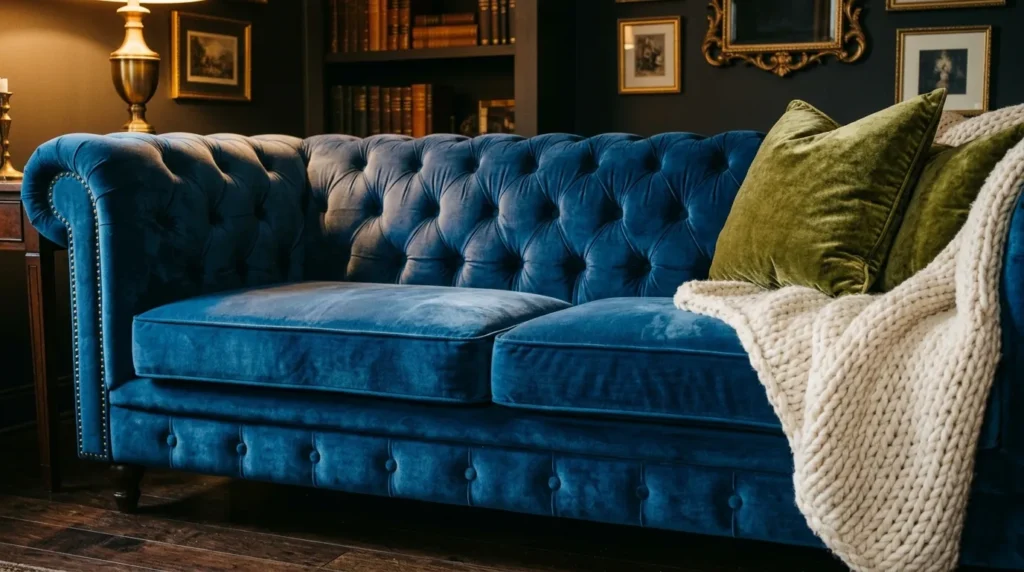
A mistake many homeowners make when trying to execute a darker design is using flat, uniform textiles that cause the space to look washed out or sterile. That’s why many designers recommend using velvet seating as a primary material anchor in an atmospheric space. Velvet features a dense, directional pile that catches low light along its curves, creating a subtle shifting sheen that prevents dark rooms from looking flat. In deeply saturated tones like sapphire, emerald, or deep garnet, velvet brings an immediate sense of warmth and editorial drama, turning a standard seating arrangement into an enticing, cozy sanctuary.
How To Style It
Anchor your central seating arrangement with a substantial velvet chesterfield sofa or a pair of sleek, mid-century modern tuxedo chairs. If your walls are finished in a dark slate or charcoal, choose an emerald green or deep amber velvet to introduce an elegant, sophisticated contrast. Layer the sofa with heavy, chunky knit wool throw blankets in cream or charcoal to build physical texture. Ensure the legs of your seating feature dark espresso wood or tapered antique brass finishes to elevate the pieces slightly off the floor, allowing light to travel underneath and maintaining a balanced sense of space.
2. Integrated Color Drenching
Quick Benefits
- Visual boundaries disappear to make spaces feel endless.
- Camouflages bulky elements like vents, trim, and doors.
- Eliminates the choppy, high-contrast look of white baseboards.
- Delivers an expensive, custom architectural appearance.
- Intensifies the cozy, cocoon-like feel of the room.
Why It Works
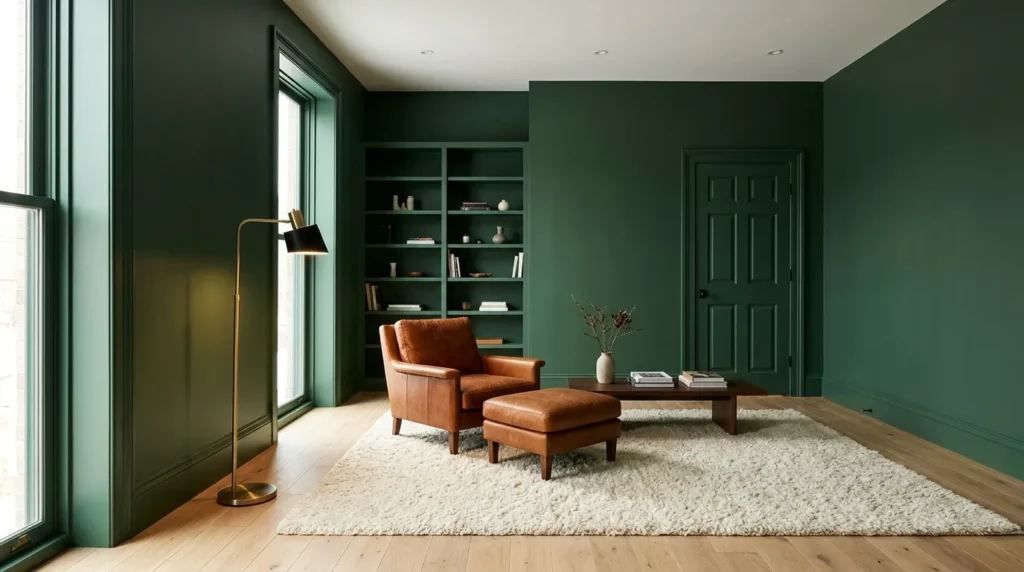
I’ve noticed that the most striking, high-end living spaces rely on a design technique known as color drenching to achieve true designer appeal. This process involves painting your walls, baseboards, window casings, crown molding, and even interior doors in the exact same deep color. When you leave trim white against a dark wall, you create a harsh grid pattern that pulls the eye to the edges of the room, highlighting its limits. By wrapping the entire room in a singular, continuous hue, you remove those visual breaks, allowing the walls to recede seamlessly and making the entire living area feel grander, softer, and incredibly cohesive.
How To Style It
Select a complex, desaturated tone like a deep forest green, charcoal gray, or a rich navy with gray undertones. Use a premium flat or matte finish for the main wall expanses to absorb light, and apply the exact same color in a satin or semi-gloss finish to the baseboards, window trim, and doors. This slight variation in sheen provides a subtle, sophisticated contrast that highlights your home’s architectural details without breaking the continuous flow of color. Contrast this all-encompassing backdrop with a light-toned oak floor or a massive, vintage-inspired cream area rug to ground the space beautifully.
3. Layered Ambient Lamps
Quick Benefits
- Eliminates harsh overhead glare and cold highlights.
- Invites instant relaxation by lowering visual stimulation.
- Illuminates specific, functional task zones elegantly.
- Creates enchanting pockets of soft shadow and light.
- Emphasizes the rich depth of dark wall colors.
Why It Works
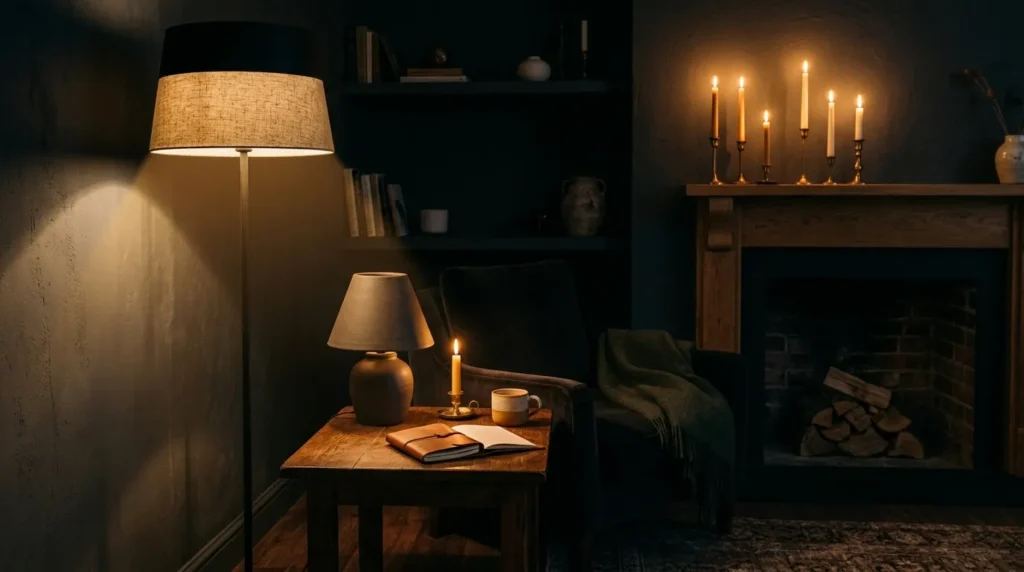
One simple trick I always suggest to instantly shift the mood of a room is completely re-evaluating your lighting plan. If you rely primarily on centralized overhead recessed lighting, you will completely wash out the subtle nuances that make a dark space feel safe and comforting. Layered ambient lighting means scattering low-wattage light sources at varying heights throughout the living room. By choosing warm, amber bulbs (ideally between 2200K and 2700K) and focusing light exclusively downward and outward, you create a soft, welcoming glow that leaves corners in gentle shadow, highlighting the cozy dimensions of the room.
How To Style It
Turn off your ceiling lights entirely and position an oversized fabric-shaded floor lamp directly beside your favorite accent chair. Place matching ceramic table lamps with opaque linen shades on flanking side tables to direct light downward toward the tabletops. Mount battery-operated or hardwired brass picture lights directly above your artwork to create a beautiful, museum-like glow on your walls. Finally, scatter real wax taper candles across your coffee table and fireplace mantelpiece, allowing the flickering flames to provide low-level, dynamic light that accentuates the room’s designer appeal.
4. Deep Walnut Elements
Quick Benefits
- Grounding material that adds instant natural history.
- Infuses dark rooms with essential organic warmth.
- Pairs beautifully with every type of deep paint.
- Displays unique, light-catching wood grain details.
- Adds significant structural weight and durability.
Why It Works
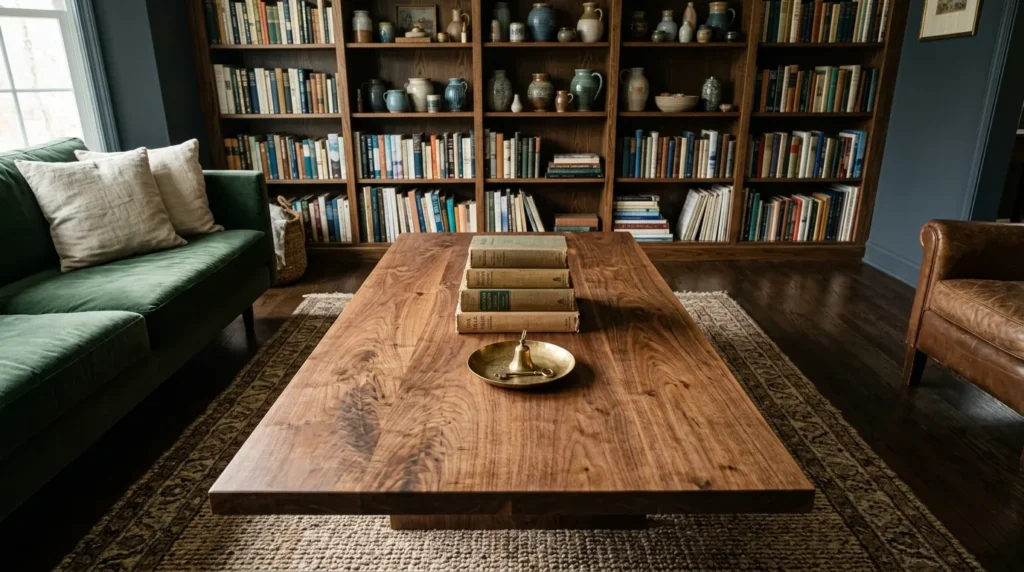
To keep an atmospheric living space from looking cold or overly synthetic, you must introduce authentic, organic elements that carry real-world warmth. Deep wood tones—specifically walnut, espresso oak, and rich mahogany—are perfect for bringing a grounded substance into the room. In my experience, wood carries a natural, matte texture and history that paint simply cannot mimic. The rich, swirling grain of a high-quality wood piece catches low light beautifully, breaking up large fields of solid dark color and providing a sense of timeless craftsmanship that elevates the entire living area.
How To Style It
Introduce dark wood through prominent, central furniture pieces rather than tiny accessories. A large, solid walnut coffee table with clean lines or a vintage dark wood credenza positioned beneath a television makes a fantastic visual anchor. If you have dark walls and dark flooring, place a large, textured wool rug beneath your walnut furniture to provide a necessary layer of visual separation. You can also introduce this material architecturally by installing dark-stained cedar or oak beams across the ceiling, which encloses the space in a striking, cabin-like architecture.
5. Antique Brass Accents
Quick Benefits
- Cuts through deep shadows with a refined gleam.
- Introduces a highly polished, jewelry-like detail.
- Complements warm-toned paint colors effortlessly.
- Ages gracefully over time, developing a soft patina.
- Restores structural contrast to dark, monochromatic rooms.
Why It Works
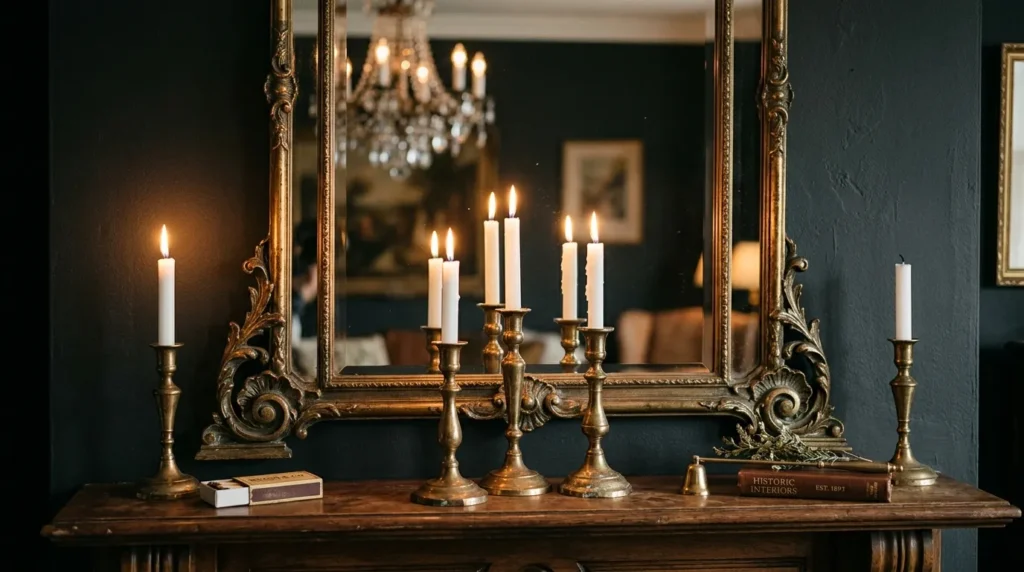
When designing with a deep, moody color palette, you need intentional, reflective elements that pierce through the shadows to prevent the space from looking dull or completely obscured. Antique brass accents act as the ultimate finishing touch for your living room. Because brass features a naturally warm, golden undertone, it contrasts beautifully against deep grays, blues, and forest greens without creating the chilly, institutional look that silver or chrome often brings. I’ve seen this idea transform spaces because unlacquered or aged brass carries a historical weight that pairs perfectly with cozy, lived-in aesthetics.
How To Style It
Look for subtle opportunities to integrate brushed or antique brass throughout your existing living room hardware. Swap out standard black or silver cabinet pulls on your media built-ins for solid brass hardware, and choose floor lamps with slender brass stems. Hang an oversized, ornate vintage brass mirror directly above your fireplace mantel to reflect light across the room, or position a set of heavy brass candleholders on your coffee table. These small, brilliant points of metallic light will catch your ambient lamp glow and keep the eye moving naturally through the space.
6. Textured Lime Wash
Quick Benefits
- Adds tactile, old-world movement to flat drywall.
- Absorbs and diffuses low light seamlessly.
- Conceals minor wall dents and uneven surfaces.
- Creates a calming, stone-like aesthetic.
- Free from harsh chemicals and synthetic odors.
Why It Works
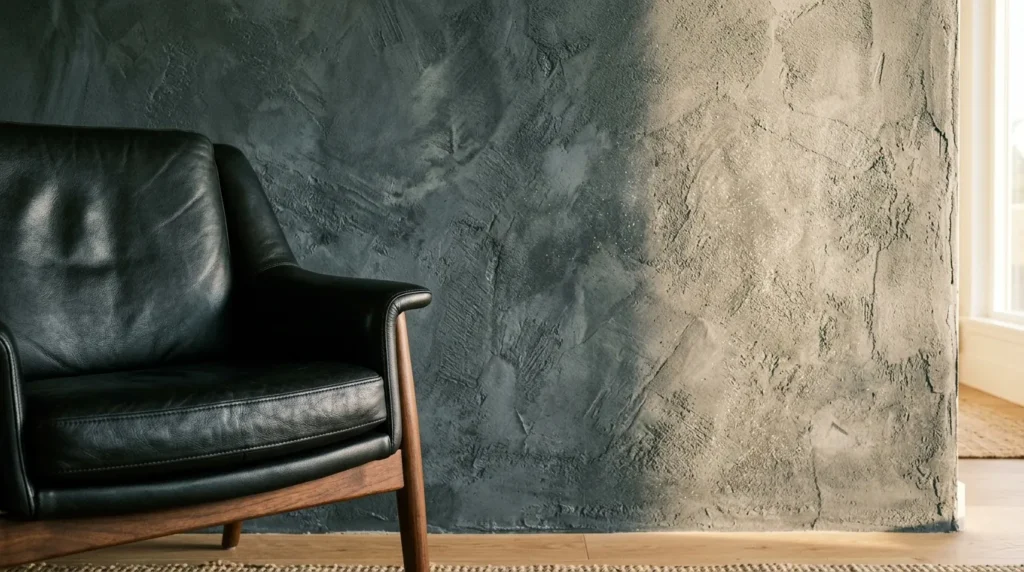
One thing that works especially well when crafting an editorial room is focusing on the physical texture of your walls. Standard latex paint dries to a completely flat, uniform film, which can occasionally make a dark room look heavy or closed-in. Lime wash paint, which is made from natural slaked lime and minerals, creates a beautiful, mottled finish that mimics the historic walls of European villas. As light hits a lime-washed wall, it catches the microscopic mineral crystals, creating subtle variations in color and tone that give your dark walls incredible movement, depth, and a high-end designer appeal.
How To Style It
Select a mineral-based lime wash paint in a deep, earthy tone like slate, dark olive, or espresso brown. Apply the paint using a traditional blocking brush in large, overlapping “X” motions to build up natural layers of visible texture. Because lime wash is highly absorbent and matte, style it alongside high-contrast textures like smooth, glossy leather chairs or sleek polished stone tabletops. Keep your artwork simple and minimally framed, allowing the incredible, suede-like texture of the lime-washed walls to serve as the primary artistic statement in the room.
7. Intimate Gallery Collections

Quick Benefits
- Infuses the room with deeply personal narrative.
- Dynamically fills large, intimidating wall spaces.
- Establishes a clear, highly engaging focal point.
- Blends modern decor with historic design elements.
- Allows you to easily swap art as seasons change.
Why It Works
Large, blank expanses of dark wall can sometimes feel imposing or sterile if left entirely bare. Creating an intimate gallery collection is a brilliant way to break up that visual weight while leaning into a curated, historic design theme. By clustering multiple pieces of artwork tightly together, you form a dense, captivating display that immediately draws people in. In my experience, selecting art prints with deep backdrops, vintage oil landscape reproductions, or charcoal sketches allows the collection to integrate naturally with dark walls, making the art feel as though it is emerging organically from the shadows.
How To Style It
Gather a collection of frames from local thrift stores, flea markets, or antique shops, focusing exclusively on ornate tarnished gold, dark wood, and deep black finishes. Source art prints that feature moody forest landscapes, dramatic vintage portraits, or classical still-life oil paintings. Arrange the frames tightly together over your main sofa or along an empty accent wall, keeping the physical distance between frames down to just two to three inches to emphasize density. Illuminate the entire collection with a dedicated brass picture light mounted directly above the center frame.
8. Puddling Velvet Drapery
Quick Benefits
- Visual height increases as ceilings appear taller.
- Softens harsh room acoustics and echoes instantly.
- Provides exceptional light blocking and insulation.
- Introduces a sweeping, theatrical element of luxury.
- Softens the hard, straight angles of window frames.
Why It Works
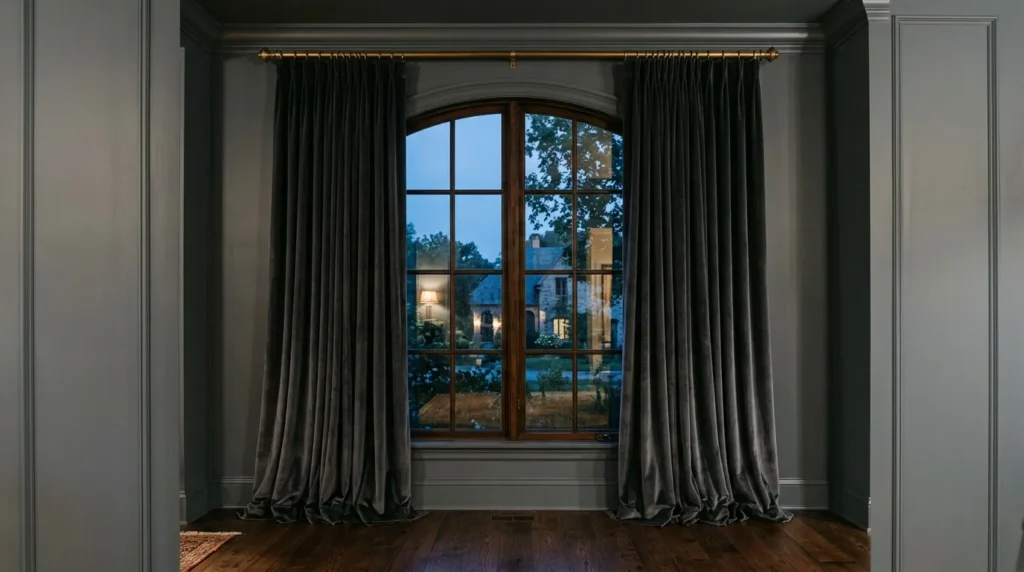
Windows can quickly become massive, cold black voids at night if they are left uncovered, which totally breaks the cozy, safe feeling of an atmospheric living area. Framing your windows with heavy, puddling velvet drapery is an elite way to add dramatic height, luxurious texture, and a soft layer of insulation. Heavy fabrics like velvet or dense, tightly woven linen soften the room physically and visually. Allowing the drapes to pool slightly on the flooring delivers an old-world elegance that instantly upgrades the room, making your windows look custom-built and meticulously designed.
How To Style It
Mount your drapery rods as close to the ceiling line as possible, extending the rod out about 12 inches wider than the window frame on each side. This smart placement allows you to pull the curtains completely open during the day without blocking natural light. Choose heavy panels in a deep color that matches your drenched walls—such as charcoal, chocolate brown, or deep navy. Order the curtains slightly longer than your actual floor-to-ceiling measurement so that an extra two inches of rich fabric can puddle gracefully on the floor for an intentional, high-end look.
9. Statement Stone Mantels
Quick Benefits
- Acts as an undeniable, grounding architectural anchor.
- Introduces raw, organic texture into a dark space.
- Creates a stunning backdrop for fire and candlelight.
- Bridges the gap between rustic and modern styling.
- Infuses the living room with a permanent historic soul.
Why It Works
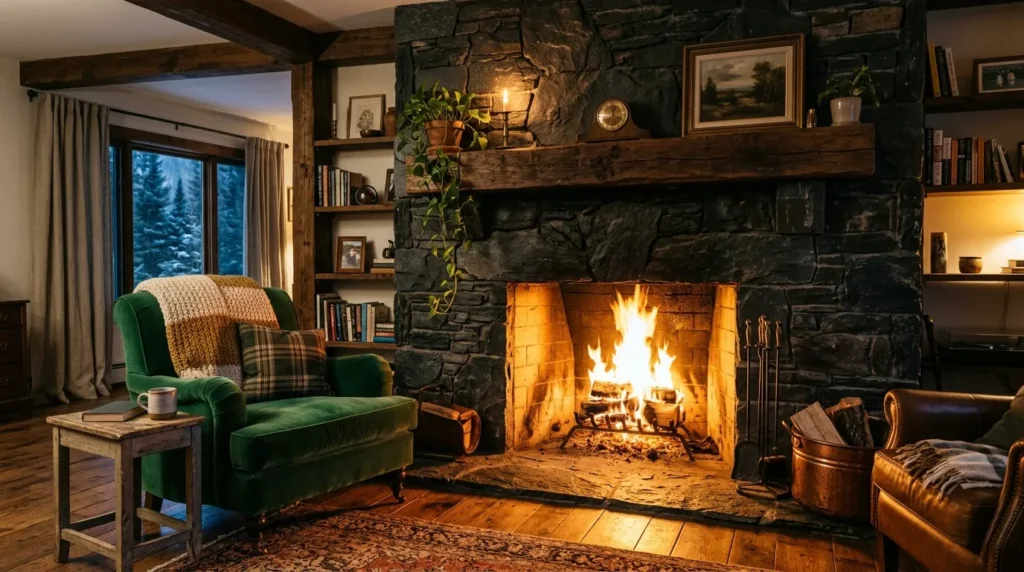
That’s why many designers recommend anchoring an atmospheric living room around a substantial architectural feature like a statement stone mantel. A fireplace naturally serves as the gathering point of a home, and building it out with dark, textured stone, slate, or over-grouted brick amplifies the cozy, hearth-centered vibe of a moody room. The raw, jagged, or weathered surface of stone absorbs and reflects firelight in an enchanting pattern, providing an incredibly rich tactile contrast against smooth drenched walls and plush velvet furniture.
How To Style It
If you have an existing fireplace fireplace, consider facing the surround with dark slate tiles, rough-hewn flagstone, or dark, charcoal-washed brick. Top the stone with a thick, heavy mantelpiece made from a reclaimed dark oak railroad tie or a solid block of dark limestone. Style the mantel minimally with a large antique mirror, a few brass candleholders, and a small stack of vintage leather-bound books. If your home doesn’t have a built-in fireplace, you can source a vintage cast-iron stove or build a faux mantel facade using dark, weathered brick slips to achieve the exact same designer impact.
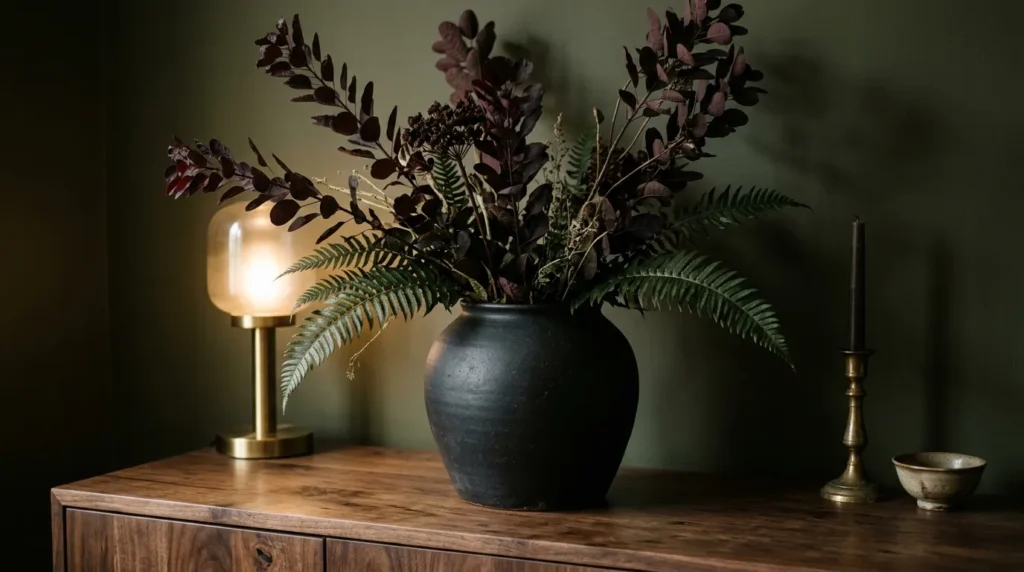
10. Moody Botanical Displays
Quick Benefits
- Brings a touch of living nature into dark spaces.
- Softens sharp furniture lines and hard corners.
- Introduces beautiful, irregular organic shapes.
- Showcases deep, unexpected color variations naturally.
- Keeps an atmospheric room looking fresh and updated.
Why It Works
Every balanced room requires a touch of natural life to feel complete, but bright, neon-green houseplants can often create an unappealing clash against a dark, moody design. Opting for moody botanical displays allows you to integrate nature seamlessly. Focusing on foliage that naturally features deep burgundy, dark plum, or forest green hues—as well as using dried branches and structural twigs—allows you to align your plants with your dark color scheme. These deeper botanical elements bring essential movement and life into your living area while preserving the sophisticated, mysterious look you’ve built.
How To Style It
Place an oversized, matte black terracotta or stoneware crock in an empty corner of the room or on your central coffee table. Fill it with tall, structural stems of dried eucalyptus, dark plum cotinus branches, or winding willow twigs that reach toward the ceiling. If you prefer live houseplants, incorporate varieties that thrive in lower light conditions and feature deep silhouettes, such as the rubber plant (Ficus elastica) with its near-black glossy leaves, or a dramatic dark ZZ plant. These deep green tones look stunning silhouetted against a dark charcoal accent wall.
Featured Snippet Optimization
To successfully style a cozy moody living room with designer appeal, you must combine dark color palettes with varied, high-end textures. Avoid flat paint and cheap fabrics. Instead, use the 10 Cozy Moody Living Room Ideas with Designer Appeal outlined in this guide: employ integrated color drenching on your walls and trim, anchor the room with plush jewel-toned velvet sofas, utilize warm, layered ambient lighting via lamps, and ground the layout with rich walnut wood furniture and antique brass details.
FAQ Section
Will implementing these cozy moody living room ideas make my space feel like a dark cave?
This is a very common concern, but the answer is no. A dark room only feels like a cave when it lacks proper lighting and texture. By scattering multiple warm ambient lamps, using reflective elements like antique brass, and introducing soft fabrics like velvet, the dark colors will actually recede visually. This creates a deeply comforting, sophisticated atmosphere that feels expansive and luxurious rather than small or gloomy.
Can I still use these designer concepts if my living room gets a lot of bright, natural sunlight?
Absolutely. In fact, natural light looks incredible in a dark room. During the day, bright sunshine will wash over your deep paint tones and highlight the beautiful, subtle textures of your lime wash walls, walnut wood, and velvet seating, creating a dynamic, high-contrast look. In the evening, when the sun sets, your ambient lamps will take over to create a cozy, intimate sanctuary.
How can I adopt a moody style if I live in a rental apartment and am not allowed to paint?
You can easily achieve an editorial, atmospheric vibe without opening a single can of paint. Focus heavily on temporary, large-scale textiles and furniture. Hang floor-to-ceiling dark velvet curtains to cover your light walls, lay down a massive dark charcoal or black vintage-style area rug to hide light flooring, bring in a dark wood coffee table, and hang a dense arrangement of thrifted art using damage-free hanging strips.
What color undertone should I look for when selecting a dark paint for a cozy room?
You should always aim for warm undertones when trying to build a cozy environment. If you want a dark gray, look for a charcoal with a warm brown or green base rather than a cool blue base. If you want a dark green, choose a muddy olive or a warm forest tone. Cool undertones can quickly make a dark room feel clinical, chilly, and uninviting, whereas warm bases keep the space feeling incredibly snug.
How do I choose the right rug for a dark, monochromatic living room layout?
To keep the space balanced, your rug should provide either a layer of rich texture or a subtle contrast. A massive, plush wool rug in a soft cream or light beige with a subtle, muted dark sketch pattern looks incredible because it breaks up the dark floor and walls. Alternatively, you can choose a vintage Persian or Turkish rug with deep burgundy, navy, and gold tones to enhance the room’s historic, collected feel.
Conclusion
Stepping away from the standard rules of bright white decorating and embracing a deep, atmospheric design is the ultimate way to inject real personality, warmth, and luxury into your home. By utilizing these 10 Cozy Moody Living Room Ideas with Designer Appeal—from the immersive look of integrated color drenching to the physical luxury of plush velvet seating and rich walnut furniture—you can easily establish a space that feels completely curated by a professional designer. Remember that creating a beautiful home is a personal journey that doesn’t have to happen all at once. Start by introducing one or two key elements, like a warm ambient table lamp or a piece of brass hardware, and watch how easily your living area transforms into an inviting, high-end sanctuary that you never want to leave.
Related Articles
- Cozy Bedroom Ideas for a Restful Sanctuary
- Small Living Room Layouts That Maximize Space
- Modern Farmhouse Decor Essentials for Every Home
- Neutral Home Styling for a Sophisticated Space
- DIY Accent Wall Ideas to Transform Your Walls