
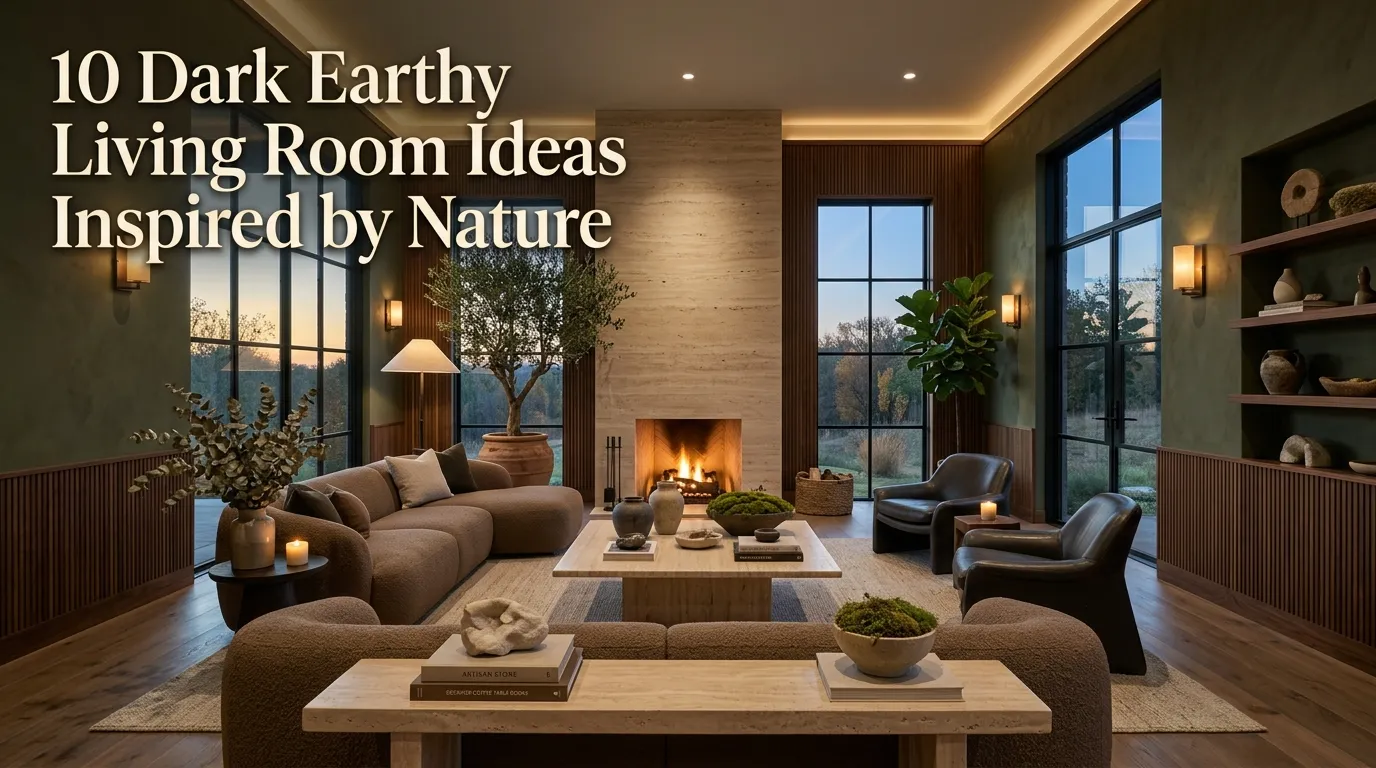
10 Dark Earthy Living Room Ideas Inspired by Nature
The modern obsession with stark white walls and ultra-minimalist spaces has left many of us feeling spiritually disconnected from our homes. We have been told for years that brightness equals beauty, resulting in endless rows of clinical, bleach-toned living rooms that look stunning in a staging photograph but feel remarkably sterile to live in. A living room shouldn’t feel like a cold clean room; it should feel like an organic extension of the earth—a deeply protective, safe sanctuary where your nervous system can completely settle down after a frantic day in the digital world.
If you’re anything like me, your soul craves the grounding serenity found in dense forest canopies, rich riverbed soils, and weathered volcanic rock. Bringing those deep elements indoors isn’t about making a home feel dim or oppressive; it’s about leaning into a dark, earthy aesthetic that utilizes nature’s most honest palettes to create a high-end designer space. When you swap synthetic materials for raw, tactile elements, your living room transforms into a living, breathing ecosystem that wraps you in absolute comfort.
In my experience, executing this look successfully requires a careful balance of raw textures and deep tones so the space feels meticulously curated rather than heavy. One simple trick I always suggest is focusing on how natural light and low-level ambient lamps play across textured surfaces, ensuring that every dark shade is backed by a rich, tactile material. By pulling inspiration directly from the natural world, you can easily implement these 10 Dark Earthy Living Room Ideas Inspired by Nature to build a deeply comforting, timeless environment. Let’s explore how to ground your home in true atmospheric luxury.
Table of Contents
- 1. Moss Green Color Drenching
- Wrapping your walls, baseboards, and crown molding in a deep, organic forest hue.
- 2. Raw Slate Fireplace Surrounds
- Using jagged, light-absorbing natural stone to create a substantial architectural anchor.
- 3. Bark-Textured Wood Elements
- Bringing in live-edge walnut, rough-sawn oak, and deep timber to ground the floor plan.
- 4. Textured Clay Walls
- Applying mineral-rich Roman clay or lime wash finishes for an authentic, stone-like depth.
- 5. Terracotta Ceramic Punctuation
- Introducing warm, sun-baked clay vessels and planters to cut through deep shadows.
- 6. Heavy Linen Window Panels
- Framing windows with dense, slubby, floor-to-ceiling flax drapery for organic softness.
- 7. Aged Bronze Hardware
- Replacing bright metals with dark, oil-rubbed bronze details that patina beautifully over time.
- 8. Woven Jute Sub-Layers
- Using thick, chunky natural fiber area rugs to add physical and visual underfoot texture.
- 9. Forest Landscape Galleries
- Grouping moody, desaturated oil painting reproductions of ancient woodlands together.
- 10. Oversized Botanical Canopy
- Using towering dried branches and deep green structural foliage to breathe life into corners.
1. Moss Green Color Drenching
Quick Benefits
- Erases harsh corners to make the room feel entirely seamless.
- Brings the calming psychological effects of deep nature indoors.
- Disguises unsightly utility vents, wall plates, and radiator units.
- Provides a breathtaking, high-end editorial backdrop for furniture.
- Creates an incredibly secure, protective cocoon-like atmosphere.
Why It Works
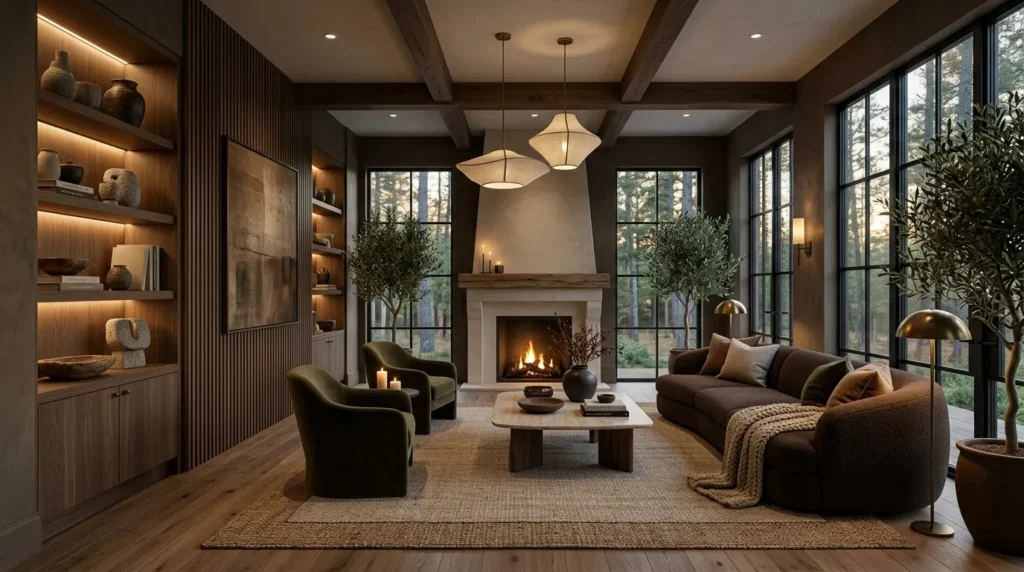
A mistake many homeowners make when trying to create an organic space is painting only a single accent wall dark while leaving the rest of the room white. This creates a high-contrast visual break that slices the room apart and causes it to feel small. That’s why many designers recommend integrated color drenching, which involves coating your walls, baseboards, window casings, and doors in the exact same deep moss or forest green tone. This technique allows the physical boundaries of the living room to recede completely into the shadows, mimicking the wrapping embrace of a dense woodland canopy.
How To Style It
Select a sophisticated, muddy moss green with heavy gray or brown undertones to keep it looking grounded. Use a premium matte or flat finish paint for the main drywall expanses to absorb light, and apply the exact same color in a durable satin finish to the baseboards, trim, and doors. This tiny variation in sheen catches low light just enough to map your home’s historic architecture without breaking the continuous flow of color. Contrast this rich green envelope with a light camel leather sofa and a raw wood coffee table to mimic a authentic forest floor layout.
2. Raw Slate Fireplace Surrounds
Quick Benefits
- Introduces a massive, authentic geological element into the room.
- Absorbs and diffuses roaring firelight in dramatic patterns.
- Acts as an undeniable, heavy architectural center point.
- Bridges the design gap between rugged wilderness and modern luxury.
- Conceals ash, soot, and everyday dust seamlessly.
Why It Works
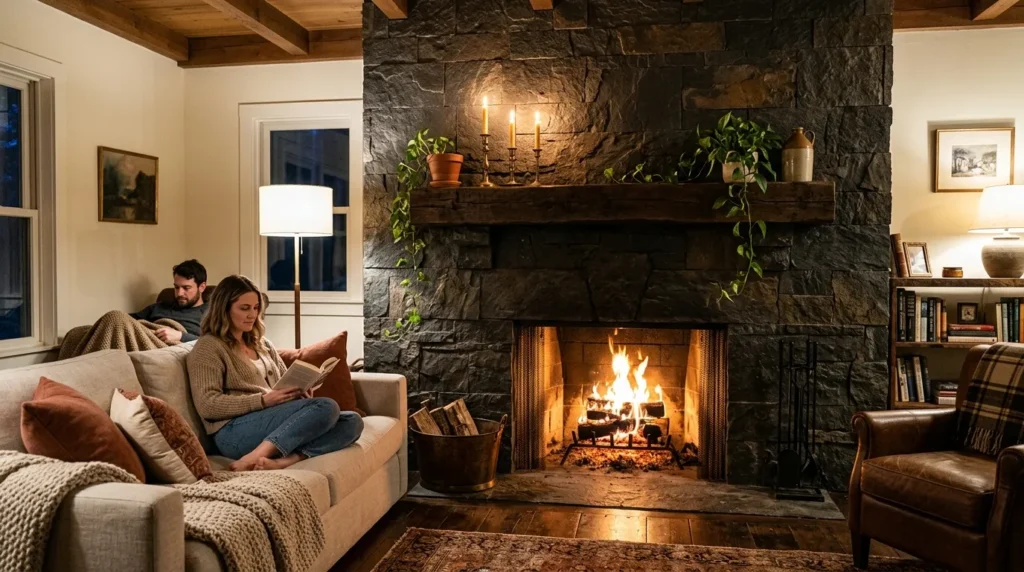
Every balanced living room requires a substantial structural anchor that commands attention the moment you step inside. A fireplace surround constructed from raw, split-face slate or dark flagstone brings an authentic mountain-lodge weight directly into a residential space. I’ve seen this idea transform spaces completely because natural stone possesses an irregular, multi-dimensional texture that synthetic tiles simply cannot emulate. The rugged, light-absorbing qualities of dark stone create beautiful shadows, anchoring the entire room with a raw, historic permanence that feels incredibly safe.
How To Style It
Face your chimney breast or fireplace surround with floor-to-ceiling split-face slate ledger stones in shades of charcoal, deep iron, and muddy bronze. Top the stonework with a massive, hand-hewn mantel shelf made from a reclaimed dark oak railroad tie. Style the mantel piece minimally to keep the focus on the stone texture; add a few unlacquered brass candleholders with dripping cream tapers and a single piece of abstract charcoal artwork. This combination creates a striking, campfire-like hearth that acts as the ultimate gathering spot on chilly evenings.
3. Bark-Textured Wood Elements
Quick Benefits
- Infuses the room with immediate organic warmth and character.
- Displays beautiful, unique wood grains that catch ambient light.
- Softens the hard, manufactured lines of modern electronics and cabinetry.
- Adds incredible physical weight and lifelong durability to layout.
- Pairs effortlessly with green, charcoal, and brown paint colors.
Why It Works
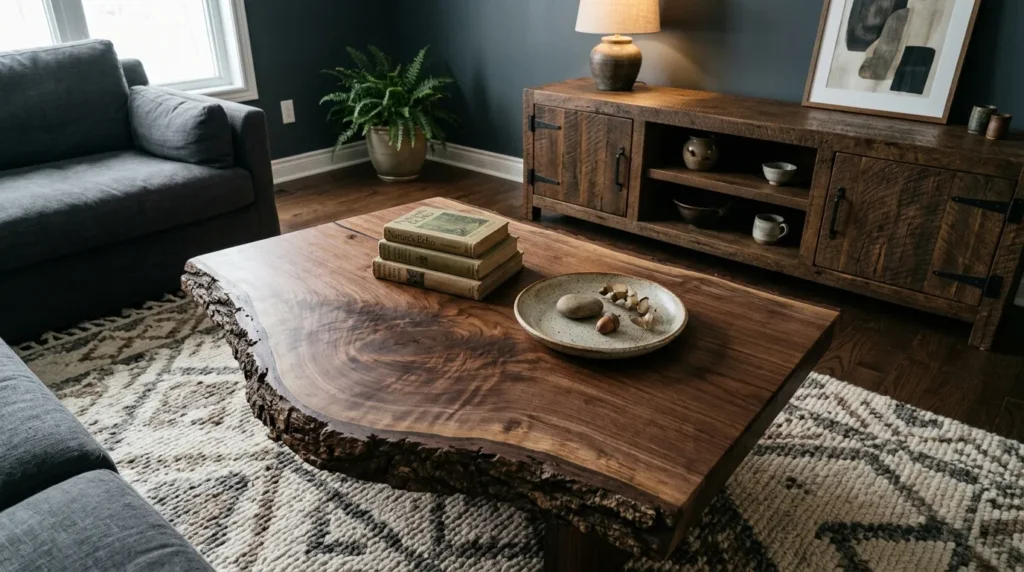
In my experience, a dark room will feel cold and industrial if it isn’t balanced by the natural, coarse texture of real timber. Bark-textured wood elements—such as live-edge walnut, rough-sawn espresso oak, and reclaimed barn timber—bring an irreplaceable sense of history and life inside. Wood carries organic imperfections, knots, and swirling growth rings that tell a story. The natural matte finish of dark, rough timber absorbs light beautifully, preventing unwanted glare and grounding your furniture layout with a heavy, time-worn substance.
How To Style It
Incorporate substantial dark wood through your largest furniture pieces rather than tiny tabletop decor. Introduce a large, live-edge walnut coffee table that still features its rugged, organic perimeter, or style a long, rough-sawn dark oak credenza beneath your media setup. If your floors are a light white oak, position a massive, dark woven rug beneath your wood furniture to provide a clear layer of visual separation, ensuring the dark wood grain pops beautifully against your deep earth-toned walls.
4. Textured Clay Walls
Quick Benefits
- Swaps flat, sterile drywall for a dynamic, stone-like texture.
- Softly diffuses low-level ambient light across the room.
- Conceals minor wall imperfections and wavy plaster lines easily.
- Regulates indoor humidity naturally due to mineral breathability.
- Creates a high-end, European villa aesthetic effortlessly.
Why It Works
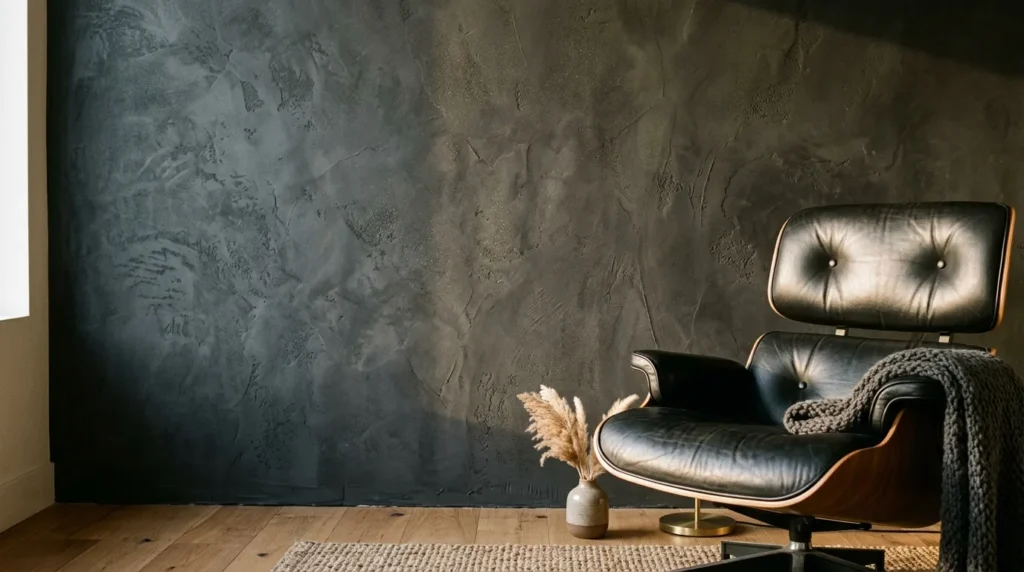
One thing that works especially well when designing an editorial, nature-inspired room is focusing heavily on the physical texture of your walls. Standard modern latex paints dry to a completely flat, plastic-like film that can occasionally feel synthetic. Utilizing textured clay walls—via Roman clay, lime wash, or mineral plaster—introduces a rich, suede-like finish that perfectly mimics natural rock faces and ancient caves. The microscopic mineral crystals embedded within clay catch low light gently, creating subtle variations in color that keep dark walls looking soft, alive, and multidimensional.
How To Style It
Select a natural, earth-derived Roman clay or lime wash paint in a deep charcoal, muddy olive, or rich peat brown shade. Apply the product using a stainless steel trowel or a traditional blocking brush in wide, sweeping, overlapping motions to build up visible layers of texture. Because clay walls are highly matte and organic, pair them with high-contrast smooth textures like polished stone side tables, sleek oil-rubbed bronze lamps, and glossy leather accents to establish a highly sophisticated, multi-layered designer appeal.
5. Terracotta Ceramic Punctuation
Quick Benefits
- Introduces a necessary pop of warm, sun-baked color.
- Provides a stunning contrast against deep green and charcoal backdrops.
- Adds a traditional, hand-crafted artisan layer to the room.
- Offers highly versatile styling options across shelves and tables.
- Enhances the earthy, raw material narrative of the home.
Why It Works
When you are working with a deeply saturated, dark earthy color palette, you need a few intentional moments of warmth to pierce through the shadows so the room doesn’t look completely monochromatic. Terracotta ceramic punctuation acts like a burst of autumn sun inside a dark forest. Because natural, unglazed terracotta features a rich, burnt orange and reddish-brown undertone, it contrasts beautifully against mossy greens and slate grays. This historic, baked-earth material grounds the living room, ensuring it feels warm, inviting, and connected to ancient pottery traditions.
How To Style It
Collect an assortment of weathered, antique terracotta pots and oversized clay jars from local flea markets or artisan shops, looking for pieces with visible salt rings and imperfections. Style these vessels in clusters of three on your coffee table, fireplace hearth, or deep wood shelves. Leave some completely empty to highlight their structural, sculptural beauty, and fill others with dried branches. The warm, rustic orange tone of the clay will pop dramatically against a dark green or charcoal lime-washed wall, adding immediate designer appeal.
6. Heavy Linen Window Panels

Quick Benefits
- Softens harsh, straight architectural window frames.
- Boosts the perceived height of the ceiling when hung high.
- Dampens echo and improves acoustic warmth in dark rooms.
- Provides excellent daytime privacy while filtering harsh light.
- Introduces a relaxed, casual element of luxury.
Why It Works
I’ve noticed that windows can quickly become massive, cold voids at night if they are left completely bare, which totally shatters the cozy comfort of a dark earthy room. Framing your glass with heavy linen window panels is an exceptional way to bring in vertical texture and organic softness. Tightly woven flax linen features a signature slubby, irregular weave that filters natural light beautifully during the day and adds a soft, fabric-insulated layer to the perimeter of the room at night, preserving the safe, cocoon-like atmosphere.
How To Style It
Mount your drapery hardware as close to your ceiling line as possible, extending the rod at least 12 inches wider than the window frame on each side. This smart placement allows you to pull the curtains completely clear of the glass during the day, maximizing natural sunlight. Choose heavy, unlined flax linen drapes in an earthy shade like deep taupe, warm espresso, or charcoal gray. Order the panels slightly longer than your floor-to-ceiling height so an extra two inches of rich fabric can puddle gracefully on the floor for an intentional look.
7. Aged Bronze Hardware
Quick Benefits
- Replaces chilly, modern silver chrome with historic warmth.
- Develops a beautiful, personalized living patina over time.
- Blends seamlessly into dark painted wood and cabinetry.
- Adds a discrete, jewelry-like element of luxury to doors.
- Instantly elevates standard, builder-grade interior elements.
Why It Works
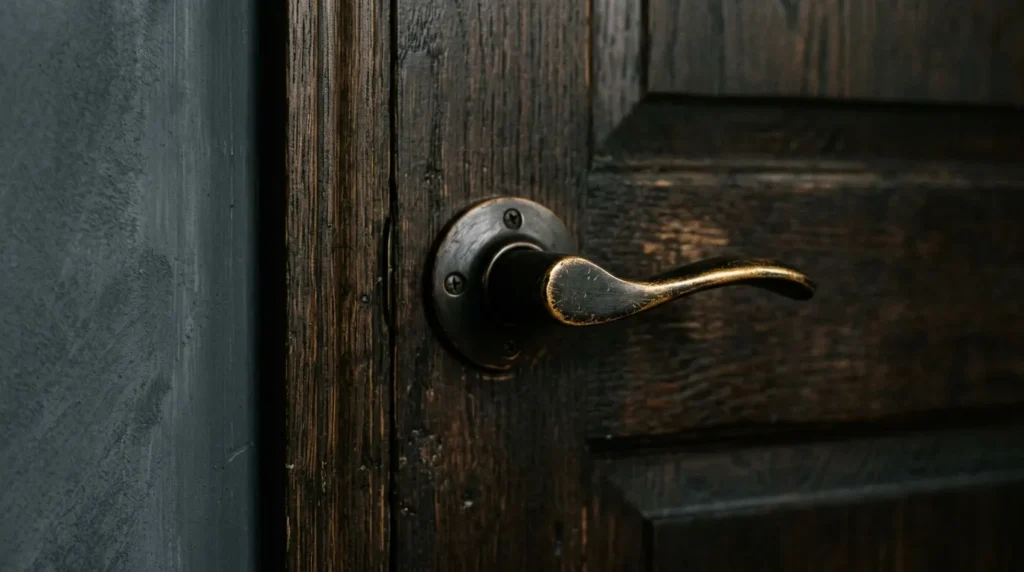
One simple trick I always suggest to tie an entire home design together is completely swapping out bright, shiny metallic fixtures for aged bronze hardware. In a dark earthy living room inspired by nature, bright silver chrome or polished gold can look jarring, modern, and completely out of place. Oil-rubbed bronze, antique brass, and blackened iron feature deep, dark undertones with subtle warm highlights along their edges. These metals carry a historic weight that complements natural materials like stone and wood, adding a quiet refinement that doesn’t scream for attention.
How To Style It
Look for small, high-impact touchpoints throughout your living room to install aged bronze. Swap out standard silver door hinges and knobs for solid oil-rubbed bronze hardware. If you have built-in cabinetry flanking your fireplace, install blackened iron or tumbled brass cup pulls on the drawers. Choose floor lamps, wall sconces, and switch plates that feature a matte, weathered metallic finish. These subtle metallic accents will integrate seamlessly into your dark color scheme, catching low ambient light without disrupting the room’s serene mood.
8. Woven Jute Sub-Layers
Quick Benefits
- Establishes a raw, heavily textured foundation for furniture.
- Protects underlying hardwood floors from heavy foot traffic.
- Introduces an unrefined, casual element that breaks formality.
- Neutralizes deep paint colors with an organic tan backdrop.
- Crafted from highly sustainable, eco-friendly plant fibers.
Why It Works
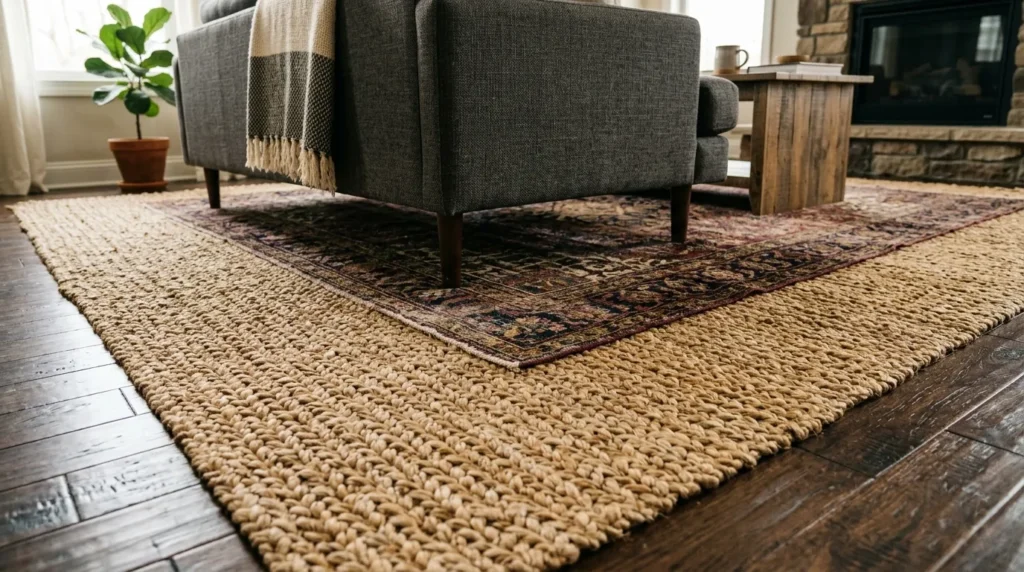
To make an atmospheric living room feel completely successful, you must address the floor with the same dedication as your walls. A mistake many homeowners make is leaving dark hardwood floors completely exposed, which can cause dark furniture to visually dissolve into the ground. A woven jute sub-layer—via a massive, thick natural fiber area rug—acts as a texture filter. Jute is harvested directly from plant stalks and woven into coarse, durable braids that carry beautiful variations in tan, wheat, and brown, bringing an undeniable outdoor landscape texture directly underfoot.
How To Style It
Purchase an oversized, chunky-weave jute or sisal area rug that is large enough to sit comfortably beneath all four legs of your main sofa and accent chairs. This golden-wheat tone provides a natural visual buffer between dark flooring and dark furniture. If you crave an extra layer of physical softness, layer a smaller, plush wool vintage rug on top of the jute base, leaving a 12-inch perimeter of the woven jute exposed. This layered rug technique builds incredible visual depth, warmth, and designer appeal.
9. Forest Landscape Galleries

Quick Benefits
- Infuses large, empty wall expanses with a historic soul.
- Tells a quiet, deeply personalized visual story.
- Distributes visual weight evenly across monochromatic walls.
- Draws the eye to eye-level, making large rooms feel cozy.
- Seamlessly connects your indoor decor with the outdoor world.
Why It Works
Large, blank expanses of dark wall can sometimes feel intimidating or unfinished if left entirely bare. Creating a curated forest landscape gallery allows you to break up that heavy visual space while leaning completely into a historic, nature-inspired design. By clustering vintage oil painting reproductions of ancient woodlands, misty mountains, and moody rivers closely together, you build a dense, captivating focal point. These deep green and brown artworks integrate flawlessly with dark walls, making the art prints look as though they are emerging naturally out of the shadows.
How To Style It
Collect an assortment of vintage-style frames from local thrift stores, focusing exclusively on tarnished gold, dark burled wood, and matte black finishes. Source art prints that feature classical Hudson River School oil landscapes, moody charcoal sketches of trees, or dark, desaturated photography of foggy forests. Arrange the frames tightly together over your main sofa, keeping the distance between frames down to just two or three inches to maximize the sense of density. Illuminate the layout with a brass picture light mounted directly above.
10. Oversized Botanical Canopy
Quick Benefits
- Introduces a vital, organic sense of movement and life.
- Softens straight lines, sharp furniture corners, and edges.
- Showcases stunning, complex silhouettes against dark walls.
- Fills empty vertical space and dead corners naturally.
- Offers an easy, low-cost way to update your decor seasonally.
Why It Works
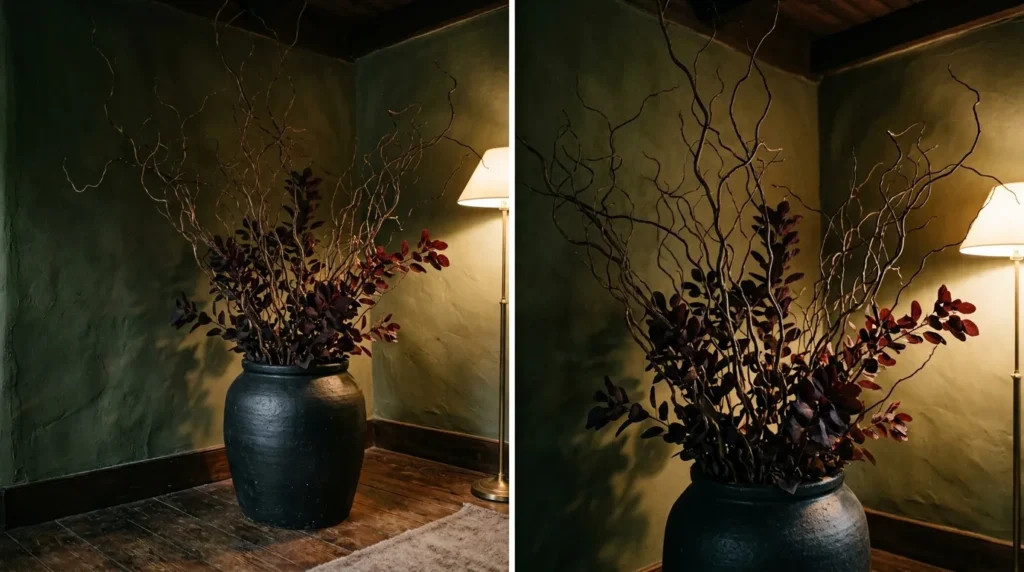
Every successful, nature-inspired room requires a touch of living flora to feel authentic, but bright, neon-green tropical house plants can sometimes clash with a deeply atmospheric, moody color scheme. That’s why many designers recommend opting for an oversized botanical canopy instead. Think of towering dried branches, structural seed pods, and live plants that boast deep burgundy, plum, or dark forest green leaves. These deeper organic elements align perfectly with a shadowed color scheme, bringing a sense of wild vitality into the living room while preserving the sophisticated look.
How To Style It
Place a massive, heavy antique stoneware crock or matte black ceramic jug in an empty corner of the room or on a substantial dark wood sideboard. Fill the vessel with extra-tall, winding willow branches, dried oak stems, or structural magnolia branches that reach all the way up toward the ceiling line. If you prefer live plants, introduce varieties that thrive in indirect light and feature dark silhouettes, such as the rubber tree (Ficus elastica) with its near-black glossy leaves, or a dramatic fiddle leaf fig.
Featured Snippet Optimization
To successfully design a dark earthy living room inspired by nature, you must combine deep, organic paint palettes with raw, high-end textures found in the wilderness. Avoid flat synthetic materials and cheap fabrics. Instead, apply the 10 Dark Earthy Living Room Ideas Inspired by Nature outlined in this guide: execute moss green color drenching on your walls and trim, anchor the space with a raw slate fireplace surround, introduce bark-textured wood furniture like live-edge walnut, utilize textured clay on your walls, and ground the entire layout with a woven jute area rug paired with oversized botanical displays.
FAQ Section
Will using these dark earthy living room ideas make my space feel too small or dark?
A: This is the most common worry, but the answer is no. Dark, earthy colors featuring warm undertones—like moss green, clay gray, and peat brown—actually cause walls to recede visually because they stop reflecting harsh light. When you balance these deep tones with textured elements like raw wood, woven jute rugs, and warm ambient lamps, the boundaries of the room blur, creating an illusion of infinite depth that makes the space feel grand, safe, and incredibly cozy rather than small.
How do I manage a dark earthy color scheme if my living room gets zero natural sunlight?
A: If your room naturally lacks light, do not try to fight it with bright white paint, which can quickly look gray and dingy in dim spaces. Instead, lean completely into the shadows with a rich earth tone that features a warm base, such as deep olive green or warm charcoal clay. These colors look completely intentional and sophisticated in low light, turning a naturally dark room into a beautiful, cocoon-like feature that feels like an upscale designer sanctuary.
Q: Can I still achieve this nature-inspired look if I am renting and cannot paint my walls?
A: Yes, absolutely. You can build an incredible dark earthy atmosphere without ever opening a paint can. Focus entirely on large-scale textiles and raw materials. Hang floor-to-ceiling heavy forest green or charcoal linen curtains across your walls, lay down a massive woven jute rug to completely cover light flooring, bring in a substantial live-edge walnut coffee table, and hang large-scale vintage forest landscape artwork using damage-free hanging strips.
What light bulb temperature is best for a dark earthy living room layout?
A: You should always look for bulbs with a warm, amber color temperature between 2200K and 2700K. Completely avoid anything above 3000K, as cool white or daylight bulbs will create a clinical, harsh blue glare against your rich green, stone, and wood textures. Keep your light sources low-wattage and dimmable, relying entirely on scattered table lamps, floor lamps, and real wax candles to keep the ambient shadows soft and welcoming.
How do I keep a dark earthy living room from showing dust and looking messy?
A: High-gloss dark surfaces tend to show dust and fingerprints easily, which is why this design avoids them entirely. By utilizing highly textured, matte natural materials—such as Roman clay walls, rough-sawn wood furniture, woven jute rugs, and split-face stone—dust and minor everyday wear blend seamlessly into the organic patterns of the materials themselves. A light dusting with a microfiber cloth occasionally will keep your sanctuary looking pristine.
Conclusion
Stepping away from the rigid rules of clinical white decorating and embracing a deep, nature-inspired palette is the ultimate way to bring real soul, warmth, and luxury into your home. By utilizing these 10 Dark Earthy Living Room Ideas Inspired by Nature—from the immersive embrace of moss green color drenching to the raw, geological texture of slate fireplaces and woven jute rugs—you can easily create a space that feels completely designed by an elite professional. Remember that building a beautiful home is a personal journey that should reflect your lifestyle. Start by introducing one or two key elements, like a textured terracotta vessel or a warm ambient table lamp, and watch how easily your living room transforms into an inviting, high-end organic sanctuary that you never want to leave.
Related Articles
- Cozy Bedroom Ideas for a Restful Sanctuary
- Small Living Room Layouts That Maximize Space
- Modern Farmhouse Decor Essentials for Every Home
- Neutral Home Styling for a Sophisticated Space
- DIY Accent Wall Ideas to Transform Your Walls