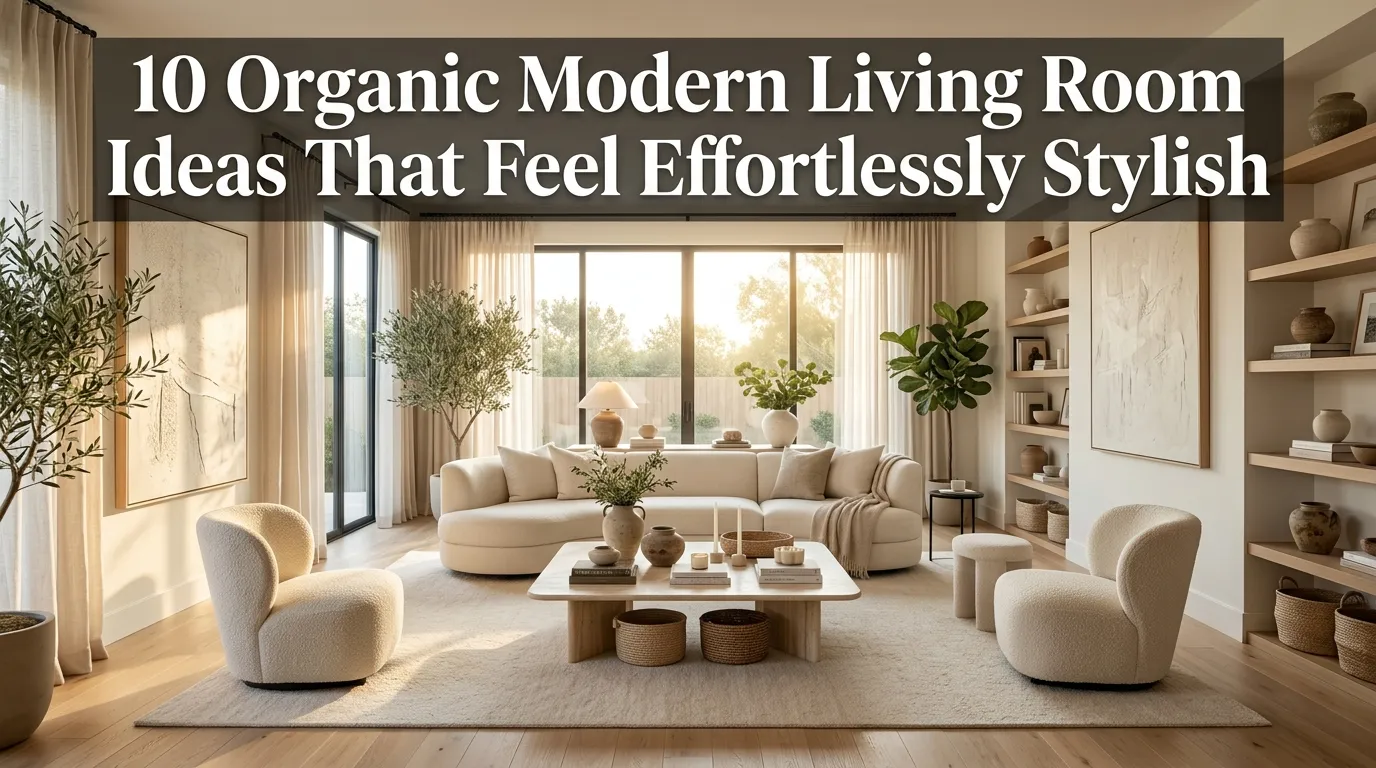
10 Organic Modern Living Room Ideas That Feel Effortlessly Stylish
If your living room feels a little too cold, a little too matchy, or somehow both cluttered and empty at the same time, you’re not alone. This is one of the most common frustrations I hear from homeowners who are trying to update their space: they’ve followed the trends, bought the “right” furniture, and it still doesn’t feel like home.
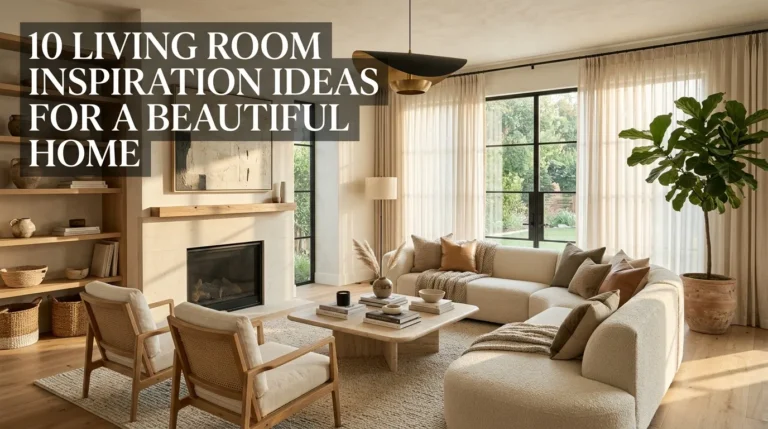
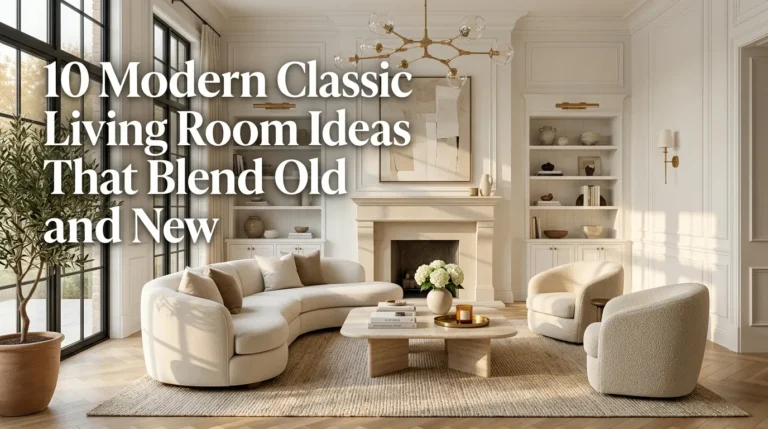
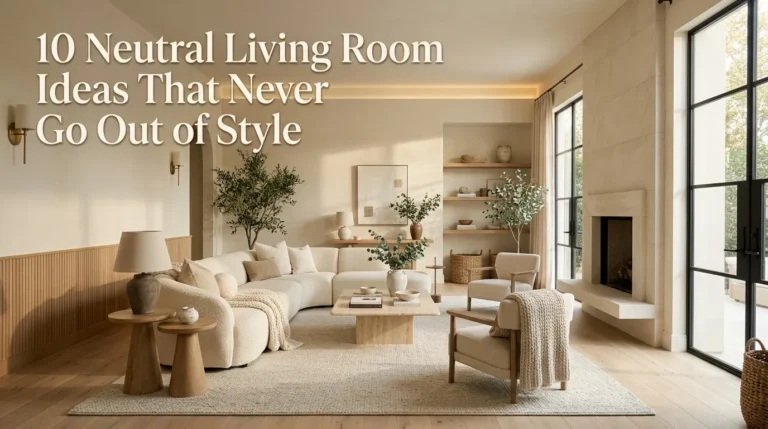
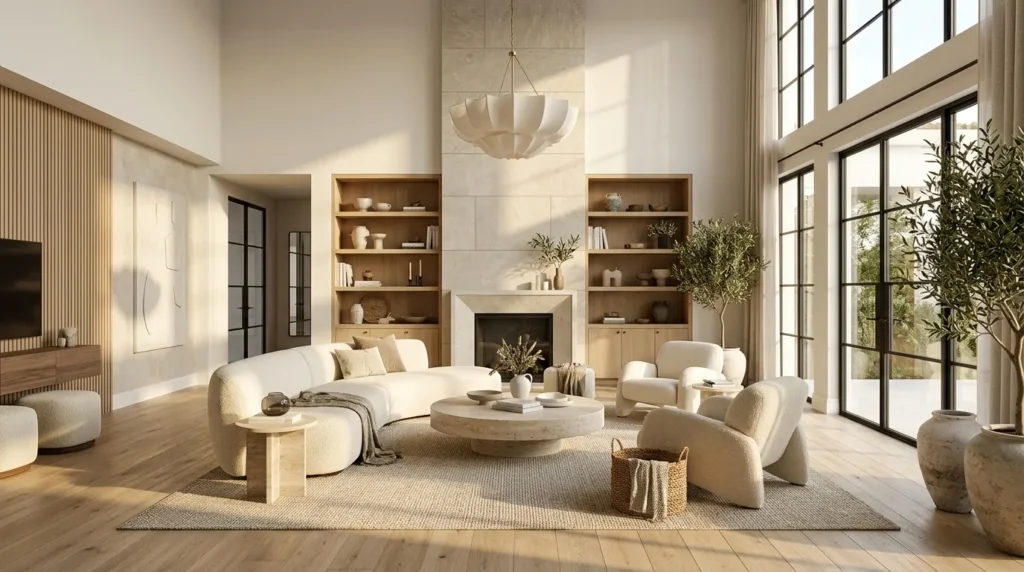
That’s usually where organic modern design comes in. It’s the style that bridges the gap between the starkness of minimalism and the warmth of a lived-in space. Think soft curves, natural materials, warm neutrals, and textures that actually invite you to sit down and stay a while.
In my experience, the rooms that photograph the most beautifully — and the ones that people save over and over on Pinterest — aren’t the ones with the most expensive furniture. They’re the ones with intention. A curved sofa here, a piece of raw-edge wood there, a woven basket doing double duty as storage and decor.
This guide breaks down ten ideas that define the organic modern living room aesthetic, along with the practical styling logic behind each one. You’ll find real advice on materials, layout, and furniture choices you can actually use — not just inspiration to admire and forget. If you’re anything like me, you don’t want a Pinterest board full of ideas you can’t execute. You want a plan.
By the end of this article, you’ll have a clear sense of which elements to prioritize first, how to layer them without overspending, and how to avoid the most common mistakes homeowners make when chasing this look.
Table of Contents
- Natural Light Flow — Why unobstructed light is the foundation of organic modern rooms.
- Curved Furniture Silhouettes — Softening a space with rounded, sculptural pieces.
- Warm Neutral Palette — Building a base that feels calm instead of clinical.
- Organic Wood Textures — Using raw and reclaimed wood as a grounding element.
- Woven Natural Fiber Accents — Adding texture through rattan, jute, and linen.
- Sculptural Statement Lighting — Choosing fixtures that double as art.
- Stone And Ceramic Details — Bringing earthy, tactile materials into small doses.
- Layered Textural Rugs — Grounding the room with depth underfoot.
- Indoor Greenery Styling — Using plants to soften hard lines and add life.
- Handcrafted Decor Accents — Choosing imperfect, artisan-made pieces over mass production.
- Open And Uncluttered Layout — Arranging furniture so the room can breathe.
1. Natural Light Flow
Quick Benefits
- Makes rooms feel larger and airier
- Enhances the warmth of neutral tones
- Reduces the need for heavy artificial lighting during the day
- Highlights natural textures like wood grain and woven fiber
- Creates a calming, restorative atmosphere
Why It Works
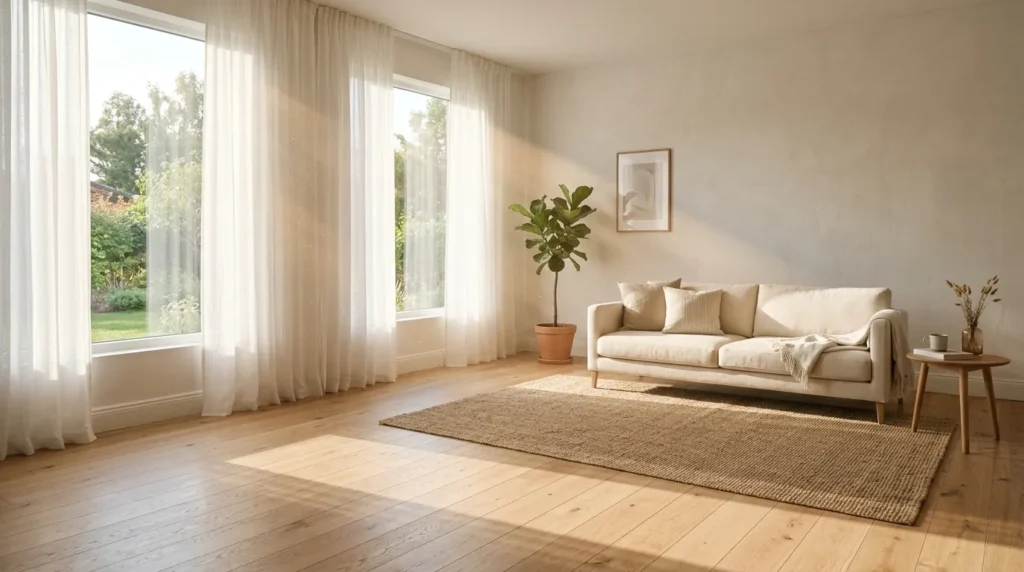
Natural light is the quiet backbone of every organic modern living room. A mistake many homeowners make is layering in beautiful materials and textures while ignoring how light interacts with them. Wood grain, linen, and stone all look flat under artificial light but come alive under natural light, which shifts throughout the day and adds subtle variation to the room. I’ve noticed that rooms with strong natural light flow tend to feel more spacious even when the square footage is modest, because shadows and highlights do the work that extra furniture can’t.
How To Style It
Start by removing heavy drapery and switching to sheer linen curtains that filter light without blocking it. If privacy is a concern, opt for solar shades that stay mostly hidden during the day. Keep furniture away from windows so light can travel across the floor uninterrupted, and use lighter wood tones near light sources to bounce brightness deeper into the room. Mirrors placed opposite windows can double the effect, especially in living rooms that only get light from one side.
2. Curved Furniture Silhouettes
Quick Benefits
- Softens boxy or angular room layouts
- Improves natural traffic flow around furniture
- Adds visual interest without extra decor
- Feels more comfortable and inviting than sharp-edged pieces
- Pairs well with both small and large living rooms
Why It Works
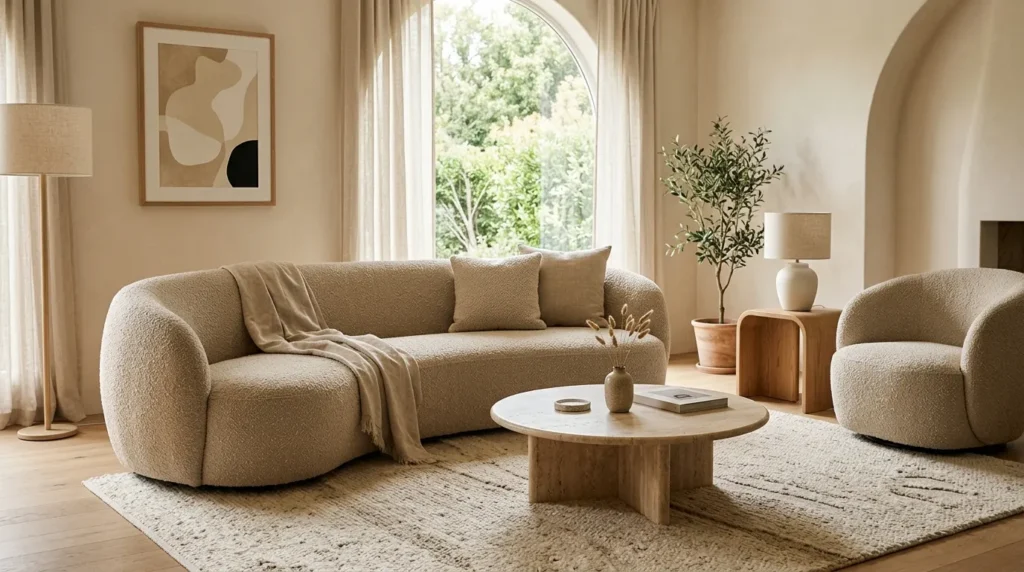
One simple trick I always suggest to clients trying to modernize a space without making it feel sterile is swapping at least one major piece of furniture for something curved. Organic modern design leans on rounded silhouettes because they mimic natural forms — river stones, tree trunks, rolling hills — which the eye reads as calming. A curved sofa or a round coffee table also physically softens a room’s traffic pattern, making it easier to move through without bumping into sharp corners.
How To Style It
A curved sofa or loveseat works as the anchor piece, especially in a soft bouclé or nubby linen fabric. Pair it with a round or kidney-shaped coffee table in a natural material like light oak or travertine. If a full curved sofa isn’t in the budget, start smaller: a barrel-back accent chair or an arched mirror can introduce the same visual softness. Balance curves with a few straight-lined pieces, like a rectangular console table, so the room doesn’t feel overly rounded or bubbly.
3. Warm Neutral Palette
Quick Benefits
- Creates a timeless base that won’t feel dated
- Makes accent colors and textures stand out
- Feels calming rather than cold or clinical
- Works well in both small and large spaces
- Easy to update seasonally with accessories
Why It Works
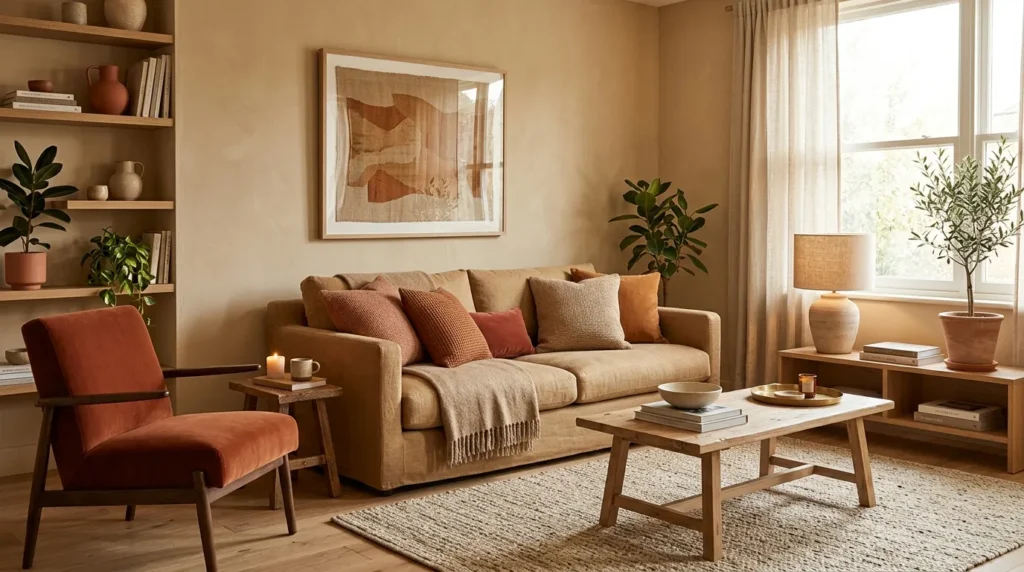
A true organic modern living room relies on warmth, not stark white or gray. That’s why many designers recommend building the palette around tones like oatmeal, sand, terracotta, and soft taupe instead of cool grays or pure whites. These warmer neutrals reflect light differently and tend to photograph more inviting, which is part of why they perform so well on Pinterest. A cool, gray-heavy room can start to feel more like a showroom than a home, while warm neutrals feel lived-in from day one.
How To Style It
Paint walls in a warm off-white or soft greige rather than a stark white or cool gray. Layer in furniture upholstered in cream, oatmeal, or camel tones, and use one or two deeper accent colors — rust, olive, or espresso brown — in throw pillows or a single statement chair. Avoid introducing more than three main colors total, since organic modern spaces rely on tonal layering rather than color contrast to create visual interest.
4. Organic Wood Textures
Quick Benefits
- Adds warmth and grounding to open layouts
- Introduces natural texture without extra clutter
- Works across furniture, flooring, and accents
- Complements both modern and rustic elements
- Ages beautifully compared to painted or laminate finishes
Why It Works
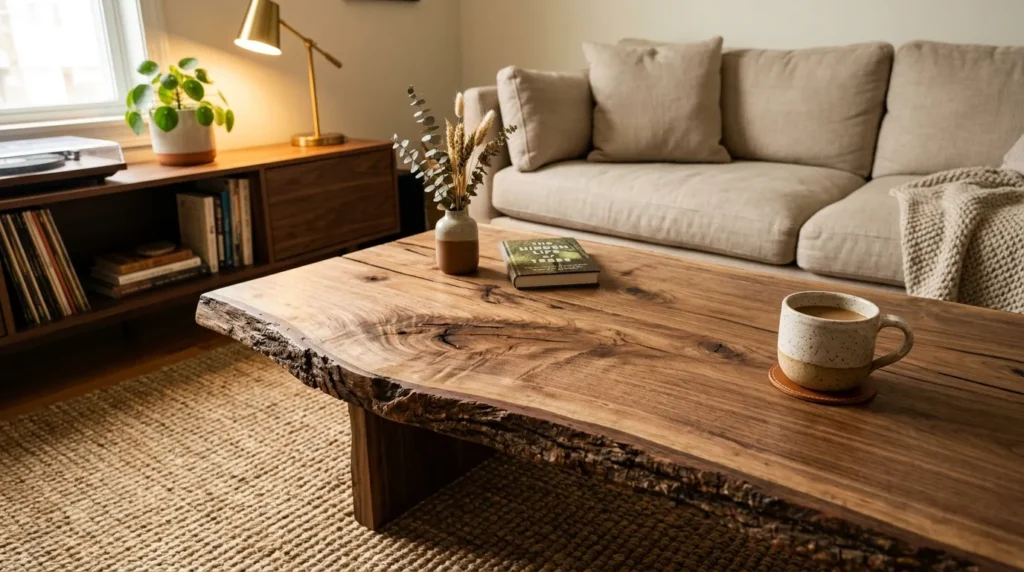
Wood is arguably the single most important material in organic modern design. I’ve seen this idea transform spaces that otherwise felt flat or overly styled — a single raw-edge coffee table or a live-edge shelf can anchor an entire room. Unlike painted or lacquered furniture, natural wood shows grain, knots, and variation, which supports the “organic” half of the aesthetic by reminding the eye that the material came from something living.
How To Style It
Mix wood tones intentionally rather than matching everything exactly — pair a lighter oak media console with a walnut side table, for example, and tie them together with similar warm undertones. Look for pieces with visible grain, live edges, or slightly irregular shapes rather than perfectly uniform, machine-finished furniture. Wood flooring, exposed beams, or even a single reclaimed wood accent wall can extend this texture beyond furniture alone.
5. Woven Natural Fiber Accents
Quick Benefits
- Adds texture without visual heaviness
- Introduces an earthy, handmade feel
- Works well in baskets, lighting, and seating
- Complements wood and stone materials
- Budget-friendly compared to large furniture pieces
Why It Works
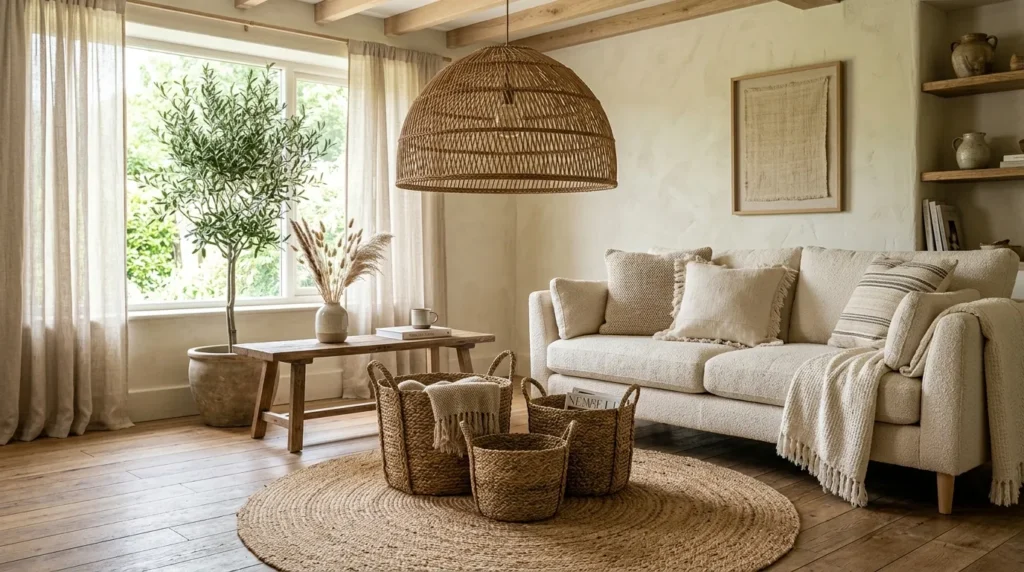
Rattan, jute, seagrass, and woven linen are staples of the organic modern living room because they add texture without adding visual weight. A mistake many homeowners make is relying entirely on solid furniture and flat fabrics, which can leave a room feeling one-dimensional. Woven materials introduce a tactile layer that photographs beautifully and feels genuinely inviting in person, especially when paired with the warm neutral palette described above.
How To Style It
A woven pendant light, a set of rattan dining chairs nearby, or a jute area rug are all easy entry points. Storage baskets made from seagrass or water hyacinth double as functional pieces while reinforcing the texture story. For smaller touches, swap out plain throw pillow covers for ones in a nubby linen or woven boucle fabric, and consider a woven bench at the base of a window seat.
6. Sculptural Statement Lighting
Quick Benefits
- Acts as functional art in an otherwise minimal room
- Draws the eye upward, making ceilings feel taller
- Introduces organic shapes without extra furniture
- Provides a focal point for Pinterest-worthy photos
- Available at a range of price points
Why It Works
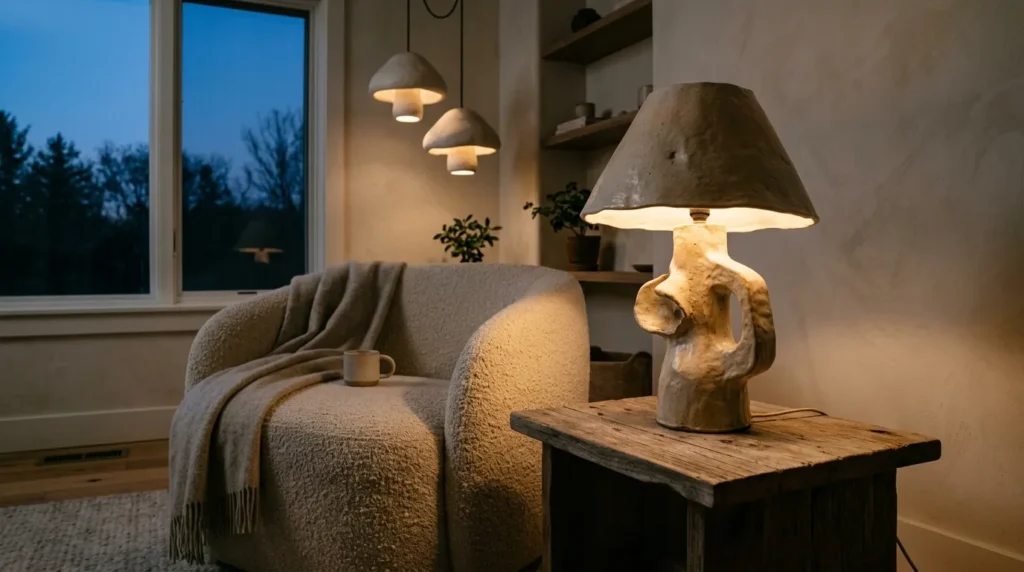
Lighting does more work in an organic modern living room than most people expect. Rather than a plain flush-mount fixture, a sculptural pendant or an asymmetrical floor lamp becomes a piece of functional art. In my experience, this is one of the highest-impact, lowest-effort upgrades a homeowner can make, since a single striking light fixture can define the entire mood of a room without requiring a full furniture overhaul.
How To Style It
Choose a pendant with an organic shape — think mushroom-inspired silhouettes, woven rattan shades, or hand-formed ceramic bases — and hang it above the coffee table or in a reading nook. Table lamps with textured, curved bases add the same effect on a smaller scale. Stick to warm-toned bulbs (2700K to 3000K) to reinforce the cozy, grounded feeling that defines this style, and avoid cool white or overly bright bulbs that can undercut the warmth of the palette.
7. Stone And Ceramic Details
Quick Benefits
- Adds an earthy, tactile element in small doses
- Balances the softness of textiles and wood
- Works well as coffee table or shelf styling
- Introduces subtle color variation
- Elevates the room without a full renovation
Why It Works
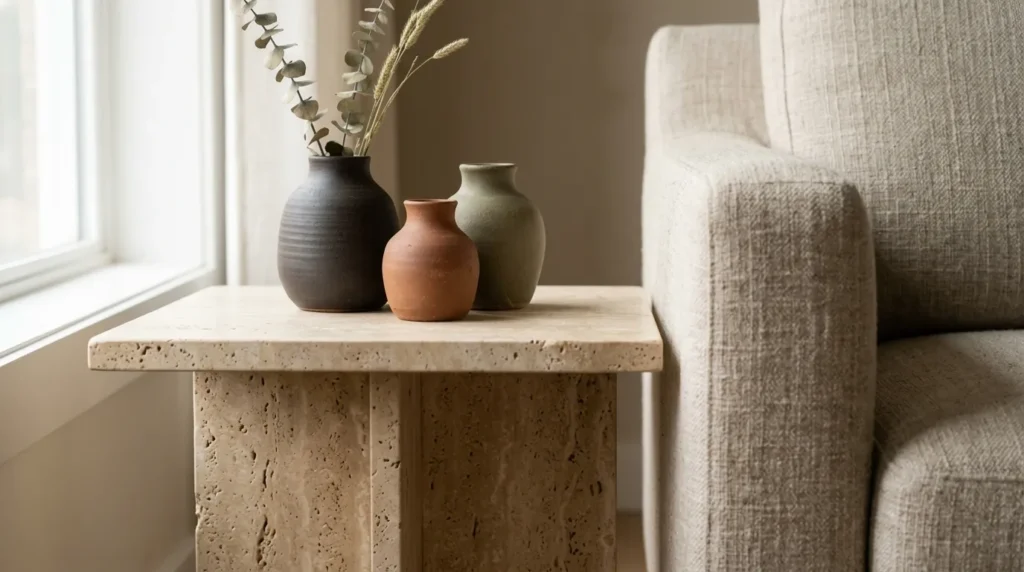
Stone and ceramic accents ground a room the way wood and fiber do, but with a slightly cooler, more solid texture that provides contrast. A living room that leans too heavily on soft materials — linen, wool, rattan — can start to feel flat without something more substantial to balance it. Travertine, marble, and hand-thrown ceramics introduce that contrast while still feeling organic rather than sterile, since each piece carries natural variation.
How To Style It
A travertine side table or coffee table base is one of the easiest ways to bring this material in at scale. On a smaller level, group a few ceramic vases of varying heights on a shelf or console, choosing pieces with visible texture, matte glazes, or hand-thrown imperfections rather than glossy, uniform finishes. A stone bookend or a small marble tray on the coffee table adds the same grounding effect without committing to larger furniture changes.
8. Layered Textural Rugs
Quick Benefits
- Defines seating areas in open floor plans
- Adds warmth and softness underfoot
- Introduces subtle pattern without overwhelming the room
- Helps balance hard flooring materials
- Ties furniture groupings together visually
Why It Works
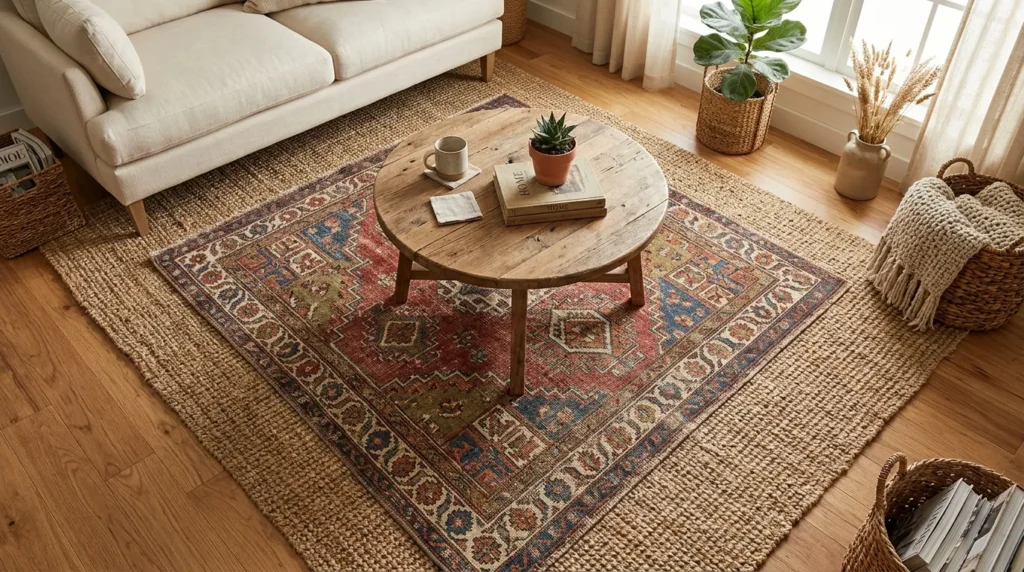
Rugs are one of the most overlooked elements in living room design, yet they’re essential to the organic modern look. A room with hardwood or stone flooring can feel cold and disconnected without a rug to anchor the seating area. Layering — placing a smaller, textured rug over a larger jute or wool base — adds depth and dimension that a single flat rug can’t achieve on its own, and it’s a technique I’ve noticed high-end designers use again and again.
How To Style It
Start with a large, low-pile jute or wool rug sized to fit under the front legs of your main seating pieces. Layer a smaller, more textured rug — like a Moroccan-inspired shag or a vintage-style flatweave — on top, slightly off-center, to add pattern and softness. Stick to muted, earthy colors so the rug supports the room’s palette rather than competing with it, and choose natural fibers over synthetic ones whenever possible to stay true to the organic modern aesthetic.
9. Indoor Greenery Styling
Quick Benefits
- Softens hard architectural lines
- Improves air quality and adds life to the room
- Requires little investment for high visual impact
- Complements every material in this list
- Easy to scale up or down based on space
Why It Works
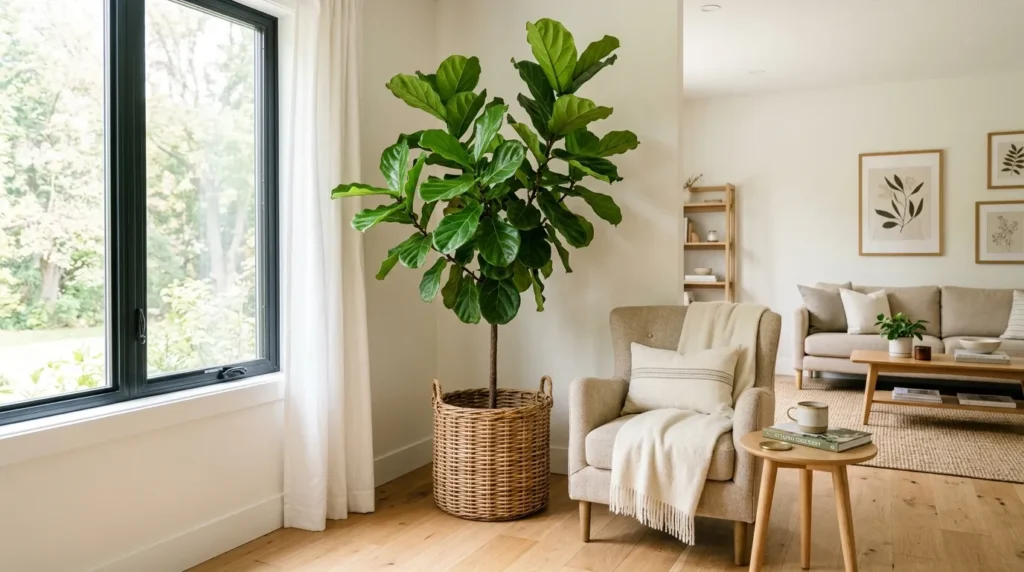
No organic modern living room is complete without greenery. Plants are one of the simplest, most affordable ways to introduce the “organic” half of the equation, and they do double duty by softening architectural lines and filling empty corners that might otherwise feel unfinished. I’ve noticed that even a single well-placed large plant can make a room feel considerably more finished, especially in newer homes with sparse trim and hard edges.
How To Style It
A large floor plant — a fiddle leaf fig, olive tree, or snake plant — works well in an empty corner or beside a sofa to fill vertical space. Smaller potted plants on shelves, side tables, or window sills add greenery at eye level without demanding much upkeep. Choose planters in natural materials like terracotta, woven rattan, or textured ceramic rather than plastic or glossy finishes, since the planter itself contributes to the room’s overall texture story.
10. Handcrafted Decor Accents
Quick Benefits
- Adds authenticity and personality to the room
- Supports small and independent makers
- Introduces subtle imperfection that feels genuine
- Works as conversation-starting decor
- Elevates a room beyond mass-produced staging
Why It Works
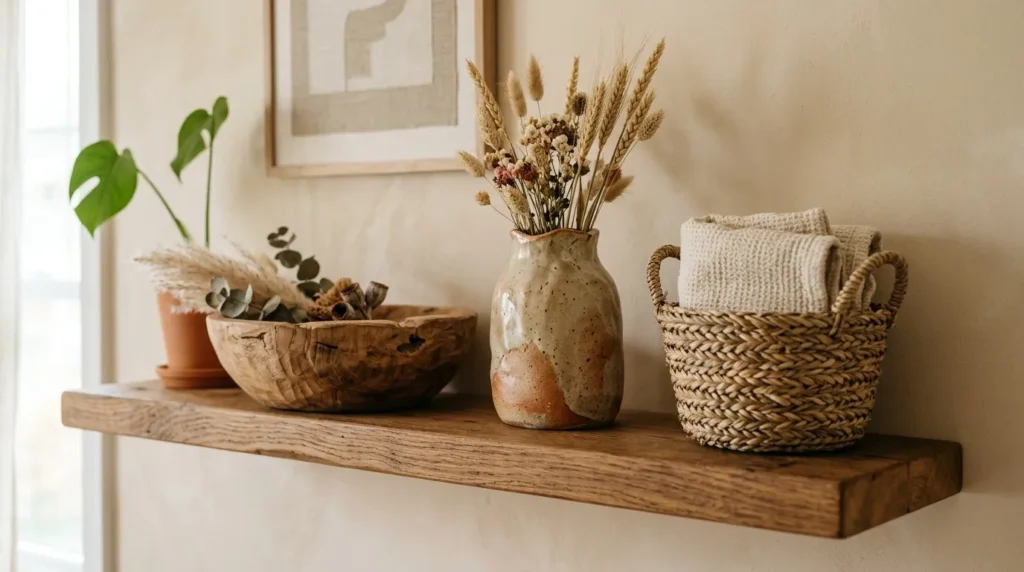
Handcrafted pieces — a hand-thrown vase, a woven wall hanging, a carved wooden bowl — are what separate an organic modern living room from a room that simply looks the part. A mistake many homeowners make is filling every surface with matching, mass-produced decor, which can flatten the personality of a space. Handmade pieces carry small variations and imperfections that photograph beautifully and give a room a sense of story.
How To Style It
Look for local makers, artisan markets, or small online shops for one-of-a-kind ceramic vases, woven baskets, or carved wood bowls. Use these pieces sparingly — three to five thoughtfully placed accents will read as intentional, while a dozen can feel cluttered. Group items in odd numbers on shelves or coffee tables, and mix heights and textures so each piece has room to stand out rather than competing for attention.
11. Open And Uncluttered Layout
Quick Benefits
- Improves natural traffic flow through the room
- Makes smaller living rooms feel larger
- Allows individual furniture pieces to stand out
- Reduces visual noise and overwhelm
- Supports better natural light distribution
Why It Works
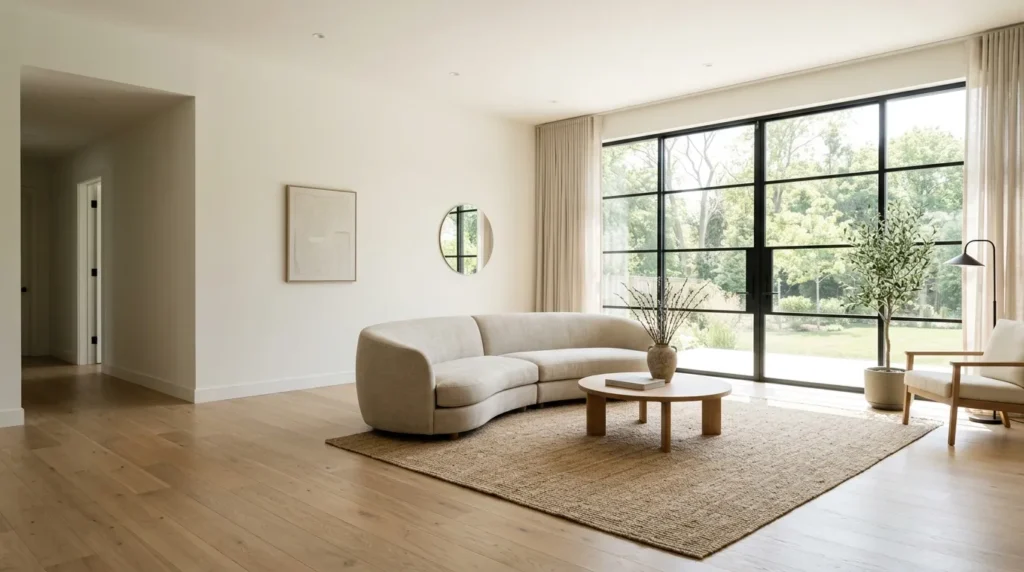
Even the most beautifully styled furniture can’t save a room that feels overcrowded. Organic modern design relies on breathing room — negative space that lets each curved sofa, wood accent, and woven texture stand on its own rather than competing with a dozen other elements. In my experience, homeowners who edit their furniture down to only what’s needed end up with rooms that feel far more expensive and intentional than those packed with extra pieces.
How To Style It
Start by removing any furniture that doesn’t serve a clear purpose in the room, and measure walkways to make sure there’s at least 30 inches of clearance for foot traffic. Float furniture away from walls when the room allows for it, which creates a more conversational layout and makes the space feel larger rather than smaller. If storage is a concern, choose multi-functional pieces like a coffee table with a shelf or a bench with hidden storage rather than adding extra freestanding units.
Frequently Asked Questions
What makes a living room “organic modern” instead of just modern?
Organic modern design takes the clean lines of modern style and softens them with natural materials, curved furniture, and warm neutral tones. Traditional modern design can feel cold or minimal, while organic modern intentionally adds texture, warmth, and imperfection through wood, woven fiber, and handcrafted decor to keep the space feeling inviting.
Is organic modern the same as boho or Scandinavian design?
Not exactly, though they share some overlap. Boho design leans on pattern, color, and eclectic layering, while Scandinavian style favors simplicity and function. Organic modern sits between the two, borrowing natural materials from both while keeping the overall palette more neutral and the silhouettes more sculptural than either style typically uses.
What colors work best in an organic modern living room?
Warm neutrals are the foundation: think oatmeal, sand, taupe, and soft ivory. These are typically paired with one or two deeper accent tones like rust, olive, or espresso brown. Cool grays and stark whites are generally avoided since they can make the space feel more clinical than cozy.
Do I need to buy all new furniture to get this look?
Not necessarily. Many homeowners can shift toward organic modern gradually by swapping textiles, adding a few wood or woven accents, and updating lighting before investing in new furniture. Starting with rugs, throw pillows, and lighting is often the most budget-friendly entry point.
What kind of lighting fits this style best?
Warm-toned bulbs between 2700K and 3000K support the cozy feel of organic modern design. Sculptural pendant lights, ceramic table lamps, and fixtures with woven or textured shades work especially well as functional focal points in the room.
How do I keep an organic modern room from feeling cluttered?
Limit decor to a few intentional, handcrafted pieces per surface rather than filling every shelf and table. Editing down furniture to only what’s necessary, using odd-numbered groupings for decor, and leaving open floor space are the easiest ways to keep the look feeling calm rather than crowded.
Can this style work in a small living room?
Yes, and in some ways it works especially well in smaller spaces. Curved furniture, lighter wood tones, and an open layout all help a small room feel larger, while natural light and warm neutrals prevent the space from feeling boxed in or cramped.
Conclusion
Building an organic modern living room isn’t about buying an entirely new set of furniture overnight. It’s about layering in warmth, texture, and natural materials one thoughtful decision at a time — a curved chair here, a handcrafted vase there, a rug that finally ties the whole room together. The goal is a space that feels calm, collected, and genuinely comfortable to live in, not just photograph well for a single afternoon.
Start with one or two ideas from this list and gradually build a space that reflects your style and supports everyday comfort. Whether that means swapping out cool-toned decor for warm neutrals, adding a single sculptural light fixture, or finally investing in that curved sofa you’ve been eyeing, small changes compound into a room that feels effortlessly put together. The most successful organic modern living rooms aren’t the ones that were finished in a weekend — they’re the ones that were built with intention over time.
Related Articles
- Cozy Neutral Bedroom Ideas
- Small Living Room Layout Solutions
- Modern Farmhouse Decor Essentials
- Warm Minimalist Home Styling
- DIY Wood Accent Wall Ideas