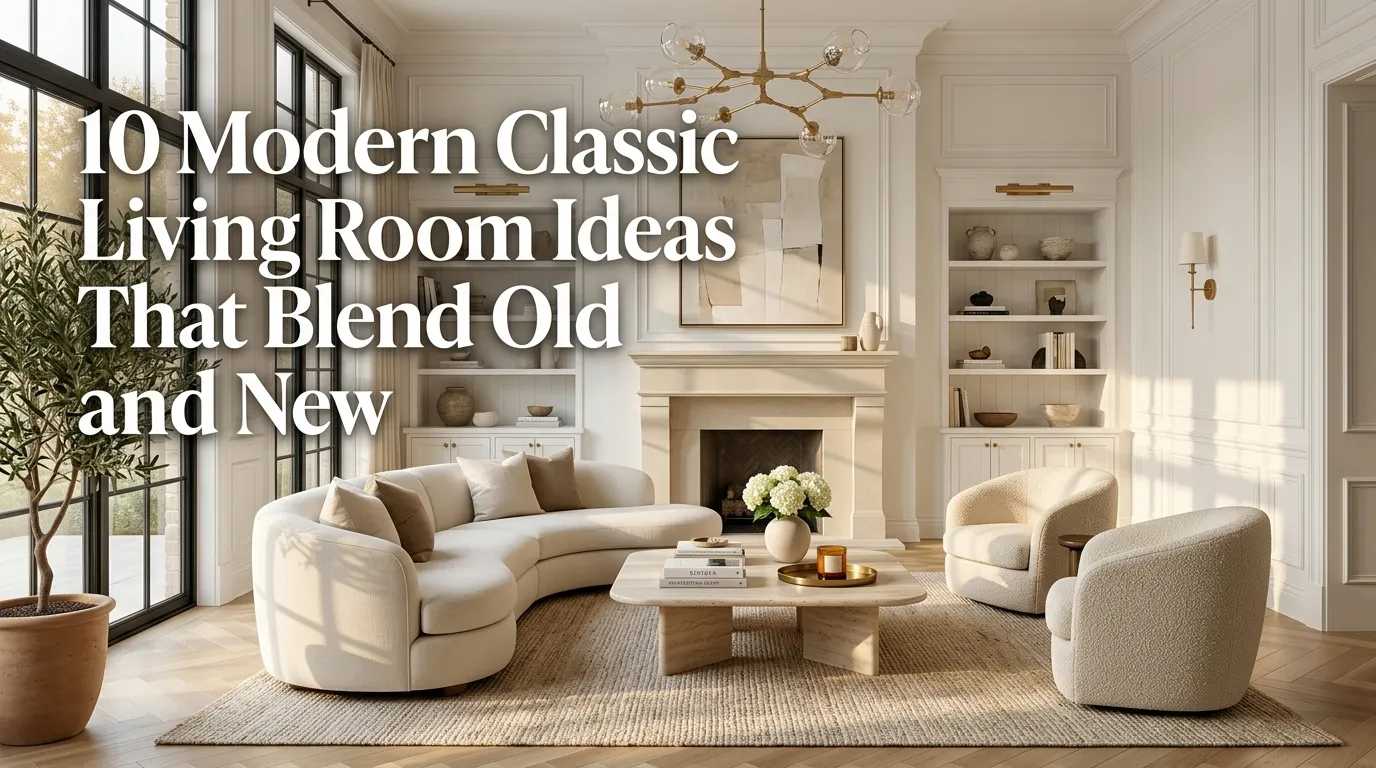
10 Modern Classic Living Room Ideas That Blend Old and New
Some living rooms feel stuck in one era — either overly traditional and heavy, or so modern they feel a little sterile and impersonal. The rooms that tend to age the best, and feel the most personal, are the ones that borrow from both: classic shapes and materials paired with a cleaner, more current sensibility.
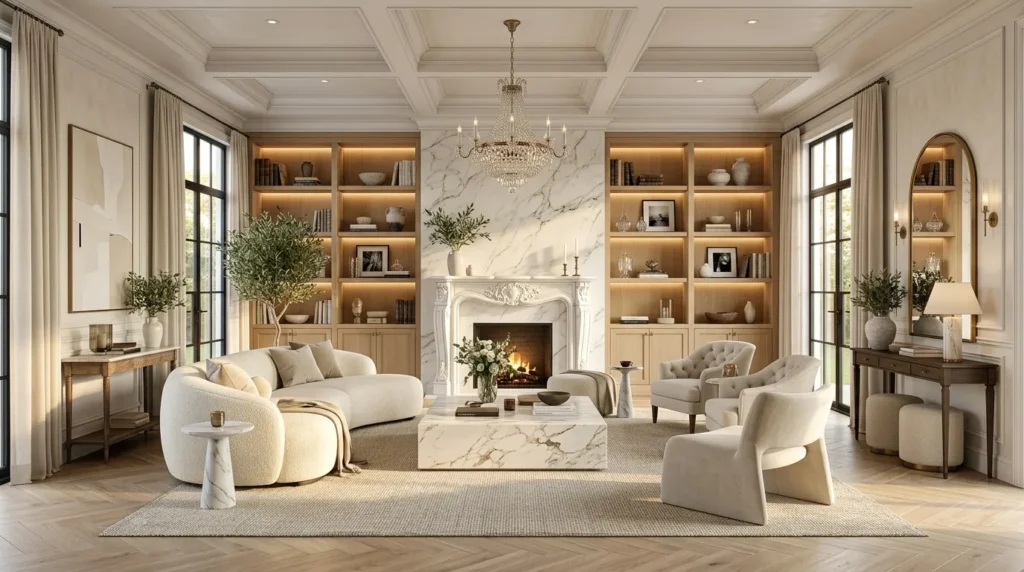
In my experience, modern classic design isn’t about splitting a room exactly down the middle between old and new. It’s about choosing which traditional elements are worth keeping — good proportions, quality materials, timeless silhouettes — and pairing them with modern restraint in color, lighting, and layout. A mistake many homeowners make is going all-in on one direction, filling a room entirely with antiques or entirely with sleek modern pieces, when the most interesting living rooms usually sit somewhere in between.
I’ve noticed that this blended approach also solves a very practical problem: most people don’t have a completely empty room to design from scratch. They have a grandmother’s side table, a modern sofa from a few years back, and a rug they love but can’t quite justify replacing. Modern classic design gives permission to keep what works and build around it, rather than starting over.
This guide walks through ten modern classic living room ideas that combine traditional character with a more current, streamlined feel. From mixing furniture eras to balancing pattern and updating a classic color palette, each idea focuses on creating a room that feels collected, considered, and genuinely timeless — not stuck in any one decade.
Table of Contents
- Antique Modern Furniture Mix — Combining one or two vintage pieces with contemporary furniture.
- Classic Molding Details — Using architectural trim to add traditional structure to a modern room.
- Contemporary Art Traditional Frames — Pairing current art styles with classic framing.
- Heritage Fabric Patterns — Introducing traditional textiles in smaller, modern doses.
- Streamlined Traditional Silhouettes — Choosing classic furniture shapes with simplified detailing.
- Mixed Metal Finishes — Blending warm and cool metals for a collected, layered look.
- Modern Lighting Vintage Base — Combining traditional lamp bases with current shades.
- Layered Pattern Balance — Mixing traditional and modern patterns without visual chaos.
- Updated Color Palette — Softening traditional colors with a more current neutral base.
- Timeless Statement Pieces — Choosing a few pieces built to outlast passing trends.
1. Antique Modern Furniture Mix
Quick Benefits
- Adds character that all-new furniture can’t replicate
- Keeps a room from feeling like a matched showroom set
- Allows sentimental or inherited pieces to shine
- Works with almost any modern furniture base
- Builds a collected-over-time feel affordably
Why It Works
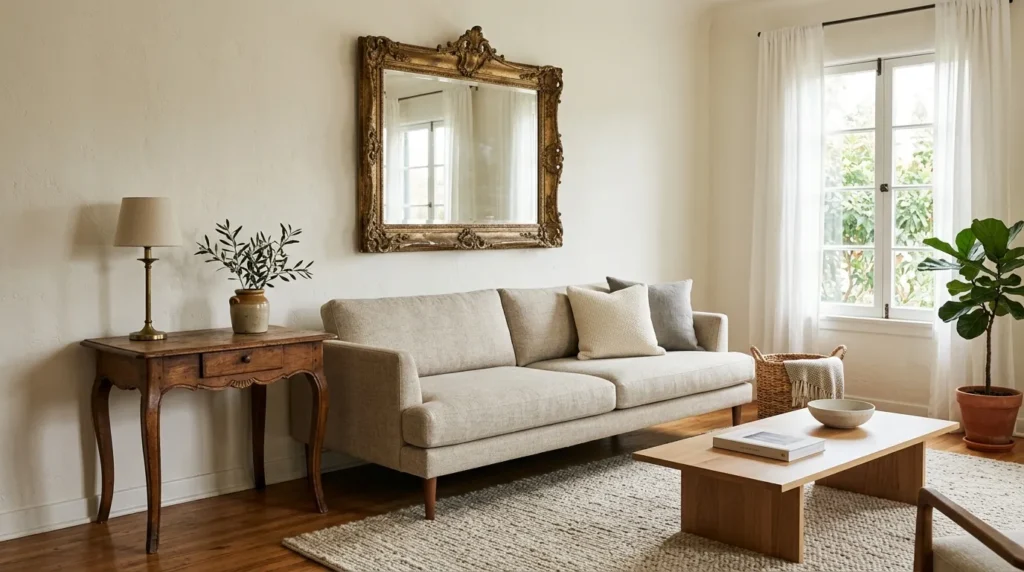
A room furnished entirely from one collection can feel flat, no matter how nice the pieces are individually. One thing that works especially well in modern classic design is anchoring a room with a contemporary sofa and clean-lined seating, then introducing one or two genuinely old pieces — an antique side table, a vintage armoire, an inherited mirror. This works because the contrast between eras creates visual interest and depth, while also giving the room a sense of history a fully new set simply can’t offer.
How To Style It
Start with a simple, modern sofa in a neutral fabric as your foundation, then choose one standout antique or vintage piece to serve as a focal point — ideally something with real age and character rather than a reproduction. Keep the rest of the furniture simple so the antique piece doesn’t get visually crowded. A single antique piece per room usually reads as intentional; three or four can start to feel cluttered or overly themed.
2. Classic Molding Details
Quick Benefits
- Adds architectural interest to plain walls
- Bridges traditional structure with modern color
- Increases perceived home value
- Works in both older and newer homes
- Pairs well with simple, contemporary furniture
Why It Works
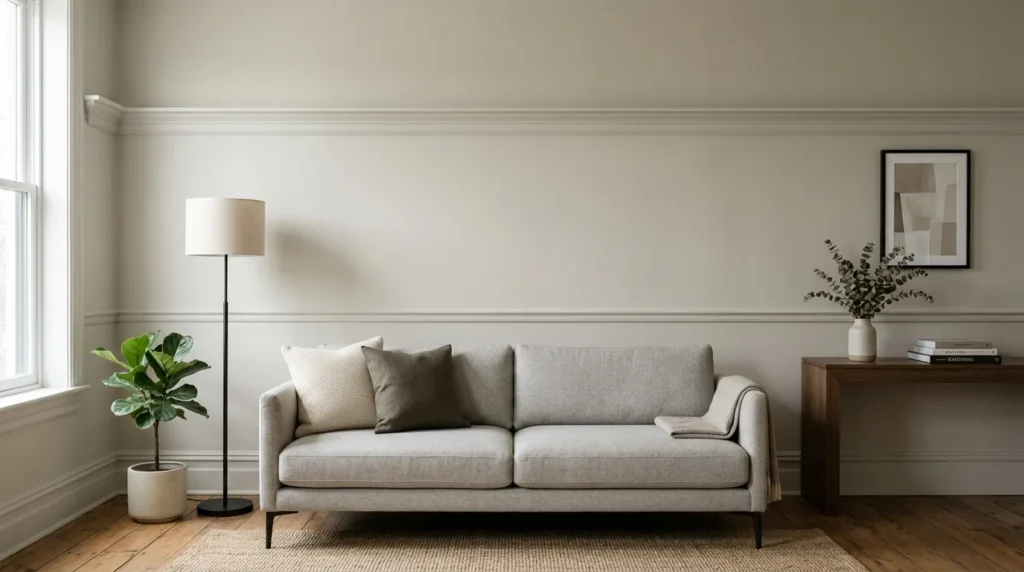
That’s why many designers recommend adding classic architectural details — picture rail molding, wainscoting, or simple crown molding — even in newer homes without existing traditional trim. Molding introduces a sense of formality and craftsmanship rooted in classic design, while a modern paint color and streamlined furniture keep the overall feel current rather than heavy or dated. This works especially well in newer builds that otherwise feel a bit generic or builder-grade.
How To Style It
Picture rail or simple box molding on a single accent wall is an approachable starting point if a full room feels like too much. Paint the molding and wall in the same tone for a subtler, more modern look, or use a soft contrast for more definition. Pair the finished wall with clean-lined, uncomplicated furniture so the molding remains the traditional anchor rather than one of several competing details.
3. Contemporary Art Traditional Frames
Quick Benefits
- Balances old and new in a single decor element
- Adds unexpected visual contrast
- Affordable way to test the modern classic look
- Works well above mantels or console tables
- Easy to rotate and update over time
Why It Works
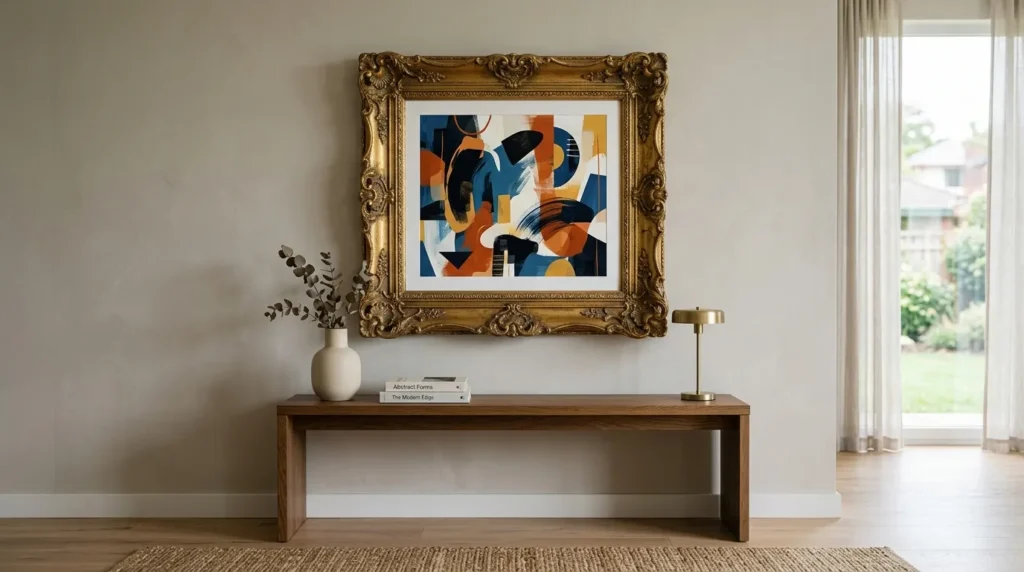
A mistake many homeowners make is assuming traditional frames only suit traditional art. In my experience, pairing a bold, contemporary art print or abstract painting with an ornate or classic frame creates exactly the kind of old-meets-new tension modern classic design is built on. This works because the contrast between a current image and a traditional frame keeps either element from feeling too safe or too predictable on its own.
How To Style It
Look for vintage or antique-style frames — thrifted, inherited, or new pieces made to look aged — and have a modern print, photograph, or abstract piece fitted inside. Alternatively, take an existing traditional frame and swap out dated artwork for something current. Keep the surrounding wall simple so the frame-and-art contrast remains the visual highlight of the space.
4. Heritage Fabric Patterns
Quick Benefits
- Introduces traditional character without overwhelming a room
- Works well in small, controlled doses
- Adds warmth and texture to modern furniture
- Easy to update seasonally through pillows or throws
- Pairs naturally with wood and brass accents
Why It Works
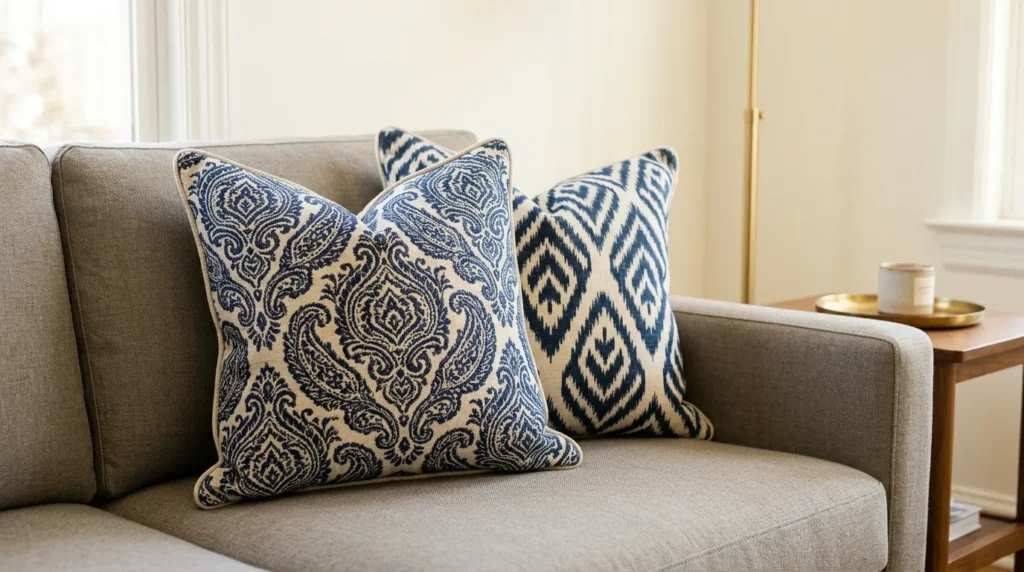
Traditional patterns — toile, damask, classic stripes, or paisley — can feel dated when used across an entire room, but in small doses, they add exactly the kind of heritage character modern classic design calls for. One simple trick I always suggest is using a heritage pattern on just one or two elements, like throw pillows or a single upholstered chair, rather than curtains, furniture, and rugs all at once. This works because it references tradition without letting the pattern dominate the space.
How To Style It
Choose one small-scale application for a heritage pattern — a pair of pillows, a single accent chair, or a lampshade — and keep everything else in the room solid and simple. Classic navy, forest green, or burgundy paired with cream tends to feel more timeless than very bright or saturated colorways, keeping the pattern from reading as overly themed.
5. Streamlined Traditional Silhouettes
Quick Benefits
- Keeps classic shapes without feeling heavy or dated
- Works well with clean, modern color palettes
- Balances comfort with visual lightness
- Suits both formal and casual living rooms
- Easy to source in new furniture lines
Why It Works
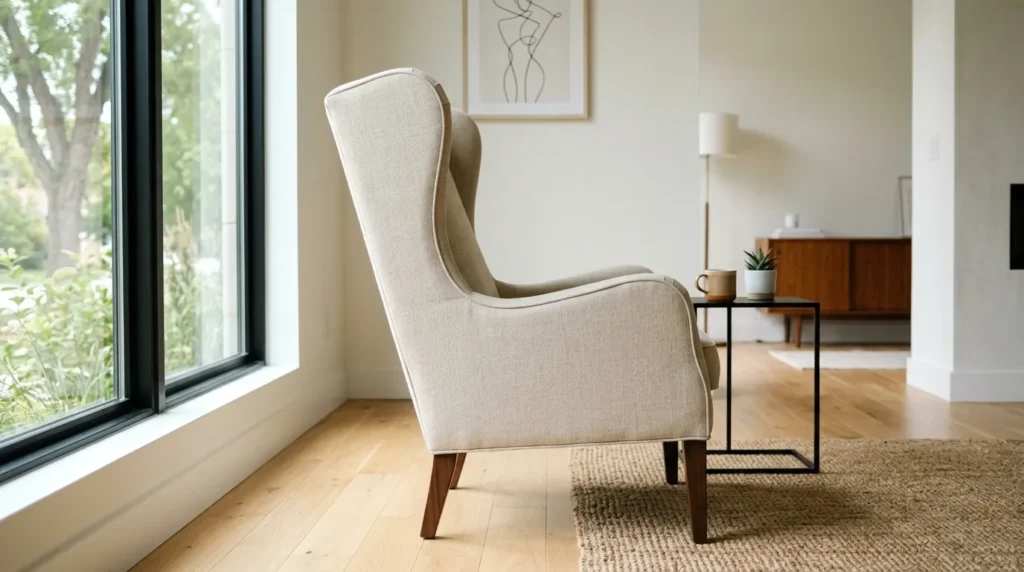
I’ve seen this idea transform spaces that felt torn between two styles: choosing furniture with a classic silhouette — like a rolled-arm sofa or a wingback chair — but in a simplified, less ornate version than the traditional original. This works because the shape reads as familiar and classic, while the reduced detailing (no heavy carving, no elaborate skirting) keeps the piece feeling current rather than antique.
How To Style It
Look for furniture that borrows a recognizable traditional shape but skips heavy ornamentation — a simplified wingback chair without carved wood detailing, or a rolled-arm sofa in a plain modern fabric instead of a traditional print. This approach lets the room reference classic design without feeling like a period piece.
6. Mixed Metal Finishes
Quick Benefits
- Adds a collected, layered feel over time
- Prevents a room from feeling too matched
- Works well when combining old and new furniture
- Easy to introduce gradually
- Suits both warm and cool color palettes
Why It Works
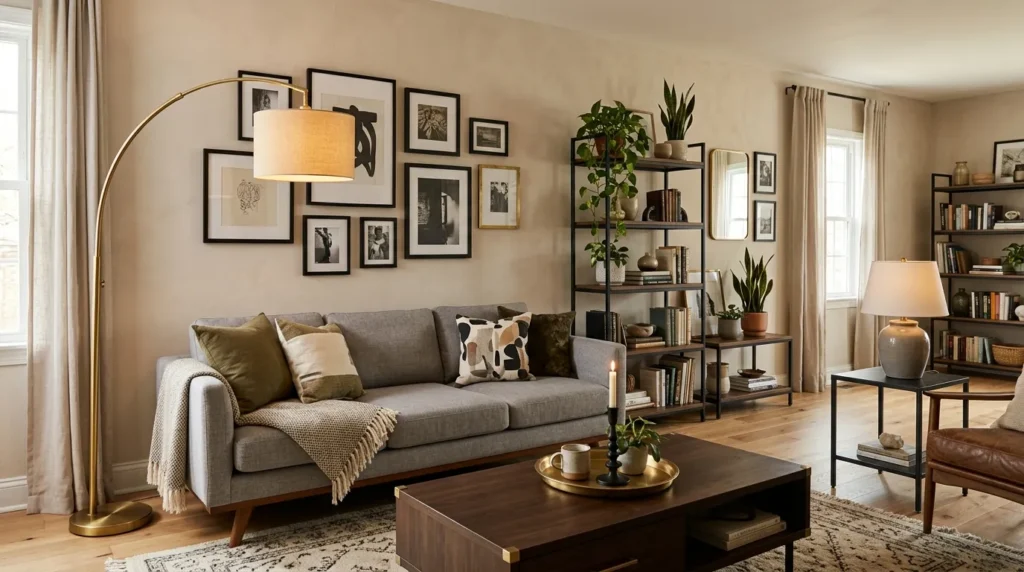
A mistake many homeowners make is assuming every metal finish in a room needs to match exactly. In modern classic spaces, a deliberate mix — brass alongside black iron, or aged bronze paired with brushed nickel — actually supports the old-meets-new concept more effectively than a single uniform finish. This works because it mirrors how real, collected-over-time homes naturally look, where furniture and fixtures were acquired at different points rather than purchased as a matching set.
How To Style It
Choose two metal finishes to repeat intentionally throughout the room — for example, brass for lighting and picture frames, black iron for furniture legs and hardware. Avoid introducing a third or fourth finish, since the goal is a considered mix, not an unplanned assortment. Repeating just two finishes consistently reads as a deliberate design choice rather than mismatched decor.
7. Modern Lighting Vintage Base
Quick Benefits
- Combines old character with current function
- Works as an affordable focal point
- Easy to source through vintage or thrifted lamps
- Balances traditional shape with modern simplicity
- Adds a collected, layered feel to lighting
Why It Works
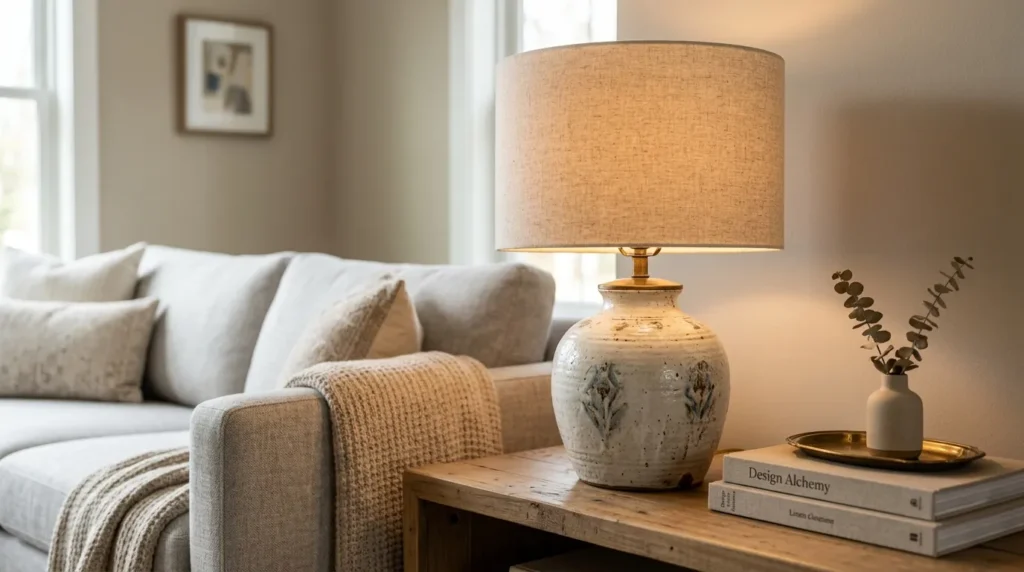
Lighting is one of the easiest places to blend old and new without much cost. A vintage or antique-style lamp base — ceramic, brass, or turned wood — paired with a simple, modern drum shade instantly balances traditional character with current simplicity. In my experience, this combination works so well because the base carries the “old” element while the shade keeps the piece from feeling overly ornate or dated.
How To Style It
Look for a vintage lamp base at a thrift store or estate sale, then replace the shade with a simple linen or cotton drum shade in a neutral tone. This single swap can transform a dated-looking lamp into something that fits comfortably in a modern classic room, without the cost of buying an entirely new fixture.
8. Layered Pattern Balance
Quick Benefits
- Adds visual interest without feeling chaotic
- Bridges traditional and current design languages
- Works well across rugs, pillows, and upholstery
- Prevents a room from feeling too plain or too busy
- Easy to adjust proportions as needed
Why It Works
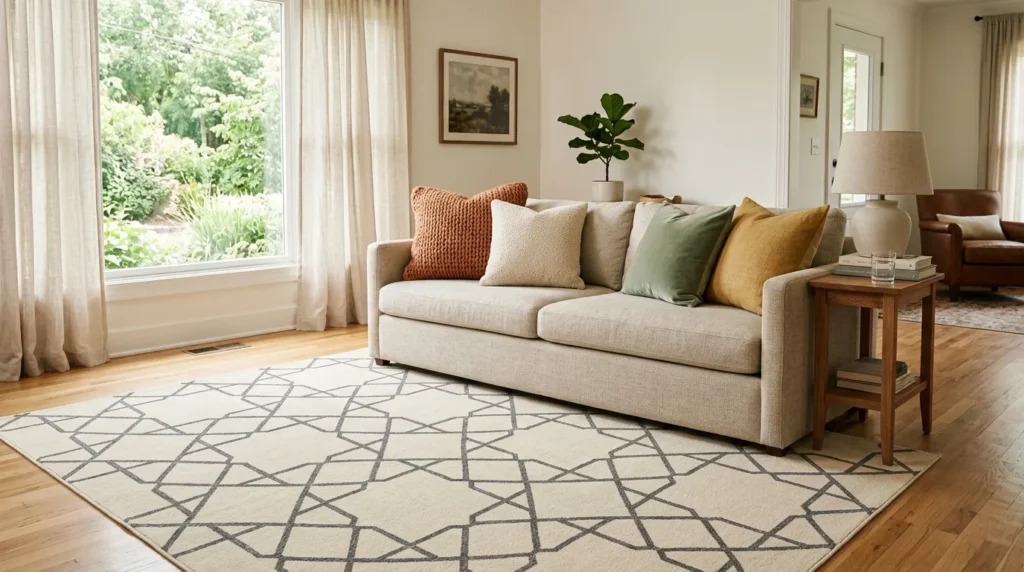
That’s why many designers recommend layering one traditional pattern with one more modern, abstract pattern rather than choosing only one style throughout. A classic striped or trellis pattern paired with a simpler, modern geometric print creates the same old-meets-new balance that defines this style. This works because it avoids the two most common pitfalls: a room that’s entirely traditional and pattern-heavy, or one that’s entirely plain and modern with no textile interest at all.
How To Style It
Choose one traditional-leaning pattern (stripes, a classic trellis, a subtle damask) and one simpler, modern pattern (a solid with texture, a simple geometric), and use them across different elements — rug and pillows, or curtains and upholstery — rather than combining them on the same piece. Keep the color palette unified across both patterns so the mix feels cohesive rather than random.
9. Updated Color Palette
Quick Benefits
- Keeps traditional design from feeling dated
- Works well over existing traditional furniture
- Modernizes a room without full replacement
- Pairs classic shapes with a fresher feel
- Budget-friendly compared to new furniture
Why It Works
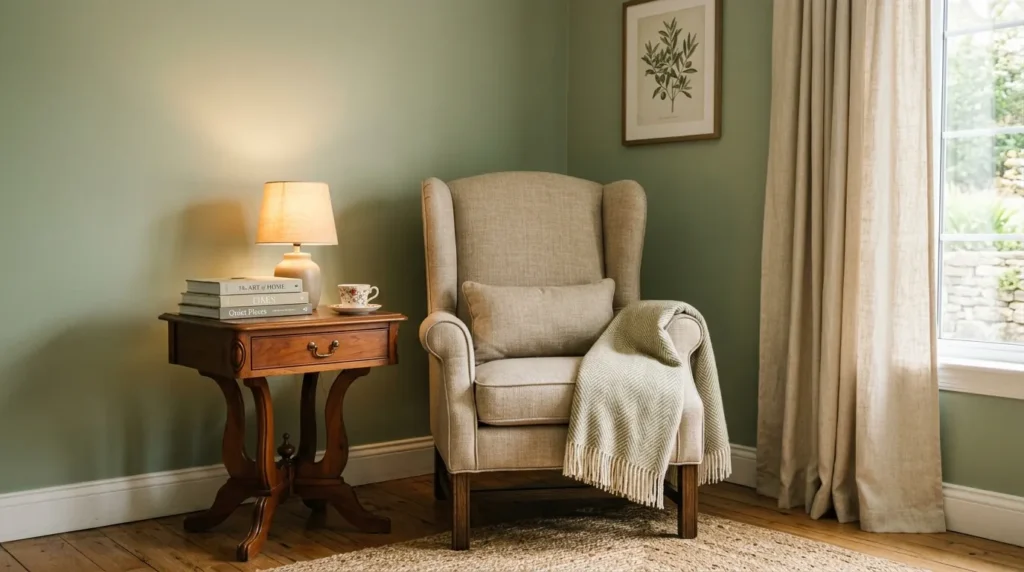
A mistake many homeowners make with inherited or traditional furniture is assuming it needs to be replaced to feel current. One thing that works especially well instead is updating the surrounding color palette — softer, more neutral wall colors and updated textiles — while keeping the classic furniture pieces themselves. This works because color is one of the fastest ways to signal “current” without touching the furniture’s actual shape or construction.
How To Style It
If you have traditional furniture pieces you want to keep, pair them with a softer, more contemporary wall color — muted sage, warm greige, or soft dove gray rather than the deeper traditional tones like burgundy or hunter green. Update small textiles like curtains and throw pillows in simpler, more current colors and patterns to modernize the overall feel without replacing the furniture itself.
10. Timeless Statement Pieces
Quick Benefits
- Reduces the need for frequent redecorating
- Anchors the room regardless of passing trends
- Justifies spending more on fewer pieces
- Works across multiple design updates over the years
- Adds long-term value to the space
Why It Works
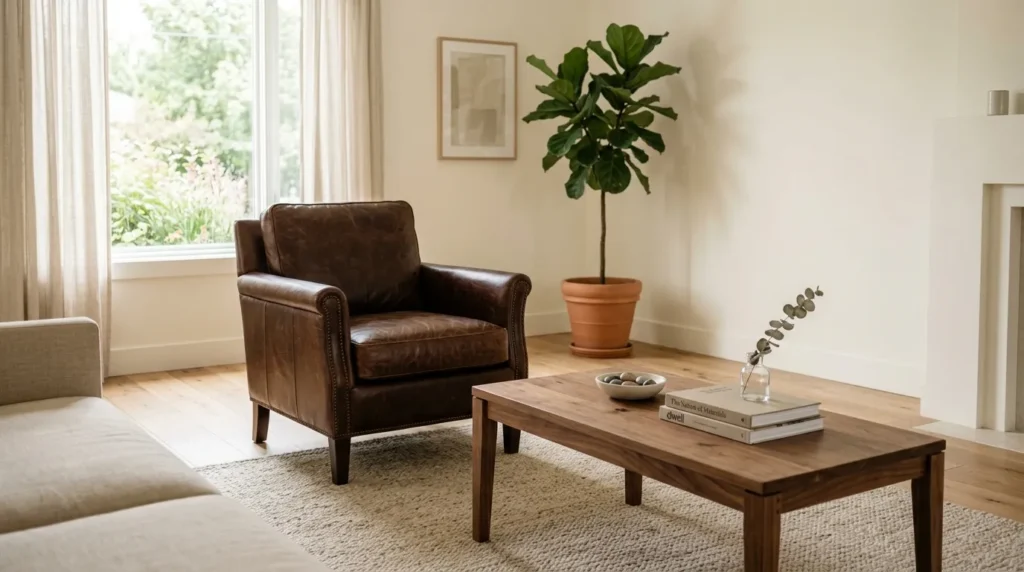
If you’re anything like me, you’ve learned that chasing every trend gets expensive and short-lived. One simple trick I always suggest is identifying one or two furniture pieces built to last both physically and stylistically — a well-made wood dining or coffee table, a quality leather chair, a classic sofa shape in a durable fabric — and treating those as the room’s foundation. This works because these pieces don’t need to be replaced as trends shift; only the smaller, more affordable accents around them need updating over time.
How To Style It
Invest in one or two higher-quality pieces with a classic, simple shape rather than a heavily trend-driven silhouette, and rotate cheaper elements like pillows, art, and small accessories to keep the room feeling current. This approach keeps the core of the room timeless while still allowing regular refreshes through low-cost updates.
Frequently Asked Questions
What does “modern classic” living room design actually mean?
It refers to blending traditional design elements — classic furniture shapes, architectural details, heritage patterns — with a more current, streamlined approach to color and styling. The goal is a room that feels collected and timeless rather than strictly traditional or strictly modern.
Do I need antique furniture to achieve this look?
Not necessarily, but one or two genuinely older or vintage pieces add character that new furniture alone can’t replicate. Even a single antique side table or vintage lamp paired with modern furniture can create the blended effect.
How do I keep a room with traditional furniture from feeling dated?
Updating the color palette and adding more current textiles, lighting, and art typically has the biggest impact. Traditional furniture pieces often feel fresh again when paired with a softer, more contemporary backdrop.
Can this style work in a newer, builder-grade home?
Yes. Adding architectural details like molding, along with a mix of vintage and modern furniture, is one of the most effective ways to add traditional character to a newer home that otherwise feels generic.
How much pattern is too much in a modern classic room?
Generally, one traditional pattern paired with one simpler modern pattern works best. Using more than two distinct patterns across a room tends to feel busy rather than intentionally layered.
What metal finishes work best for this style?
Two coordinated finishes — such as brass with black iron, or aged bronze with brushed nickel — tend to work best, since they suggest a collected-over-time feel without appearing mismatched.
Conclusion
A modern classic living room isn’t about choosing between old and new — it’s about letting the two work together, each softening the other’s extremes. A single antique piece keeps a modern room from feeling sterile, while an updated color palette or simplified furniture silhouette keeps a traditional room from feeling stuck in the past. The ten ideas above offer a practical starting point for building that balance, whether you’re working with inherited furniture, a completely blank room, or something in between.
Start with one or two ideas and gradually build a space that reflects your style and supports everyday comfort. Updating a color palette or introducing one meaningful vintage piece often makes the biggest first impression, before moving on to bigger changes like architectural details or new furniture. Give each change room to settle before adding the next, and let the room’s blended character develop naturally over time.
Related Articles
- Elegant Living Room Ideas
- Cozy Living Room Ideas
- Neutral Home Styling
- Vintage Decor Ideas
- DIY Accent Wall Ideas