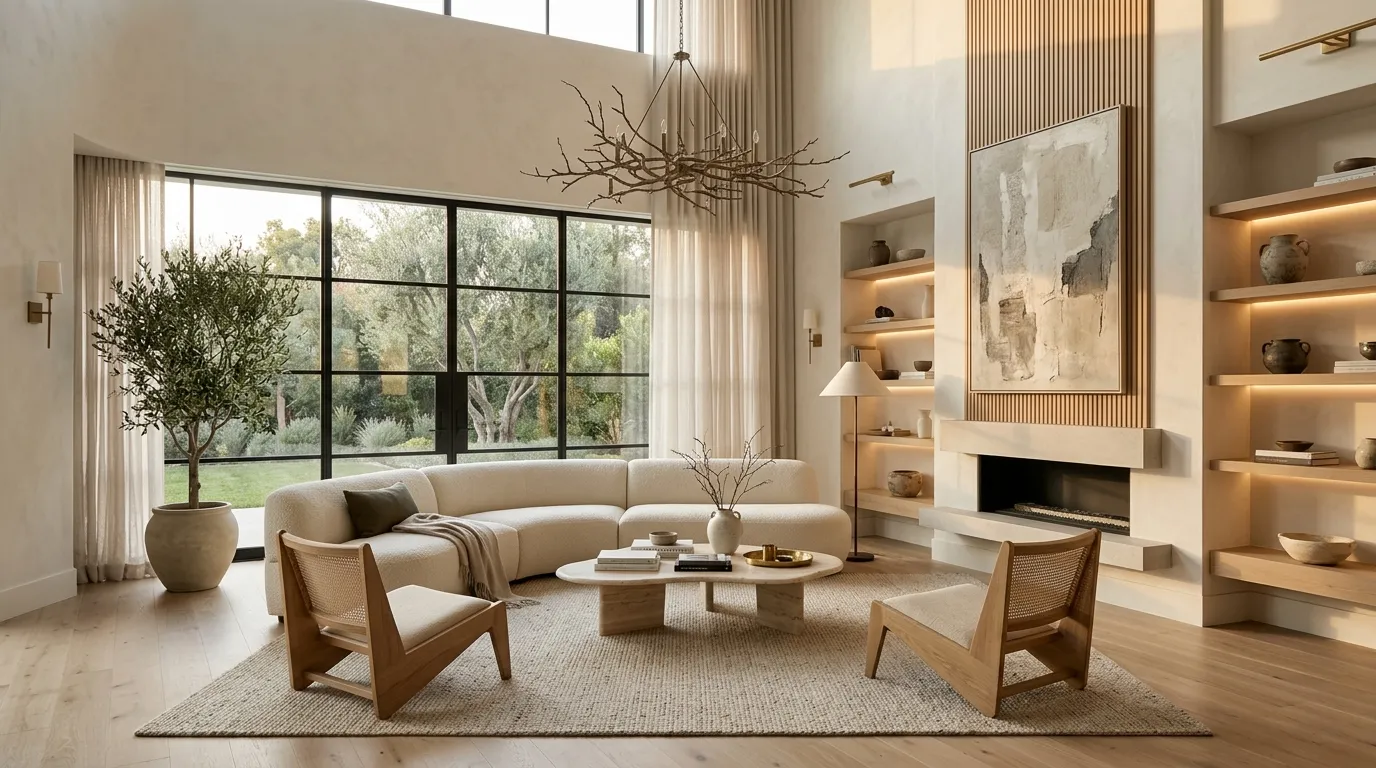
10 Contemporary Living Room Ideas That Feel Fresh and Modern
There’s a difference between a living room that looks “modern” because it happens to have new furniture, and one that’s genuinely contemporary — sleek, intentional, and current without feeling cold or sterile. A mistake many homeowners make is assuming contemporary design simply means minimal or all-white, when in reality it’s a much more specific style built on clean lines, bold contrast, and a confident use of negative space.
In my experience, the living rooms that read as truly contemporary share a few consistent traits: streamlined furniture silhouettes, a restrained but intentional color story, and a handful of sculptural or architectural details that give the space personality without cluttering it. This is a style that rewards precision — a slightly-off proportion or an overly busy accessory choice can undercut the whole look much faster than in a more relaxed, eclectic space.
This guide breaks down ten specific ideas for building a contemporary living room that feels fresh rather than trend-chasing, along with the practical reasoning and styling advice behind each one. Every idea is meant to be genuinely actionable, whether you’re furnishing a room from scratch or updating a space that currently feels a bit dated or overly traditional.
If you’re anything like me, you want your living room to feel current without needing to redecorate again in two years. These ideas are built around the core principles of contemporary design that tend to hold up well over time, even as smaller trends shift around them.
Table of Contents
- Clean Line Furniture — Choosing streamlined, uncluttered silhouettes.
- Monochromatic Color Blocking — Building depth within a single color family.
- Sleek Metal Accents — Adding polish through modern hardware and finishes.
- Statement Area Rugs — Anchoring the room with bold pattern or texture.
- Floating Shelving Display — Creating a modern, architectural storage moment.
- Bold Geometric Patterns — Introducing graphic interest without clutter.
- Streamlined Media Console — Keeping technology integrated and tidy.
- Minimalist Wall Treatments — Elevating walls beyond standard paint.
- Modern Accent Lighting — Choosing fixtures with architectural presence.
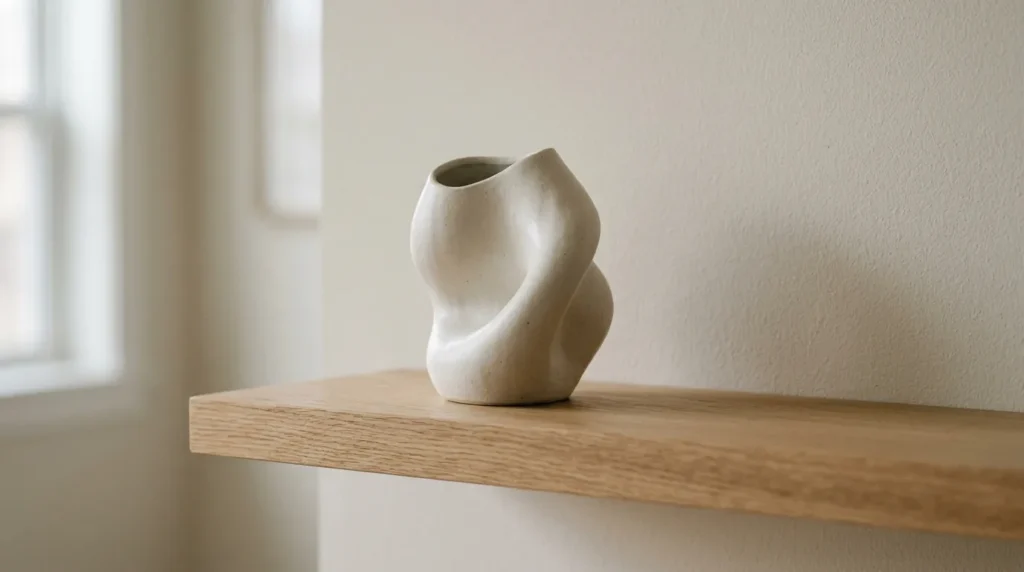
- Sculptural Decor Objects — Finishing the room with artful, modern accents.
1. Clean Line Furniture
Quick Benefits
- Creates an immediate sense of order and polish
- Makes rooms feel more spacious
- Pairs well with both bold and neutral palettes
- Reduces visual clutter
- Provides a strong contemporary foundation
Why It Works
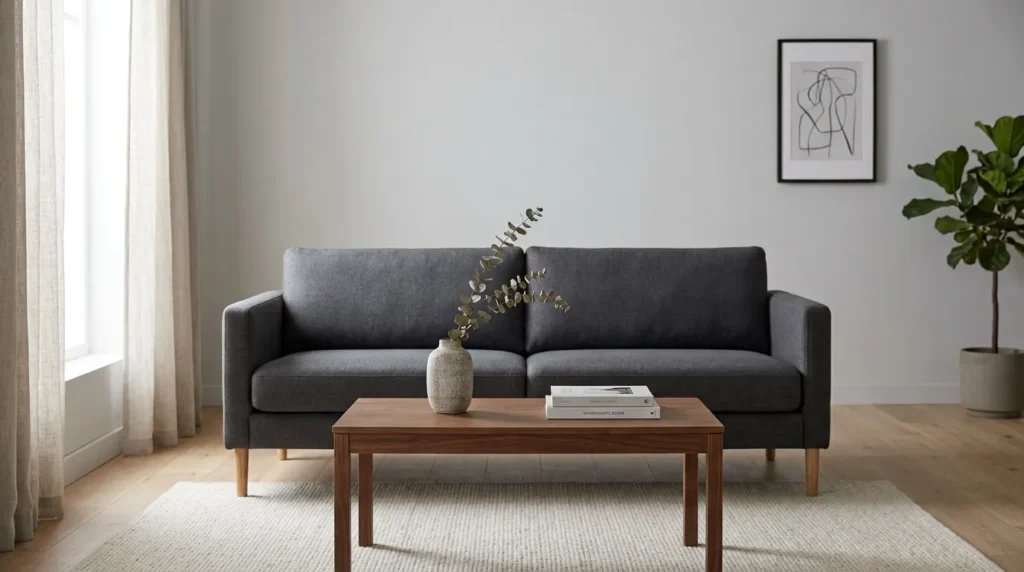
Contemporary design is defined largely by furniture with clean, straight, or gently curved lines rather than ornate detailing or heavily tufted upholstery. A mistake many homeowners make is mixing in too many traditional, heavily detailed pieces, which can pull the room away from a cohesive contemporary look even if everything else is styled correctly. Streamlined silhouettes read as more current because they let materials and proportions speak for themselves rather than relying on decorative detail.
How To Style It
Choose sofas and chairs with straight or gently tapered legs, minimal tufting, and simple, uncluttered upholstery rather than ornate carved wood or heavily patterned fabric. Keep furniture lines consistent throughout the room — if your sofa is boxy and streamlined, choose a coffee table and side tables with a similarly clean silhouette rather than mixing in overly ornate pieces. This consistency is what makes a contemporary room feel cohesive rather than assembled from mismatched styles.
2. Monochromatic Color Blocking
Quick Benefits
- Creates a sophisticated, cohesive look
- Makes the room feel larger and more unified
- Allows texture to do more visual work
- Simplifies color decision-making
- Provides a strong base for bold accents
Why It Works
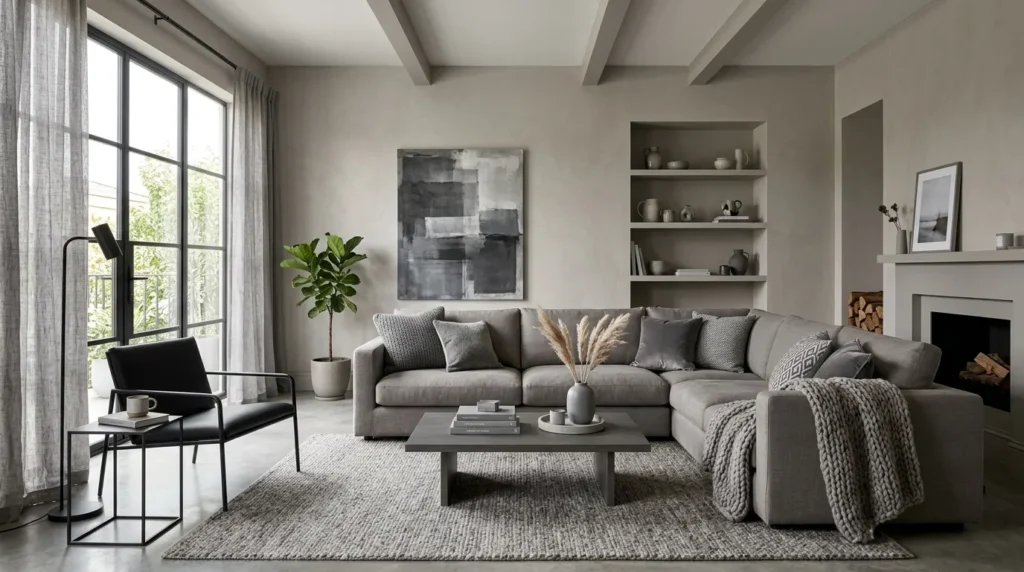
One thing that works especially well in contemporary spaces is building the palette around a single color family in varying shades and tones, rather than mixing multiple unrelated colors. A room in different tones of gray, or layered warm taupes, reads as far more intentional and current than one built from several disconnected colors. This approach also puts more visual weight on texture and material contrast, which is a hallmark of the contemporary aesthetic.
How To Style It
Choose one base color — charcoal, warm gray, or greige are common contemporary choices — and use it across walls, larger furniture, and flooring in slightly varying shades. Introduce one bold contrast color sparingly, such as a single black accent chair in an otherwise all-gray room, to keep the monochromatic palette from feeling flat. Rely on texture — a nubby wool sofa against a smooth leather chair — to add visual interest within the single-color scheme.
3. Sleek Metal Accents
Quick Benefits
- Adds a polished, modern edge
- Provides contrast against soft furnishings
- Works well in both bold and neutral rooms
- Elevates the room without major furniture changes
- Easy to introduce through smaller accessories
Why It Works
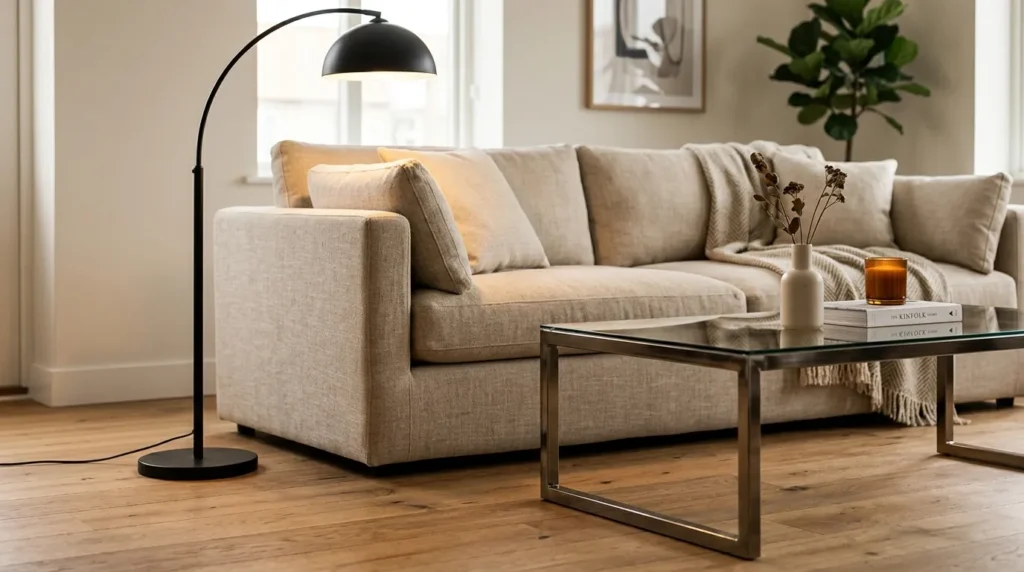
Sleek metal finishes — matte black, brushed steel, chrome — are one of the fastest ways to sharpen up a living room and push it firmly into contemporary territory. A mistake many homeowners make is relying entirely on warm materials like wood and textiles, which can lean the room toward a more traditional or organic feel rather than a crisp, contemporary one. Metal accents introduce a cooler, more architectural note that balances out softer materials elsewhere in the room.
How To Style It
Choose one metal finish — matte black is especially popular in contemporary spaces — and repeat it through a few key pieces: a floor lamp, a picture frame, a side table base, or shelving brackets. Pair these metal accents against warmer materials like a wood floor or a linen sofa to keep the room from feeling too cold or industrial. A metal-framed coffee table with a glass or stone top is a particularly effective way to introduce this material at a larger scale.
4. Statement Area Rugs
Quick Benefits
- Anchors the seating area with bold visual interest
- Introduces pattern without overwhelming furniture choices
- Provides a foundation for the room’s color story
- Adds texture underfoot
- Easy focal point to build the rest of the room around
Why It Works
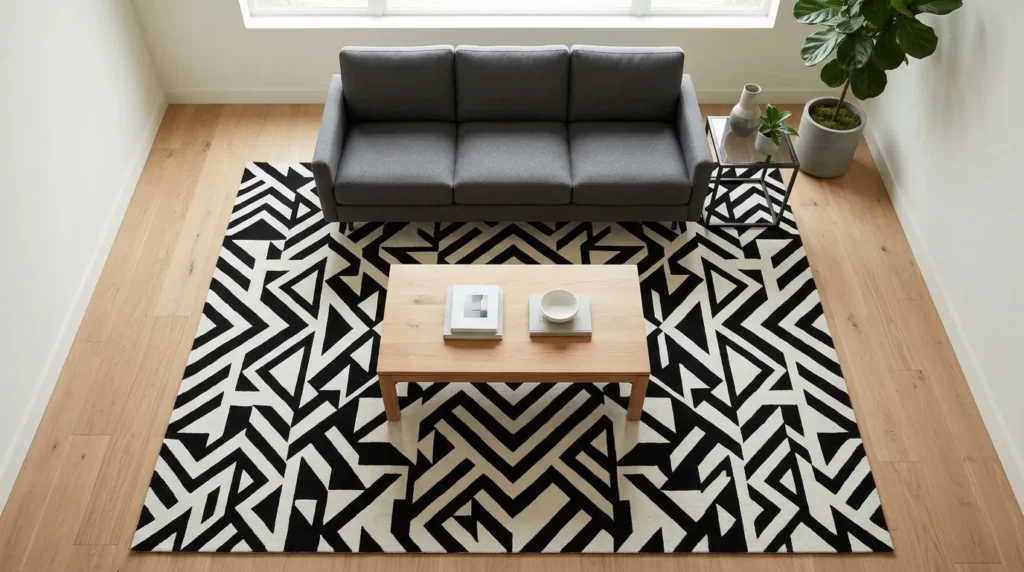
A bold, graphic area rug is one of the signature moves of contemporary design, since it introduces pattern and personality at floor level rather than through furniture or walls. I’ve noticed that many of the most memorable contemporary living rooms use a single statement rug as the room’s primary source of visual interest, keeping everything else relatively simple by comparison. This creates a clear focal point and prevents the room from feeling like too many competing patterns are fighting for attention.
How To Style It
Choose a rug with a bold geometric pattern, an abstract design, or strong color contrast, and let it act as the room’s main pattern statement. Keep surrounding furniture upholstery solid or subtly textured rather than patterned, so the rug doesn’t have to compete for visual attention. Size the rug so all four legs of your main seating pieces rest on it, which grounds the arrangement and reinforces the contemporary emphasis on intentional proportion.
5. Floating Shelving Display
Quick Benefits
- Creates an architectural, built-in look
- Frees up floor space for a cleaner layout
- Provides display space without visual bulk
- Works well for both storage and styling
- Adds a modern, gallery-like quality
Why It Works
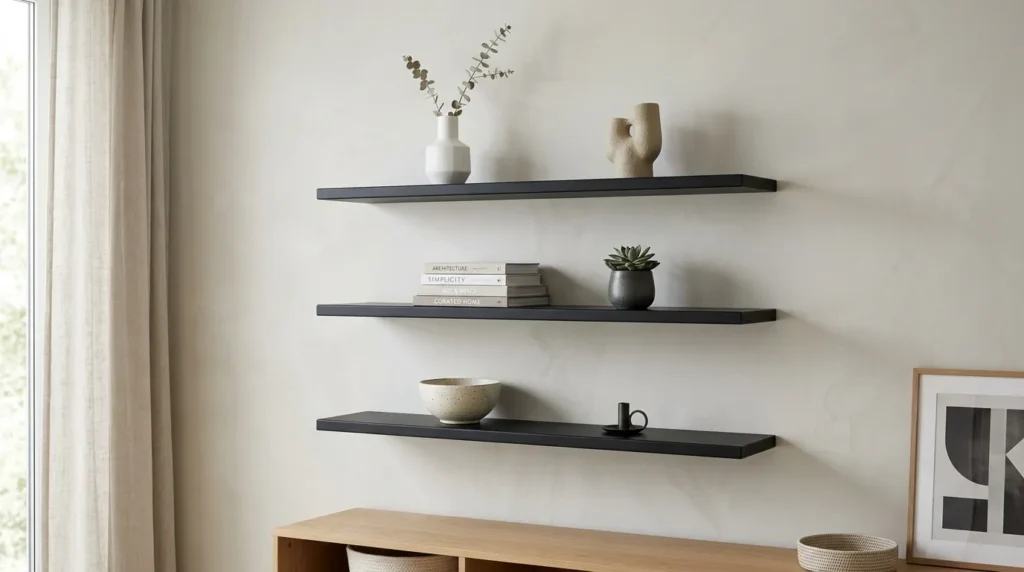
Floating shelves are a quintessential contemporary detail because they create storage and display space without the visual bulk of a traditional bookshelf or cabinet. A mistake many homeowners make is filling a room with heavy, freestanding furniture that eats up floor space and visually weighs the room down. Floating shelves, by contrast, appear to hover against the wall, reinforcing the clean, uncluttered feeling that defines contemporary interiors.
How To Style It
Install floating shelves in a simple, unadorned finish — matte black, white, or natural wood — depending on your existing palette, and keep the bracket hardware hidden for the cleanest look. Style each shelf with a mix of heights and a limited number of objects, leaving visible negative space between groupings rather than filling every inch. Vertical spacing between shelves should feel generous, generally at least ten to twelve inches, to keep the display from feeling cramped.
6. Bold Geometric Patterns
Quick Benefits
- Adds graphic interest without visual clutter
- Reinforces the room’s contemporary identity
- Pairs well with clean-lined furniture
- Works across pillows, art, and rugs
- Easy to introduce in small, swappable doses
Why It Works
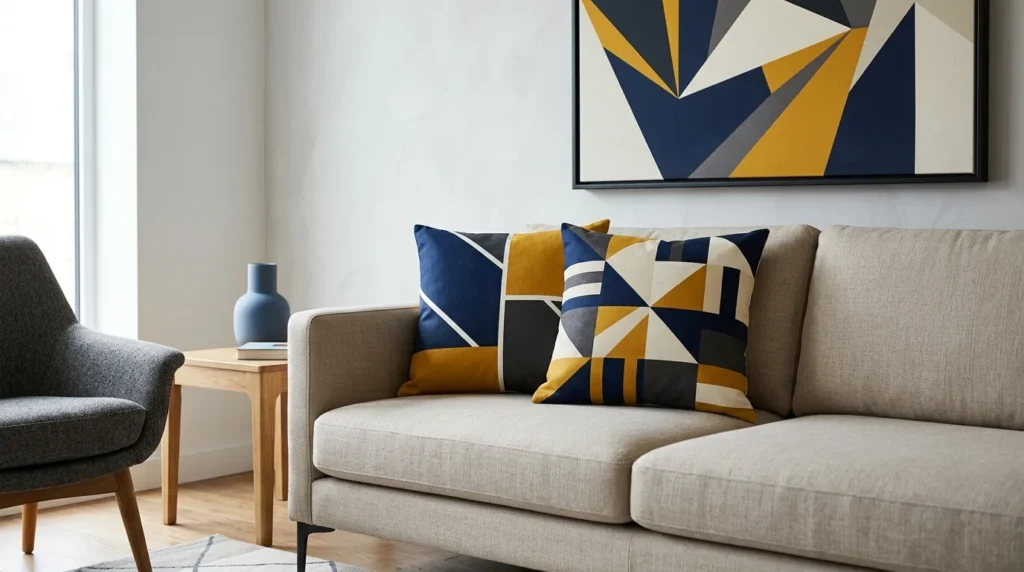
Geometric patterns — chevrons, color-blocked shapes, angular line work — are a natural complement to the clean-lined furniture that defines contemporary spaces, since both rely on precision and intentional structure. A mistake many homeowners make is introducing pattern through busy, organic florals or traditional damasks, which can clash with an otherwise contemporary room. Geometric patterns, by contrast, reinforce the same design language as the furniture and architecture around them.
How To Style It
Introduce geometric pattern through a few key pieces — a set of graphic throw pillows, a piece of abstract art, or a patterned rug — rather than throughout every textile in the room. Stick to a limited color palette within the pattern itself, ideally pulling from colors already present elsewhere in the room, so the geometric element feels integrated rather than randomly placed. Balance bold pattern with plenty of solid, uncluttered surfaces nearby so the room doesn’t feel visually overwhelming.
7. Streamlined Media Console
Quick Benefits
- Keeps technology and cords tidy and out of sight
- Provides a clean, uncluttered focal wall
- Reinforces the room’s overall clean-lined aesthetic
- Offers practical storage without visual bulk
- Works well with wall-mounted televisions
Why It Works
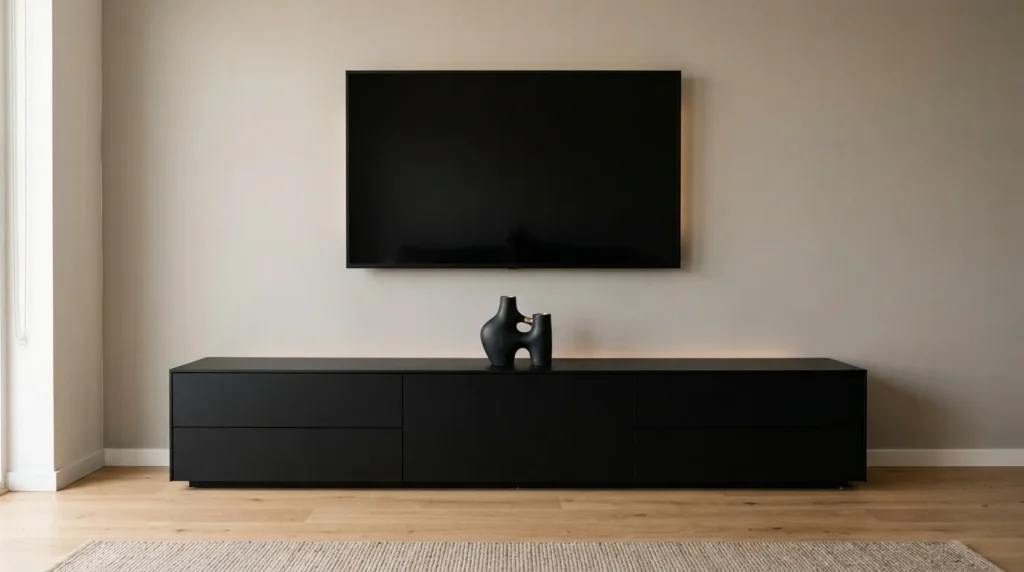
A cluttered media area — visible cords, mismatched remotes, an oversized entertainment center — can undercut an otherwise well-designed contemporary room faster than almost any other element. One simple trick I always suggest is investing in a low-profile, streamlined media console with hidden cord management, which keeps the technology functional without becoming the visual focus of the room. This is especially important in contemporary spaces, where clutter reads as more jarring against an otherwise clean backdrop.
How To Style It
Choose a media console with a low, horizontal profile and closed storage to hide remotes, cables, and other clutter. Mount the television directly above the console when possible, using an in-wall cord management kit to keep cables from hanging visibly down the wall. Style the top of the console sparingly — a single sculptural object or a small stack of books — rather than turning it into another cluttered surface.
8. Minimalist Wall Treatments
Quick Benefits
- Adds texture and depth without visual clutter
- Elevates a plain wall into an architectural feature
- Provides a strong, modern focal point
- Works well behind seating or media areas
- Pairs naturally with clean-lined furniture
Why It Works
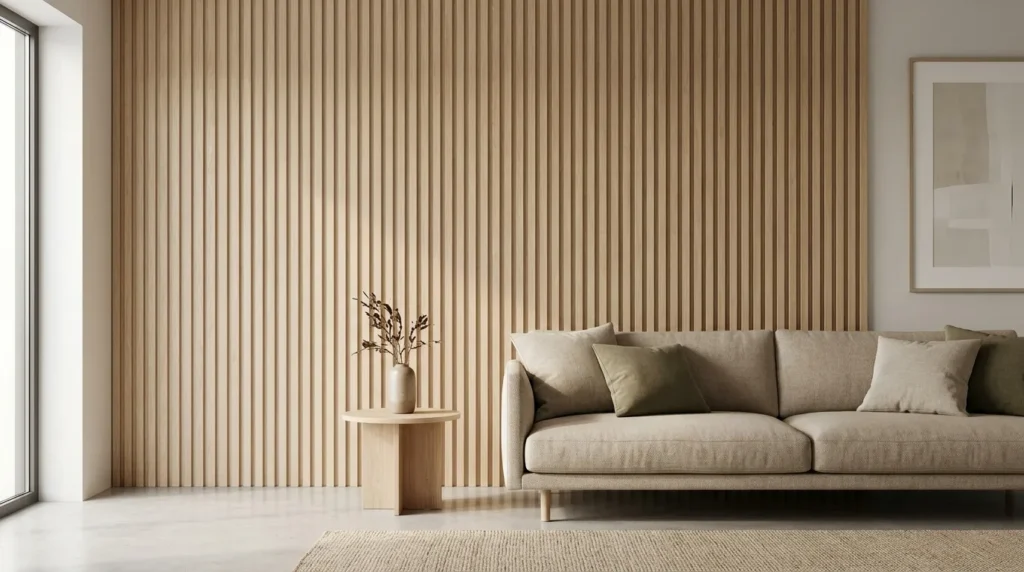
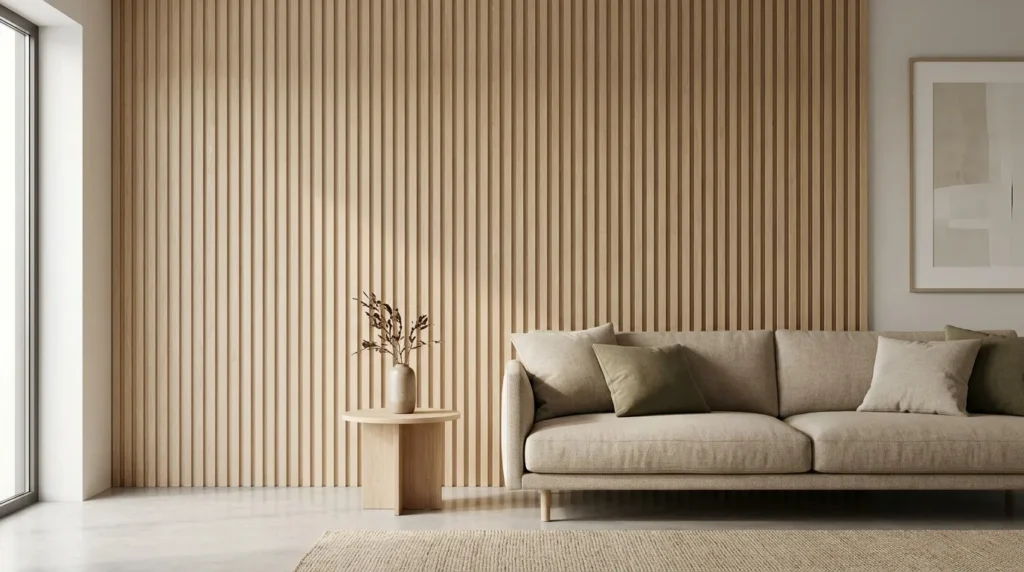
A textured accent wall — vertical wood slats, a subtle plaster finish, large-format tile — can add significant depth to a contemporary living room without introducing any additional clutter. A mistake many homeowners make is defaulting to a single flat paint color throughout the entire room, missing an opportunity to add architectural interest through the walls themselves. A well-chosen wall treatment gives the room a sense of intentional design that goes beyond furniture alone.
How To Style It
Choose one wall — typically behind the sofa or television — for a subtle textural treatment like vertical wood slats or a limewash plaster finish, and keep the remaining walls simple and solid-colored to avoid visual overload. Stick to a neutral or tonal color for the treatment so it reads as architectural rather than decorative. This kind of wall treatment works particularly well as a backdrop for the streamlined media console described above.
9. Modern Accent Lighting
Quick Benefits
- Provides a strong architectural focal point
- Elevates the room without extra furniture
- Reinforces the clean-lined contemporary aesthetic
- Works well as both function and sculpture
- Available across a wide range of budgets
Why It Works
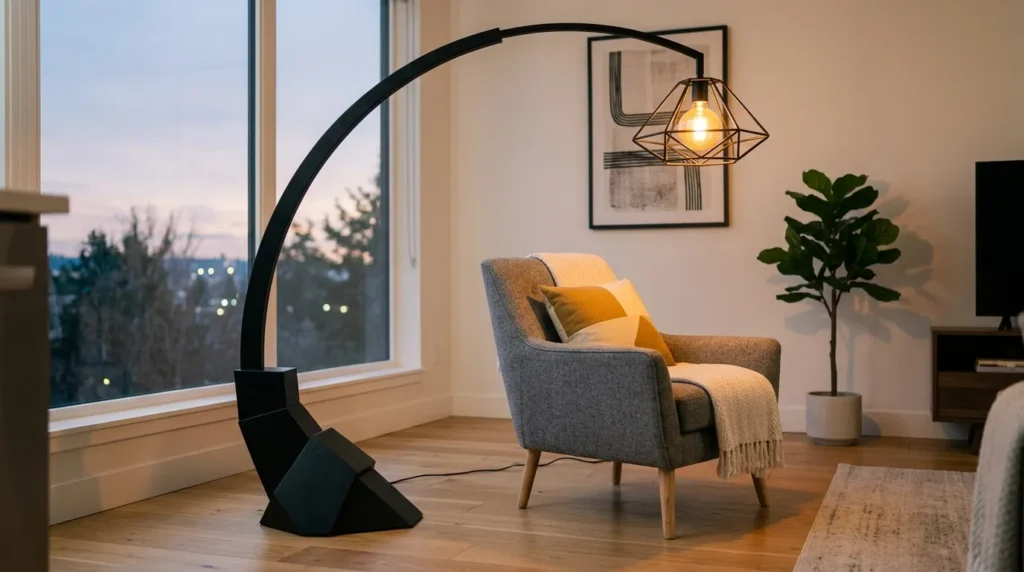
Lighting in contemporary spaces tends to favor bold, architectural silhouettes over ornate or traditional fixtures. A sculptural floor lamp with a geometric base, or a linear LED fixture, reinforces the same clean-lined language found in the furniture and wall treatments throughout the room. In my experience, a single striking lighting choice can do more to establish a contemporary mood than several smaller design decisions combined.
How To Style It
Choose lighting with a strong geometric or architectural shape — a linear pendant, an arc floor lamp with a minimalist base, or a sculptural table lamp — rather than a traditional fixture with ornate detailing. Stick to a consistent metal finish across your lighting choices to reinforce the sleek metal accents mentioned earlier in this list. Dimmable LED options are especially popular in contemporary spaces, allowing the room’s mood to shift between bright and functional to soft and atmospheric.
10. Sculptural Decor Objects
Quick Benefits
- Adds artistic interest without visual clutter
- Reinforces the room’s modern, curated identity
- Works well on shelving, consoles, or coffee tables
- Provides a finishing, gallery-like touch
- Easy to source across a range of price points
Why It Works
The final layer of a contemporary living room often comes down to a few carefully chosen sculptural objects — an abstract ceramic form, a geometric bookend, a modern art piece — that reinforce the room’s clean, intentional aesthetic. A mistake many homeowners make is filling shelves and surfaces with too many small decorative items, which can undercut the sense of restraint that defines contemporary style. A few well-chosen sculptural pieces, given room to breathe, read as far more curated.
How To Style It
Choose one or two sculptural objects per surface — a single abstract ceramic piece on a floating shelf, or a modern sculpture on the coffee table — rather than grouping several smaller items together. Favor pieces with clean, abstract, or geometric forms over ornate or traditional decor, keeping the material palette consistent with the rest of the room’s metal and wood tones. Leave generous negative space around each object so it can be appreciated individually rather than getting lost among other decor.
Frequently Asked Questions
What’s the difference between modern and contemporary design?
Modern design typically refers to a specific historical style rooted in the early to mid-20th century, while contemporary design reflects whatever is current, evolving over time. Contemporary living rooms often borrow clean lines from modern design but incorporate current trends in color, material, and technology.
Does contemporary design have to be all-white or all-gray?
No. While monochromatic and neutral palettes are common in contemporary spaces, bold color can absolutely be part of the style, especially when used intentionally through a single accent color or a statement rug rather than scattered throughout the room.
What furniture materials work best for a contemporary living room?
Materials like matte metal, glass, polished stone, and smooth leather or performance fabrics are common in contemporary spaces. These materials support the clean-lined, slightly cooler aesthetic that defines the style, especially when balanced against warmer wood tones.
How do I keep a contemporary living room from feeling cold?
Balance sleek materials like metal and glass with warmer elements such as wood flooring, natural light, and soft textiles. A single warm accent, like a wood coffee table or a linen sofa, can keep an otherwise sleek room from feeling too clinical.
Can a contemporary living room still feel cozy?
Yes. Layering in soft textiles, warm lighting, and a few natural materials alongside the clean lines and modern accents keeps a contemporary room from feeling sterile. The key is balance rather than avoiding softness altogether.
What’s the easiest way to update a traditional living room to feel more contemporary?
Start by simplifying ornate furniture silhouettes, introducing a bold statement rug, and adding a few sleek metal accents through lighting or hardware. These changes require far less investment than a full furniture replacement but shift the room’s overall feel significantly.
How much pattern is too much in a contemporary room?
Contemporary design generally favors one strong pattern moment — a rug or a piece of art — rather than pattern layered throughout pillows, curtains, and upholstery simultaneously. Keeping most surfaces solid allows the one bold pattern choice to stand out.
Conclusion
A fresh, contemporary living room comes down to a handful of consistent choices: clean-lined furniture, a cohesive color story, sleek metal accents, and a few sculptural details that give the room personality without clutter. None of these ideas require a complete gut renovation — most can be introduced gradually, piece by piece, as your budget and priorities allow.
Start with one or two ideas from this list and gradually build a space that reflects your style and supports everyday comfort. Whether that means introducing a bold statement rug, swapping in a streamlined media console, or adding a sculptural lighting fixture, small, intentional updates compound into a room that feels genuinely current. The most successful contemporary living rooms aren’t chasing every passing trend — they’re built on a handful of confident, well-executed choices that continue to feel fresh over time.
Related Articles
- Classy Living Room Ideas With Designer Charm
- Organic Modern Living Room Ideas
- Simple Timeless Living Room Ideas
- Small Living Room Layout Solutions
- Modern Media Console Styling Tips