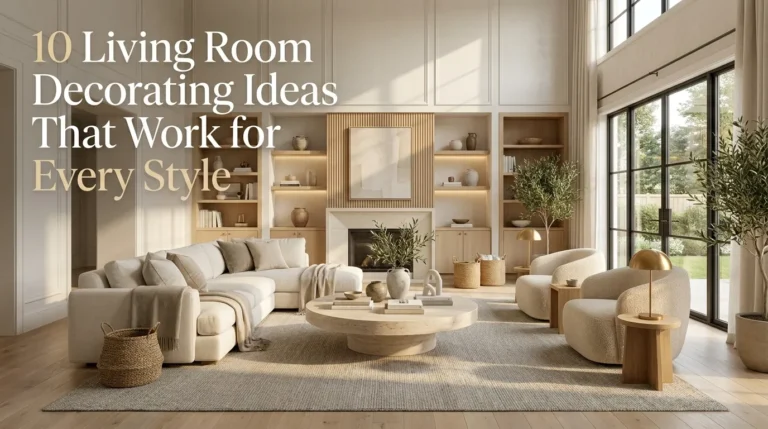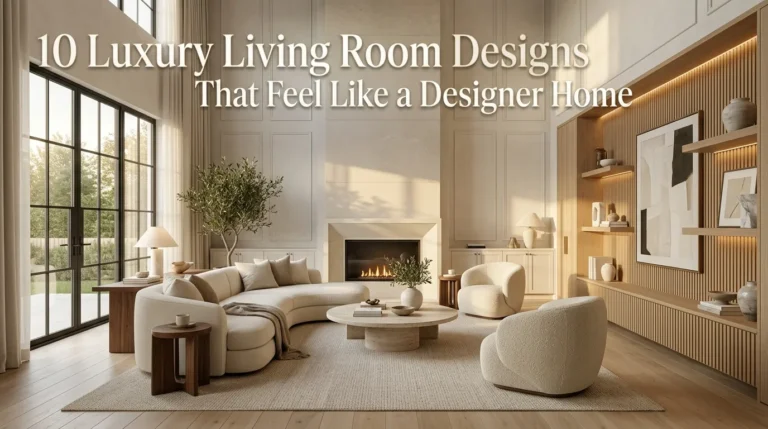
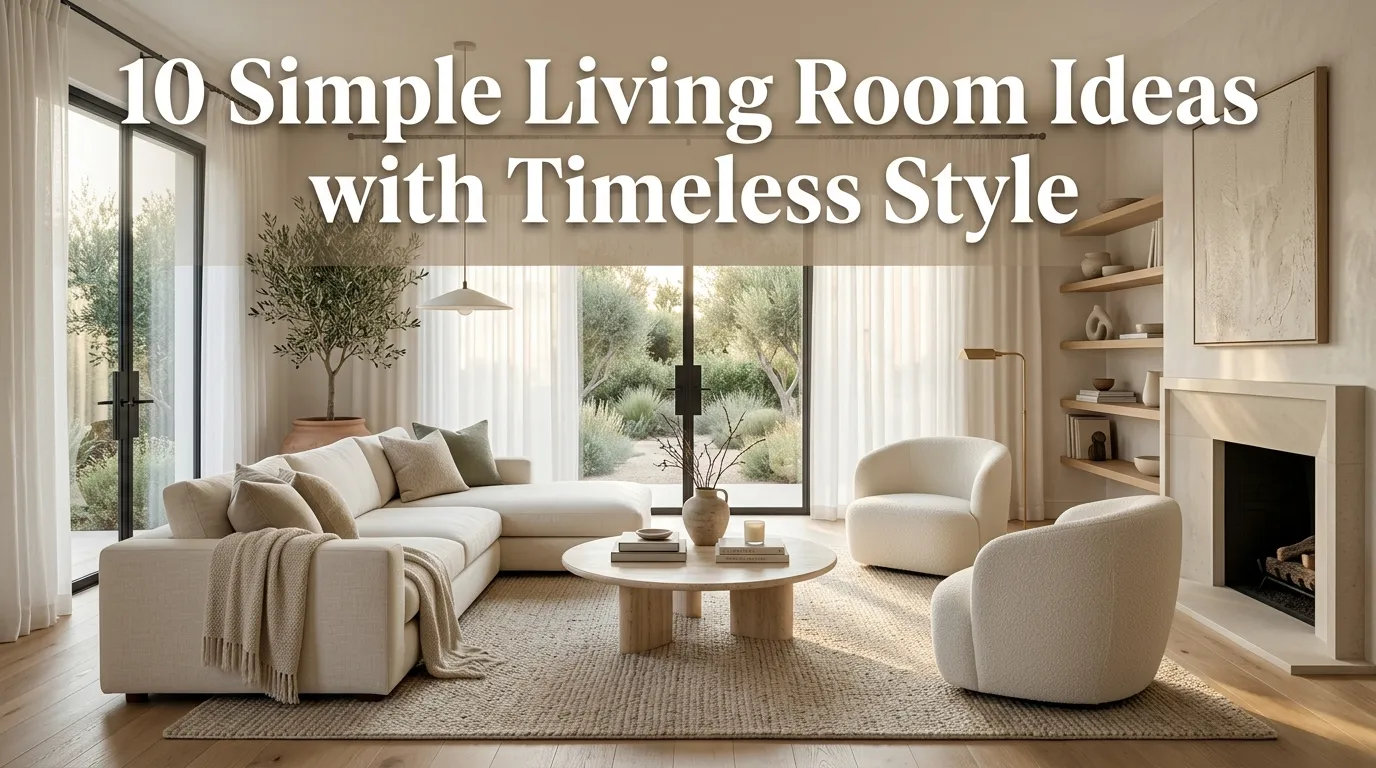
10 Simple Living Room Ideas with Timeless Style
Trends come and go faster than most of us can keep up with, and it’s easy to end up with a living room that felt fresh two years ago and dated today. A mistake many homeowners make is chasing whatever’s popular at the moment, only to find themselves wanting to redecorate again before the paint has even had time to settle. That’s exactly why timeless design keeps coming back into style — because it never really left.
Timeless doesn’t mean boring, and simple doesn’t mean bare. In my experience, the living rooms that feel the most put-together years after they were designed are the ones built on classic proportions, quality materials, and restraint rather than trend-chasing. These rooms tend to age gracefully instead of looking stuck in a particular decade, and they’re also easier to update seasonally without a full overhaul.
This guide walks through ten practical ideas for creating a simple, timeless living room — the kind of space that photographs beautifully today and will still feel right a decade from now. Each idea includes the reasoning behind it and specific, actionable ways to bring it into your own home, so you’re left with a clear plan rather than just inspiration.
If you’re anything like me, you’d rather invest once in pieces and choices that last than constantly chase whatever’s trending on social media. That’s the entire philosophy behind timeless design, and these ideas will help you get there.
Table of Contents
- Classic Neutral Palette — Building a foundation that never feels dated.
- Quality Over Quantity Furniture — Investing in fewer, better pieces.
- Symmetrical Furniture Arrangement — Creating balance and visual calm.
- Timeless Wood Tones — Choosing finishes that outlast trends.
- Simple Statement Lighting — Selecting fixtures with lasting design appeal.
- Classic Patterned Textiles — Using patterns that never go out of style.
- Minimal Wall Art — Curating instead of over-decorating walls.
- Traditional Fabric Upholstery — Choosing durable, classic materials.
- Uncluttered Surfaces — Keeping tabletops and shelves intentional.
- Timeless Accent Pieces — Selecting decor that transcends passing trends.
1. Classic Neutral Palette
Quick Benefits
- Never feels dated or trend-locked
- Provides a flexible base for seasonal updates
- Makes furniture and art stand out
- Works in nearly any architectural style
- Simplifies future redecorating decisions
Why It Works
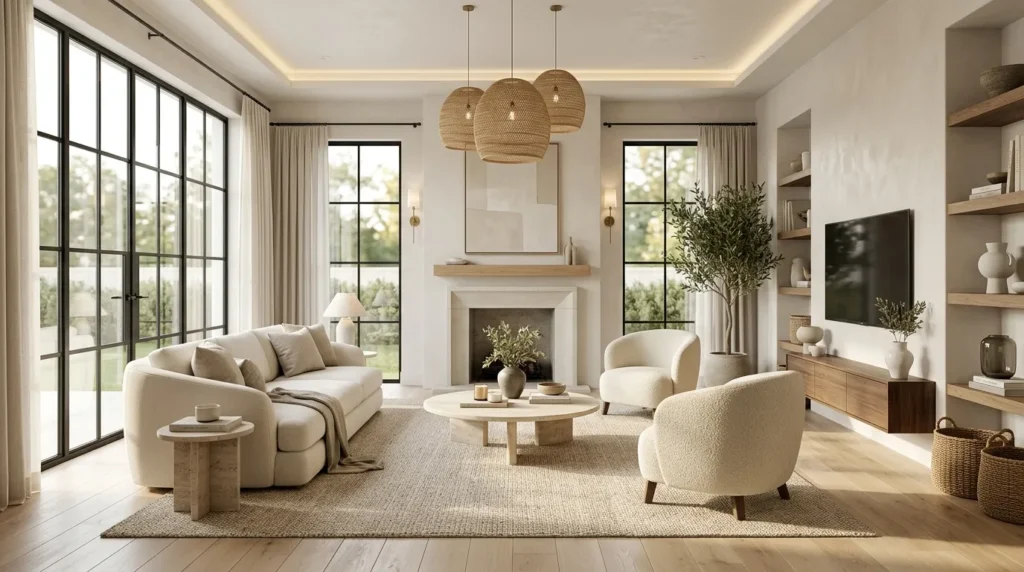
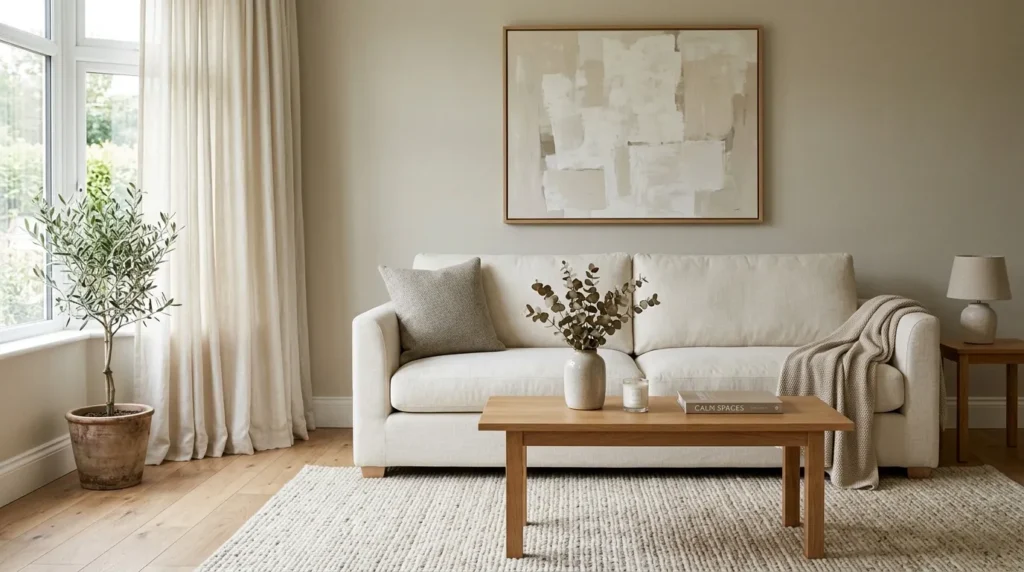
A neutral palette is the foundation of nearly every timeless living room, and for good reason. Colors that feel current tend to also feel dated the fastest, since they’re tied to a specific era’s trends. Whites, warm grays, soft beiges, and muted taupes, on the other hand, have remained popular decade after decade because they don’t compete with anything else in the room. One thing that works especially well is choosing a neutral with warm undertones, since it tends to feel more timeless than a stark, cool white.
How To Style It
Choose a soft, warm white or a muted greige for walls, and stick to that same tonal family for larger furniture pieces like sofas and rugs. Reserve bolder colors for smaller, easily swappable items — a throw pillow, a vase, a piece of art — so the overall room stays flexible. If you already have a bold accent wall or a trend-driven color choice, consider whether it could be simplified to a neutral base with color introduced through accessories instead.
2. Quality Over Quantity Furniture
Quick Benefits
- Reduces long-term replacement costs
- Improves overall room proportions
- Creates a more curated, intentional feel
- Supports a simpler, less cluttered layout
- Ages better than trend-driven, lower-cost pieces
Why It Works
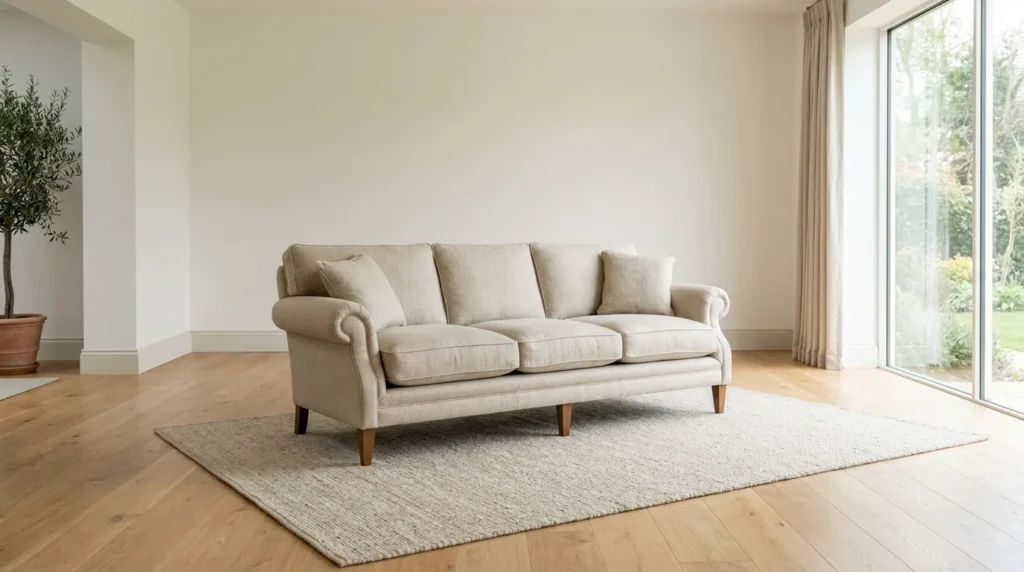
A mistake many homeowners make is filling a room with as much furniture as the budget allows, rather than prioritizing fewer, better-made pieces. Timeless living rooms tend to have noticeably less furniture than trend-driven ones, but each piece is chosen more carefully. A single well-made sofa in a classic silhouette will outlast several cheaper replacements, both in durability and in how well it continues to fit the room’s overall look over time.
How To Style It
Before buying, ask whether a piece has a classic silhouette — think rolled arms, tapered legs, or clean rectangular lines — rather than an exaggerated, trend-specific shape. Prioritize investing in your sofa and any large seating pieces first, since these anchor the room and are the most expensive to replace. Smaller, less permanent pieces, like side tables or accent chairs, can be more budget-friendly since they’re easier to swap out later if your taste shifts.
3. Symmetrical Furniture Arrangement
Quick Benefits
- Creates a naturally calming visual balance
- Makes rooms feel more organized and intentional
- Works well for both formal and casual layouts
- Simplifies furniture shopping with matched pairs
- Reads as classic rather than trend-driven
Why It Works
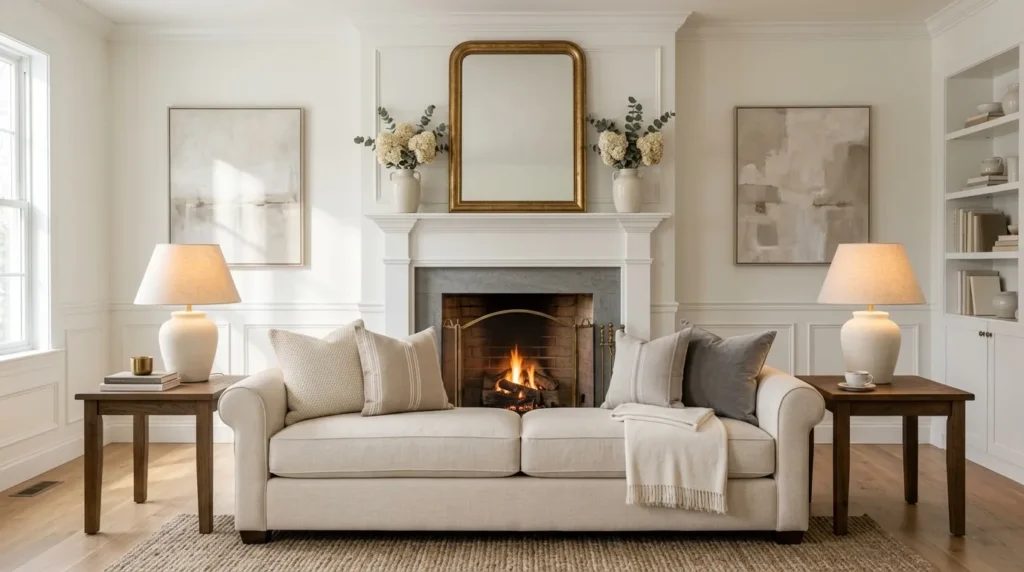
Symmetry is one of the oldest design principles for a reason: it creates an immediate sense of order and calm that the eye reads as intentional. That’s why many designers recommend anchoring a timeless living room around a symmetrical arrangement — a sofa centered on a focal wall, flanked by two matching chairs or side tables. Asymmetrical, trend-driven layouts can look interesting for a season, but symmetrical arrangements tend to feel right no matter how long they’ve been in place.
How To Style It
Center your main seating piece on the room’s focal point, whether that’s a fireplace, a media console, or a large window. Flank it with matching accent chairs, lamps, or side tables to create balance on either side. If your room’s layout doesn’t easily support full symmetry, look for smaller opportunities to introduce it — a pair of matching table lamps or two identical throw pillows on either end of the sofa can create the same calming effect on a smaller scale.
4. Timeless Wood Tones
Quick Benefits
- Adds warmth without following a passing trend
- Pairs well with nearly any color palette
- Ages gracefully compared to painted finishes
- Works across furniture, flooring, and trim
- Provides a grounding, classic material choice
Why It Works
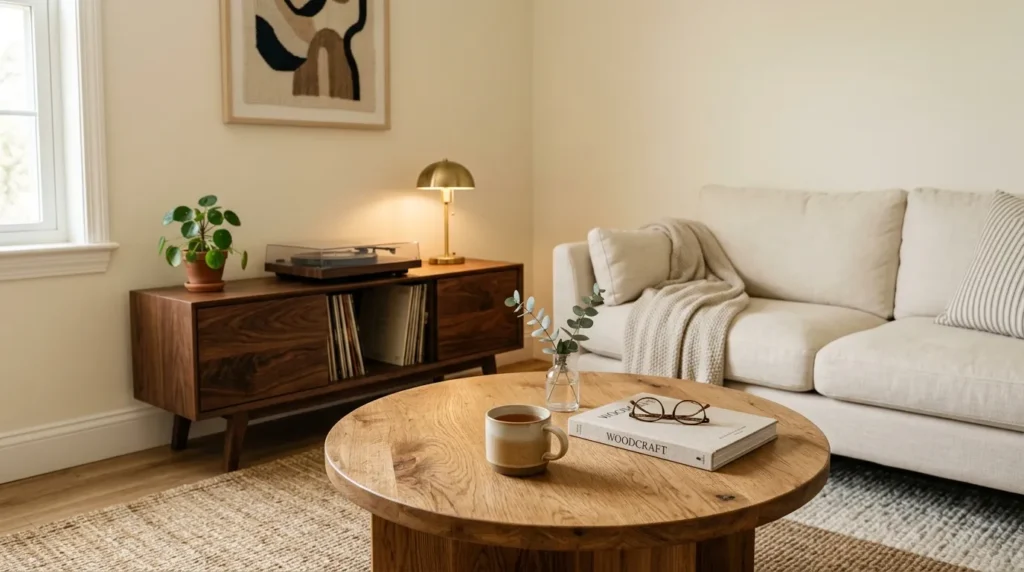
Wood tones go in and out of trend more than most people realize — gray-washed finishes were everywhere a decade ago, and heavily distressed wood had its own moment before that. A mistake many homeowners make is chasing whichever wood finish is currently popular, only to find it feels dated within a few years. Medium, natural wood tones — think classic oak or walnut — have consistently remained in style because they read as genuinely natural rather than tied to a specific design era.
How To Style It
When choosing new furniture, favor natural or lightly stained wood finishes over heavily distressed, whitewashed, or gray-toned options, which tend to date more quickly. Mixing two complementary wood tones, like a walnut coffee table with oak flooring, adds richness without looking mismatched, as long as the undertones are similar. If you already have furniture in a more trend-specific finish, a console table or bookshelf in a classic wood tone can help balance it out.
5. Simple Statement Lighting
Quick Benefits
- Adds visual interest without overwhelming the room
- Elevates a space with minimal extra decor
- Works as both function and design
- Complements nearly any furniture style
- Provides an easy focal point update
Why It Works
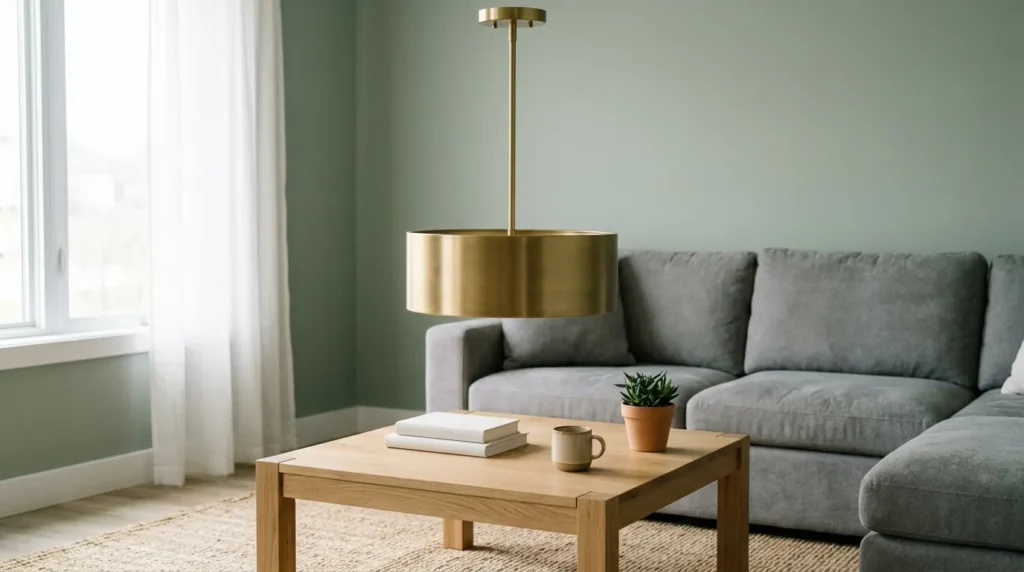
Lighting fixtures with clean, classic lines age far better than trend-driven statement pieces, which can start to feel dated the moment the trend moves on. A simple, well-proportioned pendant or a classic brass floor lamp does the same job as a more elaborate fixture — drawing the eye and adding personality — without locking the room into a specific design moment. I’ve noticed that the rooms with the longest visual shelf life tend to have lighting that could have been installed decades ago or yesterday.
How To Style It
Choose lighting with simple geometric shapes — a clean drum pendant, a classic arc floor lamp, or an understated linear chandelier — rather than heavily ornate or overly trend-specific designs. Stick to timeless finishes like brass, matte black, or brushed nickel, which pair well with almost any color palette. If your current fixtures feel trend-locked, swapping just the lampshades or bulbs can sometimes refresh the look without a full replacement.
6. Classic Patterned Textiles
Quick Benefits
- Adds visual interest without feeling trend-specific
- Pairs easily with a neutral base palette
- Provides texture and depth to the room
- Easy to introduce in small, swappable doses
- Complements both traditional and modern furniture
Why It Works
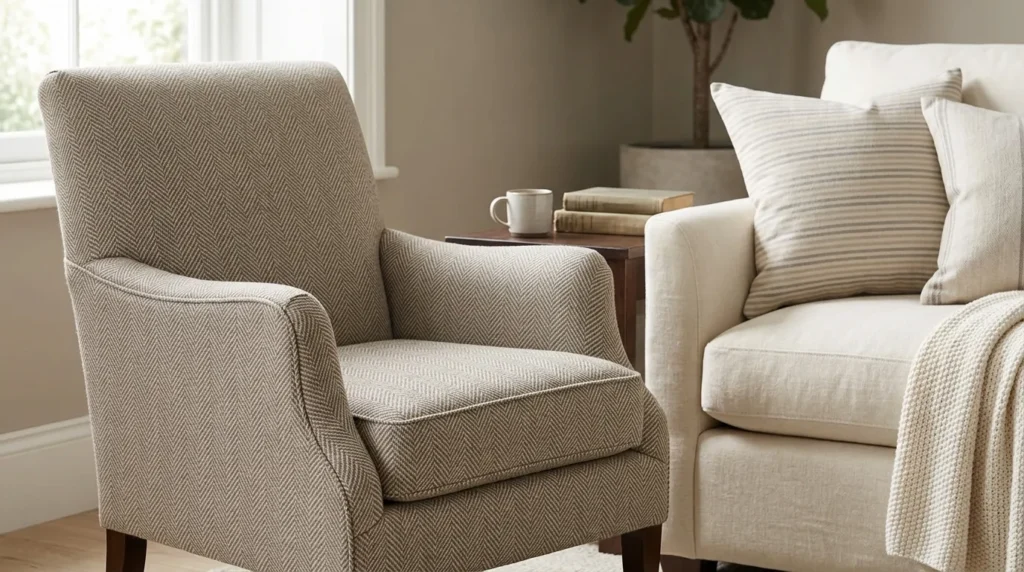
Certain patterns — stripes, herringbone, subtle checks, classic florals in muted tones — have remained in style for generations because they’re rooted in craft traditions rather than passing trends. A mistake many homeowners make is choosing bold, graphic patterns that feel current now but will likely look dated within a few years. Classic patterns, by contrast, tend to blend seamlessly into a room regardless of when they were introduced.
How To Style It
Introduce pattern through smaller, easily swappable pieces like throw pillows, a rug, or curtains rather than a large upholstered piece, which is more difficult and costly to change later. Stick to muted, tonal color combinations within the pattern rather than high-contrast, bold color pairings, since these tend to feel more timeless. A neutral herringbone or subtle stripe on an accent chair can add texture without overwhelming the room’s simplicity.
7. Minimal Wall Art
Quick Benefits
- Keeps the room feeling curated rather than cluttered
- Draws attention to a few meaningful pieces
- Easy to update without a full redesign
- Complements a simple, neutral palette
- Provides visual breathing room
Why It Works
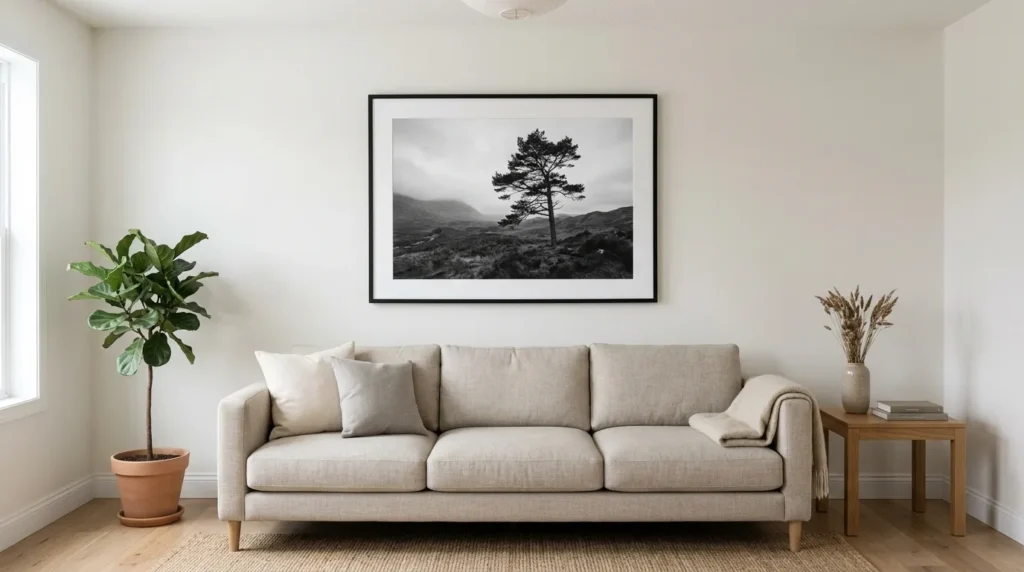
A wall covered in a dozen mismatched frames might feel trendy for a season, but it rarely ages well and can start to feel visually overwhelming faster than a more restrained approach. One simple trick I always suggest is choosing one or two larger, meaningful pieces of art per wall rather than filling every available surface. This creates breathing room and lets each piece actually be appreciated, rather than getting lost in a crowded gallery arrangement.
How To Style It
Choose one statement piece of art sized appropriately for the wall — as a general guideline, art should span roughly two-thirds the width of the furniture it hangs above. If you prefer a gallery arrangement, keep the frames in a consistent finish and leave generous spacing between them rather than clustering tightly. Black and white photography, abstract line art, and classic landscape paintings tend to age particularly well compared to bold graphic prints tied to a specific trend cycle.
8. Traditional Fabric Upholstery
Quick Benefits
- Provides long-term durability
- Feels classic rather than trend-driven
- Pairs well with a neutral color palette
- Ages gracefully with proper care
- Works across a range of furniture styles
Why It Works
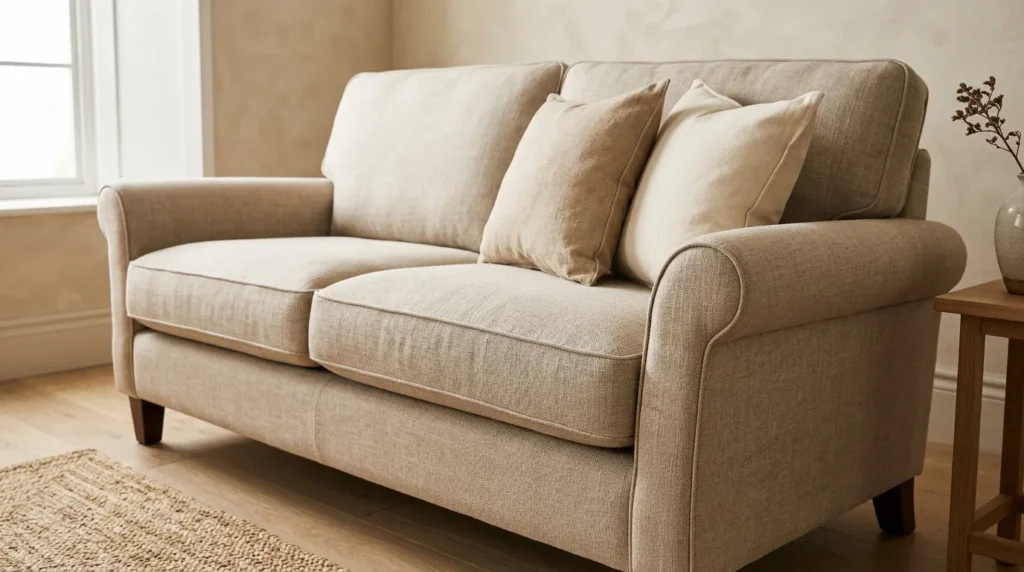
Upholstery fabric plays a bigger role in a room’s timelessness than most people expect. Trend-driven fabrics — a specific bold pattern, an ultra-glossy performance velvet in a saturated color — can quickly anchor a piece of furniture to a particular design moment. Traditional fabrics like linen, cotton twill, and classic wool blends, on the other hand, have remained popular for generations because they’re versatile, durable, and don’t scream any particular era.
How To Style It
When selecting upholstery for a sofa or major seating piece, favor natural or natural-blend fabrics in neutral tones over bold prints or highly saturated colors. Linen and performance-weave cotton are both durable, classic choices that soften nicely over time rather than looking worn out. Save bolder fabric choices for smaller, more easily replaceable pieces like accent pillows or a single statement chair rather than your primary sofa.
9. Uncluttered Surfaces
Quick Benefits
- Creates a calm, intentional visual environment
- Makes each decor piece stand out more
- Simplifies day-to-day cleaning and maintenance
- Supports a simple, minimal design approach
- Reads as more expensive and curated
Why It Works
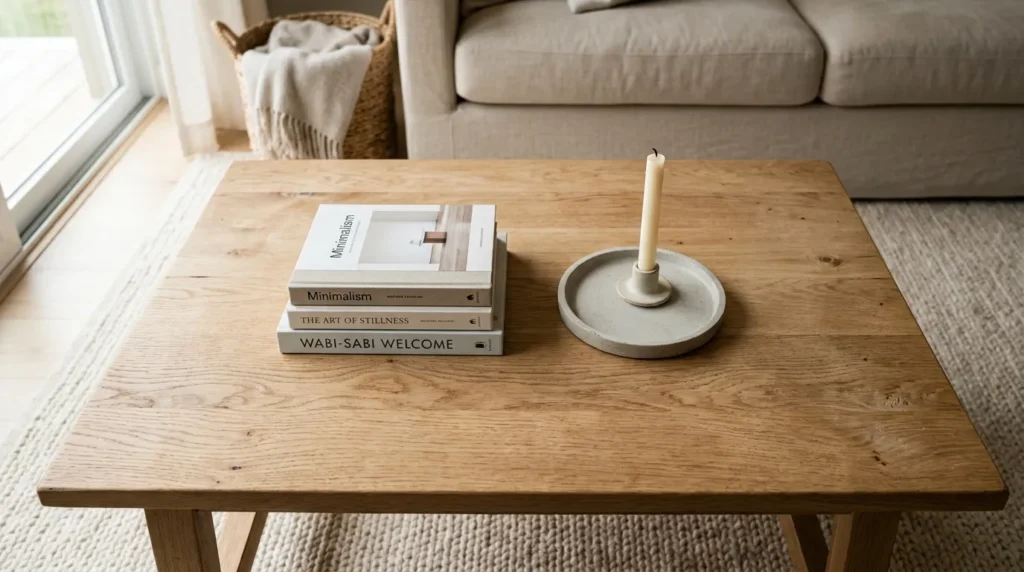
A mistake many homeowners make is filling every coffee table, console, and shelf with decor, which can make even a beautifully designed room feel visually busy. Timeless design tends to favor restraint — a few well-chosen objects with breathing room around them, rather than every surface fully styled. This isn’t about being sparse for its own sake; it’s about letting the pieces you do choose actually be seen and appreciated.
How To Style It
On your coffee table, limit styling to two or three items — a tray, a stack of books, and a small object like a candle or vase — rather than covering the entire surface. On shelving, leave roughly a third of the space open rather than filling every inch, which creates visual rest and makes the styled portions stand out more. This same principle applies to console tables and mantels: fewer, more intentional groupings read as more curated than a fully packed surface.
10. Timeless Accent Pieces
Quick Benefits
- Adds personality without following a trend cycle
- Works well as conversation-starting decor
- Complements a simple, neutral base
- Easy to source secondhand or vintage
- Elevates the room without a full redesign
Why It Works
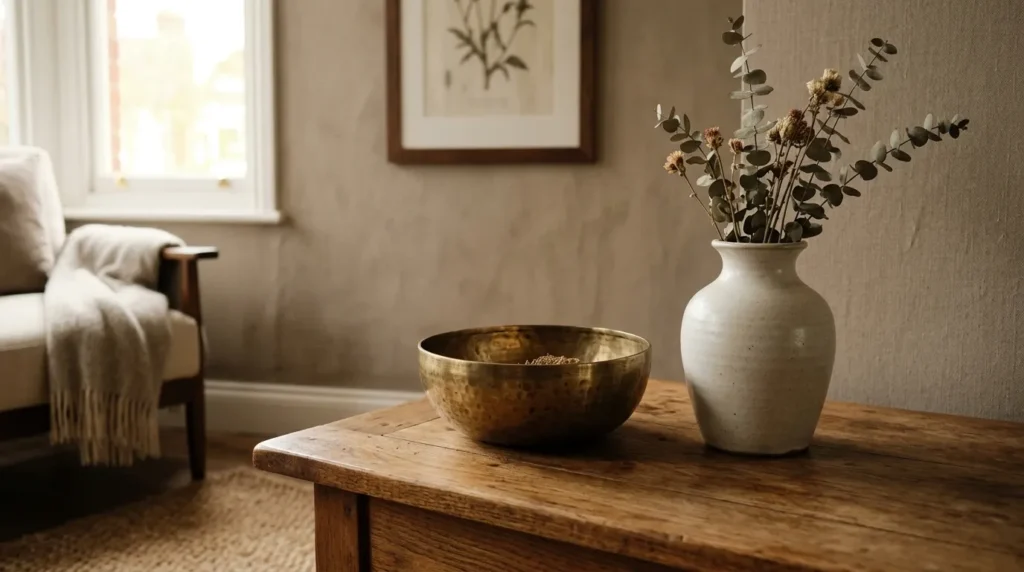
The final layer of a timeless living room comes down to accent pieces — vases, bowls, sculptural objects — that feel classic rather than tied to a specific trend. I’ve seen this idea transform simple, neutral rooms that otherwise felt a little generic, simply by adding one or two well-chosen accent pieces with genuine character. Vintage and antique pieces work particularly well here, since they’ve already proven their staying power over decades.
How To Style It
Look for one or two accent pieces with a classic shape and material — a ceramic vase, a brass bowl, a carved wood object — rather than trend-specific novelty decor. Vintage shops, estate sales, and secondhand marketplaces are excellent sources for pieces that already carry a sense of history and timelessness. Place these pieces where they’ll be noticed but not crowded, such as a single shelf or a side table, so each one has room to make an impression.
Frequently Asked Questions
What makes a living room design “timeless” instead of just simple?
Timeless design combines simplicity with classic proportions, quality materials, and restraint in color and pattern choices. A simple room can still feel trendy if it uses a popular color or shape of the moment, while a timeless room specifically avoids design choices tied to a particular era or trend cycle.
Is a neutral color palette required for timeless design?
Not strictly required, but it’s the most common foundation. Neutral palettes provide flexibility and rarely feel dated, which is why they’re so closely associated with timeless design. Color can still be introduced through smaller, easily updated accents like pillows or art.
How do I make my current living room feel more timeless without a full redesign?
Start by editing down cluttered surfaces, swapping out any overly trend-specific decor for more classic pieces, and considering whether your color palette leans neutral. Small changes like simplifying wall art or introducing a symmetrical furniture arrangement can shift the room significantly without major investment.
What furniture styles tend to stay in style the longest?
Furniture with classic silhouettes — rolled arms, tapered or turned legs, simple rectangular or gently curved profiles — tends to remain in style the longest. Exaggerated shapes tied to a specific trend, like ultra-curved or overly geometric pieces, tend to date more quickly.
Can a timeless living room still feel personal and unique?
Yes. Timeless design relies on restraint in the base elements — palette, furniture silhouettes, patterns — while leaving plenty of room for personal expression through art, accent pieces, and personal photos. The goal is longevity, not a lack of personality.
Does timeless design cost more than trend-driven design?
It can require a higher upfront investment in quality furniture, but it typically costs less over time since pieces don’t need to be replaced as frequently. Many timeless elements, like a neutral palette or simplified surfaces, actually cost nothing at all to implement.
How often should I update a timeless living room?
Much less frequently than a trend-driven space. Most timeless living rooms only need small seasonal refreshes — a new throw pillow, a swapped piece of art, fresh greenery — rather than a full redesign every few years.
Conclusion
Building a simple, timeless living room isn’t about following a rigid set of rules — it’s about choosing restraint over trend-chasing at nearly every decision point. A neutral palette, quality furniture, symmetrical balance, and a handful of carefully chosen accent pieces all work together to create a space that will feel just as right in ten years as it does today.
Start with one or two ideas from this list and gradually build a space that reflects your style and supports everyday comfort. Whether that means simplifying your wall art, editing down cluttered surfaces, or finally investing in one well-made piece of furniture instead of several trend-driven ones, small, intentional choices compound over time. The most timeless living rooms aren’t the ones frozen in a single moment — they’re the ones built to last well beyond it.
Related Articles
- Neutral Home Styling Ideas
- Small Living Room Layout Solutions
- Organic Modern Living Room Ideas
- Classic Bedroom Design Ideas
- How To Choose Timeless Furniture