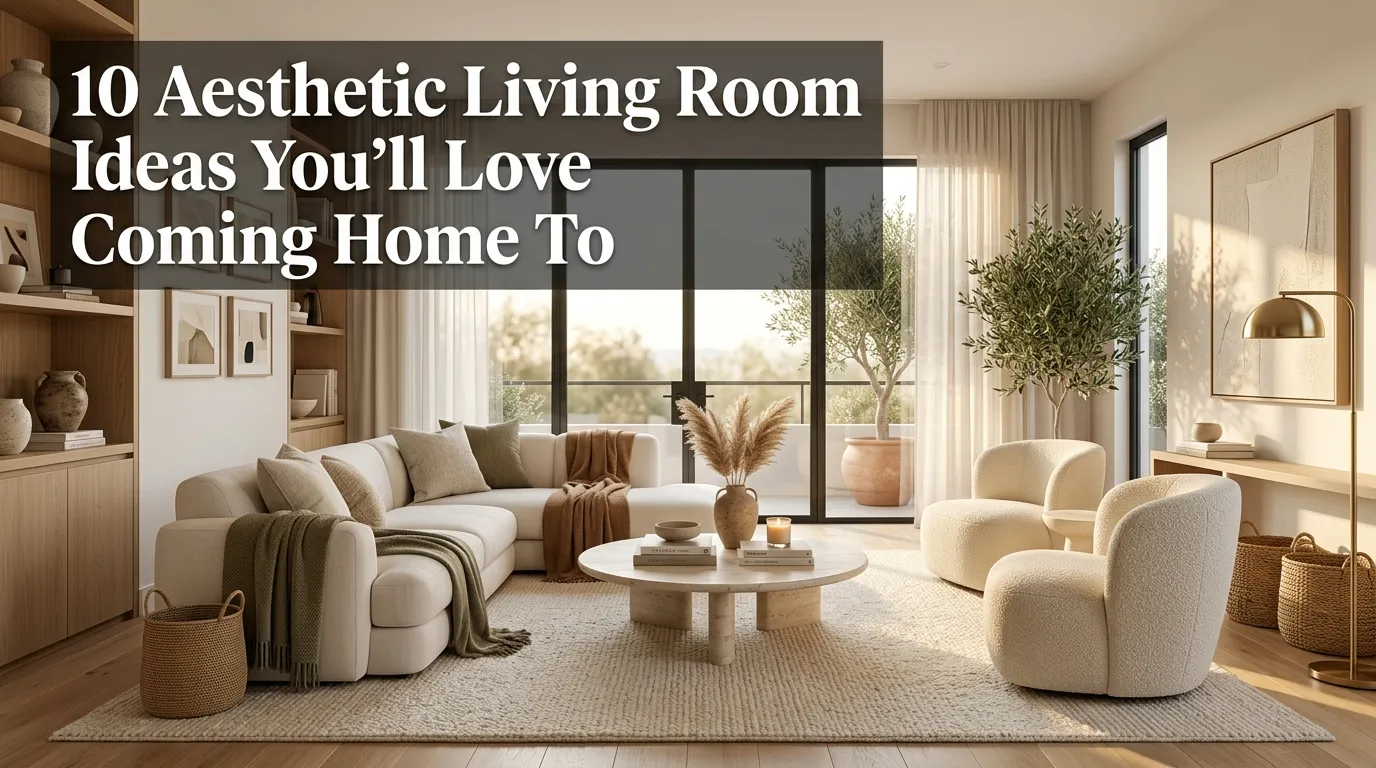
10 Aesthetic Living Room Ideas You’ll Love Coming Home To
There’s a specific kind of relief that comes from walking into a room that actually feels like you — not a showroom, not someone else’s Pinterest board, but a space that reflects your taste and makes you want to linger. A mistake many homeowners make is chasing a generic “aesthetic” they’ve seen online without translating it into something personal, which usually results in a room that looks nice in photos but doesn’t quite feel like home.
An aesthetic living room isn’t about following one specific trend to the letter. In my experience, the most genuinely aesthetic spaces are the ones built around a cohesive color story, thoughtful texture, and a handful of personal details that couldn’t be replicated in someone else’s house. That’s the difference between a room that photographs well once and a room you actually love coming home to every single day.
This guide walks through ten ideas for building a living room with real aesthetic appeal — the kind that blends visual beauty with everyday livability. Each idea includes the reasoning behind it along with specific, practical ways to bring it into your own space, so you walk away with an actual plan rather than just another saved pin.
If you’re anything like me, you’ve collected more inspiration photos than you know what to do with. These ideas are meant to help you turn that inspiration into a room that’s uniquely yours.
Table of Contents
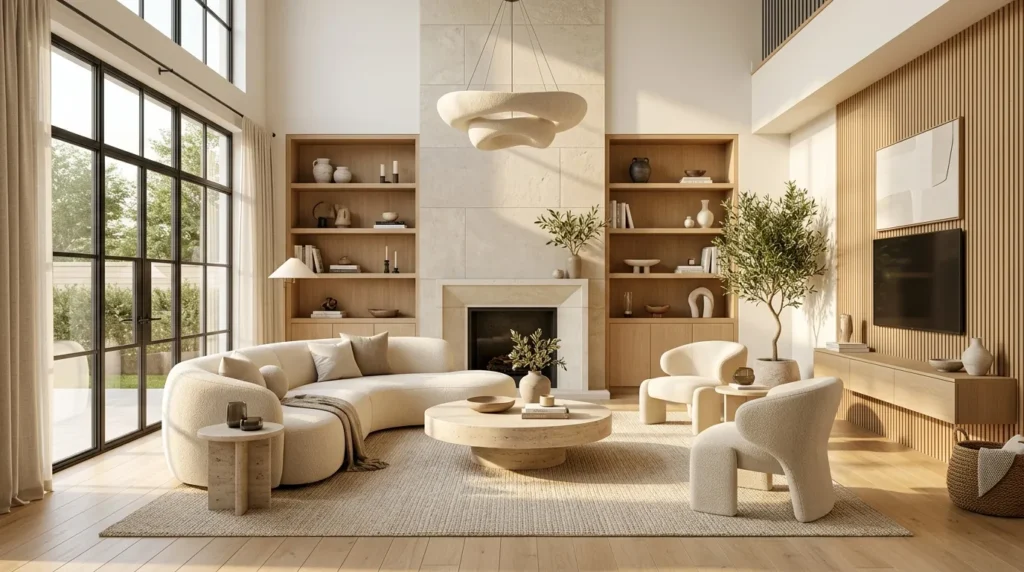
- Curated Color Story — Building a palette that feels intentional and personal.
- Soft Ambient Textures — Layering fabric and material for warmth.
- Statement Wall Moment — Creating a focal point that reflects your style.
- Vintage Charm Accents — Adding character through one-of-a-kind pieces.
- Layered Lighting Design — Setting the mood with multiple light sources.
- Personal Style Vignettes — Styling small moments that feel like you.
- Textural Plant Styling — Bringing life and softness into the space.
- Cozy Reading Nook — Carving out a corner made for slowing down.
- Aesthetic Bookshelf Styling — Turning storage into a visual feature.
- Signature Scent And Sound — Engaging every sense, not just sight.
1. Curated Color Story
Quick Benefits
- Creates a cohesive, intentional feel throughout the room
- Reflects personal taste rather than passing trends
- Makes future decor decisions easier
- Ties furniture, art, and accents together visually
- Provides a strong foundation for the room’s mood
Why It Works
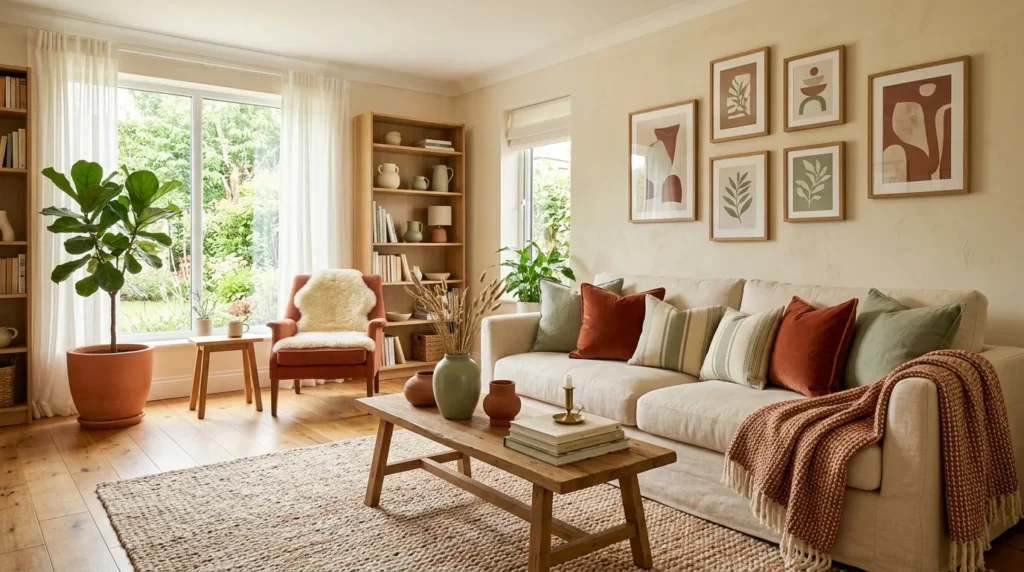
A genuinely aesthetic room almost always starts with a clear color story — not necessarily a single color, but a palette that feels deliberate rather than accidental. A mistake many homeowners make is choosing furniture and decor piece by piece without considering how the colors work together as a whole, which can leave even beautiful individual items feeling disconnected. One thing that works especially well is choosing three to five colors that genuinely resonate with you and returning to that same palette across every decision in the room.
How To Style It
Start by identifying a color palette based on tones you’re naturally drawn to — this could come from a favorite piece of art, a photo you love, or simply colors that make you feel calm and happy. Keep the palette to three to five colors total, with one or two serving as a neutral base and the rest as accent tones used more sparingly. Apply this same palette consistently across furniture, textiles, and art so the room feels unified rather than assembled from unrelated pieces.
2. Soft Ambient Textures
Quick Benefits
- Adds warmth and tactile appeal
- Makes the room feel inviting rather than staged
- Provides visual depth without extra color
- Works well layered across furniture and floors
- Easy to update seasonally
Why It Works
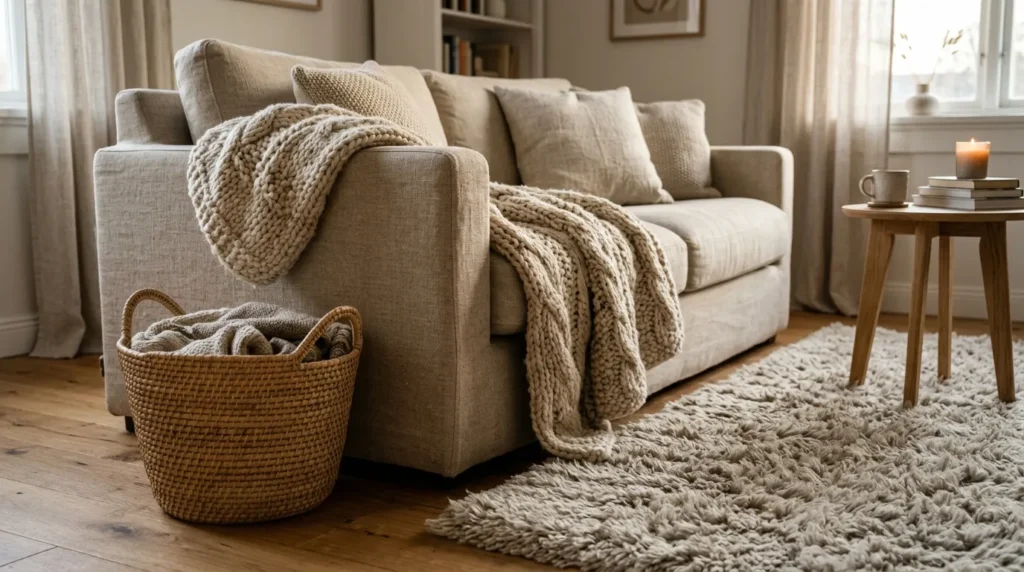
Texture is often what separates a room that looks good from one that actually feels good to be in. I’ve noticed that some of the most aesthetically pleasing living rooms rely more heavily on texture than on color or pattern — a chunky knit throw, a nubby linen sofa, a plush rug all working together to create a room that invites touch as much as it invites the eye. A mistake many homeowners make is focusing entirely on color and shape while overlooking how different a room feels once texture is layered in.
How To Style It
Combine at least three different textures within your main seating area — for example, a woven basket, a smooth ceramic vase, and a soft knit throw. Choose a rug with some texture, like a wool or high-pile weave, rather than a flat, low-pile option, since texture underfoot adds significantly to the room’s overall feel. Rotate textiles seasonally, swapping in heavier knits during cooler months and lighter linens in warmer ones, to keep the aesthetic feeling fresh year-round.
3. Statement Wall Moment
Quick Benefits
- Creates a clear visual focal point
- Reflects personal style in a bold way
- Elevates the room without new furniture
- Provides a strong backdrop for photos
- Easy to update without full commitment
Why It Works
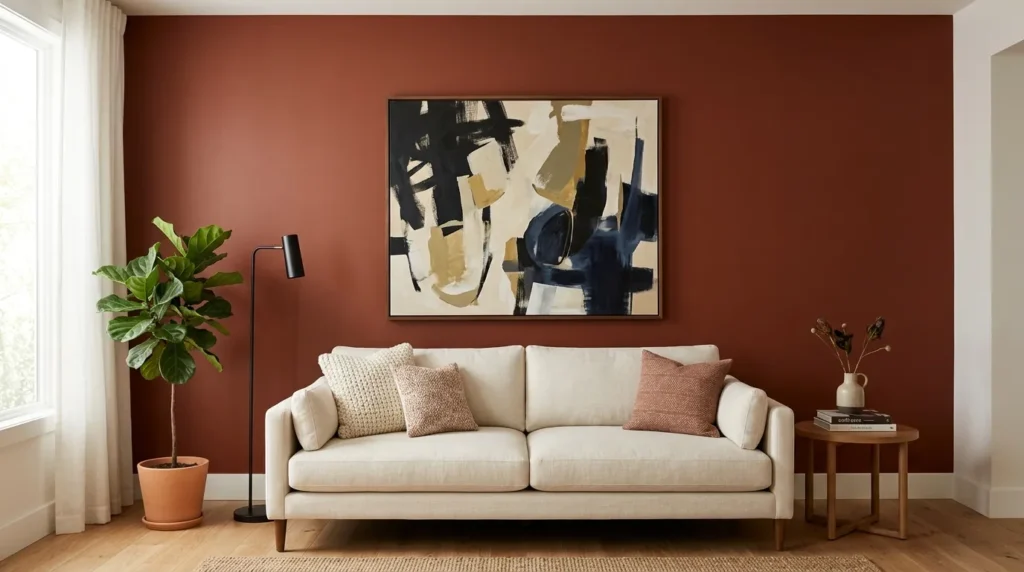
Every aesthetic living room benefits from at least one wall that does more visual work than the others — a bold paint color, a piece of oversized art, a curated gallery wall. That’s why many designers recommend choosing one wall to serve as the room’s statement moment rather than spreading equal visual weight across every surface. This single focal point gives the eye somewhere to land and often becomes the defining feature that makes the room feel distinctly yours.
How To Style It
Choose one wall — ideally the one most visible from the room’s main seating area — and commit to a bolder choice there, whether that’s a rich paint color, a large piece of art, or a textured wallpaper. Keep the remaining walls simpler and more neutral so the statement wall has room to stand out rather than competing with equally bold choices elsewhere. If you’re not ready for paint or wallpaper, a large piece of art or a curated arrangement of smaller frames can achieve a similar focal effect.
4. Vintage Charm Accents
Quick Benefits
- Adds character that can’t be mass-produced
- Introduces a genuine sense of history
- Works well mixed with newer furniture
- Often more budget-friendly than new decor
- Creates natural conversation starters
Why It Works
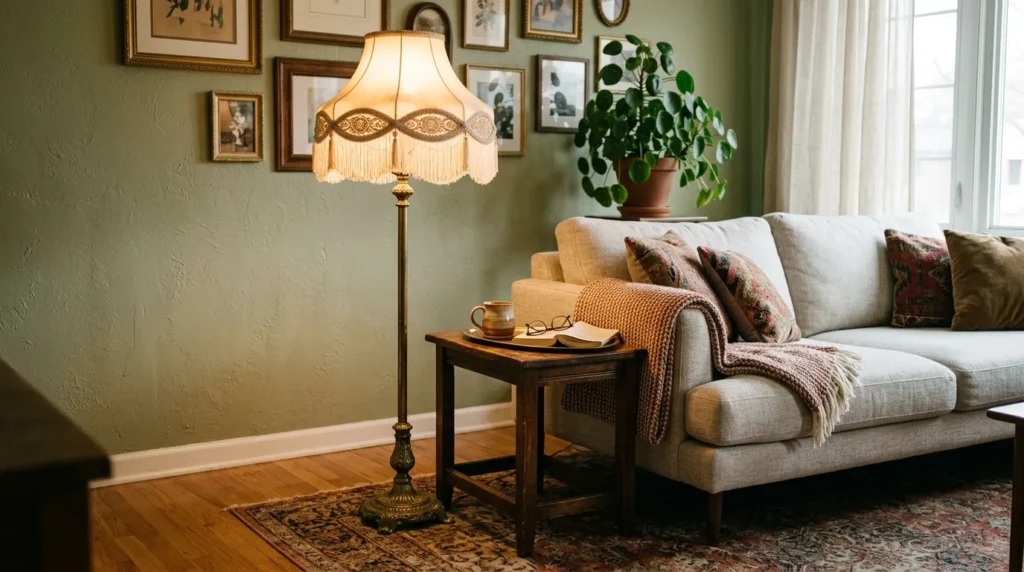
Vintage and secondhand pieces bring a layer of character to a room that’s difficult to replicate with anything bought new off a shelf. A mistake many homeowners make is furnishing an entire room exclusively from one retailer, which can result in a space that looks nice but feels a little generic, like it could belong to anyone. A single vintage lamp, a thrifted mirror, or a hand-me-down side table introduces a sense of story and individuality that instantly makes a room feel more personal.
How To Style It
Look for one or two vintage pieces to anchor the room — a coffee table, a lamp, or an accent chair are all good starting points, since they’re large enough to make an impact but not overwhelming to source. Estate sales, thrift shops, and online marketplaces are excellent places to start, and it’s worth being patient rather than settling for the first option you find. Mix these vintage pieces with newer furniture rather than trying to make the entire room feel like a single era, which tends to read as more curated and personal.
5. Layered Lighting Design
Quick Benefits
- Sets the mood more effectively than a single source
- Creates warmth and depth throughout the room
- Highlights textures and colors more flatteringly
- Allows the room to shift from bright to cozy
- Provides both function and aesthetic value
Why It Works
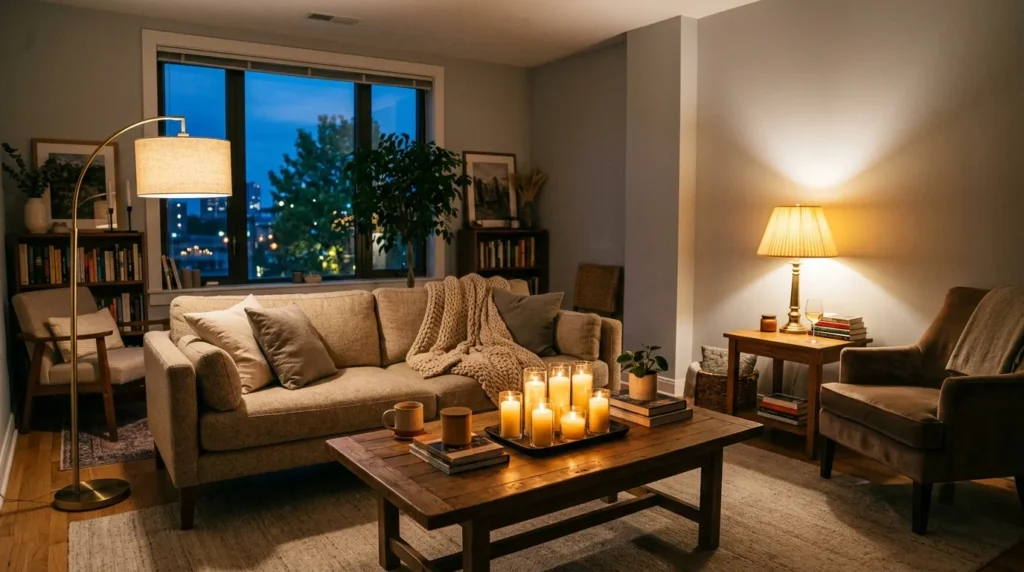
A room lit entirely by one overhead fixture rarely achieves the layered, aesthetic feel that makes a space memorable. One simple trick I always suggest is thinking of lighting in at least three layers: ambient light from an overhead fixture, task lighting from lamps, and accent lighting from smaller sources like candles or string lights. Each layer serves a different purpose, and together they create the kind of warm, dimensional glow that photographs beautifully and feels genuinely cozy in person.
How To Style It
Add at least two table or floor lamps to supplement any overhead lighting, positioning them at different heights around the room’s main seating areas. Use warm-toned bulbs in the 2700K to 3000K range to reinforce a cozy, aesthetic glow rather than a stark white light. Layer in a smaller accent light source, such as a cluster of candles on the coffee table or a strand of warm string lights near a shelf, for evenings when you want the room to feel especially atmospheric.
6. Personal Style Vignettes
Quick Benefits
- Makes the room feel authentically personal
- Provides small, changeable styling moments
- Reflects individual taste and interests
- Easy and inexpensive to update
- Creates natural talking points for guests
Why It Works
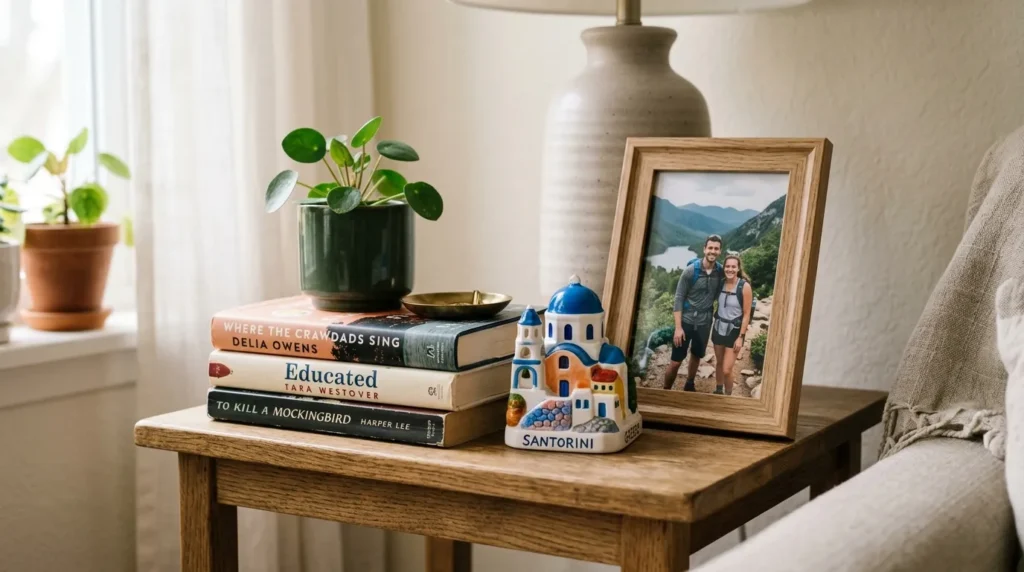
A vignette — a small, intentional grouping of objects on a shelf, side table, or console — is one of the most effective ways to inject personality into a room. A mistake many homeowners make is treating every surface as purely functional, missing the opportunity to tell a small visual story through the objects placed there. I’ve seen this idea transform living rooms that otherwise felt a bit impersonal, simply by grouping a few meaningful objects with intention rather than scattering them randomly.
How To Style It
Choose a small surface — a side table, a shelf, or a console — and group three to five objects that reflect something personal: a favorite book, a travel souvenir, a small plant, a meaningful photo. Vary the height and shape of these objects so the eye has somewhere to travel across the grouping. Rotate these vignettes occasionally as your interests or the seasons change, since this is one of the easiest and most affordable ways to keep a room feeling current.
7. Textural Plant Styling
Quick Benefits
- Adds life and softness to the room
- Complements nearly any aesthetic or color palette
- Fills empty corners and shelves naturally
- Provides an affordable way to add greenery
- Easy to scale based on available space and light
Why It Works
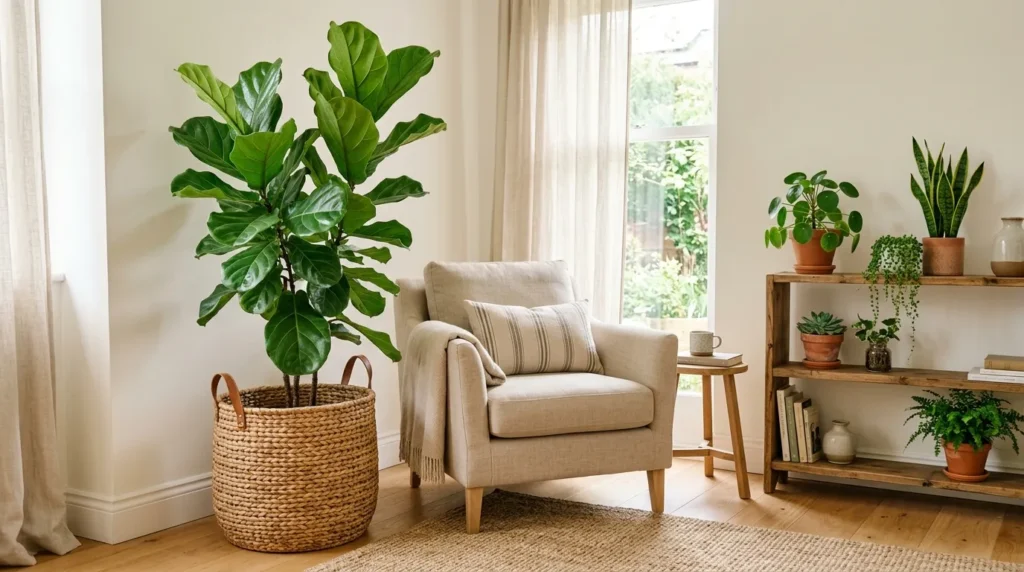
Plants are one of the simplest and most universally aesthetic additions to any living room, softening hard lines and adding a sense of life that static decor can’t replicate. In my experience, even homeowners who don’t consider themselves particularly plant-savvy can achieve a noticeably more aesthetic room with just a few well-placed, low-maintenance plants. The variety of leaf shapes and planter styles also adds another layer of texture to the room, reinforcing the layered feel discussed earlier in this list.
How To Style It
Choose a mix of plant sizes — one larger floor plant for an empty corner, and a few smaller potted plants for shelves or side tables. Select planters that complement your color story, whether that’s a textured ceramic pot, a woven rattan basket, or a simple terracotta planter. If natural light is limited, opt for low-light tolerant plants like pothos or snake plants, which require minimal care while still contributing significantly to the room’s aesthetic.
8. Cozy Reading Nook
Quick Benefits
- Creates a dedicated, restful corner of the room
- Encourages slowing down and unplugging
- Adds a distinct personality moment to the space
- Works well even in smaller living rooms
- Easy to style with existing furniture
Why It Works
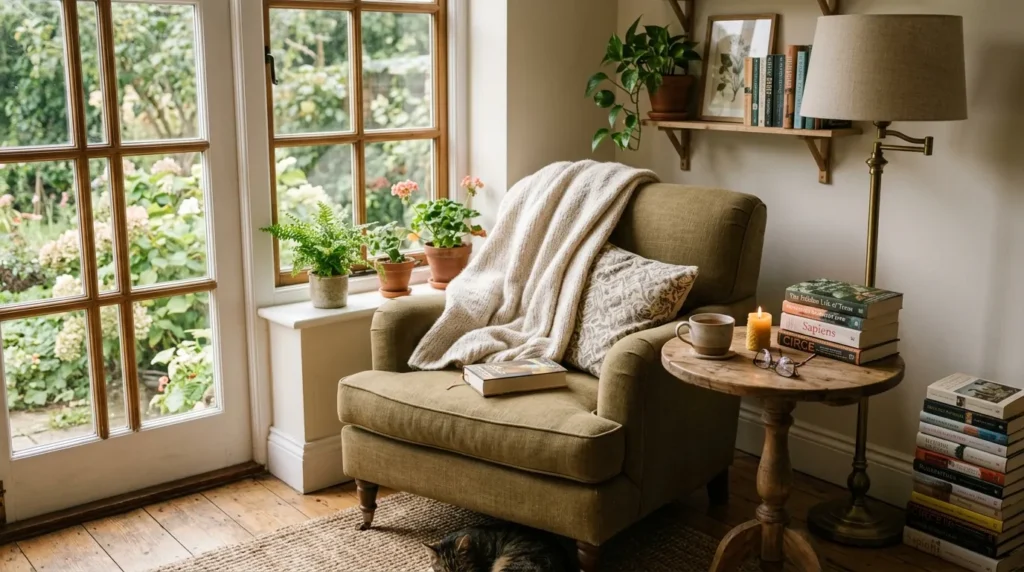
A dedicated reading nook — even a small one — adds a sense of purpose and personality that a purely open living room layout sometimes lacks. A mistake many homeowners make is arranging every piece of furniture to face a television, missing the opportunity to carve out a smaller, quieter corner for reading or relaxing. This kind of nook often becomes one of the most personally meaningful parts of the room, since it’s designed around a specific, restful activity rather than pure entertainment.
How To Style It
Choose a corner near a window or a source of good natural light, and anchor it with a single comfortable chair, a small side table, and a floor lamp for evening reading. Add a soft throw blanket and a small basket for current reads to keep the space functional as well as aesthetic. Even in smaller living rooms, a single chair angled slightly away from the main seating area can create the sense of a distinct, purposeful nook.
9. Aesthetic Bookshelf Styling
Quick Benefits
- Turns functional storage into a visual feature
- Reflects personal taste through books and objects
- Adds color and texture to the room
- Provides an ongoing, changeable styling project
- Works in nearly any living room layout
Why It Works
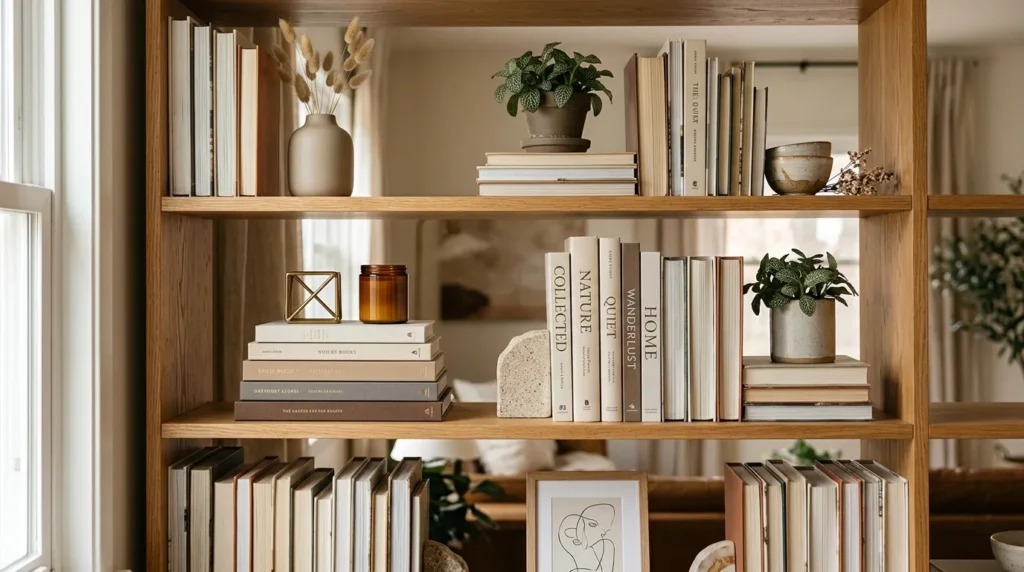
Bookshelves offer one of the best opportunities in the entire room to blend function and aesthetic, but they’re easy to under-style or over-style if approached without a plan. A mistake many homeowners make is either lining every book up by height with no personality, or cramming the shelves so full that nothing stands out. A well-styled bookshelf mixes horizontal and vertical stacks, decorative objects, and negative space to create a look that feels curated rather than accidental.
How To Style It
Mix vertical rows of books with a few horizontal stacks, using the horizontal stacks as a base to display small objects like a vase or a framed photo on top. Leave some shelves partially empty rather than filling every single one, which creates visual breathing room and lets your favorite pieces stand out. Group books loosely by color or size on individual shelves if you want a more curated look, though this is optional and depends on how much you enjoy a more organized, color-coordinated system versus a natural, lived-in arrangement.
10. Signature Scent And Sound
Quick Benefits
- Engages more senses than visual styling alone
- Creates an instant, memorable atmosphere
- Easy and inexpensive to implement
- Reinforces the room’s overall mood
- Personalizes the space in a subtle way
Why It Works
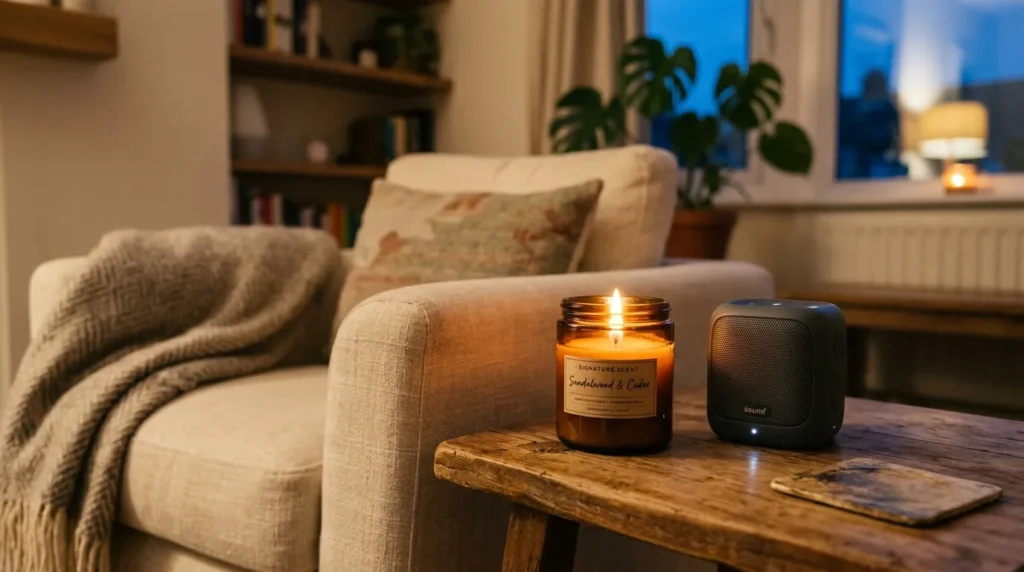
An aesthetic room isn’t only about what you see — the scent and sound of a space play a significant role in how genuinely inviting it feels. A mistake many homeowners make is focusing entirely on visual styling while ignoring these other sensory details, missing an easy opportunity to make the room feel even more distinctly theirs. A signature candle scent or a favorite playlist can turn a beautifully styled room into one that feels truly personal every time you walk in.
How To Style It
Choose one or two signature candle scents that you consistently return to, rather than switching scents constantly, so the fragrance becomes subtly associated with the room itself. Keep a speaker or sound system easily accessible in the living room, and consider building a specific “at home” playlist that reflects the mood you want the space to have. These small, sensory details are often what people remember most about a room, even if they can’t quite articulate why it felt so inviting.
Frequently Asked Questions
How do I figure out my personal living room aesthetic?
Start by collecting images of rooms and objects you’re genuinely drawn to, then look for patterns in color, material, and mood rather than trying to match a specific named style exactly. Most personal aesthetics end up being a blend of a few different influences rather than one single trend.
What’s the easiest way to make a living room feel more aesthetic on a budget?
Focus on smaller, high-impact changes first: layering in texture through throw pillows and blankets, adding a plant or two, and styling one shelf or side table intentionally. These changes cost far less than new furniture but noticeably shift the room’s overall feel.
Do I need matching decor for a cohesive aesthetic?
No. In fact, a room built entirely from matching sets often feels less personal than one that mixes pieces with a shared color palette or material story but varying origins, including vintage or secondhand finds.
How many colors should be in an aesthetic living room?
Most cohesive rooms work well with three to five colors total, including one or two neutral base tones and a couple of accent colors used more sparingly through textiles, art, or smaller decor pieces.
Can a small living room still feel aesthetic and personal?
Yes, and often more easily than a larger room, since there’s less space to fill and each choice carries more visual weight. A cozy reading nook, a well-styled shelf, and a couple of personal vignettes can make a small room feel just as intentional as a larger one.
How often should I update my living room’s styling?
Small updates — swapping a vignette, rotating textiles seasonally, adding a new plant — can happen as often as you like without disrupting the room’s overall aesthetic. Larger changes, like a new color story or major furniture, are usually worth revisiting only every few years.
What role do plants play in an aesthetic living room?
Plants add life, texture, and a sense of freshness that’s difficult to achieve with static decor alone. They also tend to soften hard architectural lines and fill empty corners in a way that feels natural rather than overly styled.
Conclusion
An aesthetic living room isn’t defined by matching a specific trend perfectly — it’s defined by intention. A curated color story, layered textures, a few personal vignettes, and a handful of sensory details all come together to create a space that feels distinctly yours, not just visually appealing in photos.
Start with one or two ideas from this list and gradually build a space that reflects your style and supports everyday comfort. Whether that means finally styling that empty bookshelf, adding a cozy reading nook, or choosing a signature candle scent for the room, small, personal choices compound into a space you genuinely love coming home to. The most aesthetic living rooms aren’t the ones copied exactly from someone else’s — they’re the ones built thoughtfully around what actually makes you feel at home.
Related Articles
- Cozy Living Room Ideas For A Warm Home
- Organic Modern Living Room Ideas
- Classy Living Room Ideas With Designer Charm
- Small Living Room Layout Solutions
- How To Style A Bookshelf Like A Designer