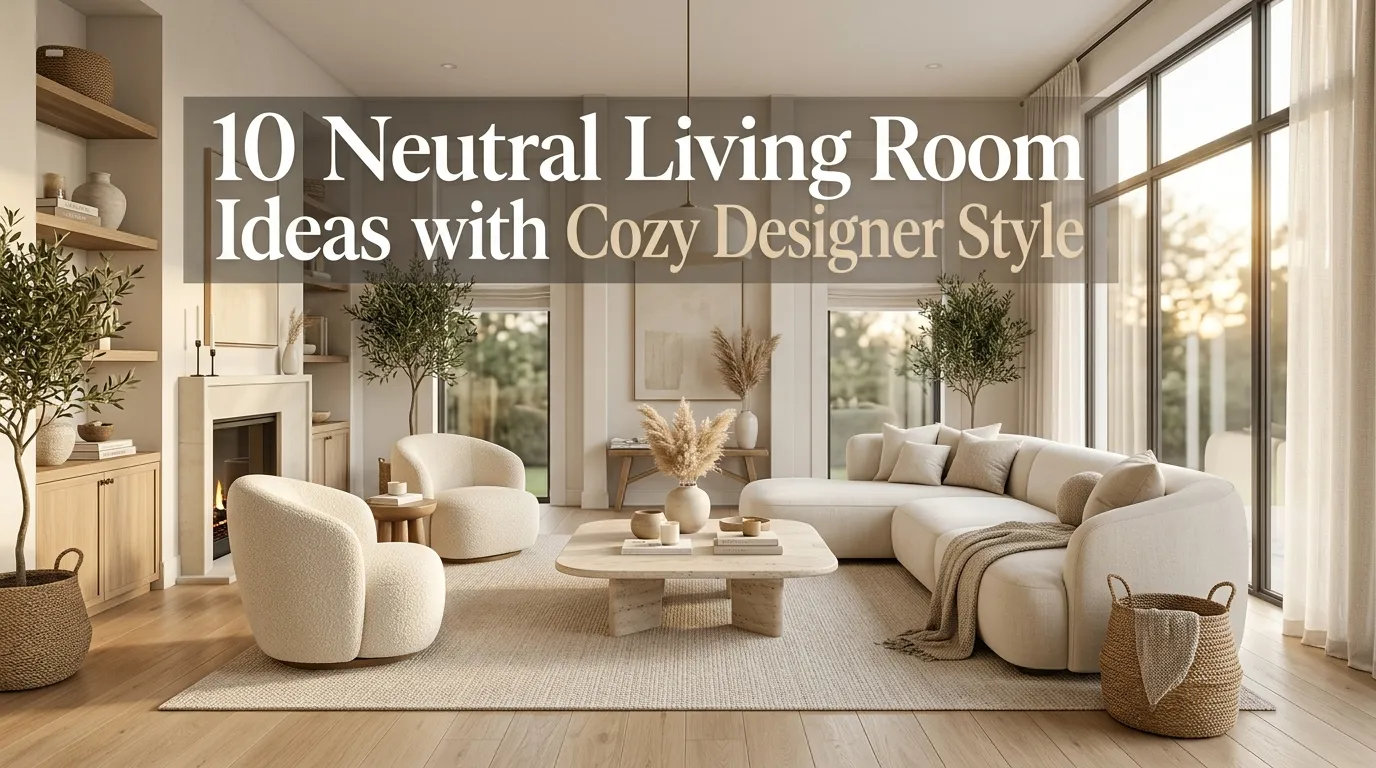
10 Neutral Living Room Ideas with Cozy Designer Style
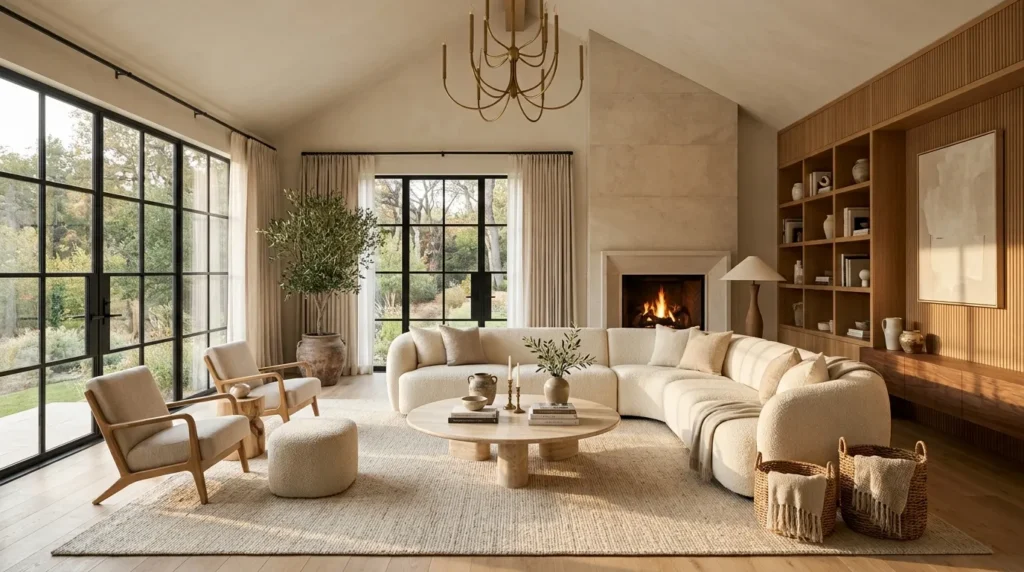
There’s a particular kind of living room that keeps showing up in design magazines and on Pinterest boards — all soft creams and warm beiges, somehow both calm and inviting at the same time. It looks simple, but a truly cozy neutral room is actually one of the harder looks to get right, because neutral so easily tips into flat or cold without the right layering.
In my experience, the biggest difference between a neutral room that feels designer-cozy and one that feels bare comes down to texture, not color. A mistake many homeowners make is choosing a beautiful neutral palette and stopping there, forgetting that neutral rooms rely almost entirely on texture and layering to create warmth, since they don’t have bold color doing that work for them.
I’ve noticed that the neutral living rooms people respond to most are the ones built in layers — a soft knit throw here, a warm wood accent there, a plush textured rug underfoot — rather than a single flat shade of beige repeated across every surface. That layering is exactly what separates a “builder-basic” neutral room from one that feels intentional and lived-in.
This guide walks through ten neutral living room ideas that bring genuine cozy, designer-level warmth to a restrained color palette. From chunky knit textiles to layered lighting and natural materials, each idea focuses on the details that keep a neutral room from feeling flat, empty, or sterile. If you’re anything like me, you’ll find that most of these ideas are more about texture and thoughtful layering than about spending on new furniture.
Table of Contents
- Layered Cream Tones — Building depth within a single neutral color family.
- Chunky Knit Throws — Adding visible, tactile texture through cozy textiles.
- Oatmeal Linen Upholstery — Choosing fabric texture that reads warm, not sterile.
- Warm Wood Furniture — Grounding a neutral palette with natural wood tones.
- Soft Ambient Candlelight — Using warm, flickering light to add instant coziness.
- Textured Wall Paneling — Adding dimension to walls without adding color.
- Plush Oversized Seating — Choosing furniture that invites sinking in, not just sitting.
- Natural Fiber Baskets — Using woven storage as both function and texture.
- Muted Earth Accents — Introducing the smallest hint of color through earthy tones.
- Layered Table Lamps — Multiplying warm light sources for a softer glow.
1. Layered Cream Tones
Quick Benefits
- Prevents a neutral room from feeling flat or cold
- Creates depth without adding bold color
- Works with almost any existing neutral furniture
- Feels calm and cohesive rather than plain
- Suits both traditional and modern styles
Why It Works
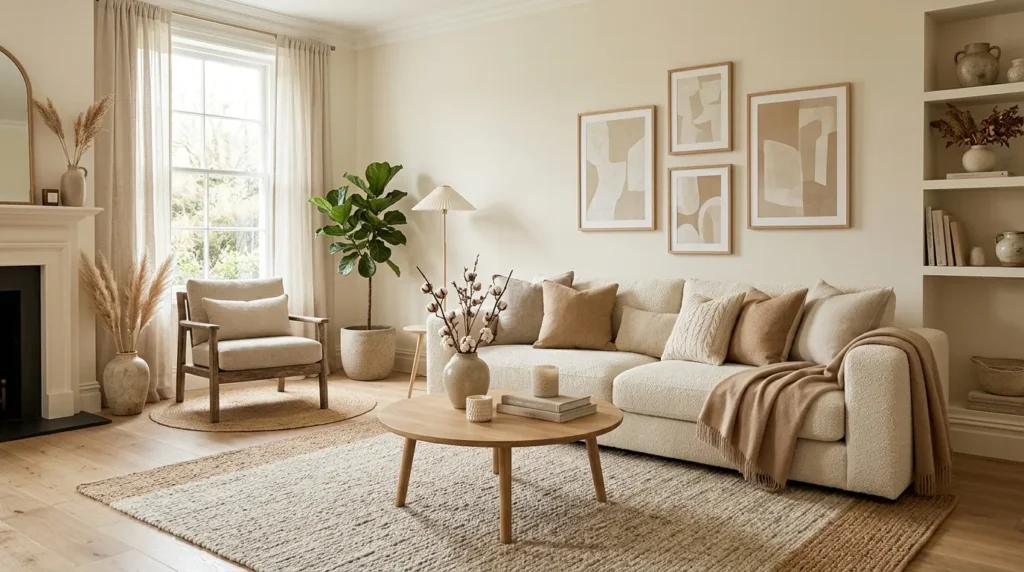
A mistake many homeowners make with neutral rooms is treating “neutral” as one single shade repeated everywhere. In my experience, the cozier, more designer-feeling neutral rooms actually use several closely related tones — ivory, oatmeal, warm taupe, soft camel — layered across walls, furniture, and textiles rather than matching everything to one exact color. This works because subtle tonal variation creates depth the eye can read as rich and considered, while a single flat neutral everywhere can start to feel sterile or unfinished.
How To Style It
Choose three or four neutral shades within the same warm family and distribute them deliberately: a slightly darker tone on the rug, a mid-tone on the sofa, and a lighter shade on the walls, for example. Avoid mixing warm and cool neutrals in the same room, since a cool gray next to a warm cream can read as mismatched rather than intentionally layered.
2. Chunky Knit Throws
Quick Benefits
- Adds immediate tactile warmth
- Works well draped over sofas, chairs, or ottomans
- Affordable way to add texture to any neutral room
- Photographs beautifully in natural light
- Easy to swap seasonally
Why It Works
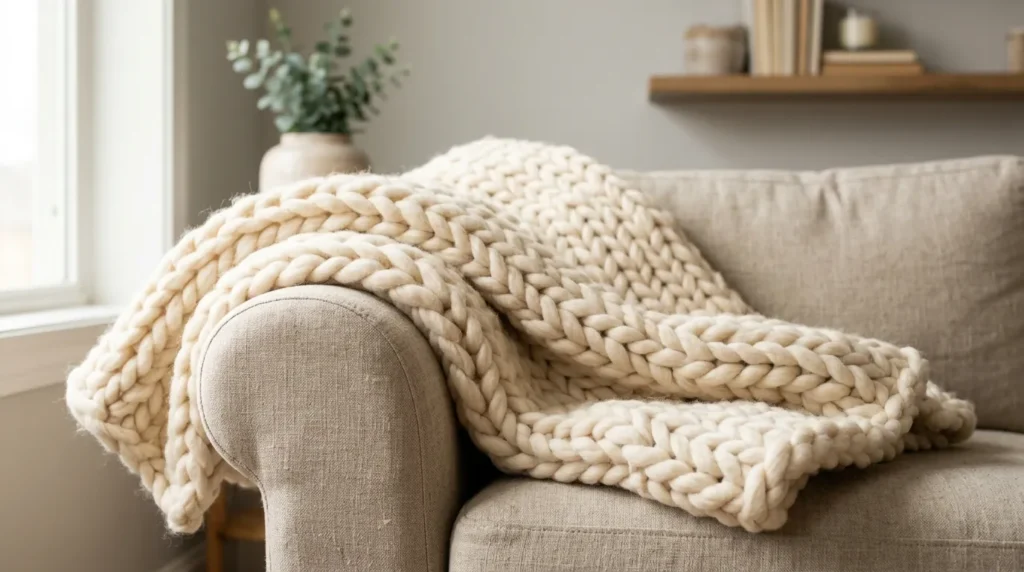
One thing that works especially well in neutral rooms is a heavily textured, chunky knit throw — the kind with a thick, visible weave rather than a flat, smooth fabric. This works because chunky texture reads as inherently cozy, almost regardless of color, giving the eye something soft and dimensional to land on in a room that otherwise relies on subtle tonal variation rather than pattern or bold color.
How To Style It
Drape a chunky knit throw loosely over the arm of a sofa or the back of an accent chair rather than folding it too neatly, which can look stiff. Choose a cream, oatmeal, or soft gray tone that sits within your existing palette, and consider adding a second, thinner textured throw nearby for contrast in weight and texture.
3. Oatmeal Linen Upholstery
Quick Benefits
- Adds warmth through fabric texture alone
- More forgiving of everyday wear than smooth fabrics
- Pairs beautifully with wood and woven accents
- Works across nearly every design style
- Ages naturally without looking worn out
Why It Works
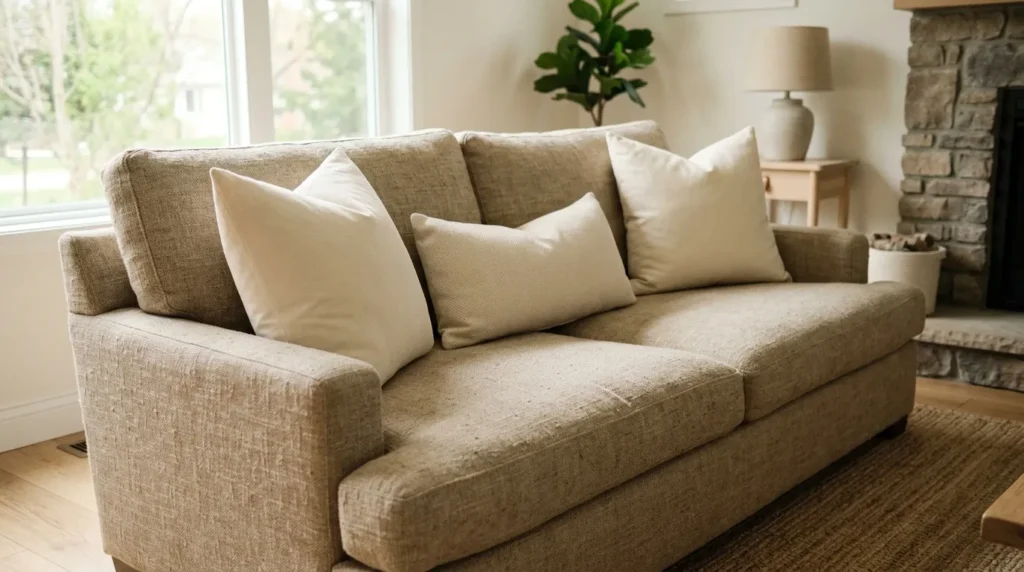
That’s why many designers recommend linen or a linen-blend fabric in a warm oatmeal tone for a neutral living room’s primary seating. Unlike a smooth, flat cotton or synthetic blend, linen has a naturally slubby, textured weave that catches light unevenly, adding subtle visual interest even in a completely solid color. This works because the fabric itself does some of the cozy-texture work that pattern or color would otherwise need to provide.
How To Style It
Choose a linen or linen-blend sofa and chairs in a warm oatmeal or soft camel tone rather than a stark white or cool gray linen, which can read as more clinical. Pair the linen upholstery with smoother-textured pillows in a complementary tone for contrast, keeping the overall palette tight and cohesive.
4. Warm Wood Furniture
Quick Benefits
- Grounds a neutral palette with natural warmth
- Prevents an all-soft-textile room from feeling shapeless
- Adds structure and visual weight where needed
- Pairs well with nearly any neutral shade
- Works across traditional and modern styles
Why It Works
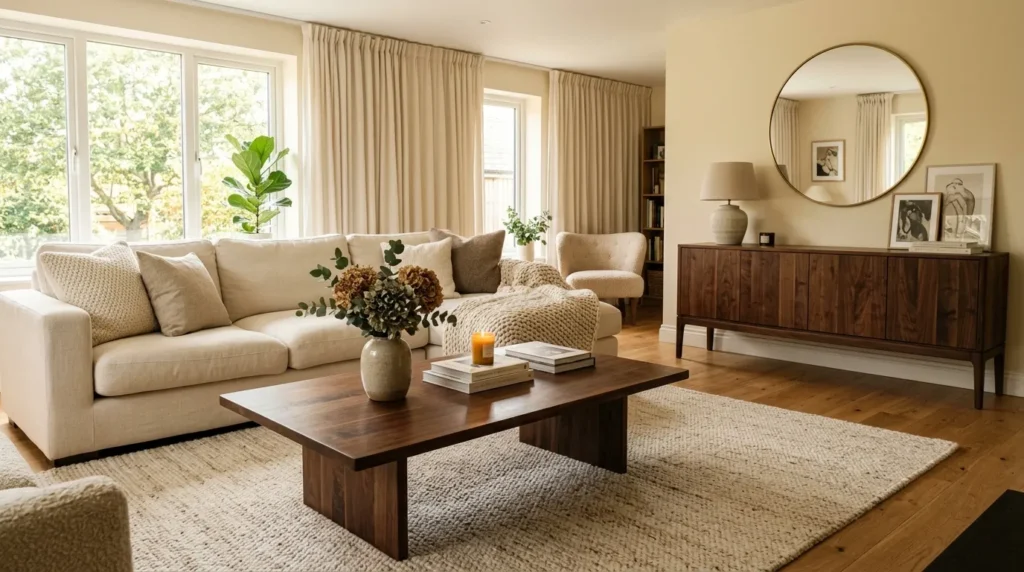
A room built entirely of soft, plush textiles can start to feel shapeless without something firmer to ground it. I’ve seen this idea transform spaces simply by introducing a warm wood coffee table, console, or shelving unit into an otherwise all-soft, all-neutral room. This works because wood grain adds a different kind of texture and visual weight than fabric does, creating the layered contrast — soft versus solid, textile versus material — that makes a room feel complete.
How To Style It
Choose furniture in a warm-toned wood — walnut, oak, or a medium warm stain — rather than a very light or very dark wood, which can either wash out or overpower a soft neutral room. A single wood coffee table or console is often enough to add the grounding effect the room needs without introducing too much visual weight.
5. Soft Ambient Candlelight
Quick Benefits
- Adds instant warmth at almost no cost
- Creates a cozy mood for evening use
- Easy to layer alongside other lighting
- Works in every room size and style
- Enhances the feel of neutral, textural decor
Why It Works
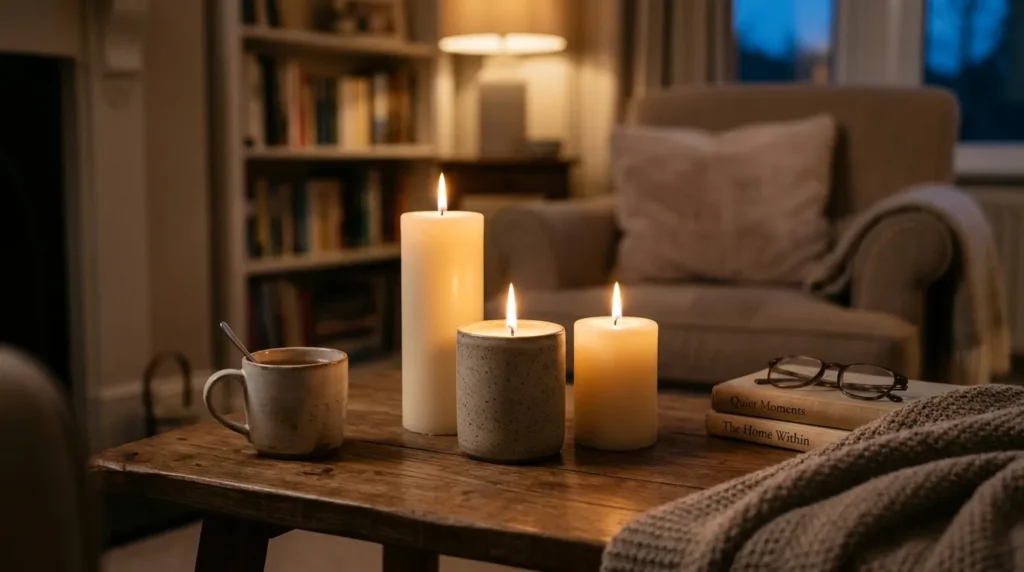
A mistake many homeowners make is relying entirely on overhead or lamp lighting and forgetting the specific warmth that candlelight adds. One simple trick I always suggest for a cozy neutral room is grouping a few candles — on the coffee table, a side table, or a mantel — for evening ambiance. This works because candlelight’s warm, flickering quality is difficult to replicate with any bulb, and it reinforces the soft, inviting mood a neutral, textural room is already working toward.
How To Style It
Group two or three candles of varying heights on a tray for a simple, low-effort styling moment on the coffee table or console. Choose unscented or subtly scented candles in neutral vessel colors — cream, stone, or clear glass — so they blend with the room’s palette rather than standing out as a bold accent.
6. Textured Wall Paneling
Quick Benefits
- Adds dimension to walls without adding color
- Creates a designer, custom-built feel
- Works well behind sofas or as an accent wall
- Suits both traditional and contemporary neutral rooms
- Increases the room’s overall sense of intention
Why It Works
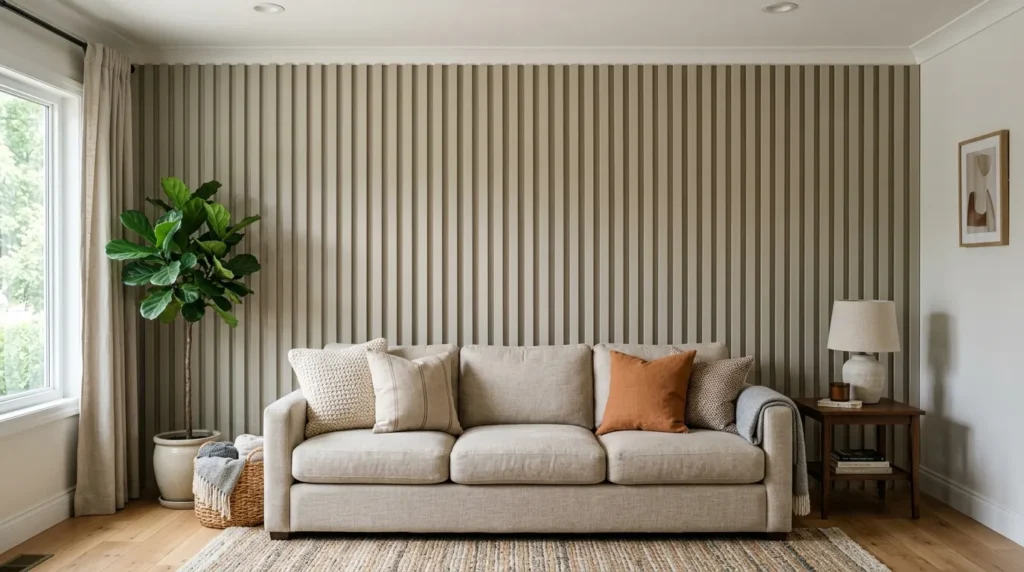
Flat, plain walls can be one of the reasons a neutral room feels a bit unfinished, even with great furniture. In my experience, adding textured wall paneling — vertical slat wood, simple grid molding, or a subtle plaster-style texture — behind a sofa or on a single accent wall adds the kind of dimension that makes a neutral room feel custom and considered rather than default. This works because texture on a large, uninterrupted surface like a wall has an outsized visual impact relative to its cost.
How To Style It
Vertical wood slats painted the same tone as the surrounding wall create a subtle, textural accent wall without adding contrast or color. Alternatively, simple grid-pattern molding installed behind the main seating area achieves a similar custom, built-in feel. Keep the paneling in the same tonal family as the rest of the room so it reads as texture rather than a bold design statement.
7. Plush Oversized Seating
Quick Benefits
- Signals comfort and coziness immediately
- Encourages actual relaxed use of the room
- Works well as a single splurge item
- Balances a room with more structured pieces
- Photographs as inviting rather than formal
Why It Works
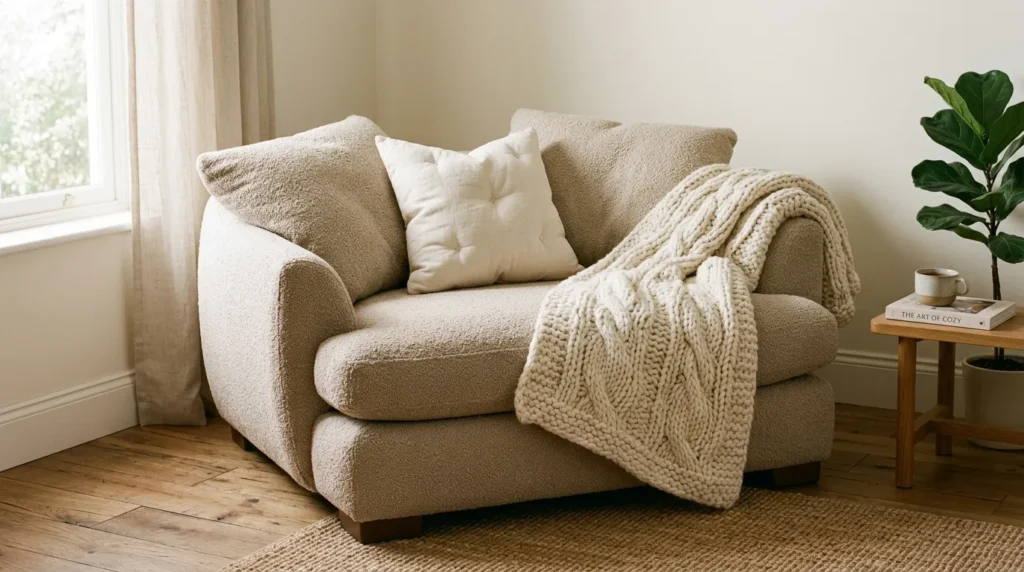
A neutral room can look beautiful in photos but feel stiff and unwelcoming if the furniture itself doesn’t invite sitting down and staying a while. One thing that works especially well in cozy, designer-style neutral rooms is at least one deep, oversized seating piece — a generously cushioned sofa or an oversized accent chair — that visually and physically signals comfort. This works because scale and cushion depth communicate coziness in a way that color and texture alone can’t fully achieve.
How To Style It
Look for a sofa with a deeper seat and higher cushion loft than a standard slim-profile option, or add one oversized accent chair with a relaxed, slouchy silhouette. Pair the plush piece with a few structured, firmer elements elsewhere in the room — a simple wood side table, straight-lined shelving — so the room doesn’t feel entirely soft and shapeless.
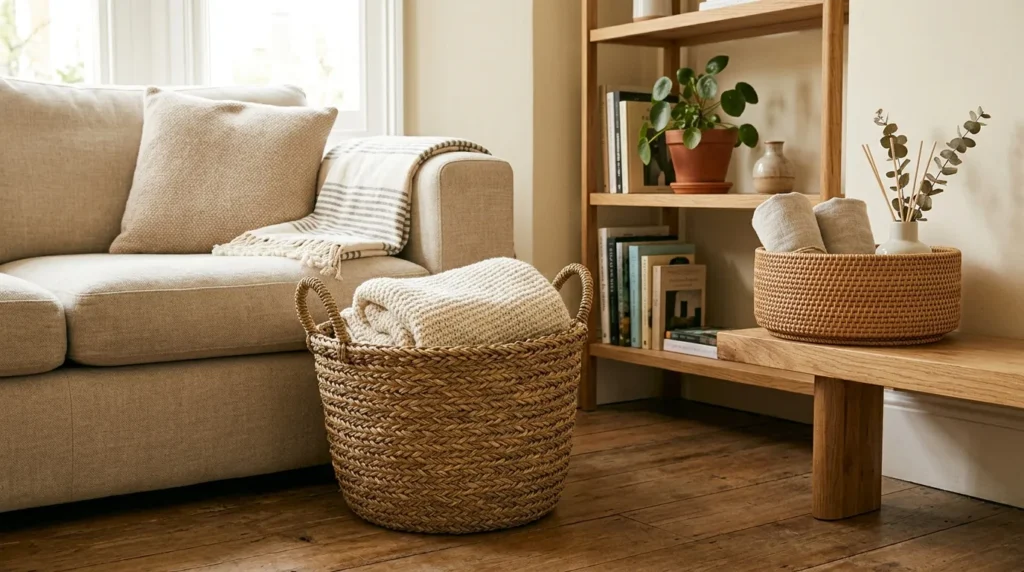
8. Natural Fiber Baskets
Quick Benefits
- Adds texture while solving real storage needs
- Affordable compared to most decor updates
- Works in nearly every design style
- Hides everyday clutter attractively
- Easy to source secondhand or new
Why It Works
That’s why many designers recommend natural fiber baskets — seagrass, rattan, or woven wicker — as both a styling and storage solution in neutral rooms. A mistake many homeowners make is using plastic or fabric bins for blankets and miscellaneous items, which don’t add anything visually to the room. Woven baskets solve the same storage problem while contributing genuine texture and warmth, making them one of the most efficient dual-purpose additions to a cozy neutral space.
How To Style It
Use a large woven basket beside the sofa for blanket storage, and a smaller one on a shelf or under a console for miscellaneous items like remotes or magazines. Stick to one or two basket sizes and a consistent weave style throughout the room rather than mixing many different basket types, which can start to look cluttered rather than cohesive.
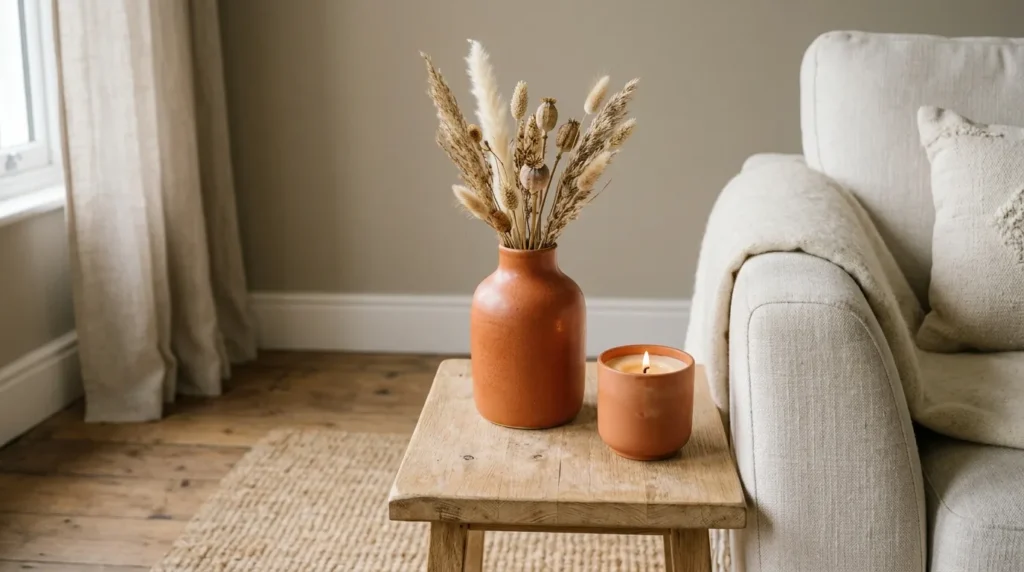
9. Muted Earth Accents
Quick Benefits
- Adds the smallest hint of color without disrupting neutrality
- Keeps the room from feeling monotone
- Easy to introduce through small accessories
- Works well with warm wood and linen tones
- Simple to rotate seasonally
Why It Works
A completely colorless room can start to feel monotone no matter how well-layered the textures are. One thing that works especially well is introducing muted earth tones — soft terracotta, sage, or warm clay — in very small doses, like a single vase, a piece of art, or one throw pillow. This works because these tones are close enough to the neutral family to feel cohesive rather than jarring, while still giving the eye a small point of visual interest beyond pure neutrals.
How To Style It
Choose one earthy accent color and repeat it in just one or two small spots — a ceramic vase and a coordinating candle, for example — rather than spreading it across multiple larger elements like furniture or curtains. This keeps the room reading as neutral overall while avoiding the flatness of an entirely monochromatic space.
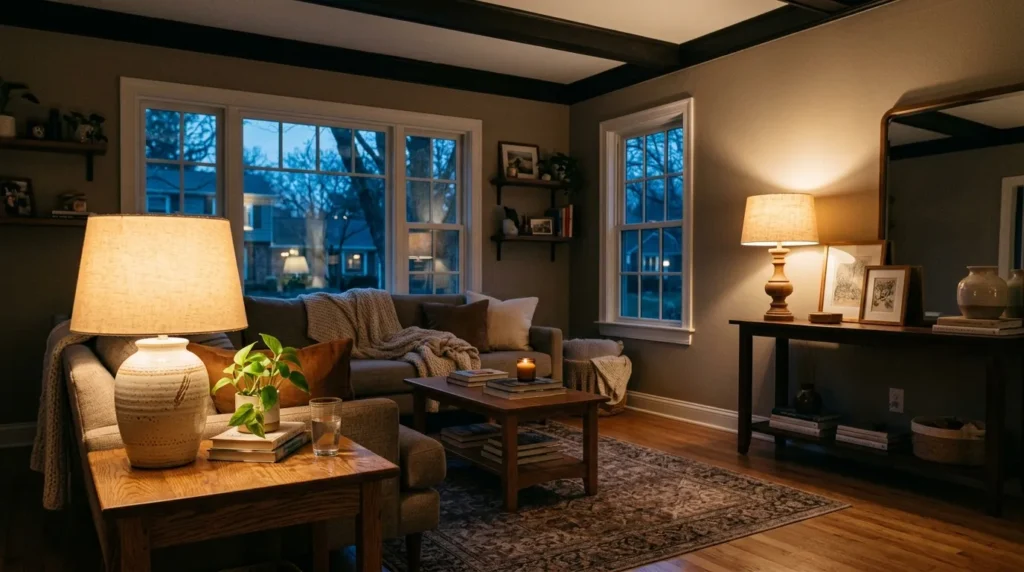
10. Layered Table Lamps
Quick Benefits
- Adds warmth and softness at multiple heights
- Reduces reliance on harsh overhead lighting
- Creates a cozier evening atmosphere
- Works in nearly any living room layout
- Easy and affordable to implement
Why It Works
A single overhead light source tends to flatten a neutral room, making its careful tonal layering harder to appreciate. I’ve noticed that using two or more table lamps — rather than just one — creates the kind of soft, layered glow found in most designer-styled cozy rooms. This works because multiple warm light sources at varying heights add depth and dimension after dark, echoing the same layering principle used in the room’s color palette and textures.
How To Style It
Place one table lamp on a side table near the main seating area and a second on a console or shelf elsewhere in the room, using warm-toned bulbs throughout. Choose lamp bases in natural materials — ceramic, wood, or woven rattan — to keep the lighting consistent with the room’s overall textural, neutral theme.
Frequently Asked Questions
How do I keep a neutral living room from feeling boring?
Layering multiple tones within the same neutral family, along with varied textures like chunky knits, linen, and natural wood, keeps a neutral room from feeling flat. Texture does most of the visual work that color would otherwise provide.
What’s the easiest way to add coziness to a neutral room on a budget?
Chunky knit throws, grouped candles, and natural fiber baskets are the most affordable starting points, since all three add texture and warmth without requiring new furniture.
Should all the wood tones in a neutral room match exactly?
They don’t need to match exactly, but staying within a similar warm-toned family (avoiding a mix of very light and very dark wood) helps keep the room feeling cohesive rather than mismatched.
Can a neutral living room still have any color at all?
Yes. Small doses of muted earth tones like sage, terracotta, or warm clay work well in neutral rooms, as long as they’re used sparingly through small accents rather than large furniture pieces.
How many textures should a cozy neutral room include?
There’s no strict rule, but combining at least three types of texture — such as knit, linen, wood, and woven fiber — tends to create the richest, most designer-feeling result without needing bold color.
Do I need designer furniture to achieve this cozy neutral look?
No. The look relies more on tonal layering, texture, and lighting than on specific furniture brands or price points. A modest sofa in the right fabric and tone can achieve the same effect as a much more expensive piece.
Conclusion
A cozy, designer-feeling neutral living room comes down to layering, not a single perfect shade of beige. From chunky knit throws and warm wood furniture to layered lamps and muted earth accents, the ten ideas above show how much depth and warmth a restrained color palette can hold when texture and lighting do the heavy lifting.
Start with one or two ideas and gradually build a space that reflects your style and supports everyday comfort. A chunky throw, a grouped set of candles, or an added table lamp can shift the mood of a neutral room almost immediately, before moving on to bigger changes like new upholstery or wall paneling. Give each change room to settle before adding the next, and let your neutral palette build its own quiet, layered warmth over time.
Related Articles
- Cozy Living Room Ideas
- Elegant Living Room Ideas
- Modern Classic Living Room Ideas
- Living Room Inspo Ideas
- Neutral Bedroom Styling Ideas