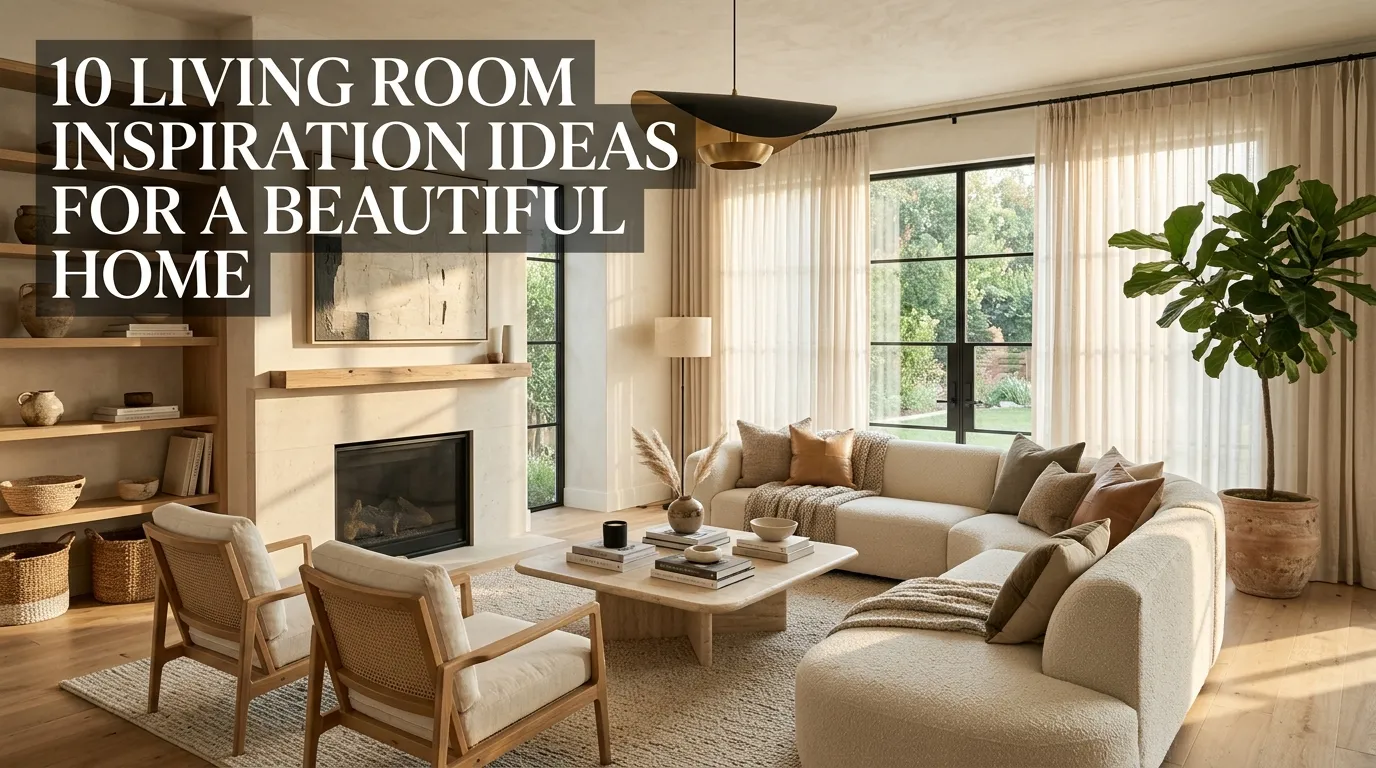
10 Living Room Inspiration Ideas for a Beautiful Home
A beautiful living room rarely comes down to one single choice. It’s usually a handful of smaller decisions — how the furniture is arranged, what draws the eye first, how the light falls in the evening — that add up to a room that feels genuinely finished rather than simply furnished.
In my experience, the homeowners who end up happiest with their living rooms aren’t the ones who bought the most decor. They’re the ones who thought through a few foundational pieces of the room — layout, focal point, scale — before adding the smaller finishing touches. A mistake many homeowners make is jumping straight to accessories and art before the underlying structure of the room, like furniture arrangement or a clear focal point, is actually working.
I’ve noticed that inspiration boards often skip over these more foundational ideas in favor of flashier decor moments, even though the foundational choices are usually what separates a “nice” living room from a truly beautiful one. Getting the layout and proportions right first makes every accessory and accent choice afterward look more intentional.
This guide gathers ten living room inspiration ideas that focus on both the bones of a beautiful room and the finishing details that bring it to life — from creating a strong focal point and arranging furniture for real conversation, to layering window treatments and displaying the personal items that make a house feel like a home. Whether you’re starting fresh or refining a room you’ve lived in for years, these ideas offer a well-rounded foundation for building a genuinely beautiful living space.
Table of Contents
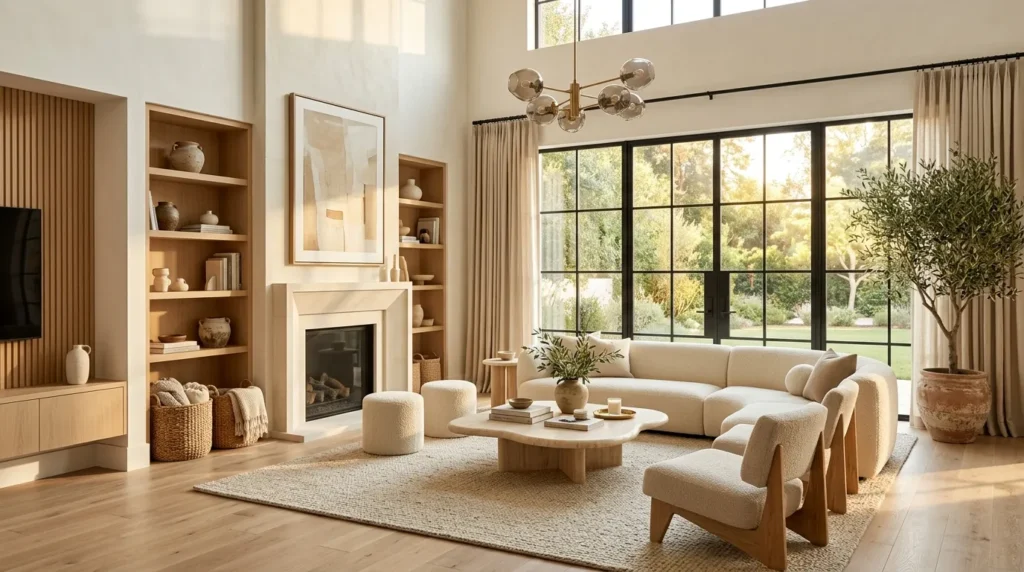
- Focal Point Fireplace Styling — Making an existing fireplace the true center of the room.
- Furniture Conversation Layout — Arranging seating for real connection, not just TV viewing.
- Layered Window Treatments — Combining curtains and hardware for a finished look.
- Personal Collection Display — Showcasing meaningful items as intentional decor.
- Accent Chair Pairing — Choosing a second seat that complements, not matches, the sofa.
- Scale And Proportion Balance — Sizing furniture correctly for the room it’s in.
- Framed Photo Displays — Turning personal photography into polished wall decor.
- Wall Sconce Lighting — Adding light at eye level for a softer, more layered glow.
- Layered Throw Pillow Mix — Combining size, texture, and pattern with intention.
- Statement Area Rug — Anchoring the room with a rug that does more than fill space.
1. Focal Point Fireplace Styling
Quick Benefits
- Gives the room a clear visual anchor
- Makes furniture arrangement more intuitive
- Elevates an existing architectural feature
- Works in both formal and casual living rooms
- Creates a natural spot for seasonal styling
Why It Works
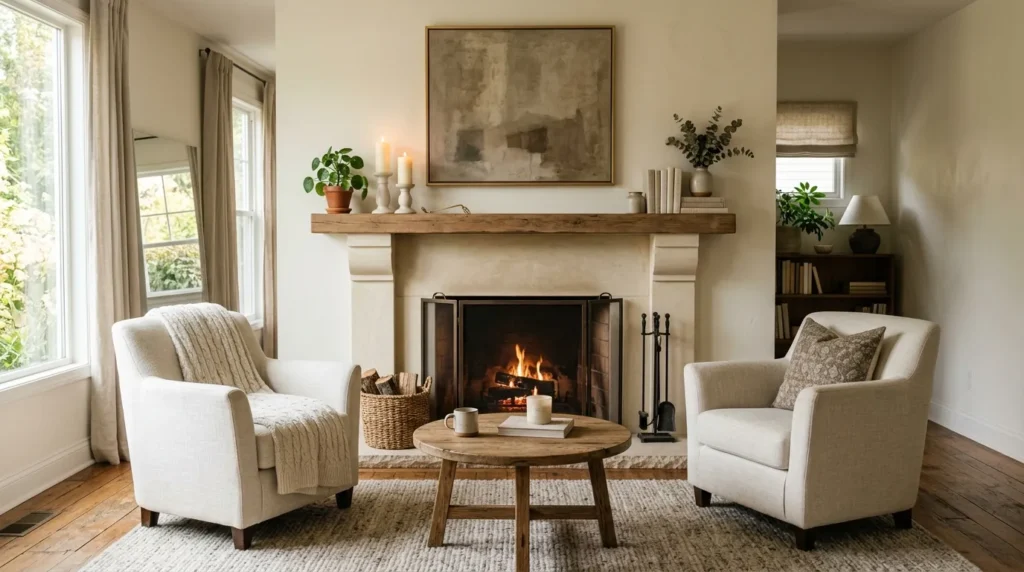
Many living rooms have a fireplace that goes underused as a design feature, simply serving as a wall the TV happens to hang above. One thing that works especially well is treating the fireplace itself, not the television, as the room’s true focal point — styling the mantel, flanking it with shelving or art, and arranging seating to face it directly. This works because a room organized around a clear focal point feels more intentional and settled than one where furniture floats without a clear reference point.
How To Style It
Style the mantel with a mix of heights — a piece of art leaning against the wall, a few candles or objects, and perhaps a small plant — rather than a single centered item. If a TV is mounted above the fireplace, keep the surrounding styling simple so it doesn’t compete visually. Arrange the main seating to directly face the fireplace, even if that means the TV sits slightly off to the side.
2. Furniture Conversation Layout
Quick Benefits
- Encourages actual conversation and connection
- Makes the room feel more social and welcoming
- Works well for entertaining guests
- Creates better traffic flow than wall-hugging furniture
- Suits both large and small living rooms
Why It Works
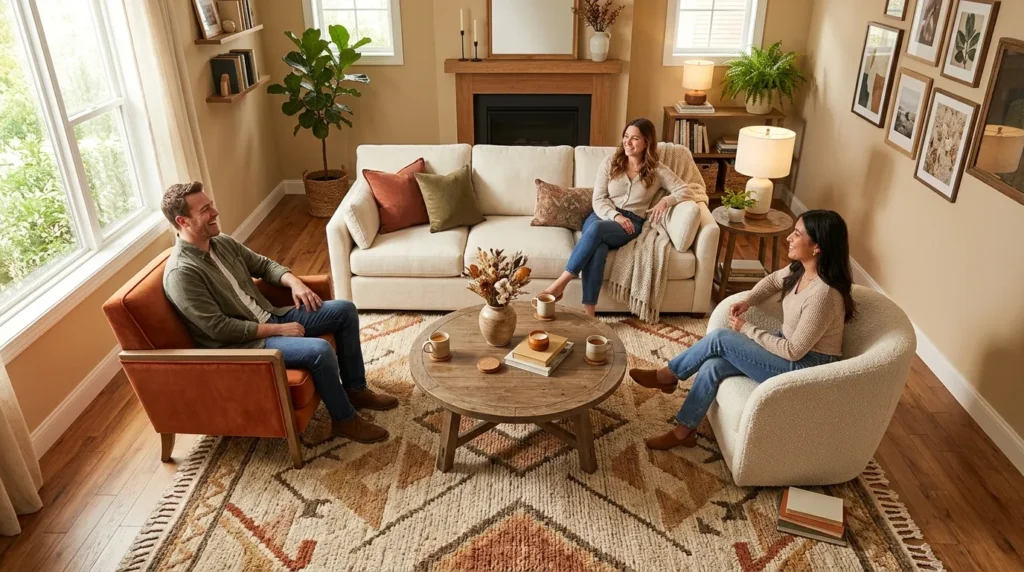
A mistake many homeowners make is pushing all furniture against the walls to maximize open floor space, when this arrangement actually makes conversation and connection harder, since seating ends up far apart and facing outward rather than toward each other. In my experience, pulling seating slightly inward and angling pieces toward a central point — a coffee table, a rug, a fireplace — creates a much more inviting, sociable room, even if it means a slightly smaller amount of open floor space.
How To Style It
Arrange your main seating pieces — sofa, chairs — so they face each other or angle toward a shared central point rather than lining every wall. Keep no more than eight feet between facing seats so conversation feels natural rather than shouted across the room. A rug beneath the main seating area helps visually anchor the grouping, even in an open floor plan.
3. Layered Window Treatments
Quick Benefits
- Adds a finished, designer-level detail
- Provides both light control and privacy
- Softens hard architectural lines around windows
- Works in nearly any room style
- Elevates even simple, budget window coverings
Why It Works
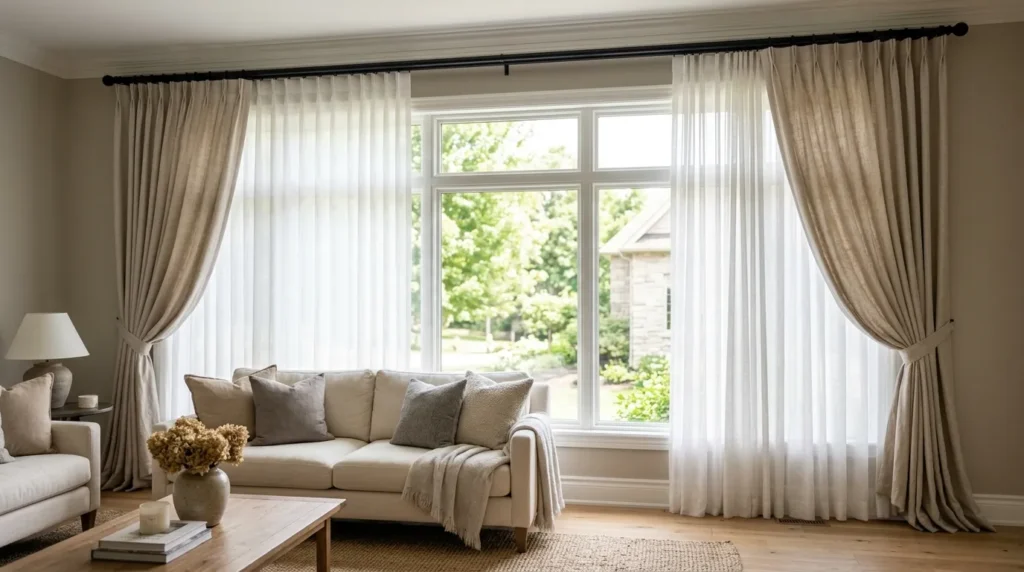
That’s why many designers recommend layering two types of window treatments — sheer curtains for daytime softness and light diffusion, paired with a heavier drape or blind for privacy and evening light control — rather than choosing just one. This works because a single flat curtain panel often looks unfinished compared to a layered treatment, which reads as more considered and complete, similar to how hotel or showroom windows are typically styled.
How To Style It
Install a sheer curtain closest to the window for daytime light diffusion, then layer a heavier linen or cotton drape on an outer rod for evening privacy and a more substantial look. Mount both rods as high and wide as the wall allows, rather than tight to the window frame, to maximize the sense of height and width in the room.
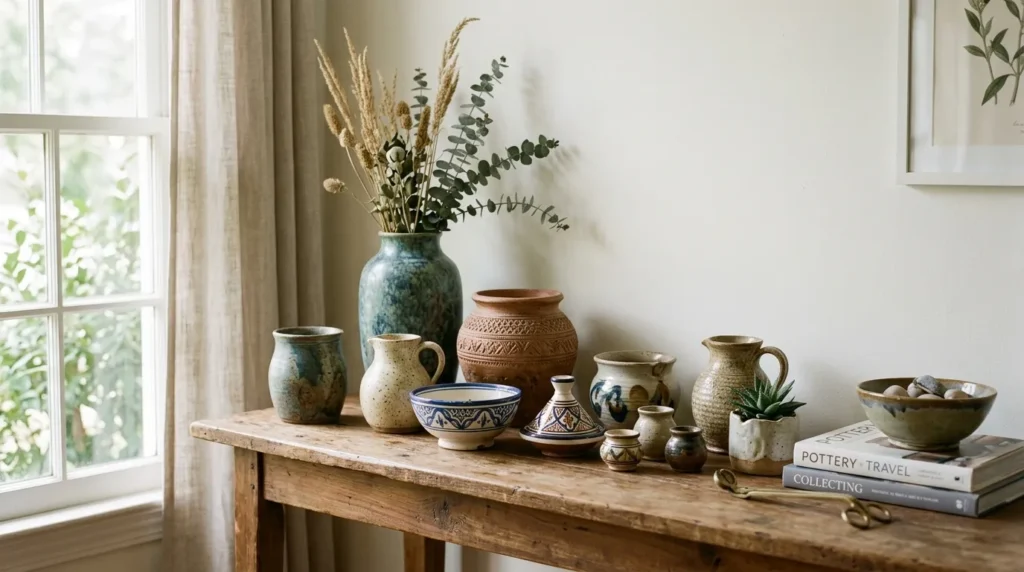
4. Personal Collection Display
Quick Benefits
- Adds genuine personality no store-bought decor can replicate
- Turns meaningful items into intentional design
- Costs little since items are already owned
- Creates conversation starters for guests
- Makes a room feel truly personal, not staged
Why It Works
A mistake many homeowners make is treating decor purely as something to buy, when the items already owned — travel souvenirs, inherited objects, a small collection of ceramics or books — often add more genuine character than anything purchased new. One simple trick I always suggest is choosing one shelf, tabletop, or console specifically to display a personal collection, rather than scattering meaningful items throughout the house where they lose visual impact.
How To Style It
Choose a single collection — vintage cameras, travel pottery, favorite books — and group them together in one location rather than spreading them out. Vary the height and depth of the display using small stands or stacked books beneath shorter items, and leave enough negative space around the grouping so it reads as curated rather than cluttered.
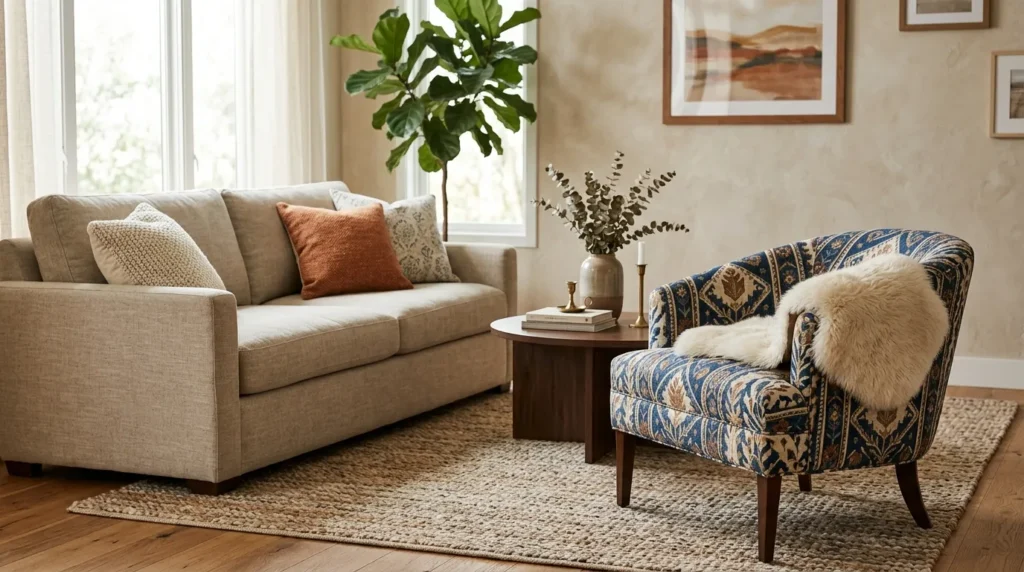
5. Accent Chair Pairing
Quick Benefits
- Adds visual interest without a full furniture overhaul
- Provides flexible extra seating
- Introduces color or pattern in a contained way
- Balances a room that feels too matched
- Works in nearly any living room size
Why It Works
A room where every piece of furniture matches exactly can feel more like a showroom display than a home. I’ve seen this idea transform spaces simply by adding one accent chair that complements, rather than matches, the sofa — different in fabric, color, or shape while still working within the room’s overall palette. This works because a slight contrast between pieces signals a collected, intentional look, while an entirely matched set can feel a bit flat or impersonal.
How To Style It
Choose an accent chair with a different silhouette or fabric than your sofa — a curved chair against a straight-lined sofa, or a patterned fabric against a solid one — while keeping the color palette connected through at least one shared tone. Position the chair at a slight angle toward the seating area rather than perfectly parallel for a more relaxed, inviting arrangement.
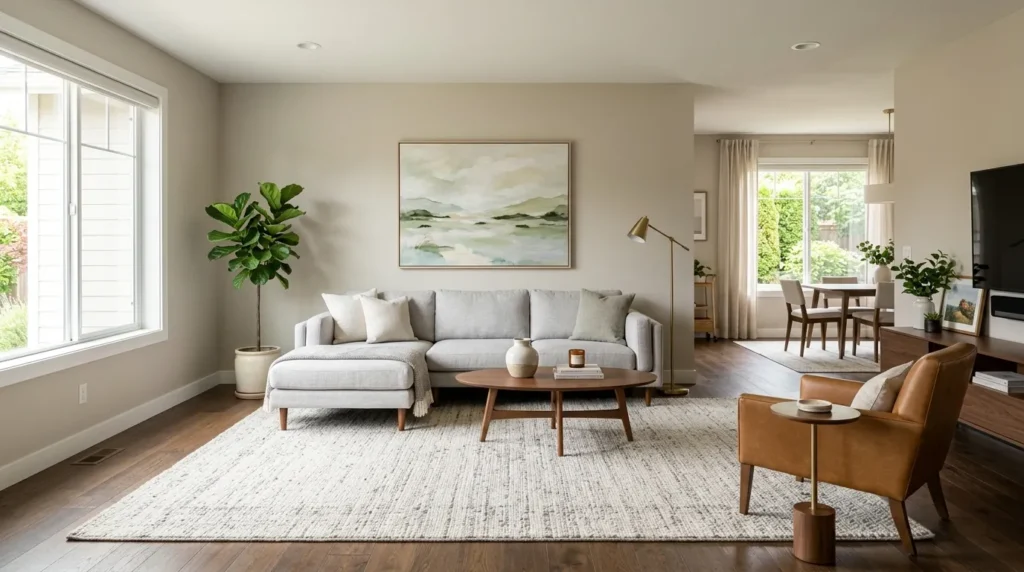
6. Scale And Proportion Balance
Quick Benefits
- Prevents a room from feeling cramped or sparse
- Makes furniture choices feel more intentional
- Improves photos and everyday visual comfort
- Applies to any budget or furniture style
- Solves one of the most common design mistakes
Why It Works
One of the most common issues in living rooms — and one of the hardest to notice without training your eye for it — is furniture that’s the wrong scale for the room. A mistake many homeowners make is choosing furniture based on individual pieces they like rather than how those pieces relate to the room’s overall size, resulting in a room that feels either overcrowded with oversized furniture or sparse with pieces too small for the space. This works because correctly scaled furniture creates visual balance that the eye reads as “right,” even if the person can’t articulate exactly why.
How To Style It
Measure your room before shopping and bring those measurements with you, prioritizing furniture that leaves at least 30 inches of walking space between major pieces. A rug should be large enough for at least the front legs of your main seating to rest on it, and art above a sofa should span roughly two-thirds of the sofa’s width for balanced proportion.
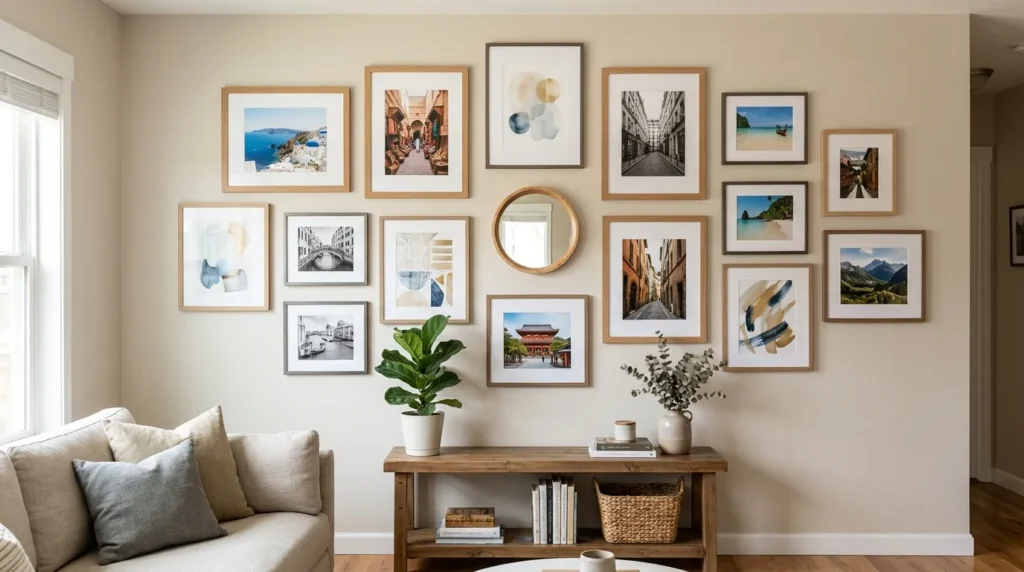
7. Framed Photo Displays
Quick Benefits
- Adds warmth and personal history to the room
- More meaningful than purchased stock-style art
- Affordable to implement using photos already taken
- Works well combined with other wall decor
- Creates a genuine, lived-in feeling
Why It Works
A living room filled entirely with purchased art, however beautiful, can feel a little impersonal without any trace of the people who actually live there. One thing that works especially well is incorporating a few framed personal photographs — travel shots, family portraits, or candid moments — alongside other wall decor. This works because personal photography adds emotional warmth that generic art simply can’t replicate, without requiring the room to feel like a family photo wall exclusively.
How To Style It
Choose a small handful of your favorite personal photos and have them printed and framed consistently, in either the same frame color or a coordinated mix of two tones. Mix them into a broader gallery wall alongside art and mirrors rather than displaying photos alone, so the personal touch feels integrated rather than separate from the room’s overall design.
8. Wall Sconce Lighting
Quick Benefits
- Adds light at a different height than lamps or ceiling fixtures
- Frees up table and floor space
- Creates a soft, ambient glow along walls
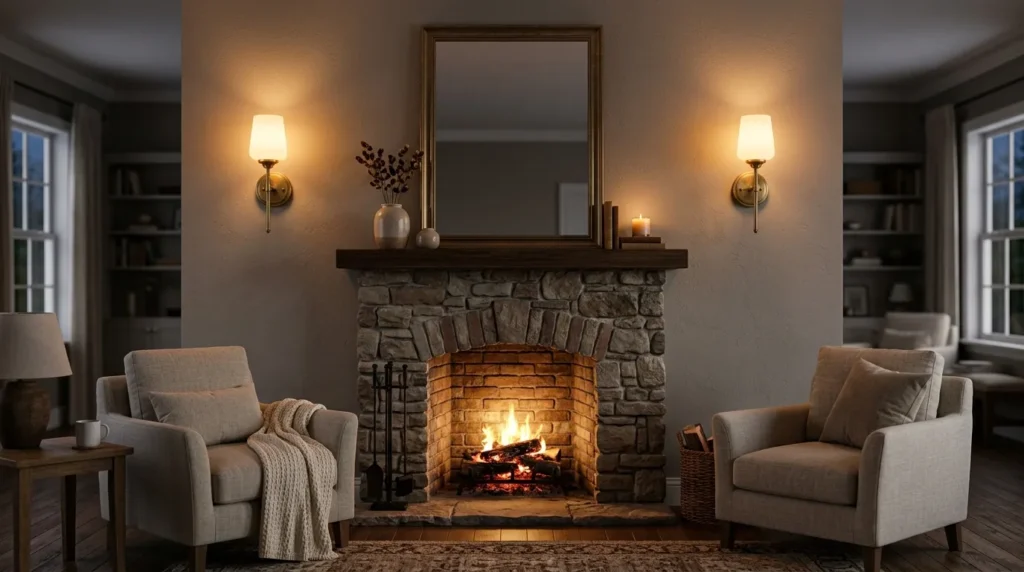
- Works well flanking art, mirrors, or a fireplace
- Elevates a room’s overall lighting layers
Why It Works
Wall sconces are one of the more overlooked lighting options in living rooms, often reserved for hallways or bathrooms instead. One simple trick I always suggest for a more designer-feeling living room is adding a pair of wall sconces flanking the fireplace, a piece of art, or a media console. This works because sconce lighting sits at a different height than lamps or ceiling fixtures, adding another distinct layer to the room’s overall lighting design while freeing up surface space that a lamp would otherwise require.
How To Style It
Install a matching pair of sconces symmetrically on either side of a fireplace, mirror, or focal piece of art, mounted at roughly eye level or slightly above for the most flattering glow. Choose a warm-toned bulb to match your other lighting, and consider a dimmable option so the sconces can shift between bright daytime use and softer evening ambiance.
9. Layered Throw Pillow Mix
Quick Benefits
- Adds color, pattern, and texture affordably
- Easy to update seasonally without replacing furniture
- Balances a room’s overall visual weight
- Works with almost any sofa or chair style
- Creates an inviting, lived-in feel
Why It Works
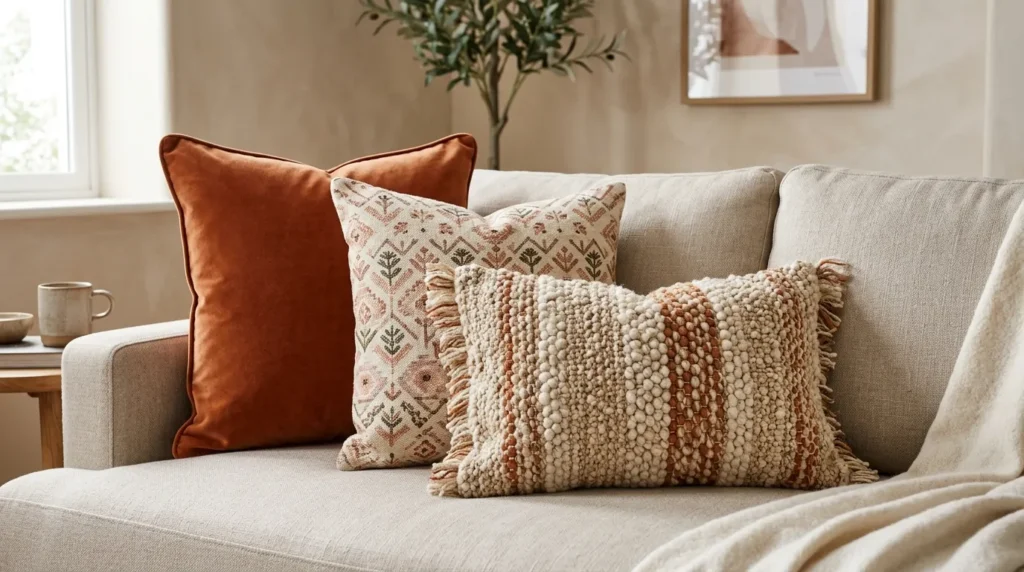
Throw pillows are one of the simplest and most affordable ways to bring personality into a living room, but a mistake many homeowners make is choosing pillows that all match in size and pattern, which can look flat rather than intentionally layered. In my experience, mixing at least two sizes and two textures — a larger solid pillow with a smaller patterned one, for example — creates the kind of layered, considered look found in professionally styled rooms.
How To Style It
Use an odd number of pillows per seat — often three on a sofa — mixing one larger square pillow, one smaller square or lumbar pillow, and one with a different texture or pattern. Stick to a cohesive color palette across all pillows so the variety in size and texture doesn’t tip into visual clutter.
10. Statement Area Rug
Quick Benefits
- Anchors the entire seating arrangement
- Adds color, pattern, or texture at the room’s foundation
- Ties furniture and decor choices together visually
- Improves comfort and warmth underfoot
- Works as a focal point in otherwise simple rooms
Why It Works
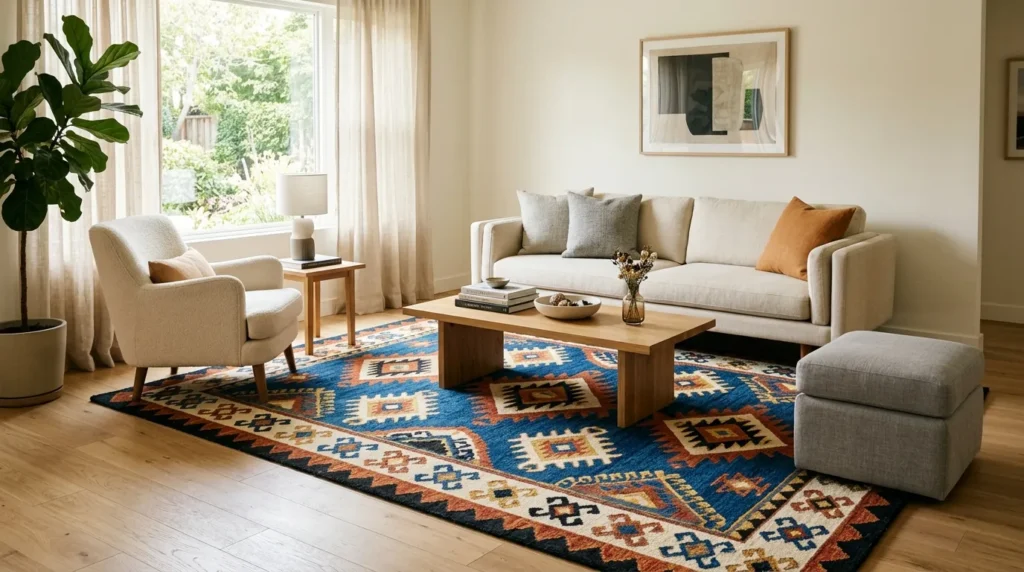
A rug does more work in a living room than most people give it credit for — it visually defines the seating area, adds warmth underfoot, and can serve as the room’s primary source of color or pattern if the furniture itself stays neutral. One thing that works especially well is choosing a rug bold or interesting enough to serve as a genuine statement piece, rather than treating it as an afterthought chosen only for size and budget.
How To Style It
Choose a rug large enough that all major furniture pieces have at least their front legs resting on it, which keeps the arrangement feeling grounded rather than floating. If your furniture and walls are neutral, a rug with pattern or a bold border can serve as the room’s main visual statement; if your furniture already carries color or pattern, a simpler textured rug helps balance the overall look.
Frequently Asked Questions
What’s the most important element of a beautiful living room?
Furniture arrangement and scale tend to matter more than any single decor item. A room with well-proportioned furniture arranged for real conversation will look and feel beautiful even with modest decor, while poor scale or layout can undermine even expensive furnishings.
How can I make my living room feel more personal?
Displaying a personal collection or a few framed personal photographs alongside other decor is one of the easiest ways to add genuine character that store-bought items alone can’t provide.
Do I need a fireplace to create a strong focal point?
No. While a fireplace is a natural focal point when available, a large piece of art, a statement rug, or a well-arranged seating area centered around a coffee table can serve the same anchoring purpose.
How many throw pillows should a sofa have?
Three pillows per seating section is a common, balanced approach — typically one larger solid pillow, one smaller pattern or texture pillow, and one accent shape like a lumbar pillow.
Should my area rug match my furniture colors exactly?
Not necessarily. A rug can either complement existing furniture tones closely for a cohesive look, or serve as a bolder contrast and statement piece if the rest of the room stays fairly neutral.
What’s an affordable way to improve my living room’s lighting?
Adding wall sconces or additional table lamps to create layered lighting is one of the most affordable upgrades, since it doesn’t require replacing any existing furniture or fixtures.
Conclusion
A truly beautiful living room is built on a foundation of good decisions — a clear focal point, well-scaled furniture, and a layout that invites real conversation — before any decor or accessories come into play. From styling a fireplace and layering window treatments to displaying personal collections and choosing a statement rug, the ten ideas above cover both the structural choices and finishing touches that make a room feel genuinely complete.
Start with one or two ideas and gradually build a space that reflects your style and supports everyday comfort. Rearranging furniture for better conversation flow or adding a personal display costs nothing and often makes an immediate difference, before moving on to bigger updates like new window treatments or lighting. Give each change room to settle before adding the next, and let your living room grow into a space that feels both beautiful and genuinely yours.
Related Articles
- Cozy Living Room Ideas
- Elegant Living Room Ideas
- Neutral Living Room Ideas
- Living Room Inspo Ideas
- Small Living Room Layouts