

10 Aesthetic Bedroom Ideas You’ll Love
Introduction
Your bedroom is more than a place to sleep; it is the one room that should feel like a soft landing at the end of a busy day. Across many USA homes, from small apartments to suburban houses, people are looking for bedrooms that feel calm, personal, stylish, and easy to maintain. The best bedroom designs do not always require a full renovation. Often, the right colors, textures, lighting, layout, and small decorative choices can completely shift how a space feels.
This guide brings together practical, beautiful, and Pinterest-friendly inspiration for anyone who wants a room that looks collected instead of cluttered. These Aesthetic Bedroom Ideas are designed to help you create a space that feels cozy, photo-worthy, functional, and realistic for everyday life. You will find styling tips, material suggestions, layout guidance, and design logic you can actually use, whether you rent, own, or are refreshing a room on a budget.
1. Soft Neutrals
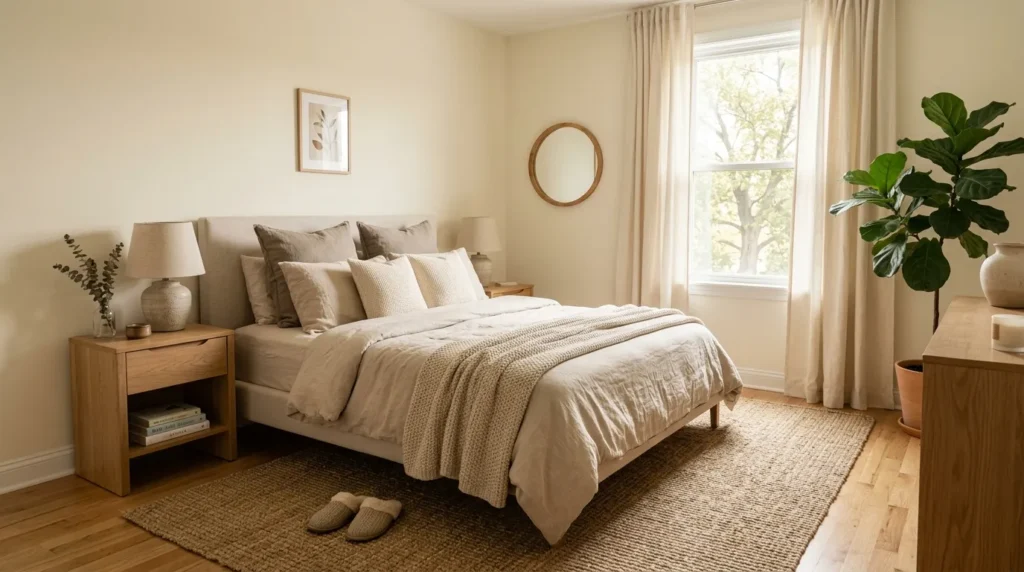
- Creates a calm, timeless bedroom foundation
- Works well in apartments, guest rooms, and primary bedrooms
- Makes small rooms feel larger and brighter
- Pairs beautifully with wood, linen, rattan, and ceramic decor
A soft neutral bedroom instantly makes a room feel peaceful, polished, and easier to style. Instead of relying on plain white alone, build the palette with warm ivory, oatmeal, beige, taupe, mushroom, and soft gray. These shades create depth without overwhelming the eye, which is why many designers recommend them for bedrooms that need to feel restful. In my experience, the trick is layering several neutral tones rather than matching everything perfectly. Use a cream duvet, beige curtains, a tan throw blanket, and natural wood furniture for a relaxed look.
This idea works especially well when your bedroom needs to feel brighter but still cozy. If your room has limited natural light, choose warm-toned paint, light bedding, and reflective accents like a mirror or glass lamp. For texture, add boucle pillows, linen sheets, a woven rug, or a chunky knit blanket. The result feels clean, warm, and lived-in without looking empty. Soft neutrals also make seasonal decorating easier because you can add muted greens, dusty blues, or rust tones later without changing the entire room.
2. Layered Bedding
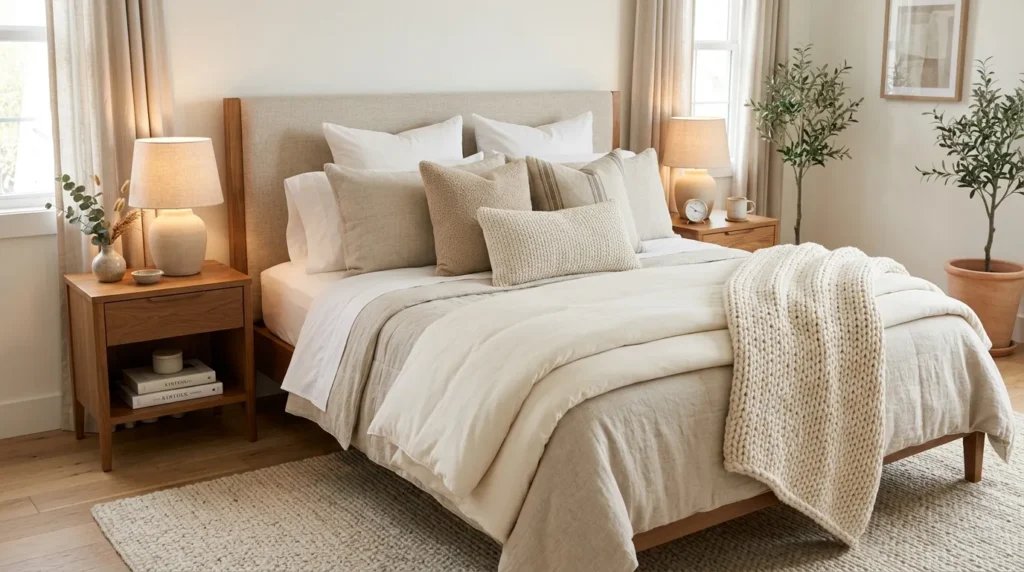
- Makes the bed look full, cozy, and professionally styled
- Adds comfort without needing expensive furniture
- Helps the room feel warmer during colder USA seasons
- Allows easy color changes through pillows and throws
A beautifully layered bed can become the main design feature of the entire room. Start with good sheets, then add a quilt, duvet, coverlet, or lightweight blanket depending on your climate. For a Pinterest-style look, let the bedding feel slightly relaxed instead of perfectly flat. Fold the duvet back, stack sleeping pillows behind decorative pillows, and place a throw blanket across the lower third of the bed. I’ve noticed this works well because it creates softness and dimension while making the bedroom feel instantly more inviting.
The practical benefit is that layered bedding lets you adjust comfort throughout the year. In warmer states, use breathable cotton or linen with a light quilt. In colder areas, add flannel sheets, a down alternative comforter, or a textured wool-blend throw. Materials matter here: percale feels crisp, linen feels casual, sateen feels smooth, and cotton quilts feel classic. Keep the color palette controlled so the bed looks intentional. Even budget-friendly bedding can look high-end when layers, texture, and proportions are thoughtfully arranged.
3. Warm Lighting
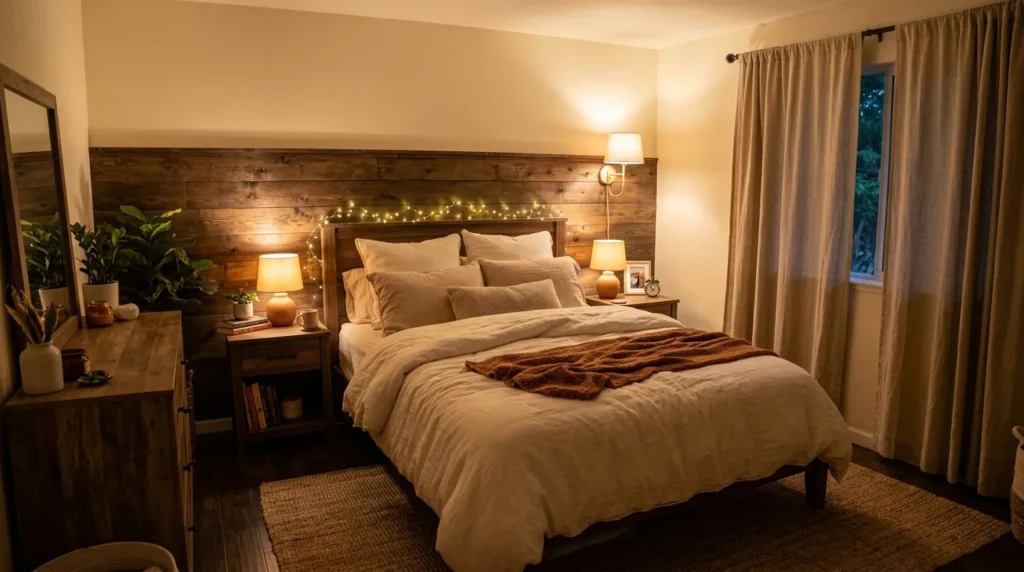
- Creates a cozy evening atmosphere
- Makes decor, bedding, and wall colors look softer
- Reduces harsh overhead brightness
- Adds function through lamps, sconces, and dimmers
Warm lighting can completely change the mood of a bedroom without moving a single piece of furniture. Harsh white bulbs often make bedrooms feel cold, flat, and unfinished, while warm bulbs create a softer glow that flatters textures and colors. Choose bulbs around 2700K for a cozy effect, especially in bedside lamps, wall sconces, or plug-in pendant lights. That’s why many designers recommend using several smaller light sources instead of relying only on one ceiling fixture. The room feels layered, restful, and much more personal.
For real-life use, think about lighting in zones. A bedside lamp helps with reading, a floor lamp brightens a dark corner, and fairy lights or LED strips can add a gentle glow around shelves or headboards. Renters can use plug-in sconces, battery-operated picture lights, or adhesive LED strips without permanent changes. Choose lampshades in linen, paper, ceramic, or woven materials to soften the light even more. When the lighting is warm and balanced, the bedroom feels calmer at night and more beautiful in photos.
4. Vintage Touches
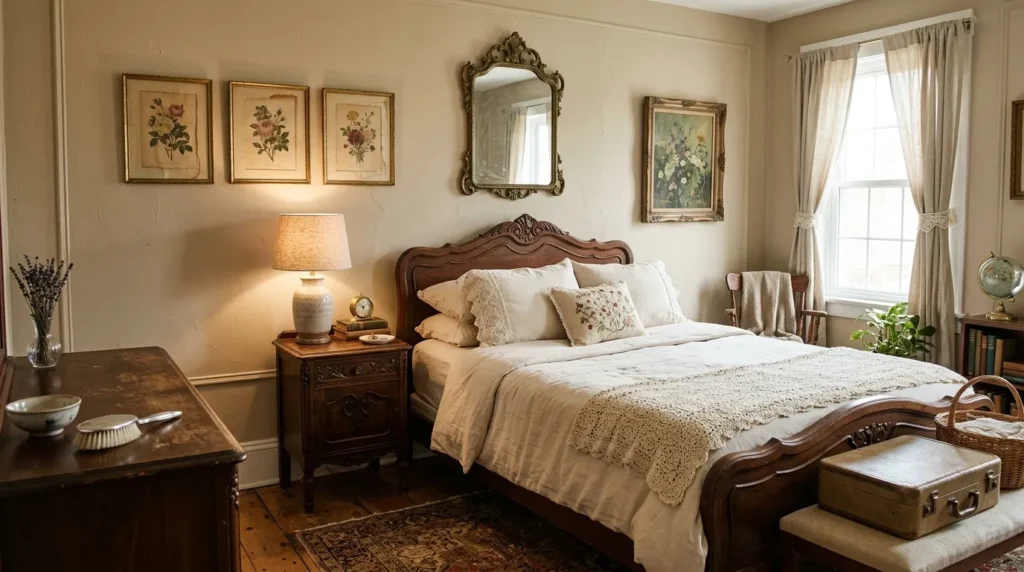
- Adds character and charm to modern bedrooms
- Makes the room feel collected instead of showroom-perfect
- Works well with thrifted, antique, or family pieces
- Brings warmth through wood, brass, glass, and aged finishes
Vintage touches give a bedroom personality that new furniture alone often cannot create. A carved wood nightstand, brass mirror, old framed artwork, ceramic lamp, or scalloped tray can instantly make the room feel more thoughtful. The goal is not to make everything look old, but to mix one or two pieces with modern basics. I’ve seen this work well in many homes because vintage elements break up flat, overly polished spaces. They add history, texture, and a sense that the room has been slowly loved over time.
To use this idea practically, start small before hunting for large furniture. Look for thrifted frames, floral prints, candle holders, small bowls, wooden stools, or antique-style mirrors. Pair these with clean bedding, simple curtains, and neutral walls so the room does not feel crowded. Materials like brass, walnut, oak, milk glass, lace, and aged ceramic work beautifully in bedrooms. A vintage touch can also solve styling problems, such as filling an empty wall, warming up a plain dresser, or making a basic rental bedroom feel unique.
5. Cozy Corners
- Turns unused bedroom space into a functional nook
- Adds comfort beyond the bed
- Works well for reading, journaling, or relaxing
- Makes the room feel larger and more intentional
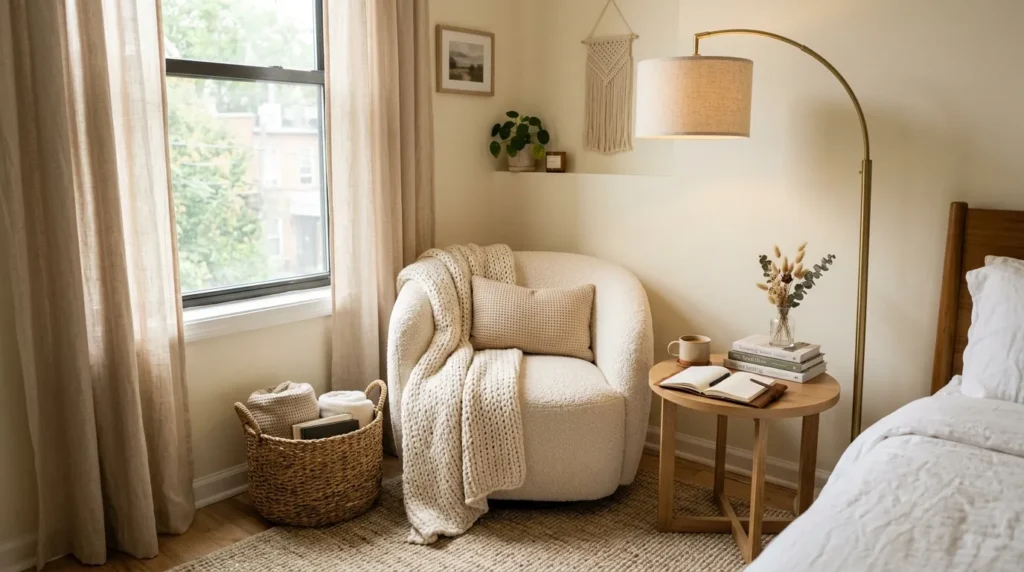
A cozy corner can make your bedroom feel like a private retreat instead of just a sleeping space. Even a small empty corner can become useful with the right chair, stool, floor cushion, or small side table. Add a soft throw, a textured pillow, and a lamp to create a simple spot for reading, scrolling, journaling, or morning coffee. In my experience, bedrooms feel more finished when every corner has a purpose. This does not mean filling the room, but giving overlooked areas gentle function.
The best cozy corners are scaled to the size of the room. In a small apartment bedroom, try a compact boucle chair, pouf, or narrow bench near a window. In a larger room, use an upholstered accent chair with a small round table and floor lamp. Materials like velvet, sherpa, linen, cane, or warm wood add comfort and visual interest. Keep the color palette connected to the bed so the nook feels like part of the same design. It adds usability while making the room feel thoughtfully styled.
6. Statement Walls
- Creates a strong focal point behind the bed
- Adds style without changing the whole room
- Works with paint, wallpaper, molding, or art
- Helps define the bedroom’s color story
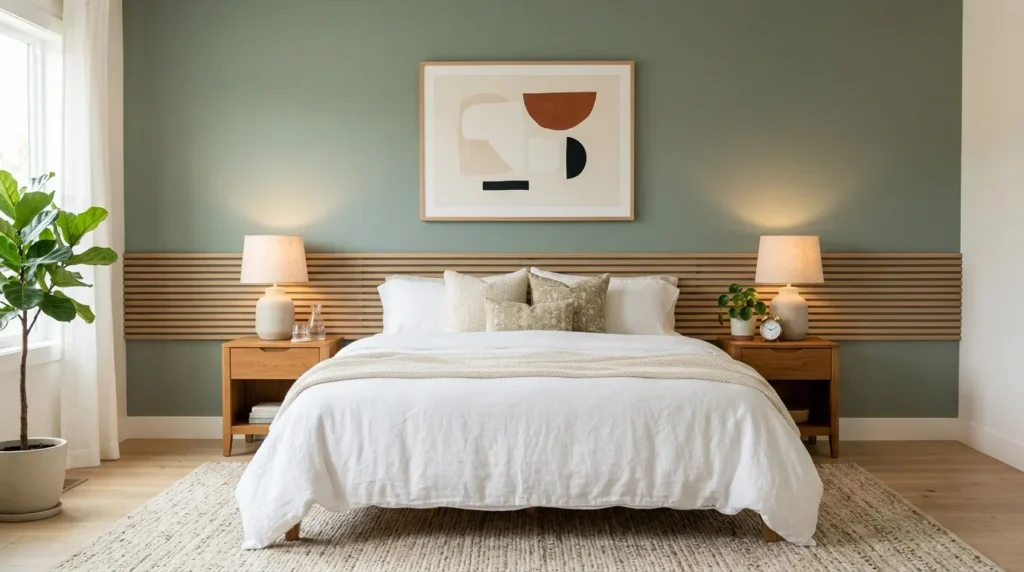
A statement wall gives the bedroom a clear focal point and makes the space feel designed. The wall behind the bed is usually the best choice because it naturally frames the room’s main feature. You can use peel-and-stick wallpaper, painted arches, board and batten, picture frame molding, wood slats, or a large gallery arrangement. For renters, removable wallpaper and fabric wall hangings are especially useful. The key is choosing one strong wall moment, then keeping the rest of the room calmer so it feels balanced.
This idea is practical because it delivers a big transformation without requiring a full makeover. A sage green wall can make a neutral bedroom feel earthy, while soft blush or terracotta creates warmth. Vertical wood slats add modern texture, and classic molding gives a high-end look. If you prefer art, choose oversized pieces rather than many tiny frames. Match the statement wall to bedding, curtains, or pillows for a cohesive result. The room will feel more complete, more photographed, and easier to decorate around.
7. Natural Textures
- Adds warmth, depth, and organic beauty
- Prevents neutral rooms from looking plain
- Works with rattan, jute, wood, linen, and clay
- Makes the bedroom feel relaxed and grounded
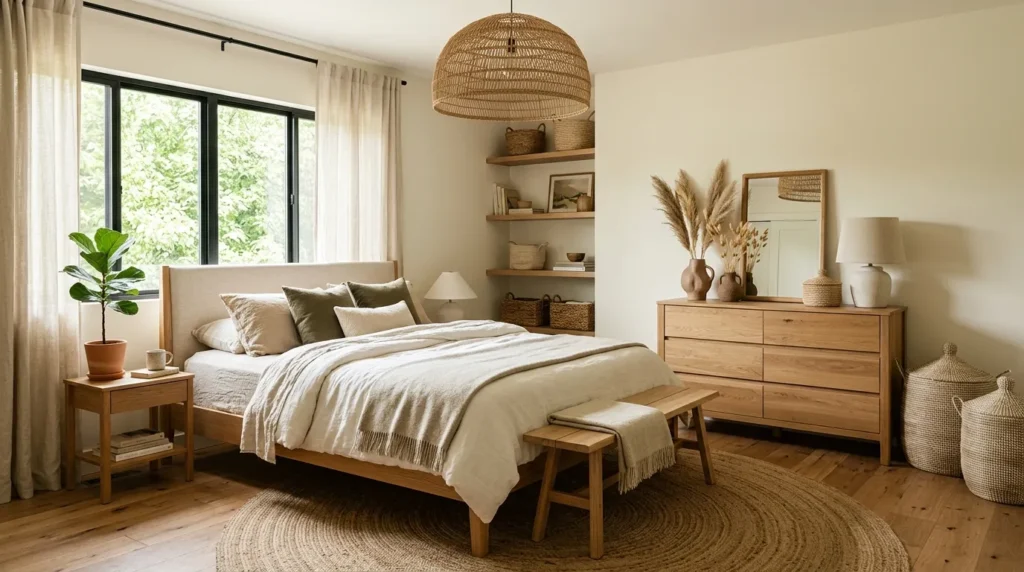
Natural textures bring life into a bedroom by adding quiet detail you can see and feel. A room can have a simple color palette and still look rich when it includes woven baskets, linen curtains, jute rugs, wood nightstands, clay vases, and rattan lighting. These materials create contrast without needing loud colors. I’ve noticed that natural texture is especially helpful in modern bedrooms because it softens clean lines and makes the space feel more human. It gives the room warmth without visual clutter.
For a practical approach, choose two or three natural materials and repeat them in small ways. For example, pair an oak dresser with a woven basket and linen bedding, or use a rattan lampshade with a jute rug and ceramic vase. Repetition makes the design feel intentional. These textures also hide everyday wear better than shiny surfaces, which is helpful for busy households. Natural materials work across farmhouse, boho, coastal, Scandinavian, and organic modern styles, making them one of the easiest upgrades for a bedroom refresh.
8. Minimal Decor
- Keeps the bedroom calm and clutter-free
- Makes cleaning and organizing easier
- Highlights quality pieces instead of many small items
- Works beautifully in small bedrooms and rentals
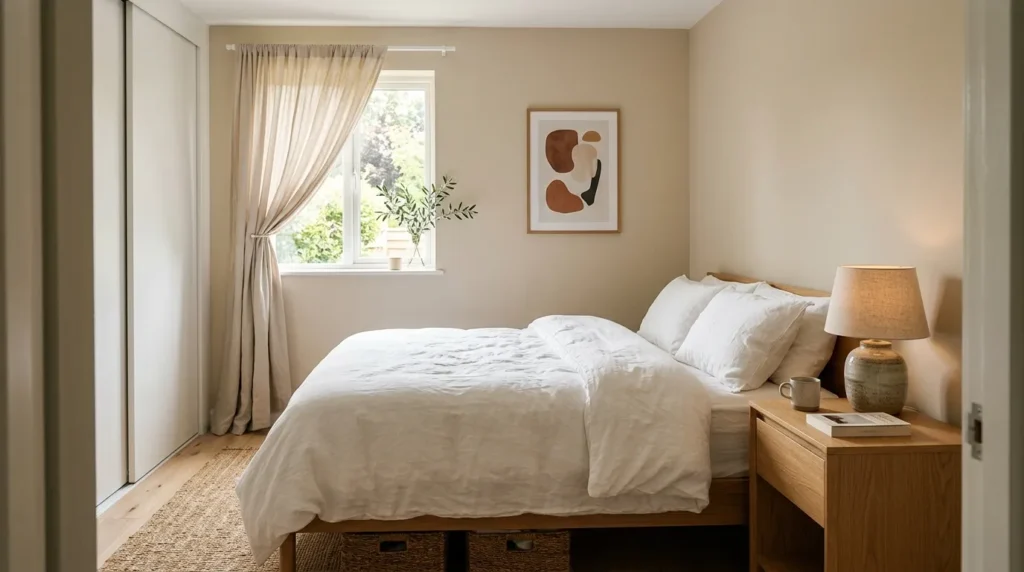
Minimal decor does not mean the bedroom has to feel empty or cold. It means choosing fewer pieces with more purpose. A clean nightstand, one beautiful lamp, a small tray, a framed print, and soft bedding can feel more elevated than shelves full of random decor. This style works because bedrooms need visual breathing room. When surfaces are less crowded, the bed, lighting, and textures stand out more clearly. That is why many designers recommend editing decor before buying anything new for a room.
The transformation comes from removing visual noise and keeping only what supports the mood you want. Start by clearing nightstands, dressers, and shelves, then bring back items that are useful or beautiful. Use closed storage for chargers, books, skincare, and accessories. Choose decor with texture, shape, or meaning, such as a ceramic vase, framed photo, candle, or sculptural lamp. Minimal styling is also budget-friendly because it focuses on placement and restraint. The room feels cleaner, calmer, and easier to enjoy every single day.
9. Canopy Details
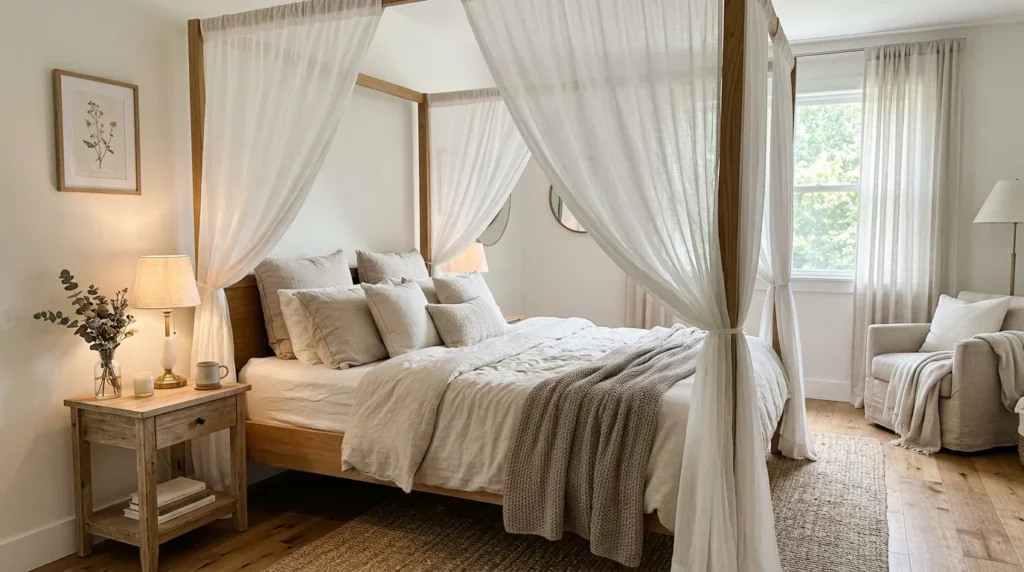
- Adds softness, height, and romantic style
- Works with fabric, curtain panels, or canopy frames
- Makes the bed feel like a cozy destination
- Creates visual drama without heavy decor
Canopy details can make a bedroom feel dreamy, soft, and beautifully layered. You do not need a traditional four-poster bed to get the look. Lightweight curtain panels, ceiling-mounted rods, sheer fabric, or a simple canopy frame can create height and movement around the bed. This idea works because it draws the eye upward, making the room feel taller and more finished. It also adds softness to bedrooms with plain walls, simple furniture, or limited architectural detail. The effect is cozy without feeling overly decorated.
For everyday use, choose breathable fabrics that are easy to clean and not too heavy. Sheer white panels feel airy, linen curtains feel relaxed, and cotton gauze creates a soft casual look. Keep the fabric away from lamps, candles, and ceiling fans for safety. In smaller rooms, hang panels only at the head of the bed to avoid crowding the space. Pair canopy details with simple bedding and minimal wall art so the fabric remains the main feature. The result feels peaceful, intimate, and very Pinterest-friendly.
10. Artful Shelving
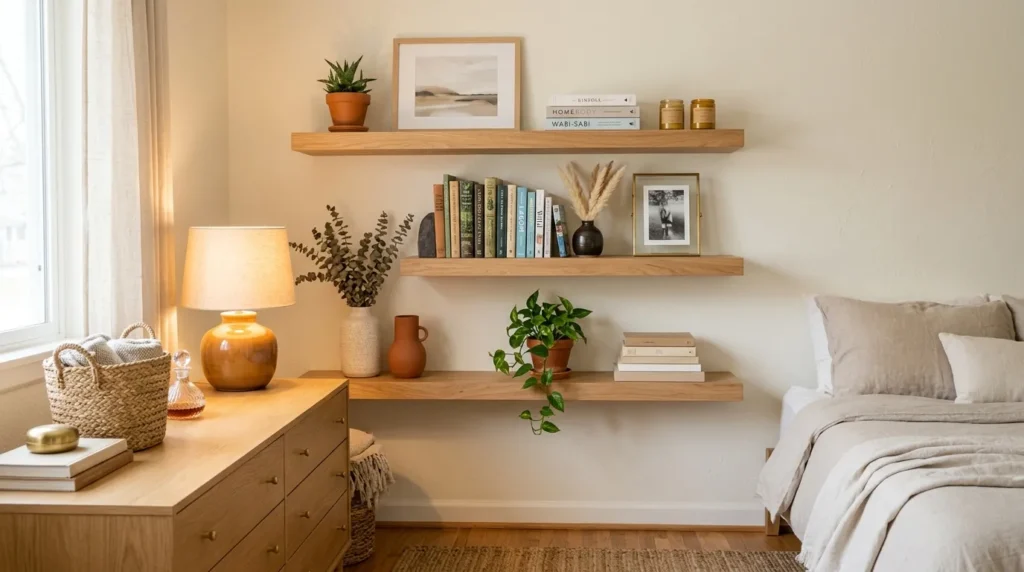
- Adds personality without using floor space
- Displays books, plants, candles, and small decor
- Helps blank walls feel styled and useful
- Works well above desks, dressers, or reading corners
Artful shelving turns blank bedroom walls into practical, beautiful display space. Floating shelves are especially useful in small USA apartments because they add storage without taking up floor area. The key is styling shelves with breathing room instead of filling every inch. Use a mix of books, framed art, small plants, candles, ceramic pieces, and personal objects. In my experience, shelves look best when items vary in height, shape, and texture. This creates movement while keeping the overall design relaxed and balanced.
To make shelving feel polished, choose a simple color palette and repeat materials used elsewhere in the room. Wood shelves pair well with neutral bedding, black brackets add contrast, and white shelves blend into light walls. Arrange items in small groups of two or three, leaving empty space between them. Avoid placing heavy objects above the bed unless the shelves are securely installed. Artful shelving works well above a dresser, beside a vanity, or near a reading nook. It adds personality while keeping the room functional.
11. Botanical Accents
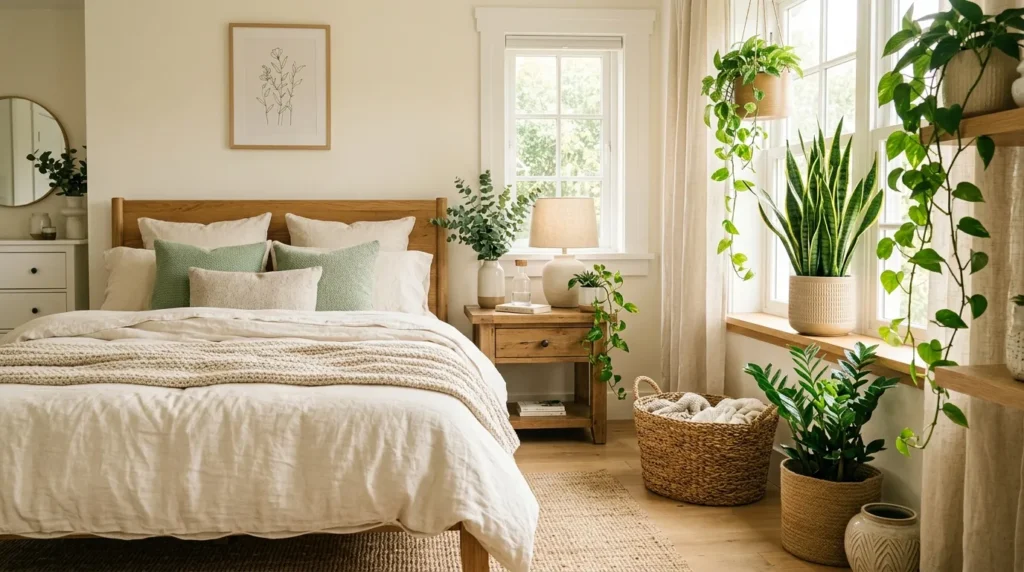
- Brings freshness, color, and natural movement
- Softens furniture, shelves, and corners
- Works with real or high-quality faux plants
- Adds a calming, lived-in feeling
Botanical accents make a bedroom feel fresh, relaxed, and connected to nature. Plants add shape, color, and softness in a way that regular decor cannot always achieve. A trailing pothos on a shelf, a snake plant near a dresser, eucalyptus stems in a vase, or a small plant on a nightstand can brighten the whole room. These accents work especially well with neutral bedding, wood furniture, and warm lighting. They bring a quiet sense of life that makes the bedroom feel more comfortable.
If you are new to plants, choose low-maintenance options like snake plants, pothos, ZZ plants, or faux greenery with realistic leaves. Place plants where they match the light conditions, not just where they look cute. Use ceramic pots, woven baskets, or stone planters to connect them to the room’s style. Botanical accents can also be seasonal: dried lavender, olive branches, or fresh flowers can shift the mood without a full redesign. As a finishing layer, greenery helps the space feel personal, soft, and complete.