10 Spa Bathroom Idea
Introduction
A bathroom should be more than a utilitarian space; it should feel like a personal retreat where daily stress melts away. For many USA homeowners, creating a Spa Bathroom at home is about blending comfort, style, and wellness into one cohesive environment. Soft lighting, natural materials, thoughtful storage, and calming colors can transform even a small bathroom into a rejuvenating haven. In today’s lifestyle-focused home design, a spa-inspired bathroom has become a coveted upgrade, offering not just aesthetic appeal but also a practical sanctuary for relaxation, self-care routines, and mindful moments.
Achieving this feeling requires more than just installing a bathtub. The best designs integrate materials, layout, and ambiance to make the space feel intentional and luxurious while remaining functional. Whether you are planning a complete remodel or simply collecting ideas for a future refresh, these Spa Bathroom concepts provide practical, visually inspiring solutions that are both stylish and Pinterest-friendly. From lighting and textures to cabinetry and greenery, each element contributes to a serene environment that encourages comfort, calm, and a touch of luxury.
1. Freestanding Bathtubs

- Creates a strong focal point in the bathroom
- Offers a luxurious, high-end visual instantly
- Works well with natural stone or wood floors
- Provides deep soaking comfort for long baths
- Enhances open layouts with sculptural form
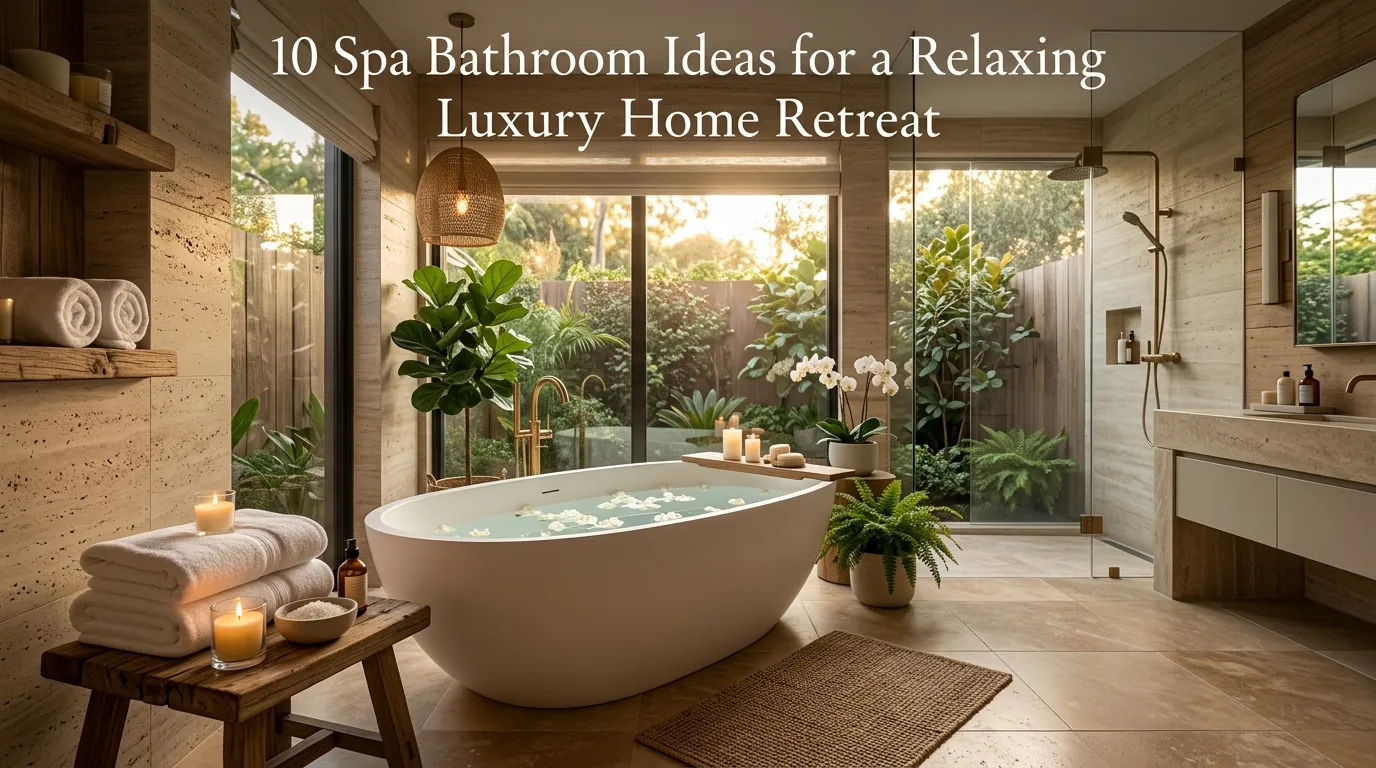
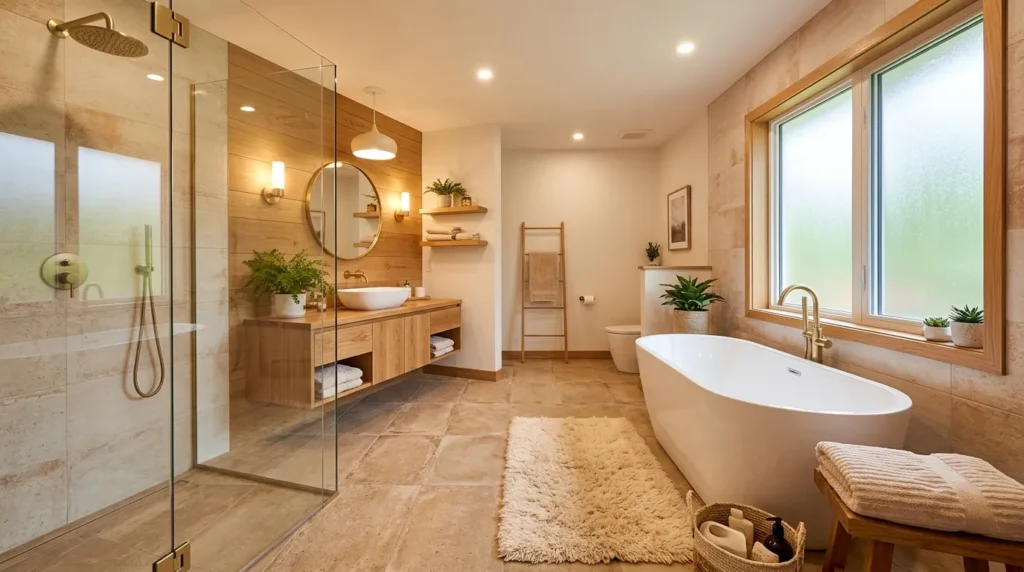
A freestanding bathtub is a hallmark of spa-inspired design because it immediately conveys relaxation and luxury. Unlike built-in tubs, freestanding models become sculptural elements that visually anchor the space. In my experience, placing a tub near a window or under soft overhead lighting maximizes both the natural light and tranquil ambiance. Materials like matte stone, cast iron, or acrylic offer different textures and finishes, allowing the tub to harmonize with your overall color palette while providing a comfortable soak that feels indulgent and intentional.
The real transformation comes from how the tub interacts with the room’s layout. A freestanding tub can be surrounded by open space, giving it prominence without feeling crowded. Complementary features like a floor-mounted faucet, wooden bath caddy, and plush towels make the area functional and inviting. This setup encourages mindful baths, reading, or meditation, making the bathroom not just visually appealing but also practically restorative for daily self-care rituals.
2. Natural Stone Surfaces
- Adds organic texture and visual warmth
- Works with countertops, floors, and shower walls
- Durable and long-lasting with proper care
- Offers varied finishes like polished, honed, or tumbled
- Enhances a timeless, upscale look
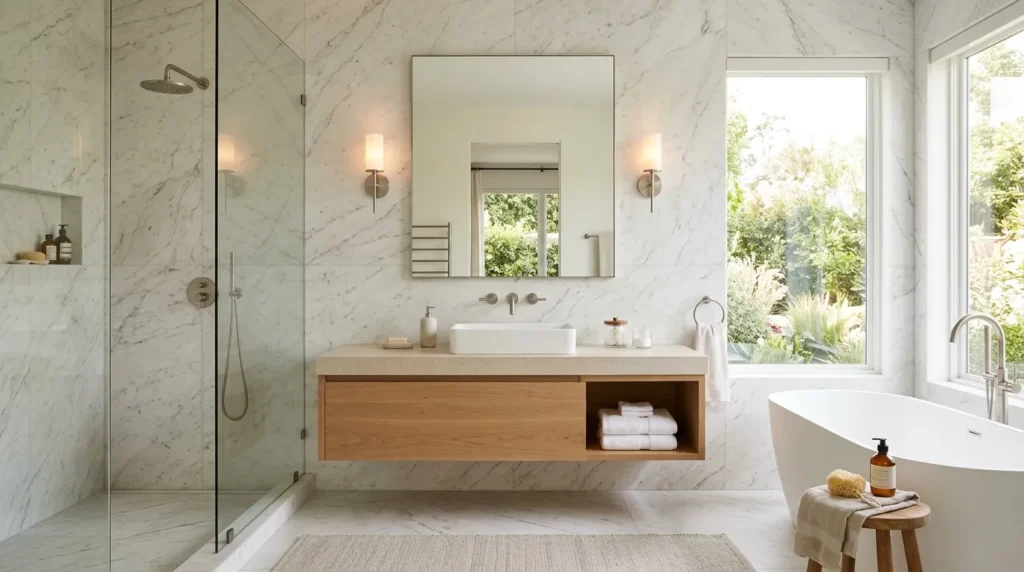
Natural stone is a classic choice for creating a spa-like atmosphere because it introduces authentic textures and subtle color variations. Materials such as marble, travertine, and slate provide tactile interest while blending beautifully with neutral tones, soft lighting, and wooden accents. I’ve noticed that bathrooms featuring natural stone feel more grounded and calming, especially when large slabs are used on floors or walls to minimize grout lines and create a seamless visual flow.
Beyond aesthetics, stone surfaces are practical for durability and longevity. Polished marble can brighten a room with reflective qualities, while honed finishes offer slip resistance and softer textures underfoot. Stone countertops or vanity tops pair well with minimalist faucets and vessel sinks, contributing to a clean, uncluttered appearance. This approach balances luxury and functionality, delivering a serene, tactile environment that elevates everyday routines.
3. Soft Ambient Lighting
- Provides calm illumination without harsh glare
- Works with dimmers, sconces, and recessed lights
- Highlights architectural and design features
- Supports morning routines and evening relaxation
- Creates layered light for depth and warmth
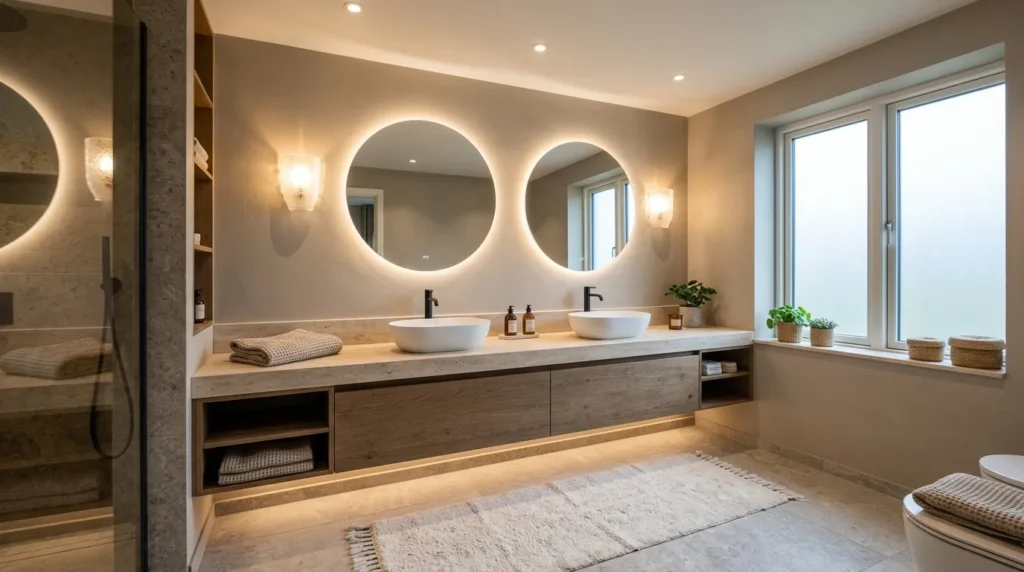
Lighting is critical in establishing a relaxing spa atmosphere. Soft ambient lighting, achieved through dimmable sconces, hidden LEDs, or warm recessed fixtures, allows you to control the mood throughout the day. That’s why many designers recommend layering light sources: combining task lighting for mirrors with soft general illumination and accent lights around tubs or shelving. This technique enhances the room’s visual depth while keeping the space functional and serene.
The transformation comes from how the lighting interacts with textures and materials. Soft light gently reflects off stone surfaces, matte wood, and soft textiles, creating a cozy and inviting atmosphere. A well-placed pendant or backlit mirror can draw attention to key features while supporting practical use. By avoiding harsh overhead lighting, the bathroom feels less clinical and more restorative, providing a sensory experience akin to a professional spa right in your home.
4. Heated Floors
- Adds comfort during cold months
- Enhances luxury perception without visible devices
- Works with tile, stone, or engineered flooring
- Supports relaxation during baths or showers
- Reduces dependence on external heating
Heated floors are a subtle yet impactful upgrade in a spa-inspired bathroom. They provide immediate warmth underfoot, creating a cozy environment that encourages relaxation. Especially in colder climates or during early mornings, this feature transforms the mundane act of stepping out of a shower into a comforting ritual. I’ve seen this work well with stone or porcelain tiles, as these materials retain heat effectively and contribute to the spa aesthetic with natural textures.
The real advantage is in the overall sensory experience. Warm floors complement soft ambient lighting, luxurious towels, and freestanding tubs, enhancing the sense of indulgence. Installation can be integrated into remodeling or through electric mats under existing tile. The result is a functional upgrade that elevates comfort, wellness, and the overall feeling of the bathroom as a personal sanctuary designed for everyday self-care.
5. Floating Vanities
- Creates open visual space beneath the sink
- Allows for under-cabinet lighting or storage baskets
- Works with various materials like wood, stone, or lacquer
- Keeps the bathroom looking modern and uncluttered
- Enhances perception of larger space
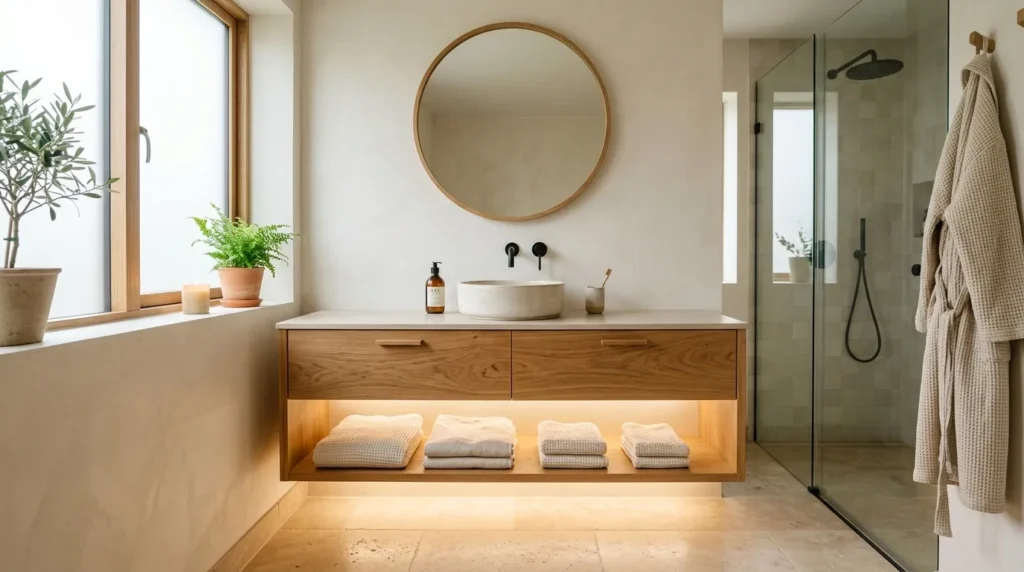
Floating vanities contribute to a spa-like feeling by opening the lower visual plane, making even smaller bathrooms feel airy and uncluttered. They also provide practical opportunities for indirect lighting, decorative baskets, or towel storage underneath. Choosing materials such as warm wood, matte lacquer, or stone ensures the vanity complements other design elements while maintaining durability. I’ve noticed that this approach simultaneously enhances style and functionality in contemporary bathrooms.
The transformation is both visual and practical. Floating vanities allow for easier cleaning and create the impression of more floor space, contributing to a calm and open environment. Pairing them with vessel sinks or sleek faucets reinforces a minimalist spa look. Incorporating soft LED lighting beneath the vanity can further amplify the luxurious feel, turning ordinary storage areas into subtle, atmospheric features that elevate the overall bathroom design.
6. Glass-Enclosed Showers
- Provides transparency and spacious feel
- Showcases beautiful tile or stone walls
- Reduces visual barriers and enhances light flow
- Works with frameless or minimal-frame designs
- Supports modern, clean-lined aesthetic
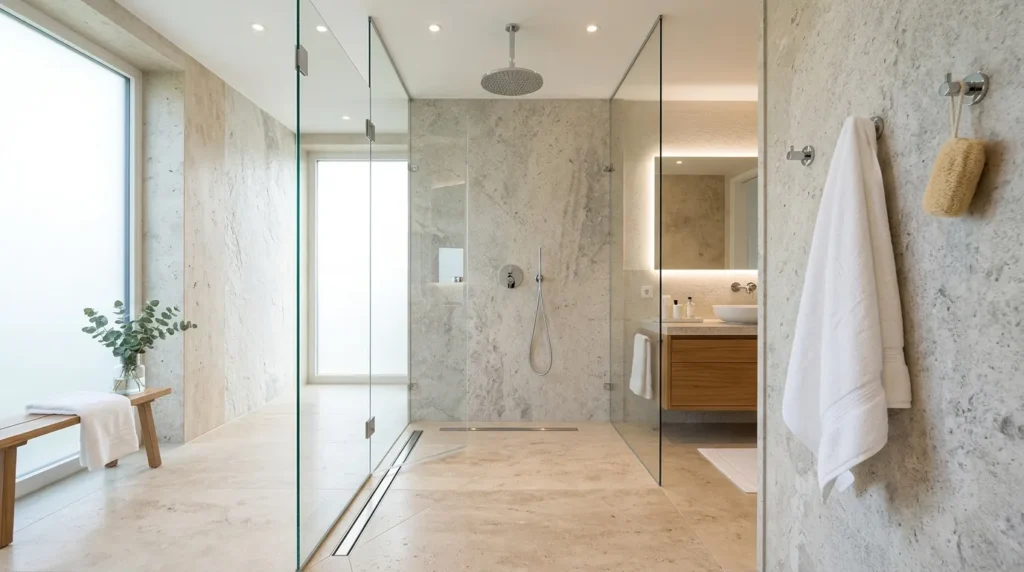
Glass-enclosed showers are a staple in spa bathrooms because they maintain openness while offering functionality. Frameless or thin-framed designs emphasize transparency, allowing natural and artificial light to pass freely. This creates the illusion of a larger bathroom and highlights premium materials like stone tiles or mosaic accents. That’s why many designers recommend pairing glass enclosures with wall niches and linear drains for both aesthetic and practical benefits.
The transformation occurs in perceived spaciousness and material display. By eliminating opaque shower walls, the design feels fluid and cohesive, making every detail—from tile patterns to showerheads—more visible and impactful. Functionally, glass enclosures keep water contained and reduce cleaning complexity. Paired with rain showerheads or wall-mounted jets, they also enhance the sense of luxury, turning routine showers into immersive spa-like experiences that feel both stylish and indulgent.
7. Neutral Color Palette
- Promotes calm and relaxation
- Works with soft whites, beiges, taupes, and greys
- Complements natural materials like wood and stone
- Enhances sense of space and light
- Creates a timeless, Pinterest-friendly backdrop
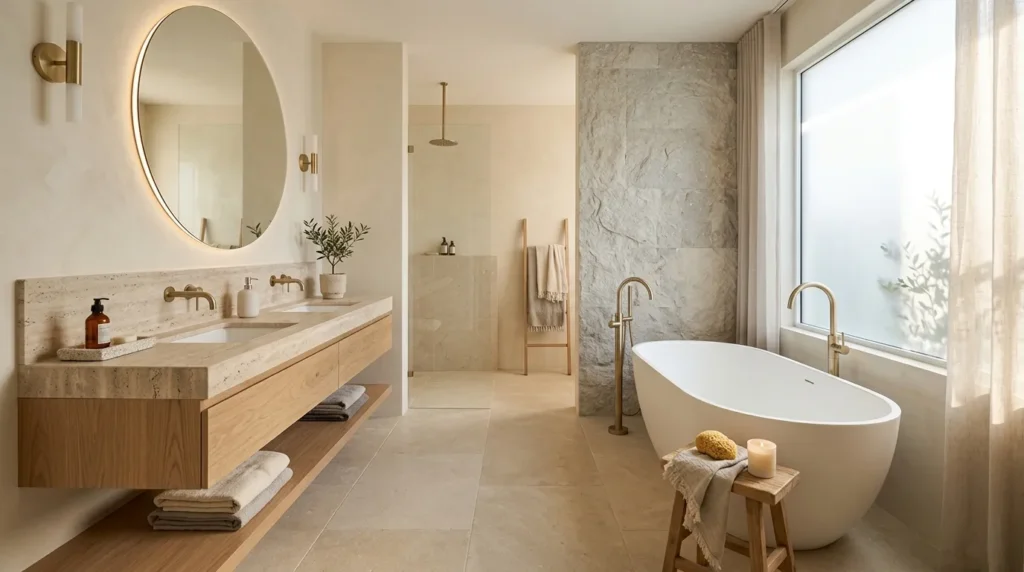
A neutral color palette forms the foundation of a spa-inspired bathroom. Soft shades of white, cream, taupe, or gray evoke tranquility, making the space feel larger and brighter. I’ve noticed that combining neutrals with natural textures—wood cabinetry, stone surfaces, or woven accents—enhances warmth without clutter. This approach provides a versatile backdrop that allows décor, towels, and plants to pop without overwhelming the eye, resulting in a balanced and harmonious atmosphere.
Beyond aesthetics, neutral tones enhance usability by making lighting and accessories more adaptable. They help unify design elements and support a seamless flow between areas like vanities, showers, and bathtubs. In small bathrooms, lighter neutrals visually expand the space, while in larger layouts, tonal variations can create subtle depth and dimension. The overall effect is a serene and welcoming environment that aligns with both Pinterest trends and practical home comfort.
8. Indoor Greenery
- Introduces natural color and texture
- Improves air quality and ambiance
- Works with potted plants, hanging planters, or small succulents
- Complements stone, wood, and neutral tones
- Enhances sensory experience and relaxation
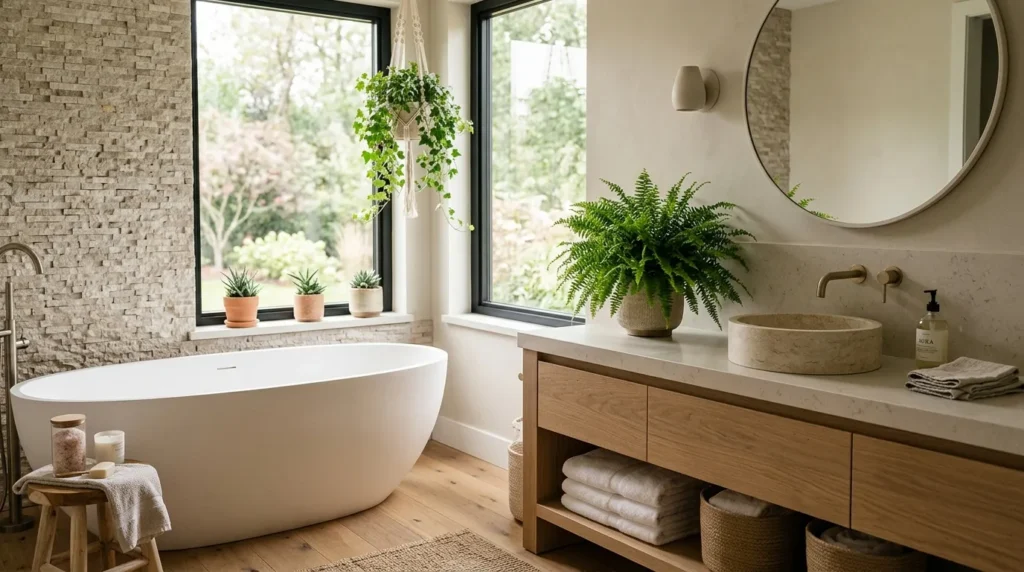
Plants are transformative in a spa bathroom because they bring life and freshness into the space. Small potted ferns, hanging vines, or succulents can thrive in high-humidity conditions while adding color and texture to neutral backgrounds. I’ve seen this work well near tubs, floating vanities, or window sills where plants receive indirect light. Greenery balances hard surfaces like stone or tile, creating a more inviting and rejuvenating environment for self-care rituals.
In practical terms, incorporating plants encourages mindfulness and connection to nature. The visual softness of foliage contrasts with clean lines, while larger leafy plants can act as natural focal points. Hanging planters save floor space and create vertical interest, while small pots near mirrors add charm and freshness. This integration elevates the bathroom experience beyond mere functionality, offering a sensory layer of tranquility and life that enhances every soak, shower, or morning routine.
9. Luxury Fixtures
- Elevates aesthetic and functional appeal
- Works with faucets, showerheads, towel bars, and lighting
- Can feature finishes like matte black, polished chrome, or brass
- Improves usability and ergonomics
- Creates a polished, high-end look
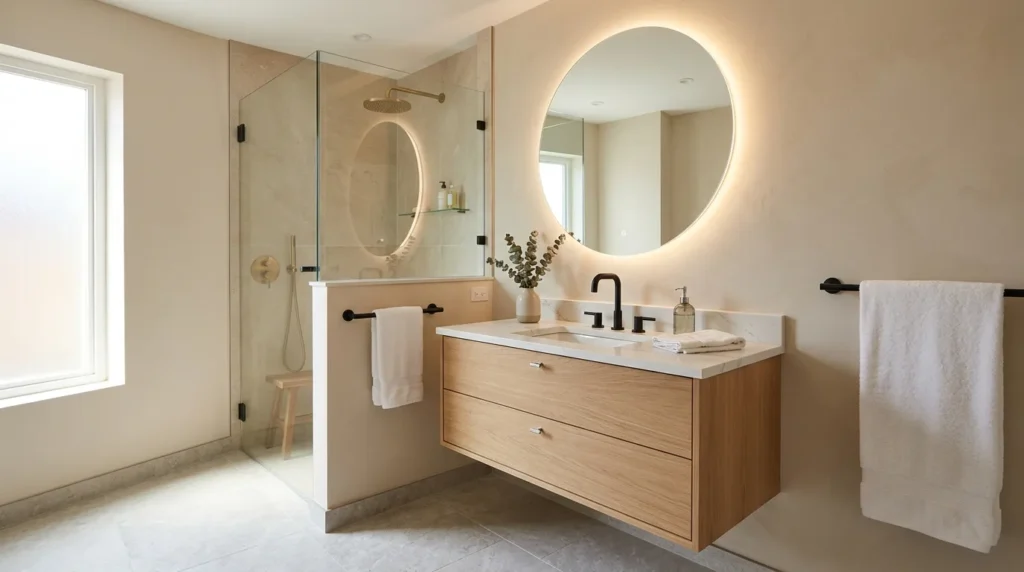
High-quality fixtures instantly signal luxury in a spa-inspired bathroom. Sleek faucets, rainfall showerheads, towel bars, and coordinated hardware elevate both function and design. Matte black, polished chrome, or brushed brass finishes provide striking contrasts or harmonious complements to neutral backgrounds. I’ve noticed that even small fixture upgrades can completely transform the perception of the space, making it feel professionally designed and cohesive.
Functionally, luxury fixtures improve the daily experience by offering smooth operation, ergonomic shapes, and durability. For example, wall-mounted faucets free counter space, while adjustable showerheads cater to different users. Coordinating finishes across all fixtures creates a unified look that supports the spa-like aesthetic. When paired with quality materials, thoughtful layout, and soft ambient lighting, these touches transform the bathroom into a sanctuary where style and practicality coexist seamlessly.
10. Textured Towels & Mats
- Adds tactile comfort and visual interest
- Works with woven, plush, or patterned textiles
- Complements neutral palettes and natural materials
- Provides warmth and softness underfoot or on skin
- Enhances overall sensory spa experience
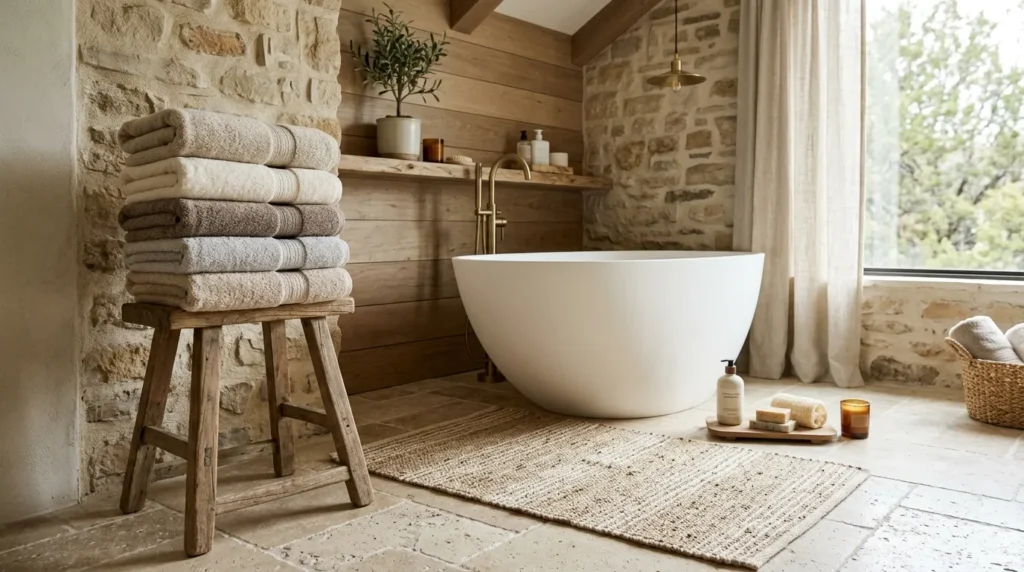
Textiles are essential in completing a spa-inspired bathroom because they provide comfort and subtle design layering. Plush towels, woven mats, and patterned bath rugs introduce texture that contrasts with smooth surfaces like tile, stone, or glass. I’ve seen this approach add warmth and a lived-in feel without compromising the spa aesthetic. Carefully chosen textiles in soft neutrals or muted tones enhance visual harmony while maintaining functionality.
Beyond appearance, textured towels and mats improve usability and comfort. Thick, absorbent fabrics make post-shower routines more indulgent, while cushioned mats provide warmth and support underfoot. Coordinating textiles with cabinet finishes, flooring, and lighting can further unify the space. Layering textures allows you to introduce subtle patterns and interest without overpowering the calm atmosphere. This creates a tactile and sensory-rich environment that reinforces relaxation and well-being.