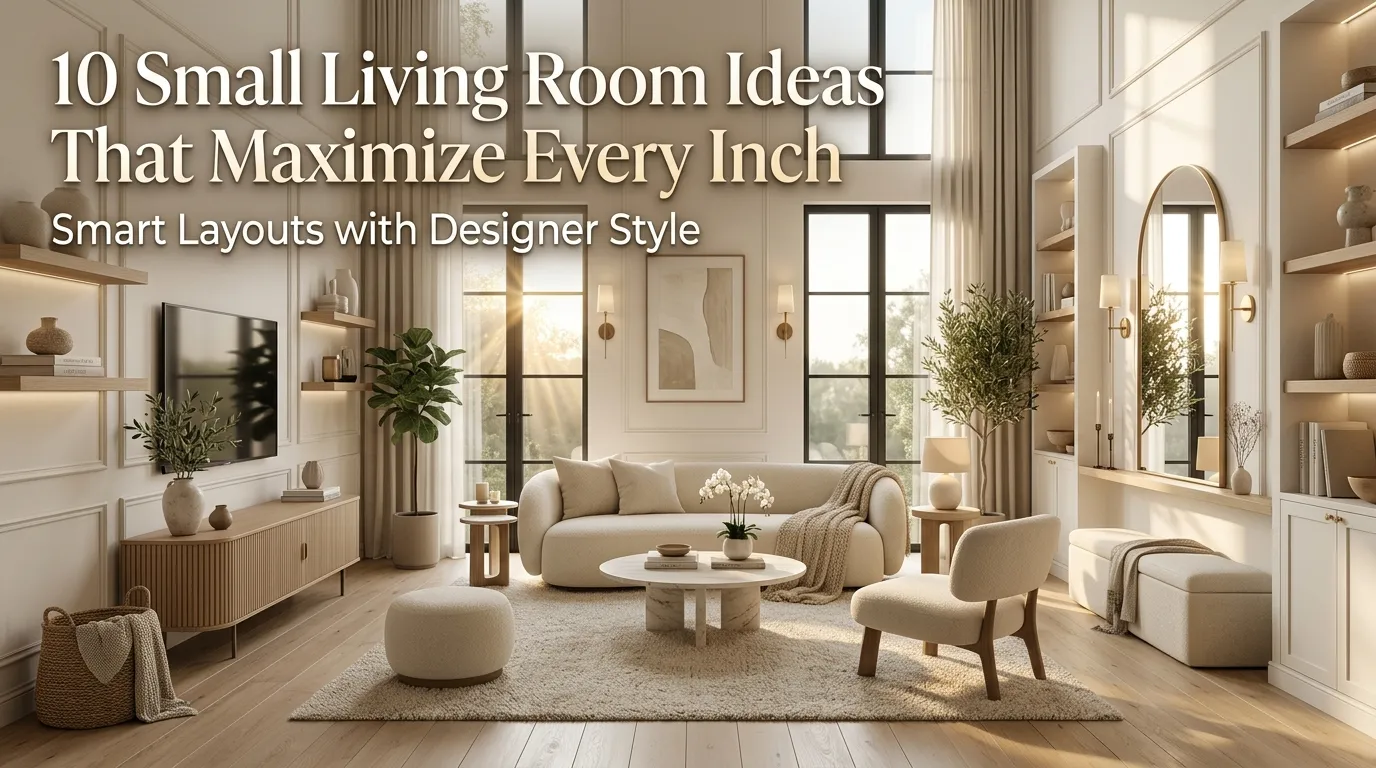
10 Small Living Room Ideas That Maximize Every Inch
Decorating a small living room can feel like solving a puzzle. Every piece of furniture matters, every corner counts, and it’s easy to end up with a space that feels cramped instead of comfortable. The good news is that a compact room doesn’t have to limit your style. In fact, some of the most beautiful living rooms are the smallest because every design choice is intentional.
I’ve noticed that the biggest mistake many homeowners and renters make is trying to fit too much into a limited space. Instead of creating a cozy atmosphere, oversized furniture, unnecessary accessories, and poor layouts often make the room feel even smaller. A thoughtful design approach can completely change how a room looks and functions without requiring expensive renovations.
The best small living rooms combine comfort, smart storage, balanced proportions, and beautiful styling. Whether you’re decorating a city apartment, a townhouse, a condo, or a cozy family home, choosing the right layout and décor can make every square foot work harder while still feeling warm and inviting.
In this guide, you’ll discover practical design ideas that help maximize every inch without sacrificing personality. From furniture that serves multiple purposes to clever lighting techniques and color palettes that visually expand a room, these ideas are simple enough for beginners while still offering inspiration for experienced decorators.
If you’re ready to create a living room that feels larger, brighter, and more functional, these Pinterest-worthy ideas will help you make the most of your space while reflecting your own personal style.
Table of Contents
1. Floating Furniture
Create a more open layout by positioning furniture strategically instead of pushing everything against the walls.
2. Vertical Storage
Use wall space to increase storage while keeping the floor clear.
3. Light Color Palette
Bright colors reflect light and help small rooms feel noticeably larger.
4. Multi-Purpose Pieces
Choose furniture that performs more than one job to reduce clutter.
5. Layered Lighting
Mix different lighting sources to add warmth, depth, and visual space.
6. Slim Furniture
7. Large Mirror Focus
8. Cozy Textures
9. Hidden Storage
10. Defined Zones
1. Floating Furniture
Quick Benefits
- Makes the room feel larger
- Improves traffic flow
- Creates balanced layouts
- Adds a designer-inspired appearance
- Prevents walls from looking crowded
Why It Works
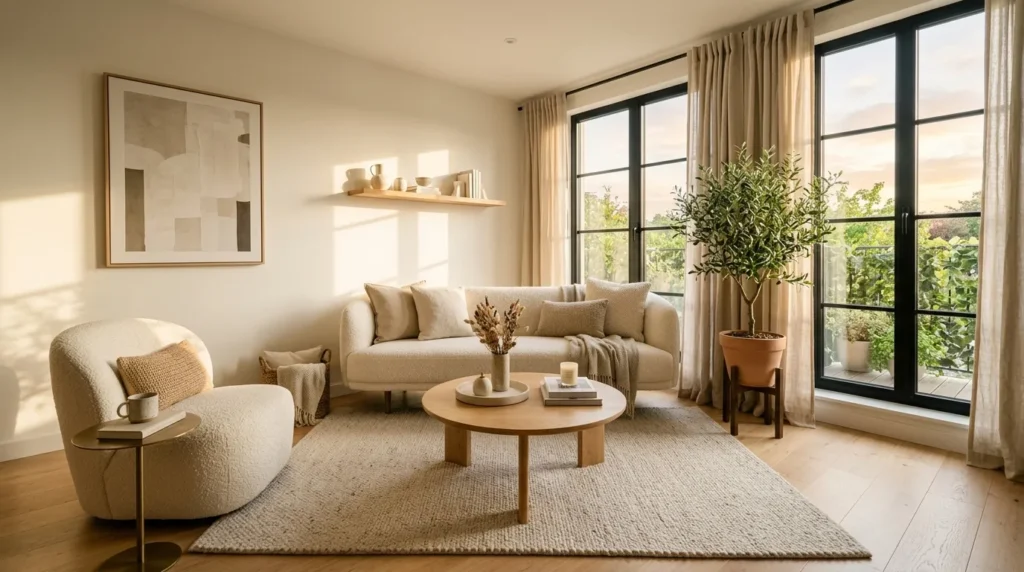
Many people automatically push every piece of furniture against the walls, assuming it creates more floor space. In reality, this often leaves an awkward empty center while making the room feel flat and disconnected. One thing that works especially well is allowing the sofa or accent chairs to “float” slightly away from the walls, even if it’s only a few inches. This creates visual breathing room and encourages a more intentional layout. Designers frequently use this technique because it gives the impression of a thoughtfully planned space instead of one that’s simply trying to fit everything in.
How To Style It
Start with a properly sized area rug and position the front legs of your seating on top of it to anchor the arrangement. Leave a small gap between the sofa and the wall, then add a slim console table behind it if space allows. Pair the seating with a compact coffee table and a single accent chair instead of multiple bulky pieces. Finish the look with a floor lamp, textured throw pillows, and a few carefully chosen decorative accents to keep the room feeling open yet inviting.
2. Vertical Storage
Quick Benefits
- Maximizes unused wall space
- Reduces everyday clutter
- Keeps floors open
- Adds decorative display areas
- Makes the room feel taller
Why It Works
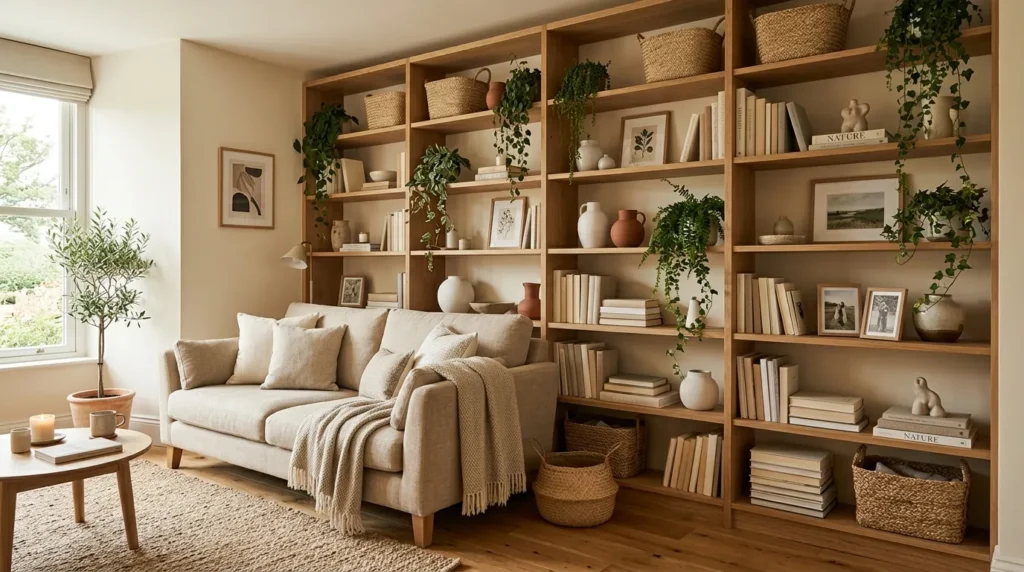
When floor space is limited, the walls become one of the most valuable design opportunities. Vertical storage naturally draws the eye upward, making ceilings appear higher while providing plenty of room for books, baskets, artwork, and decorative accessories. I’ve seen this idea transform compact apartments where every inch matters. Rather than filling the room with bulky cabinets, tall shelving offers both storage and visual interest without overwhelming the overall layout.
How To Style It
Choose slim open shelving or tall bookcases that extend close to the ceiling. Mix practical storage baskets with decorative objects like ceramic vases, framed artwork, candles, and trailing houseplants to create balance. Keep heavier items on lower shelves and lighter décor higher up to maintain visual harmony. Sticking to a consistent color palette also prevents the shelving from looking overly busy while helping the room feel organized and spacious.
3. Light Color Palette
Quick Benefits
- Reflects more natural light
- Makes rooms appear larger
- Creates a calm atmosphere
- Coordinates easily with décor
- Gives timeless appeal
Why It Works
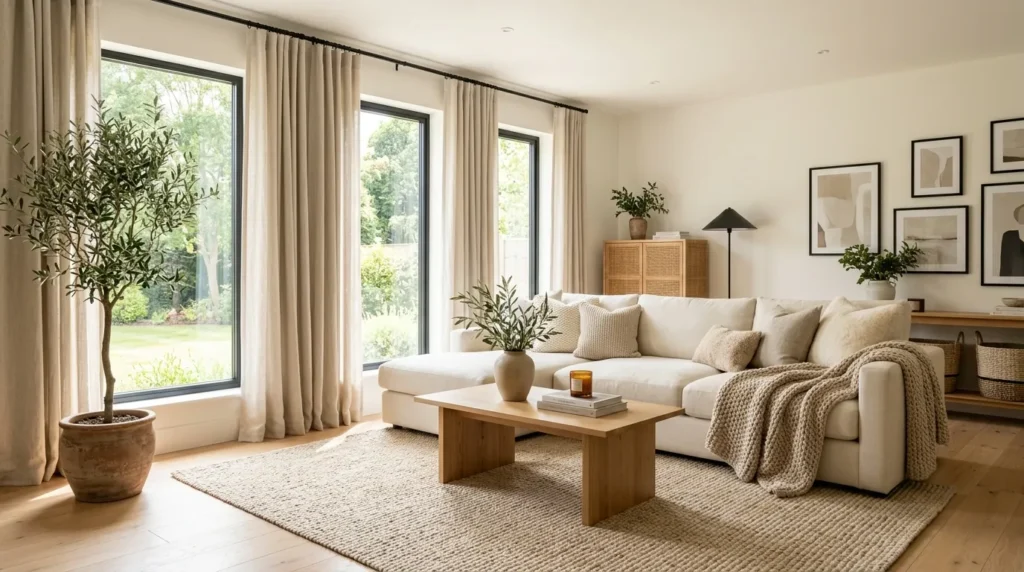
Color has a powerful effect on how spacious a room feels. Soft neutrals and light shades bounce natural light around the room, reducing visual heaviness and creating an airy atmosphere. That’s why many designers recommend shades like warm white, soft beige, greige, pale taupe, and light gray in smaller spaces. Instead of relying on bold wall colors, adding personality through textiles and accessories allows the room to remain bright while still feeling welcoming and full of character.
How To Style It
Paint walls in warm white or soft cream, then layer complementary shades through upholstered furniture, rugs, curtains, and decorative pillows. Natural wood furniture introduces warmth without making the space feel heavy. Add subtle black accents through lighting or picture frames for contrast while keeping the overall palette soft. Incorporating a few green plants completes the look by bringing life and freshness into the room.
4. Multi-Purpose Pieces
Quick Benefits
- Saves valuable floor space
- Reduces furniture clutter
- Adds hidden storage
- Improves daily functionality
- Ideal for apartments and condos
Why It Works
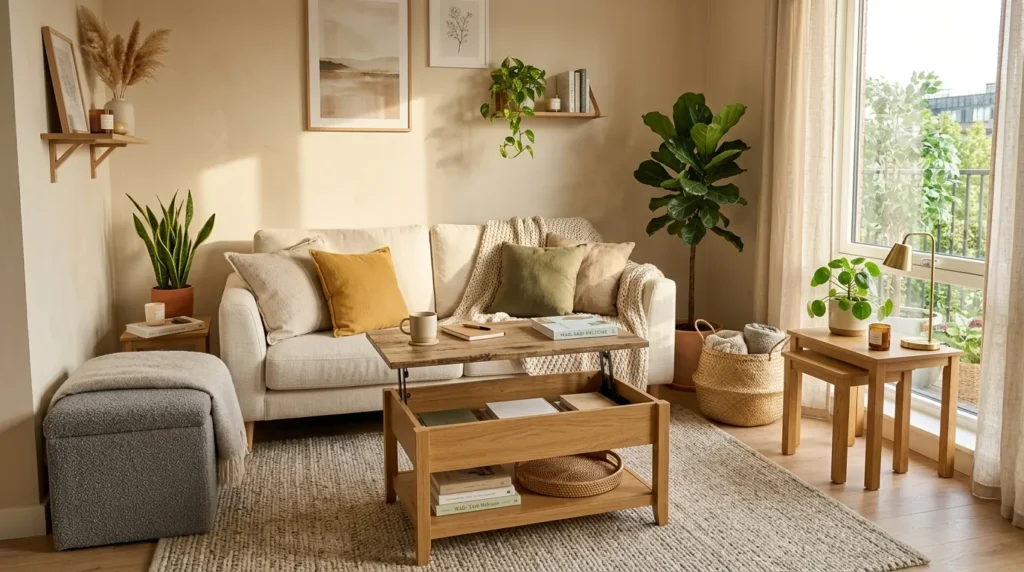
Furniture that serves more than one purpose is one of the smartest investments for any small living room. Instead of filling the space with separate storage units, tables, and seating, multi-functional furniture combines several needs into one stylish piece. In my experience, this simple approach immediately makes a room feel less crowded while improving organization. It also allows homeowners to adapt their space for entertaining, relaxing, or working from home without adding unnecessary furniture.
How To Style It
Choose an ottoman with hidden storage, a lift-top coffee table, nesting side tables, or a storage bench beneath a window. Look for compact sofas that include built-in storage compartments or sleeper functionality if overnight guests are common. Stick to furniture with clean lines and raised legs to maintain an open appearance while maximizing every square inch of usable space.
5. Layered Lighting
Quick Benefits
- Makes rooms feel larger
- Adds warmth and depth
- Reduces dark corners
- Improves functionality
- Creates a cozy atmosphere
Why It Works
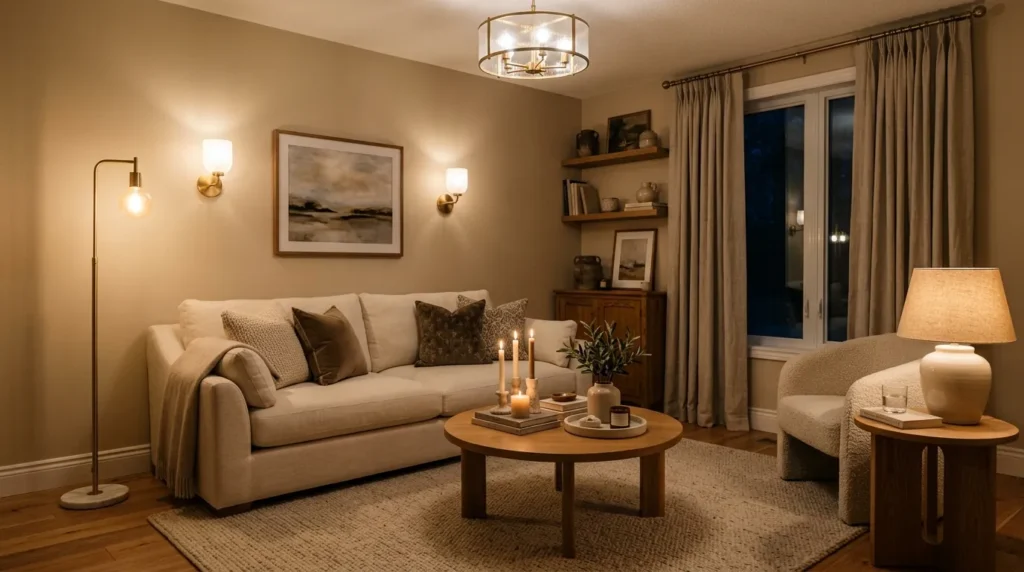
Lighting influences how spacious a room appears just as much as furniture placement. Relying on a single ceiling fixture often creates harsh shadows that make a compact living room feel smaller. Layering different light sources spreads illumination evenly throughout the room, adding dimension and warmth. I’ve found that combining ambient, task, and accent lighting creates a comfortable environment that feels inviting throughout the day and into the evening.
How To Style It
Combine a ceiling fixture with a slim floor lamp, stylish table lamp, and wall sconces if possible. Use warm white LED bulbs to create a soft glow that complements neutral interiors. Position lighting near reading chairs, shelving, and darker corners to eliminate shadows. Finish with candles or rechargeable accent lights for additional warmth that instantly makes the room feel more luxurious and welcoming.
6. Slim Furniture
Quick Benefits
- Saves valuable floor space
- Creates a lighter visual appearance
- Improves movement around the room
- Makes layouts feel less crowded
- Gives a modern designer-inspired look
Why It Works
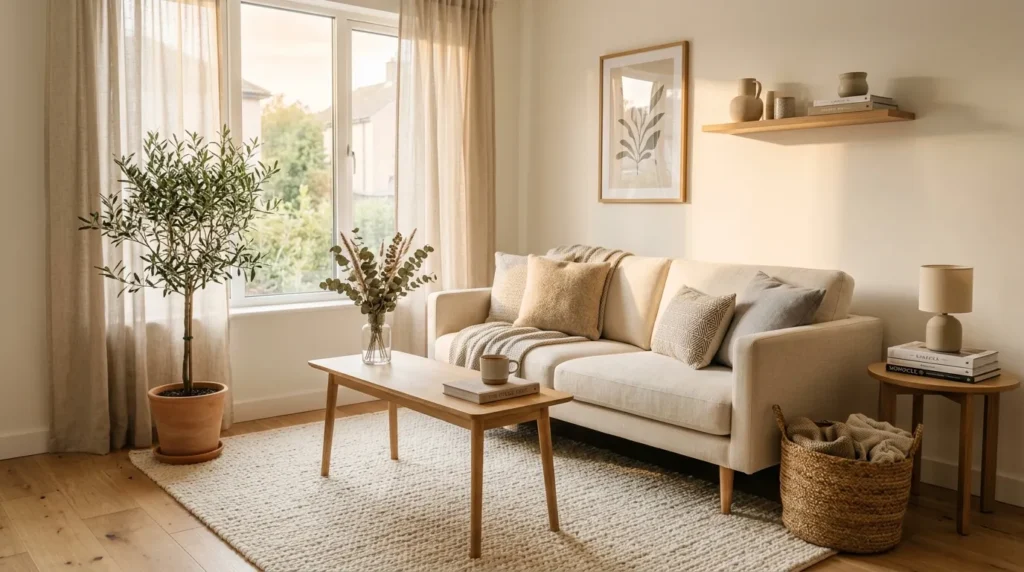
Oversized furniture can quickly overwhelm a compact living room, even if the room is beautifully decorated. One simple trick I always suggest is choosing pieces with slimmer frames, narrow arms, and exposed legs. Furniture that appears visually lighter allows more of the floor to remain visible, which naturally makes the room feel larger. Many modern and Scandinavian-inspired designs are created with this principle in mind, making them perfect for smaller homes without sacrificing comfort.
How To Style It
Look for sofas with clean lines, slim armrests, and raised wooden or metal legs. Pair them with compact side tables, nesting tables, or a narrow console behind the sofa. Avoid oversized recliners or bulky coffee tables that dominate the room. Instead, focus on furniture that fits the scale of the space while still providing everyday comfort. Finish with textured cushions and a soft throw blanket to create warmth without visual clutter.
7. Large Mirror Focus
Quick Benefits
- Reflects natural light beautifully
- Makes the room appear larger
- Adds elegance and depth
- Brightens darker corners
- Creates a luxurious focal point
Why It Works
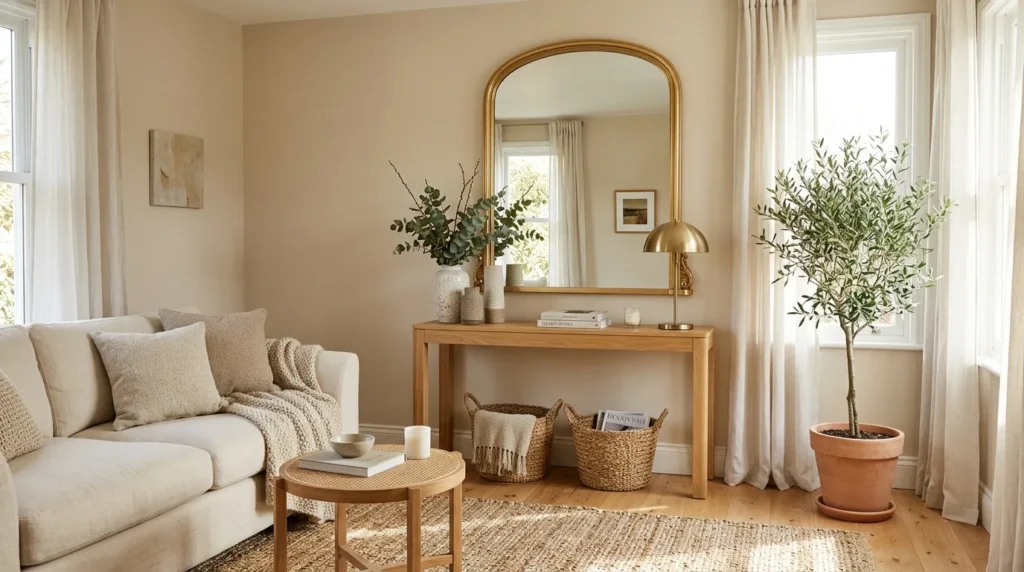
Mirrors have long been one of the most effective decorating tools for small spaces. They reflect both light and surrounding décor, creating the illusion of additional square footage. I’ve seen a single oversized mirror completely transform compact living rooms by adding depth where none existed before. Whether positioned across from a window or above a console table, mirrors instantly make interiors feel brighter, more open, and more inviting.
How To Style It
Choose one oversized mirror instead of several smaller ones to avoid visual clutter. A black metal frame works well in modern homes, while gold or natural wood frames complement traditional and transitional interiors. Position the mirror where it reflects natural light or a beautiful decorative vignette. Pair it with a console table, greenery, candles, or ceramic accessories for a balanced and sophisticated arrangement.
8. Cozy Textures
Quick Benefits
- Adds warmth without clutter
- Makes the room feel inviting
- Creates visual depth
- Enhances comfort
- Elevates simple neutral décor
Why It Works
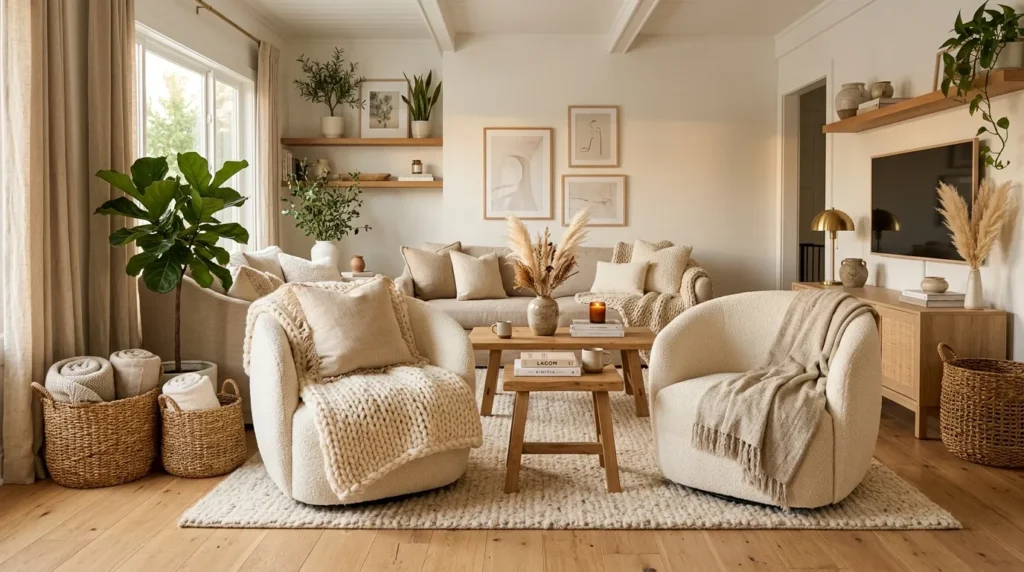
Small living rooms often rely on neutral colors, but without texture they can feel flat or unfinished. Layering different materials creates richness while maintaining a calm color palette. That’s why many designers recommend combining woven fabrics, natural wood, linen, boucle, cotton, wool, and soft knits. Instead of adding more decorative objects, texture provides visual interest in a subtle, timeless way that keeps the room feeling comfortable and welcoming.
How To Style It
Mix a chunky knit throw with linen cushions, a woven rug, boucle accent chair, wooden furniture, and natural baskets. Add ceramic vases, dried pampas grass, or fresh greenery for additional softness. Keep the color palette consistent using shades of cream, beige, ivory, taupe, and warm wood to create a layered look that feels luxurious without overwhelming the space.
9. Hidden Storage
Quick Benefits
- Reduces everyday clutter
- Keeps surfaces clean
- Maximizes every inch
- Makes cleaning easier
- Improves daily organization
Why It Works
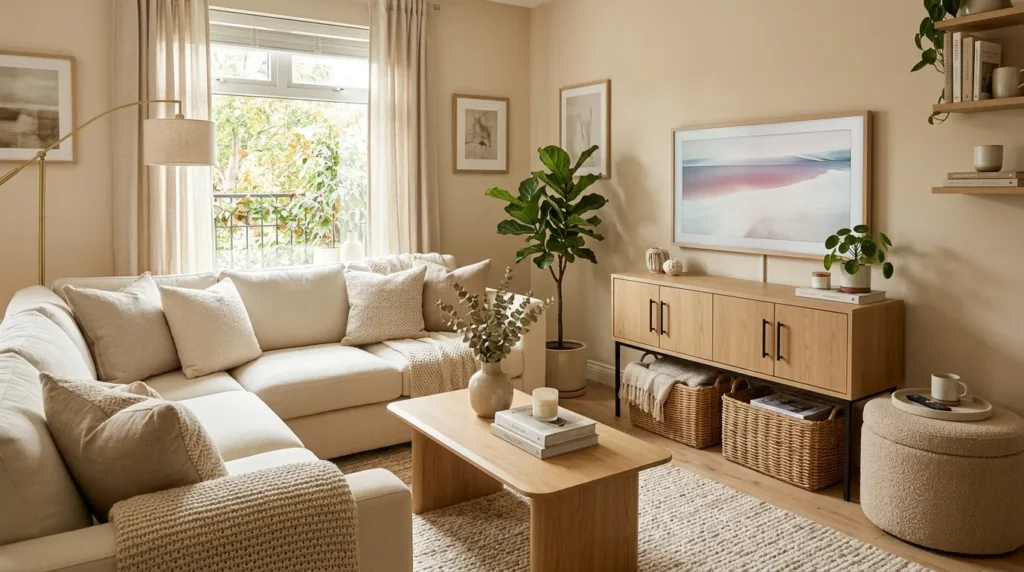
A clutter-free room almost always feels larger than one filled with visible storage bins and everyday items. Hidden storage helps maintain a clean appearance while keeping essentials close at hand. In my experience, this is one of the easiest upgrades for families, apartment dwellers, and anyone working with limited square footage. Concealed storage allows decorative elements to shine without sacrificing functionality.
How To Style It
Incorporate storage ottomans, coffee tables with concealed compartments, TV consoles with closed cabinets, decorative baskets, and benches with lift-up seating. Keep frequently used items like blankets, remotes, magazines, or board games tucked away but easily accessible. Stick to matching baskets and storage boxes to create a polished, cohesive look throughout the room.
10. Defined Zones
Quick Benefits
- Makes layouts feel organized
- Creates better functionality
- Improves furniture placement
- Adds visual balance
- Works well in open-concept homes
Why It Works
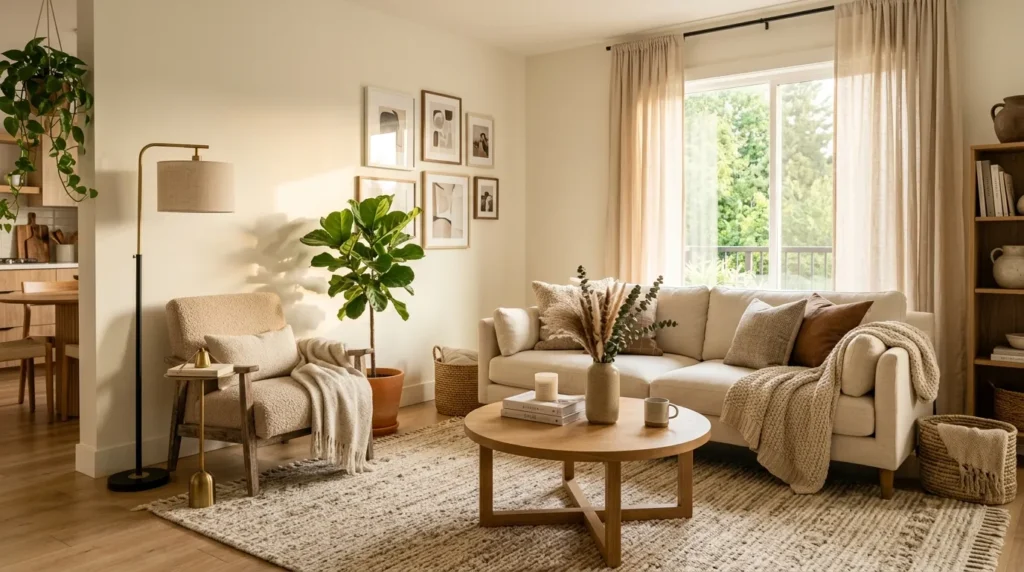
Even the smallest living room benefits from having clearly defined areas. Creating separate zones for relaxing, reading, entertaining, or working helps the room feel intentional rather than crowded. Instead of relying on walls, furniture placement, rugs, lighting, and decorative accents naturally separate each function. This technique is especially effective in apartments and open-concept homes where multiple activities take place in the same room.
How To Style It
Anchor your seating arrangement with an appropriately sized area rug, then use lighting, side tables, or accent chairs to define each area. A reading chair beside a floor lamp instantly creates a cozy reading corner, while a narrow console behind the sofa subtly separates the living area from nearby spaces. Keep pathways open so each zone feels connected without becoming cluttered.
Frequently Asked Questions
How can I make a small living room look bigger?
The easiest way is to combine light wall colors, properly scaled furniture, layered lighting, and mirrors that reflect natural light. Keeping clutter to a minimum and using furniture with exposed legs also creates a more open, spacious appearance without requiring renovations.
What colors work best in a small living room?
Warm white, cream, beige, greige, soft taupe, and light gray are excellent choices because they reflect light and create an airy atmosphere. You can introduce color through pillows, artwork, throws, and plants while keeping the overall palette bright and balanced.
Should furniture be placed against the wall?
Not always. Leaving a small gap behind larger furniture pieces often makes the room feel more thoughtfully designed. Floating furniture can improve traffic flow and create better visual balance, especially when paired with a properly sized area rug.
What type of furniture is best for compact spaces?
Furniture with slim profiles, raised legs, hidden storage, and multiple functions works especially well. Pieces that are scaled appropriately for the room provide comfort without overwhelming the available floor space.
Are rugs a good idea in a small living room?
Yes. A correctly sized rug helps define the seating area and visually connects the furniture. Choosing a rug that extends beneath the front legs of your seating creates a cohesive layout that actually makes the room appear larger.
How do I decorate without creating clutter?
Focus on quality rather than quantity. Use a limited number of decorative accessories, incorporate natural textures, choose multi-functional furniture, and keep everyday items stored out of sight. This approach creates a stylish room that still feels calm and spacious.
Conclusion
A small living room doesn’t have to feel limiting. With thoughtful furniture choices, smart storage solutions, balanced lighting, and carefully layered textures, even the most compact space can become comfortable, functional, and beautifully styled. Often, it’s the smallest design adjustments—like choosing slim furniture, adding a large mirror, or using vertical storage—that make the biggest difference.
Rather than trying to fit everything into one room, focus on selecting pieces that truly serve your lifestyle while maintaining an open and welcoming atmosphere. Prioritize comfort, keep clutter under control, and let each decorative element have a purpose.
Remember, creating a beautiful home isn’t about having more space—it’s about making the most of the space you already have. Start with one or two of these ideas, build your room gradually, and you’ll create a living area that feels stylish, inviting, and perfectly suited to everyday living.