

10 Japandi Bedroom Ideas That Feel Cozy and Minimal
A bedroom has one job above all else: to help you actually rest. A mistake many homeowners make is treating the bedroom like every other room in the house, filling it with the same amount of furniture, color, and decor as a living room, when in reality, a bedroom benefits more than almost any other space from restraint. Japandi design, with its blend of Japanese simplicity and Scandinavian warmth, happens to be one of the most naturally suited styles for exactly this kind of restful space.
In my experience, the bedrooms that feel both cozy and genuinely calming share a similar formula: a low, grounded bed, soft natural textiles, warm but minimal lighting, and just enough personality to feel like home without tipping into visual clutter. This isn’t about creating a stark, empty room — it’s about being intentional with every piece so that nothing in the space works against the goal of actual rest.
This guide walks through ten specific ideas for building a Japandi bedroom that balances minimalism with genuine coziness, along with the reasoning and practical styling advice behind each one. Whether you’re furnishing a bedroom from scratch or gradually simplifying an existing space, each idea includes concrete guidance you can put to use.
If you’re anything like me, you’ve probably noticed that some bedrooms feel instantly more restful than others, even before you factor in the mattress. These ten ideas get at exactly why that is.
Table of Contents
- Low Platform Bed Frame — Grounding the room’s largest piece of furniture.
- Layered Neutral Bedding — Building warmth through texture, not color.
- Paper Shade Bedside Lighting — Softening light for a calmer evening routine.
- Hidden Closet Storage — Keeping visual clutter out of the sleeping space.
- Minimal Headboard Alternative — Choosing simplicity over a bulky frame.
- Woven Blackout Curtains — Balancing function with natural texture.
- Ceramic Bedside Styling — Adding quiet character in small doses.
- Warm Wood Nightstands — Selecting furniture that grounds the room.
- Floor-Level Seating Nook — Creating a small spot to unwind.
- Soft Textured Area Rug — Adding warmth underfoot without visual noise.
1. Low Platform Bed Frame
Quick Benefits
- Establishes the room’s grounded, calming proportions
- Creates more visual openness overhead
- Reflects traditional Japanese furniture scale
- Pairs naturally with minimal bedding and decor
- Works well in both small and large bedrooms
Why It Works
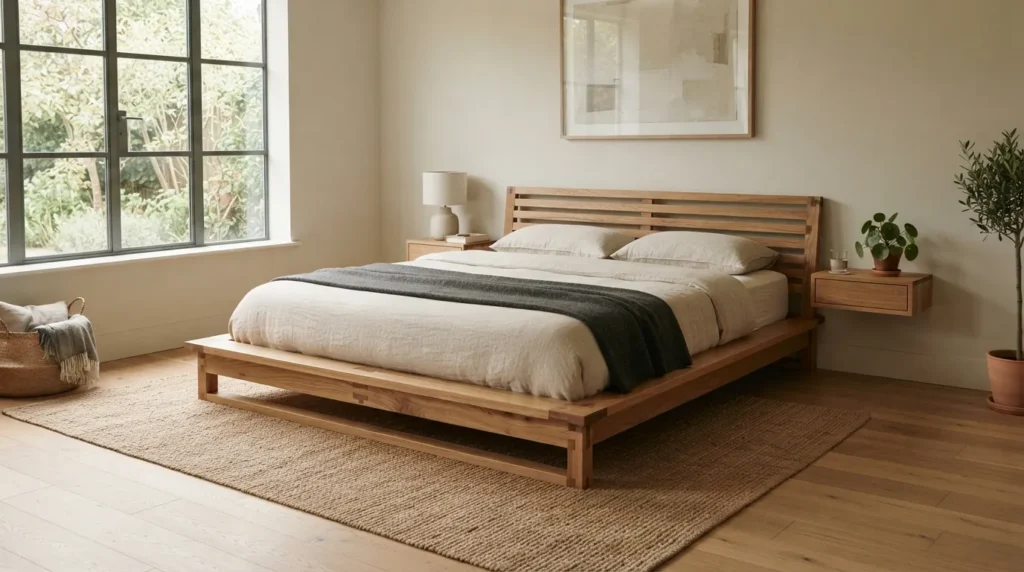
The bed is the largest and most visually dominant piece of furniture in any bedroom, which makes its silhouette especially important in setting the tone for the entire room. A low platform bed, sitting noticeably closer to the floor than a standard Western bed frame, immediately establishes the grounded, calm proportions central to Japandi design. A mistake many homeowners make is keeping a tall, bulky bed frame while trying to achieve this style elsewhere in the room, which works against the sense of openness a lower bed naturally creates.
How To Style It
Choose a platform bed frame in a natural wood tone, ideally without a tall, ornate headboard, with a mattress height that sits close to 12 to 16 inches off the floor. Look for frames with simple, exposed wood joinery rather than upholstered or heavily padded designs, since visible natural material reinforces the room’s overall honesty of construction. This lower proportion also makes the ceiling feel higher by comparison, which contributes to the room’s sense of calm, open space.
2. Layered Neutral Bedding
Quick Benefits
- Adds genuine coziness without visual clutter
- Reflects both Scandinavian hygge and natural material principles
- Provides texture variation within a restrained palette
- Works well across seasons with simple swaps
- Elevates the bed as the room’s central, soft focal point
Why It Works
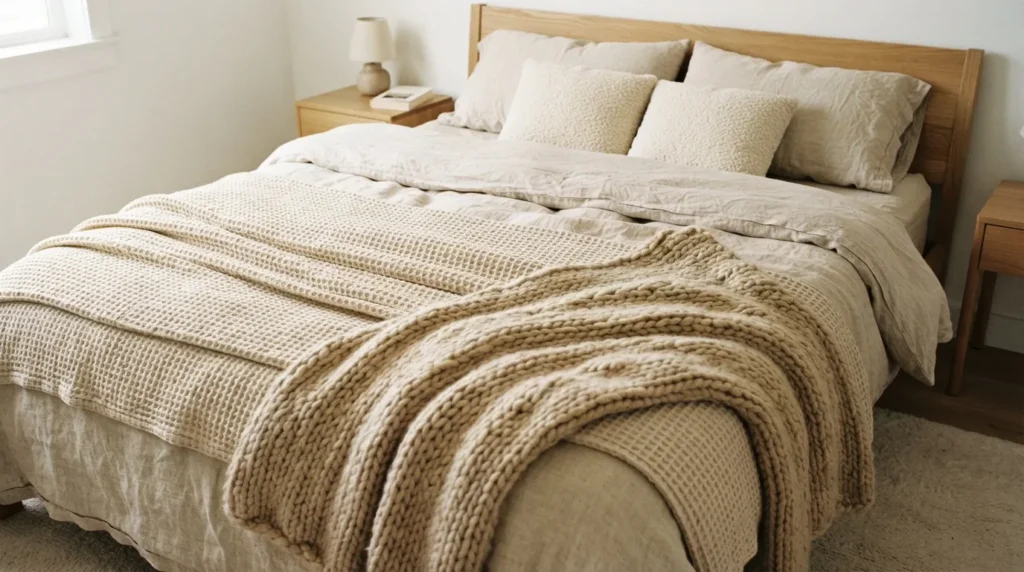
Coziness in a Japandi bedroom comes primarily from texture rather than color or pattern, which is why layered neutral bedding is such an essential element. One thing that works especially well is combining two or three different textile weights and textures — a lightweight linen sheet, a waffle-weave blanket, a chunkier knit throw — all within a narrow, muted color range. This approach delivers genuine warmth and softness without introducing the visual busyness that a patterned or brightly colored bedding set would bring.
How To Style It
Choose linen or cotton sheets in a soft, warm neutral tone, layering a waffle-weave or knit blanket at the foot of the bed for texture and visual interest. Add two or three pillows in slightly varying but complementary neutral tones, avoiding a perfectly matched set in favor of subtle tonal variation. Swap the heavier throw blanket seasonally, using a lighter linen coverlet in warmer months and a chunkier knit or wool blanket in cooler ones, while keeping the base bedding consistent year-round.
3. Paper Shade Bedside Lighting
Quick Benefits
- Creates a soft, calming glow for evening routines
- Reflects traditional Japanese lantern-style lighting
- Avoids harsh, bright light before sleep
- Adds a gentle, sculptural design element
- Works well on both nightstands or as a floor lamp
Why It Works
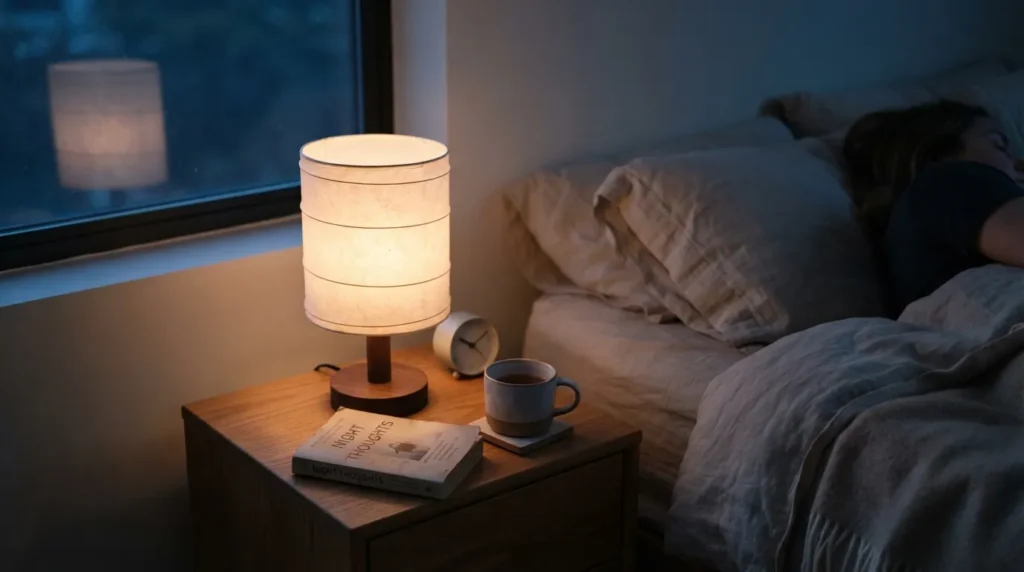
Bright, direct lighting right before bed can work against the body’s natural wind-down process, which is part of why Japandi bedrooms favor soft, diffused light sources over standard bright bulbs and exposed fixtures. A mistake many homeowners make is using the same bright, functional lighting in the bedroom as in the rest of the house, missing an easy opportunity to create a more calming evening atmosphere specifically suited to this room’s purpose. Paper or rice-paper-style shades diffuse light gently, supporting a genuinely restful mood.
How To Style It
Choose bedside lamps with paper, linen, or rice-paper-inspired shades, paired with warm-toned bulbs in the lower range, closer to 2700K, for the softest possible glow. A small floor lamp with a similar diffused shade works well if nightstand space is limited or if a more sculptural lighting element is preferred. Position these lights at a lower height in keeping with the room’s overall low furniture proportions, avoiding tall, bright floor lamps that would compete with the calming mood.
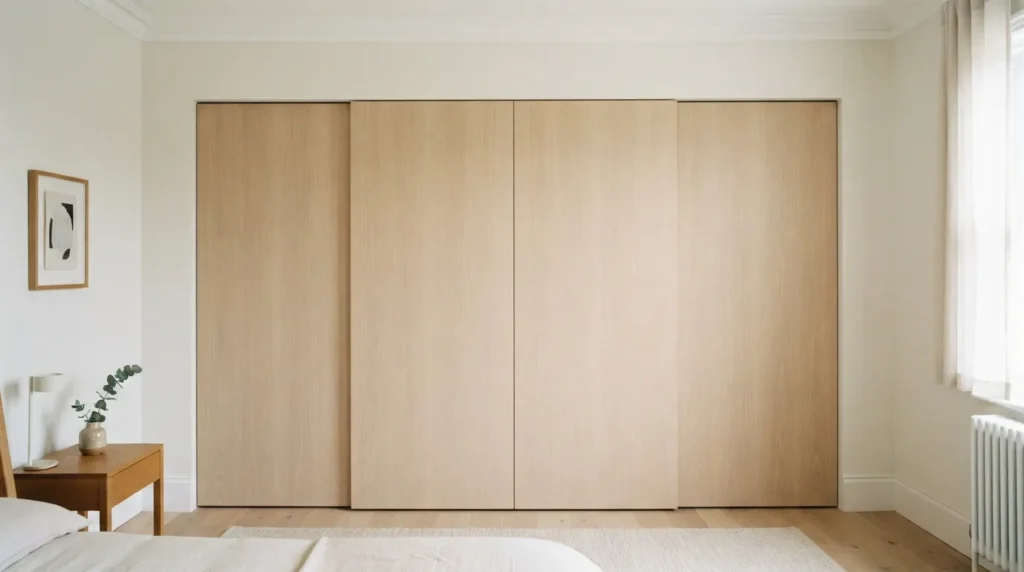
4. Hidden Closet Storage
Quick Benefits
- Removes visual clutter from the sleeping space
- Supports the room’s overall sense of calm
- Provides ample storage without bulky furniture
- Works well with sliding or simple flush doors
- Keeps daily items organized and out of sight
Why It Works
Visible clutter, even something as simple as an open closet with visible clothing, can quietly work against a bedroom’s sense of calm, which is why Japandi bedrooms typically favor closed, minimal storage solutions. A mistake many homeowners make is leaving closets open or using freestanding wardrobes with ornate detailing, both of which introduce more visual complexity than the room’s overall restraint calls for. Simple, flush storage solutions keep the room’s focus on rest rather than on managing visible belongings.
How To Style It
Choose closet doors with a simple, flush design in a natural wood tone or a matching wall color, avoiding paneled or ornately detailed doors that introduce unnecessary visual texture. A sliding door design works particularly well in smaller bedrooms, since it doesn’t require floor space to swing open. If a freestanding wardrobe is necessary, choose one with simple, clean lines in a light wood tone that complements the bed frame, keeping the piece as visually quiet as possible.
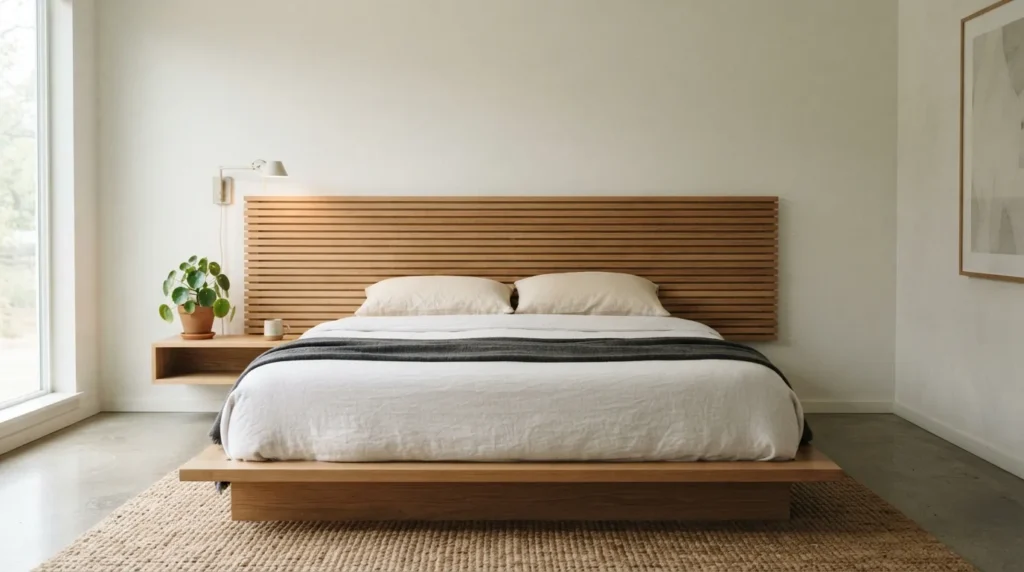
5. Minimal Headboard Alternative
Quick Benefits
- Reduces visual bulk behind the bed
- Provides a simpler, more architectural focal point
- Pairs naturally with a low platform bed frame
- Adds subtle texture without heavy upholstery
- Works well with a variety of wall treatments
Why It Works
A traditional, heavily upholstered headboard can add visual weight and bulk that works against the low, minimal proportions central to a Japandi bedroom. A mistake many homeowners make is defaulting to a tall, padded headboard out of habit, missing the opportunity to use a simpler alternative, like a low wood panel, a woven screen, or even a single piece of art, to define the space behind the bed with far less visual weight. This substitution reinforces the room’s overall restraint while still providing a defined focal point.
How To Style It
Choose a low wood slat panel or a simple woven screen mounted behind the bed at a height that doesn’t exceed the top of a standard mattress by more than a foot or so. Alternatively, forgo a headboard entirely and use a single piece of art or a woven wall hanging centered above the bed to create a similar visual anchor. Keep whatever option you choose consistent with the room’s natural material palette, favoring wood, woven fiber, or simple textile over anything heavily padded or glossy.
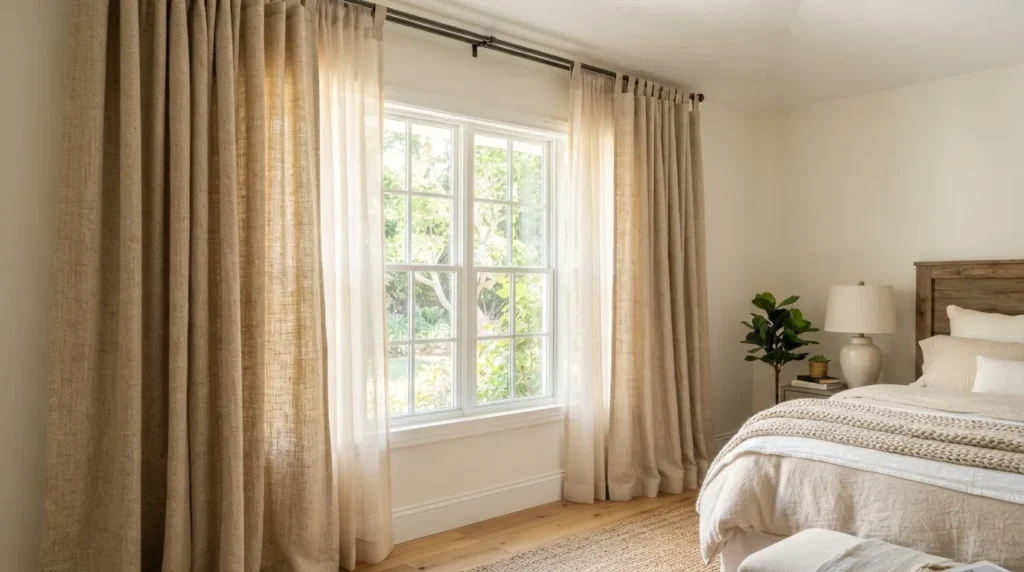
6. Woven Blackout Curtains
Quick Benefits
- Balances function with natural texture
- Supports better sleep through effective light control
- Reinforces the room’s material palette even at the window
- Adds softness to hard architectural lines
- Works well layered with a sheer panel for daytime
Why It Works
Blackout curtains are a practical necessity for many bedrooms, but they don’t have to sacrifice the room’s natural material story to be functional. A mistake many homeowners make is choosing a purely synthetic, glossy blackout fabric for practicality alone, missing the option of a woven-textured blackout curtain that still supports full light control while contributing genuine texture to the room. This detail matters more than it might seem, since curtains cover a significant visual area of most bedrooms.
How To Style It
Choose blackout curtains with a woven, linen-like texture in a warm neutral tone, rather than a smooth, synthetic finish, to maintain consistency with the room’s overall material palette. Layer a sheer linen panel beneath the blackout curtain for daytime use, allowing soft natural light to filter through when full darkness isn’t needed. Hang the curtains close to the ceiling, well above the window frame, to maintain the same sense of height and openness found elsewhere in the room’s design.
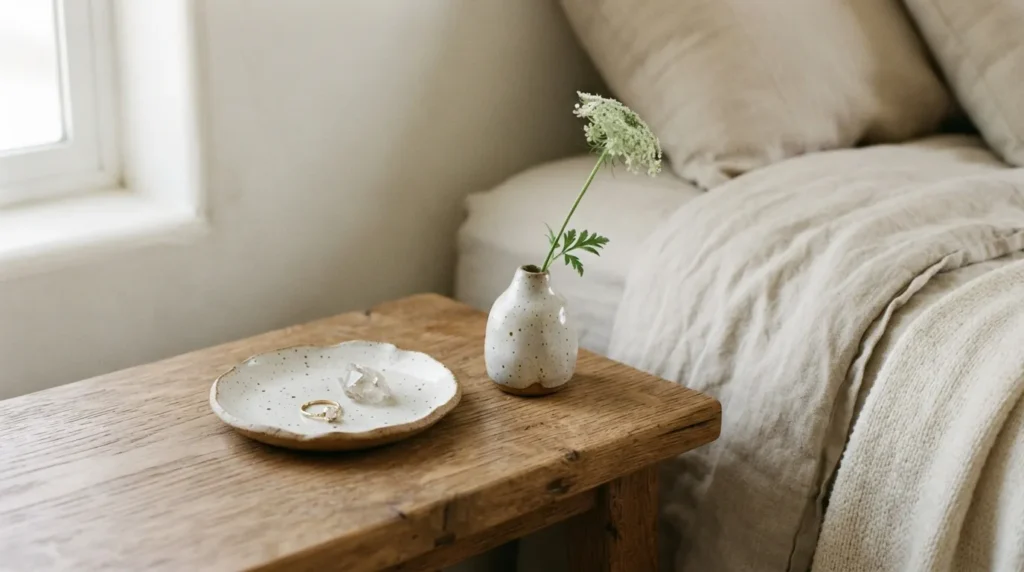
7. Ceramic Bedside Styling
Quick Benefits
- Adds quiet character in small, manageable doses
- Reflects the wabi-sabi appreciation for handmade objects
- Provides functional storage for small items
- Works well paired with minimal nightstand styling
- Elevates the space without adding visual clutter
Why It Works
A single ceramic piece on the nightstand — a small dish, a simple vase, a textured mug — introduces the handcrafted warmth central to Japandi design without adding meaningful clutter to a surface that should stay largely clear. I’ve noticed that even one well-chosen ceramic object can carry a surprising amount of visual weight and personality in an otherwise minimal bedroom, precisely because it isn’t competing with a dozen other decorative items for attention.
How To Style It
Choose one ceramic piece per nightstand, such as a small dish for jewelry or glasses, or a simple bud vase with a single stem, favoring a matte glaze and slightly irregular, handmade shape over a perfectly uniform, glossy finish. Keep this the primary decorative object on the surface, alongside only functional items like a lamp and perhaps a single book. This restraint ensures the ceramic piece actually gets noticed and appreciated rather than blending into a busier surface.
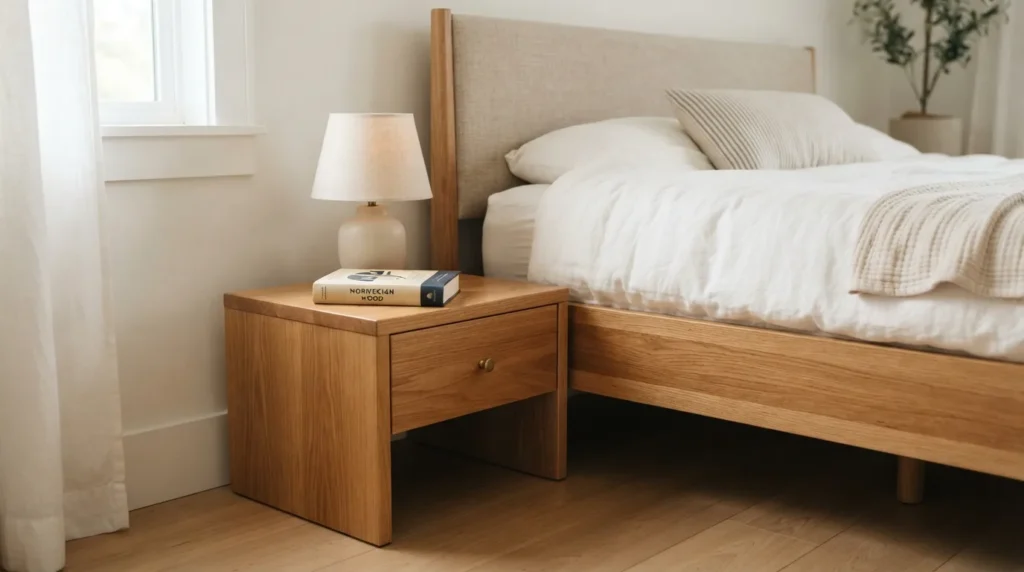
8. Warm Wood Nightstands
Quick Benefits
- Grounds the bed with matching natural material
- Provides essential bedside storage and surface space
- Reinforces the room’s overall wood tone consistency
- Works well in a low, simple silhouette
- Complements both platform beds and minimal headboards
Why It Works
Nightstands play a significant supporting role in the bedroom’s overall material story, and choosing pieces in a warm, natural wood tone that complements the bed frame reinforces the sense of cohesion central to Japandi design. A mistake many homeowners make is choosing mismatched nightstands in a different material or finish than the bed frame, which can undercut the intentional, considered feeling the rest of the room works to establish. Simple, low nightstands in a matching or complementary wood tone tie the whole sleeping area together.
How To Style It
Choose nightstands in the same or a very similar wood tone to the bed frame, with a simple, low profile and clean lines rather than ornate detailing or heavy hardware. A single drawer or small open shelf provides enough storage for everyday bedside items without adding unnecessary bulk. Keep the nightstand height roughly level with or slightly below the top of the mattress, maintaining the room’s overall low, grounded furniture proportions.
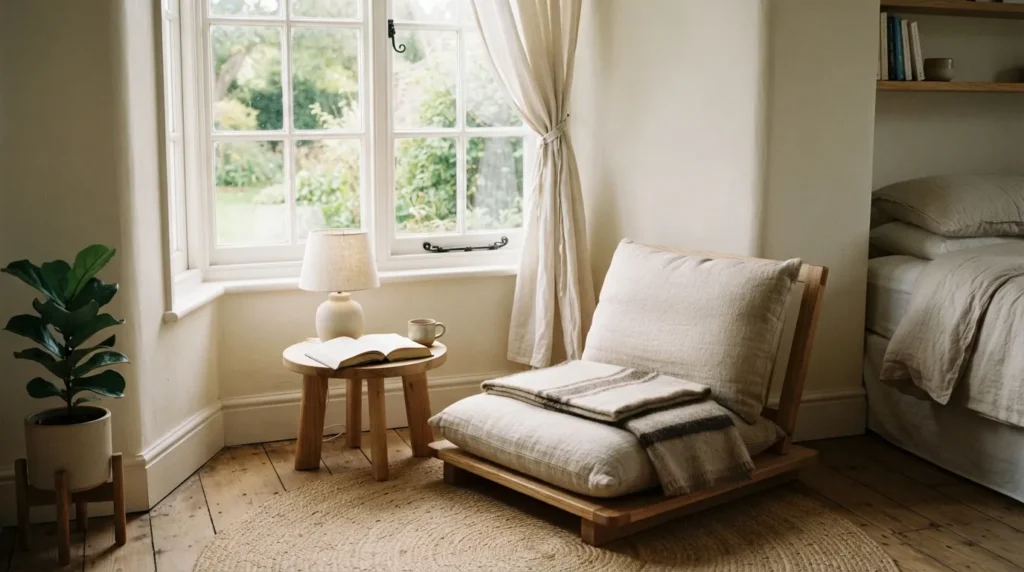
9. Floor-Level Seating Nook
Quick Benefits
- Adds a small, dedicated spot to unwind before sleep
- Reinforces the room’s low, grounded furniture scale
- Works well even in smaller bedrooms
- Provides a place to read or journal outside of bed
- Complements the room’s overall calm, restful purpose
Why It Works
A small seating area, separate from the bed itself, gives the bedroom an additional function beyond sleep — a place to read, journal, or simply sit quietly before winding down for the night. A mistake many homeowners make is filling every spare corner of a bedroom with additional storage or furniture, missing the opportunity to carve out even a small nook dedicated purely to rest and reflection. This kind of space reinforces the room’s overall purpose as a genuine retreat.
How To Style It
Choose a low chair or a floor cushion paired with a small side table, positioned in a corner or near a window, away from the main sleeping area. Add a small reading lamp with a soft, diffused shade and a woven basket for current books nearby. Keep this nook simply styled, resisting the urge to add much beyond the essentials, since its value comes from the quiet space itself rather than from additional decor.
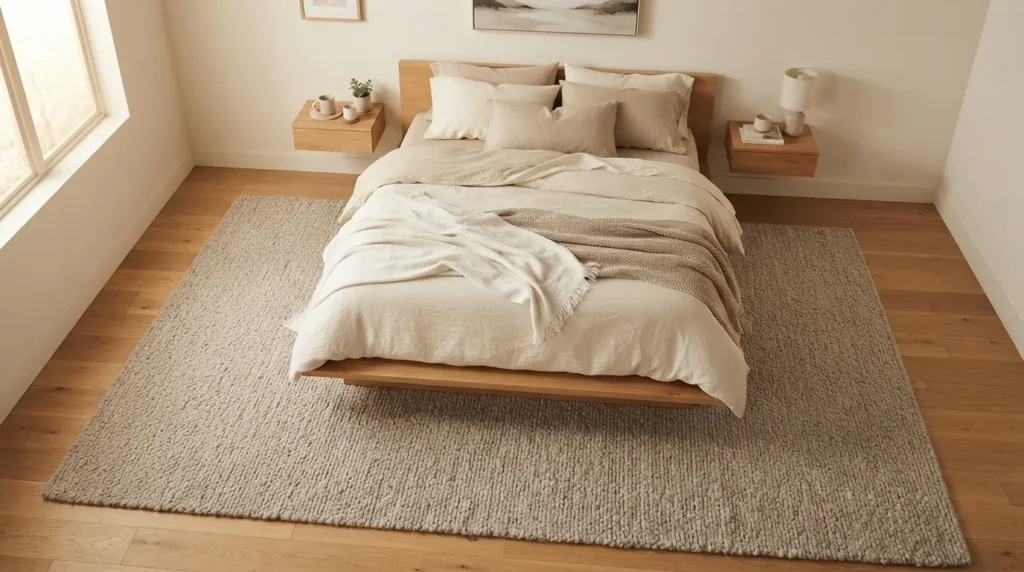
10. Soft Textured Area Rug
Quick Benefits
- Adds warmth underfoot, especially on cooler mornings
- Introduces texture without visual noise
- Anchors the bed within the room’s overall layout
- Reflects the room’s natural material palette
- Provides a soft landing point for bare feet
Why It Works
A soft, textured area rug beneath or beside the bed adds a layer of physical comfort that pairs well with the room’s overall visual restraint, ensuring the space feels genuinely cozy rather than just aesthetically minimal. A mistake many homeowners make is choosing a flat, low-pile rug purely for its clean look, missing the tactile comfort that a slightly higher pile or a natural wool weave can provide, especially for bare feet stepping out of bed. This small detail contributes meaningfully to the room’s everyday livability.
How To Style It
Choose a rug in a natural wool or a soft, textured weave, in a muted, neutral tone that complements rather than competes with the room’s overall palette. Size the rug so it extends at least 18 to 24 inches beyond each side of the bed, ensuring bare feet land on something soft when getting in or out of bed. Keep the pattern simple or entirely solid, allowing the rug’s texture rather than a busy design to provide the room’s visual interest at floor level.
Frequently Asked Questions
Can a Japandi bedroom still feel warm and cozy, not just minimal?
Yes, and that balance is central to the style. Layered natural textiles, warm wood tones, and soft, diffused lighting all contribute genuine coziness, while the room’s restraint in color and clutter keeps it feeling calm rather than sparse or cold.
Is a low platform bed comfortable for everyone?
Most people adjust to a low platform bed easily, though those with mobility concerns may find a slightly higher platform more comfortable for getting in and out of bed. Choosing a platform in the higher end of the low-profile range, around 14 to 16 inches, can help balance the aesthetic with practical comfort.
What colors work best in a Japandi bedroom?
Warm neutrals dominate, including soft beige, warm white, and muted clay tones, with deeper accents like charcoal or a muted forest green used sparingly through a single throw blanket or a piece of art rather than throughout the whole room.
Do I need to get rid of most of my furniture for this style to work?
Not necessarily, but editing down to only what’s genuinely needed is central to the aesthetic. A bed, one or two nightstands, and perhaps a small seating nook is typically enough furniture for a Japandi bedroom, with any additional storage kept hidden behind closed doors.
How do I make a small bedroom feel calm using Japandi principles?
Low furniture, a light neutral palette, and minimal decor all help a small bedroom feel more open and calm rather than cramped. Hidden storage, in particular, makes a significant difference in smaller rooms where visible clutter has an outsized effect on the perceived size of the space.
What kind of art works well in a Japandi bedroom?
Simple, muted pieces with organic or abstract subject matter tend to work best, such as botanical studies, abstract ink work, or textural fiber art. A single piece, given plenty of wall space around it, is generally preferred over a full gallery arrangement.
Is blackout fabric necessary for a Japandi bedroom, or does it clash with the natural aesthetic?
Blackout fabric doesn’t have to clash with the style. Choosing a woven, textured blackout curtain in a warm neutral tone allows for full light control while still supporting the room’s overall natural material palette.
Conclusion
A Japandi bedroom proves that minimal and cozy aren’t opposites — with the right balance of natural materials, soft layered textiles, and restrained styling, a room can feel both calm and genuinely warm at the same time. A low platform bed, layered neutral bedding, soft diffused lighting, and a few thoughtfully chosen ceramic accents all work together to create a space built specifically for rest.
Start with one or two ideas from this list and gradually build a space that reflects your style and supports everyday comfort. Whether that means swapping in a lower bed frame, layering in a chunkier knit throw for texture, or finally hiding away visible closet clutter, these choices compound into a bedroom that feels like a genuine retreat. The best Japandi bedrooms aren’t the emptiest ones — they’re the ones where every remaining piece earns its place by supporting real, restful sleep.
Related Articles
- Japandi Interior Ideas That Feel Calm And Luxurious
- Japandi Living Room Design Ideas You’ll Love
- Japandi Home Decor Ideas For A Peaceful Home
- Cozy Living Room Ideas For A Warm Home
- How To Layer Bedding For Better Sleep