10 Kitchen Cabinet Ideas That Transform Your Space
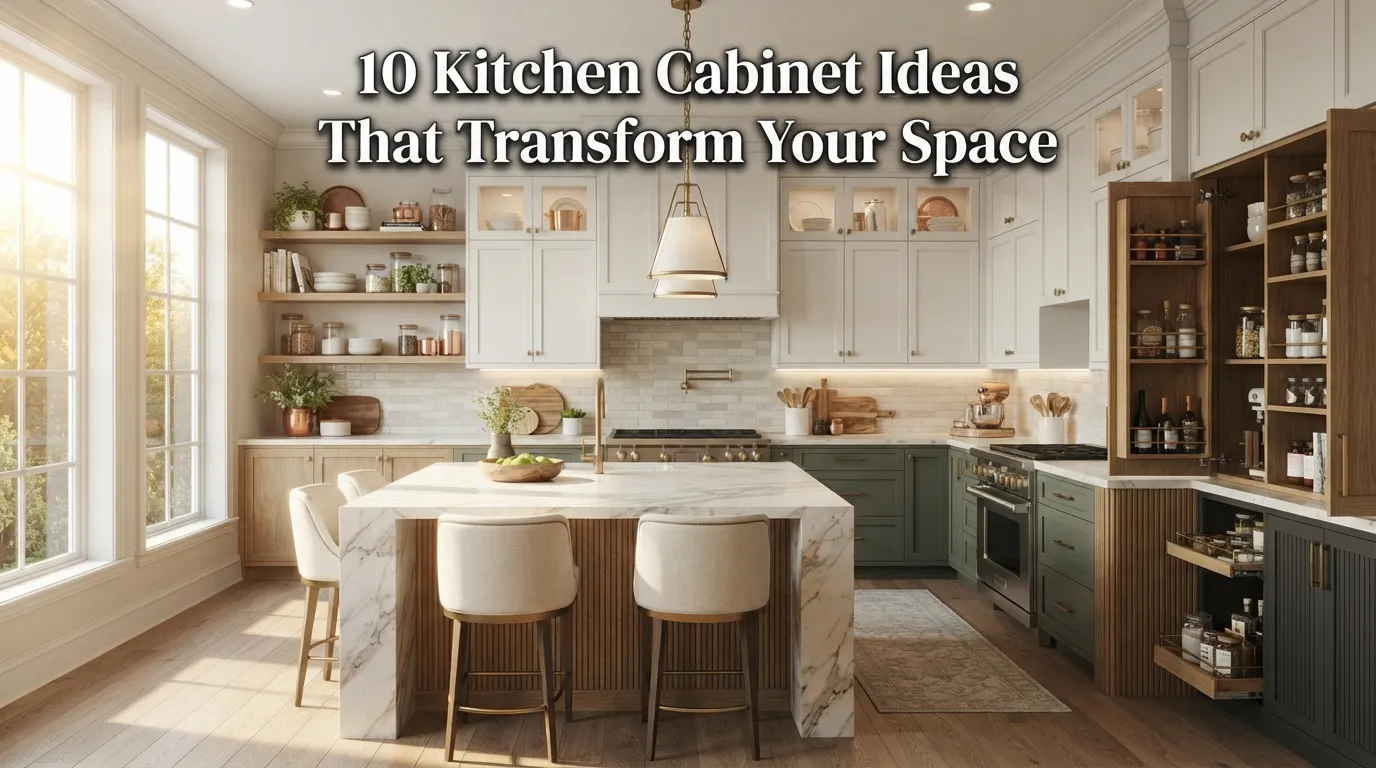
Kitchens have a funny way of becoming the absolute emotional center of a home, yet they are easily the hardest-working rooms we own. Over the years, I’ve noticed that while countertops and backsplashes get all the initial glory during a design refresh, it’s the cabinetry that ultimately anchors the space. It dictates the visual weight, the flow, and frankly, how much you enjoy prepping a meal on a chaotic Tuesday evening.
If you are anything like me, you’ve probably spent hours scrolling through gorgeous interior feeds, wondering how to bridge the gap between those breathtaking, magazine-worthy kitchens and the realities of everyday storage. The secret rarely lies in gutting the entire layout; more often than not, it is about making intentional, high-impact stylistic choices with your cabinetry. A mistake many homeowners make is treating cabinets as mere boxes with doors, missing out on the incredible architectural personality they can bring to a home.
Whether you are dealing with a compact galley kitchen that feels a bit claustrophobic or a large, sprawling open-concept space that lacks a distinct focal point, changing up your cabinet approach can completely rewrite the energy of your home. The right choices can make ceilings look soaring, dark corners feel flooded with light, and daily clutter magically disappear. In this deep dive, we are going to explore ten exceptionally beautiful, highly practical cabinetry concepts that masterfully balance modern functionality with timeless, livable style. Let’s look at the ideas that will make you fall in love with your kitchen all over again.
Table of Contents
- Earth Tone Greenery – A rich, nature-inspired palette that grounds your kitchen with organic warmth.
- Reclaimed Wood Texture – Bringing tactile history and architectural character to modern spaces.
- Fluted Glass Fronts – The perfect balance of visual lightness and concealed everyday storage.
- Deep Charcoal Contrast – A sophisticated, moody aesthetic that adds instant luxury and depth.
- Floating Open Shelving – Breaking up heavy upper cabinetry to create an airy, modern feel.
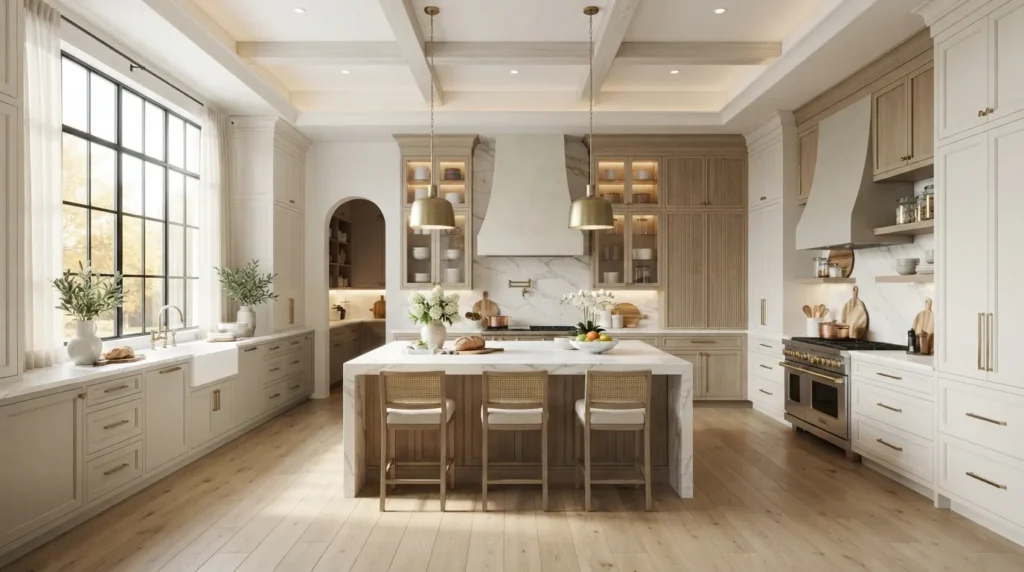
- Warm Cream Shaker – A softer, incredibly elegant alternative to stark white traditional kitchens.
- Inset Seamless Construction – Clean lines and high-end craftsmanship for a bespoke furniture feel.
- Muted Terracotta Warmth – A sun-drenched, earthy tone that fills the room with inviting energy.
- Mesh Metal Inserts – Industrial elegance meets classic detailing for a unique, semi-transparent look.
- Two Tone Dimension – Grounding the space with darker bases while keeping the upper eye-line bright.
1. Earth Tone Greenery
Quick Benefits
- Brings natural tranquility indoors
- Hides daily smudges effortlessly
- Pairs beautifully with warm metallics
- Creates an instant design focal point
- Complements diverse wood floor tones
Why It Works
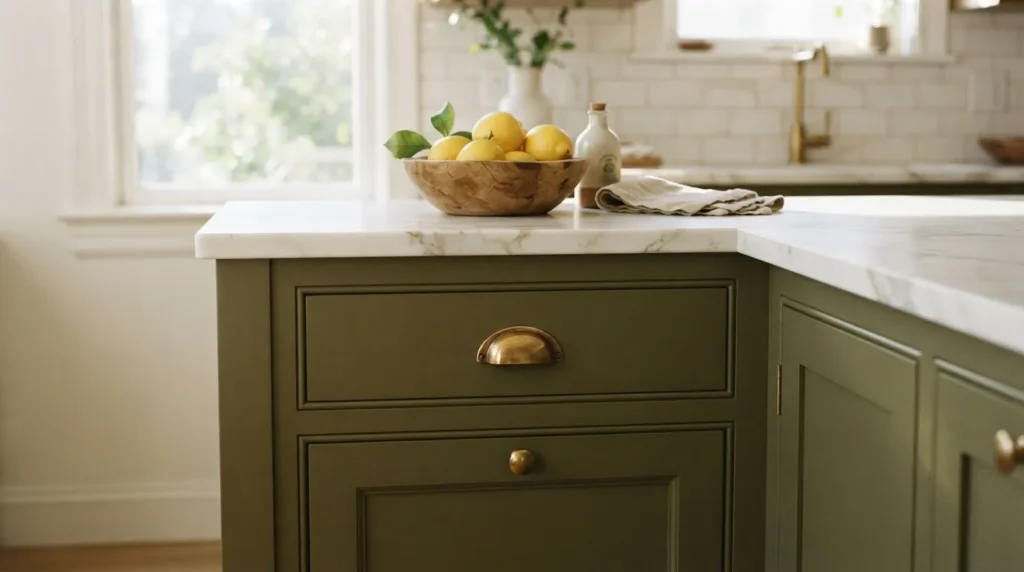
There is a distinct reason why design enthusiasts are moving away from sterile, all-white color stories and embracing rich, organic hues. In my experience, choosing an earth-toned green—like a velvety sage, muted olive, or deep forest hue—instantly grounds a kitchen, making it feel less like a sterile laboratory and more like a sanctuary. This color family functions beautifully as a “new neutral.” It provides a sophisticated splash of color while remaining deeply tied to nature, which prevents it from feeling dated as fleeting design trends shift. It establishes an incredibly soothing backdrop that elevates the entire mood of the house.
How To Style It
To execute this look with maximum visual impact, pair earth-toned green cabinets with unlacquered brass or warm copper hardware. The metallic warmth cuts through the cool undertones of the green spectacularly well. For countertops, choose a bright white quartzite or a classic honed marble with subtle grey or gold veining to keep the room feeling bright and airy. Incorporate elements like a raw white oak island or exposed overhead beams to echo the organic look. This approach thrives in rooms with plenty of natural light, which coaxes out the intricate undertones of the paint.
2. Reclaimed Wood Texture
Quick Benefits
- Conceals scratches and everyday wear
- Adds unmatched historic character
- Introduces beautiful tactile texture
- Works with modern or rustic styling
- Softens hard, cold kitchen surfaces
Why It Works
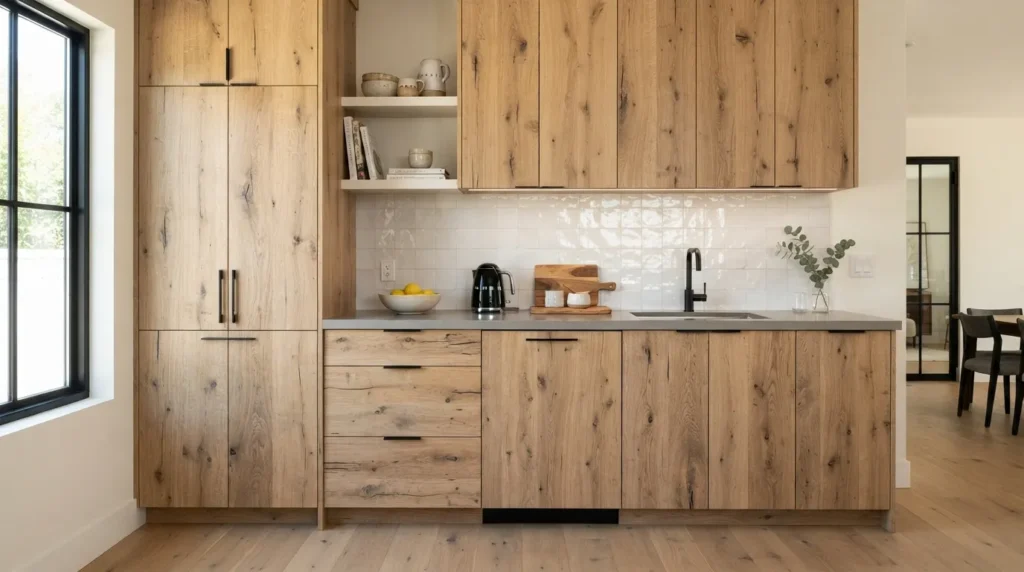
Kitchens are naturally full of hard, reflective surfaces—think polished stone, stainless steel appliances, and smooth glass backsplashes. One thing that works especially well to balance that coldness is the introduction of highly tactile, reclaimed wood cabinetry. The natural imperfections, varying grain patterns, and weathered patinas tell a beautiful visual story that brand-new materials simply cannot replicate. I’ve seen this idea transform spaces that felt cold and cavernous into rooms that feel instantly historic, cozy, and layered with architectural interest.
How To Style It
The key to styling raw, textured wood without making your kitchen look like a rustic log cabin is contrast. Keep your surrounding elements sleek, clean, and minimalist. Use flat-panel, slab-style doors for the reclaimed wood to maintain a modern silhouette. Pair these cabinets with matte black minimalist hardware and slim, solid-surface countertops in a solid concrete grey or pure white. A backsplash of simple, glossy white zellige tiles will reflect light across the room, balancing out the matte, absorbent nature of the weathered wood grains.
3. Fluted Glass Fronts
Quick Benefits
- Blurs messy cabinet contents beautifully
- Reflects ambient light across the room
- Breaks up heavy, solid upper cabinetry
- Adds a high-end, architectural detail
- Makes small layouts feel spacious
Why It Works
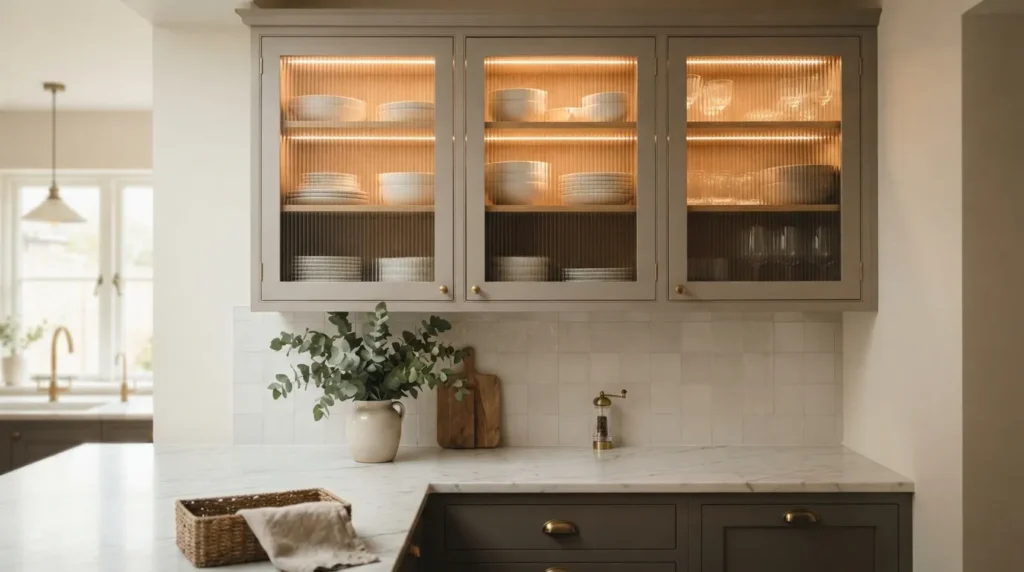
We all love the airy look of open display cabinets, but the reality of keeping everyday mismatched coffee mugs and plastic storage containers perfectly organized is exhausting. That’s why many designers recommend fluted glass fronts. The ribbed texture of the glass lets light pass through, which opens up the sightlines of your kitchen and makes small layouts feel double their size. However, the vertical ridges cleverly obscure the shapes and colors behind the glass, hiding your everyday clutter while maintaining a high-end look.
How To Style It
Use fluted glass on select upper cabinets, particularly those flanking a range hood or framing a large window, to create a sense of symmetry. Paint the structural cabinet frames a crisp, clean neutral to let the glass texture take center stage. Inside the cabinets, install integrated LED strip lighting along the front framework rather than the back; this illuminates the fluted ridges from within, creating a beautiful, soft glow during evening dinner parties. Keep hardware minimal with sleek, elongated pull bars.
4. Deep Charcoal Contrast
Quick Benefits
- Projects high-end, luxurious style
- Resists visible staining and prints
- Makes perimeter walls recede visually
- Provides an incredible artistic contrast
- Accents architectural details sharply
Why It Works
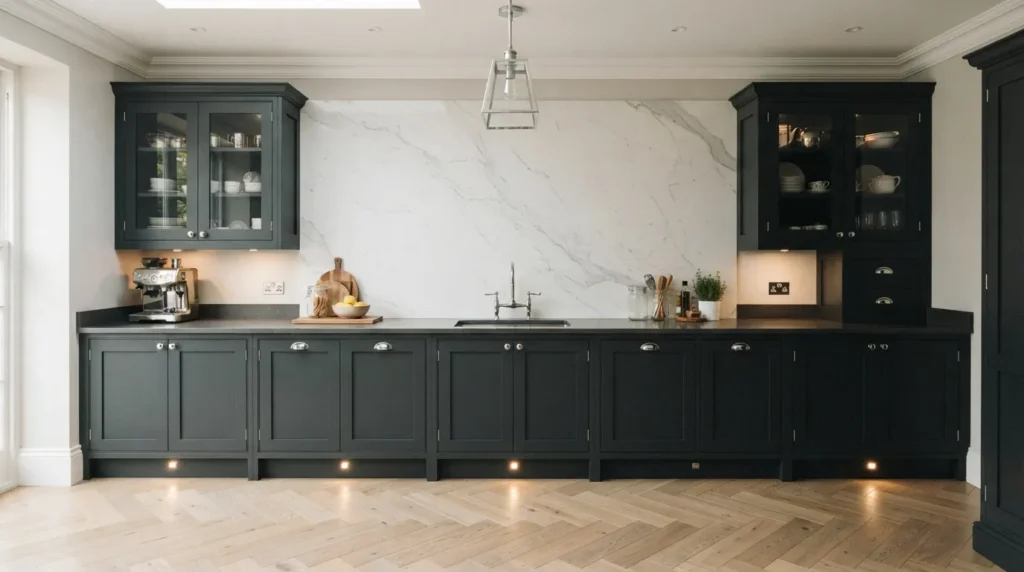
If you want to make an undeniably bold, luxurious architectural statement, deep charcoal is an unparalleled choice. Unlike a true pitch-black, which can sometimes absorb too much light and feel flat, charcoal features delicate blue, grey, or brown undertones that shift beautifully throughout the day. One simple trick I always suggest to people who are worried about dark colors is to remember that dark shades actually cause walls to visually recede. This can give a medium-sized kitchen a shocking amount of visual depth and sophisticated drama.
How To Style It
To keep a deep charcoal kitchen from feeling gloomy, balance the dark cabinetry with ultra-bright, reflective surroundings. Use a crisp white polished slab backsplash that runs all the way up to the ceiling, and pick light-colored flooring like a pale herringbone oak. For hardware, satin nickel or polished chrome offers a stunning, crisp contrast that looks incredibly tailored against the dark matte paint. Bring in warmth via accessories, such as large wooden cutting boards and ceramic bowls displayed on countertops.
5. Floating Open Shelving
Quick Benefits
- Delivers an airy, breathable layout
- Keeps frequently used items accessible
- Drastically lowers initial renovation costs
- Showcases curated, beautiful kitchen heirlooms
- Enhances the vertical height of walls
Why It Works
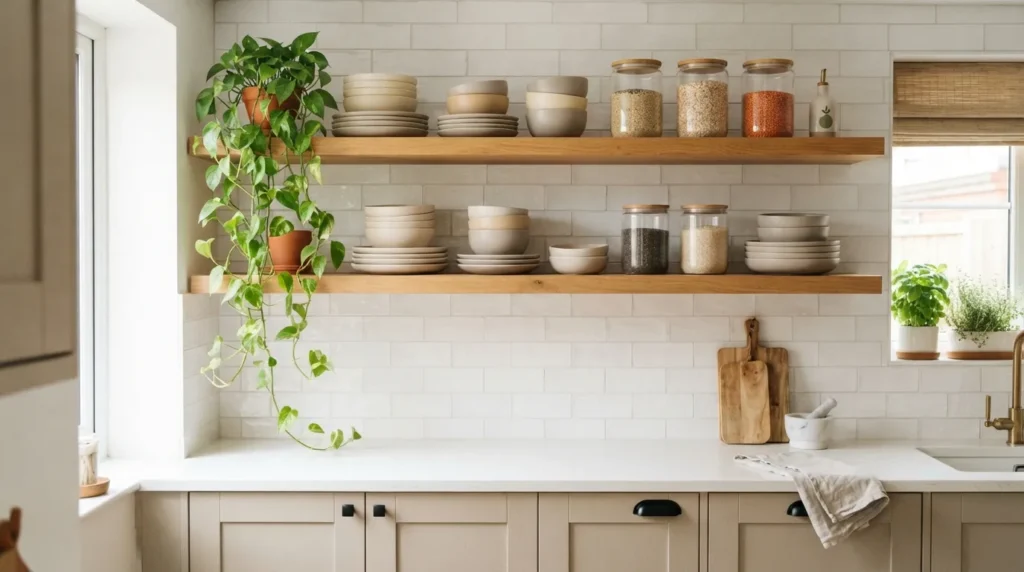
Traditional upper cabinets can occasionally enclose a kitchen, making the cooking zone feel cramped and boxed-in at eye level. Swapping out a portion of those heavy uppers for thick, floating open shelving changes the entire architecture of the room. It allows your backsplash tile to climb all the way to the ceiling, drawing the eyes upward and maximizing the illusion of vertical space. It’s an approach that appeals instantly to the lifestyle reader who loves a curated, intentional home that prioritizes quick access to beautiful everyday essentials.
How To Style It
To make open shelving practical and beautiful, limit shelves to areas near the dishwasher or stove for easy unloading and prepping. Choose thick wood slabs—at least two inches thick—in a finish that matches your kitchen island or floor. Style them using the “rule of threes,” mixing functional items like stacked neutral dinnerware and clear spice jars with purely decorative elements like a trailing pothos plant or a small framed oil painting. Keep the lower base cabinets enclosed to hide less attractive appliances.
6. Warm Cream Shaker
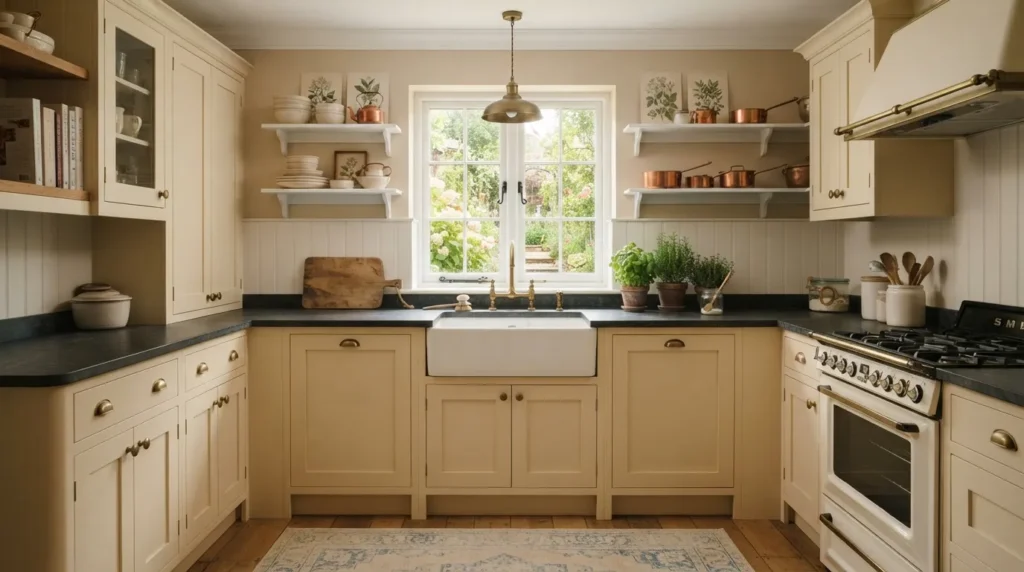
Quick Benefits
- Never goes out of style
- Feels much warmer than basic white
- Bridges traditional and modern tastes
- Reflects an immense amount of light
- Coordinates with any stone countertop
Why It Works
Pure, bright white kitchens had a massive moment over the past decade, but many homeowners found that crisp, blue-toned whites can quickly feel clinical under standard home lighting. Enter warm cream shaker cabinetry. Shaker doors offer a timeless, five-piece recessed panel design that works in virtually any architectural style of home. When executed in a rich cream with warm yellow or beige undertones, the cabinetry glows, creating a welcoming, sun-drenched environment that feels high-end and deeply inviting.
How To Style It
Warm cream is an incredibly versatile chameleon. To style it for a transitional look, select hardware in an oil-rubbed bronze or a matte antique gold. Pair the cabinetry with a classic soapstone countertop—the deep charcoal-black stone with white veining pops brilliantly against the cream base. If you prefer a brighter aesthetic, opt for a warm white marble lookalike quartz. Integrate a farmhouse apron-front sink to play up the classic, comforting heritage of the shaker style.
7. Inset Seamless Construction
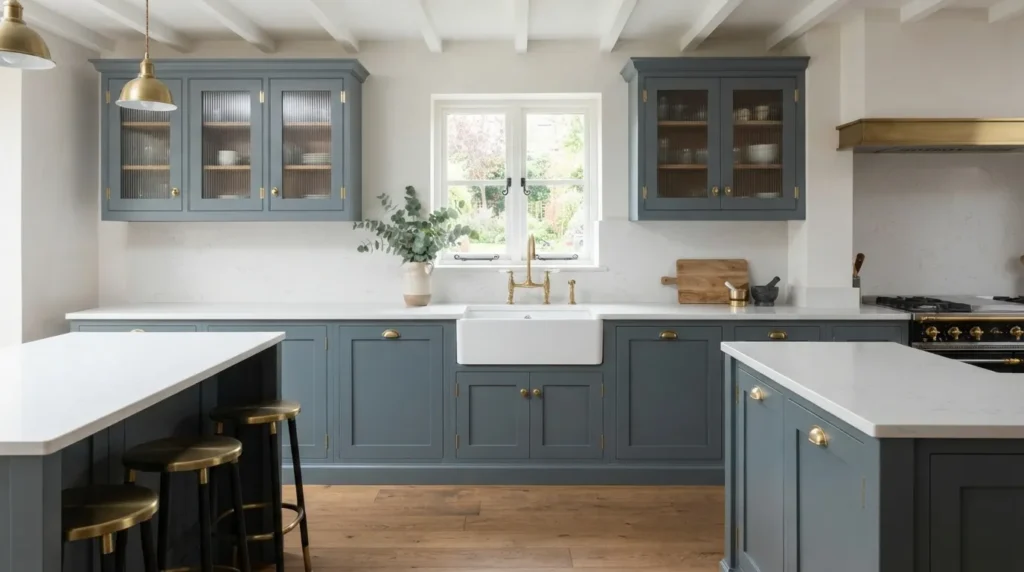
Quick Benefits
- Offers a clean, high-end furniture look
- Eliminates overlapping door corners
- Minimizes wear on outer door edges
- Highlights precise, premium woodwork craftsmanship
- Creates an exceptionally smooth profile
Why It Works
With standard overlay cabinets, the doors sit on top of the cabinet box frame, hiding it entirely. Inset cabinetry, however, is a classic style where the doors and drawers are meticulously crafted to fit inside the face frame openings. The result is a completely flat, flush surface that resembles a beautifully crafted piece of fine furniture. It screams luxury and craftsmanship. I’ve seen this idea transform spaces entirely by removing the bulky, overlapping lines common in budget installations, replacing them with clean architectural precision.
How To Style It
Because inset cabinets have a very clean, structured look, you want to let the fine wood craftsmanship shine. Choose traditional exposed butt hinges in a metallic finish that matches your cabinet knobs to embrace the historic look. This construction style looks jaw-droppingly beautiful when painted in historical, heritage colors like a deep historical blue-grey or left in a rich, natural walnut grain. Keep clutter off the countertops to preserve the clean, flush lines of the cabinetry layout.
8. Muted Terracotta Warmth
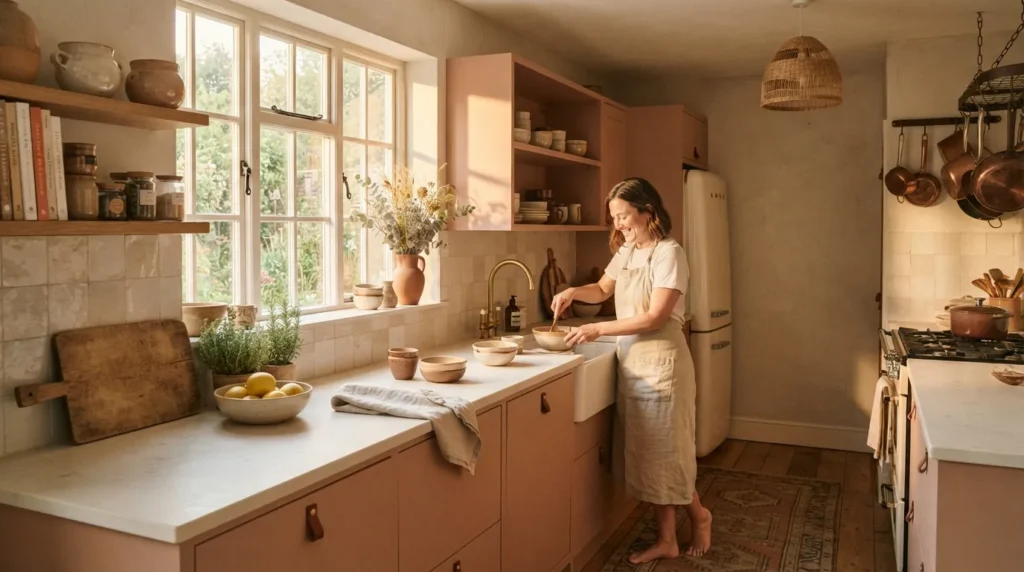
Quick Benefits
- Introduces a joyful, sun-drenched mood
- Pairs perfectly with artisanal tiles
- Softens sleek, hard modern lines
- Hides cooking dust and flour well
- Sets your home apart stylistically
Why It Works
If you want your kitchen to feel like a warm, lively gathering place inspired by Mediterranean or southwestern design, muted terracotta is an exceptional choice. Terracotta isn’t just a basic orange; it’s a complex blend of rich clay, pink, and brown undertones. It brings a festive, radiant warmth to the room that feels incredibly artistic and tactile. It is a fantastic option for homeowners who want to express a bold personality through color without sacrificing a sense of sophisticated restraint.
How To Style It
Pair muted terracotta cabinetry with hand-made zellige or talavera tiles for a beautiful backsplash that honors the artisanal roots of the color. For countertops, choose a honed, matte white limestone or a light, warm concrete surface to keep the focus entirely on the rich clay cabinetry. Dark wood accents, like a walnut butcher-block island top, anchor the color beautifully. Keep hardware low-profile and dark, using simple matte black iron pulls or delicate leather tabs.
9. Mesh Metal Inserts
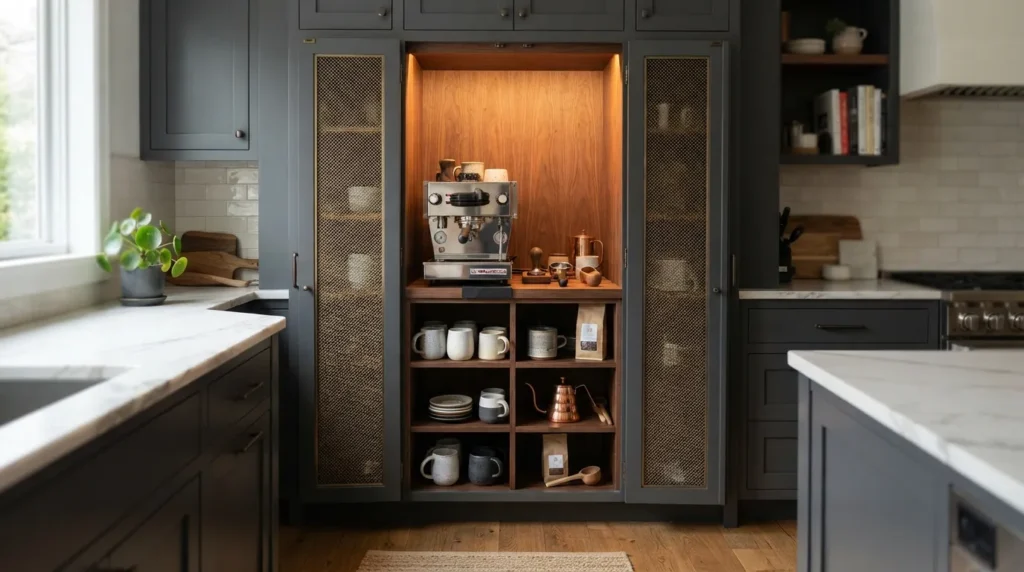
Quick Benefits
- Adds a brilliant reflective texture
- Conceals mess better than clear glass
- Breaks up long, monotonous runs of wood
- Introduces a subtle, tailored industrial accent
- Promotes ventilation for pantry goods
Why It Works
Mesh metal door inserts—whether constructed from woven brass, bronze, or antiqued wire—are a fantastic alternative to both solid wood and standard glass. They introduce a dazzling texture that catches overhead lighting elegantly while offering a semi-transparent view of what’s inside. A mistake many homeowners make when trying to add visual interest is adding too many different paint colors; mesh metal inserts let you break up a long wall of standard cabinetry using high-end texture instead of changing paints.
How To Style It
Mesh inserts look most effective when used on select accent zones, such as a set of tall pantry towers, a built-in coffee station, or a dedicated hutch area. Choose an antique brass wire mesh and pair it with matching brass hardware across the rest of the kitchen for design cohesion. Line the interiors of those specific cabinets with a rich stained wood backing to create a dramatic, layered contrast that peeks through the metallic weave when the kitchen lights hit it.
10. Two Tone Dimension
Quick Benefits
- Lowers the visual center of gravity
- Maximizes light reflection at eye-level
- Allows you to experiment safely with bold colors
- Makes low ceilings feel much higher
- Offers an easy, affordable painting update
Why It Works
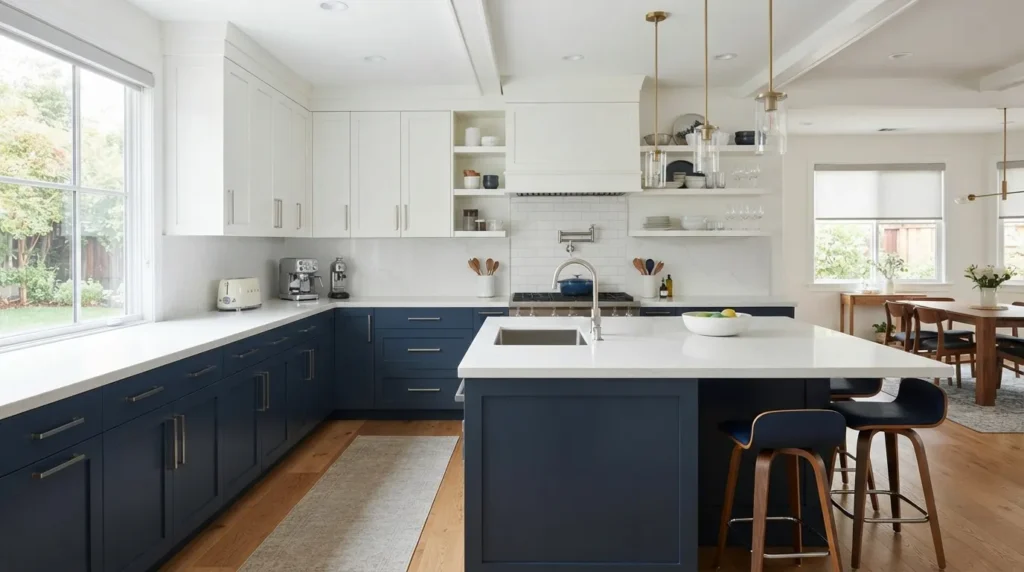
Can’t decide between a dramatic, deep color and a bright, breezy neutral? The two-tone cabinetry approach gives you the absolute best of both worlds. By painting your lower cabinets and kitchen island a rich, grounding shade (like navy, charcoal, or deep green) and keeping your upper cabinets a light neutral (like white, alabaster, or pale grey), you create a beautiful layout with a distinct sense of balance. The darker bases anchor the room and hide lower scuffs, while the light uppers bounce sunlight around, keeping the ceiling feeling sky-high.
How To Style It
To ensure a two-tone kitchen feels cohesive rather than disjointed, use the exact same style of door hardware on both the top and bottom cabinets. Carry a single, continuous backsplash material from the countertop all the way up behind the uppers to act as a visual bridge between the two zones. If your island features the darker base color, consider introducing a wood tone for the island countertop to soften the transition between the two distinct painted worlds.
FAQ Section
How do I choose between matte and glossy finishes for kitchen cabinets?
Matte finishes are highly recommended for modern, moody, or rustic styles because they absorb light, hide fingerprint smudges well, and offer a soft, velvety texture. Glossy finishes, on the other hand, act like mirrors, reflecting massive amounts of light around a room. This makes gloss excellent for tiny, dark kitchens, though they do show prints and water spots more quickly.
Are open shelves in the kitchen difficult to keep clean and dust-free?
They can require a bit more maintenance, which is why location is everything. Avoid placing open shelves directly next to your cooktop, where airborne grease can settle on them. Instead, mount them near your sink or main prep area, and stock them with items you use and wash daily—like your favorite coffee mugs and dinner plates—so dust never has a chance to accumulate.
What cabinet style is best for maximizing the resale value of my home?
Warm cream or soft neutral Shaker-style cabinetry continues to hold the highest resale value. Shaker doors have a clean, transitional profile that easily adapts to a buyer’s personal style, whether they prefer a traditional farmhouse look or a sleek, contemporary aesthetic. It is universally appealing and stands the test of time.
Can I mix different types of hardware metals across my cabinetry?
Absolutely, and it actually makes a kitchen look beautifully custom-designed rather than a standard showroom package. The trick is to pick one dominant metal for 70% of the room (like matte black pulls) and an accent metal for the remaining 30% (like unlacquered brass latches on your accent cabinets or island). Just make sure the undertones complement each other.
How can I make my inexpensive builder-grade cabinets look high-end?
The fastest, most high-impact trick is swapping out cheap factory hardware for heavy, solid-brass or matte black designer handles. Next, remove a couple of upper doors over a bar area to create instant open shelving, paint the back panel a contrasting color, and install under-cabinet LED puck lights to create dramatic, architectural spotlighting.
Conclusion
Redesigning your kitchen cabinets is one of the most rewarding investments you can make for your home’s aesthetics and daily functionality. As we’ve explored, you don’t have to settle for safe, boring options to achieve a timeless look. From the grounding serenity of earth-toned greens to the brilliant space-saving illusion of fluted glass and two-tone layouts, there are endless ways to make your space feel distinctly yours. Start with one or two ideas that call to you, and gradually build a beautiful kitchen that reflects your unique style and supports everyday comfort.
Related Articles
- Minimalist Kitchen Layouts for Small Spaces
- The Ultimate Guide to Choosing Kitchen Hardware
- Stunning Backsplash Ideas That Elevate Your Countertops
- Modern Farmhouse Kitchen Styling Tips
- How to Light Your Kitchen for Maximum Visual Drama