
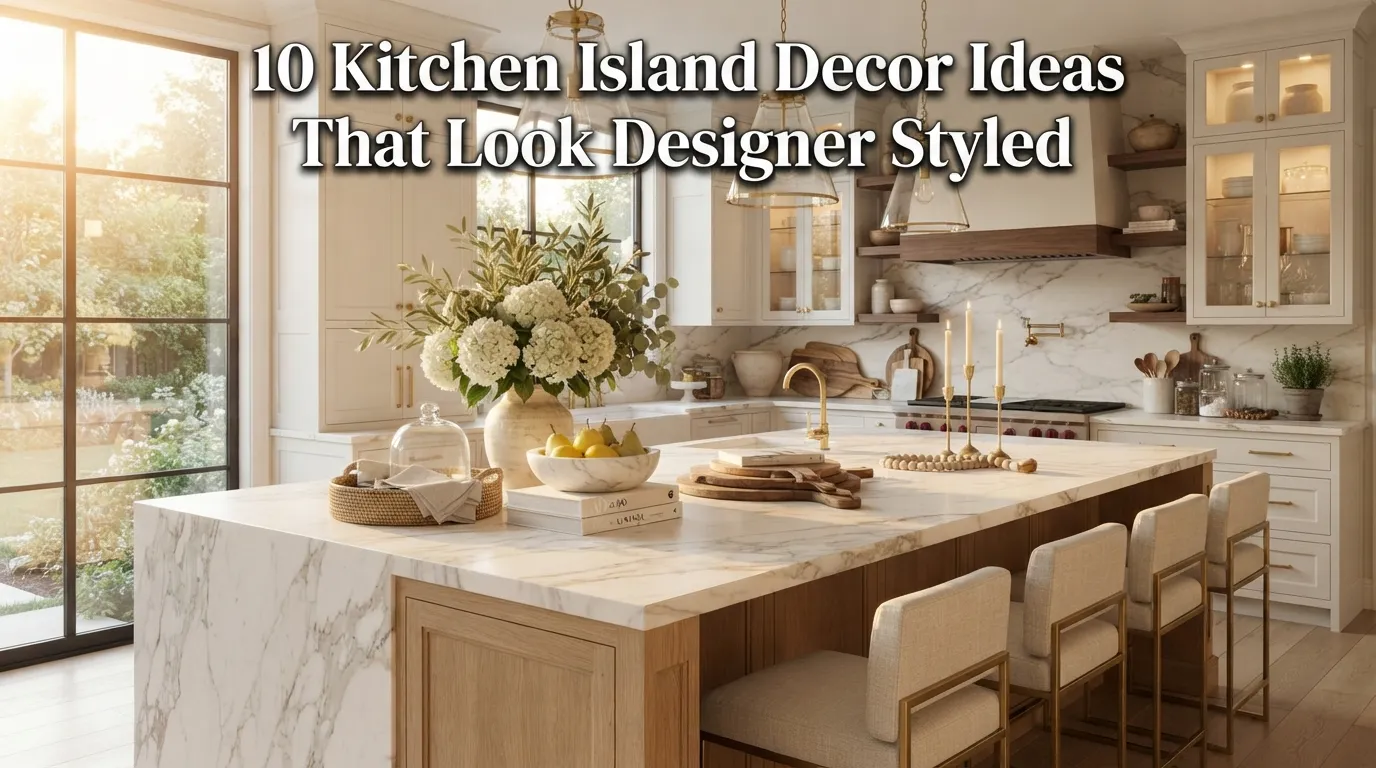
10 Kitchen Island Decor Ideas That Look Designer Styled
An island can be beautifully built — the right countertop, the right cabinetry, the right lighting overhead — and still fall a little flat if the surface itself is left bare or cluttered with everyday mail and random odds and ends. A mistake many homeowners make is assuming a well-designed island doesn’t need any additional styling, when in reality, the way an island is decorated day to day plays a huge role in how put-together the entire kitchen feels.
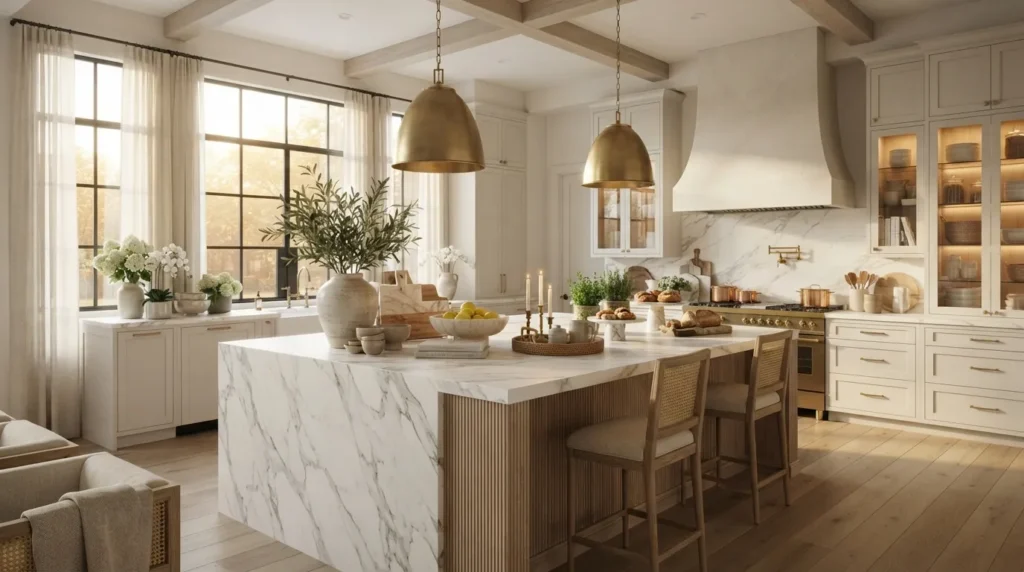
In my experience, designer-styled islands share a similar approach: a few intentional objects, some variation in height and texture, and just enough restraint to keep the surface from feeling cluttered. This isn’t about staging the island for a photo and never touching it again — it’s about developing simple styling habits that keep the space looking considered even while it’s being used for its everyday purpose of cooking, prepping, and gathering.
This guide walks through ten specific decor ideas for styling a kitchen island, along with the practical reasoning and styling advice behind each one. Every idea is meant to be genuinely livable, not just photogenic, since a kitchen island needs to function as much as it needs to look good.
If you’re anything like me, you’ve probably admired plenty of styled kitchen islands online without a clear sense of what’s actually holding those vignettes together. These ten ideas break that down into a plan you can use in your own kitchen.
Table of Contents
- Layered Cutting Board Display — Using everyday tools as intentional decor.
- Seasonal Fruit Bowl Styling — Turning a functional bowl into a design feature.
- Fresh Herb Centerpiece — Adding life and fragrance to the island.
- Stacked Cookbook Vignette — Styling books as both decor and reference.
- Ceramic Vessel Grouping — Layering height and texture with vessels.
- Woven Tray Styling — Anchoring smaller items with a natural material.
- Statement Bar Stools — Choosing seating that doubles as decor.
- Everyday Olive Oil Display — Elevating a kitchen staple into styling.
- Seasonal Greenery Accents — Rotating small touches through the year.
- Coordinated Dish Towel Styling — Using a small textile for big visual impact.
1. Layered Cutting Board Display
Quick Benefits
- Turns a functional tool into an intentional decor piece
- Adds warmth and texture through natural wood
- Keeps frequently used items easily accessible
- Provides visual height variation on the counter
- Works in nearly any kitchen style
Why It Works
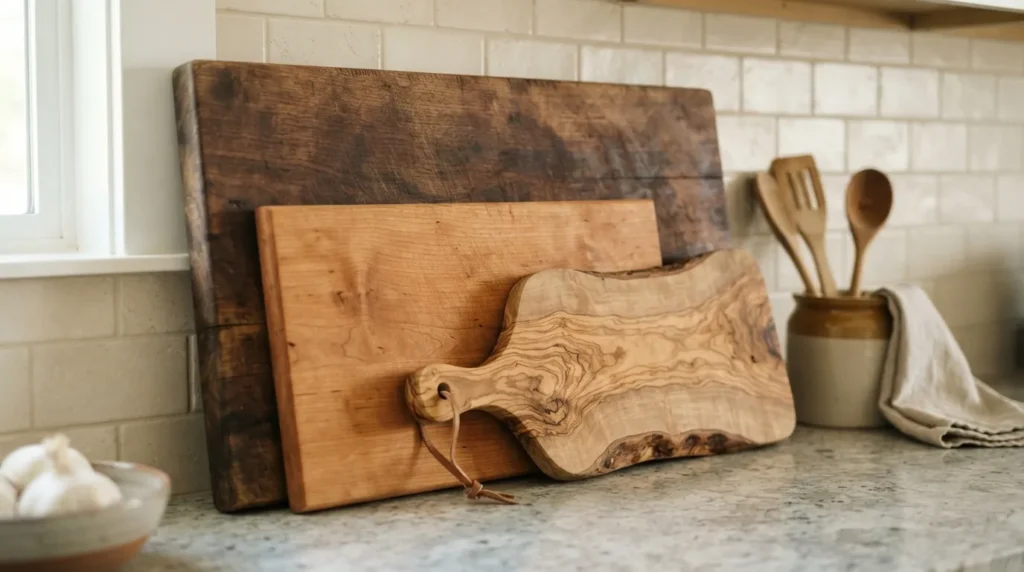
A few wood cutting boards, leaned or stacked rather than tucked away in a drawer, do double duty as both a practical kitchen tool and an easy source of warm, natural texture on the island’s surface. A mistake many homeowners make is storing every cutting board out of sight, missing the opportunity to use these everyday objects as part of the island’s overall styling. Wood grain adds a layer of organic texture that pairs particularly well against stone or quartz countertops.
How To Style It
Lean two or three cutting boards of varying sizes against a backsplash or wall, or stack them flat with the largest on the bottom, near the edge of the island where they’re both visible and within easy reach for actual use. Choose boards in varying wood tones or shapes for visual interest, mixing a round board with a rectangular one, for example. Keep this display in an area of the island that sees genuine daily use, since a display of tools that never actually get used can start to feel more like a prop than a lived-in kitchen detail.
2. Seasonal Fruit Bowl Styling
Quick Benefits
- Adds natural color to the island’s surface
- Encourages healthier snacking habits
- Provides an easy, ever-changing styling element
- Works with almost any bowl material or style
- Requires no ongoing maintenance beyond restocking
Why It Works
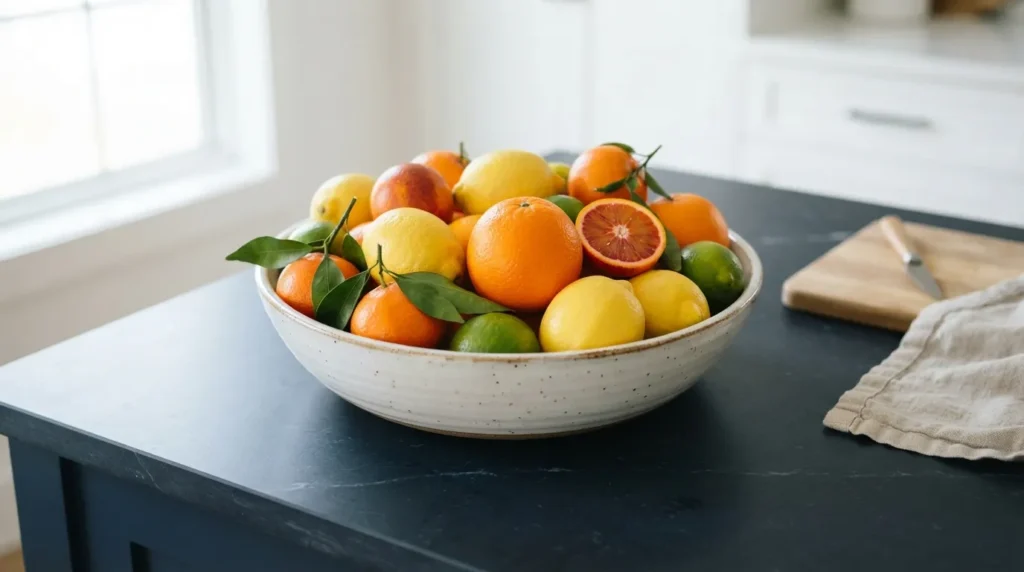
A bowl of fruit is one of the simplest, most classic pieces of kitchen island styling, and it remains popular because it’s genuinely functional in addition to being visually appealing. One thing that works especially well is choosing fruit that complements the season and the kitchen’s color palette — bright citrus in winter, deep-colored stone fruit in summer — which means this styling element naturally refreshes itself throughout the year without any extra effort.
How To Style It
Choose a bowl in a material that complements your island’s finishes, such as a ceramic bowl with a matte glaze or a woven basket-style bowl for a more organic look. Fill it generously but not overflowing, and consider the fruit’s color in relation to the rest of the kitchen — bright lemons pop beautifully against a navy or dark green island, for example. Replace the fruit regularly enough that it stays both fresh and visually appealing, since wilted or overripe fruit undercuts the styling rather than enhancing it.
3. Fresh Herb Centerpiece
Quick Benefits
- Adds greenery and fragrance to the island
- Provides fresh ingredients within reach while cooking
- Brings a sense of life to an otherwise static surface
- Works well in both large and small kitchens
- Elevates the island with minimal cost
Why It Works
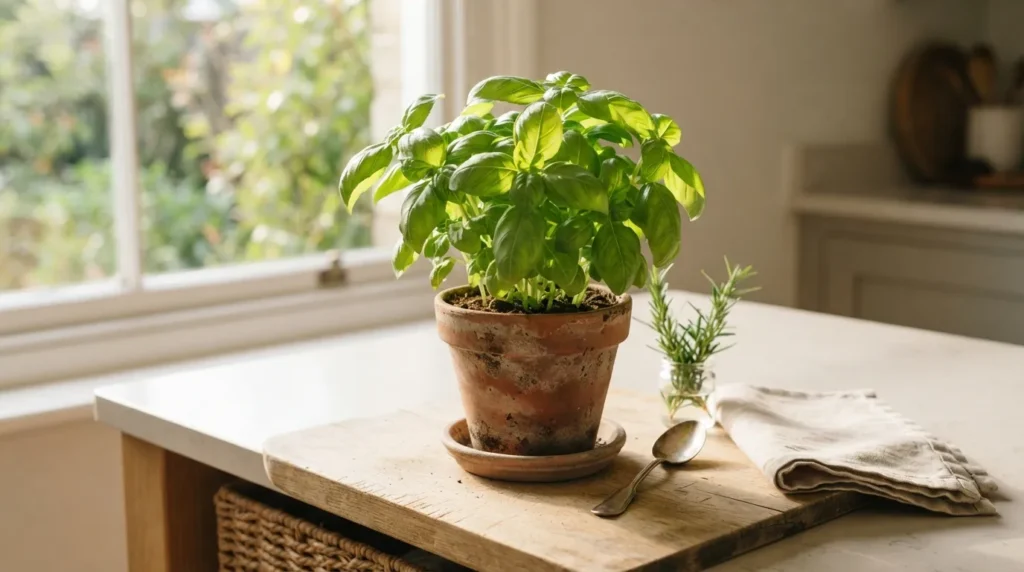
A small pot or jar of fresh herbs on the island brings a sense of life and fragrance that static decor simply can’t replicate, while also serving the very practical purpose of keeping cooking ingredients within arm’s reach. A mistake many homeowners make is keeping herbs stored in the refrigerator exclusively, missing the opportunity to use them as both a functional ingredient and an easy styling element right where meal prep happens. Basil, rosemary, and mint are all attractive, easy-to-grow options for this purpose.
How To Style It
Choose a simple ceramic or terracotta pot for a growing herb plant, or a glass jar of water for cuttings like mint or basil that will root and last for weeks. Position the herbs near the island’s edge where they’ll get some natural light from a nearby window, if possible, without directly interfering with the main prep area. Rotate or refresh the herbs as needed, using this element as both a practical cooking resource and an easy way to add a touch of green to the island.
4. Stacked Cookbook Vignette
Quick Benefits
- Adds personality through genuine, well-loved books
- Provides a natural, useful reference on the island
- Creates height variation for a more layered look
- Works well paired with other small decor objects
- Reflects the household’s real cooking interests
Why It Works
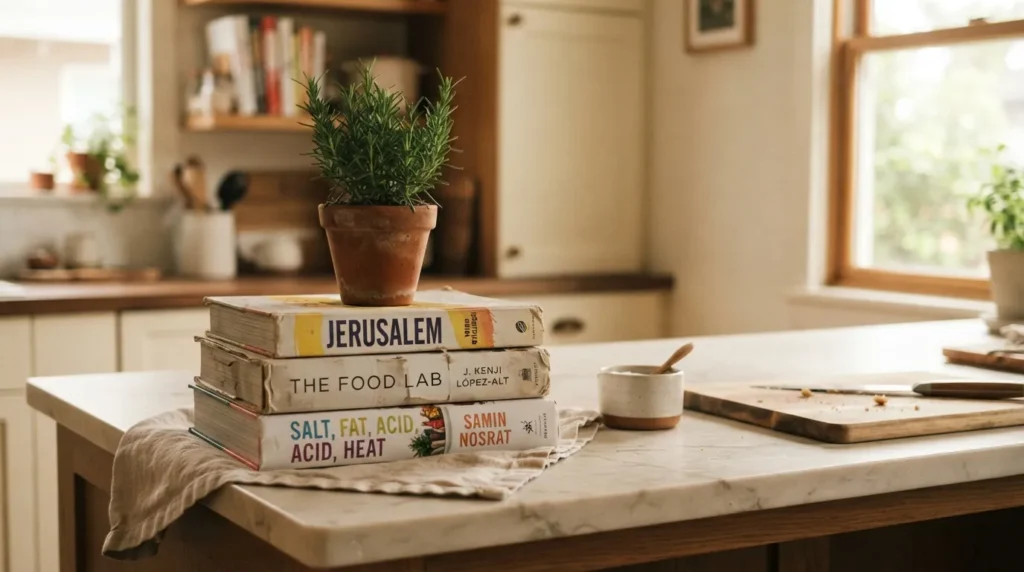
A stack of cookbooks on the island serves a similar function to coffee table books in a living room, adding personality and visual interest while also being genuinely useful in a kitchen setting. A mistake many homeowners make is choosing cookbooks purely for their cover design without any real intention of using them, which can make the styling feel a bit hollow. A stack of cookbooks that actually get used regularly tends to feel warmer and more authentic than a purely decorative arrangement.
How To Style It
Stack two to four cookbooks horizontally, choosing titles that reflect genuine cooking interests, whether that’s a favorite regional cuisine, baking, or a well-loved family recipe collection. Top the stack with a small object, such as a wood spoon rest or a small potted herb, to add height variation. Position the stack toward one end of the island where it won’t interfere with active meal prep, keeping it accessible enough to actually be picked up and used.
5. Ceramic Vessel Grouping
Quick Benefits
- Adds visual interest through varied height and shape
- Introduces texture and handmade character
- Works well as a rotating, changeable display
- Complements nearly any kitchen color palette
- Elevates the island with a curated, intentional feel
Why It Works
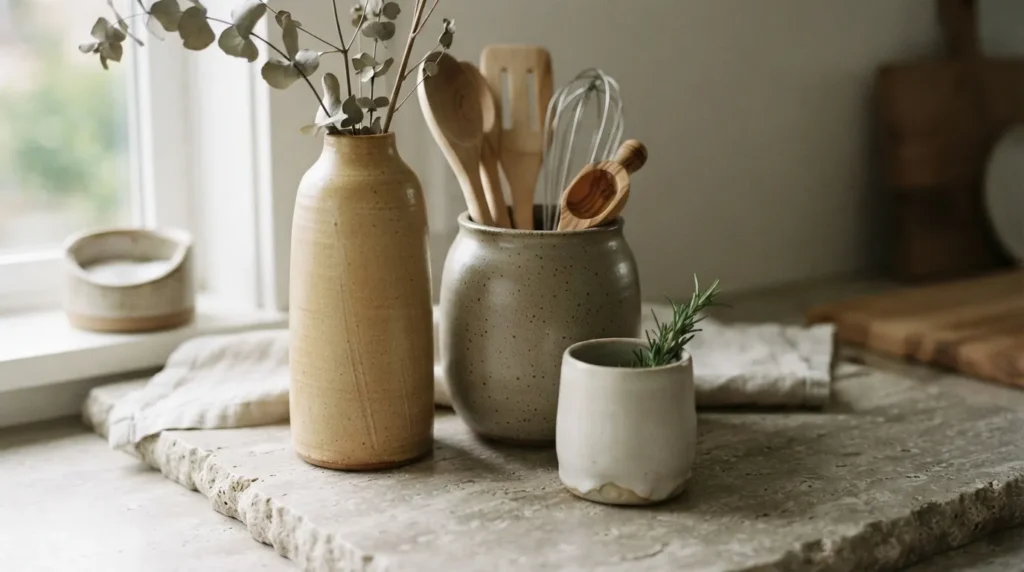
A small grouping of ceramic vessels — a vase, a utensil crock, a small bowl — adds the kind of varied height and texture that makes a styled surface feel intentional rather than sparse or cluttered. I’ve noticed that odd-numbered groupings of three, with some variation in height and shape, consistently read as more curated than either a single object or a large, uniform collection. This is one of the most flexible styling elements on this list, since the specific vessels can be swapped out easily as your taste evolves.
How To Style It
Group three ceramic pieces of varying heights together, such as a taller vase, a mid-height crock holding wooden utensils, and a small shallow bowl for stray produce or garlic. Choose pieces with some cohesion, whether that’s a shared color palette, a similar matte glaze finish, or a mix of handmade and more classic shapes. Keep the grouping toward one section of the island rather than spreading the pieces out individually across the entire surface.
6. Woven Tray Styling
Quick Benefits
- Anchors smaller items into one cohesive grouping
- Adds natural texture to the island’s surface
- Keeps the counter looking tidy and organized
- Provides an easy way to corral everyday clutter
- Works well as a base for other styling elements
Why It Works
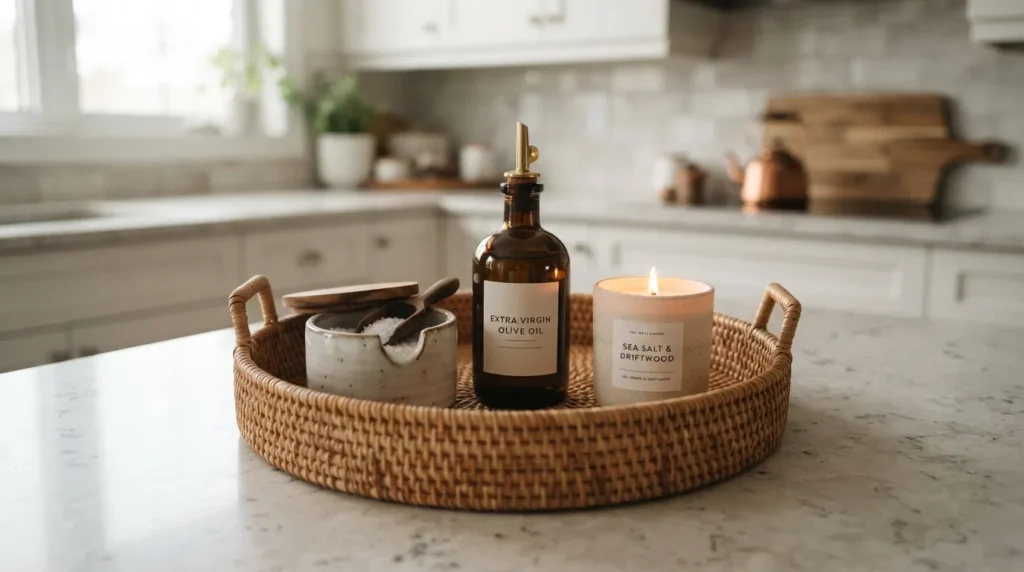
A tray does the same organizing work on a kitchen island that it does on a coffee table, corralling smaller items into a single, visually cohesive grouping rather than letting them scatter across the counter. A mistake many homeowners make is styling several small objects directly on the countertop without any unifying element, which can make even nicely chosen pieces look scattered and unintentional. A woven or wood tray solves this by giving the smaller objects a defined boundary.
How To Style It
Choose a tray in a natural material, such as woven rattan or a simple wood board, sized to hold two or three smaller items like a salt cellar, a small olive oil bottle, and a candle. Position the tray toward one end of the island where it won’t interfere with active prep space, and use it as a home base for smaller items that might otherwise clutter the counter individually. This styling element also makes it easy to quickly clear the island for cooking, since the entire tray can be moved as one unit if needed.
7. Statement Bar Stools
Quick Benefits
- Adds personality and color through seating
- Elevates the island without changing the cabinetry
- Provides a strong visual anchor for the space
- Works well even with a fairly neutral island base
- Offers an easy way to introduce texture or pattern
Quick Benefits
Why It Works
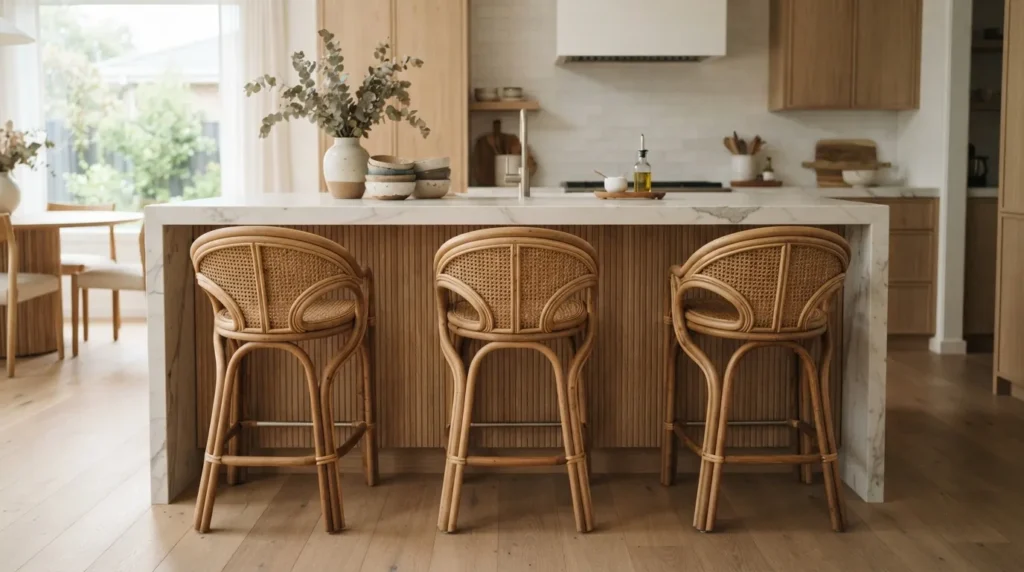
Bar stools are often chosen purely for comfort and function, but they represent one of the easiest opportunities to add real personality to an island without touching the cabinetry, countertop, or lighting at all. That’s why many designers recommend treating stool selection as a genuine styling decision rather than an afterthought, since a set of stools with an interesting material, color, or silhouette can transform the entire feel of an island that might otherwise be fairly neutral.
How To Style It
Choose stools with a distinctive material or texture — woven rattan, boucle upholstery, or a sculptural metal frame — rather than a purely basic, backless option, unless a minimal look is specifically what you’re going for. Consider a bold color or pattern on the stools if the rest of the kitchen leans neutral, since this is a lower-commitment way to introduce personality compared to a cabinet color change. Ensure the stools are proportioned correctly for the island’s counter height, since even the most stylish stool will look and feel wrong if it doesn’t fit properly.
8. Everyday Olive Oil Display
Quick Benefits
- Turns a cooking staple into a styling element
- Keeps frequently used ingredients within reach
- Adds warmth through glass and natural tones
- Works well paired with a small tray or board
- Requires no additional purchase beyond what’s already used
Why It Works
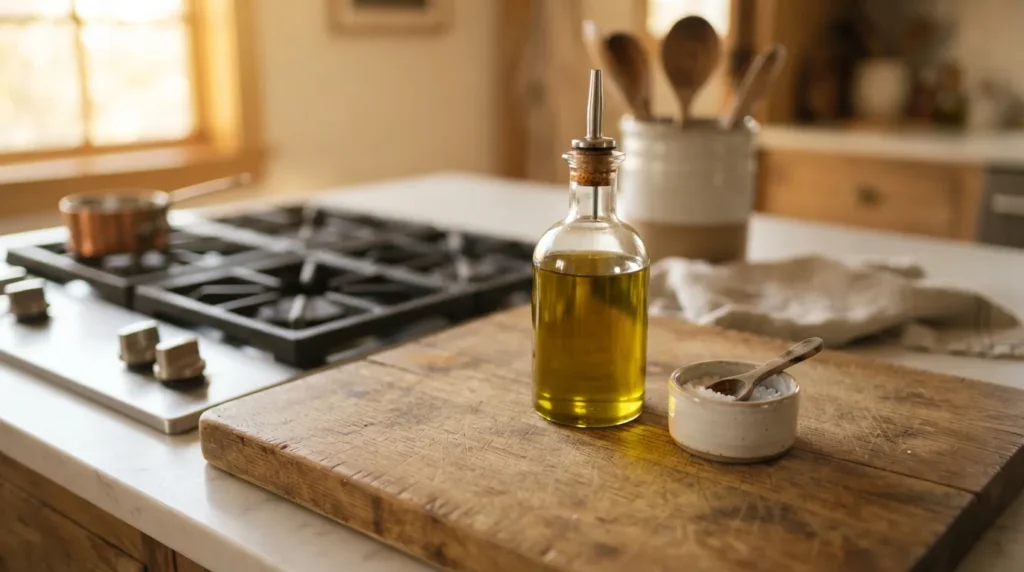
Olive oil, vinegar, and other frequently used cooking staples are often hidden away in a cabinet, but displaying them on the island turns a purely practical habit into a genuine styling opportunity. A mistake many homeowners make is treating all cooking ingredients as clutter to be hidden, missing the chance to use a few attractive, frequently reached-for bottles as part of the island’s everyday decor. The warm, golden tone of olive oil in a glass or ceramic vessel also adds a subtle pop of color to the counter.
How To Style It
Choose one or two attractive bottles or cruets for your most frequently used oils and vinegars, positioning them near the stovetop or the main prep area where they’ll actually get used during cooking. Pair this display with a small dish for flaky salt or a pepper grinder, grouping these functional items together on a small tray or board. Keep this display limited to items genuinely used on a regular basis, since anything purely decorative in this category tends to look out of place in a working kitchen.
9. Seasonal Greenery Accents
Quick Benefits
- Refreshes the island’s look throughout the year
- Adds natural color and texture without much cost
- Provides an easy, low-commitment styling update
- Works well in a small vase or jar
- Complements nearly any existing island decor
Why It Works
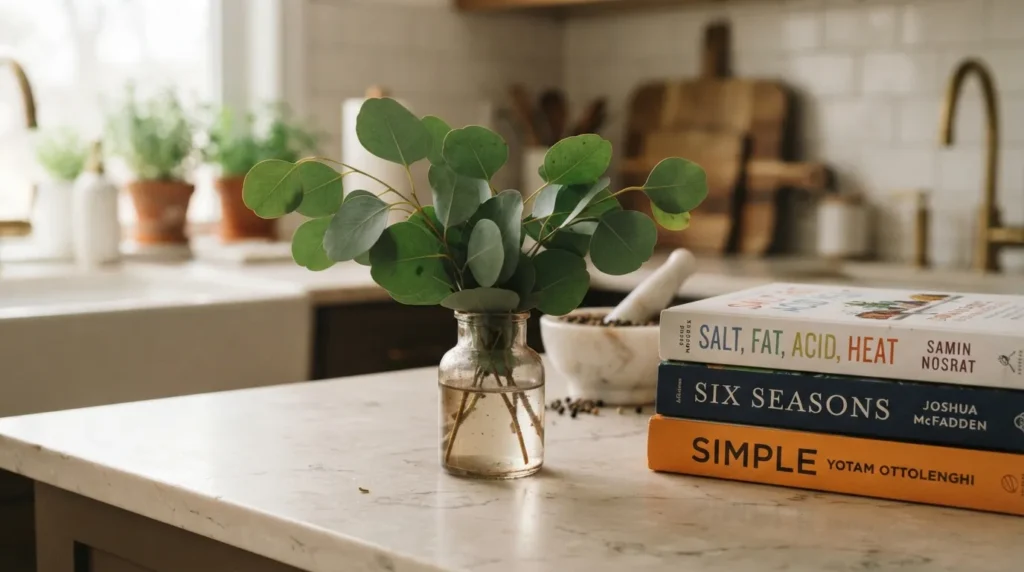
Small seasonal greenery accents — a few stems of eucalyptus, a sprig of rosemary, seasonal branches in fall or winter — offer one of the easiest ways to keep an island’s styling feeling current throughout the year without replacing any of the other decor. A mistake many homeowners make is styling an island once and leaving it completely static for months or years, missing the opportunity to make small, low-cost updates that keep the space feeling fresh. A rotating greenery accent solves this with very little effort.
How To Style It
Choose a small vase or jar sized appropriately for the island, and rotate the greenery seasonally — fresh flowers or eucalyptus in spring and summer, dried wheat or small branches in fall, evergreen sprigs in winter. Position this accent near the other styled elements on the island, such as the ceramic vessel grouping or the tray display, so it feels integrated into the overall styling rather than a separate afterthought. This is one of the most affordable ways to keep the island’s look feeling seasonally appropriate.
10. Coordinated Dish Towel Styling
Quick Benefits
- Adds a pop of color or pattern at low cost
- Provides genuine everyday function
- Easy to swap seasonally or as tastes change
- Works well draped over the oven handle or folded on the counter
- Ties the island’s styling to the broader kitchen palette
Why It Works
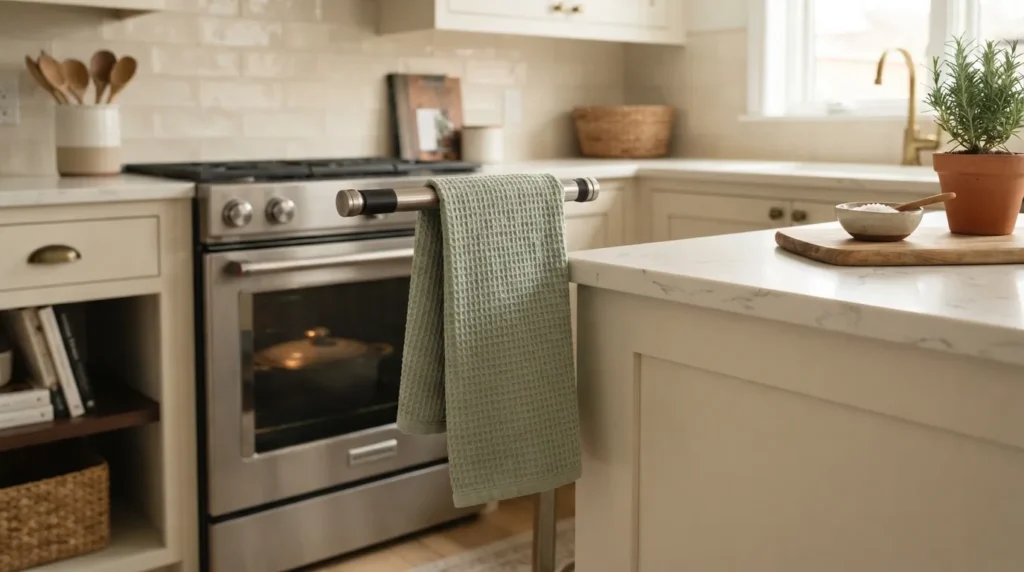
A dish towel might seem like too small a detail to matter, but a well-chosen one, folded neatly or draped over an oven handle near the island, adds a genuine pop of color or pattern for very little cost. One simple trick I always suggest is choosing dish towels that echo a color already present elsewhere in the kitchen, whether that’s the cabinetry, the backsplash, or another styling element on the island, since this small textile detail ties the whole space together more than most people expect.
How To Style It
Choose a dish towel in a linen or cotton waffle-weave fabric, which tends to look more elevated than a basic terry cloth towel, in a color or pattern that complements your kitchen’s palette. Fold the towel neatly in thirds and drape it over the oven handle, or fold it into a simple stack near the sink area of the island if there is one. Swap the towel seasonally or as it wears, using this small, inexpensive detail as an easy way to refresh the island’s overall look.
Frequently Asked Questions
How do I style a kitchen island without it looking cluttered?
Limit styling to two or three distinct groupings — such as a fruit bowl, a stacked cookbook vignette, and a small tray — rather than scattering many individual items across the entire surface. Leaving some open counter space is just as important as the styled elements themselves.
Should I clear my island decor every time I cook?
Not necessarily. Most styling elements, like a fruit bowl or a ceramic vessel grouping, can be positioned toward one end of the island so they stay out of the way during active meal prep. Items that do need to move should be easy to relocate quickly, such as a tray that can be lifted as one unit.
What’s the most affordable way to style a kitchen island?
Rotating seasonal greenery, styling a bowl of fruit, and folding a coordinated dish towel are all low-cost or free options, especially if you’re using items you already own. These small touches can meaningfully change the island’s look without any real investment.
Do bar stools count as part of island decor?
Yes, and they’re one of the most impactful styling choices available, since they’re highly visible and can introduce color, texture, or pattern without touching the cabinetry or countertop. Choosing stools intentionally is a key part of designer-style island decor.
How often should I update my kitchen island styling?
Small updates, like swapping seasonal greenery or rotating a dish towel, can happen every few months without much effort. Larger styling elements, like a ceramic vessel grouping or bar stools, are typically updated less frequently, more in line with broader kitchen refreshes.
Is it okay to keep everyday items like olive oil out on the island?
Yes, as long as the items are chosen thoughtfully and kept to a reasonable number. Displaying a few attractive, frequently used staples like olive oil or salt actually reinforces a lived-in, functional feel that purely decorative styling can lack.
What styling mistake should I avoid on a kitchen island?
Overcrowding the surface with too many small, unrelated objects is the most common mistake. Grouping items intentionally, using trays to corral smaller pieces, and leaving some open counter space will always read as more designer-styled than a fully covered surface.
Conclusion
Styling a kitchen island well comes down to the same principles that make any surface feel designer-curated: intentional groupings, varied height and texture, and enough restraint to let each element actually be seen. A layered cutting board display, a seasonal fruit bowl, or a simple tray corralling a few everyday staples can transform an island’s look without requiring any changes to the cabinetry or countertop underneath.
Start with one or two ideas from this list and gradually build a space that reflects your style and supports everyday comfort. Whether that means finally investing in a set of statement bar stools, grouping a few ceramic vessels with intention, or simply swapping in a coordinated dish towel, these small styling choices compound into an island that looks considered every single day, not just when company is coming over. The best-styled kitchen islands aren’t staged for a single photo — they’re genuinely lived in, and it shows.
Related Articles
- Kitchen Island Ideas That Make Every Kitchen Better
- Timeless Kitchen Ideas That Never Go Out Of Style
- Two-Tone Kitchen Cabinet Ideas That Add Character
- Aesthetic Living Room Ideas You’ll Love
- How To Style Open Kitchen Shelving