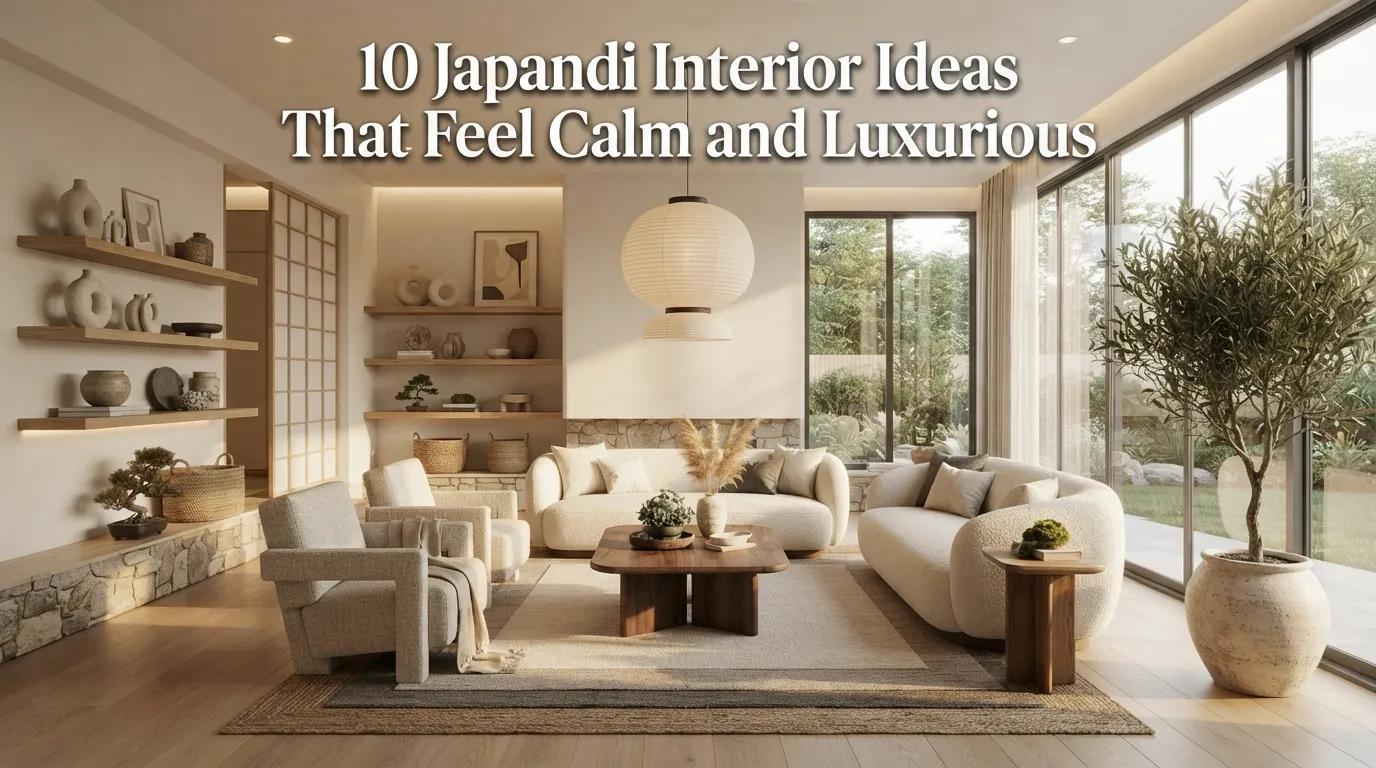
10 Japandi Interior Ideas That Feel Calm and Luxurious
There’s a reason Japandi design has held onto its popularity longer than most interior trends — it taps into something most of us are genuinely craving at home: quiet, order, and a sense of calm that doesn’t feel cold or empty. A mistake many homeowners make is assuming Japandi simply means “minimalist,” when in reality, it’s a much more specific blend of Japanese wabi-sabi philosophy and Scandinavian hygge warmth, resulting in spaces that feel both restrained and deeply comfortable at the same time.
In my experience, the homes that pull off Japandi design successfully share a very particular restraint. Every piece feels chosen rather than accumulated, natural materials are given room to be appreciated on their own, and negative space is treated as an intentional design element rather than an empty gap waiting to be filled. This is a style built on subtraction as much as addition, which is part of what makes it feel so genuinely luxurious despite its simplicity.
This guide walks through ten specific ideas for bringing authentic Japandi design into your own home, along with the reasoning and practical styling advice behind each one. Whether you’re starting an entire room from scratch or looking to shift an existing space toward this calmer aesthetic, each idea includes concrete, actionable guidance.
If you’re anything like me, you’ve probably been drawn to Japandi spaces online without fully understanding what separates them from generic minimalism. These ten ideas break down exactly what makes this style work.
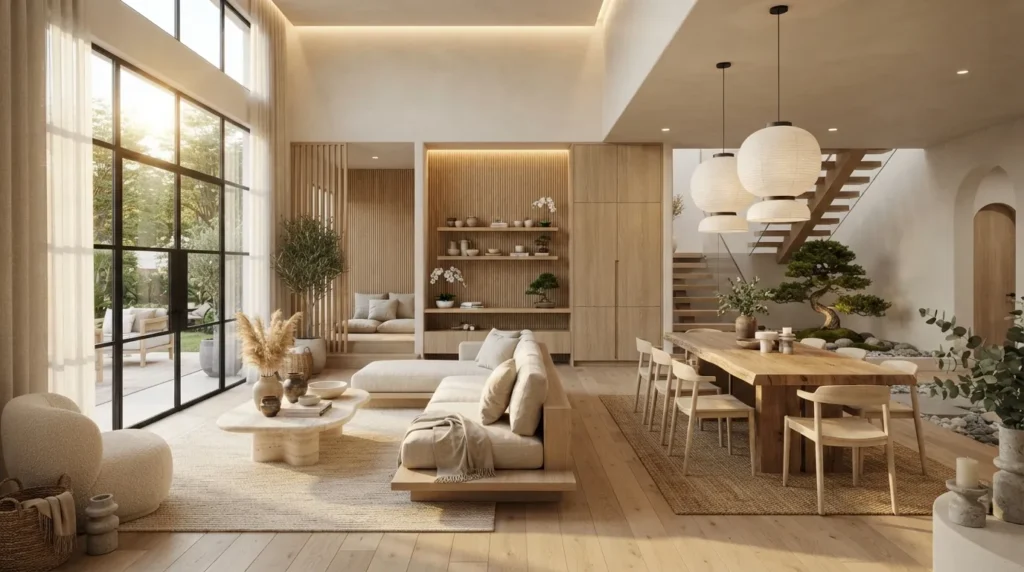
Table of Contents
- Natural Wood Tones — Grounding the space in warm, honest material.
- Low Profile Furniture — Choosing pieces with a grounded, humble silhouette.
- Neutral Earthy Palette — Building a calm, cohesive color foundation.
- Handcrafted Ceramic Accents — Celebrating imperfection through pottery.
- Minimalist Negative Space — Treating empty space as a design choice.
- Linen And Cotton Textiles — Layering natural fiber for texture and comfort.
- Stone And Clay Elements — Bringing earthy materials into the palette.
- Soft Diffused Lighting — Creating a gentle, shadow-aware glow.
- Woven Natural Textures — Adding warmth through handmade fiber work.
- Botanical Simplicity — Using greenery with quiet, intentional restraint.
1. Natural Wood Tones
Quick Benefits
- Grounds the space with genuine warmth
- Reflects both Japanese and Scandinavian material traditions
- Ages beautifully rather than looking dated
- Pairs seamlessly with a neutral color palette
- Provides texture without visual clutter
Why It Works
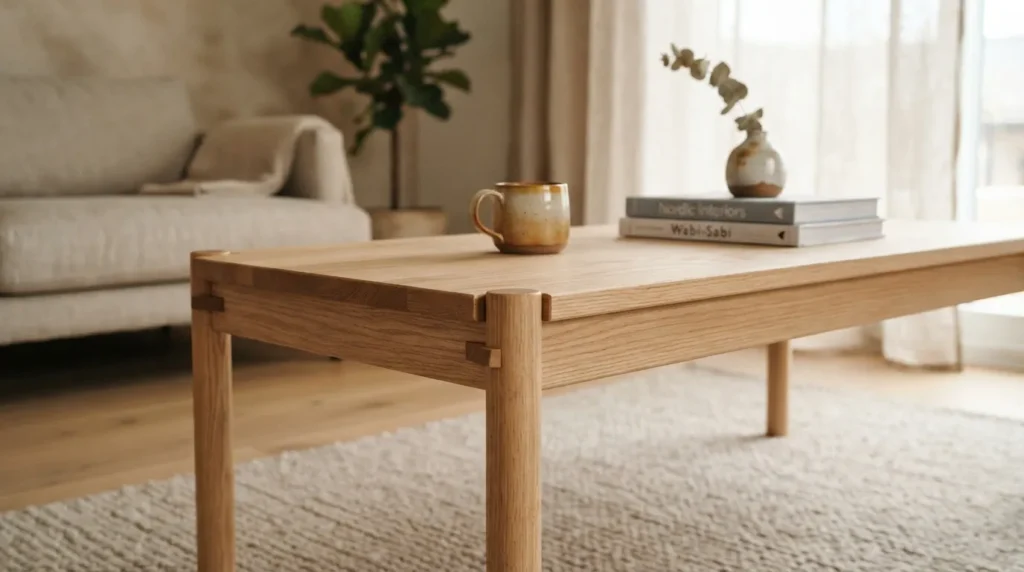
Natural wood sits at the intersection of both design traditions that inform Japandi style, appearing throughout traditional Japanese joinery and Scandinavian furniture design alike. A mistake many homeowners make is choosing heavily stained, glossy, or painted wood finishes, which work against the raw, honest material quality that defines Japandi spaces. Lighter, more natural finishes that let the grain show through are central to why this style reads as calm rather than heavy.
How To Style It
Choose furniture in lighter wood tones — ash, oak, or white oak — over darker, more traditional stains, since lighter woods reinforce the airy, calm quality central to Japandi design. Look for pieces with visible joinery or simple, exposed construction rather than furniture that hides its structure behind upholstery or paint. Mix in one or two pieces with a slightly different wood tone for subtle variation, but keep the overall palette within a similar warm, light range rather than combining dramatically different woods.
2. Low Profile Furniture
Quick Benefits
- Creates a grounded, calming visual weight
- Reflects traditional Japanese seating and furniture proportions
- Makes rooms feel more spacious and open
- Encourages a slower, more intentional way of living
- Pairs well with minimal, uncluttered layouts
Why It Works
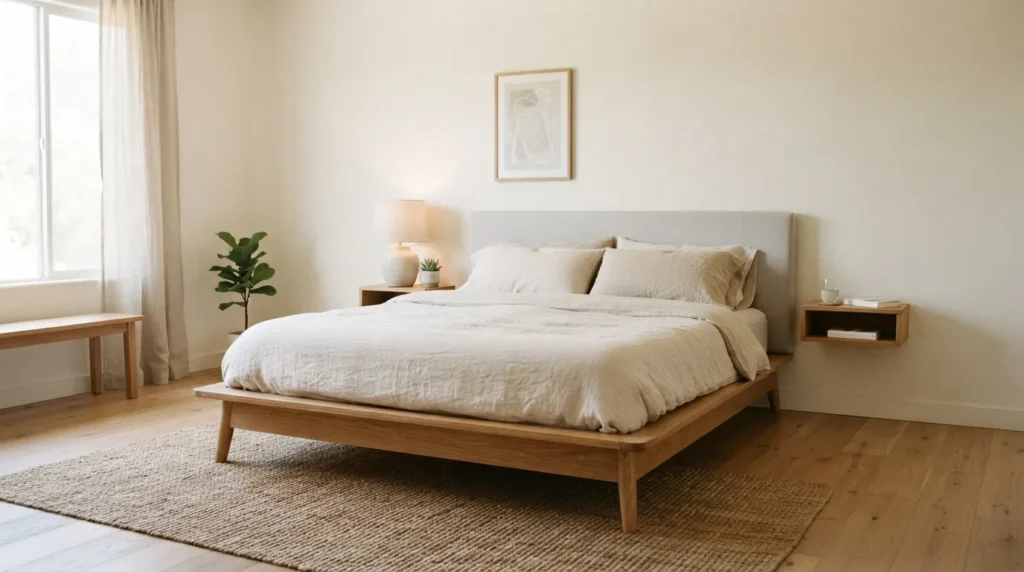
Furniture with a low, grounded silhouette is a defining characteristic of Japandi interiors, drawing directly from traditional Japanese furniture, which was historically kept close to the floor. One thing that works especially well is choosing a low platform bed, a low sofa, or a floor-level coffee table, since this proportion creates a sense of openness overhead and a calmer, more grounded feeling throughout the room. This is a significant departure from the taller, bulkier furniture common in many Western interior styles.
How To Style It
Choose a platform bed frame without a tall headboard, or a low-profile sofa with simple, tapered wooden legs, to establish this grounded proportion in the room’s largest furniture pieces. Pair low seating with a floor cushion or two for additional, flexible seating that reinforces the same low, relaxed feeling. Keep surrounding furniture, like side tables and shelving, similarly low in profile so the room’s overall silhouette feels intentional and consistent rather than mismatched in scale.
3. Neutral Earthy Palette
Quick Benefits
- Creates an immediate sense of calm
- Reflects both wabi-sabi and hygge color sensibilities
- Provides flexibility for natural material accents
- Avoids feeling either sterile or overly saturated
- Works cohesively across multiple rooms
Why It Works
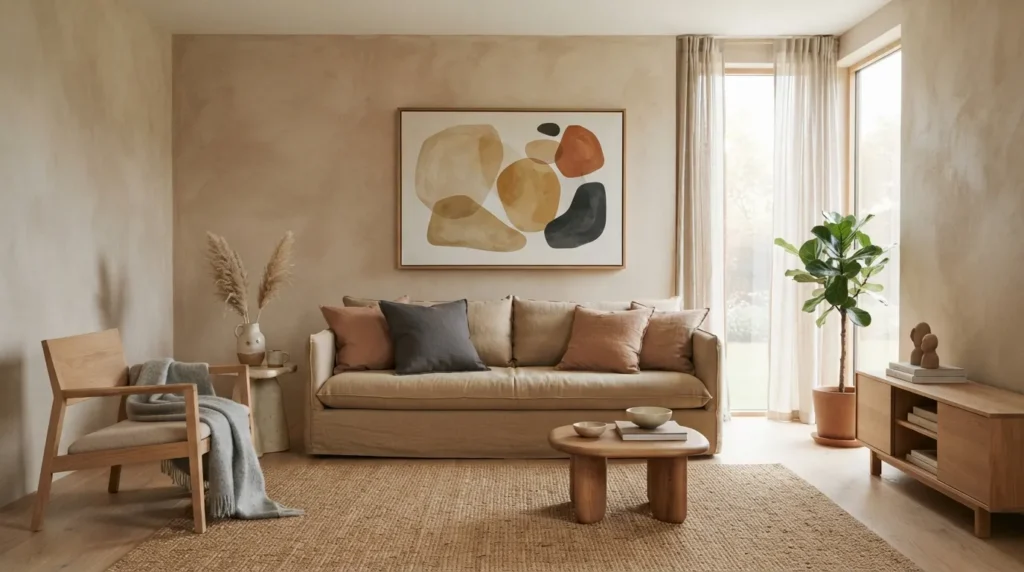
Japandi’s color palette draws from the earthy, muted tones found in both Scandinavian and Japanese design traditions — warm beige, soft clay, charcoal, and off-white, rather than the stark white commonly associated with pure Scandinavian minimalism or the bold red and black often associated with more traditional Japanese design. That’s why many designers recommend building the palette around these warmer, more muted neutrals specifically, since they support the calm, grounded feeling central to Japandi without tipping into either overly cold or overly bold territory.
How To Style It
Choose a base palette of warm white, soft beige, and light gray for walls and larger furniture, introducing deeper tones like charcoal or clay through smaller accents such as pillows, ceramics, or a single piece of furniture. Avoid bright, saturated colors almost entirely, since they work against the quiet, restrained quality that defines this style. Let natural material colors — wood tones, stone, woven fiber — do much of the visual work, rather than relying on paint or fabric color alone.
4. Handcrafted Ceramic Accents
Quick Benefits
- Celebrates natural imperfection and craftsmanship
- Adds texture and individuality to a minimal space
- Reflects the wabi-sabi appreciation for handmade objects
- Provides a personal, non-mass-produced design element
- Works beautifully in small, curated groupings
Why It Works
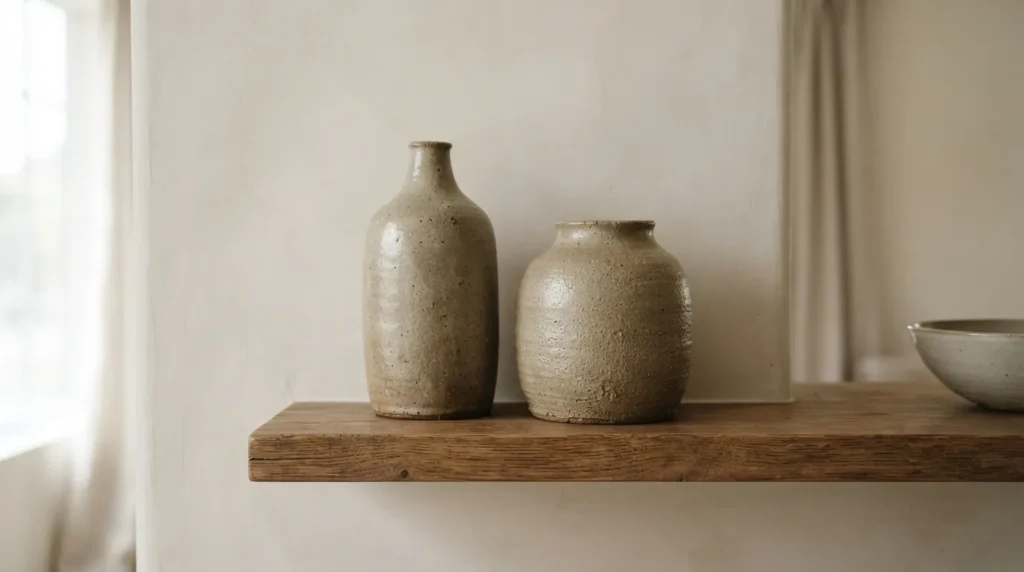
Handcrafted ceramics are central to authentic Japandi styling, reflecting the wabi-sabi principle of finding beauty in imperfection and the natural variation that comes from handmade work. A mistake many homeowners make is filling a minimal space with perfectly uniform, mass-produced decor, which can end up feeling sterile rather than calm. A single hand-thrown vase or a set of slightly irregular ceramic bowls introduces the kind of quiet character that machine-made objects simply can’t replicate.
How To Style It
Choose ceramics with visible texture, a matte or slightly uneven glaze, and subtle asymmetry rather than perfectly smooth, glossy, uniform pieces. Group two or three ceramic pieces together on a low shelf or table, allowing some negative space around them so each piece can actually be appreciated. Look for pieces from independent potters or small studios when possible, since these tend to carry more of the individual character that defines genuine wabi-sabi styling.
5. Minimalist Negative Space
Quick Benefits
- Creates genuine visual and mental calm
- Allows individual pieces to be fully appreciated
- Prevents the room from feeling cluttered or busy
- Reflects core Japanese design philosophy
- Elevates the perceived quality of the entire space
Why It Works
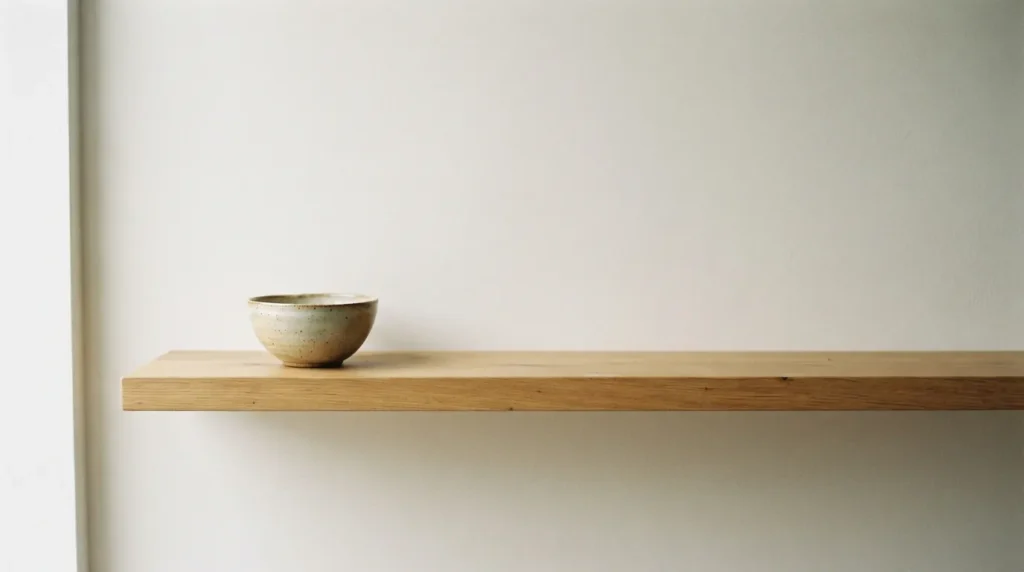
Negative space, referred to as “ma” in Japanese design philosophy, is treated as an active design element in its own right, not simply the absence of decor. A mistake many homeowners make is feeling that empty wall space or bare shelving needs to be filled, when in Japandi design, that emptiness is precisely what allows the surrounding elements to feel calm and intentional rather than cluttered. This principle is often the hardest for homeowners accustomed to more maximalist styles to embrace, but it’s central to why Japandi spaces feel so genuinely restful.
How To Style It
Resist the urge to fill every shelf, wall, and surface, and instead choose fewer, more meaningful objects with generous space around each one. When styling a shelf, aim to leave at least a third of the surface visibly empty, rather than filling it edge to edge. Apply this same principle to walls, choosing one piece of art or leaving a wall entirely bare rather than defaulting to a full gallery arrangement, which works against the calm, spacious feeling this style is built around.
6. Linen And Cotton Textiles
Quick Benefits
- Adds softness without visual clutter
- Reflects natural, breathable material choices
- Provides subtle texture within a neutral palette
- Ages gracefully with a naturally worn-in look
- Works well across bedding, curtains, and upholstery
Why It Works
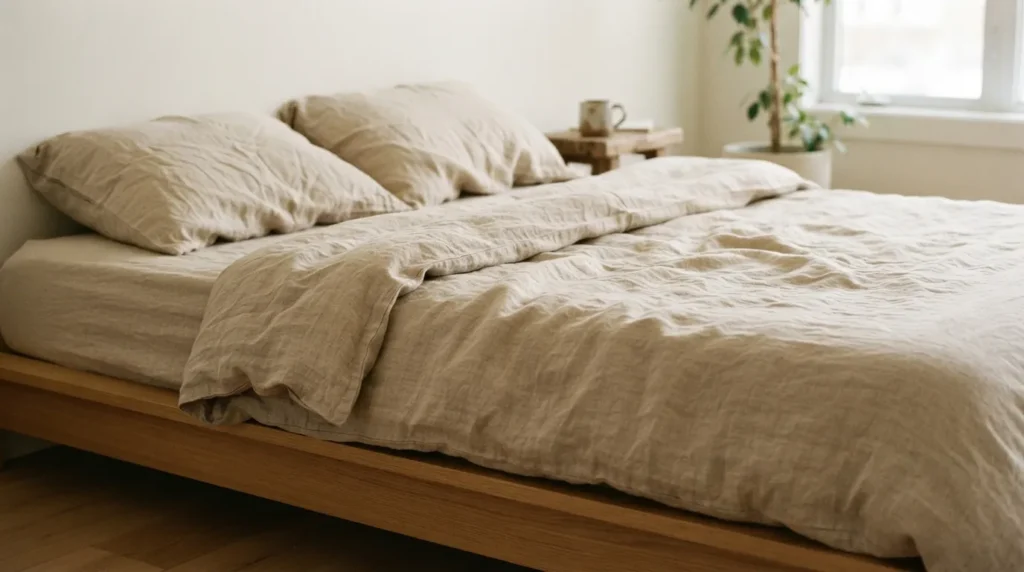
Natural fiber textiles, particularly linen and cotton, support the Japandi emphasis on honest, natural materials while adding a layer of softness that keeps the style from feeling too austere. I’ve noticed that linen in particular develops a slightly rumpled, lived-in texture over time that actually reinforces the wabi-sabi appreciation for natural imperfection, unlike a perfectly smooth synthetic fabric that always looks the same. This softness balances the more structured, low-profile furniture common throughout the rest of the space.
How To Style It
Choose linen bedding, curtains, and upholstery in soft, muted tones that align with the room’s earthy palette, allowing some natural wrinkling and texture rather than pressing everything perfectly smooth. Layer in a cotton throw or a few textured pillow covers for subtle variation, keeping the overall color range narrow and tonal rather than introducing contrasting colors. These natural fibers also tend to feel more breathable and comfortable in daily use, which supports the livability that’s just as important as the visual style.
7. Stone And Clay Elements
Quick Benefits
- Grounds the space with genuine earthy material
- Adds subtle texture and color variation
- Complements wood and ceramic elements
- Provides a tactile, grounding counterpoint to softer textiles
- Reflects both design traditions’ appreciation for natural material
Why It Works
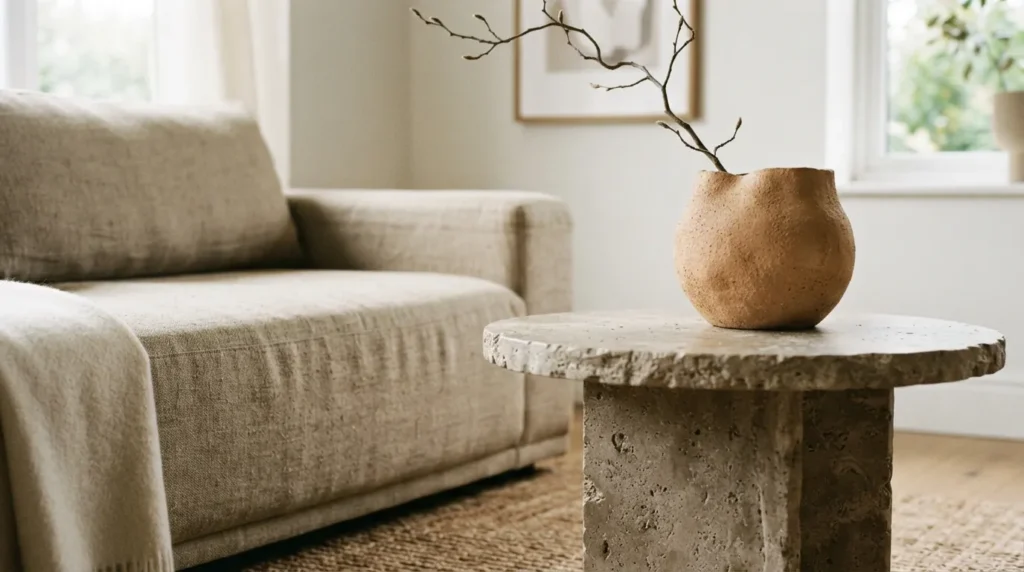
Stone and unglazed clay bring an additional layer of earthy, grounding material into a Japandi space, complementing the wood tones and ceramics already central to the style. A mistake many homeowners make is relying entirely on wood and textiles, missing the textural contrast that a stone side table or a raw clay vessel can provide. These materials carry a certain weight and permanence that reinforces the calm, settled feeling central to Japandi design.
How To Style It
Introduce stone through a side table, a coaster set, or a small decorative bowl, choosing pieces with a honed or natural, unpolished finish rather than a high-gloss surface. Unglazed clay vessels, left in their natural earthy tone rather than painted or heavily glazed, work particularly well as simple planters or small storage vessels. Balance these heavier, more solid materials against the softer linen textiles and lighter wood tones elsewhere in the room to maintain an overall sense of harmony.
8. Soft Diffused Lighting
Quick Benefits
- Creates a calm, gentle atmosphere throughout the day
- Reflects the Japanese appreciation for shadow and subtlety
- Avoids harsh, overly bright artificial light
- Complements natural materials without overpowering them
- Supports the room’s overall restful quality
Why It Works
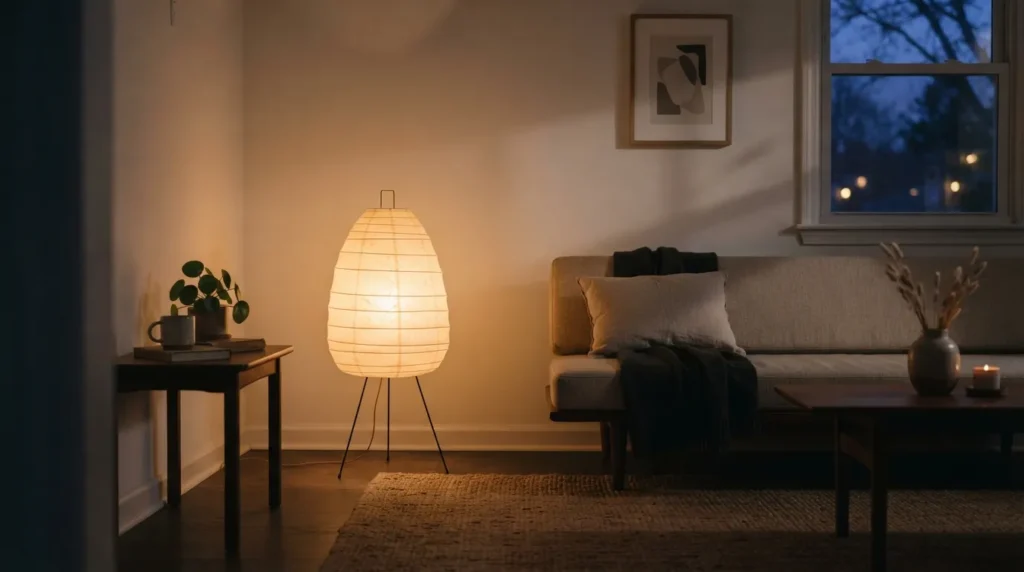
Lighting in Japandi interiors tends to favor soft, diffused sources over bright, direct light, drawing on the traditional Japanese appreciation for shadow and subtlety, sometimes referred to through the concept of “in’ei” or the beauty found in dim, gentle light. One simple trick I always suggest is layering in paper or fabric-shaded lighting, which softens and diffuses the light source itself, rather than relying on bright, exposed bulbs or harsh overhead fixtures that work against the calm mood central to this style.
How To Style It
Choose lighting with paper, linen, or rice-paper-style shades, which diffuse light gently rather than casting sharp, direct beams. Use warm-toned bulbs in the lower range, closer to 2700K, and rely on multiple smaller light sources placed at a lower height rather than one bright, central overhead fixture. Floor lamps and low table lamps both support the room’s low, grounded furniture proportions while contributing to this same soft, ambient quality of light.
9. Woven Natural Textures
Quick Benefits
- Adds handmade warmth to a minimal palette
- Introduces texture without visual clutter
- Reflects both design traditions’ natural material focus
- Works well across rugs, baskets, and lighting
- Balances the room’s structured, low furniture
Why It Works
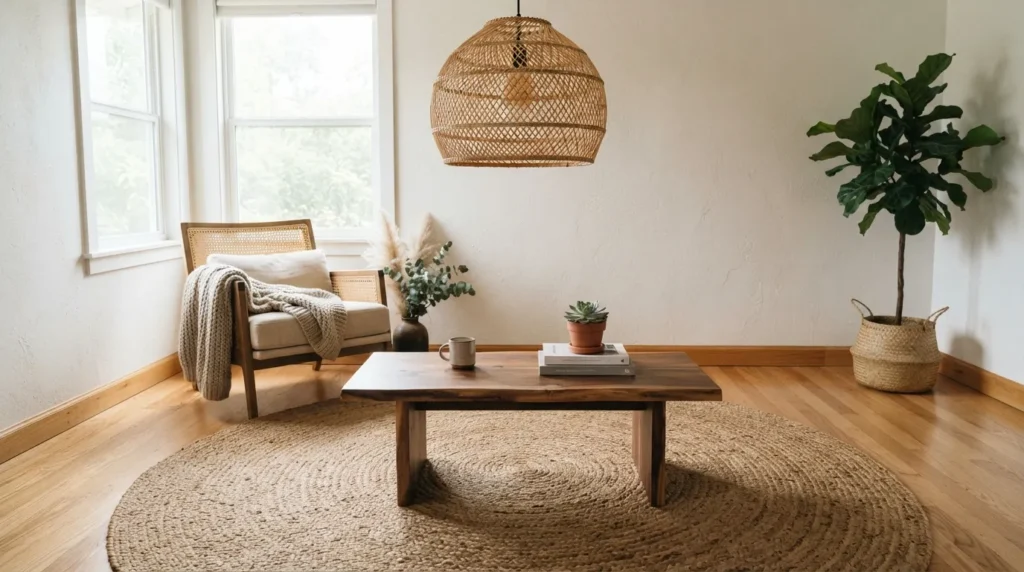
Woven natural materials, such as rattan, seagrass, and tatami-inspired textures, add a layer of tactile warmth that keeps a Japandi space from feeling too rigid or sparse. A mistake many homeowners make is relying entirely on smooth, hard surfaces like wood and stone, missing the softer, more organic texture that woven elements provide. These materials also carry strong ties to both Japanese tatami flooring traditions and Scandinavian basket-weaving, making them a particularly authentic choice for this specific style.
How To Style It
Choose a woven jute or seagrass rug for the room’s main floor covering, which adds texture underfoot while staying within the neutral, earthy palette. Incorporate woven baskets for storage, and consider a woven pendant light shade to reinforce this texture at eye level as well as underfoot. Keep the weave patterns relatively simple and consistent rather than mixing many different weave styles, which helps maintain the calm, cohesive feeling central to the space.
10. Botanical Simplicity
Quick Benefits
- Adds life to the space without visual excess
- Reflects the Japanese appreciation for considered nature
- Provides a calming, organic focal point
- Works well as a single, intentional statement
- Complements the room’s overall restrained palette
Why It Works
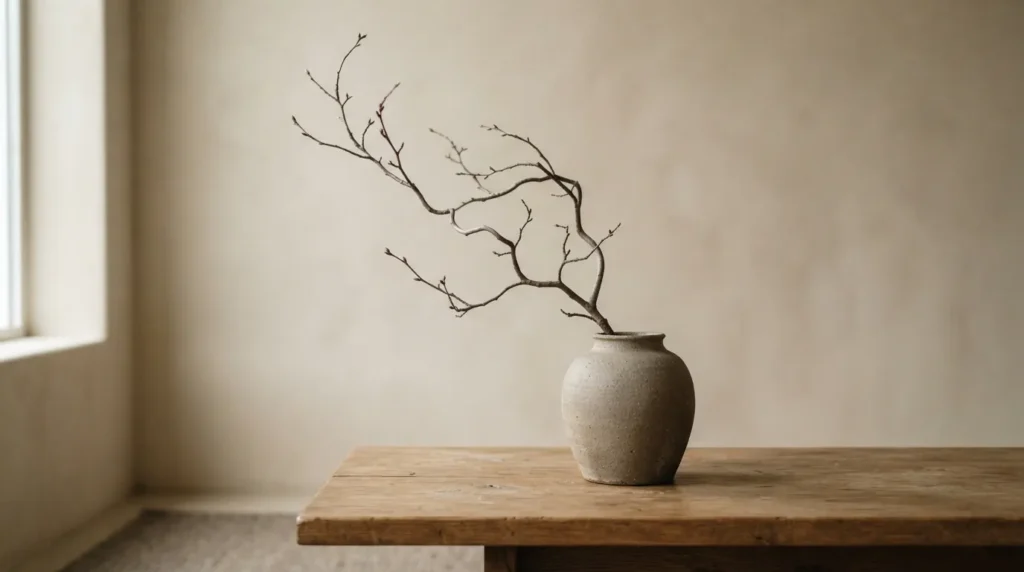
Greenery in Japandi interiors tends to follow the same principle of restraint found throughout the rest of the style, favoring one or two carefully chosen plants over an abundant indoor jungle. This approach draws on the Japanese tradition of ikebana, where a single branch or a few carefully arranged stems can carry as much visual weight as a large, full arrangement. I’ve seen this idea transform Japandi spaces that otherwise felt a bit too sparse, adding just enough organic life without disrupting the room’s overall sense of calm.
How To Style It
Choose one or two plants with simple, sculptural forms — a single branch arrangement, a bonsai, or a snake plant with clean architectural lines — rather than a large collection of varied greenery. Place them in simple, unglazed ceramic or stone planters that align with the room’s earthy palette, avoiding busy or brightly colored pots that would compete with the intentional restraint elsewhere in the space. A single well-placed plant, given room to be appreciated on its own, does more for a Japandi room than several plants competing for attention.
Frequently Asked Questions
What’s the difference between Japandi and regular minimalism?
Minimalism often prioritizes function and simplicity above all else, sometimes resulting in a colder, more austere feel. Japandi blends that same restraint with the warmth of Scandinavian hygge and the imperfect, handcrafted appreciation of Japanese wabi-sabi, resulting in a style that feels calm and inviting rather than stark.
Do I need to buy all new furniture to create a Japandi look?
Not necessarily. Many homeowners can shift toward Japandi gradually by simplifying existing decor, introducing natural materials through smaller accents, and being more intentional about negative space, before investing in new furniture pieces.
What colors are typically used in Japandi design?
Warm neutrals dominate the palette, including soft beige, warm white, light gray, and muted clay tones, with deeper accents like charcoal used more sparingly. Bright, saturated colors are generally avoided in favor of these earthy, calming tones.
Is Japandi design expensive to achieve?
It can be, particularly with solid wood furniture and handcrafted ceramics, but the style’s emphasis on fewer, well-chosen pieces means the overall investment can actually be lower than filling a room with many smaller decor items. Prioritizing quality over quantity is central to the aesthetic itself.
Can Japandi design work in a small apartment?
Yes, and it often works particularly well in smaller spaces, since the style’s low-profile furniture and emphasis on negative space naturally suit more compact rooms. The restrained approach to decor also means fewer pieces are needed overall.
What materials should I avoid in a Japandi interior?
Glossy, synthetic materials, heavily patterned textiles, and bright or neon colors generally work against the calm, natural aesthetic central to Japandi design. Sticking to natural materials like wood, stone, clay, and natural fiber textiles keeps the look authentic.
How is Japandi different from farmhouse or cottage style?
Farmhouse and cottage styles often lean into a more layered, collected, sometimes rustic look with visible pattern and ornamentation, while Japandi favors a much more restrained, quiet aesthetic with cleaner lines and significantly less visual clutter, even though both styles share an appreciation for natural materials.
Conclusion
Japandi design proves that calm and luxurious aren’t mutually exclusive — in fact, the calm is often exactly what makes the space feel luxurious. Natural wood tones, low-profile furniture, handcrafted ceramics, and a genuine respect for negative space all work together to create rooms that feel deeply restful rather than sparse or cold.
Start with one or two ideas from this list and gradually build a space that reflects your style and supports everyday comfort. Whether that means simplifying a cluttered shelf, introducing a single handcrafted ceramic piece, or finally embracing some intentional empty wall space, these choices compound into a home that feels genuinely calm to spend time in. The most successful Japandi interiors aren’t the ones with the most curated collection of natural objects — they’re the ones that know exactly when to stop adding.
Related Articles
- Organic Modern Living Room Ideas
- Simple Timeless Living Room Ideas
- Aesthetic Living Room Ideas You’ll Love
- Neutral Home Styling Ideas
- How To Style Open Shelving With Restraint
- le highlighting the plant’s simple, intentional form.