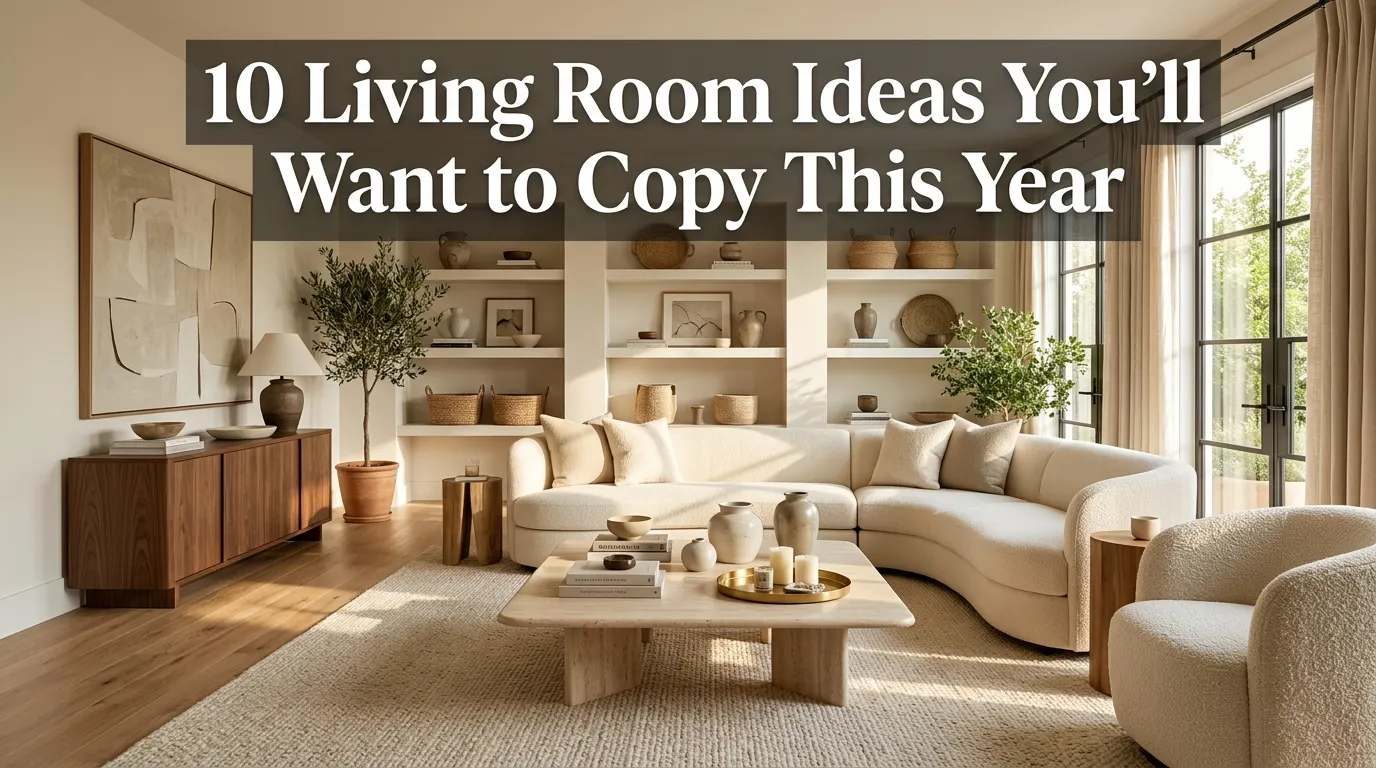
10 Living Room Ideas You’ll Want to Copy This Year
If you’ve spent any time scrolling home decor inspiration lately, you already know the living room is where every design trend gets tested first. It’s the room guests see the moment they walk in, the room where family movie nights happen, and often the room that gets redecorated the most — and abandoned the fastest, because so many “trendy” ideas never actually hold up in real homes with real furniture budgets.
In my experience working with homeowners on refreshes big and small, the living rooms that actually feel good to live in aren’t the ones copied straight off a showroom floor. They’re the ones built around a few solid ideas, done well, with room left to breathe. That’s the approach behind this list of living room ideas — each one has been tested in actual homes, not just styled for a photo.
A mistake many homeowners make is trying to change everything at once: new sofa, new rug, new wall color, new lighting, all in the same weekend. It rarely works, and it almost always feels disjointed. The better path is picking one or two ideas that solve a problem you actually have — a space that feels cold, cluttered, dark, or just “off” — and building from there.
This guide walks through ten living room ideas that are genuinely worth copying this year, not because they’re trending on Pinterest (though they are), but because they solve real design problems: awkward layouts, flat lighting, spaces that feel unfinished, and rooms that never quite feel cozy no matter how much furniture gets added. Whether you’re working with a rental, a fixer-upper, or a room you’ve lived in for a decade and finally want to update, you’ll find something here that fits your space, your style, and your budget.
Table of Contents
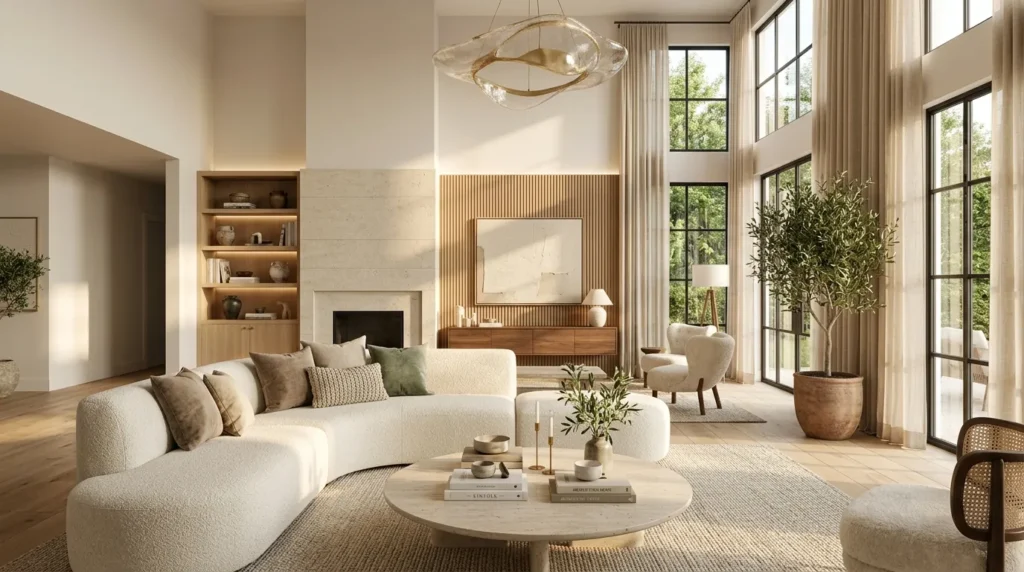
- Organic Modern Layers — Blending natural materials with clean modern lines for a room that feels both current and warm.
- Warm Neutral Palette — Using tonal neutrals instead of stark white for a softer, more livable base.
- Statement Lighting Moments — Letting one bold fixture do the heavy lifting instead of scattered overhead lights.
- Textured Layered Rugs — Building depth underfoot with two rugs instead of one flat layer.
- Curated Coffee Table Styling — Styling the coffee table with intention instead of clutter.
- Vintage Wood Accents — Mixing in aged or reclaimed wood pieces for instant character.
- Sculptural Furniture Silhouettes — Choosing furniture shapes with curves and presence, not just function.
- Gallery Wall Design — Creating a personal, collected-over-time art display.
- Cozy Reading Corner — Carving out a small dedicated nook for quiet time.
- Indoor Greenery Touches — Adding plants strategically for life and color without overwhelming the space.
1. Organic Modern Layers
Quick Benefits
- Feels current without chasing every trend
- Works with almost any existing furniture
- Adds warmth to spaces that feel too sterile
- Easy to build gradually, piece by piece
- Photographs beautifully for a cohesive Pinterest board
Why It Works
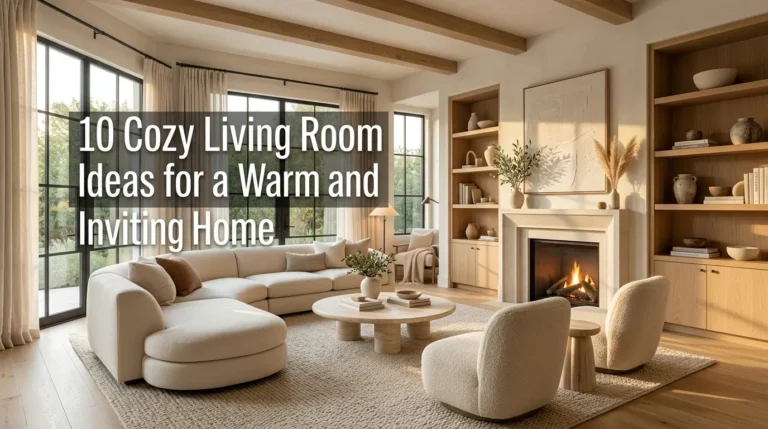
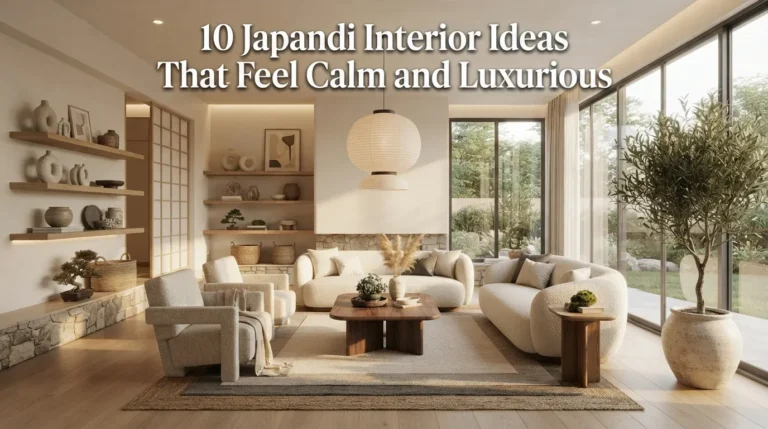
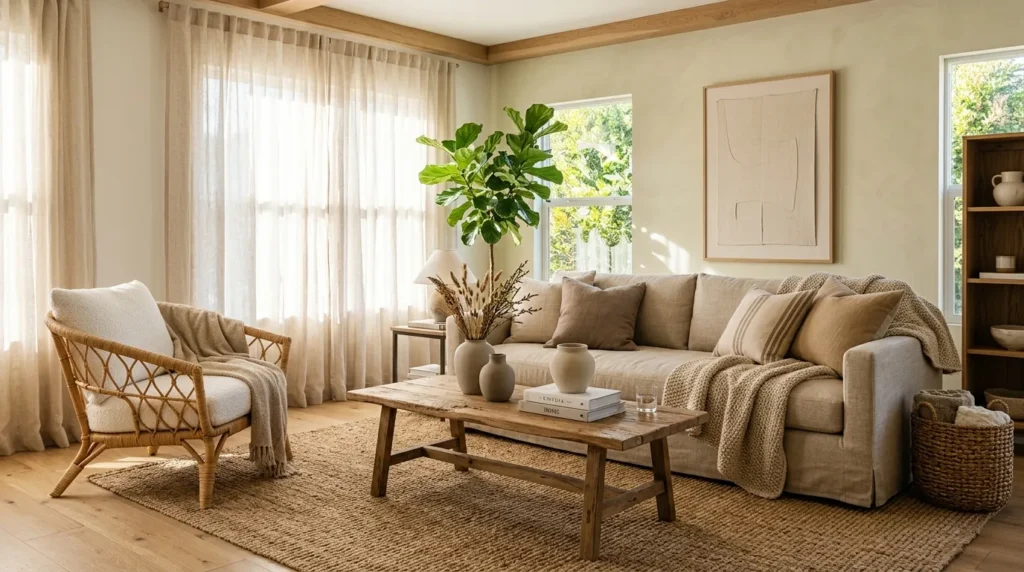
Organic modern design takes the clean lines of contemporary style and softens them with natural materials — think linen, rattan, unfinished wood, and stone. I’ve noticed this combination works so well because it satisfies two opposing needs at once: a room that looks put-together and intentional, but still feels lived-in and comfortable. Pure modern design can feel cold in a family space, while pure traditional design can feel heavy or dated. Organic modern splits the difference. It also ages well, since it’s built on materials rather than trends, so you’re not stuck redecorating every time a color falls out of favor.
How To Style It
Start with a neutral sofa in a woven or textured fabric rather than smooth leather, then bring in a rattan or wood-framed accent chair. Swap metal or acrylic side tables for reclaimed wood or a organic-shaped stone-look table. Layer in linen curtains and a few ceramic vases in matte, earthy glazes. Keep your color palette limited to three or four tones so the natural materials stand out instead of competing with busy patterns.
2. Warm Neutral Palette
Quick Benefits
- Makes small rooms feel larger and calmer
- Never goes out of style
- Pairs easily with any accent color later
- Hides everyday wear better than stark white
- Creates a soothing backdrop for busy households
Why It Works
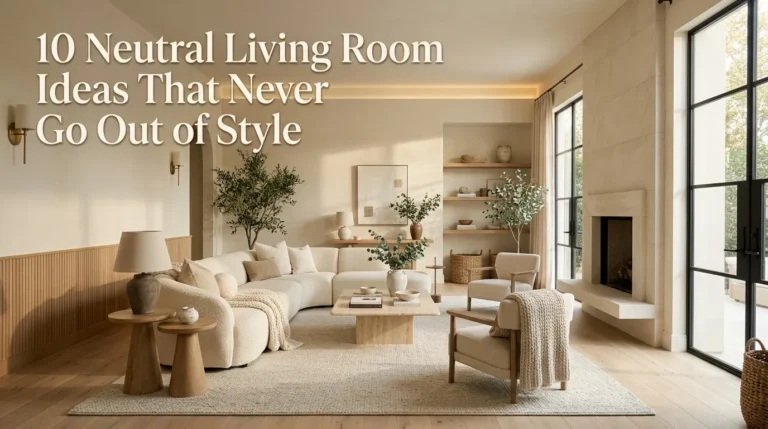
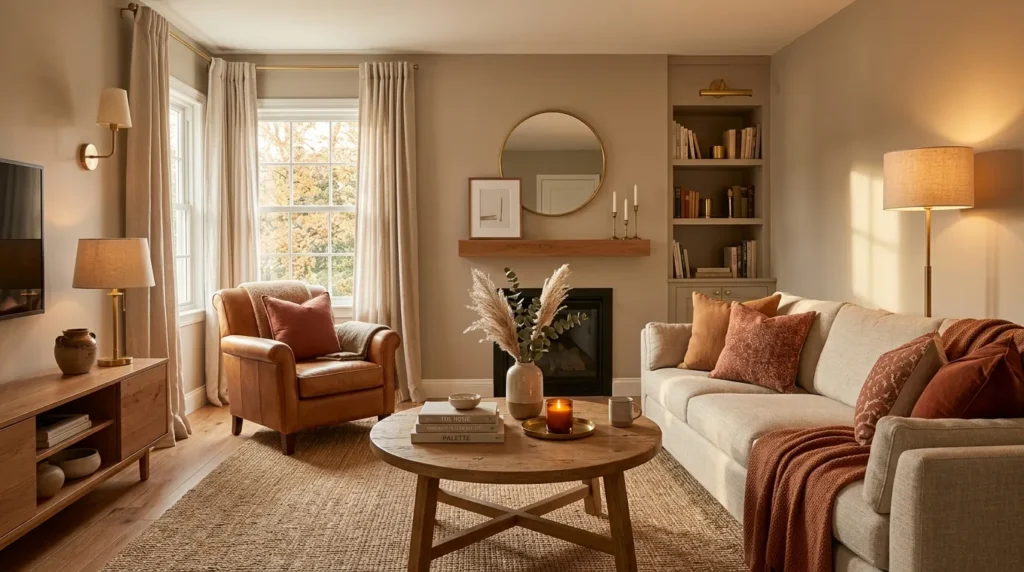
If you’re anything like me, you’ve probably painted a room “greige” at some point only to find it read as cold and flat under certain light. The trick with a warm neutral palette isn’t just picking beige — it’s layering tones with a hint of warmth, like a soft oatmeal, warm taupe, or muted terracotta undertone. That’s why many designers recommend testing paint swatches at different times of day before committing; a color that looks perfect at noon can turn gray and lifeless by evening. Warm neutrals give a room a sense of calm without making it feel unfinished or bare.
How To Style It
Choose a wall color with warm undertones rather than cool gray, and repeat that warmth in your textiles — think caramel leather, rust-colored throw pillows, or a jute rug. Avoid stacking too many cool-toned metals like chrome; brass, bronze, or matte black hardware reads warmer and ties the palette together. If you rent and can’t paint, this palette translates easily through furniture and soft goods alone.
3. Statement Lighting Moments
Quick Benefits
- Instantly elevates an otherwise simple room
- Draws the eye away from imperfect walls or floors
- Doubles as functional task or ambient light
- Works in both large and small living rooms
- One piece can define the whole room’s style
Why It Works
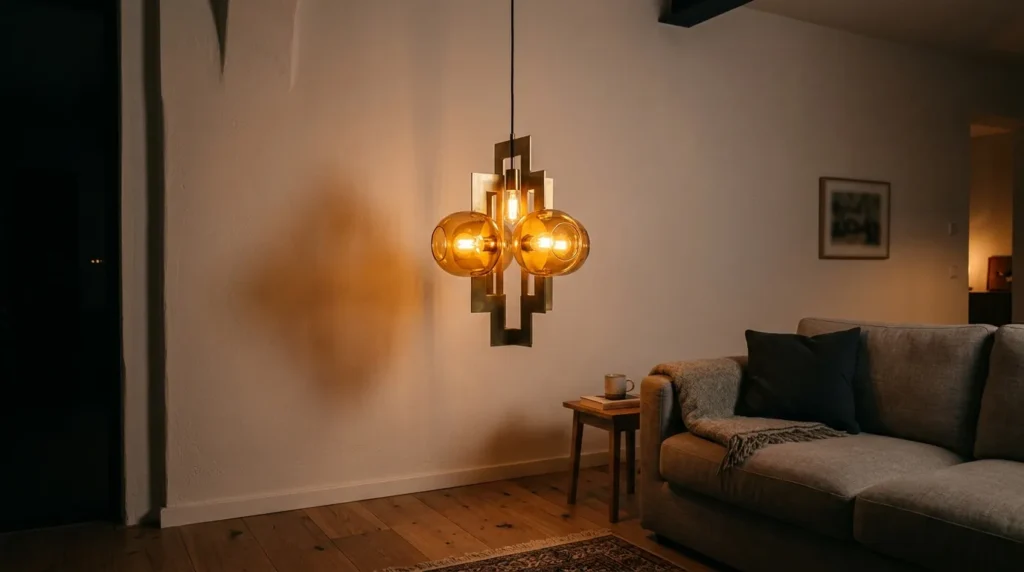
Overhead lighting is one of the most overlooked elements in living room design, and it’s usually the last thing anyone budgets for. One simple trick I always suggest is treating a single lighting fixture as a piece of art rather than a utility. A sculptural pendant, an oversized arc floor lamp, or a cluster of glass globes creates a focal point the eye naturally travels to, which makes the whole room feel more finished — even if the furniture underneath is simple. It works because lighting shapes mood and depth in ways paint and furniture can’t replicate on their own.
How To Style It
Pick one fixture to be the “statement” and keep everything else simple — table lamps in plain shades, sconces in matching finishes. Position it where it’ll be seen from the main seating area or entryway, not tucked in a corner. If your ceiling is low, a floor lamp with an oversized shade can create the same drama a pendant would, without the installation. Warm bulbs (2700K–3000K) keep the mood cozy rather than clinical.
4. Textured Layered Rugs
Quick Benefits
- Adds visual depth without adding clutter
- Softens hard flooring in open-concept spaces
- Helps define separate zones in larger rooms
- Budget-friendly compared to replacing flooring
- Easy to update seasonally
Why It Works
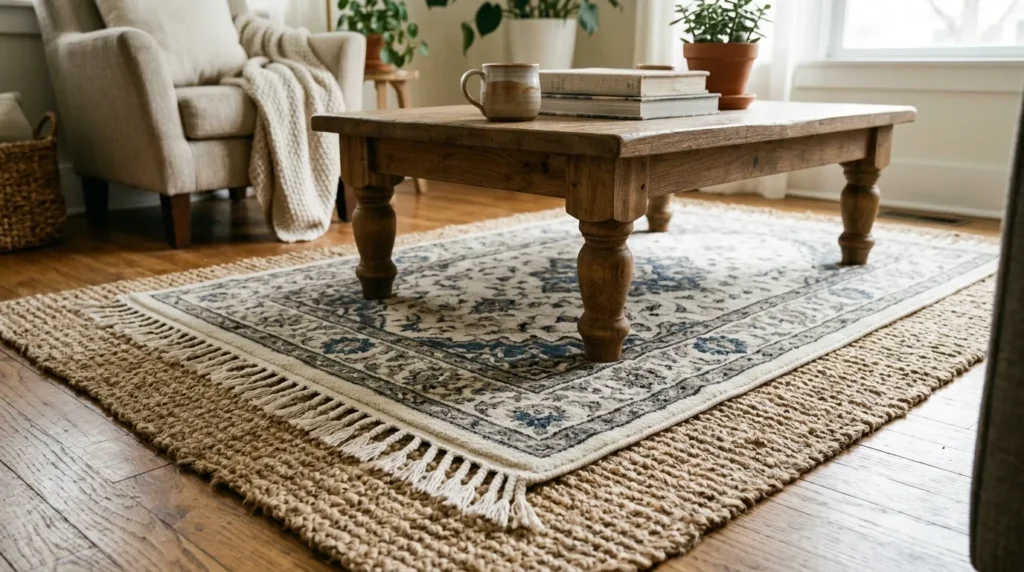
Layering rugs is a technique I’ve seen transform spaces that otherwise felt flat, especially in open-concept homes where the living area blends into a dining or entry space. A neutral jute or sisal rug as the base, topped with a smaller patterned or textured rug, creates depth the way a single flat rug never can. It also solves a practical problem: sisal alone can feel scratchy underfoot, while a soft layered rug on top keeps the texture without sacrificing comfort.
How To Style It
Choose a natural fiber rug slightly larger than your seating area as the base layer, then add a smaller wool, vintage-style, or patterned rug centered under the coffee table. Keep pattern scale in mind — a busy base with a busy top layer competes for attention, while a plain base with one patterned layer keeps things balanced. This works especially well in rooms with hardwood or tile that otherwise feel echoey and bare.
5. Curated Coffee Table Styling
Quick Benefits
- Makes the room feel intentional, not staged
- Costs little to nothing using items you own
- Easy to refresh by season or mood
- Adds personality without permanent commitment
- Creates a natural conversation piece for guests
Why It Works
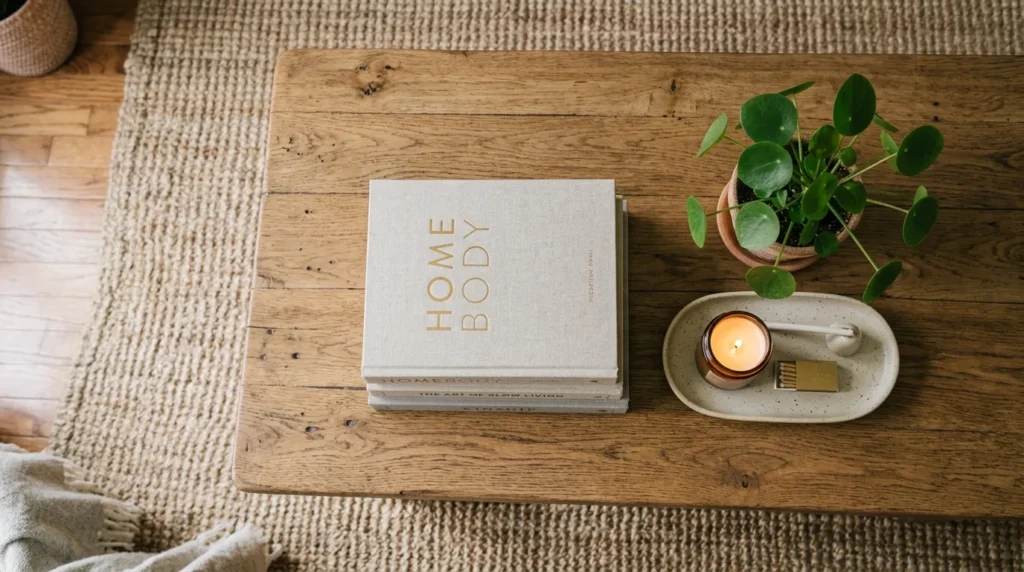
A cluttered coffee table is one of the fastest ways to make an otherwise nice living room feel chaotic, but a completely bare one can feel cold and unfinished. In my experience, the sweet spot is a small, curated grouping — usually three to five objects of varying height and texture. This works because the eye reads groupings of odd numbers as more natural and balanced than even, symmetrical arrangements, and mixing heights creates the kind of visual rhythm that makes a space feel styled rather than staged.
How To Style It
Anchor the grouping with a stack of coffee table books, then add one organic element (a small plant or a bowl of dried branches), one textural object (a ceramic vase or ceramic tray), and one personal item like a small dish for keys or a candle. Leave at least half the table surface open for actual use — drinks, laptops, feet — so the styling never feels precious or off-limits.
6. Vintage Wood Accents
Quick Benefits
- Adds instant character and history to new furniture
- Prevents a room from feeling too matched or showroom-like
- Often more affordable than new solid wood pieces
- Pairs well with almost any design style
- Sustainable choice that reduces new furniture demand
Why It Works
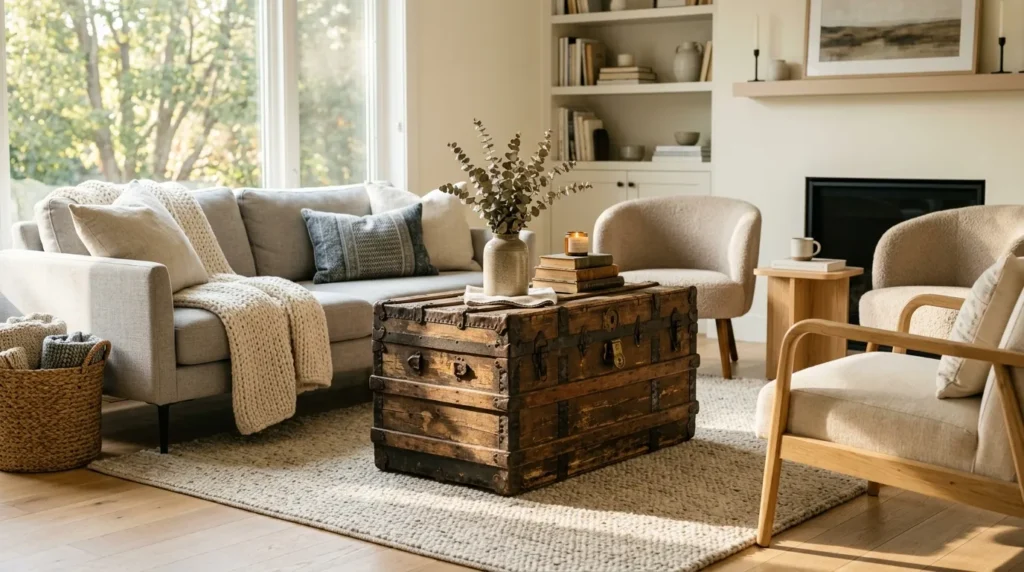
A room filled entirely with brand-new furniture can feel strangely impersonal, like a hotel lobby rather than a home. One thing that works especially well is introducing at least one vintage or reclaimed wood piece — an old trunk used as a coffee table, a weathered console, or a set of thrifted wood frames. The imperfections, grain variation, and worn edges do something new furniture can’t: they suggest a story, which makes the whole room feel collected over time rather than purchased in a single trip.
How To Style It
Look for one anchor piece with real age to it — an estate sale trunk, a vintage sideboard, or a reclaimed wood shelf — and let newer furniture play a supporting role around it. Don’t over-restore vintage wood; a bit of patina and visible wear is part of the appeal. Balance it with one or two other wood tones in the room so the vintage piece doesn’t look randomly placed.
7. Sculptural Furniture Silhouettes
Quick Benefits
- Adds visual interest without extra accessories
- Softens boxy, straight-lined rooms
- Creates a memorable focal point
- Works well as a single splurge item
- Elevates even a simple, neutral color scheme
Why It Works
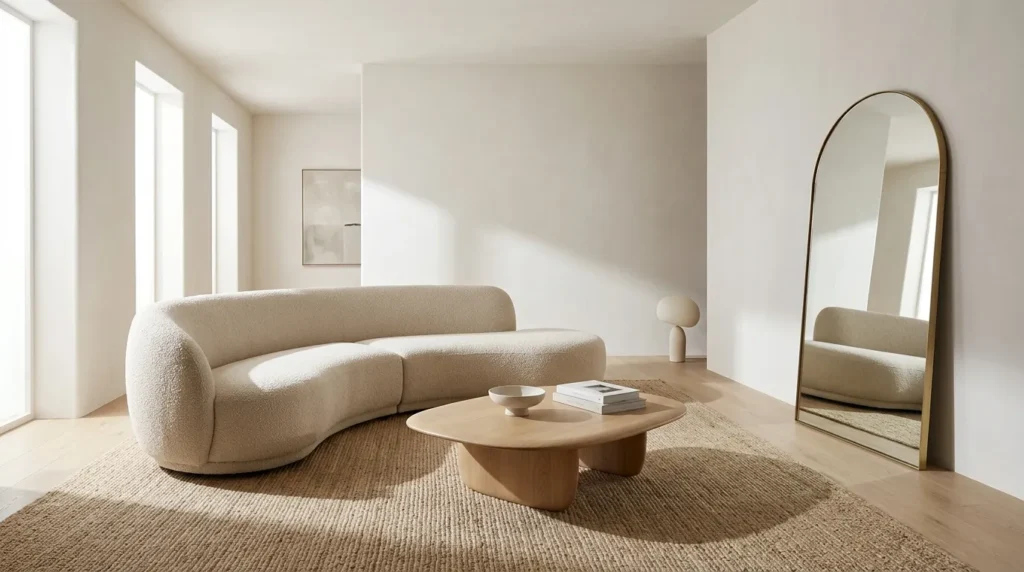
Most living rooms default to boxy sofas and straight-edged furniture, which is practical but visually flat. A mistake many homeowners make is assuming bold shape means bold color — it doesn’t. A curved sofa, a rounded accent chair, or an arched mirror in an otherwise neutral room adds drama purely through silhouette. This works because curves catch and reflect light differently than flat surfaces, creating subtle shadow and movement that make a simple room feel considered and high-end.
How To Style It
Choose one sculptural piece as your statement — a curved sofa, an egg-shaped accent chair, or a rounded coffee table — and keep the rest of the furniture simple and low-profile so it doesn’t compete. Neutral upholstery lets the shape speak for itself; save bold color or pattern for smaller accessories like pillows or a throw.
8. Gallery Wall Design
Quick Benefits
- Fills large blank walls affordably
- Reflects personal taste and memories
- Works in nearly any style of home
- Easy to expand over time
- Creates a natural photo backdrop for the room
Why It Works
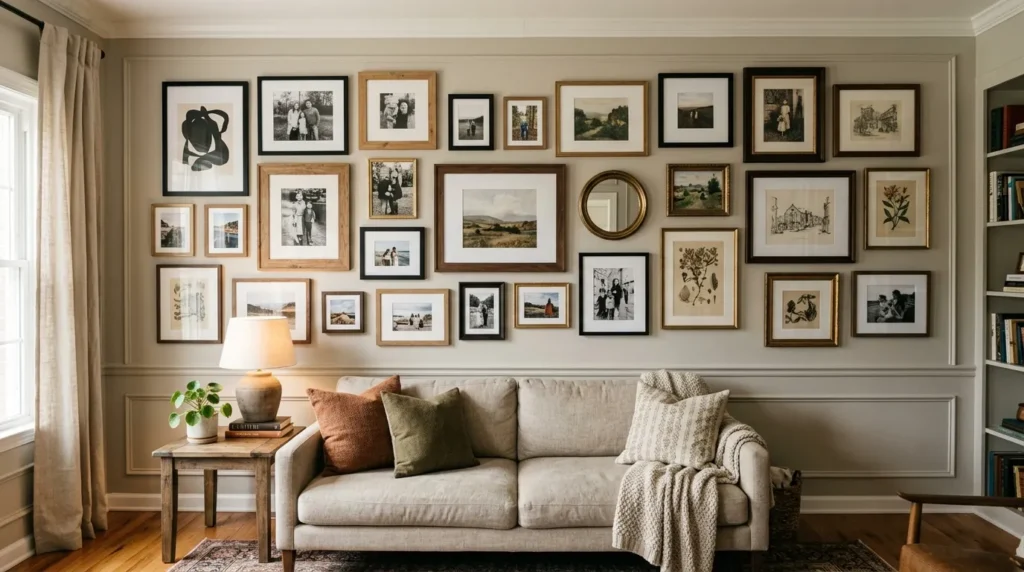
A large blank wall is one of the most common complaints I hear from homeowners, and a single piece of art often isn’t enough to fill the space without looking sparse. A gallery wall solves this by combining several smaller and medium pieces — art prints, photographs, mirrors, even small shelves — into one cohesive display. That’s why many designers recommend building a gallery wall gradually; the mismatched-but-connected feel is part of what makes it look personal rather than purchased as a matching set.
How To Style It
Lay pieces out on the floor first to test spacing before hanging anything, keeping two to three inches between frames for a cohesive but breathable look. Stick to two or three frame colors max (black, wood, and one metal, for example) to keep it from feeling chaotic. Mix in one or two non-photo elements, like a small mirror or a woven wall hanging, for texture.
9. Cozy Reading Corner
Quick Benefits
- Makes small unused corners functional
- Encourages relaxation and screen-free time
- Requires minimal furniture or investment
- Adds a personal retreat within a shared space
- Works in apartments, rentals, and large homes alike
Why It Works
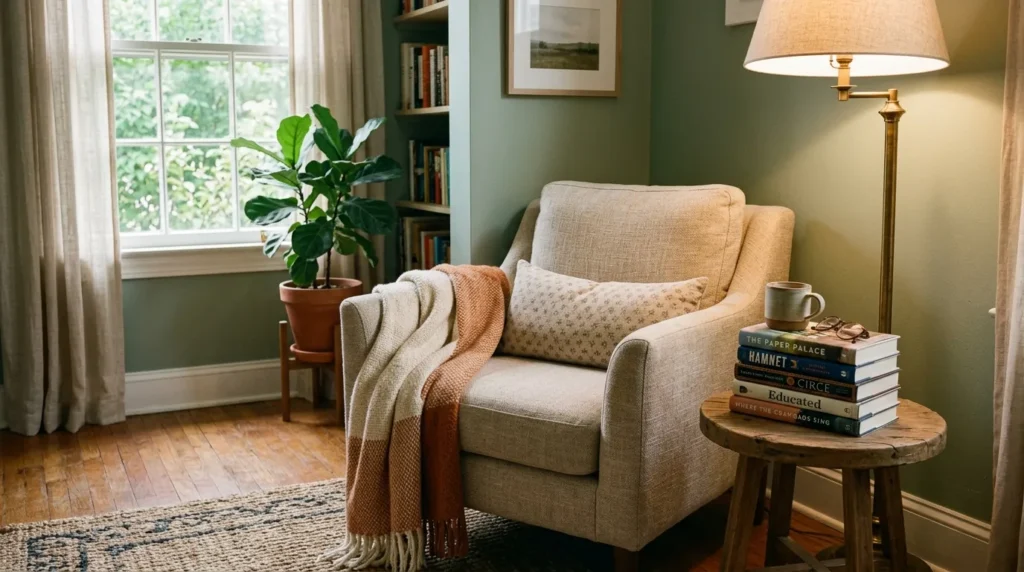
Not every part of the living room needs to face the TV. In my experience, one of the most underused opportunities in a living room is the awkward corner — too small for a sofa, too big to ignore — that’s perfect for a reading nook instead. This works because it gives the room a secondary purpose beyond entertaining, which makes the whole space feel more livable day-to-day rather than only “on” when guests are over.
How To Style It
A single accent chair, a small side table, and a floor lamp are really all you need. Add a soft throw blanket, a small basket for current reads, and if space allows, a compact bookshelf nearby. Position the chair near natural light if possible — even a modest window makes the corner feel intentional rather than an afterthought.
10. Indoor Greenery Touches
Quick Benefits
- Adds color and life without a full redesign
- Improves the overall mood of a space
- Budget-friendly compared to most decor updates
- Works in nearly every design style
- Easy to scale from one plant to many
Why It Works
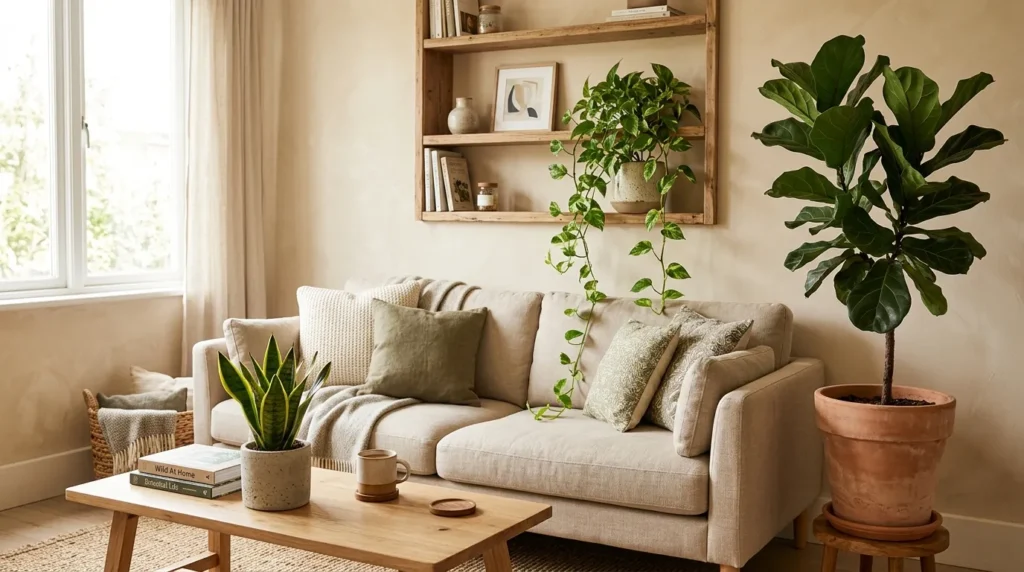
A living room without a single plant often feels unfinished, even when everything else is styled well. Greenery does something no other decor element quite replicates: it adds movement, color, and a sense of life to a static room. I’ve seen this idea transform spaces on a very small budget — sometimes a single well-placed plant does more for a room than an expensive new accessory would.
How To Style It
Vary plant height and placement rather than clustering everything at the same level — a tall floor plant in a bare corner, a trailing plant on a shelf, and a small potted plant on the coffee table create natural rhythm. If natural light is limited, choose low-light-tolerant plants like pothos or snake plants, or use quality faux versions in areas where real plants won’t survive.
Frequently Asked Questions
What is the most budget-friendly living room idea to start with?
Curated coffee table styling and indoor greenery touches are the most affordable places to start, since both use items you may already own or can find secondhand. A single plant, a stack of books, and one meaningful object can noticeably improve how a room feels without any major purchase.
How do I make a small living room feel bigger?
A warm neutral palette combined with textured layered rugs tends to work best in small spaces. Light, warm wall colors reflect more light, while a properly sized rug (rather than one too small for the seating area) visually expands the floor space instead of chopping it into pieces.
Do I need to follow one specific design style?
No. These ideas are meant to be mixed across styles like organic modern, farmhouse, or transitional. The goal is picking ideas that solve a real problem in your space, not committing to a single rigid aesthetic.
How many living room ideas should I try at once?
Start with one or two, ideally ones that address whatever bothers you most about the room right now — whether that’s poor lighting, a bare wall, or a cluttered surface. Trying to implement all ten at once often leads to a disjointed result.
Are vintage pieces necessary for this look?
Not necessarily, but one vintage or well-worn piece adds character that’s difficult to replicate with all-new furniture. If vintage shopping isn’t accessible, look for new furniture with visible wood grain, imperfect finishes, or hand-made qualities instead.
What’s the easiest living room idea to update seasonally?
Curated coffee table styling and rug layering are the easiest to swap by season, since both can be refreshed with small, inexpensive changes rather than replacing major furniture pieces.
Conclusion
A great living room doesn’t come from copying every trend at once — it comes from choosing a handful of ideas that solve the specific problems in your space and layering them in thoughtfully. Whether your room needs more warmth, better lighting, a stronger focal point, or simply a little personality, the ten living room ideas above offer a realistic, livable starting point rather than an unattainable showroom look.
Start with one or two ideas and gradually build a space that reflects your style and supports everyday comfort. A single lighting change, a layered rug, or one vintage accent piece can shift how a room feels far more than a complete overhaul ever could. Give each change room to settle before adding the next, and let the space evolve at its own pace.
Related Articles
- Cozy Bedroom Ideas
- Small Living Room Layouts
- Modern Farmhouse Decor
- Neutral Home Styling
- DIY Accent Wall Ideas