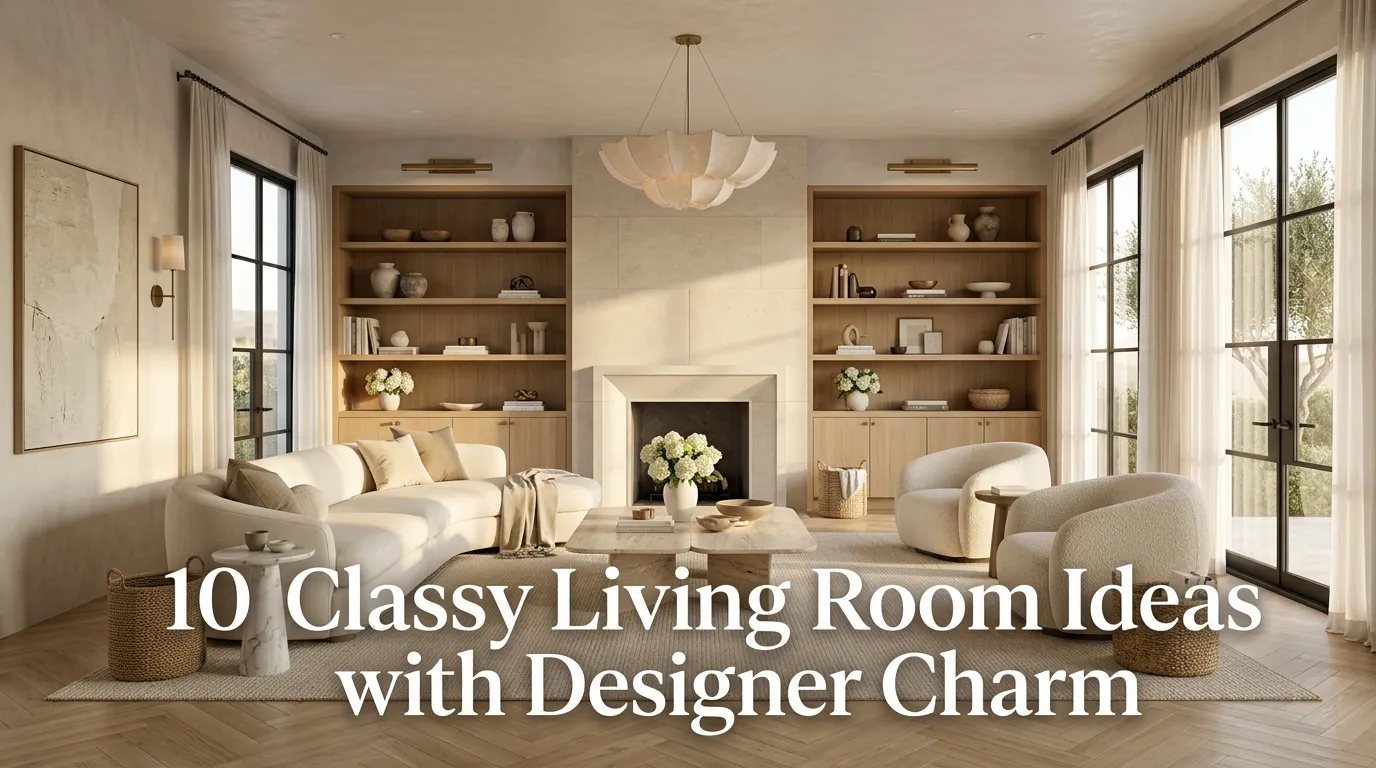
10 Classy Living Room Ideas with Designer Charm
There’s a certain kind of living room that feels expensive the moment you walk in, even when you can’t quite pinpoint why. It’s rarely about how much was spent — I’ve walked into rooms with modest budgets that felt more polished than ones with designer price tags. A mistake many homeowners make is assuming that “classy” means “costly,” when in reality, it almost always comes down to intention, proportion, and a handful of well-chosen details.
Designer charm is built on specific, repeatable choices: rich color moments used sparingly, furniture with tailored lines, lighting that acts as a focal point rather than an afterthought. In my experience, the living rooms that feel the most elevated share a similar restraint — they don’t try to do everything at once. Instead, they choose a few strong, confident decisions and let those carry the room.
This guide walks through ten practical ideas for bringing that same designer-level polish into your own living room, without needing an interior designer’s budget or connections. Each idea explains the reasoning behind it along with specific ways to bring it to life, so you’re left with an actionable plan rather than just a mood board.
If you’re anything like me, you’ve probably saved dozens of “elevated living room” pins without a clear sense of how to actually get there. These ten ideas are meant to close that gap.
Table of Contents
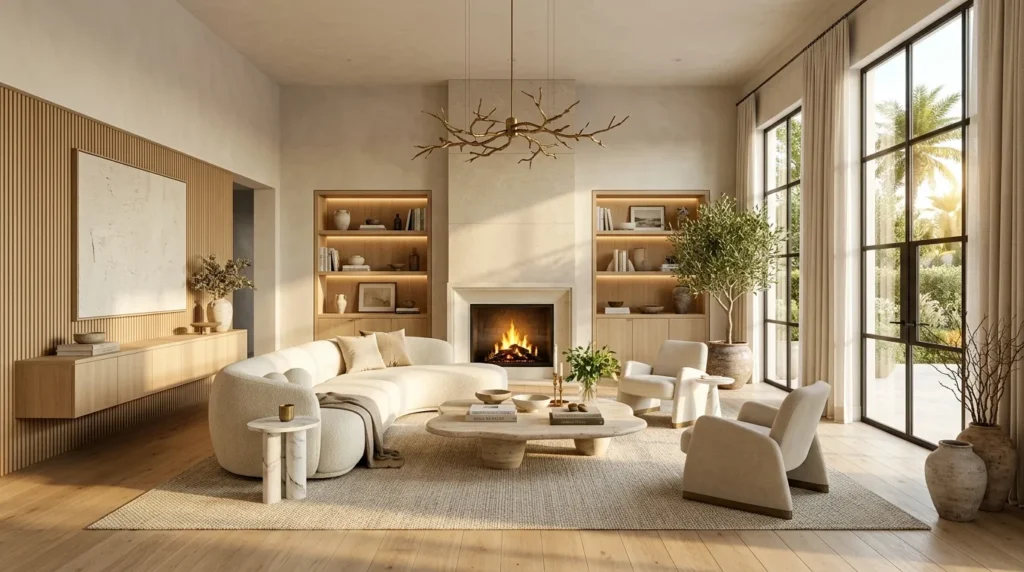
- Rich Jewel Tone Accents — Using deep color for a sense of luxury.
- Statement Coffee Table — Anchoring the room with one confident piece.
- Tailored Upholstered Furniture — Choosing crisp, structured silhouettes.
- Layered Drapery Panels — Elevating windows with proper proportion.
- Metallic Hardware Details — Adding polish through small finishes.
- Gallery Wall Curation — Styling art with a designer’s eye.
- Luxe Textile Layering — Combining rich fabrics for depth.
- Designer Lighting Fixtures — Choosing statement pieces that elevate the room.
- Refined Accent Chairs — Adding a tailored seating moment.
- Curated Coffee Table Styling — Finishing the room with intentional detail.
1. Rich Jewel Tone Accents
Quick Benefits
- Adds an immediate sense of luxury
- Works beautifully against neutral bases
- Draws the eye without overwhelming the room
- Elevates otherwise simple furniture
- Easy to introduce through small accents
Why It Works
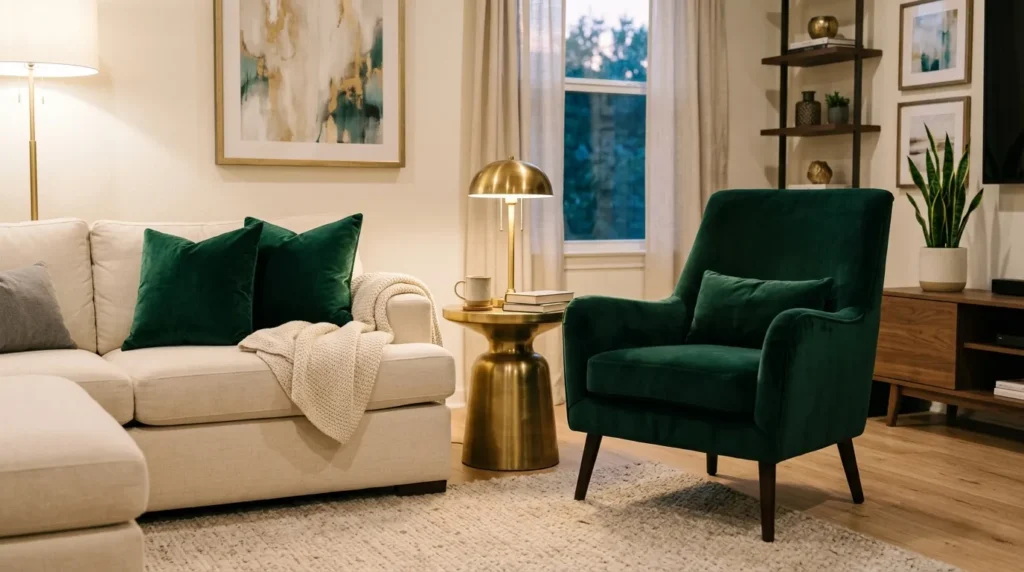
Deep, saturated colors — emerald, sapphire, deep plum, burgundy — read as inherently more luxurious than pastel or overly muted tones. That’s why many designers recommend anchoring a classy living room with at least one jewel-toned moment, whether that’s a velvet accent chair or a set of throw pillows. A mistake many homeowners make is either avoiding bold color entirely or using too much of it, when the real designer trick is using it sparingly against a calm, neutral backdrop so it reads as intentional rather than overwhelming.
How To Style It
Choose one jewel tone and introduce it through a single significant piece — a velvet sofa, an accent chair, or a set of drapery panels — rather than scattering multiple bold colors throughout the room. Pair it with a neutral base of cream, warm white, or soft gray so the color has room to stand out. If a full piece of furniture feels like too big a commitment, start smaller with a set of throw pillows or a single vase in your chosen jewel tone.
2. Statement Coffee Table
Quick Benefits
- Acts as a natural focal point in the room
- Elevates the entire seating area
- Provides a surface for curated styling
- Balances more understated seating pieces
- Available across a wide range of budgets
Why It Works
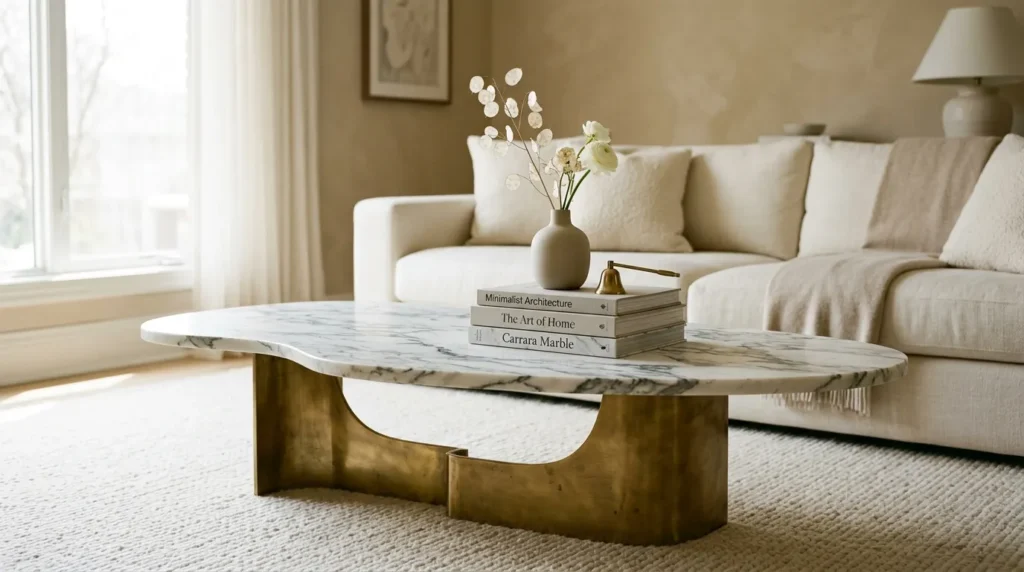
A coffee table does more visual work than most people give it credit for. One simple trick I always suggest to clients wanting a more polished living room is upgrading the coffee table before anything else, since it sits at the center of the room and is often the first thing the eye lands on. A table with an interesting material — marble, brass, lacquered wood — instantly elevates the perceived quality of the entire seating arrangement, even if the surrounding furniture is fairly simple.
How To Style It
Look for a coffee table with a distinctive material or shape — a marble top, a brass base, a sculptural silhouette — rather than a purely functional, plain wood option. Scale matters here: the table should be large enough to feel substantial without overwhelming the walkway around it, generally leaving at least 14 to 18 inches of clearance from surrounding seating. If a full replacement isn’t in the budget, a tray in a rich material like brass or marble can add a similar polish to an existing table.
3. Tailored Upholstered Furniture
Quick Benefits
- Creates a crisp, polished silhouette
- Reads as more expensive than overstuffed pieces
- Pairs well with both modern and traditional decor
- Provides structure to balance softer textiles
- Ages well with proper fabric care
Why It Works
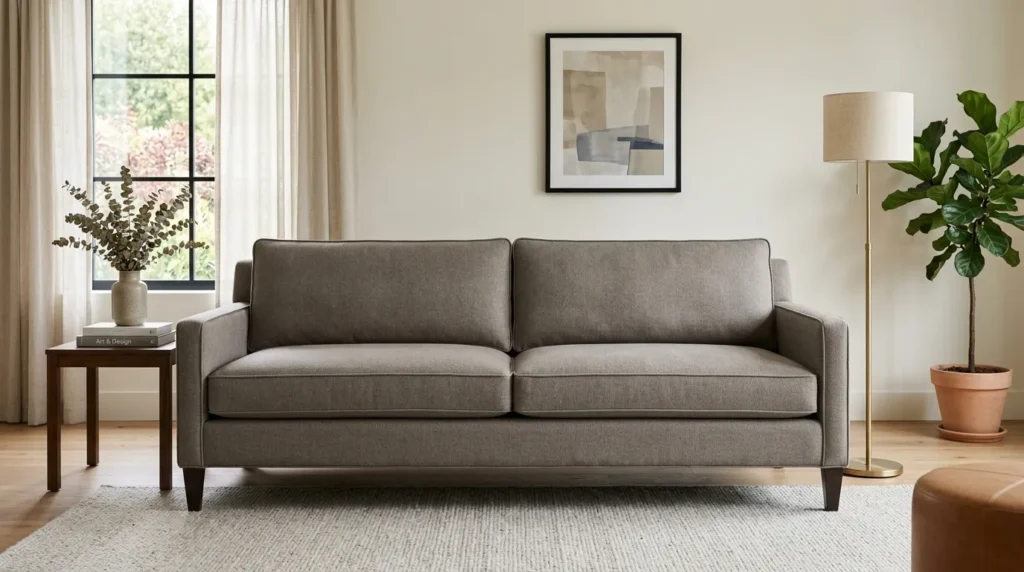
Tailored furniture — pieces with crisp seams, structured cushions, and defined silhouettes — is a hallmark of designer-level spaces. A mistake many homeowners make is choosing only overstuffed, casual furniture, which can make a room feel comfortable but not particularly elevated. A single tailored piece, like a structured sofa with piped edges or a chair with a defined back, introduces the kind of polish that designers rely on to keep a room from feeling too relaxed or informal.
How To Style It
Look for furniture with visible tailoring details — piping along the seams, tight cushions rather than loose pillow-back construction, and clean, defined arms. A single tailored piece, such as an accent chair or a settee, can balance out more casual, overstuffed seating elsewhere in the room. Choose upholstery in a solid, sophisticated color rather than a busy pattern to let the tailoring itself be the visual interest.
4. Layered Drapery Panels
Quick Benefits
- Adds height and grandeur to the room
- Frames windows with a polished, finished look
- Softens hard architectural lines
- Introduces texture and, if desired, color
- Elevates even standard-sized windows
Why It Works
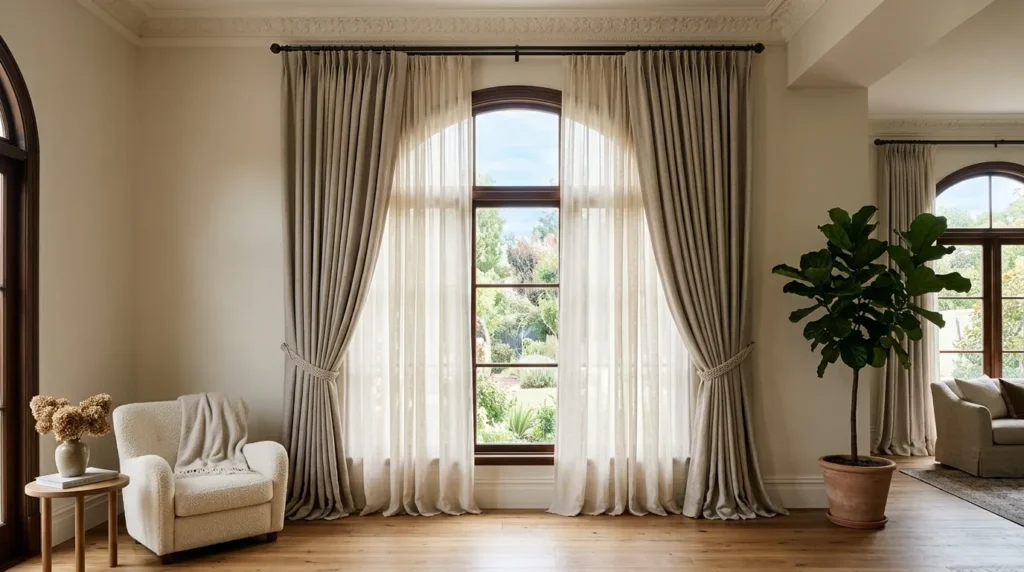
Drapery is one of the most underused tools for adding designer polish, largely because it’s easy to get the proportions wrong. Floor-length panels hung high above the window frame create the illusion of taller ceilings and a more grand, finished room, while short, poorly proportioned curtains can undercut an otherwise well-designed space. I’ve noticed that this single detail — hanging drapery correctly — is one of the fastest ways to make a room look professionally designed rather than simply decorated.
How To Style It
Hang curtain rods four to six inches above the window frame, or as close to the ceiling as practical, and choose panels long enough to just graze or slightly pool on the floor. Opt for a substantial fabric — a heavier linen or a subtle velvet — rather than sheer panels alone if you’re aiming for a more formal, designer feel. Layering a sheer panel underneath a heavier drapery panel adds both function and visual depth.
5. Metallic Hardware Details
Quick Benefits
- Adds subtle polish without major investment
- Ties disparate furniture pieces together
- Works well in both modern and traditional rooms
- Provides a cohesive finishing touch
- Easy to update without replacing furniture
Why It Works
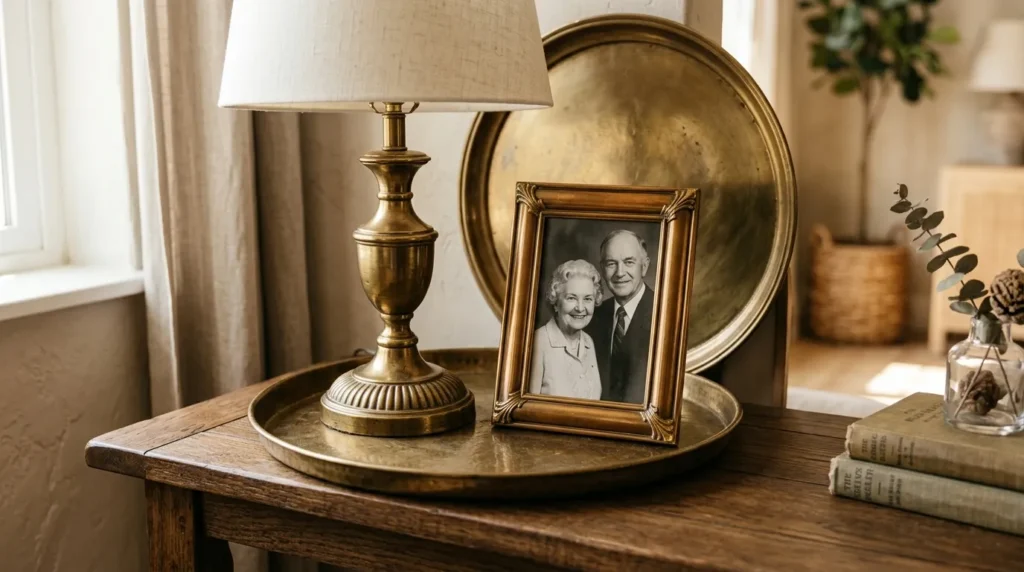
Small metallic details — drawer pulls, lamp bases, picture frames, tray edges — do a surprising amount of work in tying a room together. A mistake many homeowners make is mixing metals randomly throughout the room without any cohesive plan, which can make even well-chosen furniture feel disjointed. Designers typically choose one or two metal finishes and repeat them intentionally throughout the space, which creates a subtle but noticeable sense of polish.
How To Style It
Choose a primary metal finish — brass, matte black, or brushed nickel — and repeat it across at least three or four elements in the room: lamp bases, picture frames, a tray, or cabinet hardware if visible. A secondary metal can be introduced in smaller doses for contrast, but keep the primary finish consistent enough that it reads as a deliberate choice rather than a mismatch. This is one of the most budget-friendly ways to add a designer-level sense of cohesion.
6. Gallery Wall Curation
Quick Benefits
- Adds personality with a curated, designer touch
- Creates a strong visual focal point
- Works well above sofas or in stairwells
- Balances a variety of frame styles and art
- Elevates the room without new furniture
Why It Works
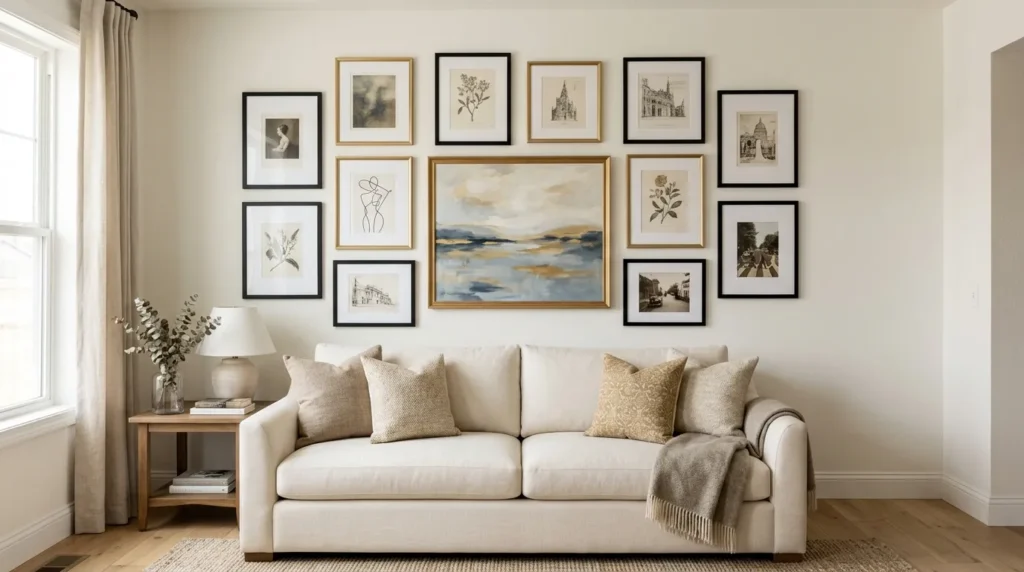
A well-curated gallery wall looks effortless, but it’s rarely accidental. That’s why many designers recommend planning the layout in advance rather than hanging pieces as they’re acquired. A mistake many homeowners make is mixing frames and art with no unifying thread — no shared color palette, frame finish, or spacing logic — which can make the wall look cluttered rather than curated, even with beautiful individual pieces.
How To Style It
Choose a unifying element to tie the gallery together, whether that’s a consistent frame finish, a shared color palette across the art, or matching mat board. Lay the arrangement out on the floor first, or trace paper templates on the wall, before committing to nail placement. Keep spacing consistent — typically two to three inches between frames — and anchor the arrangement around one larger, more significant piece rather than making every frame the same size.
7. Luxe Textile Layering
Quick Benefits
- Adds depth and richness to the room
- Introduces varied texture without extra furniture
- Elevates even simple, neutral furniture
- Creates a more sensory, inviting experience
- Works across pillows, throws, and rugs
Why It Works
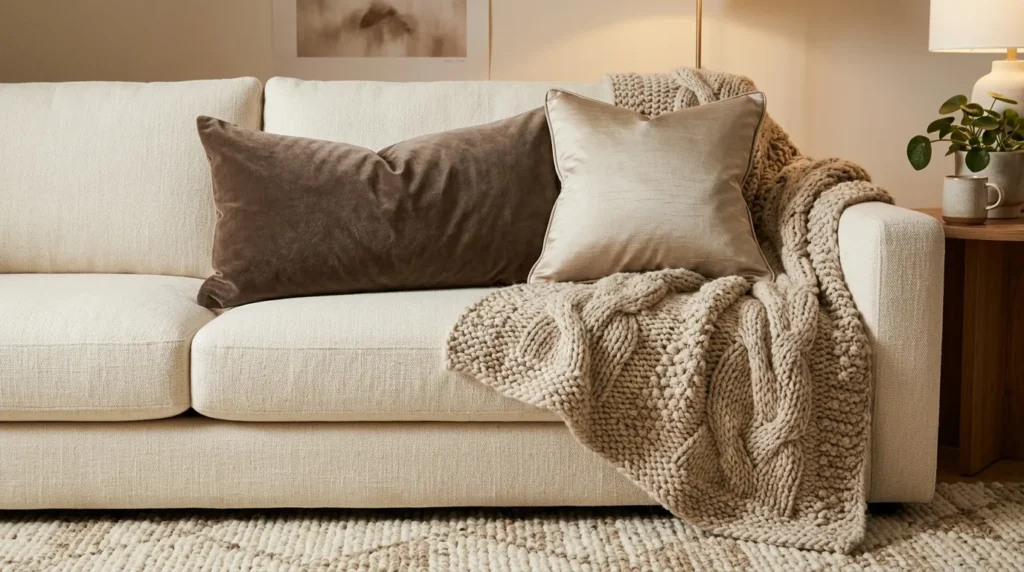
Rich, high-quality textiles — velvet, silk-blend, cashmere-adjacent knits — are one of the fastest ways to elevate a room without buying new furniture. In my experience, swapping standard cotton throw pillows for a mix of velvet and textured knit can transform the entire feel of a sofa in an afternoon. The key is variety: a designer’s touch usually comes from layering multiple rich textures together rather than relying on a single fabric type throughout the room.
How To Style It Mix at least two to three different luxe textures on your main seating piece — a velvet lumbar pillow, a knit throw, and a silk-blend accent pillow, for example. Choose a cohesive color palette across these textiles so the variety in texture doesn’t turn into visual clutter. Extend the same principle to your rug, opting for a higher-pile or subtly patterned option rather than a flat, basic weave, to reinforce the layered, elevated feel throughout the room.
8. Designer Lighting Fixtures
Quick Benefits
- Acts as functional art in the room
- Elevates the space without major renovation
- Creates a clear focal point
- Works well as a conversation piece
- Available across a range of price points
Why It Works
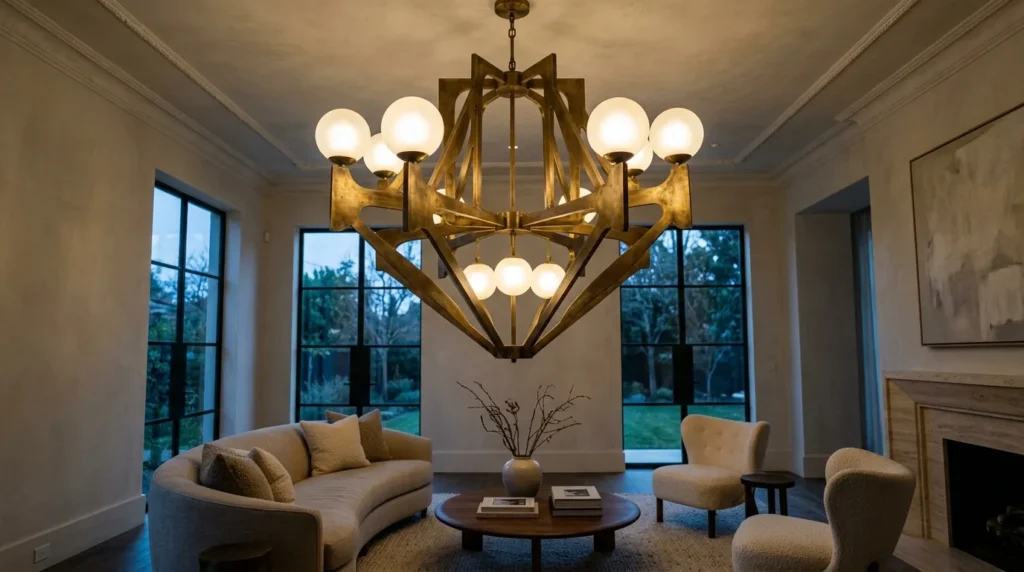
A standout lighting fixture is often the single detail that makes a room feel designer-level rather than simply well-decorated. One thing that works especially well is choosing a fixture with a strong, sculptural silhouette — think an architectural chandelier or an oversized pendant — and letting it act as the room’s visual anchor. Unlike furniture, a striking light fixture draws the eye upward and can transform a room’s entire mood without requiring any other changes.
How To Style It
Choose a fixture that’s proportionate to the room — as a general rule, a chandelier or large pendant should be roughly one-third to one-half the width of the table or seating area beneath it. Opt for a distinctive silhouette or material, such as a sculptural brass chandelier or a large glass-globe pendant, rather than a purely functional, boxy fixture. If a full chandelier isn’t practical, a statement floor lamp with a similarly bold silhouette can achieve much of the same effect.
9. Refined Accent Chairs
Quick Benefits
- Adds a tailored seating moment
- Balances larger, more casual sofas
- Introduces color, pattern, or texture intentionally
- Provides flexible extra seating
- Elevates the room’s overall silhouette variety
Why It Works
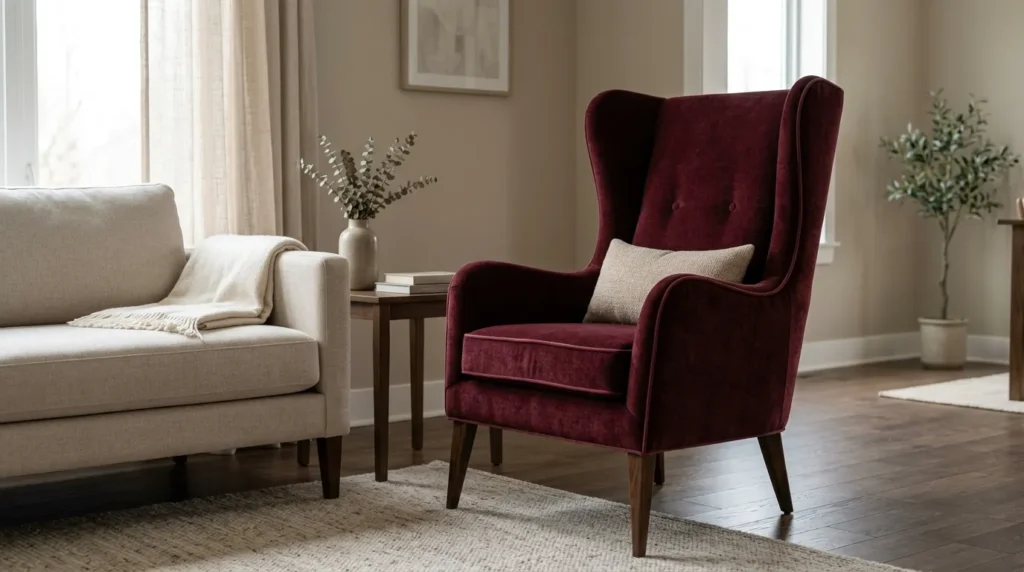
A single refined accent chair — something with a distinctive shape, fabric, or leg detail — can do more for a room’s perceived polish than an entire matching furniture set. A mistake many homeowners make is choosing all-matching furniture, which can feel safe but rarely reads as designed. I’ve seen this idea transform living rooms that otherwise felt a bit predictable, simply by introducing one chair with real personality alongside more neutral, supporting pieces.
How To Style It
Choose an accent chair with a distinctive silhouette — a wingback, a barrel shape, or a chair with exposed, tapered wood legs — and place it at an angle to the sofa rather than in a strict matching pair. This chair is a great place to introduce the jewel-toned color or luxe textile mentioned earlier in this list, since it’s a smaller commitment than a full sofa. Keep surrounding pieces more neutral so the accent chair has room to stand out as the room’s personality piece.
10. Curated Coffee Table Styling
Quick Benefits
- Finishes the room with intentional detail
- Creates a polished, magazine-ready surface
- Easy and inexpensive to update seasonally
- Reflects personal taste in a small, curated way
- Ties together the room’s material and color story
Why It Works
The final layer of designer charm often comes down to how a coffee table is styled, since it’s one of the most visible surfaces in the room. A mistake many homeowners make is either leaving it completely bare or cluttering it with too many small items, both of which undercut the polish the rest of the room has built. A well-styled coffee table follows a simple formula: height variation, material variety, and restraint.
How To Style It
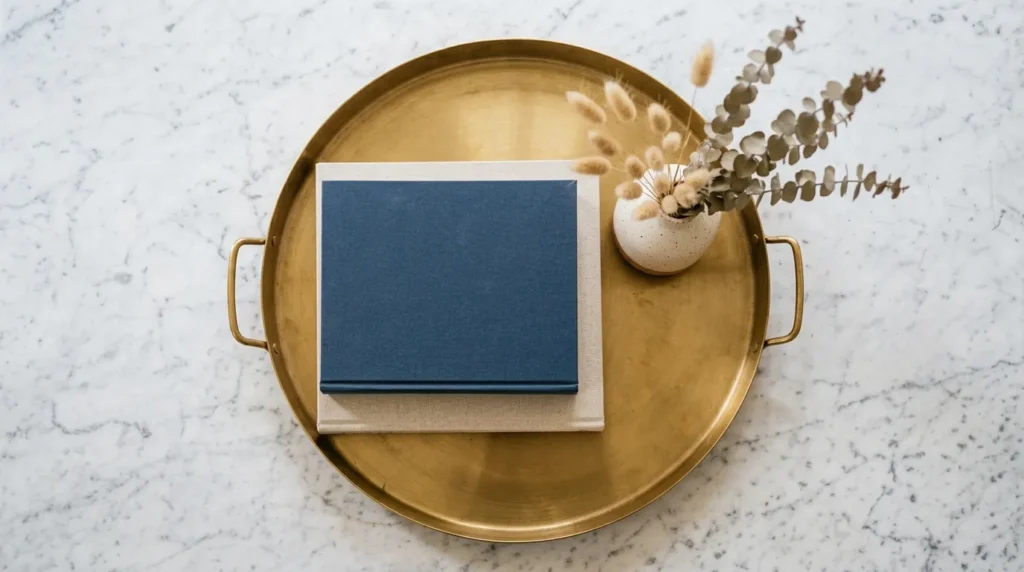
Style the table with three main elements: a tray to anchor the grouping, a stack of one or two coffee table books, and a single decorative object like a small vase or sculptural piece. Vary the height of these items so the eye has somewhere to travel across the surface. Choose materials that echo the room’s broader palette — a brass tray if your lighting or hardware is brass, for example — to reinforce the sense that every detail was chosen with intention.
Frequently Asked Questions
How can I make my living room look more expensive without a full renovation?
Focus on a few high-impact changes: upgrading your coffee table, introducing one jewel-toned accent piece, hanging drapery at the correct height, and styling your existing surfaces more intentionally. These changes require far less investment than new furniture but noticeably elevate the room’s overall feel.
What colors read as the most “classy” in a living room?
Deep jewel tones like emerald, sapphire, and burgundy paired with a neutral base tend to read as the most elevated. Black accents, in small doses, also add a sense of sophistication, especially when paired with warm metallics like brass.
Do I need matching furniture for a designer look?
No, and in fact, an entirely matching furniture set can sometimes read as less designed than a room with one standout piece paired with more neutral supporting furniture. Designers typically favor intentional variety over a uniform matching set.
What’s the easiest way to add designer polish on a budget?
Textile layering and coffee table styling are two of the most affordable ways to elevate a room. Swapping in a few luxe throw pillows, a textured throw blanket, and styling your coffee table with a tray and a stack of books can transform a room’s feel for a relatively small cost.
How important is lighting to a classy living room?
Very important. A distinctive lighting fixture is often the single element that makes a room feel intentionally designed rather than simply decorated, since it acts as a natural focal point and draws the eye upward.
Should drapery match the wall color or contrast with it?
Either can work, but a soft contrast — drapery a shade or two darker or lighter than the wall — tends to add more visual depth than an exact match. The most important factor for a polished look is proper length and mounting height rather than color matching.
Can a small living room still achieve a designer, classy look?
Yes. Many of these ideas, like a statement coffee table, refined accent chair, or curated styling, work especially well in smaller spaces because there’s less competing for attention. Restraint, which is central to designer style, often comes more naturally in a smaller room.
Conclusion
A classy, designer-feeling living room isn’t about spending the most money — it’s about making a few confident, intentional choices and letting them carry the room. A rich jewel-toned accent, a statement coffee table, properly hung drapery, and a well-curated surface or two can transform a space far more effectively than an entire room full of new furniture.
Start with one or two ideas from this list and gradually build a space that reflects your style and supports everyday comfort. Whether that means investing in one standout coffee table, introducing a single tailored accent chair, or simply restyling your existing surfaces with more intention, small, confident choices compound into a room that feels genuinely elevated. The most designer-caliber living rooms aren’t the most expensive ones — they’re the most deliberate.
Related Articles
- Organic Modern Living Room Ideas
- Simple Timeless Living Room Ideas
- Cozy Living Room Ideas For A Warm Home
- Elegant Bedroom Styling Ideas
- How To Style A Coffee Table Like A Designer