10 Japandi Home Decor Ideas for a Peaceful Home
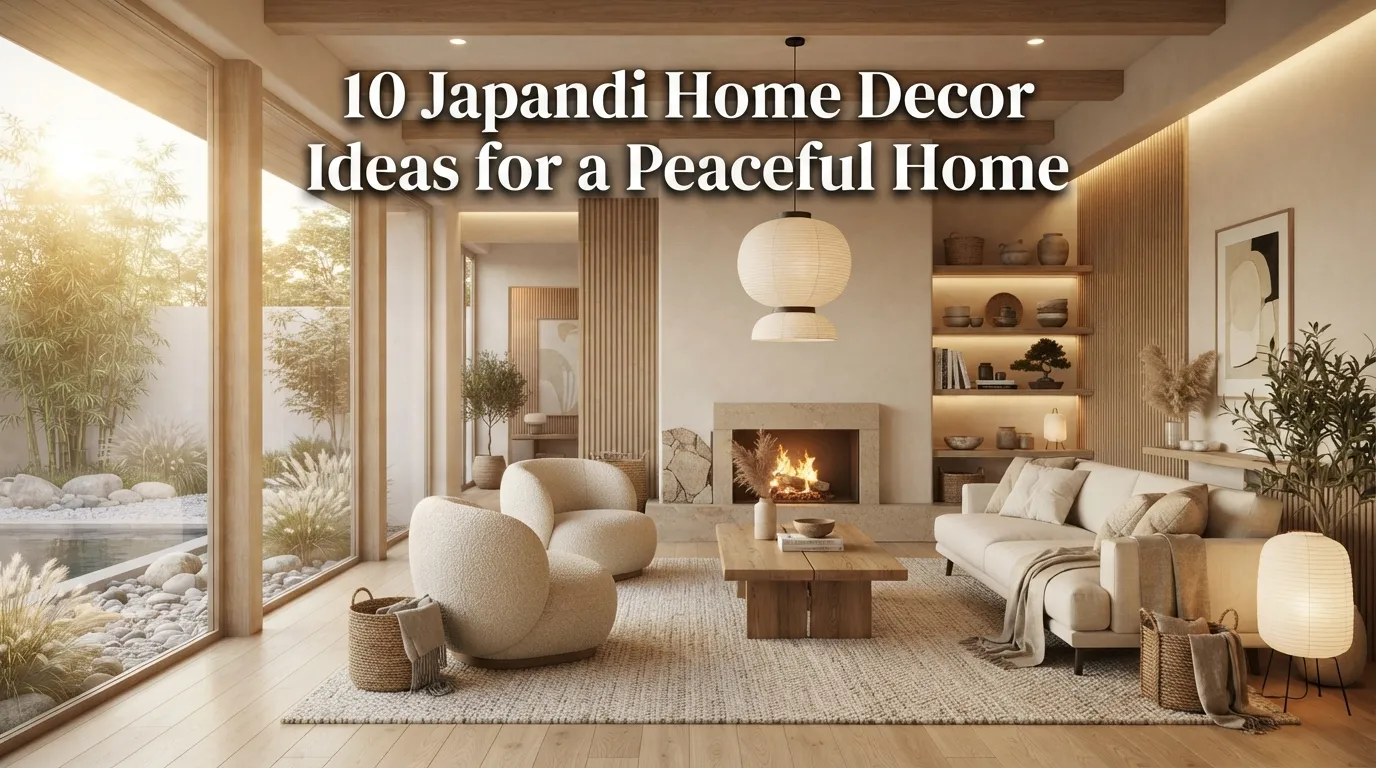
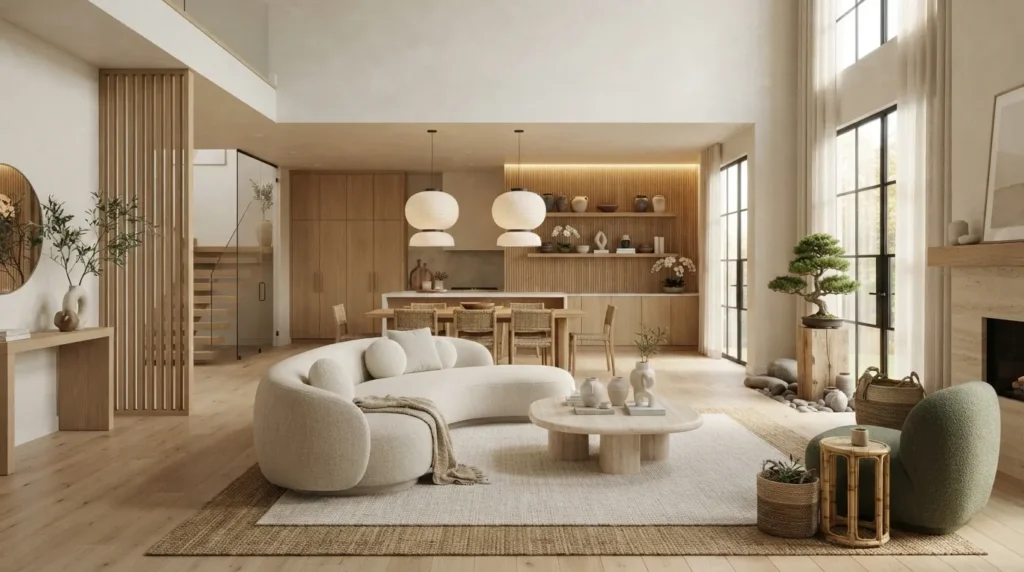
Japandi’s principles — natural materials, restraint, quiet imperfection — sound straightforward in theory, but translating them into actual decor choices throughout a home is where a lot of people get stuck. A mistake many homeowners make is applying this style only in the living room, missing the chance to bring the same peaceful, considered feeling into smaller spaces like the entryway, bedroom, or dining table, where a few well-chosen decor pieces can make just as much of a difference.
In my experience, some of the calmest Japandi homes aren’t defined by a single showpiece room, but by consistent small decisions repeated throughout the house — a simple vignette by the front door, a nightstand styled with restraint, a bathroom corner treated with the same intention as the main living space. These smaller touches are often what make a home feel genuinely peaceful to live in, not just impressive to photograph.
This guide walks through ten specific, room-by-room decor ideas for bringing Japandi’s peaceful sensibility into your everyday spaces, along with the practical reasoning and styling advice behind each one. Every idea is meant to be genuinely achievable, whether you’re working with an entire house or just a single corner you’d like to feel calmer.
If you’re anything like me, you’ve probably found that peace at home comes less from one big design statement and more from a series of small, consistent choices. These ten ideas are built around exactly that.
Table of Contents
- Entryway Zen Vignette — Setting a calm tone from the moment you walk in.
- Bedroom Nightstand Styling — Simplifying the last thing you see at night.
- Bathroom Spa Corner — Bringing quiet ritual into a functional space.
- Dining Table Simplicity — Styling a table meant to be gathered around.
- Wabi-Sabi Wall Art — Choosing imperfect, natural pieces over polish.
- Incense And Ritual Corner — Creating a small space for daily stillness.
- Natural Fiber Baskets — Solving storage with texture instead of plastic.
- Minimalist Bookshelf Edit — Curating instead of collecting.
- Kitchen Open Shelf Calm — Bringing restraint into a busy room.
- Entry Bench Styling — Creating a small, functional pause point.
1. Entryway Zen Vignette
Quick Benefits
- Sets a calm tone immediately upon entering
- Creates a smooth transition from outside to inside
- Provides a small, manageable styling project
- Works in even the smallest entry spaces
- Reflects the home’s overall Japandi sensibility from the start
Why It Works
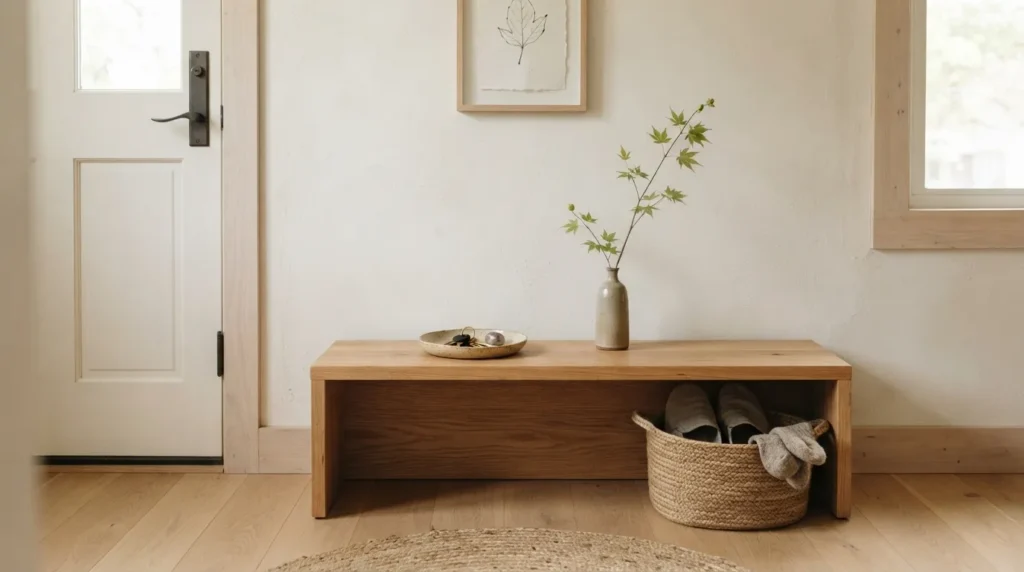
The entryway sets the emotional tone for the rest of the home, and a cluttered, chaotic entry can undercut even the calmest, most carefully designed living room beyond it. A mistake many homeowners make is treating the entry purely as a drop zone for shoes, mail, and bags, missing the opportunity to create a small, intentional vignette that signals a shift into a calmer state of mind the moment you walk through the door. Even a modest entryway benefits from this kind of considered styling.
How To Style It
Choose a simple low wood shelf or table, styled with just two or three objects — perhaps a small ceramic dish for keys, a single stem in a vase, and a woven basket for shoes. Keep the wall above minimal, with either a single piece of understated art or nothing at all, resisting the urge to fill every inch. A small floor mat in a natural fiber, like jute or seagrass, reinforces the material palette from the very first step inside.
2. Bedroom Nightstand Styling
Quick Benefits
- Simplifies the last visual impression before sleep
- Reduces visual clutter in a space meant for rest
- Provides a small, easily maintained styling project
- Works well on both sides of the bed
- Reinforces the bedroom’s overall calm atmosphere
Why It Works
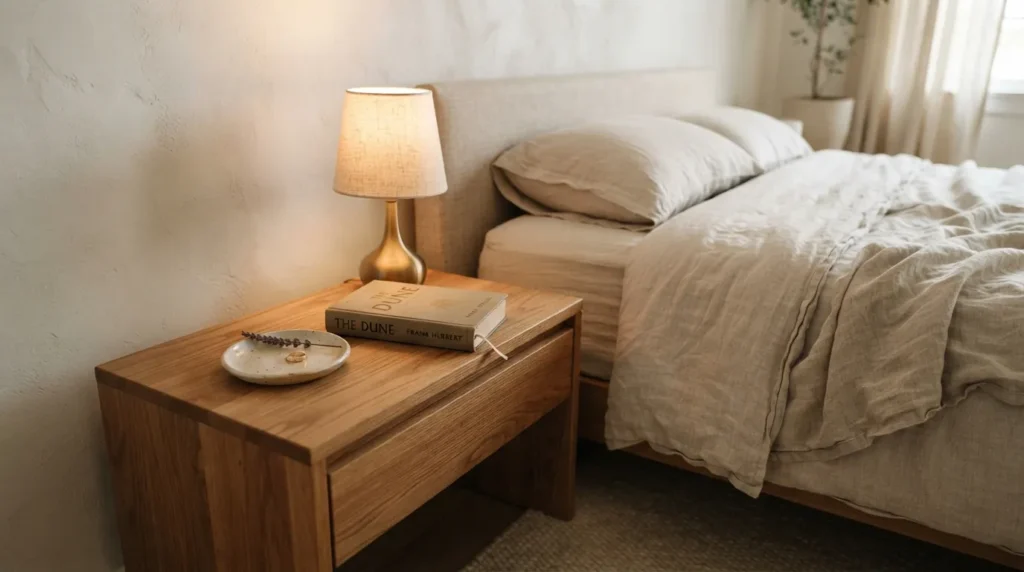
A cluttered nightstand, piled with chargers, books, and half-used skincare products, works directly against the sense of calm a bedroom is supposed to provide, especially since it’s often the last thing seen before sleep and the first thing seen upon waking. One thing that works especially well is limiting nightstand styling to just three or four items total, which forces a level of intentionality that a fuller surface doesn’t allow. This small discipline has an outsized effect on how restful the entire room feels.
How To Style It
Choose a low, simple wood nightstand, and limit what stays on top to a small lamp, a single book, and perhaps a small ceramic dish for jewelry or glasses. Store everything else — chargers, extra books, skincare — in a drawer or a small basket tucked beneath the nightstand, out of sight but still accessible. This same principle applies to both nightstands if the bedroom has two, keeping the styling consistent on either side of the bed.
3. Bathroom Spa Corner
Quick Benefits
- Brings a sense of ritual into a purely functional room
- Elevates everyday routines like bathing and skincare
- Adds natural texture to a typically hard-surfaced space
- Works well even in smaller bathrooms
- Reinforces the home’s overall Japandi consistency
Why It Works
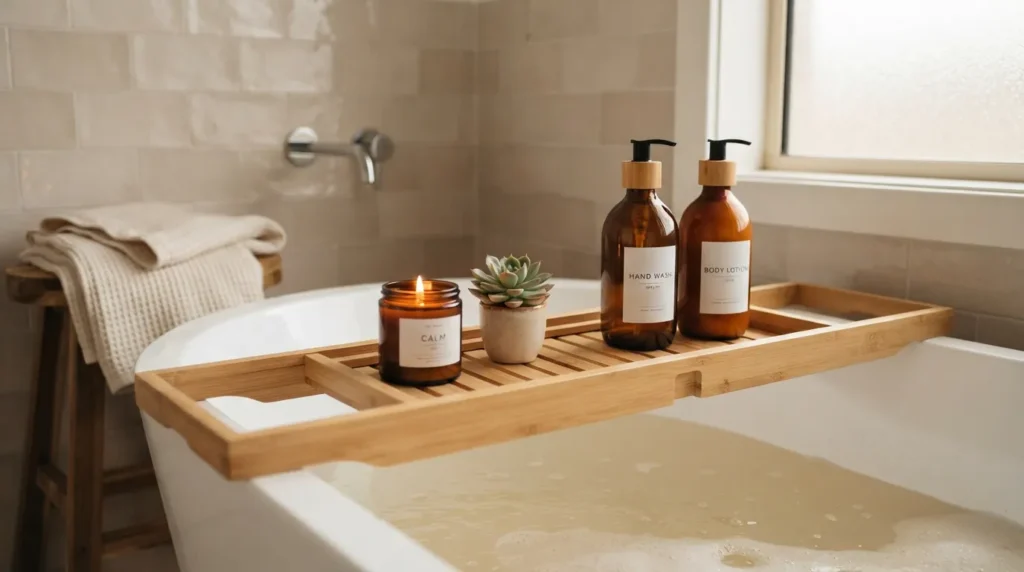
Bathrooms are often overlooked in whole-home styling, treated purely as functional spaces rather than as rooms that could benefit from the same calm, intentional decor found elsewhere in the house. A mistake many homeowners make is leaving bath products in their original plastic packaging scattered across the counter, missing an easy opportunity to bring warmth and ritual into a space used every single day. A small, considered corner — even just a shelf or a tray — can transform how the room feels to use.
How To Style It
Decant bath products into simple ceramic or glass dispensers, and add a wood or bamboo bath tray to hold soap, a small plant, or a candle near the tub or shower. A small stack of neatly folded linen or cotton waffle-weave towels adds texture without clutter, especially when stored on an open shelf rather than tucked away entirely. Choose a single scented candle or a small diffuser to introduce a calming fragrance during baths or showers.
4. Dining Table Simplicity
Quick Benefits
- Keeps a frequently used surface feeling calm and ready
- Reflects Japanese and Scandinavian appreciation for simple gathering
- Provides an easy daily styling habit rather than a big project
- Works well with a rotating, seasonal centerpiece
- Reinforces mindful, intentional mealtimes
Why It Works
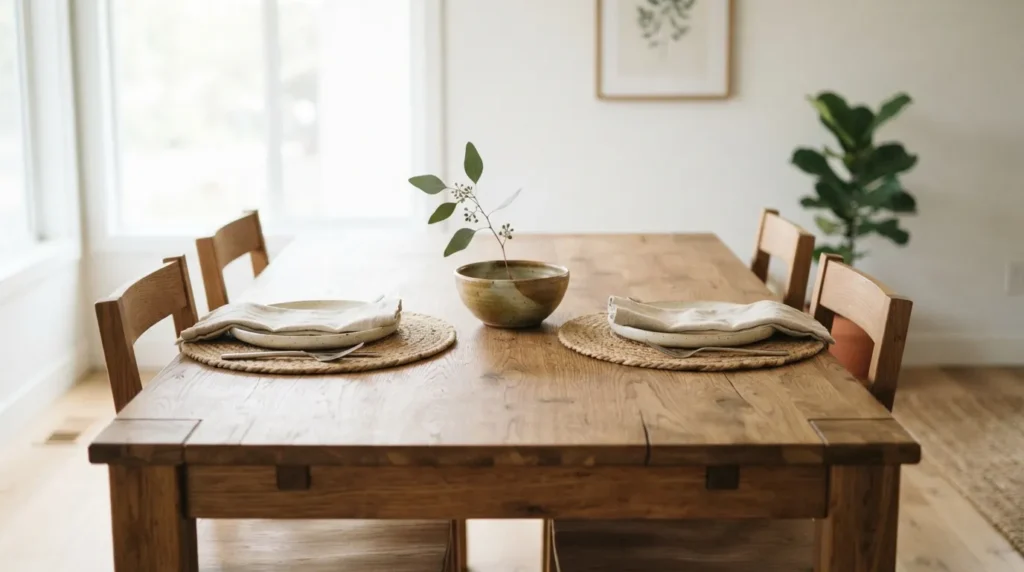
A dining table is meant to be used daily, which makes restraint especially important here — an overly styled or cluttered table can feel like it’s more for display than for actual gathering. A mistake many homeowners make is leaving a large, elaborate centerpiece on the table permanently, which then has to be moved every time the table is actually used for a meal. A simpler, smaller centerpiece supports both the table’s everyday function and its role as a calm gathering space.
How To Style It
Choose a single small centerpiece, such as a low ceramic bowl or a simple vase with one or two stems, sized so it doesn’t obstruct sightlines across the table during meals. Keep linens simple, favoring a natural woven placemat or a plain linen runner over a heavily patterned tablecloth. This minimal approach also makes it easy to quickly clear the table for actual use, reinforcing the idea that the space is meant to be lived in and gathered around, not simply admired.
5. Wabi-Sabi Wall Art
Quick Benefits
- Adds visual interest without ornate detail
- Reflects the beauty found in natural imperfection
- Works well as a single, restrained statement piece
- Complements a Japandi home’s natural material palette
- Provides a personal, non-mass-produced design element
Why It Works
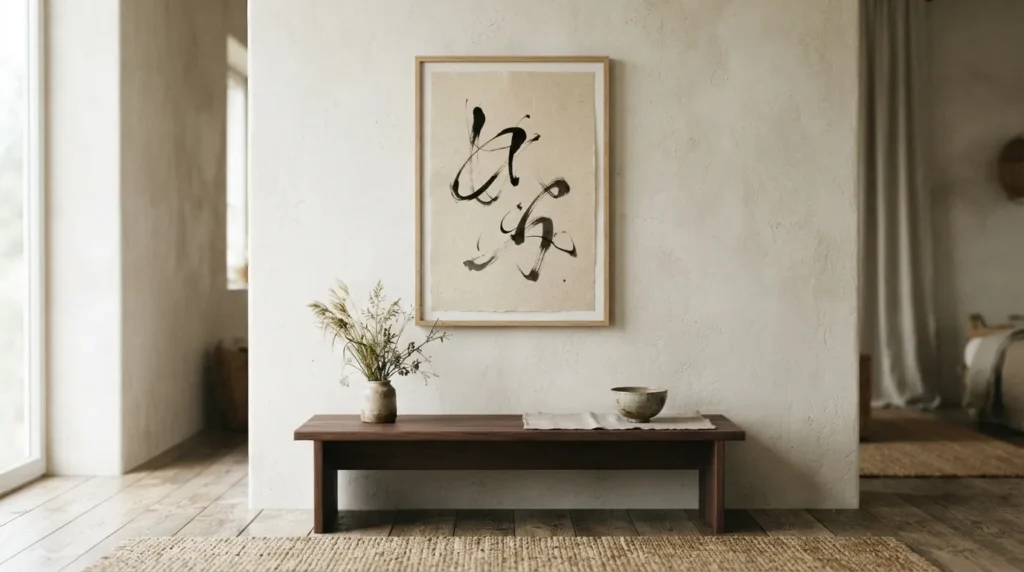
Wall art in a Japandi home tends to favor understated, natural subject matter — abstract ink work, botanical studies, textural fiber art — over bold graphic prints or elaborate framed pieces. A mistake many homeowners make is filling walls with a large gallery arrangement, which can work against the restrained, calm feeling central to this style. A single, well-chosen piece, given plenty of space around it, tends to carry far more visual weight and impact than a wall crowded with several smaller frames.
How To Style It
Choose one piece of art per wall, favoring natural, muted tones and simple, organic subject matter, such as abstract ink brushwork, a textural fiber art piece, or a botanical print. Frame the piece simply, in natural wood or a thin black frame, rather than an ornate or heavily gilded option. Leave generous wall space around the piece, resisting the temptation to add additional smaller frames nearby, which would dilute the single piece’s impact.
6. Incense And Ritual Corner
Quick Benefits
- Creates a small, dedicated space for daily stillness
- Introduces gentle fragrance throughout the home
- Reflects Japanese traditions of mindful ritual
- Requires minimal space to implement
- Adds a personal, sensory layer to the home’s calm
Why It Works
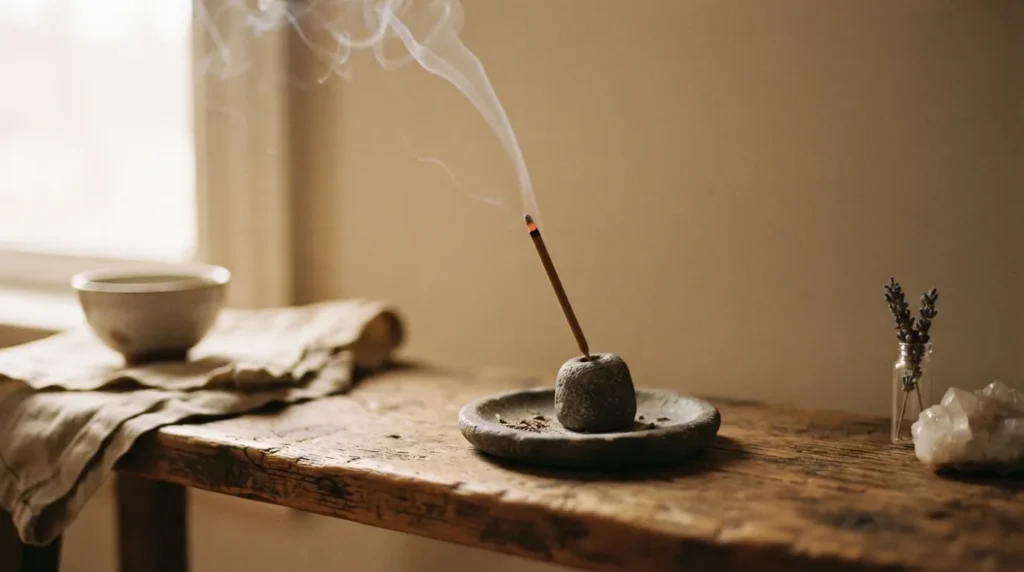
A small dedicated spot for incense or a similar quiet ritual — even just a shelf or a corner of a side table — reinforces the sense of mindfulness that Japandi design draws from its Japanese roots. I’ve noticed that having a specific, designated spot for this kind of daily ritual, rather than lighting incense wherever happens to be convenient, adds a subtle but meaningful sense of intention to the practice itself. This is one of the smallest decor additions on this list, but it carries a genuine sense of purpose.
How To Style It
Choose a simple ceramic or stone incense holder, paired with a small tray to catch ash, positioned on a low shelf or a corner of a side table away from flammable materials. Add a small box or dish to hold extra incense sticks, keeping the entire setup contained to a small, defined footprint. This corner can be as simple as a single tray with two or three objects, since the ritual itself matters more than an elaborate setup.
7. Natural Fiber Baskets
Quick Benefits
- Solves everyday storage needs with natural texture
- Replaces plastic bins with a warmer, cohesive material
- Works throughout nearly every room in the home
- Adds subtle texture without additional decor
- Provides an affordable way to extend the material palette
Why It Works
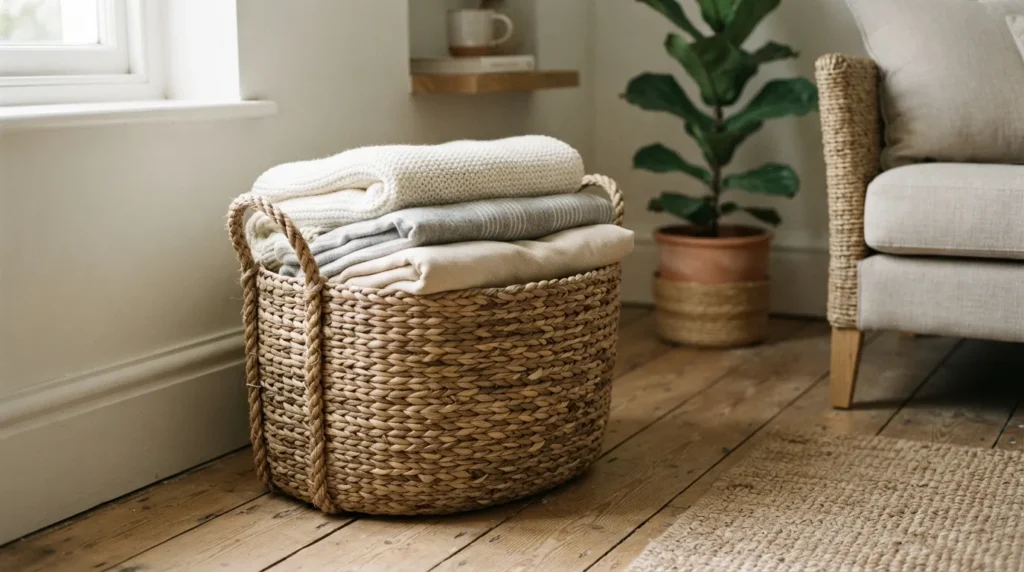
Storage is a practical necessity in every home, but the containers chosen for that storage have a real impact on how cohesive and calm a space feels overall. A mistake many homeowners make is relying on plastic bins or brightly colored storage containers, which can undercut an otherwise carefully considered natural material palette. Swapping these out for woven baskets in rattan, seagrass, or water hyacinth extends the home’s Japandi sensibility into rooms and closets that might otherwise go unstyled.
How To Style It
Choose baskets in a consistent natural material and similar tone throughout the home, using them for laundry, blankets, toys, or general storage in place of plastic bins. Select a range of sizes to accommodate different needs, from a large floor basket for blankets to a small one for bathroom essentials. This is one of the most functional decor ideas on this list, since it solves a genuine storage problem while simultaneously reinforcing the home’s material story.
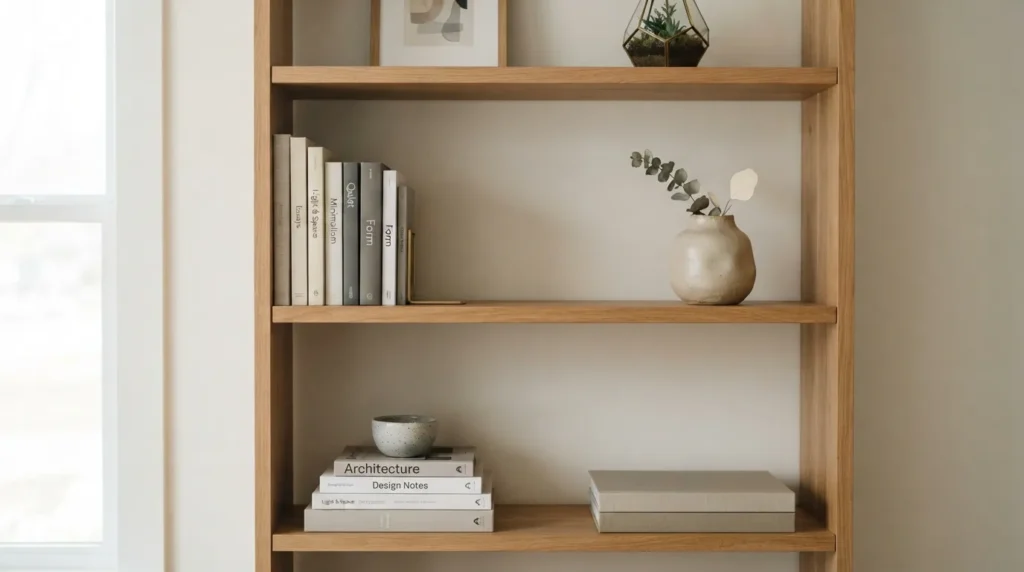
8. Minimalist Bookshelf Edit
Quick Benefits
- Turns an often-cluttered surface into a calm focal point
- Reflects the home’s overall restraint and intention
- Provides an ongoing, low-cost styling project
- Works well in a living room, office, or bedroom
- Elevates favorite books and objects rather than hiding them
Why It Works
Bookshelves tend to accumulate clutter over time, filled with books that are rarely read alongside decorative objects added one at a time without much overall plan. A mistake many homeowners make is treating a bookshelf as unlimited storage rather than as a styled surface, resulting in a cluttered, visually busy shelf that works against the rest of the home’s calm styling. A periodic edit, removing anything that doesn’t serve the space, keeps the shelf feeling intentional.
How To Style It
Go through the shelf and remove anything that isn’t genuinely used or loved, donating or storing books elsewhere that don’t need to be on display. Style what remains with generous negative space, mixing vertical book stacks with a few horizontal groupings topped by a small ceramic or stone object. Revisit this edit every few months, since bookshelves tend to accumulate clutter gradually, and a regular reset keeps the space feeling as calm as the rest of the home.
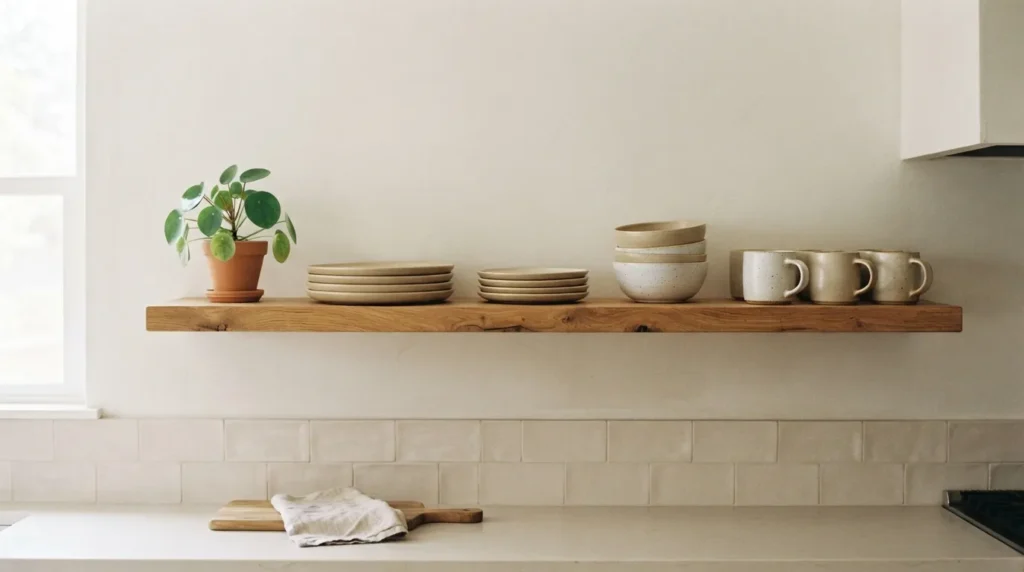
9. Kitchen Open Shelf Calm
Quick Benefits
- Brings restraint into one of the home’s busiest rooms
- Creates a calm visual break among functional storage
- Showcases simple, everyday dishware intentionally
- Works well combined with closed cabinet storage
- Reinforces the home’s material and color consistency
Why It Works
Kitchens are inherently busy, functional spaces, which can make them one of the harder rooms to bring into a calm, Japandi sensibility. A mistake many homeowners make is displaying every dish, mug, and cooking tool on open shelving, which quickly becomes visually overwhelming rather than calming. A more restrained approach to open shelving, showing only a curated selection of simple, neutral-toned dishware, brings the same sense of intention found elsewhere in the home into the kitchen.
How To Style It
Choose one section of open shelving, and limit the display to simple, matching or tonally coordinated dishware, leaving the rest of the kitchen’s items in closed cabinet storage out of view. Add one or two ceramic pieces or a small plant among the dishware for a touch of softness, without overcrowding the shelf. This selective approach allows the kitchen to feel calm and intentional in the areas that are visible, even if the rest of the storage remains purely functional and hidden.
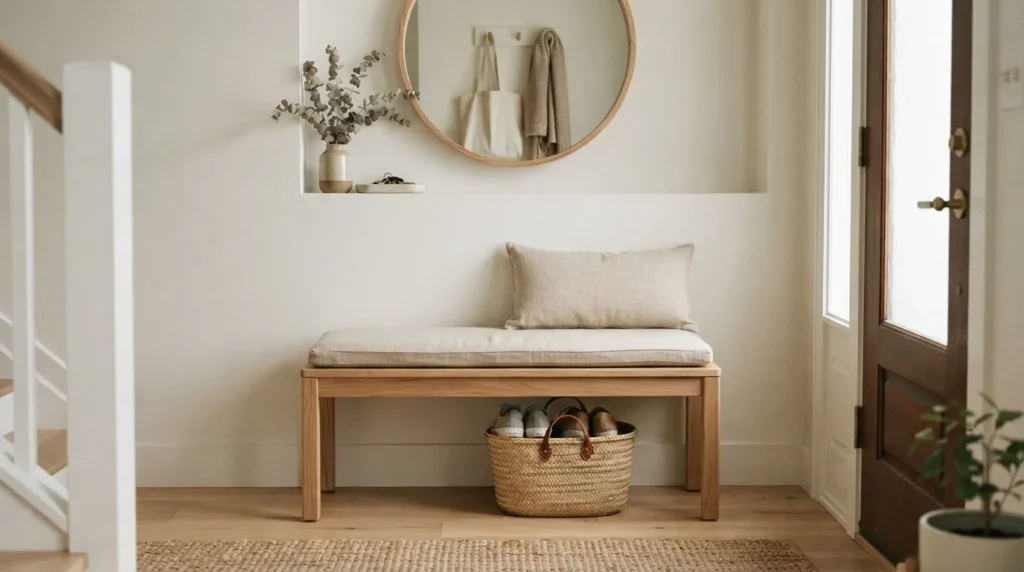
10. Entry Bench Styling
Quick Benefits
- Adds a small, functional pause point near the door
- Provides a spot to sit while removing shoes
- Reinforces the entryway’s overall calm first impression
- Works well even in compact entry spaces
- Combines function with the home’s material story
Why It Works
A simple bench near the entry adds both function and a small ritual moment — a place to pause, sit, and remove shoes — which aligns closely with Japanese customs around transitioning from outdoor to indoor space. A mistake many homeowners make is skipping this element entirely in smaller entries, assuming there isn’t room, when even a narrow bench can provide this functional pause point without taking up significant space. This small addition reinforces the calm, intentional transition established by the entryway vignette mentioned earlier in this list.
How To Style It
Choose a simple, low wood bench sized to fit your entry space, even a narrow one measuring just a foot or two in depth. Add a thin cushion in natural linen for comfort, and tuck a small basket beneath the bench for shoes or outdoor accessories. Keep the styling minimal, allowing the bench’s simple form and the natural wood material to carry the visual interest rather than additional decor layered on top.
Frequently Asked Questions
Do I need to redecorate my whole house to achieve a Japandi feel?
No. Many of these ideas, like nightstand styling, a bathroom tray, or an entry vignette, can be implemented in individual spaces without touching the rest of the home. Small, consistent choices throughout several rooms often create a more cohesive peaceful feeling than one heavily designed room alone.
What’s the easiest room to start applying Japandi decor to?
The entryway and bedroom nightstand are both excellent starting points, since they require minimal investment and can be edited down or restyled in an afternoon. Both also have an outsized effect on daily mood, given how frequently they’re seen.
Can Japandi decor work in a rental home?
Yes, since most of these ideas rely on furniture, baskets, and decor objects rather than permanent renovations. Swappable elements like baskets, wall art, and bath trays are all renter-friendly ways to bring this style into a space.
How do I keep open shelving from looking cluttered in a Japandi kitchen?
Limit the display to a small, curated selection of simple, coordinated dishware, and keep the remaining items in closed cabinet storage. Leaving visible negative space on the shelf itself is just as important as the items chosen to display.
Is it expensive to bring Japandi decor into a home?
It doesn’t have to be. Many of these ideas, like editing a bookshelf, decanting bathroom products, or simplifying a dining table centerpiece, cost little to nothing and rely more on restraint than on new purchases.
What decor items should I avoid in a Japandi-styled home?
Bright plastic storage containers, heavily patterned textiles, and cluttered decorative groupings all work against the calm, natural aesthetic central to this style. Favoring natural materials and leaving visible negative space are the two most important guiding principles.
How often should I edit or refresh Japandi decor throughout the home?
A periodic edit every few months, particularly for surfaces prone to clutter like bookshelves and nightstands, helps maintain the sense of calm this style depends on. Unlike more maximalist styles, Japandi decor benefits from ongoing restraint rather than continuous additions.
Conclusion
A peaceful, Japandi-styled home isn’t built from one dramatic design statement — it’s built from consistent, small decisions repeated throughout the house. A calm entryway vignette, a simplified nightstand, a considered bathroom corner, and a curated bookshelf all reinforce the same underlying philosophy of restraint and natural material, room by room.
Start with one or two ideas from this list and gradually build a space that reflects your style and supports everyday comfort. Whether that means finally editing down a cluttered bookshelf, swapping plastic bins for natural fiber baskets, or adding a small ritual corner for incense, these small choices compound into a home that feels genuinely peaceful to live in, not just to look at. The most successful Japandi homes aren’t the ones with the most beautiful single room — they’re the ones where every space, however small, reflects the same quiet intention.
Related Articles
- Japandi Interior Ideas That Feel Calm And Luxurious
- Japandi Living Room Design Ideas You’ll Love
- Aesthetic Living Room Ideas You’ll Love
- Neutral Home Styling Ideas
- How To Declutter Your Home Room By Room