

10 Japandi Living Room Ideas Inspired by Nature
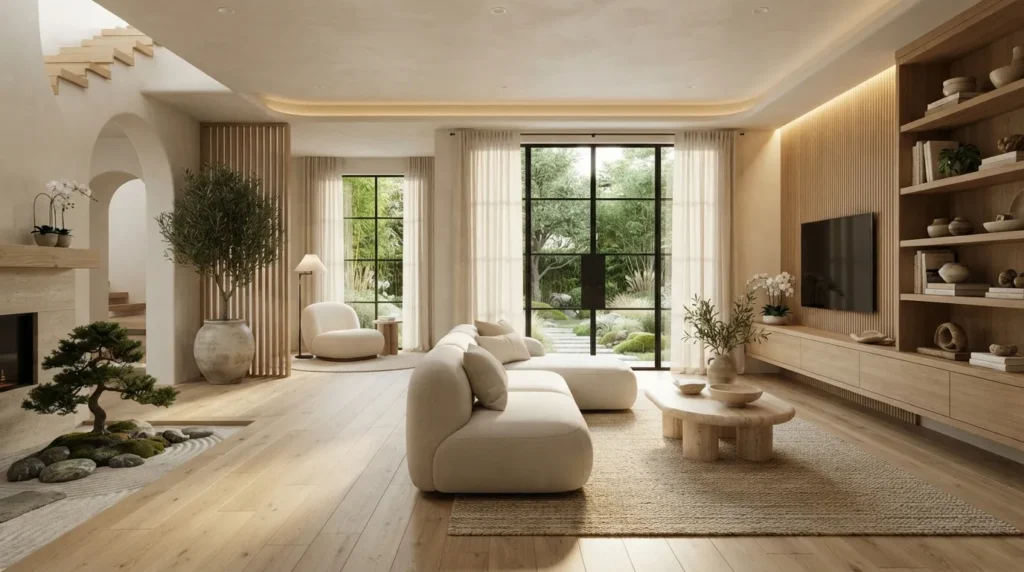
Both halves of Japandi design draw deeply from nature, even though they come from very different climates and cultures — Japanese design’s reverence for seasonal change and natural materials, and Scandinavian design’s response to long winters by bringing warmth, light, and greenery indoors. A mistake many homeowners make is thinking of “natural” simply as a color palette, when the deeper version of this idea is about genuinely connecting the living room to the rhythms and elements of the outside world.
In my experience, the living rooms that feel most alive within this style aren’t just filled with wood furniture and neutral tones — they actively engage with natural light, seasonal change, and the outdoors in ways that go beyond material choice alone. A single well-placed plant, a window left intentionally unobstructed, a small water feature — these are the details that make a room feel genuinely connected to nature rather than simply inspired by its color story.
This guide focuses specifically on the nature-connected side of Japandi living room design: light, plants, seasonal rhythm, and sensory details that bring the outdoors in. Each idea includes the reasoning behind it along with specific, practical advice for applying it to your own living room.
If you’re anything like me, you’ve probably noticed that some rooms feel alive in a way that has little to do with their furniture and everything to do with their relationship to light and the outdoors. These ten ideas are built around exactly that connection.
Table of Contents
- Indoor Garden Corner — Dedicating real space to living plants.
- Sunlight-Following Layout — Arranging furniture around natural light patterns.
- Botanical Branch Arrangements — Bringing seasonal nature indoors simply.
- Nature Sound Elements — Engaging the ears as well as the eyes.
- Seasonal Foliage Rotation — Letting the room shift gently with the year.
- Outdoor View Framing — Treating windows as living artwork.
- Living Moss Wall Accent — Adding a soft, textural nature feature.
- Water Feature Simplicity — Introducing the calming presence of water.
- Pressed Botanical Art — Preserving nature as quiet wall decor.
- Natural Scent Diffusion — Bringing the outdoors in through fragrance.
1. Indoor Garden Corner
Quick Benefits
- Creates a genuine, living connection to nature
- Improves air quality and humidity naturally
- Provides a calming, ongoing focal point
- Works well in a corner with good natural light
- Reinforces the room’s overall organic character
Why It Works
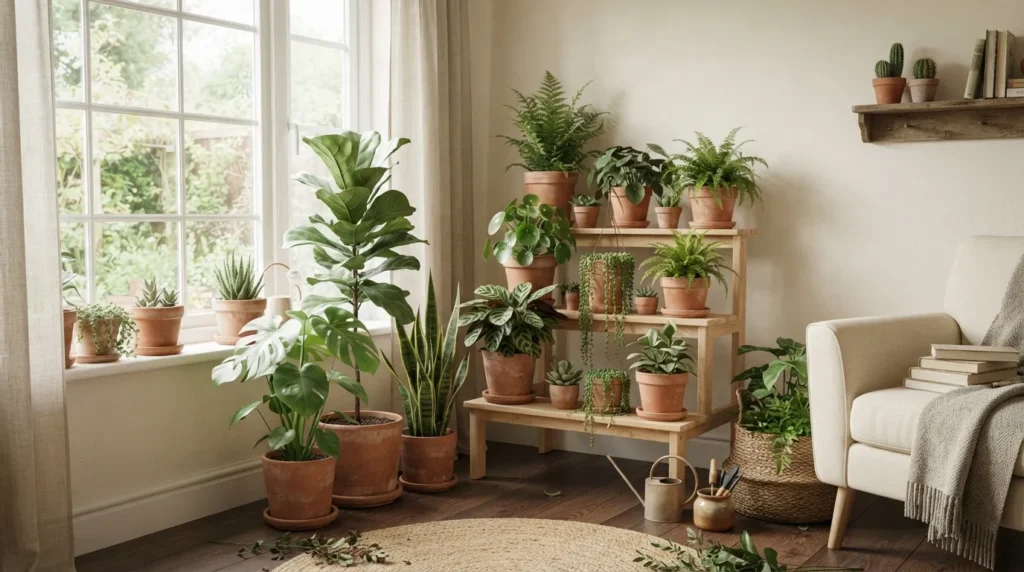
Rather than scattering a single plant here and there, dedicating an actual corner of the living room to a small indoor garden creates a more meaningful connection to nature than decor alone can achieve. A mistake many homeowners make is treating plants purely as decoration to be placed wherever there’s an empty spot, missing the opportunity to create a genuine, tended garden corner that becomes a living, changing part of the room. This kind of dedicated space also tends to encourage more consistent care, since the plants have a clear, intentional home.
How To Style It
Choose a corner with the best available natural light, and group several plants of varying heights together, using simple, unglazed ceramic or stone planters that align with the room’s earthy palette. Include a mix of textures, such as a broad-leafed plant alongside something more delicate or trailing, to create visual variety within the grouping. A simple wood or bamboo plant stand can help stagger heights, adding dimension to the corner without requiring elaborate shelving.
2. Sunlight-Following Layout
Quick Benefits
- Maximizes natural light throughout the day
- Reduces reliance on artificial lighting
- Creates a room that shifts and changes with the sun
- Enhances the warmth of natural materials
- Reinforces the room’s overall calm, organic feel
Why It Works
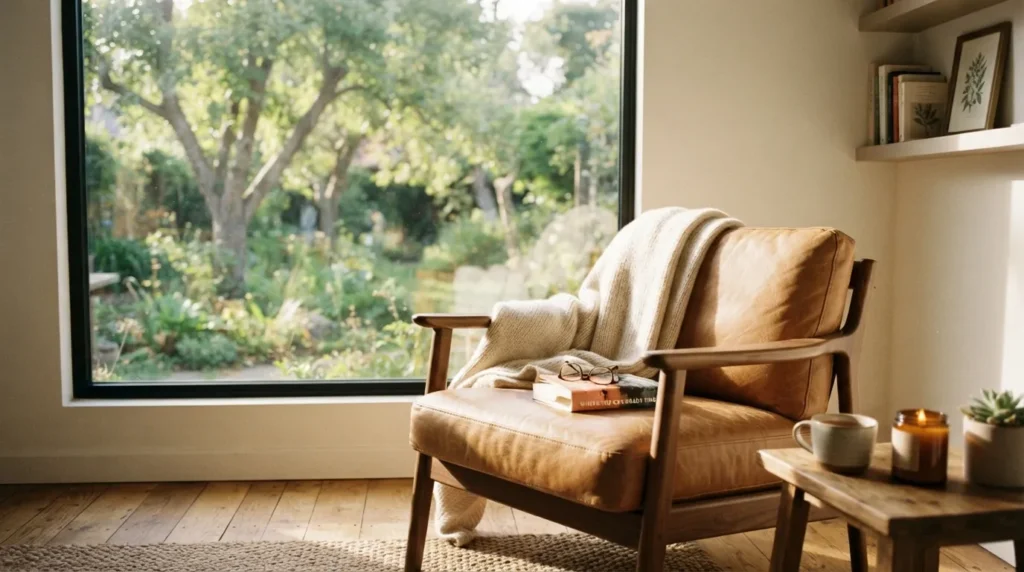
One thing that works especially well in nature-inspired Japandi living rooms is arranging the layout specifically around how sunlight moves through the space throughout the day, rather than simply positioning furniture for convenience or symmetry. I’ve noticed that rooms designed with this kind of attention to natural light tend to feel more alive and connected to the outdoors, since the quality and direction of light genuinely changes the room’s mood from morning to evening in a way that artificial lighting alone can’t replicate.
How To Style It
Observe how light moves through the room at different times of day before finalizing furniture placement, positioning a reading chair or the sofa where it will catch soft morning or afternoon light rather than blocking a window entirely. Keep window treatments minimal or easily opened, favoring sheer linen panels that filter rather than block natural light during the day. Avoid placing tall furniture or bookshelves directly in front of windows, preserving as much light penetration into the room as possible.
3. Botanical Branch Arrangements
Quick Benefits
- Brings genuine seasonal nature indoors
- Provides a low-maintenance alternative to potted plants
- Adds sculptural, ever-changing visual interest
- Reflects Japanese ikebana traditions
- Works well as a single, restrained statement
Why It Works
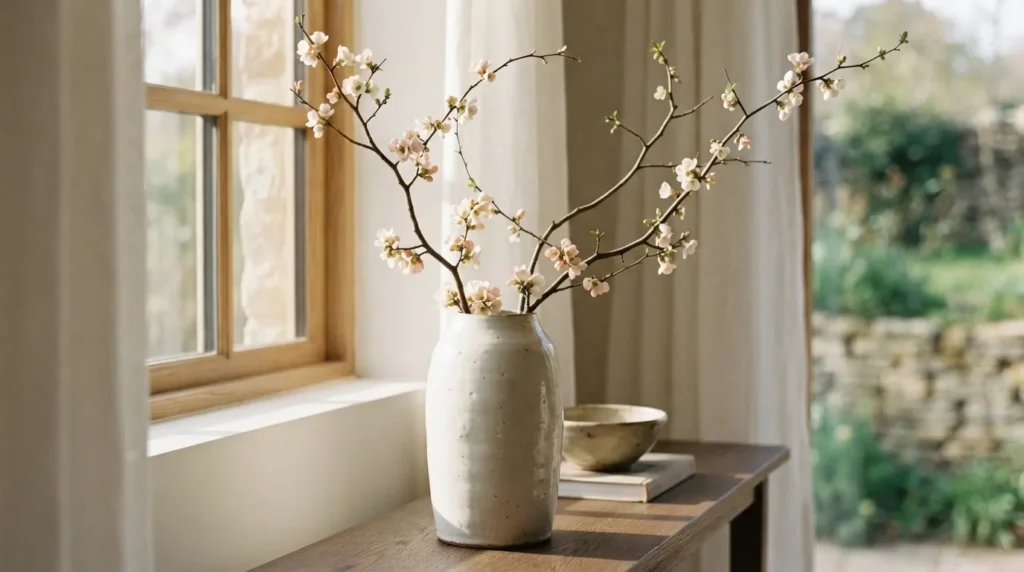
A simple arrangement of branches — flowering in spring, bare and sculptural in winter, full and leafy in summer — brings a genuinely seasonal connection to nature into the living room without the ongoing care that potted plants require. That’s why many designers recommend this approach specifically for those who want a strong nature connection without a significant time investment, since a branch arrangement can last for weeks and simply gets replaced as the seasons shift, always reflecting what’s happening outside.
How To Style It
Choose a tall, simple ceramic or stone vase, and gather branches from your own yard or a local florist that reflect the current season, whether that’s cherry blossoms in spring or bare branches in winter. Keep the arrangement relatively spare, following the Japanese ikebana principle that a few well-placed branches carry more visual weight than an overly full arrangement. Position the vase somewhere it will be genuinely seen and appreciated, such as near a window or on a low console table.
4. Nature Sound Elements
Quick Benefits
- Engages the senses beyond just sight
- Creates a calming, ambient background atmosphere
- Reinforces the room’s overall connection to nature
- Works well alongside a water feature or open windows
- Adds a subtle, often-overlooked layer of comfort
Why It Works
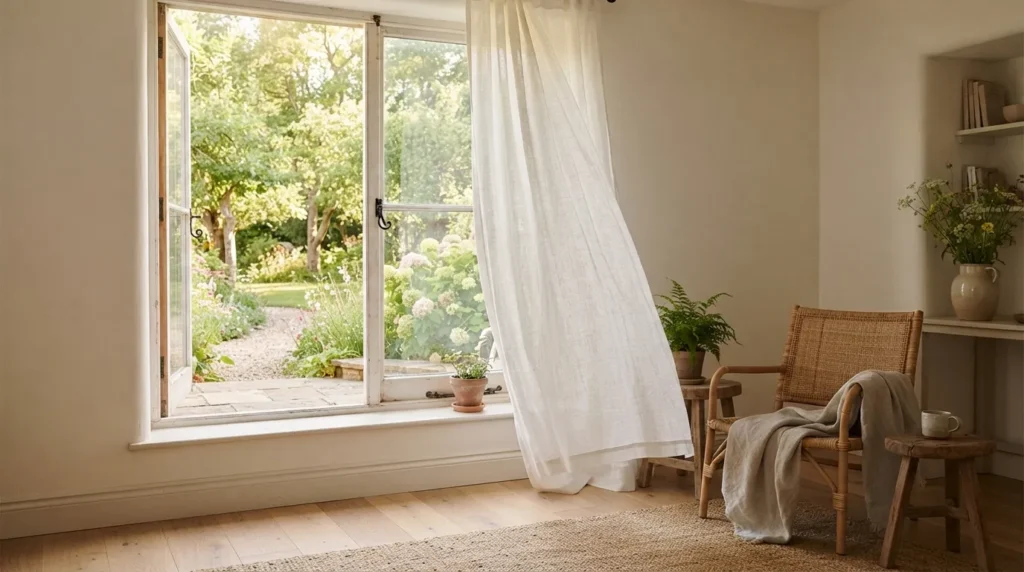
Nature-inspired design doesn’t have to be purely visual, and incorporating natural sound — whether through open windows, a small water feature, or ambient sound — adds another sensory layer that deepens the room’s connection to the outdoors. A mistake many homeowners make is focusing entirely on how a nature-inspired room looks while overlooking how it sounds, missing an opportunity to create a more immersive, calming atmosphere. Even something as simple as opening a window during mild weather can shift a room’s entire feel.
How To Style It
When weather allows, keep windows open to let in ambient outdoor sound, particularly if your living room has access to a garden or quiet outdoor space. A small tabletop water feature, discussed further below, can provide a similar effect year-round regardless of the weather outside. If ambient outdoor or water sound isn’t practical, a simple sound machine with nature recordings, kept at a very low volume, can offer a similar subtle benefit.
5. Seasonal Foliage Rotation
Quick Benefits
- Keeps the room feeling connected to the changing year
- Provides an easy, low-cost styling update
- Reinforces the Japanese appreciation for seasonal awareness
- Works well through vases, branches, or small plants
- Adds subtle variety without disrupting the overall palette
Why It Works
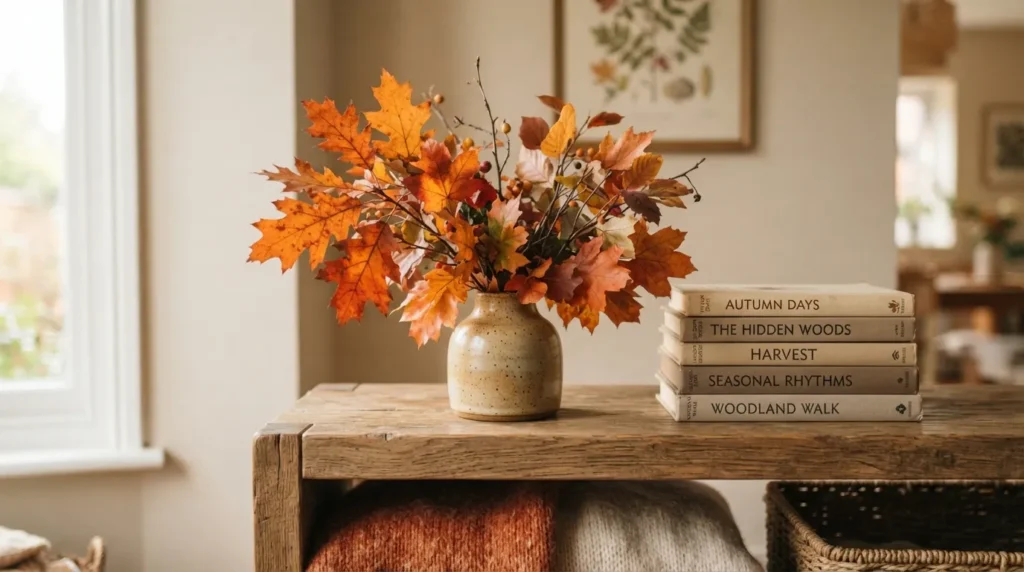
Rotating small foliage and greenery elements throughout the year reflects the Japanese cultural practice of seasonal awareness, known as “kisetsukan,” which values noticing and honoring the specific character of each season rather than keeping a home static year-round. A mistake many homeowners make is styling greenery once and leaving it unchanged for years, missing an easy opportunity to keep the living room feeling genuinely connected to the current time of year through small, seasonal updates.
How To Style It
Identify two or three spots in the room — a console table, a low shelf, a windowsill — dedicated to seasonal foliage, and update these spots as the seasons shift: fresh flowering branches in spring, lush greenery in summer, dried grasses or turning leaves in fall, and simple evergreen branches in winter. Keep the vessels used for these arrangements consistent throughout the year, so only the foliage itself changes, maintaining an overall sense of cohesion despite the seasonal variation.
6. Outdoor View Framing
Quick Benefits
- Treats windows as a living piece of art
- Maximizes the sense of connection to the outdoors
- Reduces the need for additional wall decor
- Works well in rooms with a garden or natural view
- Reinforces the room’s overall calm, nature-focused mood
Why It Works
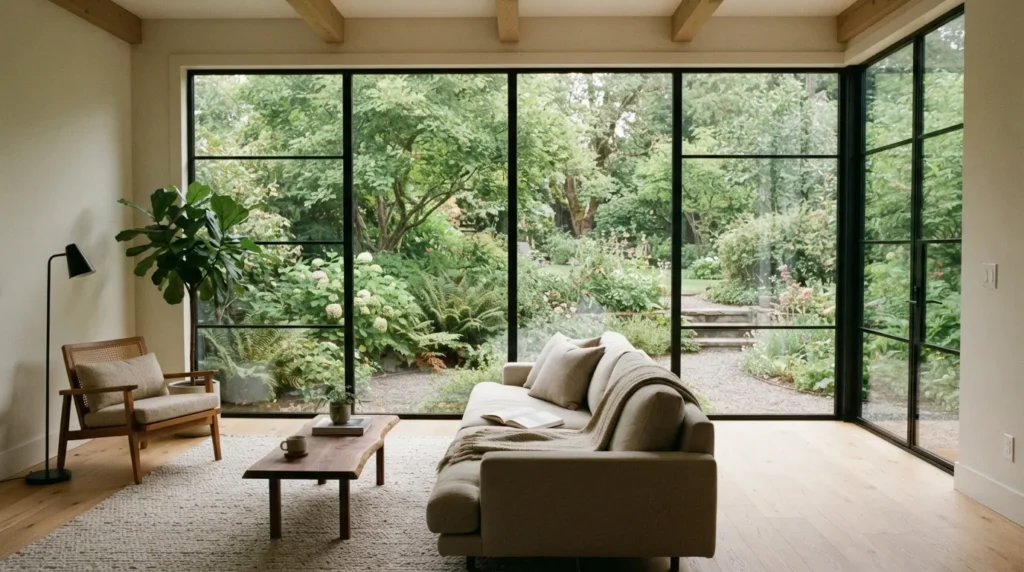
A window with a genuinely good outdoor view — trees, a garden, even a single well-placed tree in an urban yard — can function as one of the most valuable pieces of “art” in the entire living room, provided the space around it is arranged to actually frame and highlight that view. A mistake many homeowners make is blocking windows with tall furniture or heavy curtains, missing the opportunity to treat a genuinely good view as a central design element rather than simply a light source.
How To Style It
Position the room’s primary seating to face or angle toward the best available window view, keeping furniture height low enough that it doesn’t obstruct the sightline. Use minimal window treatments, favoring sheer or easily opened curtains that can be pulled back completely during the day to maximize the framed view. If the outdoor view is limited, consider adding a single well-placed potted tree or tall plant just outside the window to create a more intentional, garden-like frame.
7. Living Moss Wall Accent
Quick Benefits
- Adds a soft, textural nature element to a wall
- Requires minimal to no ongoing maintenance depending on type
- Creates a striking, organic focal point
- Reflects the tactile, natural material focus of Japandi design
- Works well as a contained, framed piece
Why It Works
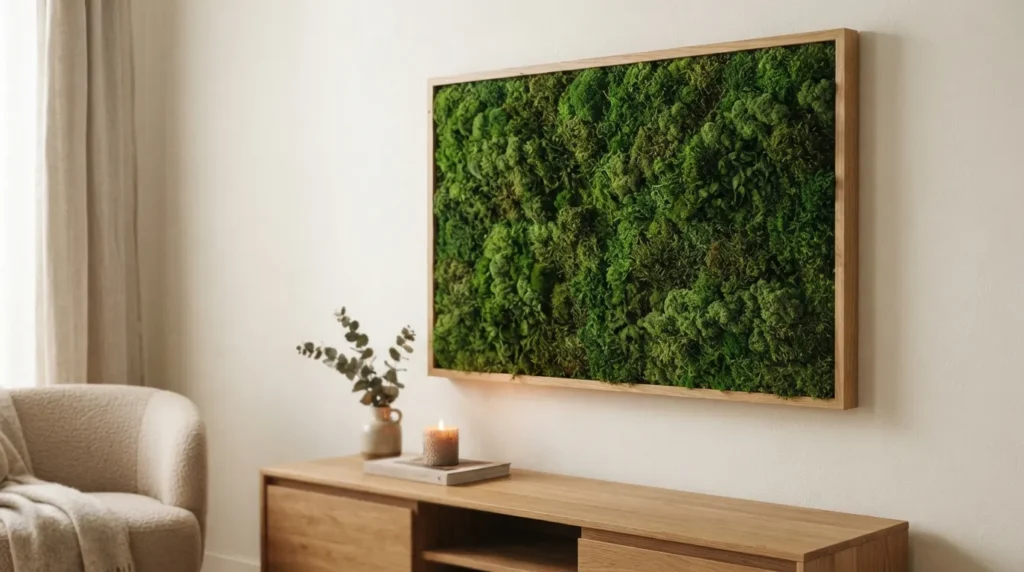
A small moss wall panel, using preserved rather than living moss for low maintenance, introduces an unusual but striking natural texture that few other decor elements can replicate. I’ve seen this idea transform a plain, underutilized wall into a genuine focal point, adding both color and a soft, organic texture that pairs beautifully with the wood and stone materials common throughout the rest of a Japandi living room. This feature works especially well as a contained, framed piece rather than covering an entire wall.
How To Style It
Choose a preserved moss panel, sized to fit within a simple wood frame, and mount it in a spot that gets indirect light rather than direct sun, which can cause preserved moss to fade over time. Position the panel where it will be a genuine focal point, such as above a console table or as a stand-alone piece on an otherwise simple wall. Keep the surrounding wall area minimal, allowing the moss panel’s unique texture and color to stand out without competing with other decor.
8. Water Feature Simplicity
Quick Benefits
- Introduces the calming presence of moving water
- Adds ambient natural sound to the room
- Reflects both Japanese garden and Scandinavian nature traditions
- Works well as a small, contained tabletop element
- Provides a genuinely soothing focal point
Why It Works
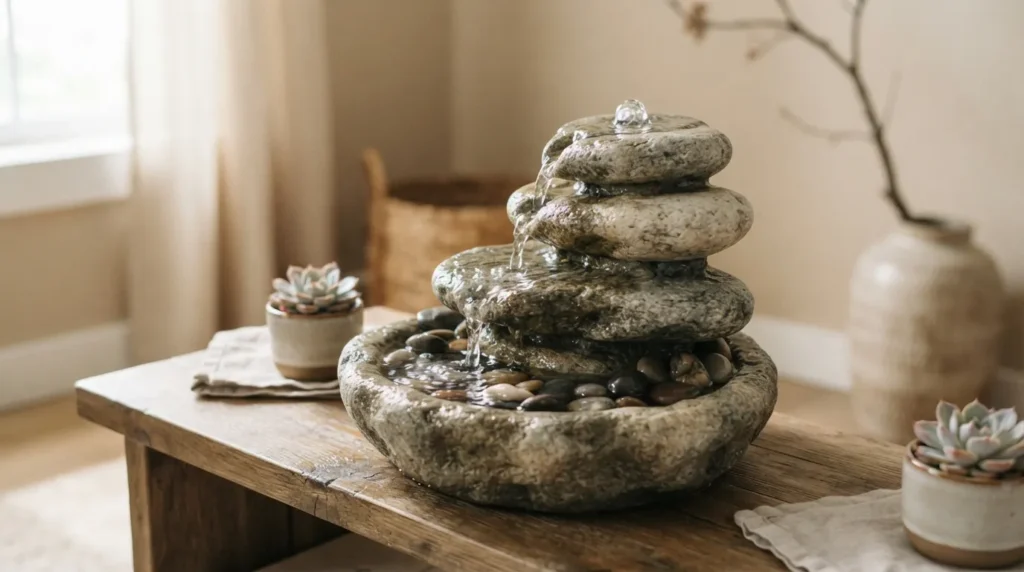
A small, simple water feature brings one of the most calming natural elements directly into the living room, combining gentle movement and ambient sound in a single design element. A mistake many homeowners make is assuming a water feature requires an elaborate, large-scale installation, when a small tabletop fountain, using natural stone or ceramic, can provide much of the same calming effect in a fraction of the space. This detail reinforces the room’s connection to nature through more than just visual elements alone.
How To Style It
Choose a small, simple tabletop fountain in natural stone or a matte ceramic finish, positioned on a low console table or shelf where its gentle sound can be heard from the main seating area without being overly loud or distracting. Keep the fountain’s design minimal, avoiding ornate or brightly colored options that would clash with the room’s overall restrained palette. Regular maintenance, including cleaning and refilling the water, keeps this feature functioning well and looking its best.
9. Pressed Botanical Art
Quick Benefits
- Preserves genuine natural material as quiet wall decor
- Reflects the seasons and specific plants from your own life
- Provides a personal, handmade alternative to printed art
- Works well as a single or small grouped display
- Adds subtle color and texture without visual clutter
Why It Works
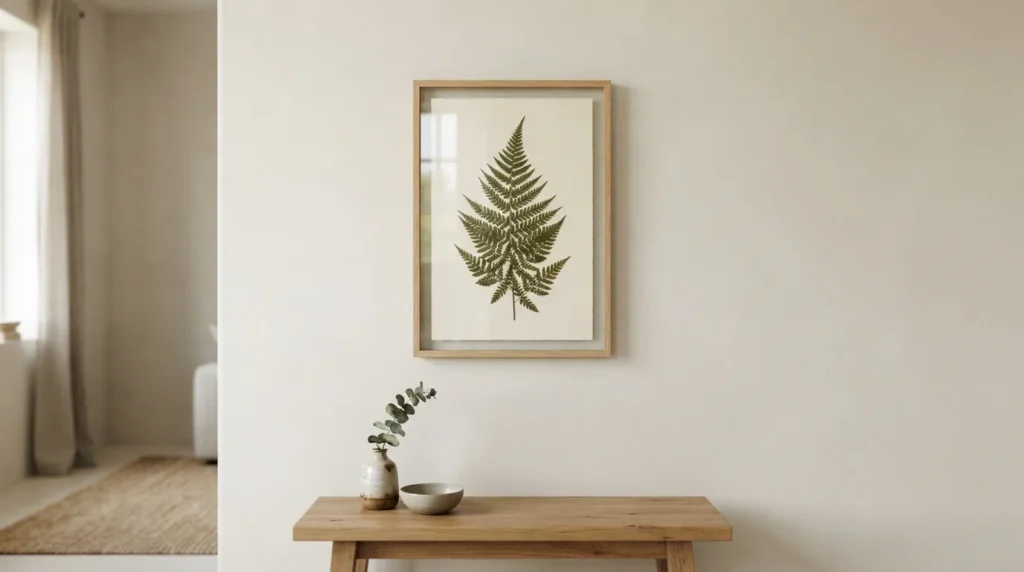
Pressed botanical art — real leaves, flowers, or ferns preserved and simply framed — brings an authentic, personal connection to nature into the living room’s wall decor, offering an alternative to printed botanical prints that, while lovely, don’t carry the same genuine material connection. A mistake many homeowners make is choosing generic printed nature art without considering this more personal, handmade option, which can be created from plants gathered from your own yard, garden, or travels.
How To Style It
Press leaves, flowers, or ferns using a traditional flower press or simply between the pages of a heavy book, allowing several weeks for the material to fully dry and flatten. Frame the pressed botanicals simply, using a thin wood or black frame with a plain mat, and display them either as a single piece or in a small grouping of two or three. This approach works particularly well when the pressed material comes from a meaningful source, such as a garden you’ve tended or a place you’ve visited.
10. Natural Scent Diffusion
Quick Benefits
- Brings the outdoors in through fragrance
- Engages the sense of smell alongside sight and sound
- Reinforces the room’s overall calming, natural atmosphere
- Works well through candles, diffusers, or fresh greenery
- Provides an easy, low-cost way to enhance the space
Why It Works
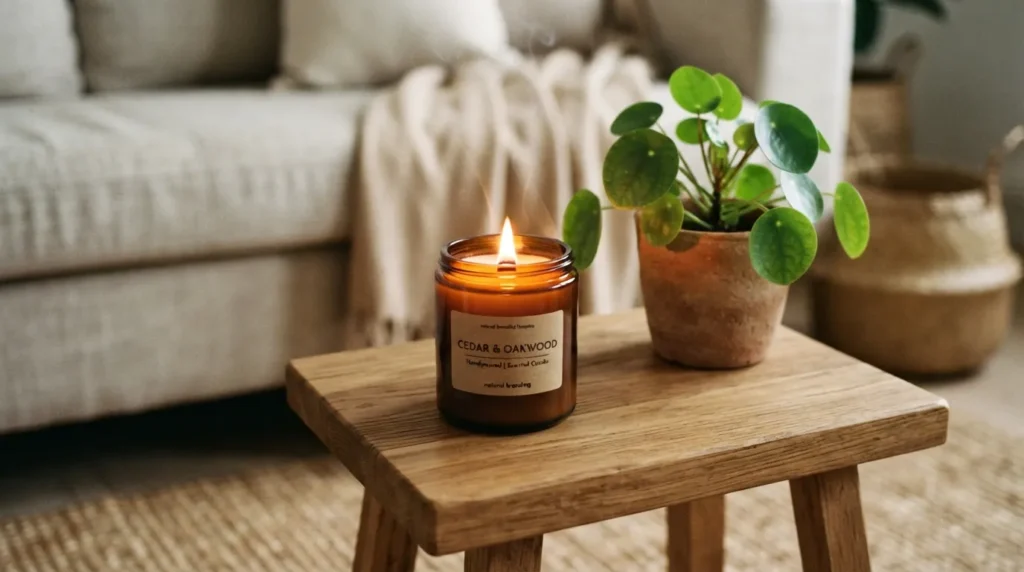
Scent is one of the most powerful and often overlooked ways to reinforce a room’s connection to nature, and choosing fragrances that genuinely evoke the outdoors — cedar, pine, moss, fresh rain — can deepen the sense of a nature-inspired living room in a way that visual elements alone can’t achieve. One simple trick I always suggest is choosing a signature natural scent for the living room specifically, so that fragrance becomes subtly associated with the room’s overall calm, outdoor-inspired mood every time you walk in.
How To Style It
Choose a candle or diffuser in a natural, woody, or green fragrance, such as cedar, hinoki cypress, or a fresh, herbal scent, avoiding overly sweet or floral options that can feel at odds with the room’s earthy palette. Fresh greenery, like eucalyptus or pine branches during winter, also naturally scents the room without any additional product. Keep the fragrance subtle rather than overpowering, allowing it to be a quiet, ambient layer rather than the room’s most noticeable feature.
Frequently Asked Questions
Do I need a lot of plants for a nature-inspired Japandi living room?
Not necessarily. A dedicated garden corner with a few well-chosen plants, combined with other nature-inspired elements like natural light and seasonal branch arrangements, can achieve this feeling without requiring an extensive plant collection.
What if my living room doesn’t get much natural light?
Focus on other nature-connected elements from this list, such as botanical branch arrangements, natural scent, and a small water feature, all of which don’t depend on strong natural light. Low-light tolerant plants can also still contribute to an indoor garden corner even in a dimmer room.
Is a real water feature necessary, or can I use a recording instead?
A small tabletop water feature provides both the visual and auditory benefits of moving water, but a very low-volume ambient sound recording can offer some of the same calming effect if a physical feature isn’t practical for your space.
How do I keep seasonal foliage rotation from becoming expensive or high-maintenance?
Gathering branches and greenery from your own yard, when possible, keeps this practice essentially free. Even a single seasonal vase, updated every few months, is enough to create the intended effect without requiring elaborate or frequent purchases.
Can pressed botanical art be made from store-bought flowers?
Yes, though botanicals gathered from your own garden, a meaningful trip, or a special occasion tend to carry more personal significance. Store-bought flowers still press and preserve well if that’s the most practical option available to you.
What’s the easiest nature-inspired idea to start with?
An indoor garden corner or a simple seasonal branch arrangement are both accessible starting points, requiring relatively little investment or ongoing effort while making a noticeable difference in how connected the room feels to the outdoors.
Does a nature-inspired Japandi living room require living plants, or can artificial ones work?
Living plants, dried botanicals, and preserved moss all align more closely with the style’s emphasis on genuine natural material than artificial or silk plants, which tend to lack the authentic texture and slight imperfection central to the aesthetic. High-quality preserved elements are generally a better fit than artificial alternatives.
Conclusion
A nature-inspired Japandi living room goes beyond a neutral color palette and wood furniture — it actively engages with light, seasons, sound, and scent in ways that make the room feel genuinely alive and connected to the world outside. An indoor garden corner, a seasonal branch arrangement, or even something as simple as an open window on a mild day all reinforce this deeper relationship with nature.
Start with one or two ideas from this list and gradually build a space that reflects your style and supports everyday comfort. Whether that means dedicating a corner to a small indoor garden, framing your best window view more intentionally, or introducing a natural scent that evokes the outdoors, these choices compound into a living room that feels like an extension of nature rather than simply inspired by it. The most successful nature-connected Japandi rooms aren’t the ones with the most plants — they’re the ones most attuned to the light, seasons, and quiet outside their windows.
Related Articles
- Japandi Interior Ideas That Feel Calm And Luxurious
- Japandi Living Room Design Ideas You’ll Love
- Japandi Bedroom Ideas That Feel Cozy And Minimal
- Organic Modern Living Room Ideas
- How To Bring Biophilic Design Into Your Home