
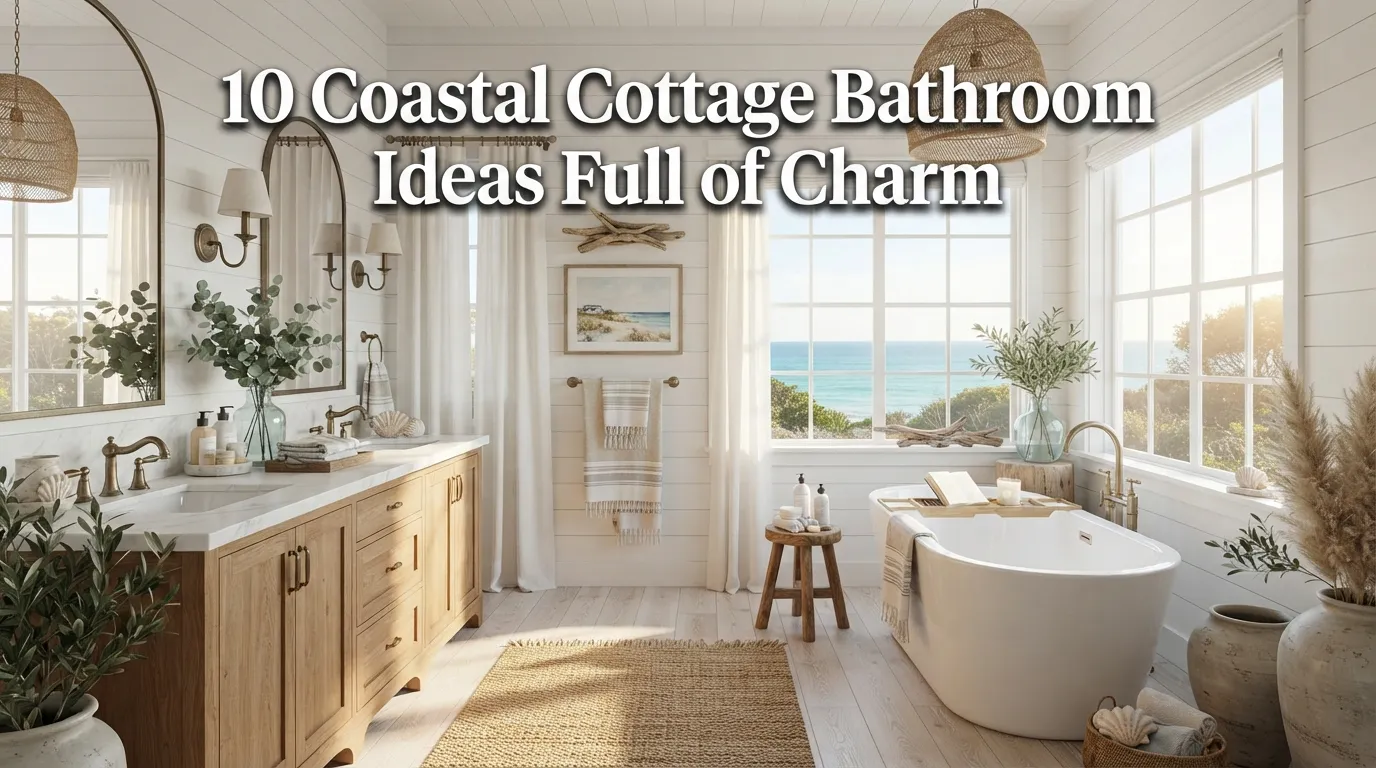
10 Coastal Cottage Bathroom Ideas Full of Charm
There is something instantly restorative about the architecture of a classic seaside cottage. It’s a design style that doesn’t demand perfection; instead, it celebrates the weathered, the relaxed, and the deeply nostalgic. Over the years, I’ve noticed that while living rooms and kitchens are often the first to get the coastal treatment, it is the bathroom where this aesthetic truly shines. A bathroom should inherently feel like a personal sanctuary, and infusing it with coastal cottage charm turns a functional, utilitarian space into a breezy, soul-soothing escape.
If you are anything like me, you want your home to feel layered and full of history rather than looking like a sterile showroom catalog. A mistake many homeowners make when trying to execute a coastal theme is relying on cheesy beach cliches—think plastic anchor signs, bright neon blue walls, and matching seashell soap dispensers. True coastal cottage design is much more subtle and sophisticated. It’s about texture, soft light, and natural materials that feel as though they’ve been gently worn down by sand and sea air over decades.
Whether you are remodeling a compact powder room tucked under the stairs or refreshing a spacious master bath, integrating smart, character-rich coastal details can completely change the room’s energy. The right choices have a beautiful way of making tight layouts feel incredibly bright and airy, while wrapping the space in an old-world, welcoming warmth. Let’s dive into ten exceptionally beautiful, highly practical coastal cottage bathroom concepts that masterfully balance maritime nostalgia with clean, modern usability.
Table of Contents
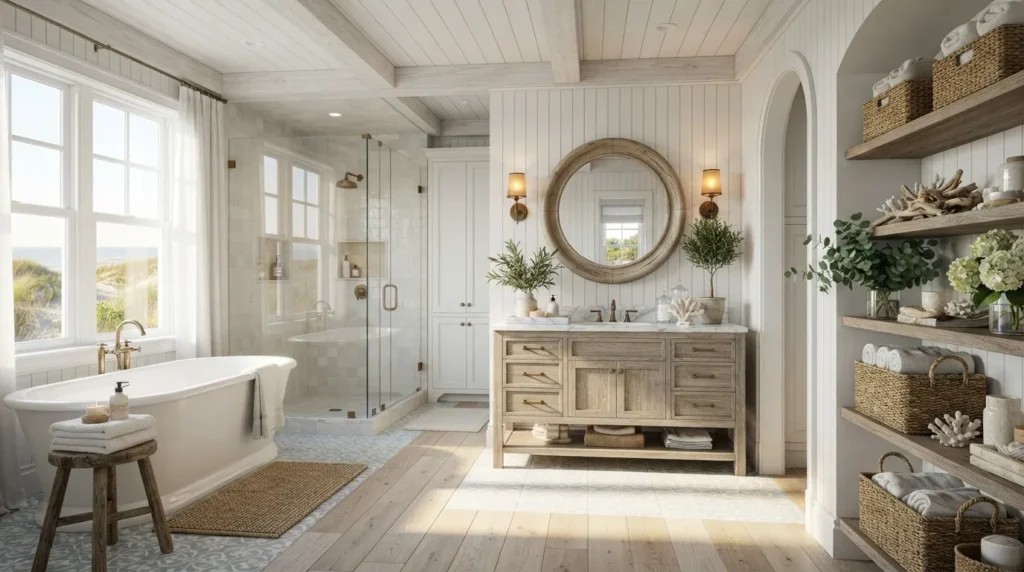
- Weathered Beadboard Paneling – Bringing classic cottage texture and vertical visual height to bare bathroom walls.
- Soft Seafoam Shiplap – A serene, color-drenched twist on traditional horizontal coastal wall planking.
- Vintage Clawfoot Tub – Anchoring the space with timeless, historic luxury and a relaxing focal point.
- Woven Rattan Sconces – Introducing airy, organic warmth to bathroom vanity lighting zones.
- Polished Chrome Plumbing – Adding a crisp, reflective sparkle reminiscent of luxury vintage yacht fittings.
- Muted Driftwood Vanities – Utilizing soft, textured wood grains that mimic sun-bleached coastal timber.
- Artisanal Blue Zellige – Creating a shimmering, water-like backdrop with irregular handmade ceramic tiles.
- Freestanding Linen Hutch – Maximizing storage while introducing the charming character of historical furniture.
- Natural Sisal Runners – Softening hard bathroom tile floors with durable, coastal-approved plant fibers.
- Porthole Accent Mirrors – Incorporating classic nautical geometry without sacrificing a clean, modern aesthetic.
1. Weathered Beadboard Paneling
Quick Benefits
- Adds instant historic cottage character
- Visually elongates low bathroom ceilings
- Protects lower walls from water splashes
- Offers a budget-friendly drywall alternative
- Easy to refresh with paint over time
Why It Works
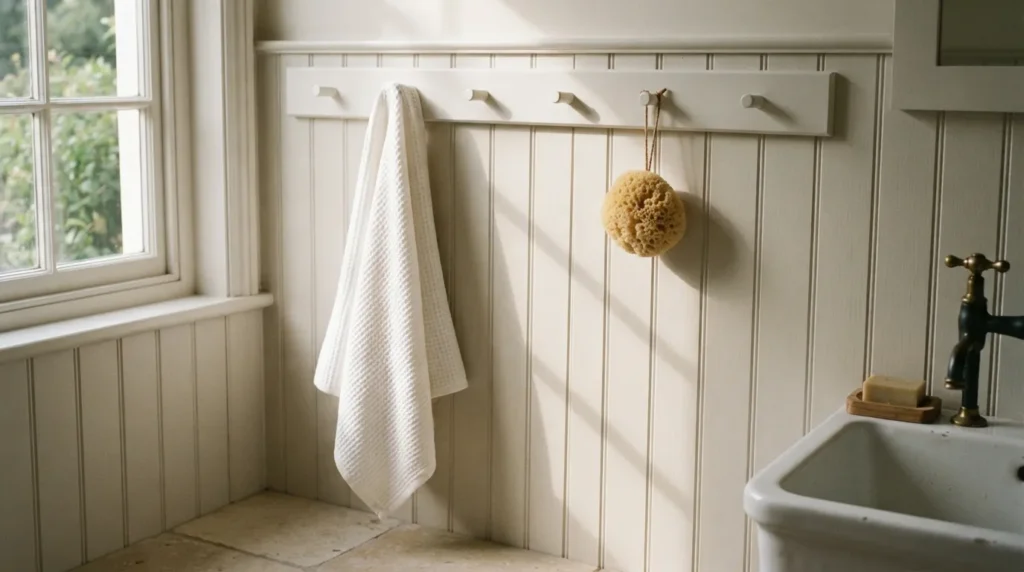
Bathrooms are naturally full of cold, flat surfaces like porcelain and drywall. One thing that works especially well to counter that sterile feel is introducing vertical beadboard paneling. Running tongue-and-groove beadboard up to chair-rail height—or even all the way to the ceiling—instantly roots a bathroom in historic, old-world architecture. The thin, repetitive vertical grooves create a beautiful play of light and shadow, giving the room a cozy, hand-crafted texture that feels distinctly like a historic New England cape or a cozy beachside bungalow.
How To Style It
For a classic coastal cottage look, paint your beadboard paneling in a soft, ultra-matte alabaster white or a very pale misty grey. Top the paneling with a thick, traditional peg rail where you can hang plush white Turkish towels and a natural loofah sponge. Pair this texture with a clean, white quartz countertop and a simple drop-in porcelain sink. Keep the upper portion of the wall painted in a matching neutral shade to create a seamless, cohesive backdrop that lets your accent decor pop.
2. Soft Seafoam Shiplap
Quick Benefits
- Introduces a soothing, watery color story
- Expands the horizontal feel of tight walls
- Provides an incredibly durable wall surface
- Nods to classic boat-building techniques
- Masks wall imperfections and drywall flaws
Why It Works
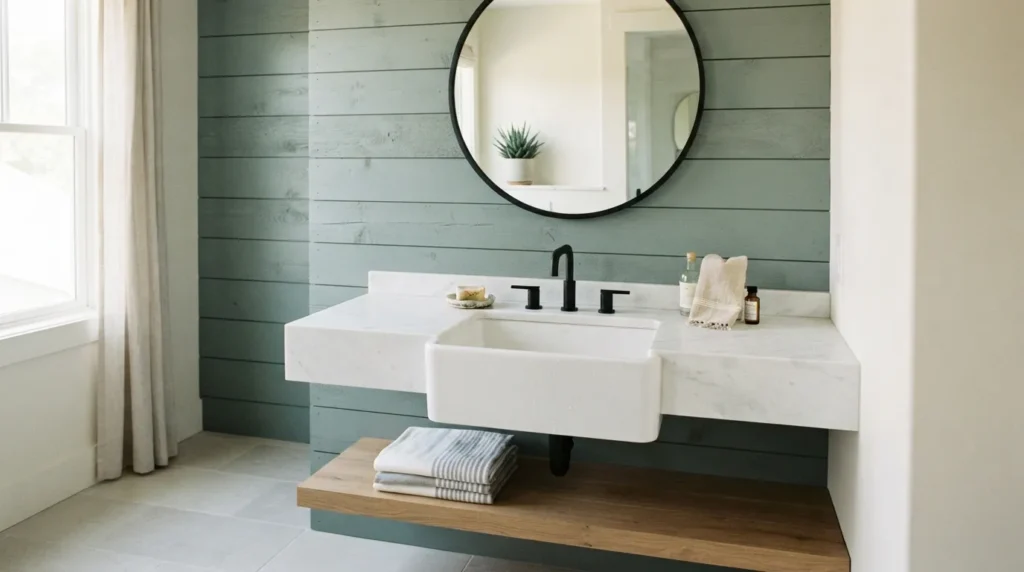
Shiplap has a rich maritime history, originally utilized as interlocking exterior wood boards to keep boats and coastal homes watertight. Bringing shiplap indoors instantly evokes that coastal heritage. However, instead of sticking with basic white, painting horizontal shiplap in a muted, desaturated seafoam green changes the game entirely. I’ve seen this idea transform spaces from feeling expected to feeling like a custom, designer-led retreat. The soft green hue infuses the room with a calming, watery energy that encourages long, relaxing steamy showers.
How To Style It
The trick to styling colored shiplap is keeping the tone sophisticated—choose a paint color with heavy grey or beige undertones so it looks soft and dusty rather than neon. Run the shiplap horizontally across your main accent wall, such as behind the vanity or around a built-in alcove tub. Pair the seafoam wood with a clean white farmhouse apron-front sink and matte black metal hardware. The black handles cut through the watery tones beautifully, grounding the design with a modern, graphic edge.
3. Vintage Clawfoot Tub
Quick Benefits
- Commands attention as a striking focal point
- Offers a deep, luxurious soaking experience
- Exudes high-end, historical estate luxury
- Frees up visual floor space underneath the tub
- Never goes out of design style
Why It Works
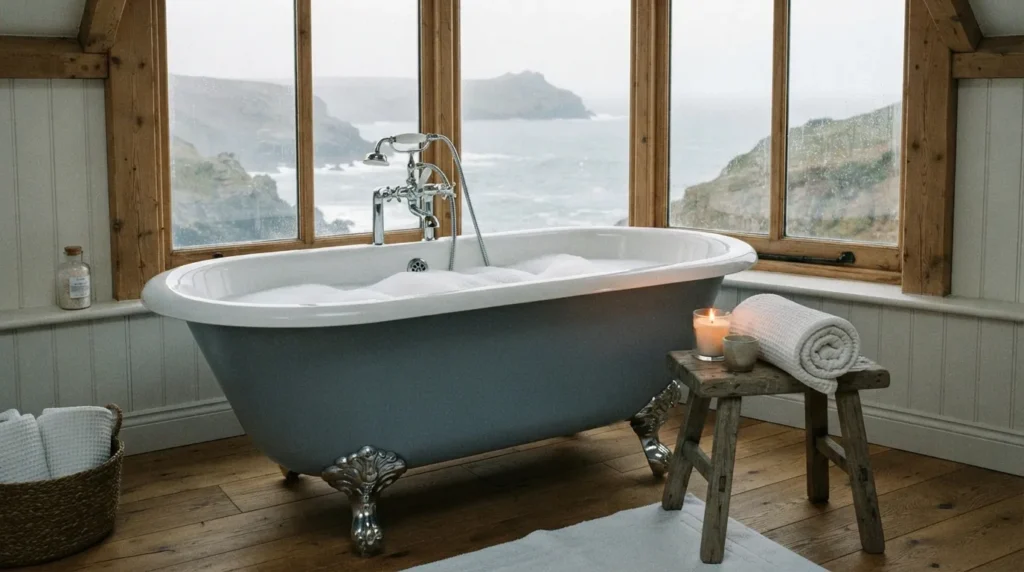
Nothing says “cottage charm” quite like a freestanding vintage clawfoot bathtub. It acts as an undisputed architectural sculpture that sets a slow, intentional pace for the entire room. Unlike modern drop-in acrylic tubs that feel boxy and commercial, a clawfoot tub features beautiful sweeping curves and detailed metallic feet that elevate the bathroom’s design status instantly. It appeals directly to the lifestyle reader who views bathing not just as a quick daily task, but as a restorative, slow-living ritual.
How To Style It
Position your clawfoot tub directly beneath a window to maximize your views and natural light while soaking. Paint the exterior underbelly of the cast-iron tub in a soft, muted tone like dusty slate blue or a warm biscuit cream to contrast against bright white bathroom floors. Install a floor-mounted telephone-style tub filler in a polished metallic finish, and place a small wooden stool right beside the tub to hold a burning candle, a rolled towel, and your favorite book.
4. Woven Rattan Sconces
Quick Benefits
- Softens harsh, glaring vanity light bulbs
- Introduces beautiful, warm organic texture
- Bounces intricate patterned shadows onto walls
- Breaks up heavy metal bathroom finishes
- Incredibly lightweight and easy to mount
Why It Works
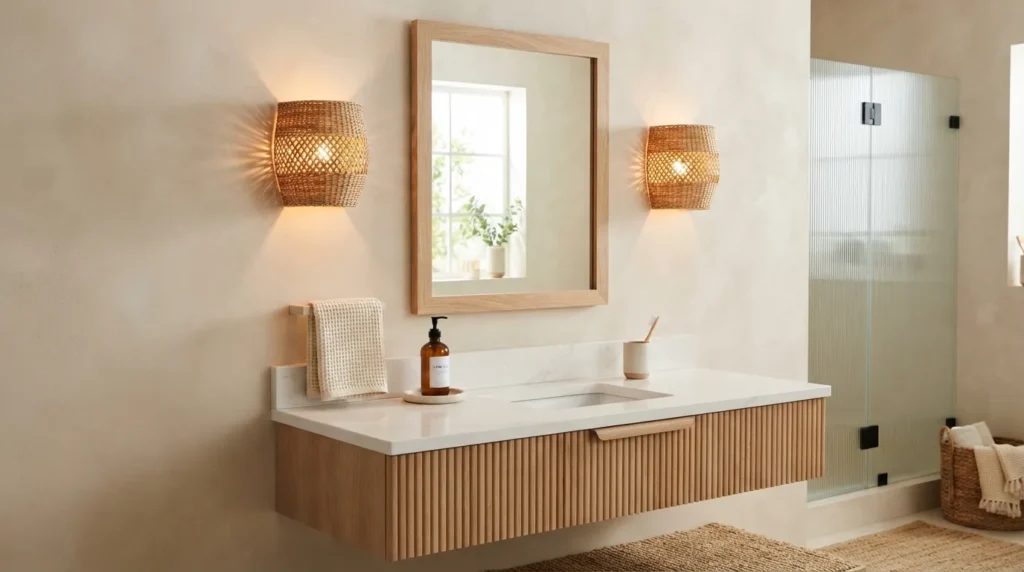
Bathrooms require plenty of metal for faucets and towel rings, but overdoing the metal can quickly cause a space to feel cold and institutional. That’s why many designers recommend bringing in woven natural fibers like rattan, wicker, or jute through your lighting fixtures. Mounting a pair of woven rattan basket sconces on either side of your vanity mirror introduces an instant hit of organic warmth right at eye level. The woven grids filter the light softly, casting a warm, flattering glow that makes morning routines feel much more peaceful.
How To Style It
Select sconces that feature a tightly woven natural finish paired with a clean brass or matte black backplate. Mount them directly onto a soft plaster or beadboard wall to frame a simple, rectangular wood-framed vanity mirror. To keep the look cohesive, echo the warm rattan texture elsewhere in the room—such as a large woven wicker laundry hamper in the corner or a small rattan tray holding perfume bottles on your countertop.
5. Polished Chrome Plumbing
Quick Benefits
- Mirrors the look of luxury antique yachts
- Bounces massive amounts of light around
- Exceptionally easy to clean and maintain
- Highly cost-effective compared to brass
- Coordinates flawlessly with white porcelain
Why It Works
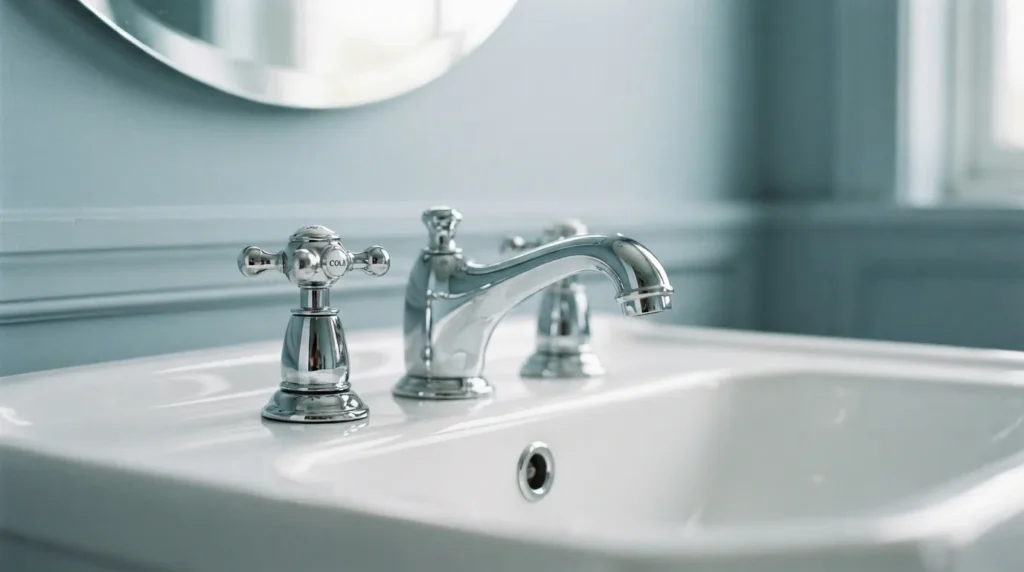
When it comes to hardware, a mistake many homeowners make is neglecting the historic power of polished chrome. While brass and matte black have trended heavily, polished chrome is the absolute blueprint for an authentic coastal cottage aesthetic. It features cool, bright undertones that feel deeply tied to maritime design, mimicking the gleaming, sun-lit chrome fixtures found on classic vintage luxury yachts. It looks incredibly crisp, clean, and intentional when paired with watery blues and bright whites.
How To Style It
Choose plumbing fixtures with traditional, historic silhouettes—think cross-handle wall-mounted faucets, exposed shower pipes, and heavy porcelain lever handles. Install a widespread chrome faucet onto a classic pedestal sink or a custom wood vanity. Keep the chrome looking brilliant by wiping it down with a soft cloth to maintain that ultra-reflective, liquid-like sheen that catches overhead bathroom lighting so beautifully.
6. Muted Driftwood Vanities
Quick Benefits
- Hides water spots and powder dust effortlessly
- Introduces a sun-bleached, natural wood element
- Softens the stark look of white porcelain
- Coordinates with both cool and warm tones
- Adds a rich tactile grain to the room
Why It Works
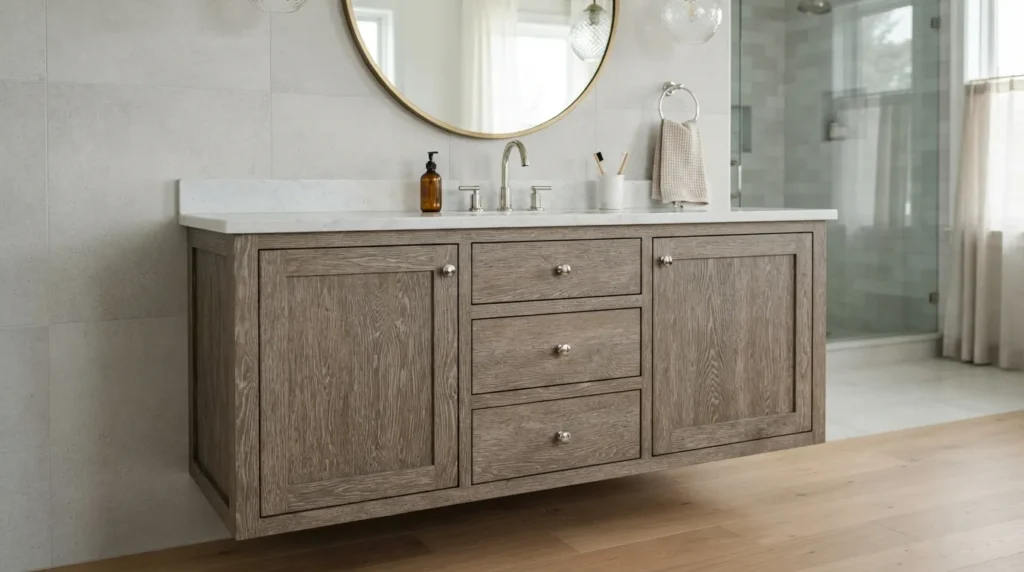
A coastal cottage bathroom needs a grounding element to prevent all the light whites and blues from looking too floatsome or unanchored. A custom vanity crafted from muted, driftwood-toned oak or maple is the perfect solution. This specific wood finish features a beautiful grey-washed or wire-brushed texture that perfectly mimics timber that has been bleached by the sun and tumbled by ocean waves. It introduces an organic, casual luxury that feels authentic to beachside living.
How To Style It
Select a driftwood vanity with a simple flat-panel or shaker door silhouette to let the beautiful, weathered wood grain serve as the main attraction. Top the vanity with a thick slab of honed white Carrara marble or a solid white surface with very faint grey veining. Pair the driftwood finish with polished nickel or antique brass hardware to inject a hint of warmth, and display a cluster of clear glass apothecary jars filled with white cotton rounds on top.
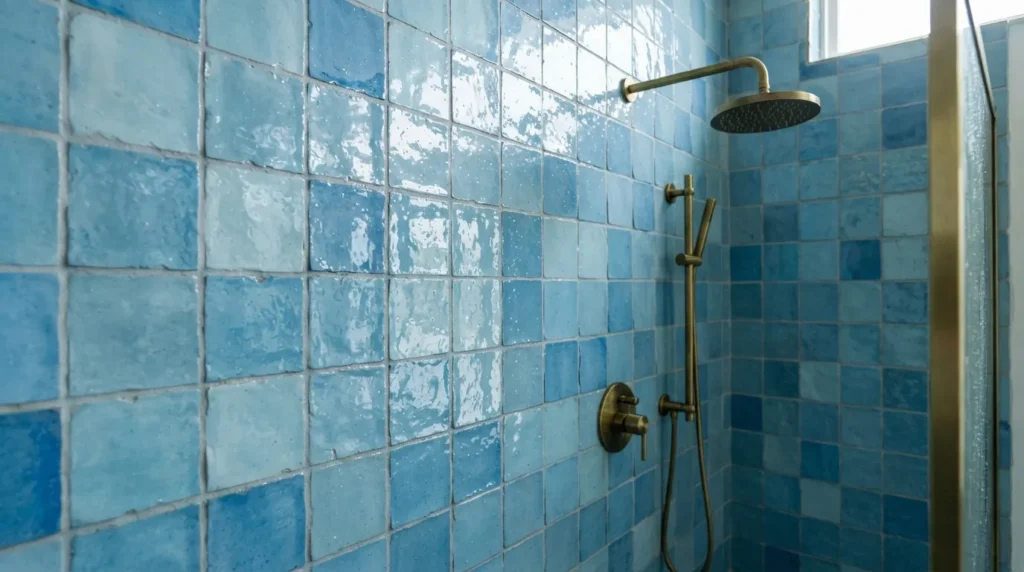
7. Artisanal Blue Zellige
Quick Benefits
- Captures a shimmering, ocean-like surface reflection
- Features beautiful, hand-made irregular edges
- Offers an incredibly unique, custom luxury look
- Stands up perfectly to heavy shower moisture
- Never looks flat, uniform, or mass-produced
Why It Works
To capture the true essence of the ocean without using tacky motifs, look to artisanal handmade tiles like Moroccan zellige. Each tile is hand-chiseled and glazed individually, resulting in slight variations in thickness, flat-ness, and color depth. When you line a bathroom wall or a shower alcove with zellige tiles in a soft pale blue or watery aqua, the irregular surfaces reflect incoming daylight unevenly. The result is a gorgeous, shimmering wall that looks exactly like sunlight dancing across moving ocean water.
How To Style It
Run your blue zellige tiles from the floor all the way to the ceiling inside a walk-in shower, or use them as a full-height backsplash behind your vanity mirror. Use a matching translucent or ultra-light grey grout with a very tight joint to emphasize the beautiful, uneven hand-cut edges of the tiles. Pair this highly reflective, shimmering surface with a matte painted vanity and soft linen hand towels to achieve a perfectly balanced texture story.
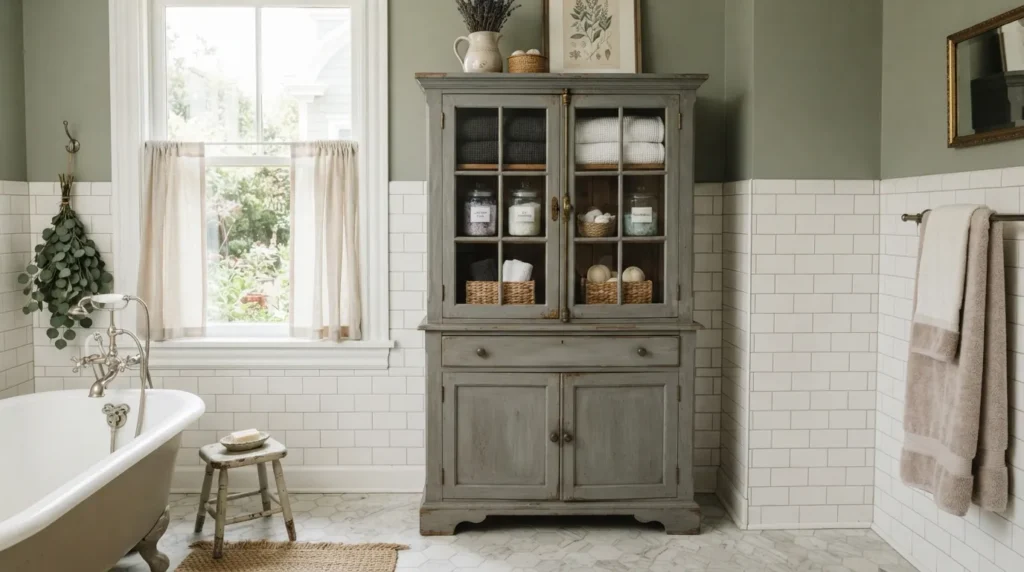
8. Freestanding Linen Hutch
Quick Benefits
- Eliminates the need for boring sheetrock closets
- Maximizes vertical storage for small footprints
- Introduces a beautiful piece of character furniture
- Conceals messy toilet paper and spare toiletries
- Showcases curated, beautiful waffle-weave linens
Why It Works
Most standard modern bathrooms rely on built-in drywall linen closets, which can look flat, boxy, and completely devoid of personality. Swapping that out for a freestanding, vintage-inspired wooden linen hutch instantly injects your bathroom with cozy cottage charm. A hutch functions as a beautiful piece of furniture, introducing a sense of history and architectural scale. It allows you to display your prettiest folded linens through glass doors while keeping less attractive bathroom necessities tucked away behind solid drawers below.
How To Style It
Look for a slim, tall wooden hutch with glass upper doors and a slightly distressed painted finish—such as a weathered pewter grey or a soft antique cream. Line the interior shelves with neatly rolled waffle-weave bath towels, handmade sea-salt soaps, and a small woven basket filled with sea sponges. Place the hutch against a blank wall or right next to your shower enclosure for easy, functional access to fresh linens.
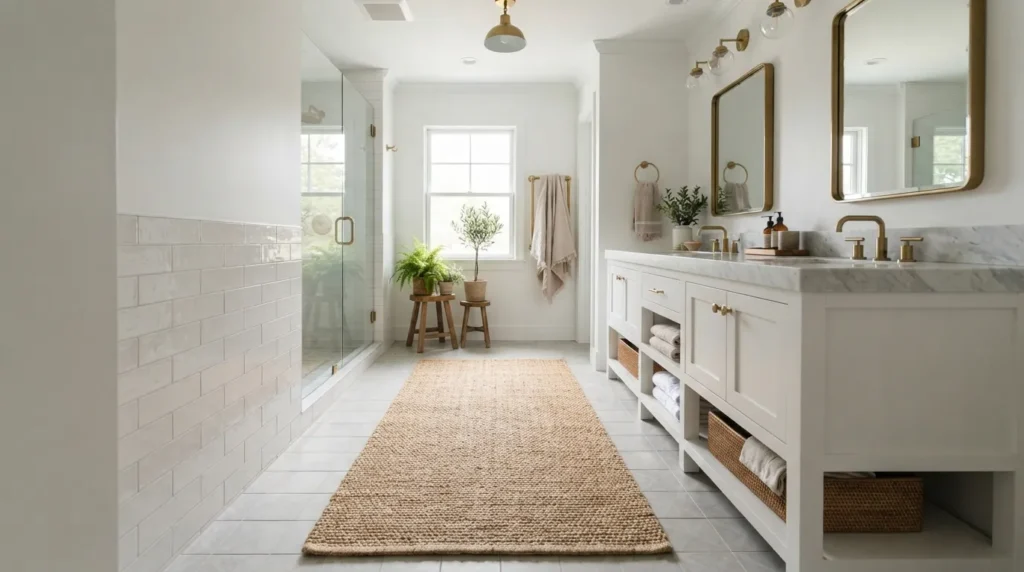
9. Natural Sisal Runners
Quick Benefits
- Adds a highly durable underfoot plant fiber
- Brings a warm, sandy-beach texture indoors
- Absorbs echoing sound waves in tiled rooms
- Keeps bare feet off freezing bathroom floors
- Features fully biodegradable, eco-friendly roots
Why It Works
Bathroom floors are usually a sea of cold, hard tiles that can feel uninviting on chilly mornings. While standard terrycloth bath mats are functional, they often look messy and disrupt the flow of the room. A long, natural sisal or jute runner rug is an exceptional alternative. Woven from durable, sustainable plant fibers, a sisal runner introduces a rich, sandy-tan color and a coarse, grounding texture that feels exactly like stepping onto a beach boardwalk. It frames a long vanity or a narrow walk-in path beautifully.
How To Style It
Choose a sisal or jute runner with a low-profile flat weave and a non-slip natural rubber backing to ensure it stays securely in place on slick bathroom tiles. Position the runner so it stretches across the full length of your double vanity or down the center path of a long galley bathroom layout. Pair the golden, sandy tones of the rug with crisp white painted floors or classic grey cement encaustic floor tiles to create a gorgeous, high-contrast maritime base.
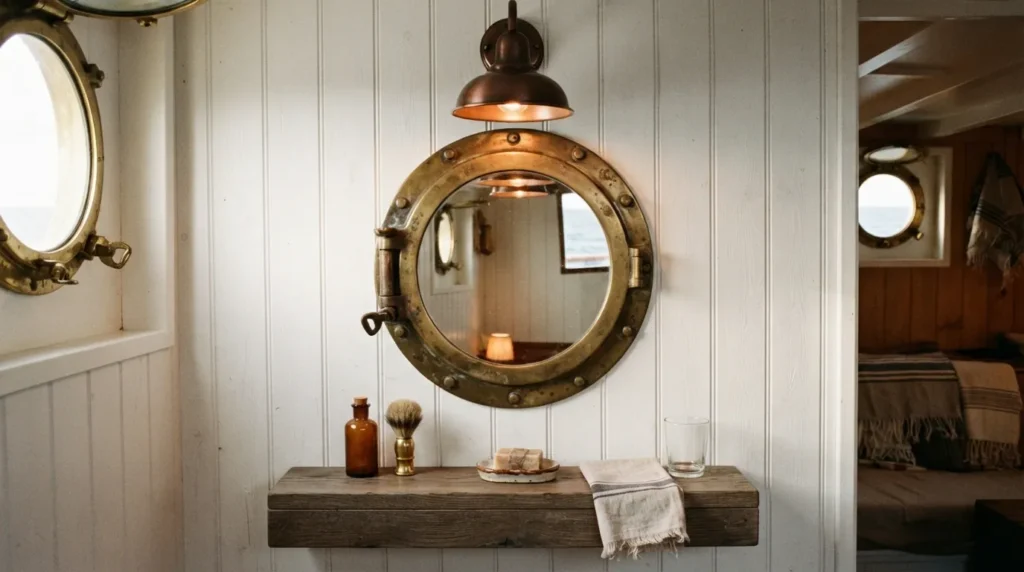
10. Porthole Accent Mirrors
Quick Benefits
- Introduces classic, sweeping geometric curves
- Nods subtly to vintage nautical design
- Bounces daylight directly onto vanity counters
- Breaks up long blocks of square tiling
- Instantly shifts a plain wall into a feature zone
Why It Works
Every bathroom vanity requires a great mirror, making it the perfect staging ground to introduce a subtle nod to nautical design. A large, circular mirror styled after a ship’s porthole introduces a soft, sweeping geometry that breaks up the rigid straight lines of your countertops and wall tiles. It feels instantly adventurous, whimsical, and historical without crossing the line into cheesy theme-decor territory. It offers a clean, structured frame that beautifully highlights the surrounding wall textures.
How To Style It
Select a porthole mirror with a thick, heavy frame crafted from antiqued brass, unlacquered copper, or a distressed weathered wood. Mount it directly above your vanity sink, illuminating it from above with a pair of classic goose-neck metal barn lights. The circular shape of the mirror looks jaw-droppingly beautiful when hung against a backdrop of crisp vertical beadboard or shimmering blue tiles, completing a perfectly balanced coastal look.
FAQ Section
Will wood beadboard and shiplap warp due to heavy bathroom moisture and steam?
Not if you use the correct materials and finishes! For high-humidity zones like bathrooms, it is highly recommended to use moisture-resistant MDF (medium-density fiberboard) or traditional wood planks that have been sealed on all sides with a premium, anti-microbial primer. Finish the face with a high-quality satin or semi-gloss paint to create a completely washable, water-repellent barrier.
How do I clean and maintain a woven rattan lighting fixture in a bathroom?
Because rattan is a natural plant fiber, it can collect airborne dust over time. Once a month, simply use the soft brush attachment on your vacuum cleaner to gently clear away any dust trapped within the woven grid. Avoid spraying heavy liquid chemical cleaners directly onto the rattan; instead, use a slightly damp microfiber cloth to wipe down the fibers if needed.
Are natural sisal and jute rugs safe to use right outside a wet shower enclosure?
Sisal and jute are highly durable plant fibers, but they are highly absorbent and can discolor or water-spot if they remain soaking wet for long periods. It is best to place your natural sisal runner along the dry vanity zone or center walking path, and use a standard, quick-drying cotton loop bathmat directly outside the shower door to catch heavy footprints.
What paint finishes are best for achieving a authentic cottage look without looking shiny?
To capture that historic, authentic cottage vibe, opt for an eggshell or satin finish on your wood beadboard and shiplap paneling. This provides just enough subtle sheen to repel water and clean up easily, while avoiding the harsh, plastic-like glare common with high-gloss finishes, preserving a soft, hand-painted look.
Can I mix different metal finishes across my coastal bathroom fixtures?
Absolutely, and it actually makes a bathroom look beautifully layered and custom-designed over time. The trick is to establish a clear dominant metal—like polished chrome for your primary faucets and shower pipes—and layer in a warm accent metal like antique brass or unlacquered copper for your mirror frames, cabinet knobs, or lighting fixtures.
Conclusion
Cultivating a gorgeous, coastal cottage bathroom is all about prioritizing texture, soft watery color stories, and natural materials that celebrate a relaxed, slow-living lifestyle. By replacing generic, mass-produced fixtures with character-rich elements like vertical beadboard, shimmering blue zellige tiles, a weathered driftwood vanity, or a freestanding vintage hutch, you completely rewrite the sensory experience of the room. Start with one single high-impact update, focus on the details that bring you comfort, and gradually build a beautiful seaside sanctuary that helps you unwind and restores your energy every single day.
Related Articles
- Stunning Small Powder Room Layouts That Maximize Style
- The Ultimate Guide to Mixing Metal Hardware Finishes
- How to Style a Cozy and Timeless Master Bedroom
- Beautiful Architectural Wall Molding Ideas for Your Home
- Designing a Functional and Gorgeous Guest Bathroom