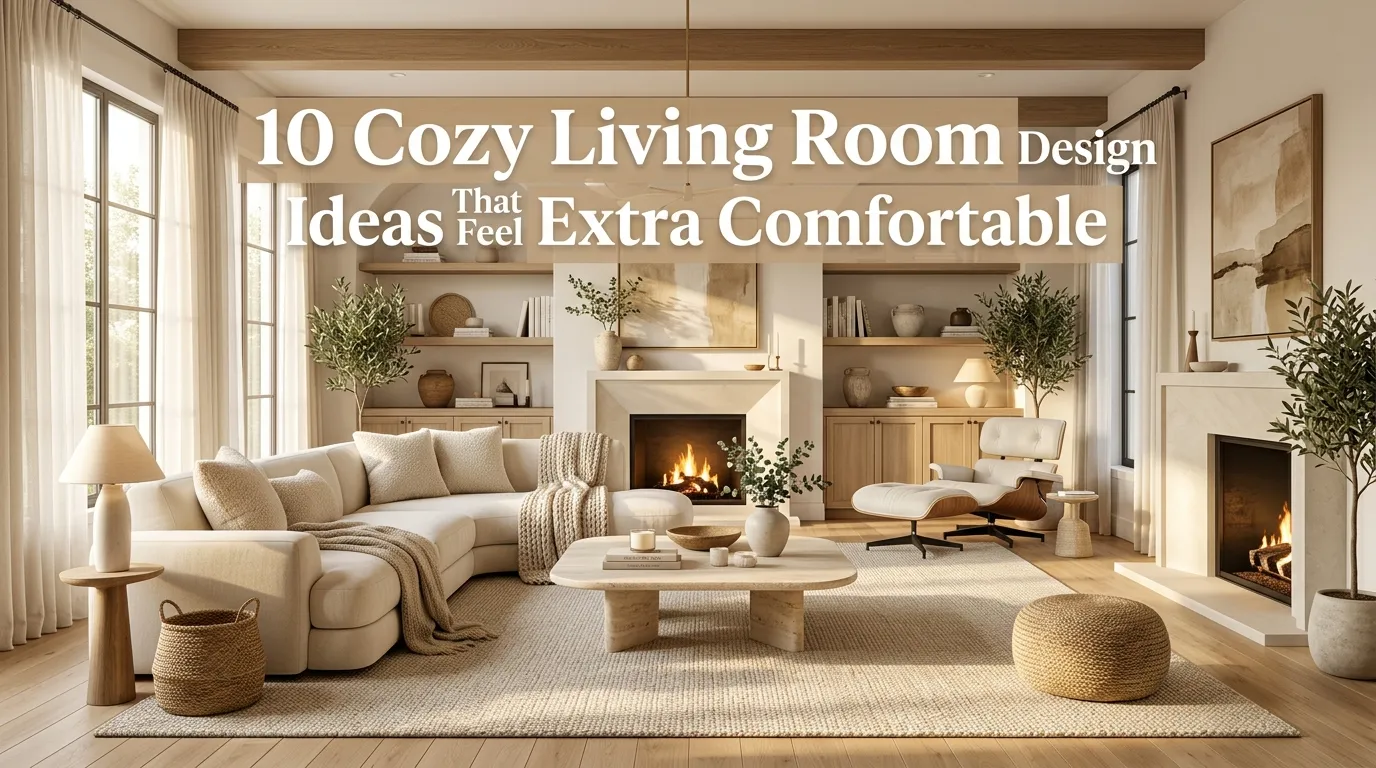
10 Cozy Living Room Design Ideas That Feel Extra Comfortable
Comfort in a living room isn’t only about soft blankets and warm lighting — a lot of it comes down to design decisions that happen before a single throw pillow gets placed. A mistake many homeowners make is assuming coziness is purely about accessories, when in reality, the way a room is laid out, furnished, and shaped has just as much influence on how comfortable it feels to actually sit in.
In my experience, some of the most genuinely comfortable living rooms I’ve seen have fairly simple decor, but the underlying design choices — how the seating is arranged, how deep the furniture is, how the room’s architecture is used — do most of the heavy lifting. These are the kinds of decisions that are easy to overlook because they’re less visually obvious than a new rug or a set of candles, but they’re often what makes the biggest difference in how a room actually feels to live in.
This guide focuses specifically on the design-level choices that create genuine comfort: seating configuration, furniture depth, room shape, and a few architectural details that many homeowners don’t think to prioritize. Each idea includes the reasoning behind it along with practical advice for applying it to your own space.
If you’re anything like me, you’ve probably noticed that some rooms just feel easier to relax in than others, even when the decor style is similar. These ten ideas get at the design principles behind that feeling.
Table of Contents
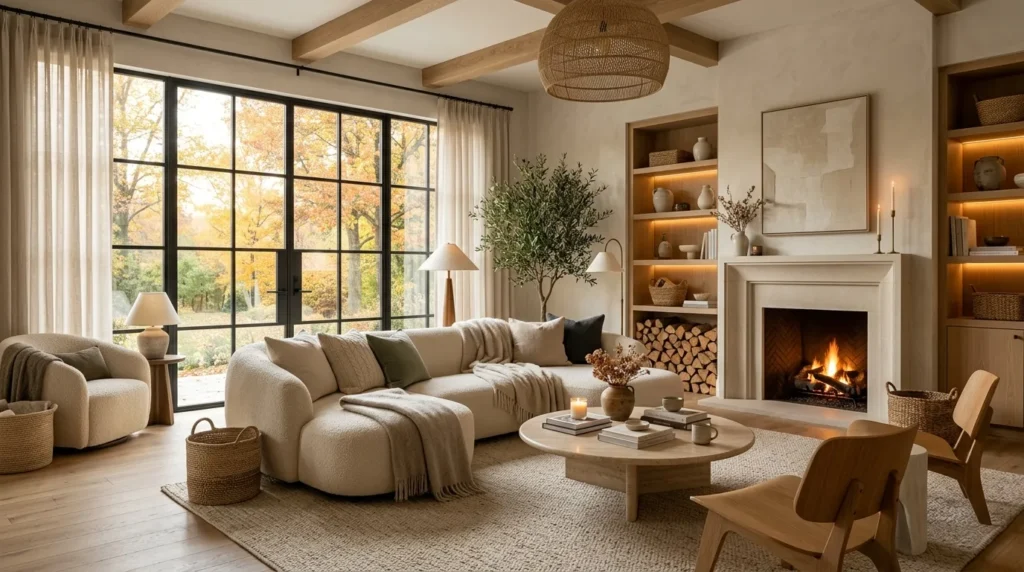
- Conversation-Focused Seating Layout — Arranging furniture for connection, not just a view.
- Deep Cushioned Sectional — Choosing seating built for lounging.
- Layered Table Lamp Trio — Designing light placement around seating zones.
- Warm Wood Ceiling Beams — Using architecture to add coziness overhead.
- Blanket Ladder Styling — Designing a dedicated spot for warmth and access.
- Nesting Furniture Arrangement — Creating flexible, adaptable seating.
- Curtain-Framed Windows — Softening architecture with proportion.
- Board Game And Tray Styling — Designing for shared, slow-down activities.
- Woodburning Stove Ambiance — Building the room around a heat source.
- Hygge-Inspired Layering — Designing with comfort as the central principle.
1. Conversation-Focused Seating Layout
Quick Benefits
- Encourages connection and relaxed conversation
- Creates a more intentional, purposeful layout
- Reduces the “everything faces the TV” default
- Works well for both daily use and entertaining
- Improves the room’s overall sense of warmth
Why It Works
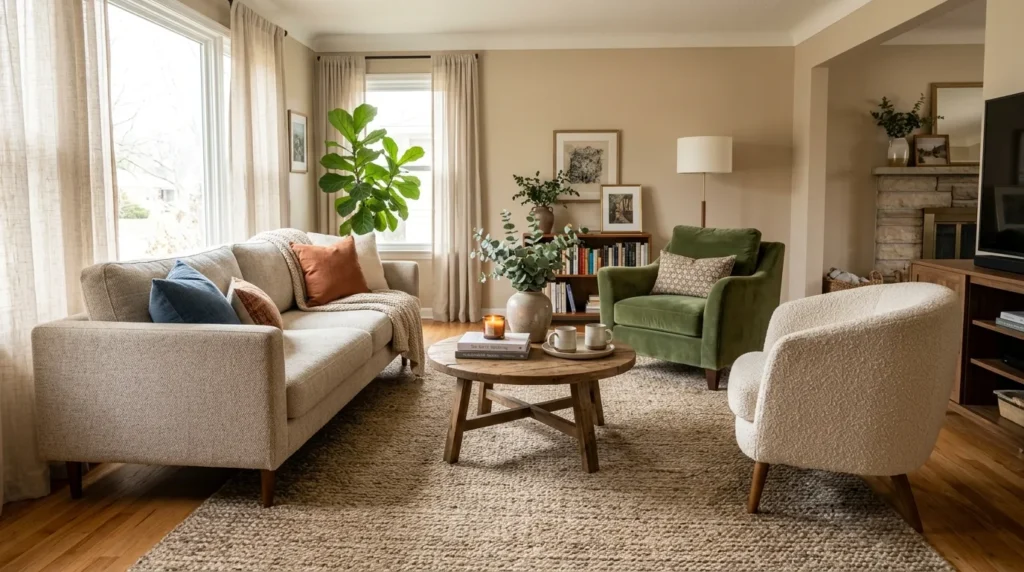
A mistake many homeowners make is arranging every seat in the room to face a television, which prioritizes passive viewing over the kind of relaxed, face-to-face comfort that makes a room feel genuinely cozy. A conversation-focused layout — seating angled toward each other rather than all facing one direction — creates a room that feels warmer and more social, even when no one is actively talking. This layout choice alone can shift a room from feeling like a media room to feeling like a true gathering space.
How To Style It
Arrange your sofa and one or two chairs in a loose triangle or L-shape rather than lining everything up to face a single wall. If a television is part of the room, consider mounting it at an angle or on a swivel stand so it can be tucked out of the primary sightline when it’s not in use. Leave enough space between seating pieces for conversation, generally within six to eight feet, so people can talk comfortably without raising their voices.
2. Deep Cushioned Sectional
Quick Benefits
- Provides ample room for lounging and stretching out
- Accommodates more people comfortably
- Encourages longer, more relaxed time in the room
- Works well as the room’s central gathering piece
- Available in configurations to fit different layouts
Why It Works
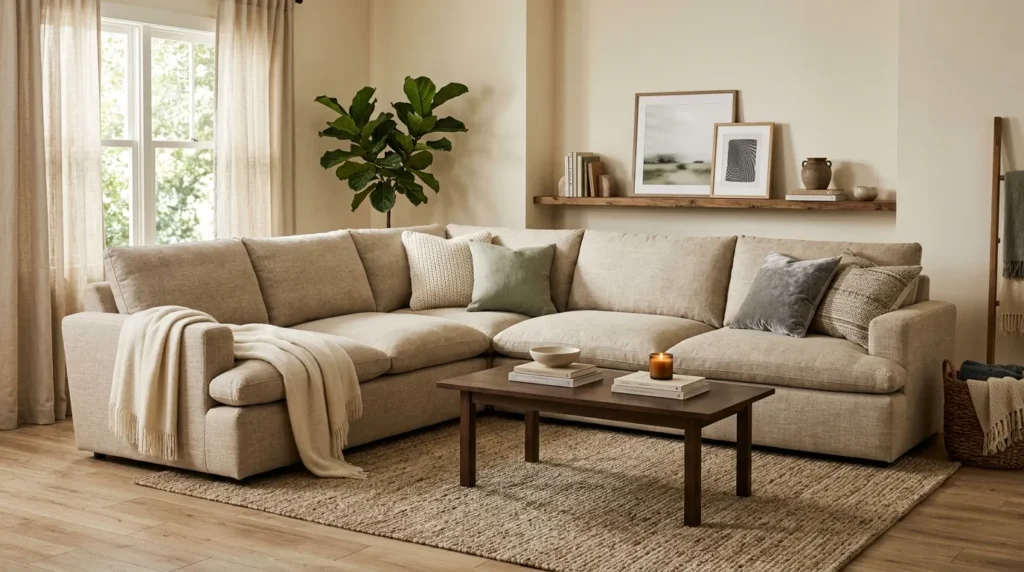
A deep, cushioned sectional is one of the most direct design choices you can make for comfort, since it’s built specifically to support lounging rather than upright sitting. One thing that works especially well is choosing a sectional with a seat depth of at least 40 inches, which allows for curling up or stretching out fully rather than perching on the edge. This kind of seating naturally encourages people to settle in and stay longer, which is a large part of what makes a room feel cozy.
How To Style It
Look for a sectional with deep seats, a low back height, and soft, down-blend or down-alternative cushions rather than firm, structured seating. An L-shaped or U-shaped configuration works particularly well for larger families or frequent entertaining, since it maximizes lounging space while still supporting the conversation-focused layout mentioned above. Leave enough room around the sectional for a coffee table and clear walking paths so the size of the piece doesn’t overwhelm the room.
3. Layered Table Lamp Trio
Quick Benefits
- Creates warm, functional light near every seating zone
- Supports reading, relaxing, and conversation equally
- Adds architectural rhythm to the room’s design
- Reduces reliance on a single central light source
- Reinforces the room’s overall cozy design intent
Why It Works
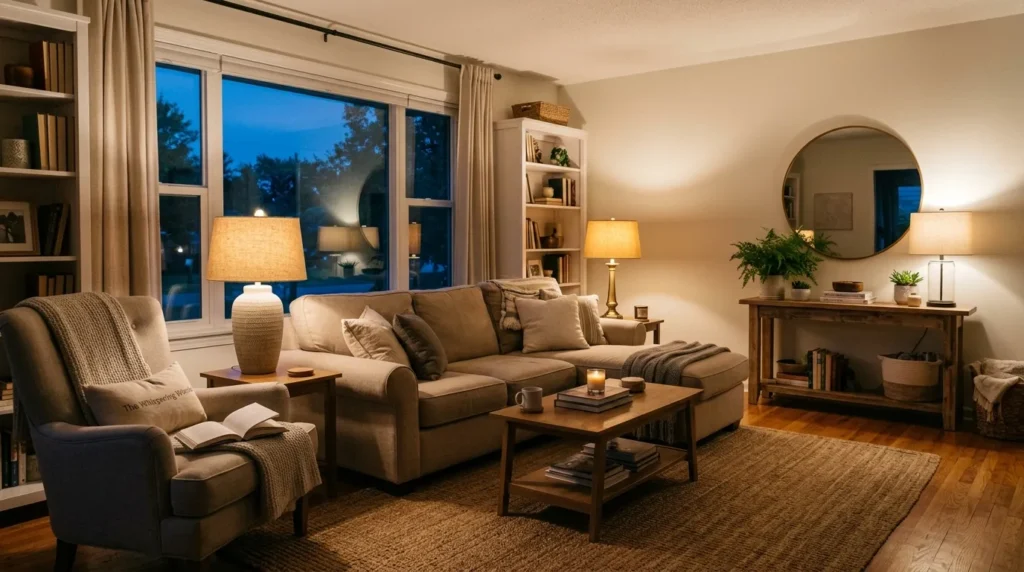
Rather than treating lighting as an afterthought, a genuinely comfortable living room design plans for light at each seating zone from the start. A mistake many homeowners make is placing a single lamp wherever there happens to be an empty surface, rather than considering how light supports each area where people actually sit. Designing around a trio of lamps — positioned near a reading chair, beside the sofa, and on a console — ensures no seating area is left in shadow.
How To Style It
Identify the primary places people sit and relax in the room, and place a lamp within reach of each one — a floor lamp beside a reading chair, a table lamp on a side table next to the sofa, and a smaller accent lamp elsewhere in the room. Vary the lamp heights slightly to create visual rhythm rather than a uniform row of identical fixtures. This kind of intentional placement supports both function and the room’s overall cozy design language.
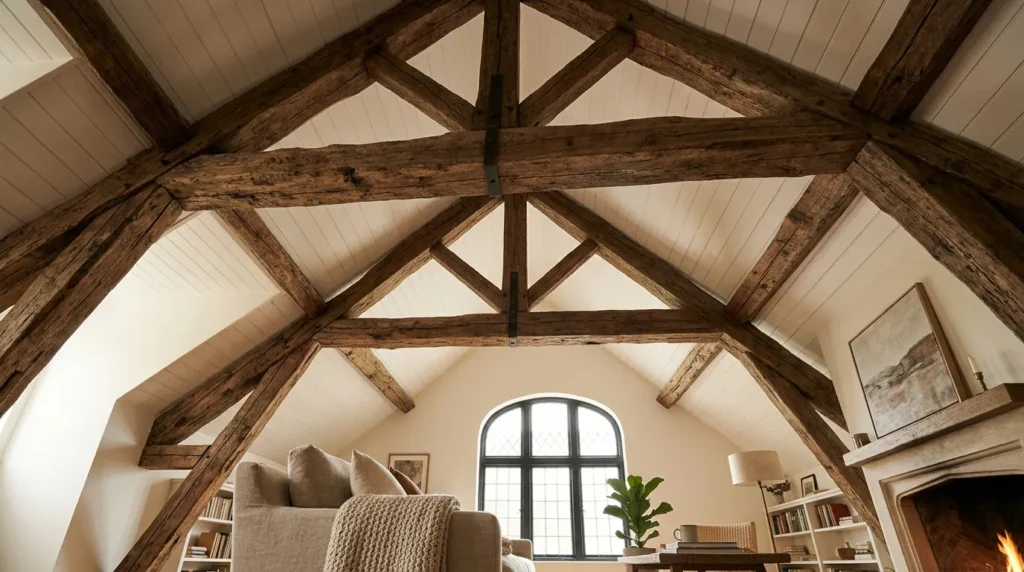
4. Warm Wood Ceiling Beams
Quick Benefits
- Adds architectural warmth overhead
- Creates a sense of intimacy in taller rooms
- Provides visual interest beyond wall-level decor
- Complements natural and rustic design elements
- Works well in both new construction and retrofits
Why It Works
Ceilings are often overlooked in living room design, but exposed or added wood beams can dramatically change how intimate and cozy a room feels, particularly in spaces with higher ceilings that might otherwise feel a bit cavernous. I’ve noticed that rooms with some kind of ceiling detail — beams, wood paneling, a lower soffit over a specific seating area — tend to feel more enclosed and comfortable than rooms with a single flat, untreated ceiling plane.
How To Style It
If your home already has exposed beams, consider staining or whitewashing them in a warm tone that complements the rest of the room’s wood accents. For homes without existing beams, faux wood beams can be added relatively affordably to create a similar visual and architectural effect. In rooms with especially high ceilings, adding a beam or a lower soffit specifically over the main seating area can help that zone feel more intimate compared to the rest of the room.
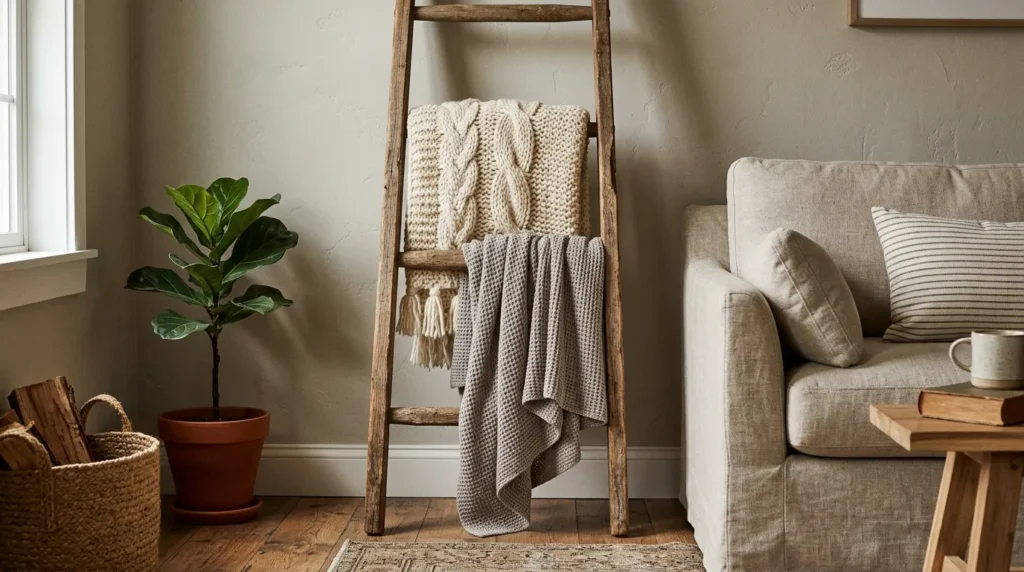
5. Blanket Ladder Styling
Quick Benefits
- Provides accessible, visible storage for blankets
- Adds a rustic, functional design element
- Keeps throws organized rather than tossed aside
- Works well in corners or beside seating
- Reinforces the room’s cozy design intent visually
Why It Works
A blanket ladder might seem like a small detail, but it’s a design choice that solves a real problem: where do all the cozy throw blankets actually live when they’re not in use? A mistake many homeowners make is leaving blankets balled up on the arm of the sofa or stuffed in a closet, both of which undercut the intentional, designed feeling of the room. A ladder or wall-mounted rack keeps blankets visible, accessible, and part of the room’s overall design story.
How To Style It
Place a wood blanket ladder in a corner near the main seating area, close enough that blankets are within easy reach when someone wants to curl up. Drape two to three blankets over the rungs, varying the texture and fold style slightly so it looks relaxed rather than perfectly staged. This piece works especially well positioned near a window or reading nook, reinforcing the room’s overall cozy, lived-in design.
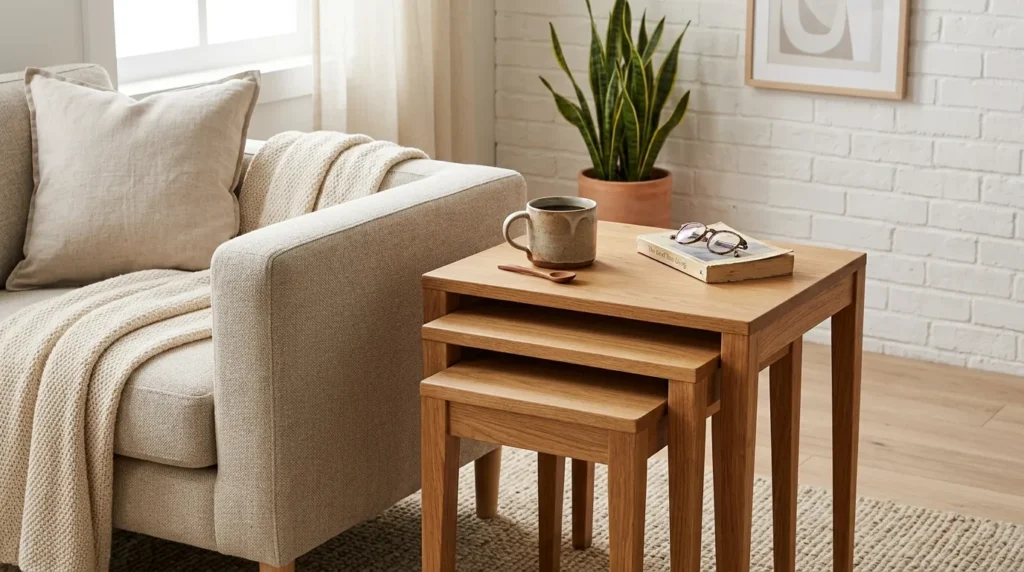
6. Nesting Furniture Arrangement
Quick Benefits
- Adapts easily to different needs and gatherings
- Maximizes flexibility without adding clutter
- Provides extra surface space only when needed
- Keeps the room feeling open during everyday use
- Supports a more relaxed, adaptable design approach
Why It Works
Nesting furniture — side tables, ottomans, or stools that tuck together and pull apart as needed — is a design approach built around flexibility, which is central to genuine comfort. A mistake many homeowners make is committing to a fixed furniture arrangement that doesn’t adapt to different situations, whether that’s a quiet night in or a larger gathering. Nesting pieces let a room expand its functional seating and surface space without permanently taking up more floor area.
How To Style It
Choose a set of two or three nesting tables in varying sizes, storing them tucked together near the sofa when not in use and pulling them apart to create extra surface space for drinks, books, or snacks as needed. Small stools or poufs that tuck under a console table work similarly, providing extra seating for guests without permanently occupying floor space. This adaptable approach keeps the room feeling open day-to-day while still supporting larger, cozier gatherings when needed.
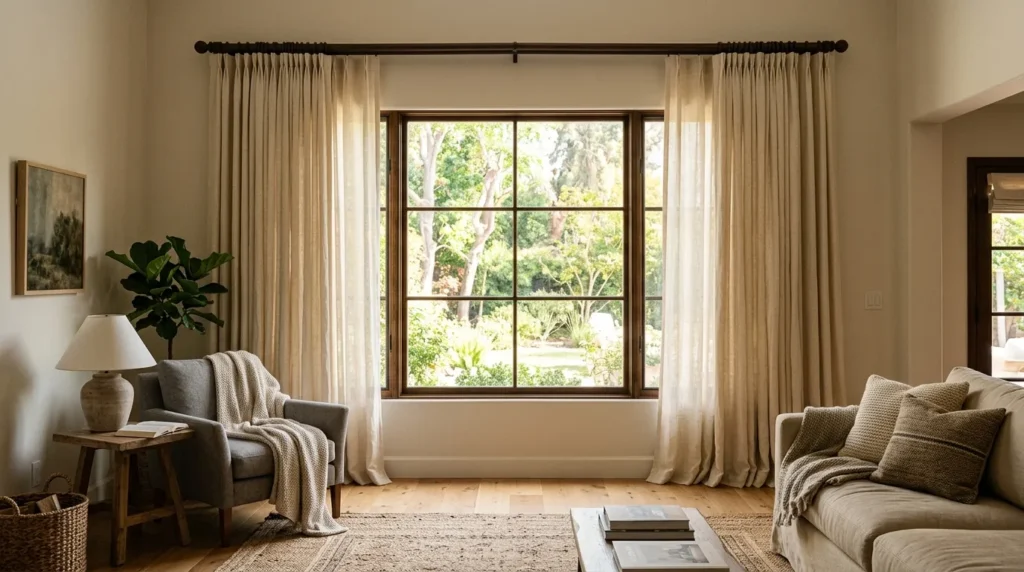
7. Curtain-Framed Windows
Quick Benefits
- Softens hard architectural lines around windows
- Adds warmth and texture to the room’s perimeter
- Creates a finished, intentional design feel
- Works well with both natural and artificial light
- Complements the room’s overall cozy material palette
Why It Works
Windows without any soft framing can leave a room feeling a bit stark, even if the rest of the space is thoughtfully designed. That’s why many designers recommend treating curtains as a core design element rather than an afterthought, since properly proportioned drapery softens the hard edges of a window frame and adds a layer of texture that contributes meaningfully to a room’s overall coziness. This is a design decision, not just a decorative one — proportion and fabric choice both matter.
How To Style It
Choose a heavier, textured fabric like a brushed linen or a soft velvet rather than a thin, flat curtain panel, since texture reads as warmer and more substantial. Hang curtains so they cover at least the width of the window frame on either side, even when open, so the fabric contributes to the room’s design even during the day. Floor-length panels that just graze the ground add a finished, cozy quality that shorter curtains don’t achieve.
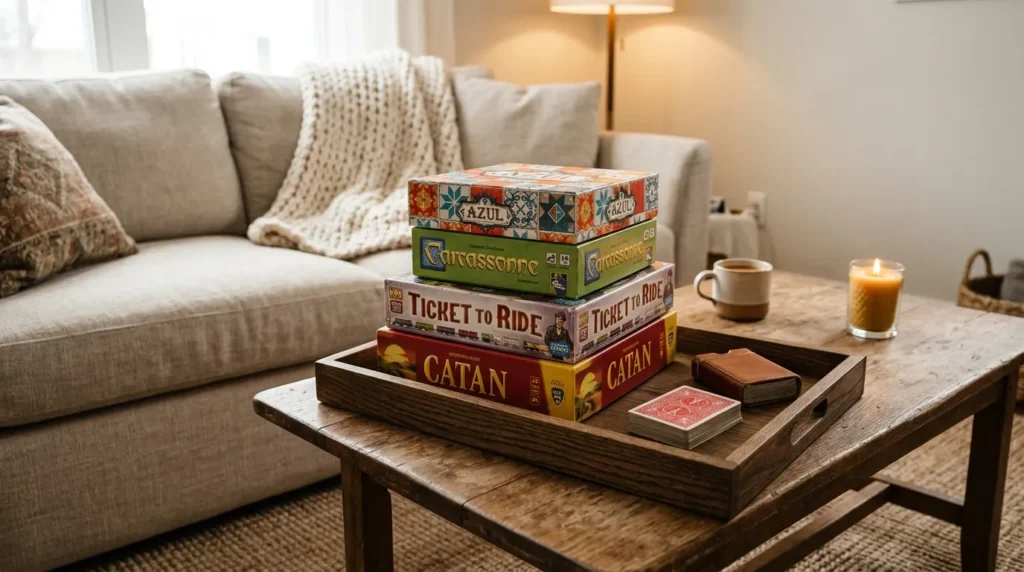
8. Board Game And Tray Styling
Quick Benefits
- Encourages slower, shared activities in the room
- Adds a functional, purposeful design layer
- Provides an easy conversation starter
- Works well styled on a coffee table or shelf
- Reinforces the room’s role as a gathering space
Why It Works
Designing a room around comfort means designing for how people actually want to spend time in it, and for many households, that includes slower activities like board games, puzzles, or shared reading. A mistake many homeowners make is designing purely for looks without considering these everyday uses, resulting in a coffee table that looks nice in photos but doesn’t actually support how the family spends an evening together. Building in a spot for these activities reinforces the room’s cozy, lived-in purpose.
How To Style It
Dedicate a section of a console table, ottoman, or lower shelf to a rotating stack of board games, puzzles, or a deck of cards, styled in a way that looks intentional rather than cluttered. A large tray on the coffee table can hold a current puzzle in progress or a stack of favorite games, making them easy to access without needing to be put away entirely between uses. This small design choice signals that the room is meant for slowing down, not just for looking presentable.
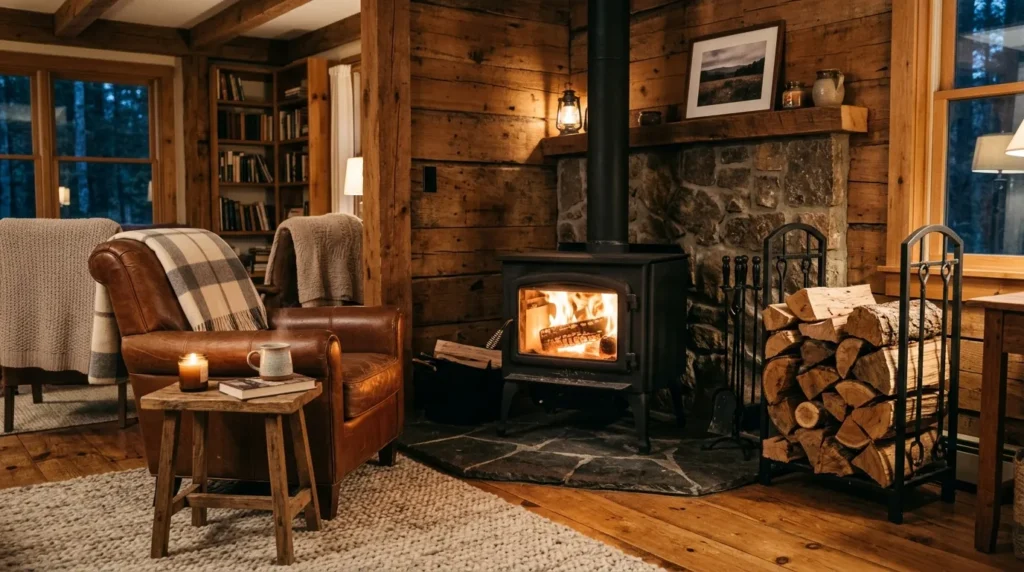
9. Woodburning Stove Ambiance
Quick Benefits
- Provides genuine warmth as well as visual coziness
- Creates a strong natural focal point
- Adds a rustic, grounded design element
- Works well as the anchor for the room’s layout
- Elevates the room’s overall sense of comfort
Why It Works
If your home has a woodburning stove or is a candidate for one, it’s one of the strongest design elements available for building a genuinely cozy living room, since it provides real warmth in addition to strong visual appeal. A mistake many homeowners make is underutilizing this feature by arranging furniture away from it or leaving the surrounding area under-styled. A woodburning stove, much like a traditional fireplace, works best as an intentional anchor around which the rest of the room’s layout is built.
How To Style It
Arrange your main seating to angle toward the stove, similar to how you would design around a fireplace, so it functions as a natural focal point rather than an overlooked feature. Style the surrounding area with a wood or metal stand for extra firewood, which adds both function and rustic visual texture. Keep flammable materials, like loose textiles or paper decor, a safe distance away, and consult manufacturer guidelines for proper clearance around the stove itself.
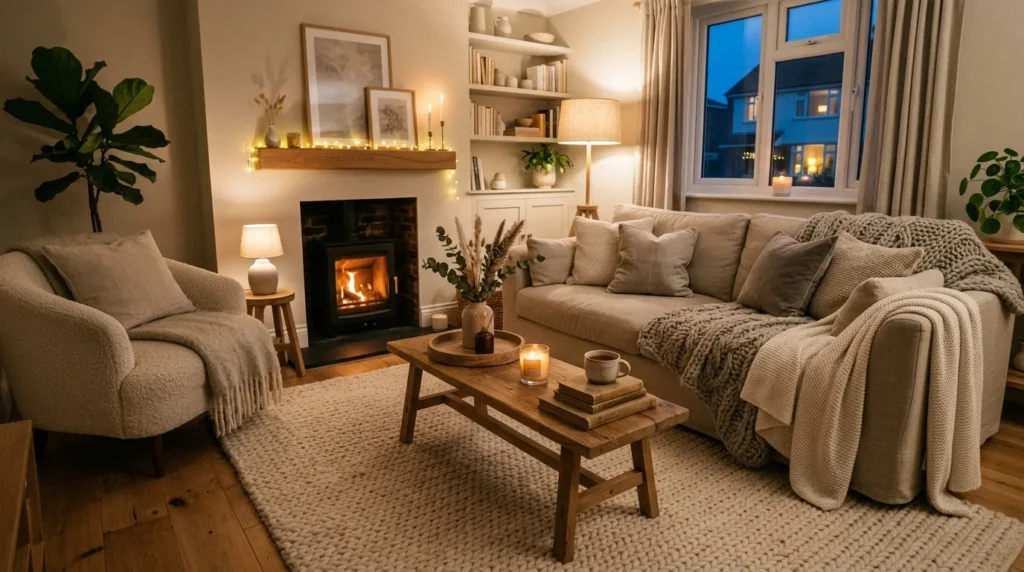
10. Hygge-Inspired Layering
Quick Benefits
- Brings together multiple comfort-focused design principles
- Creates a cohesive, intentional sense of coziness
- Balances function with warmth throughout the room
- Works well as an overarching design philosophy
- Ties together furniture, lighting, and texture choices
Why It Works
Hygge, the Danish concept of cozy contentment, isn’t a specific style so much as a design philosophy that ties together many of the ideas already covered in this list: warm lighting, soft textures, comfortable seating, and spaces designed for slowing down. A mistake many homeowners make is treating coziness as a single decorating choice rather than a layered design approach that touches every part of the room. Thinking in terms of hygge as an overarching principle helps ensure that every design decision, big or small, supports the same underlying goal.
How To Style It
Approach each design decision in the room — furniture depth, lighting placement, textile choice, layout — by asking whether it genuinely supports comfort and slowing down, not just visual appeal. Layer soft textures throughout the space, from a chunky rug to a wool throw, while keeping the overall design uncluttered enough to feel calm rather than busy. This philosophy works best when applied consistently across the whole room, rather than as a single standout element among otherwise formal or sparse design choices.
Frequently Asked Questions
What’s the difference between cozy decor and cozy design?
Cozy decor typically refers to accessories like pillows, candles, and blankets, while cozy design refers to the underlying structural and layout choices — furniture depth, seating arrangement, lighting placement — that shape how comfortable a room feels before any accessories are added.
Does furniture arrangement really affect how cozy a room feels?
Yes, significantly. Rooms arranged for conversation, with seating angled toward each other rather than all facing a screen, tend to feel warmer and more inviting than rooms arranged purely around a television or a single focal wall.
Is a sectional necessary for a cozy living room design?
Not necessarily, but a deep, cushioned sectional does support lounging and comfort more directly than a shallow, upright sofa. If a full sectional isn’t practical, prioritizing seat depth and cushion softness in whatever sofa you do choose achieves a similar effect.
How does ceiling height affect coziness?
Very tall ceilings can sometimes feel less intimate than lower ones, since the extra vertical space can make a room feel more cavernous. Adding architectural elements like wood beams or a lower soffit over the seating area can help balance this and create a more enclosed, comfortable feel.
What is hygge, and do I need to follow it exactly to have a cozy room?
Hygge is a Danish concept centered on comfort, warmth, and contentment, often achieved through soft textures, warm lighting, and slower-paced living. You don’t need to follow it as a strict style — it works better as a general philosophy that guides individual design decisions throughout the room.
Can a modern or minimalist living room still feel cozy?
Yes. Comfort-focused design principles like seating arrangement, furniture depth, and lighting placement apply regardless of decorating style. A minimalist room can feel just as cozy as a more traditional one if these underlying design choices prioritize comfort.
What’s the most overlooked design element when it comes to coziness?
Furniture arrangement is one of the most commonly overlooked elements. Many homeowners focus on individual pieces or accessories without considering how the overall layout supports or undermines a sense of warmth and connection in the room.
Conclusion
A genuinely comfortable living room starts well before the decorating stage — it starts with how the space is laid out, how deep the furniture is, and how intentionally the room supports the way people actually want to spend time in it. Conversation-focused seating, deep cushioned furniture, thoughtful lighting placement, and a few architectural details all work together to create comfort that goes deeper than surface-level styling.
Start with one or two ideas from this list and gradually build a space that reflects your style and supports everyday comfort. Whether that means rearranging your seating into a conversation-friendly layout, adding a blanket ladder near your main seating area, or finally prioritizing seat depth in your next furniture purchase, these design-level choices compound into a room that feels genuinely, extra comfortable to spend time in. The coziest living rooms aren’t just decorated well — they’re designed well from the ground up.
Related Articles
- Cozy Living Room Ideas For A Warm Home
- Simple Timeless Living Room Ideas
- Small Living Room Layout Solutions
- Aesthetic Living Room Ideas You’ll Love
- How To Arrange Furniture For Better Flow