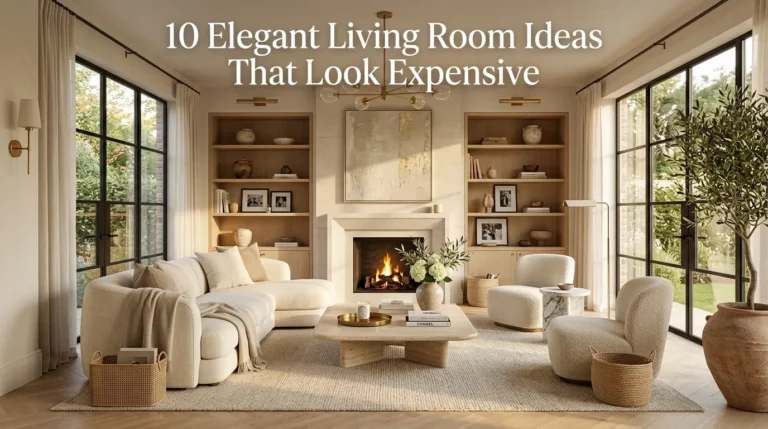

10 Living Room Inspo Ideas Worth Saving
Every so often you come across a living room photo that stops your scroll — not because it’s flashy, but because it does something a little unexpected with a familiar space. Those are the ideas worth actually saving, not just admiring for a second before moving on.
In my experience, the living room inspo that holds up over time isn’t the kind built around a single trendy product. It’s the kind built around an idea — a technique, a layout choice, a way of using color or texture — that you can adapt to your own space instead of copying exactly. A mistake many homeowners make is saving dozens of pins that all show the same generic neutral room, when the ideas that actually change how a space feels tend to be a little bolder or more specific than that.
I’ve noticed that the boards people return to again and again usually mix a few different types of ideas: one bold, slightly risky choice, a few grounding neutral basics, and one or two clever layout or lighting tricks that solve a real problem. That combination is what makes a living room feel inspired rather than assembled from a catalog.
This guide rounds up ten living room inspo ideas genuinely worth saving this year — the kind that go beyond “buy this sofa” and instead offer a technique or approach you can apply regardless of your existing furniture, budget, or home style. Whether you’re starting a full redesign or just looking for one idea to refresh a tired corner, these are the concepts worth pinning, saving, and actually coming back to.
Table of Contents
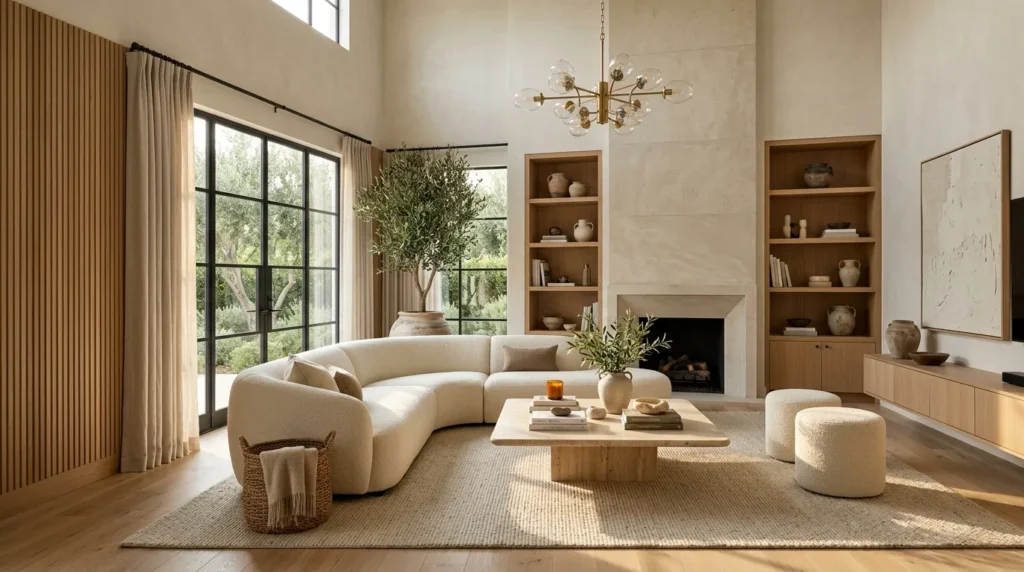
- Color Drenched Walls — Painting walls, trim, and ceiling in one continuous shade for a cocooning effect.
- Curved Archway Accents — Softening a room’s hard lines with curved architectural details.
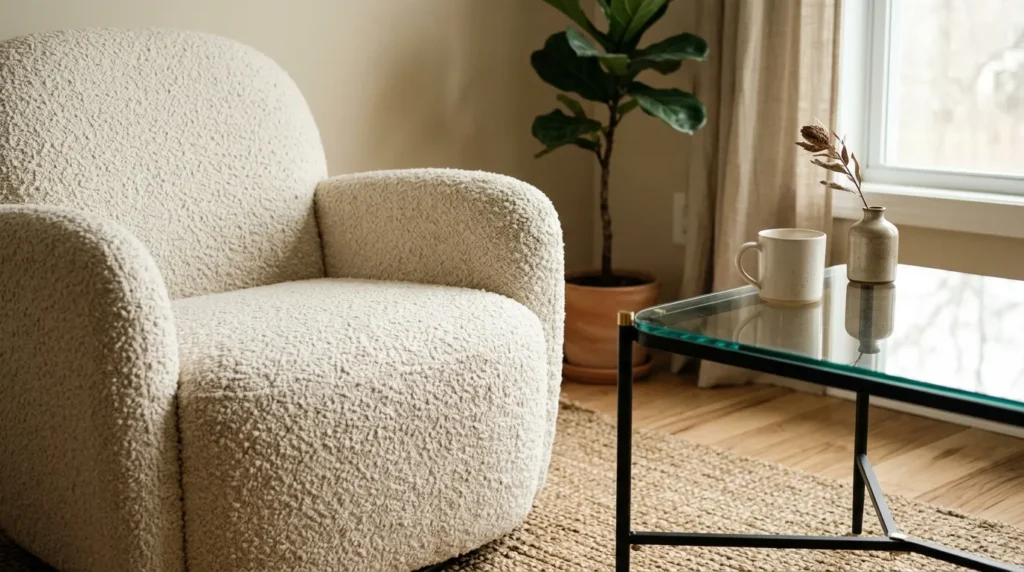
- Boucle Furniture Texture — Adding tactile, nubby texture through upholstery choices.
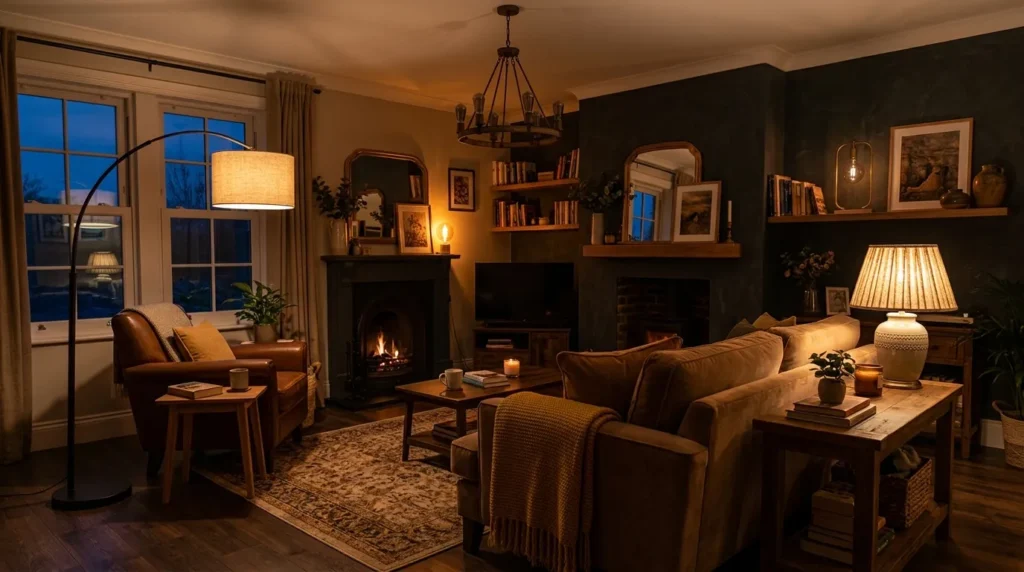
- Layered Lighting Zones — Using multiple light sources instead of one central fixture.
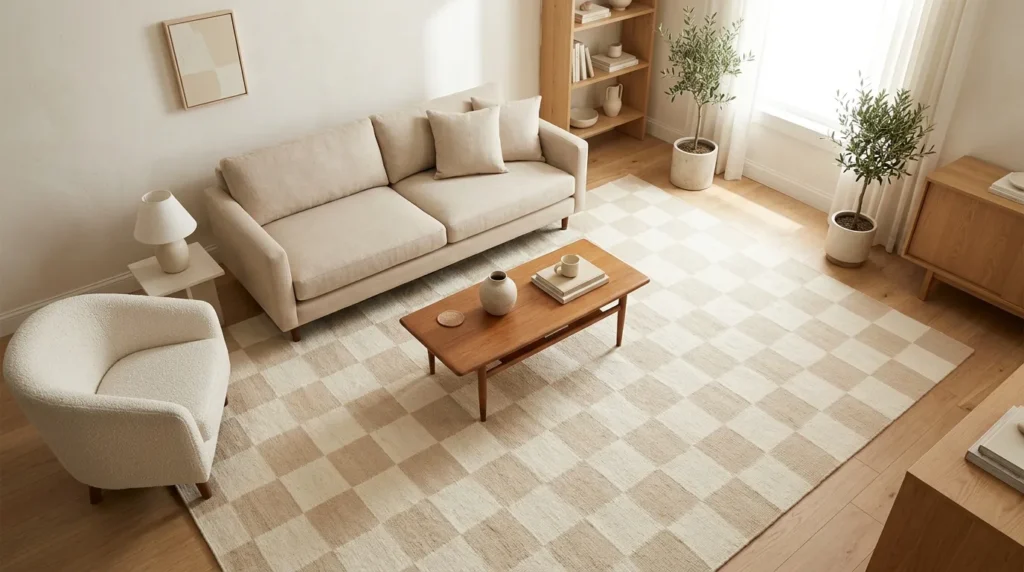
- Checkerboard Floor Pattern — Introducing graphic flooring for a bold foundational statement.
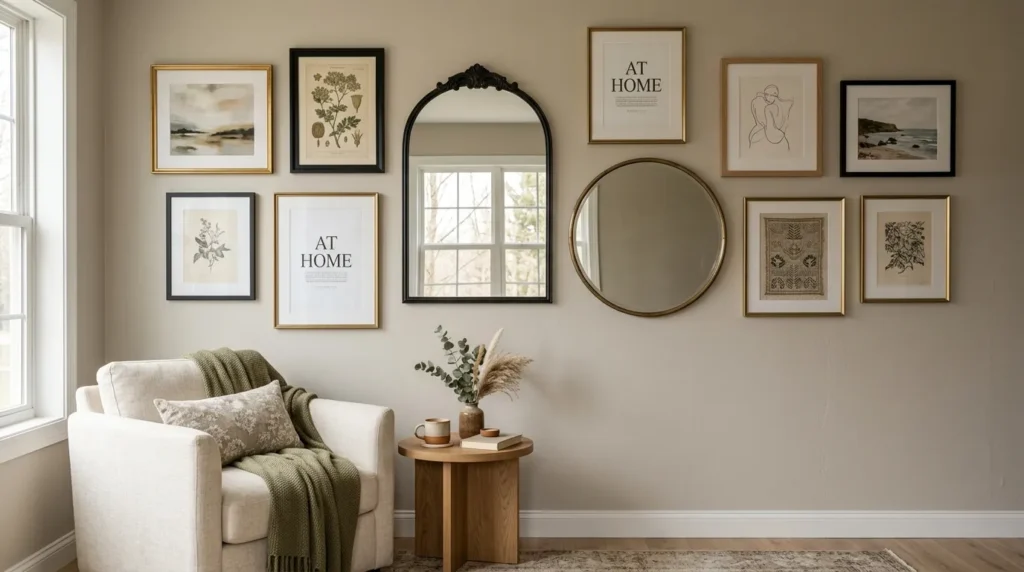
- Mirror Gallery Wall — Using mirrors instead of art to add light and depth.
- Statement Ceiling Treatment — Bringing color or texture to the most overlooked surface in the room.
- Woven Natural Textures — Layering rattan, jute, and wood for organic warmth.
- Built-In Shelving Nooks — Creating custom-feeling storage without a full renovation.
- Seasonal Styling Swaps — Refreshing a room’s look throughout the year with small changes.
1. Color Drenched Walls
Quick Benefits
- Creates a cozy, cocooning atmosphere
- Makes architectural quirks feel intentional
- Works surprisingly well in small rooms
- Adds drama without adding clutter
- Photographs beautifully for a moody, saveable look
Why It Works
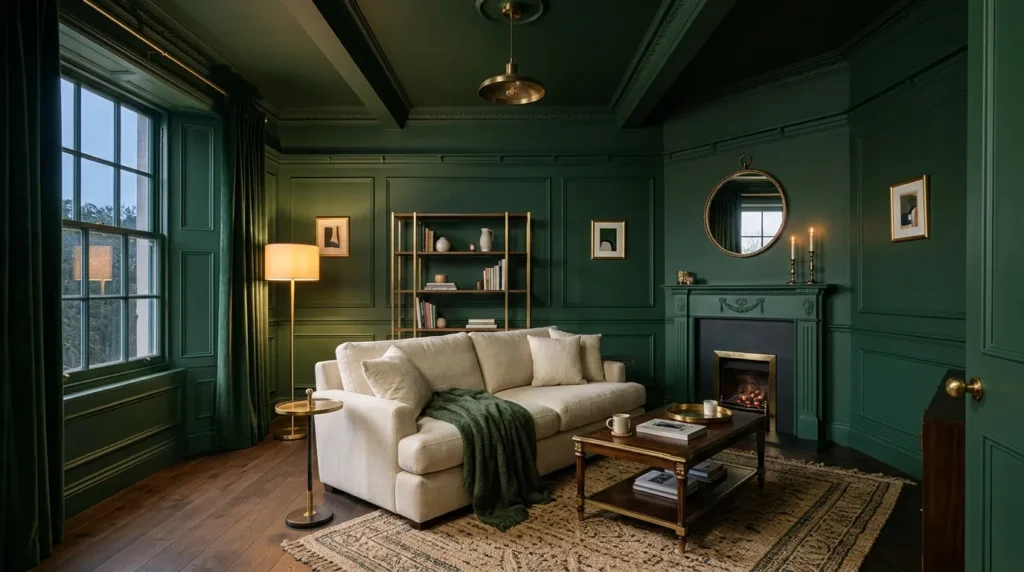
Color drenching — painting the walls, trim, and sometimes even the ceiling in the same or a closely related shade — has become one of the most saved living room ideas for good reason. One thing that works especially well about this technique is how it eliminates visual “breaks” in a room; instead of white trim interrupting a colored wall, everything flows into one continuous, immersive tone. This works because it makes a room feel enveloping and intentional rather than piecemeal, and it can actually make an awkwardly shaped room feel more cohesive by blurring odd angles and corners into the same color field.
How To Style It
Choose a deep, saturated color — forest green, deep terracotta, ink navy — and apply it to walls, trim, and baseboards in the same sheen family, then use a matching or complementary tone on the ceiling for full effect. Keep furniture and textiles in lighter, contrasting neutrals so the room doesn’t feel overwhelming, and rely on one or two metallic accents to add shine against the saturated backdrop.
2. Curved Archway Accents
Quick Benefits
- Softens boxy, rectangular rooms
- Adds architectural interest without a full renovation
- Creates a natural transitional focal point
- Works well between open living and dining areas
- Pairs beautifully with rounded furniture shapes
Why It Works
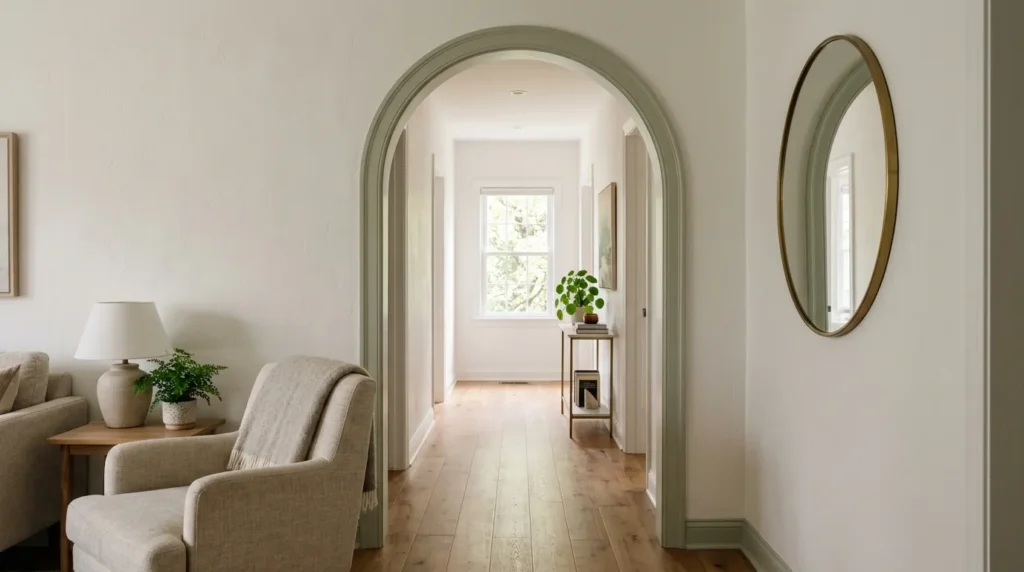
A mistake many homeowners make is assuming architectural changes require a major renovation, but a single curved archway — whether structural or a faux applied detail — can transform how a room reads. I’ve seen this idea transform spaces that felt boxy and rigid simply by softening one transition point, like the opening between a living room and hallway. This works because curves introduce a sense of movement and softness that straight, hard-edged rooms often lack, especially in newer builds with very square floor plans.
How To Style It
If a structural archway isn’t feasible, a faux arch built with simple framing and drywall over an existing doorway can achieve a similar visual effect at a lower cost. Painting the archway interior a slightly different tone than the surrounding wall emphasizes the curve further. Pair the softened opening with at least one other curved element in the room, like a rounded mirror or an arched shelf, to tie the look together.
3. Boucle Furniture Texture
Quick Benefits
- Adds tactile warmth without adding color
- Works beautifully in neutral or muted rooms
- Elevates simple furniture silhouettes
- Photographs with striking texture and depth
- Pairs well with both modern and traditional styles
Why It Works
Bouclé fabric — with its nubby, looped texture — has become one of the most saved upholstery choices because it adds visual and tactile interest without relying on color or pattern at all. That’s why many designers recommend a bouclé accent chair or ottoman as an easy way to add depth to an otherwise flat, monochromatic room. This works because texture reads at a different visual “frequency” than color, so it adds richness to a room without disrupting a carefully chosen neutral palette.
How To Style It
A single bouclé accent chair or a pair of bouclé stools makes the biggest visual impact without committing an entire sofa to the trend. Pair bouclé’s soft, rounded texture with a smooth material nearby — a glass or wood coffee table, a leather ottoman — so the textures contrast rather than blend together. Cream, oatmeal, and soft gray bouclé tend to photograph and wear the best over time.
4. Layered Lighting Zones
Quick Benefits
- Creates a warmer, more dimensional atmosphere
- Reduces reliance on harsh overhead lighting
- Allows the room to adapt to different activities
- Adds visual interest at multiple heights
- Works in nearly any room size or style
Why It Works
One simple trick I always suggest is thinking about lighting in layers rather than relying on a single central fixture. A ceiling light alone tends to flatten a room and cast harsh, even light across every surface. Combining a central fixture with table lamps, floor lamps, and even accent lighting like picture lights creates pools of warm light at different heights, which is exactly the kind of layered glow that makes inspo-worthy living rooms feel so inviting in photos and in person.
How To Style It
Aim for at least three light sources in a living room: one ambient source (a ceiling fixture or recessed lighting), one task source (a floor or table lamp near seating), and one accent source (a picture light or small accent lamp). Use warm bulbs throughout for consistency, and consider dimmers on primary fixtures so the lighting mood can shift between daytime brightness and evening coziness.
5. Checkerboard Floor Pattern
Quick Benefits
- Adds a bold graphic foundation to the room
- Works especially well in entryways connected to living spaces
- Creates a strong visual statement without extra decor
- Suits both classic and contemporary styles
- Achievable through paint, tile, or rugs
Why It Works
A checkerboard floor has resurfaced as one of the most saved living room ideas because it adds pattern and personality at the foundation of the room, rather than through furniture or walls. In my experience, this works particularly well because a patterned floor lets everything above it — furniture, walls, art — stay simple and neutral, while the floor itself carries the room’s visual interest. It’s a technique that works in both traditional black-and-white checkerboard and softer, tonal variations.
How To Style It
If installing new flooring isn’t realistic, a large checkerboard-patterned rug achieves a similar effect without the commitment of tile or paint. For a more subtle look, choose two closely related tones (cream and warm beige) rather than high-contrast black and white. Keep furniture and walls neutral and simple so the floor pattern remains the room’s clear focal point.
6. Mirror Gallery Wall
Quick Benefits
- Adds light and the illusion of more space
- Creates visual interest without relying on art alone
- Works especially well in darker rooms
- Reflects both natural and lamp light
- Adds texture through varied frame shapes
Why It Works
A mistake many homeowners make when planning a gallery wall is filling it entirely with framed art, when mixing in one or two mirrors adds both visual variety and functional light reflection. This works because mirrors do double duty — they add to the collected, layered look of a gallery wall while also bouncing available light around the room, which is especially valuable in living rooms that don’t get much direct sun.
How To Style It
Combine two or three mirrors of varying shapes and sizes with several framed art pieces in a similar color palette of frames. Position at least one mirror where it reflects a window or lamp to maximize the light-bouncing effect. Keep the overall arrangement loose and slightly irregular rather than a rigid grid for a more collected, personal feel.
7. Statement Ceiling Treatment
Quick Benefits
- Uses an often-overlooked surface for visual interest
- Adds drama without taking up floor space
- Works well in both large and small rooms
- Creates a strong “look up” moment for photos
- Pairs with almost any wall color below
Why It Works
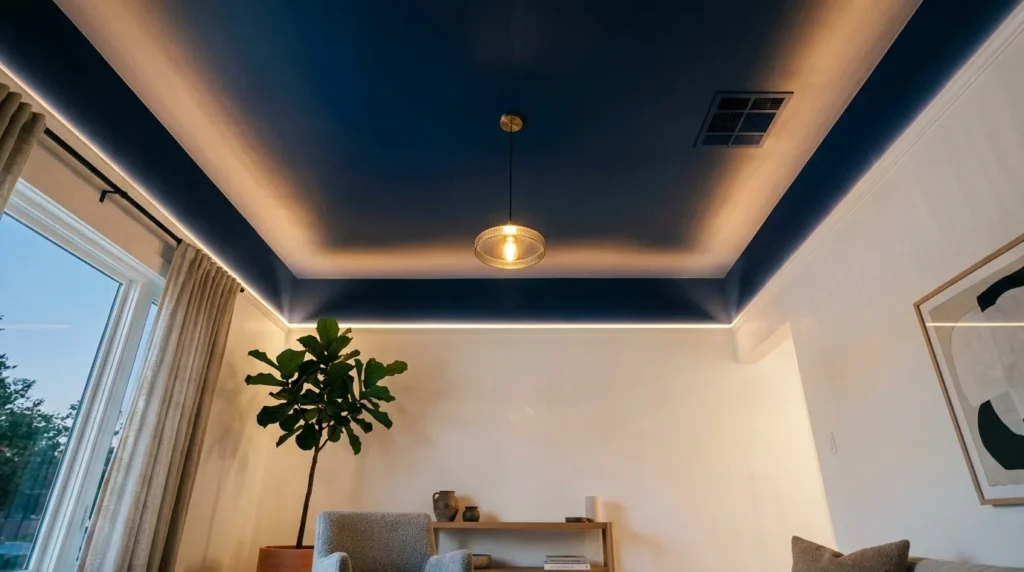
The ceiling is sometimes called the “fifth wall,” and it’s one of the most underused surfaces in most living rooms. One thing that works especially well is bringing color, wallpaper, or even a simple wood treatment to the ceiling instead of leaving it plain white. I’ve noticed this idea transforms spaces because it adds an unexpected layer of interest that most rooms don’t have, making the space feel more finished and considered than a room with a plain ceiling ever could.
How To Style It
A bold paint color, a subtle wallpaper pattern, or thin wood slats applied to the ceiling all create a strong statement without touching the walls or floor. Keep the walls simpler and more neutral so the ceiling doesn’t compete with too many other bold choices in the same room. This idea works particularly well in rooms with otherwise plain, boxy proportions that need a bit more personality.
8. Woven Natural Textures
Quick Benefits
- Adds warmth without adding color
- Works across nearly every design style
- Creates a grounded, organic feel
- Budget-friendly compared to major furniture changes
- Pairs beautifully with both modern and traditional pieces
Why It Works
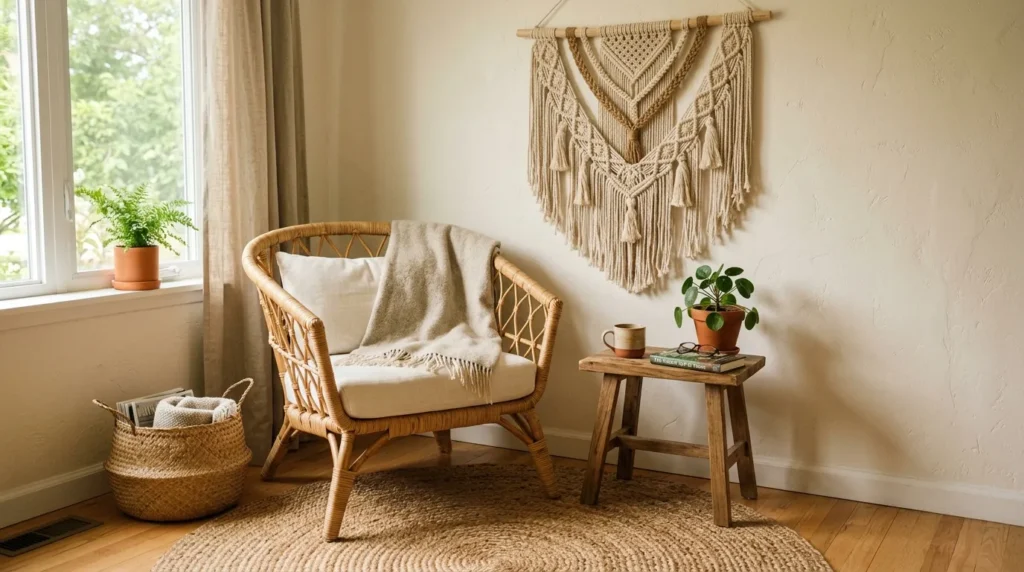
Rattan, jute, and natural wood have remained consistently saved and shared living room ideas because they add warmth and texture without locking a room into a specific color trend. That’s why many designers recommend leaning on woven natural materials as a foundational layer — a jute rug, a rattan chair, a woven basket — since these elements work as well in a coastal room as they do in a modern farmhouse or organic modern space. This works because natural texture reads as timeless in a way that color trends simply don’t.
How To Style It
Introduce natural texture through at least two different elements — a woven rug plus a rattan accent chair, or a jute pouf plus woven wall art — to build a cohesive layered look rather than one isolated piece. Balance the organic texture with a few smooth, simple surfaces (glass, ceramic, painted wood) so the room doesn’t feel overly rustic or heavy.
9. Built-In Shelving Nooks
Quick Benefits
- Adds custom-feeling storage without a full renovation
- Frames a TV or fireplace more elegantly than floating furniture
- Increases both function and perceived home value
- Creates a strong display opportunity for styling
- Works in nearly any room size
Why It Works
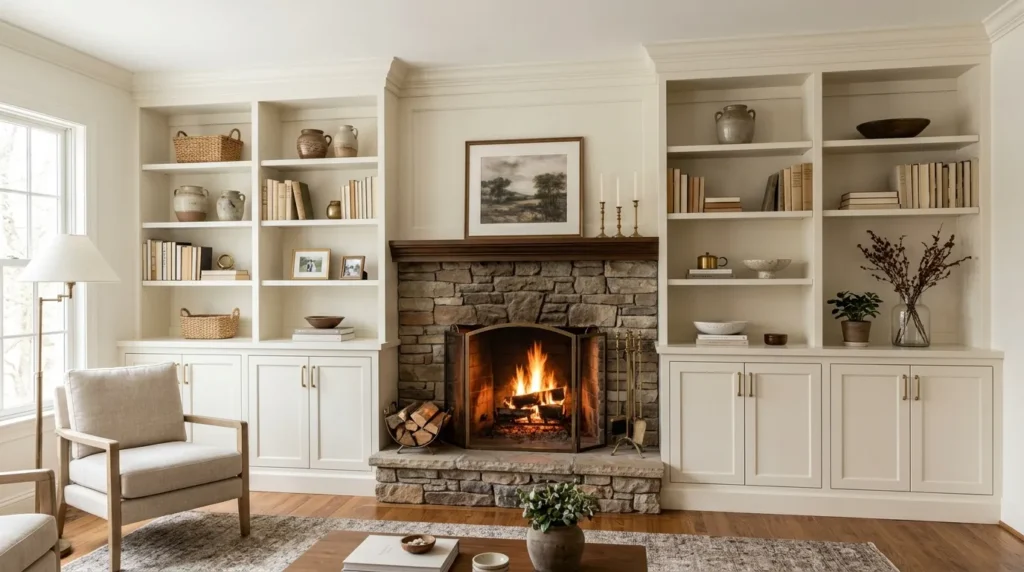
A mistake many homeowners make is treating built-ins as an all-or-nothing renovation decision, when smaller-scale built-in shelving around a fireplace or in an alcove can achieve much of the same custom, finished look at a fraction of the cost. This works because built-ins fill awkward gaps — the narrow space beside a fireplace, for example — in a way that freestanding furniture rarely does as cleanly, creating a room that feels designed specifically for the space rather than furnished around it.
How To Style It
Flanking shelving on either side of a fireplace or media console is one of the most achievable built-in projects for most budgets. Style the shelves with a mix of books, a few objects, and some open negative space rather than filling every inch, and consider adding simple cabinet doors on the lower portion for closed storage beneath open display shelving above.
10. Seasonal Styling Swaps
Quick Benefits
- Keeps a room feeling fresh without major spending
- Makes the most of items already owned
- Easy to plan and execute in an afternoon
- Extends the life of existing furniture and decor
- Encourages more intentional, less impulsive shopping
Why It Works
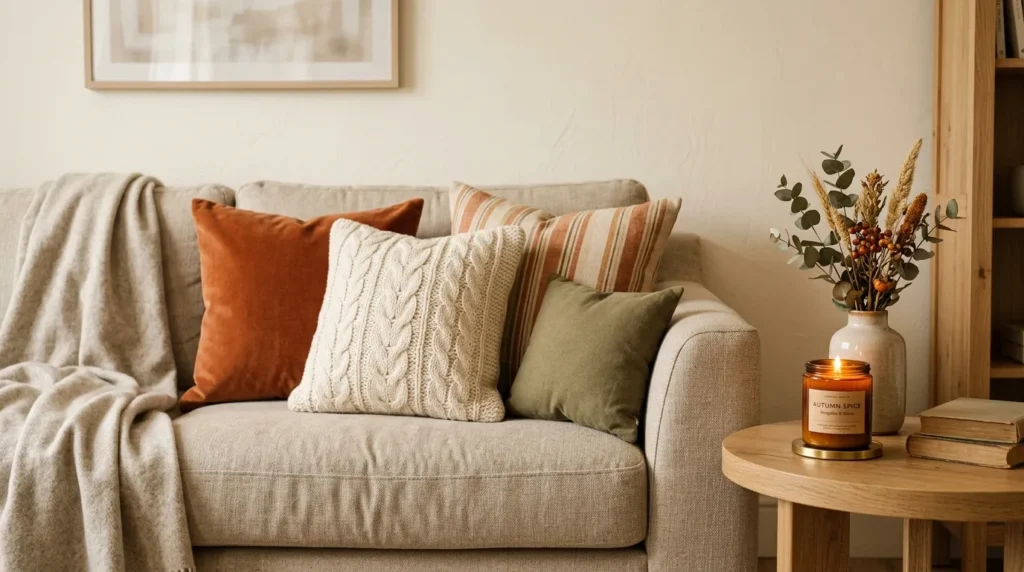
If you’re anything like me, you’ve noticed how a living room can start to feel stale after a year or two, even when nothing is actually wrong with it. One simple trick I always suggest instead of a full redecorate is rotating a few small elements seasonally — throw pillow covers, a table runner, a scent, a few accent pieces. This works because it satisfies the desire for change and novelty without the cost or waste of replacing furniture that’s still perfectly good.
How To Style It
Build a small rotating collection of throw pillow covers, a couple of seasonal candles, and a few small accent pieces (a vase, a tray, a small piece of art) that can be swapped in and out every few months. Store the “off-season” items in a labeled bin so switching the room’s look takes only a few minutes rather than a full afternoon of reorganizing.
Frequently Asked Questions
What’s the easiest living room inspo idea to try first?
Layered lighting zones and seasonal styling swaps are the easiest starting points, since both use items you likely already own or can find inexpensively, and neither requires any construction or major furniture changes.
Is color drenching too bold for a small living room?
Not necessarily. Color drenching can actually help a small or oddly shaped room feel more cohesive by removing the visual breaks created by contrasting trim, making the space feel enveloping rather than choppy.
Do I need a full renovation for built-in shelving?
No. Smaller-scale built-ins, like shelving flanking a fireplace or filling a narrow alcove, can be added without a full renovation and often cost significantly less than whole-room built-in projects.
How many textures should a living room include?
There’s no fixed number, but combining at least two to three different textures — such as woven natural fiber, smooth wood, and soft textiles like bouclé — tends to create the most balanced, layered look.
Can I try a checkerboard floor without replacing my flooring?
Yes. A checkerboard-patterned rug offers a similar visual effect without the cost or commitment of new flooring, and it can be swapped out more easily if your style changes over time.
How often should I refresh my living room with seasonal swaps?
Every few months works well for most households — enough to keep the space feeling current without constant spending or effort. Rotating pillow covers, small accents, and a candle scent is often enough to notice a difference.
Conclusion
The living room ideas worth saving are rarely about buying more — they’re about techniques and small shifts that make a space feel more considered, whether that’s a bold painted ceiling, a mix of textures, or simply rotating a few accents by season. From color drenching and curved archways to built-in shelving and layered lighting, the ten ideas above offer real, adaptable inspiration rather than a single look to copy exactly.
Start with one or two ideas and gradually build a space that reflects your style and supports everyday comfort. A small change like layering your lighting or introducing one textured piece often makes a noticeable difference before you commit to anything bigger, like a statement ceiling or new flooring. Give each change room to settle before adding the next, and let your living room evolve into a space that genuinely feels like yours.
Related Articles
- Cozy Living Room Ideas
- Elegant Living Room Ideas
- Modern Classic Living Room Ideas
- Small Living Room Layouts
- DIY Accent Wall Ideas