10 Timeless Kitchen Ideas That Never Go Out of Style
Introduction
Kitchens are one of the most expensive rooms in the house to renovate, which makes it especially frustrating when a trendy design choice starts to feel dated just a few years after installation. A mistake many homeowners make is choosing finishes and materials based on what’s popular in the moment, only to find themselves wanting another renovation before the first one is even paid off. Timeless kitchen design exists specifically to avoid that cycle.
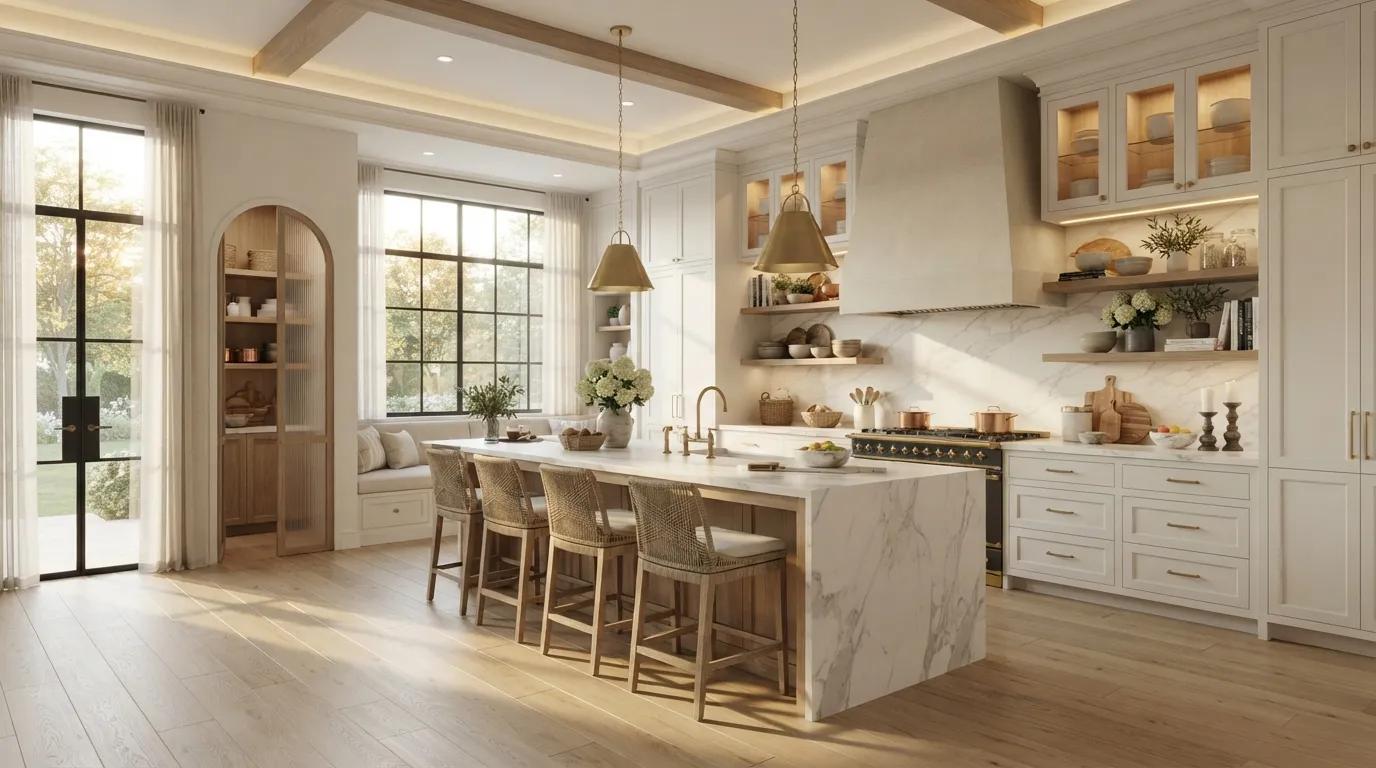
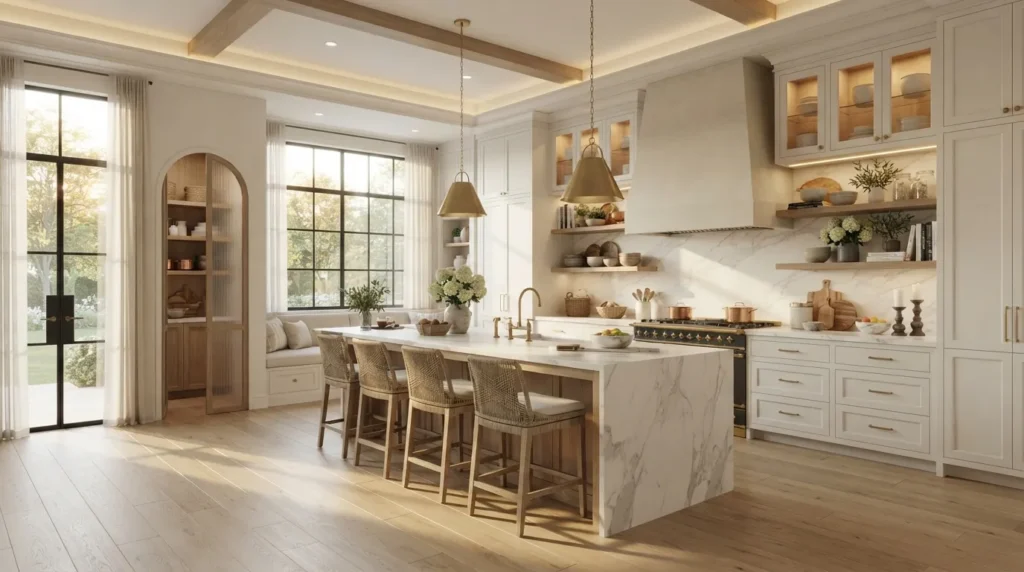
In my experience, the kitchens that continue to feel fresh decades after they were built share a consistent set of choices: classic cabinetry, natural materials, and a restrained color palette that lets quality and craftsmanship speak for themselves. These aren’t boring kitchens — they’re kitchens built on design principles that have already proven their staying power, which is exactly why they photograph so well and consistently rank among the most saved kitchen styles on Pinterest.
This guide walks through ten specific, well-established ideas for building a timeless kitchen, along with the practical reasoning and real-world advice behind each one. Whether you’re planning a full renovation or looking for smaller updates that will age gracefully, each idea includes concrete guidance you can actually put to use, not just inspiration to admire.
If you’re anything like me, you’d rather invest in choices that last than chase a look that will need replacing again in five years. These ten ideas are the foundation of kitchen design that consistently stands the test of time.
Table of Contents
- Classic White Cabinetry — Building a foundation that never feels dated.
- Natural Stone Countertops — Choosing surfaces with lasting character.
- Farmhouse Apron Sink — Adding a classic, functional focal point.
- Timeless Subway Tile — Using a backsplash pattern with proven staying power.
- Brass Hardware Accents — Finishing details that age beautifully.
- Shaker Style Cabinets — Selecting a door style built to last.
- Neutral Color Palette — Creating flexibility through restrained color choices.
- Open Wood Shelving — Balancing storage with warmth and texture.
- Classic Pendant Lighting — Choosing fixtures with enduring design appeal.
- Quality Hardwood Flooring — Investing in a material that only improves with age.
1. Classic White Cabinetry
Quick Benefits
- Brightens the kitchen and enhances natural light
- Pairs with nearly any countertop or hardware choice
- Provides a flexible base for future updates
- Has remained popular across multiple design decades
- Photographs beautifully in nearly any lighting
Why It Works
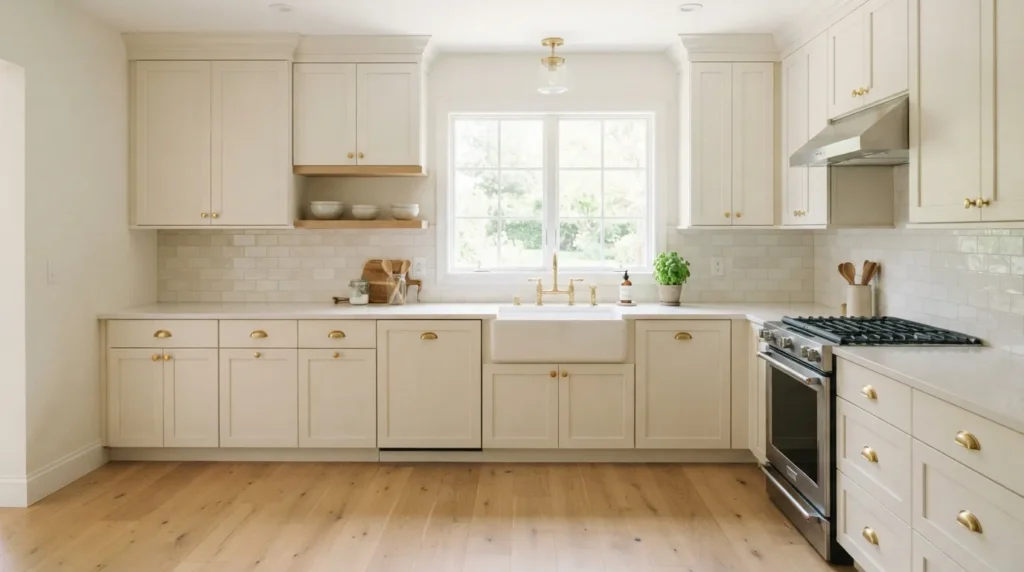
White cabinetry has remained a dominant choice in kitchen design for generations, and it’s rarely gone out of style the way bolder cabinet colors have. A mistake many homeowners make is choosing a trendy cabinet color that feels current now but risks looking dated within a decade, when a classic white or warm off-white provides the same clean, bright feel without tying the kitchen to a specific era. White cabinetry also reflects light exceptionally well, which helps smaller or darker kitchens feel more open.
How To Style It
Choose a warm white or soft cream over a stark, cool white, since warmer tones tend to feel more timeless and less clinical. Shaker-style doors, discussed further below, pair particularly well with white cabinetry for a classic look, though inset or flat-panel doors work nicely too depending on the kitchen’s overall style. Balance the brightness of white cabinets with a warmer countertop or wood accent elsewhere in the kitchen to keep the space from feeling too stark or one-dimensional.
2. Natural Stone Countertops
Quick Benefits
- Adds genuine, one-of-a-kind character
- Ages gracefully compared to manufactured surfaces
- Increases home value in most markets
- Pairs well with nearly any cabinet color
- Provides a durable, long-lasting work surface
Why It Works
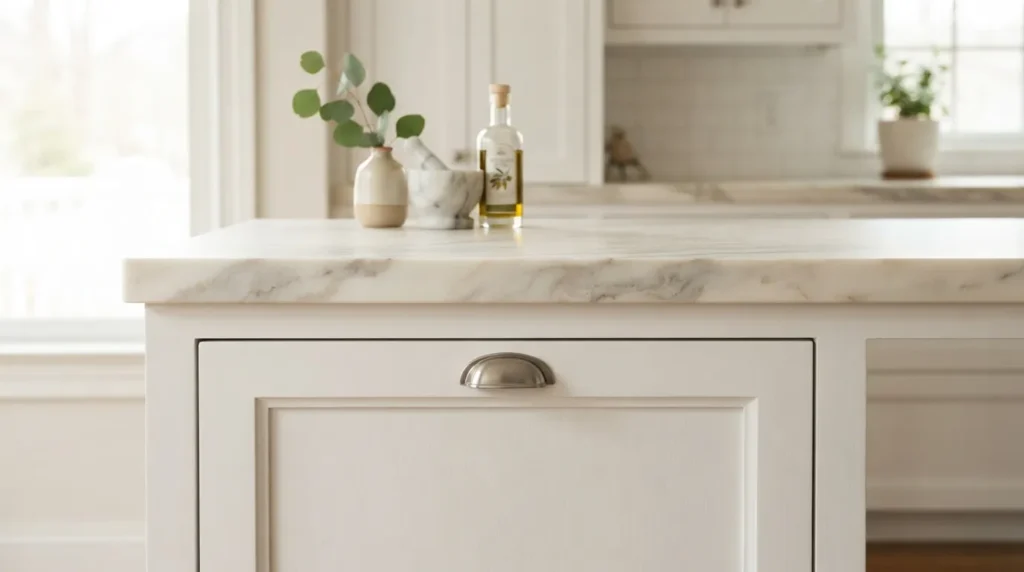
Natural stone — marble, granite, quartzite — has been a staple of high-end kitchen design for centuries, and its popularity has never meaningfully declined the way some manufactured countertop trends have. That’s why many designers recommend natural stone specifically for its timelessness: no two slabs are exactly alike, which means a natural stone countertop will never look like it was chosen from a catalog of identical options. The subtle veining and variation age beautifully rather than looking worn.
How To Style It
Choose a stone with movement and veining that feels organic rather than an overly uniform, manufactured pattern, since natural variation is part of what makes stone timeless. Honed finishes, which have a matte rather than glossy surface, tend to read as slightly more classic and forgiving of daily wear than a high-polish finish. If budget is a concern, a stone countertop on just the kitchen island, paired with a more budget-friendly surface elsewhere, can bring in the material’s timeless quality without the full-kitchen cost.
3. Farmhouse Apron Sink
Quick Benefits
- Serves as a strong, classic focal point
- Provides generous, practical basin space
- Complements both traditional and modern kitchens
- Has remained popular for well over a century
- Adds architectural character to the cabinetry
Why It Works
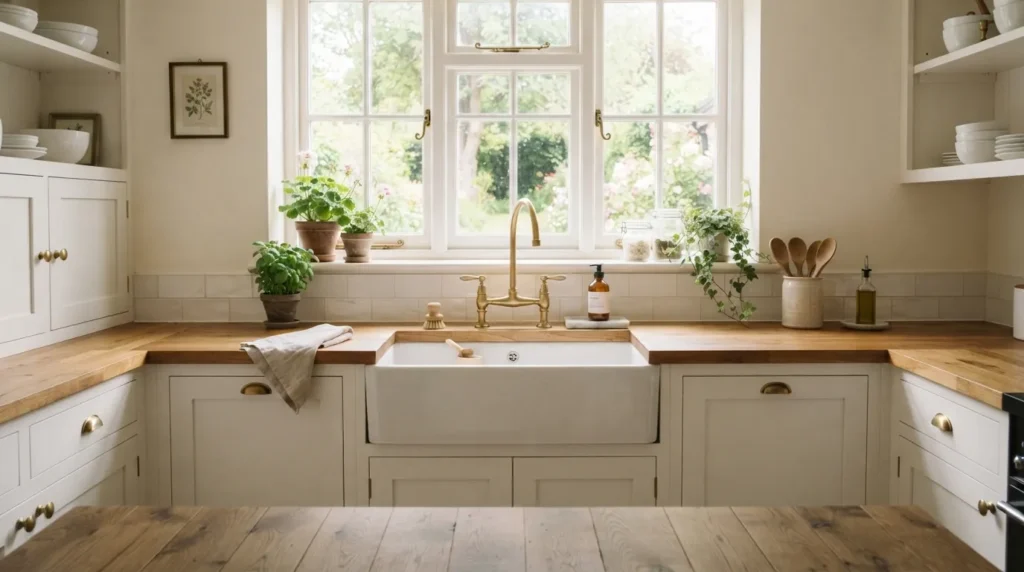
The farmhouse or apron-front sink has a design history stretching back well over a hundred years, and it has remained consistently popular because it combines genuine function with strong visual character. A mistake many homeowners make is choosing an undermount sink purely because it’s slightly easier to install, missing the opportunity to add a farmhouse sink’s distinctive exposed front, which serves as a natural focal point in the cabinetry. Its deep basin also makes it especially practical for larger pots and everyday kitchen tasks.
How To Style It
Choose a farmhouse sink in a material that complements your countertop and cabinetry — fireclay and cast iron are both classic, durable options that age well over decades of use. Position the sink beneath a window whenever the layout allows, which pairs the sink’s classic character with natural light and a view while working at the counter. Pair the sink with a simple, classic faucet in a finish that matches your other kitchen hardware for a cohesive, timeless look.
4. Timeless Subway Tile
Quick Benefits
- Provides a clean, classic backsplash option
- Works in nearly any kitchen style
- Available at a range of price points
- Easy to clean and maintain
- Has remained popular for over a century
Why It Works
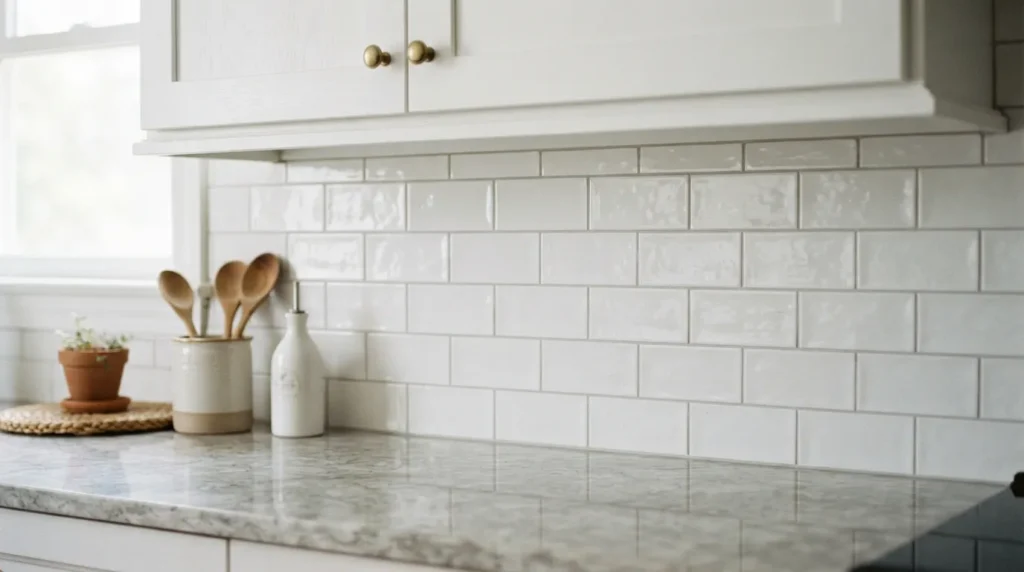
Subway tile has been used in kitchens and bathrooms since the early 1900s, and its popularity has never significantly waned, which places it firmly among the most reliably timeless backsplash choices available. One thing that works especially well is that the tile’s simple, rectangular shape allows it to adapt to different design eras through grout color and layout pattern, all while the tile itself remains a constant, classic choice. This flexibility is part of why it continues to appear in both traditional and contemporary kitchens alike.
How To Style It
Choose a classic white or off-white subway tile in a standard 3-by-6-inch size for the most timeless result, reserving larger or more oversized formats for a more contemporary look if that’s the direction you prefer. A traditional running bond layout, where each row is offset by half a tile, reads as the most classic option, though a herringbone pattern can add subtle interest while remaining fairly neutral. Keep grout color close to the tile color for the most understated, enduring look.
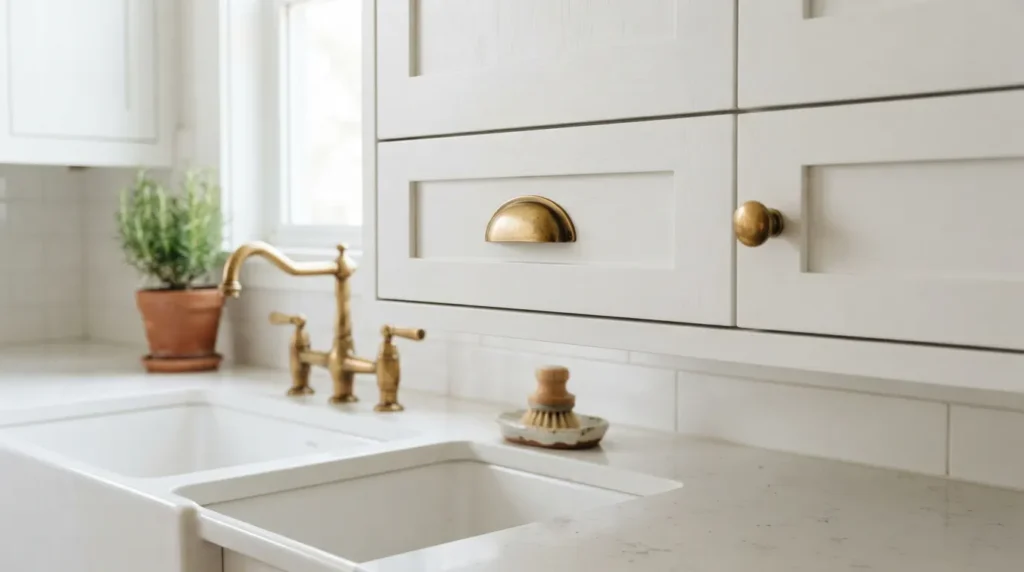
5. Brass Hardware Accents
Quick Benefits
- Adds warmth and polish to cabinetry
- Pairs beautifully with both classic and modern kitchens
- Ages gracefully, especially unlacquered finishes
- Ties together lighting, faucets, and cabinet pulls
- Provides an affordable way to elevate the space
Why It Works
Brass hardware has moved in and out of favor over the decades, but unlike some trend-driven finishes, it has always eventually returned to popularity because of its inherent warmth and versatility. A mistake many homeowners make is choosing an overly trend-specific finish, like a heavily brushed or matte black hardware set, without considering how quickly that particular look can start to feel dated. Brass, particularly in an unlacquered or antique finish that develops a natural patina, tends to age in a way that actually enhances its character over time.
How To Style It
Choose brass cabinet pulls and knobs in a simple, classic shape — a bar pull or a round knob — rather than an overly ornate or heavily trend-specific design. Repeat the same brass finish across your faucet, cabinet hardware, and any visible light fixtures to create a cohesive, intentional look throughout the kitchen. Unlacquered brass will develop a natural patina over time, which many homeowners find adds to its timeless character rather than detracting from it.
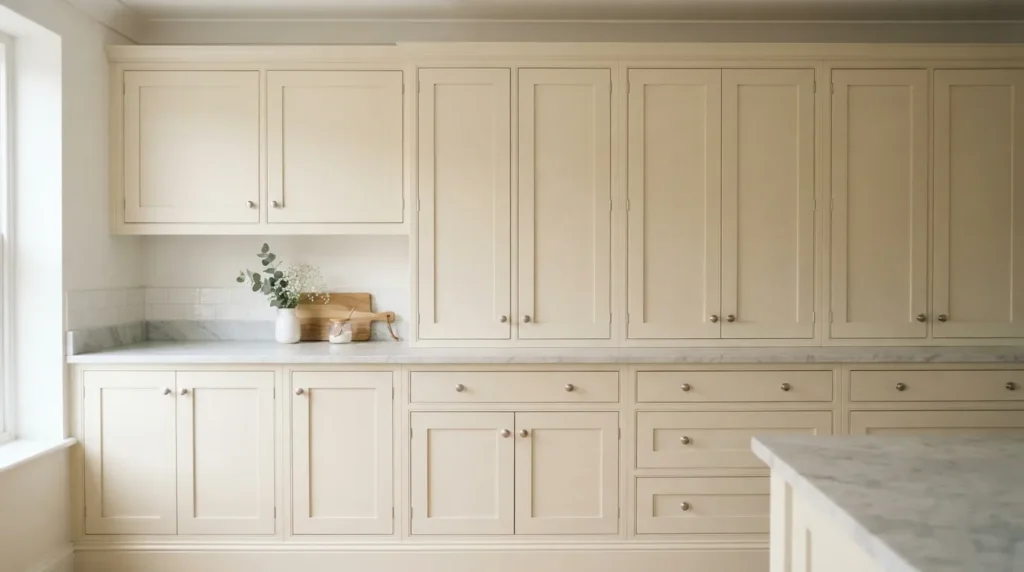
6. Shaker Style Cabinets
Quick Benefits
- Provides a clean, versatile door profile
- Works in traditional, transitional, and modern kitchens
- Has remained a top choice for well over a century
- Pairs with nearly any hardware or countertop style
- Offers a simple, uncomplicated silhouette
Why It Works
Shaker-style cabinetry, with its simple recessed panel and clean lines, has remained one of the most consistently popular cabinet styles since it was first developed in the 18th century by the Shaker religious community. I’ve noticed that this style works because it manages to feel both classic and current at the same time, avoiding the overly ornate detailing that can date a kitchen while also steering clear of the ultra-minimal, handle-less doors that define a more specifically modern look.
How To Style It
Choose Shaker cabinets with a moderate frame width — not too thin, which can look overly modern, and not too wide, which can feel heavier and more traditional than intended. This door style works well in nearly any cabinet color, from classic white to a deeper navy or forest green accent color on a kitchen island. Pair Shaker cabinetry with simple, classic hardware to keep the overall look cohesive and avoid competing design languages within the same kitchen.
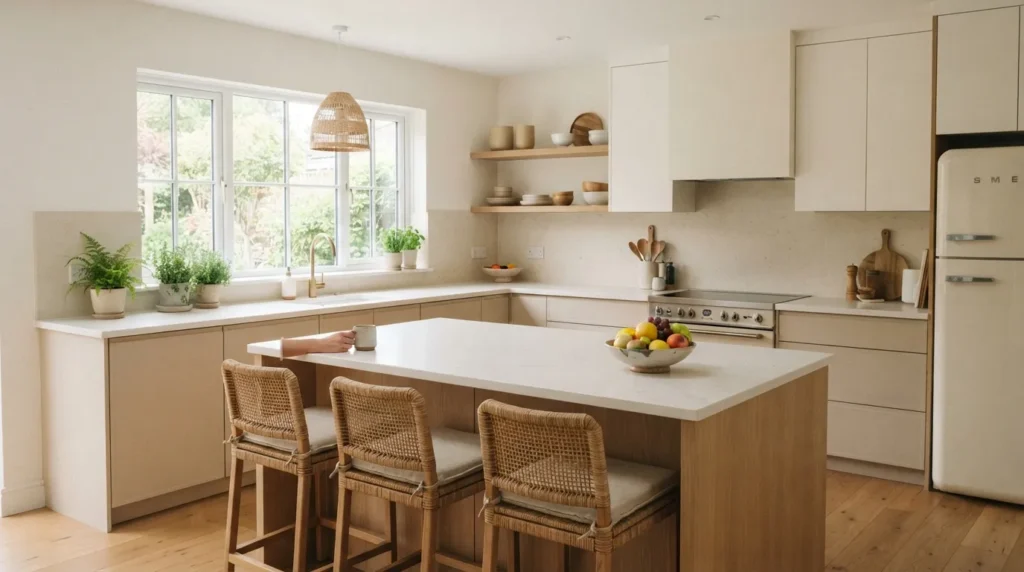
7. Neutral Color Palette
Quick Benefits
- Provides long-term flexibility for updates
- Avoids tying the kitchen to a specific design era
- Makes it easier to introduce color through accessories
- Pairs well with natural materials throughout
- Increases resale appeal in most markets
Why It Works
A kitchen built around a neutral color palette — whites, warm grays, soft beiges — provides the most flexibility over time, since neutral tones rarely feel dated the way bold, trend-specific colors can. A mistake many homeowners make is choosing a bold accent color for a large, permanent element like cabinetry, which can be costly and difficult to change once tastes shift. Neutral palettes allow color and personality to be introduced instead through smaller, more easily updated elements like dish towels, art, or a few accessories.
How To Style It
Build the kitchen’s foundation — cabinets, countertops, backsplash — around two to three neutral tones that complement each other, such as warm white cabinetry, a light natural stone countertop, and warm wood flooring. Introduce seasonal or personal color through smaller, swappable items like a runner rug, dish towels, or a bowl of fruit, which can change easily without any permanent renovation. This approach keeps the kitchen’s core investment protected while still allowing for personal expression.
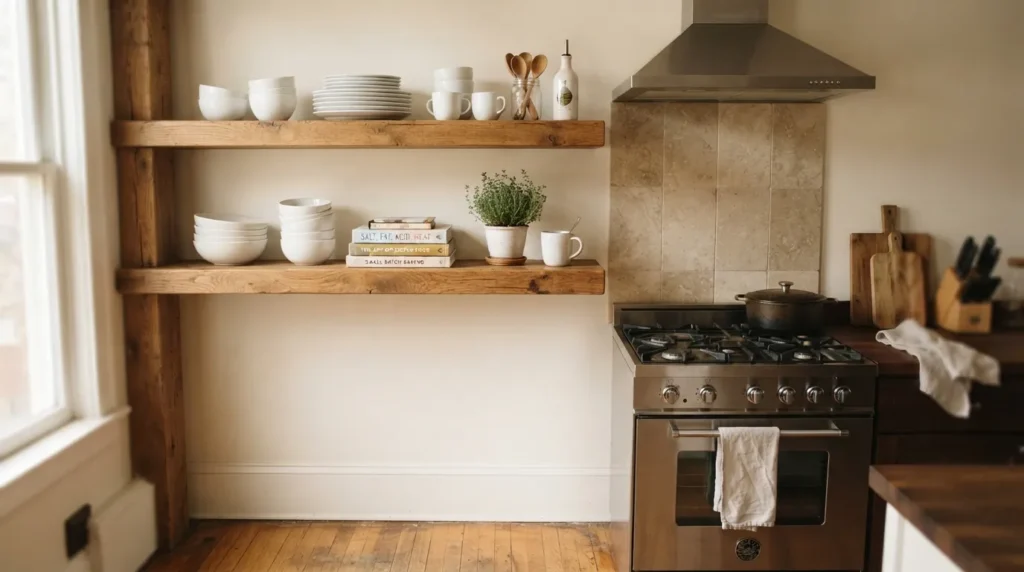
8. Open Wood Shelving
Quick Benefits
- Adds warmth and texture to balance cabinetry
- Provides a display opportunity for everyday dishware
- Creates a lighter, less boxy feel than full upper cabinets
- Works well in both traditional and modern kitchens
- Has remained a popular design choice for decades
Why It Works
Open wood shelving strikes a balance between practicality and visual warmth that closed cabinetry alone doesn’t achieve, and it’s remained a popular choice specifically because it adds texture and personality without following any particular passing trend. A mistake many homeowners make is filling every available wall with closed upper cabinets, which can make a kitchen feel heavier and more closed-in than necessary. A section of open shelving lightens the overall visual weight of the kitchen while providing a natural spot to display everyday dishware.
How To Style It
Install open shelving in a natural or lightly stained wood finish, positioned in an area with easy access, such as beside the range or above a prep counter. Style the shelves with a mix of everyday dishware, a few cookbooks, and one or two decorative objects, leaving some negative space rather than filling every inch. Keep the styling relatively simple and functional, since open shelving works best in a timeless kitchen when it looks genuinely used rather than purely decorative.
9. Classic Pendant Lighting
Quick Benefits
- Adds a strong visual focal point above the island
- Provides functional task lighting
- Elevates the kitchen without major renovation
- Pairs well with a range of cabinet and hardware finishes
- Offers a wide range of budget-friendly options
Why It Works
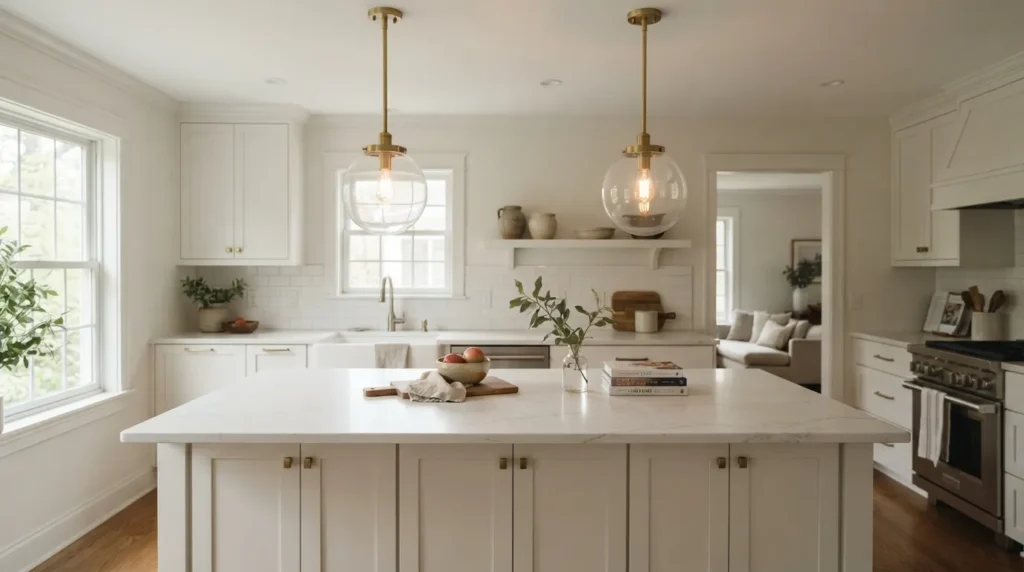
A set of classic pendant lights above the kitchen island does more for the room’s overall polish than almost any other single design choice, since lighting is one of the first things the eye notices upon entering the space. One simple trick I always suggest is choosing a pendant with a simple, classic silhouette — a glass globe, a simple dome, or a lantern-style fixture — rather than an overly trend-specific design that risks feeling dated within a few years.
How To Style It
Choose two or three matching pendants for a standard-sized island, spacing them evenly and hanging them roughly 30 to 36 inches above the counter surface for both function and proportion. Stick to a classic material and finish, such as glass, brass, or black metal, that complements your other kitchen hardware. A simple, well-proportioned pendant light will continue to look intentional and current far longer than an elaborate, statement-making fixture tied to a specific design moment.
10. Quality Hardwood Flooring
Quick Benefits
- Adds warmth underfoot and visually throughout the room
- Ages gracefully, often improving with wear
- Increases home value in most markets
- Pairs with nearly any cabinet or countertop choice
- Provides a durable, long-lasting investment
Why It Works
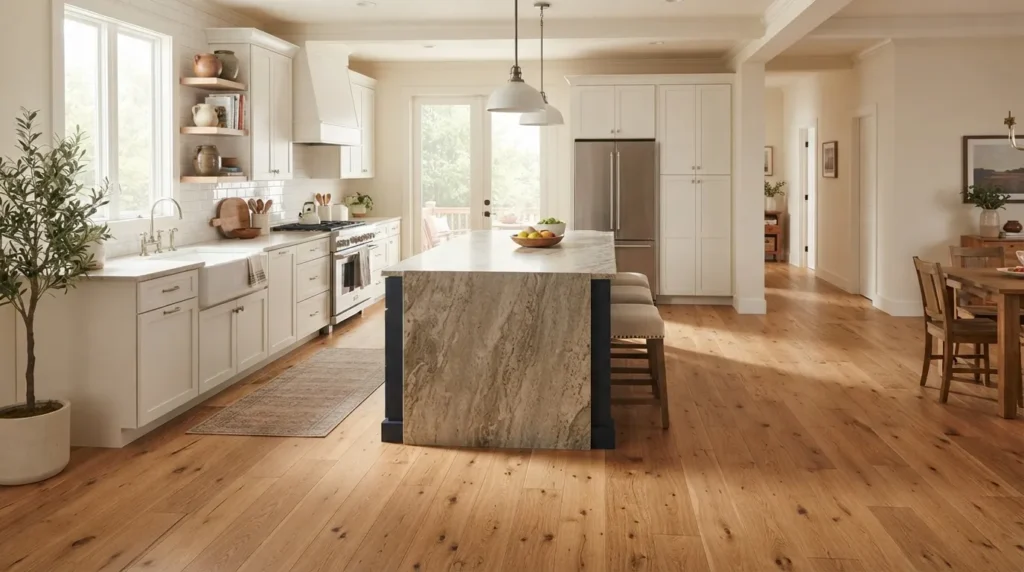
Hardwood flooring has remained one of the most desirable kitchen flooring options for generations, largely because it ages in a way that feels intentional rather than worn out. A mistake many homeowners make is choosing a highly trend-specific flooring finish, like a heavily gray-washed or distressed plank, which can date more quickly than a classic, medium-toned hardwood. Quality hardwood, properly maintained, can be refinished multiple times over its lifespan, making it a genuinely long-term investment rather than a temporary design choice.
How To Style It
Choose a medium wood tone, such as white oak or a classic oak stain, over a heavily distressed or extremely dark finish, since medium tones tend to remain in style the longest and hide everyday wear more effectively. A wider plank width generally reads as more current while still remaining classic, though narrower traditional planks work well in more historic homes. If solid hardwood isn’t practical in a kitchen due to moisture concerns, a high-quality engineered hardwood offers similar timeless appeal with better durability in wet areas.
Frequently Asked Questions
What makes a kitchen design “timeless” instead of just simple?
Timeless kitchen design combines classic materials, proven layouts, and a restrained color palette specifically chosen to avoid feeling tied to a particular design era. A simple kitchen can still feel trendy if it uses a currently popular finish or color, while a timeless kitchen deliberately avoids choices linked to a passing trend cycle.
Is white the only timeless cabinet color?
No, though it’s the most consistently popular. Warm wood tones and certain deep, classic colors like navy or forest green, especially on a kitchen island, have also demonstrated lasting appeal, particularly when paired with a predominantly neutral surrounding palette.
Are quartz countertops considered timeless?
Quartz can be timeless if the pattern chosen mimics natural stone with authentic-looking veining, but overly uniform or heavily flecked quartz patterns tend to feel more trend-specific and can date more quickly than genuine natural stone.
How do I update a dated kitchen without a full renovation?
Focus on the most visible, changeable elements first: hardware, lighting, and backsplash tile tend to offer the most visual impact relative to their cost. Repainting cabinets in a classic white or warm neutral can also refresh a dated kitchen significantly without replacing the cabinet boxes themselves.
Does timeless kitchen design cost more than trend-driven design?
It often requires a similar or sometimes higher upfront investment in quality materials, but it typically costs less over the long run since the kitchen won’t need another full renovation as quickly. Many timeless choices, like a neutral palette, also cost nothing extra to implement.
What kitchen trends should I avoid if I want a timeless look?
Highly saturated cabinet colors, ultra-glossy or heavily patterned countertops, and extremely trend-specific finishes, such as an unusual tile shape or an overly futuristic hardware style, tend to date the fastest. Classic materials and simple silhouettes are the safer long-term choice.
Can a timeless kitchen still feel personal and unique?
Yes. Timeless design relies on restraint in the larger, more permanent elements, while leaving plenty of room for personality through smaller, easily updated details like open shelf styling, a runner rug, or seasonal accessories.
Conclusion
A truly timeless kitchen comes down to choosing classic materials and proven design elements over whatever happens to be trending at the moment. Classic white or wood cabinetry, natural stone countertops, a farmhouse sink, and simple pendant lighting all work together to create a space that will feel just as intentional and beautiful decades from now as it does today.
Start with one or two ideas from this list and gradually build a space that reflects your style and supports everyday comfort. Whether that means choosing Shaker-style cabinets for your next renovation, swapping in brass hardware for an easy update, or finally installing that farmhouse sink you’ve been eyeing, these choices compound into a kitchen built to last well beyond a single design trend. The most timeless kitchens aren’t frozen in a specific decade — they’re built on materials and design principles that simply never go out of style.
Related Articles
- Simple Timeless Living Room Ideas
- Modern Farmhouse Decor Essentials
- Classic Bathroom Design Ideas
- Neutral Home Styling Ideas
- How To Choose Timeless Kitchen Hardware